Inky Black Cats

One thing about having to clean up and discard damaged items from the flood is that I found a lot of things I had lost, buried in the debris. I also cleaned out the garage for 4 hours the other day, reorganizing my loads of loads. My muscles are sore and my mind is blank. There are still some things in the living room, but as the bins are full, I am forced to take a break. That’s good.

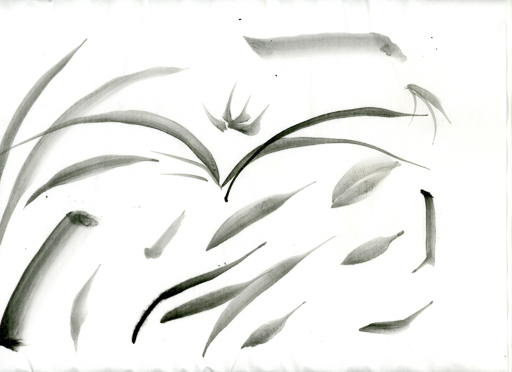
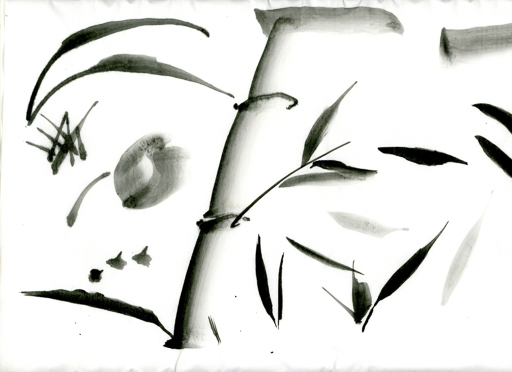
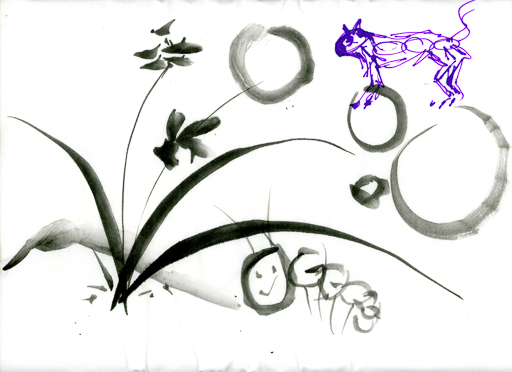
One thing I found was some sumi-e ink and thin paper for practicing traditional painting strokes. I still had a bit of a knack for ink painting – one of the founding subjects of this blog, too – but don’t have quite all I need. Nonetheless, I decided to try my hand with my ink stick, suzuri, brushes, and rice paper.

Nothing spectacular. I managed to remember a few things. I also realized I had to find a few other things, like a felt mat and some paper weights to hold my paper steady. Easily done.

From there, I drew a cat in purple ink, thinking about painting cats could be fun.

And easy.

And I found out they are not easy!

So, I tried to follow a few “how-to” videos on YouTube, I got frustrated and had an epiphany: I much rather paint in my own way, not following traditional formulaic representations. And this is not to put these traditional ways down – they are amazing in their own right – but I find it very frustrating to paint like someone else. Learn from someone, from tradition, but ultimately go on my own path.

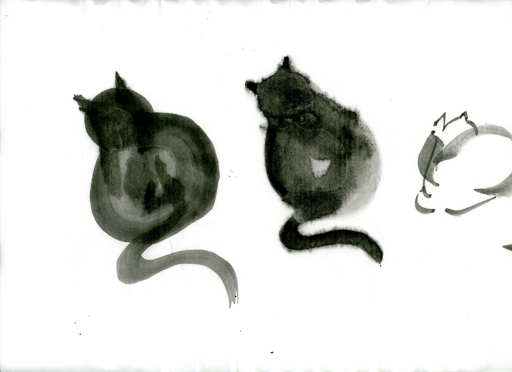
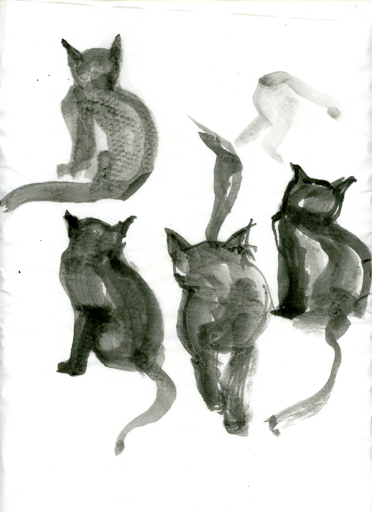
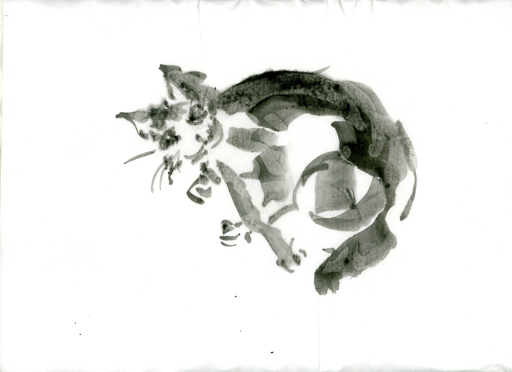
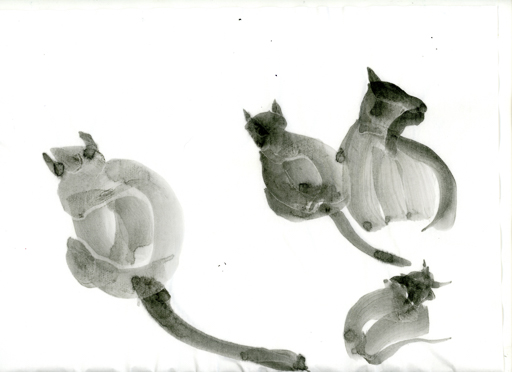
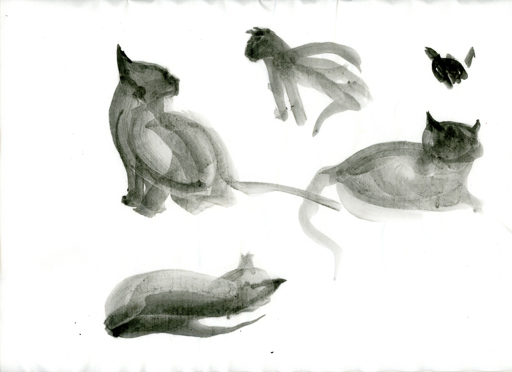
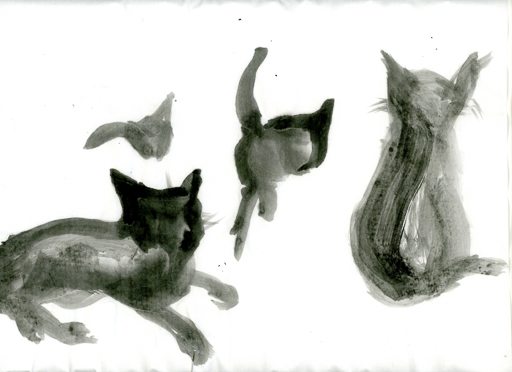
So, I painted some cats. I copied some, I looked at photos of cats, and that is when I realized I need to learn more about controlling my brush and the shades of grey and black and manage the moisture on the paper. So, inky black cats, some of which may give you nightmares, but working on their shapes and using my brush has opened my mind to a lot of potentials. That is the exciting part!

The Black Cat Rebellion is here.

Chrysanthemums

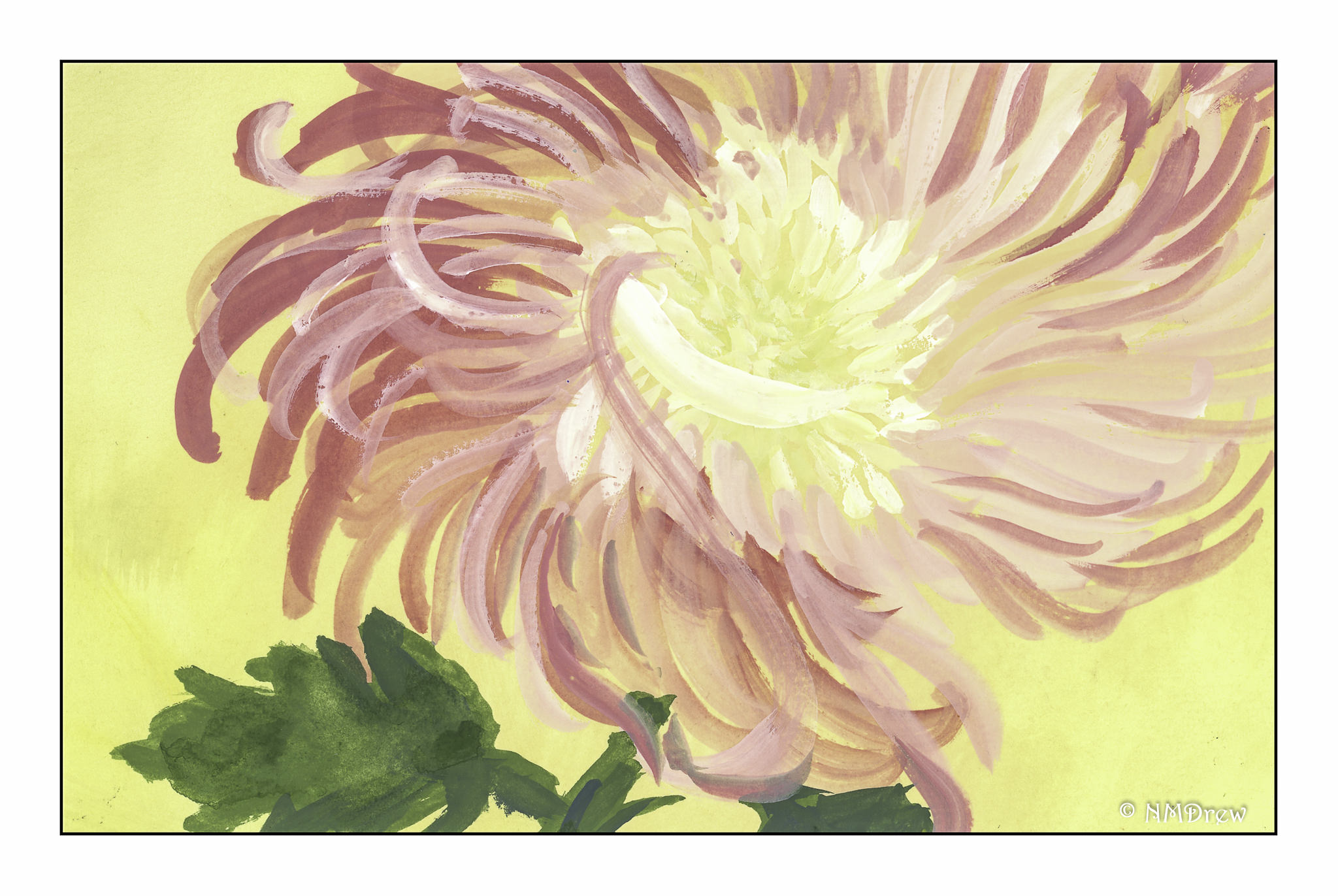
Years ago I did Japanese ink painting, along with Chinese painting.  Chrysanthemums are a traditional study.  Here, I tried to work with the gouache in the same fashion – following the same formula – as in Oriental painting.  Because the paper and pigment are different, it doesn’t work out the same, although the brushwork is applied similarly.

Using what I learned from the first painting, while I held to the constructs I had learned in Asian painting, I applied the principles of gouache here.  I built on layers and worked over areas I wasn’t too thrilled with.

Being familiar with how different painting techniques are applied is very handy.  This knowledge can be applied to another area (here, painting) and modified to fit the needs of the medium.  Painting is like opening up a brand new world!  It is quite an adventure.

Temple Sunrise

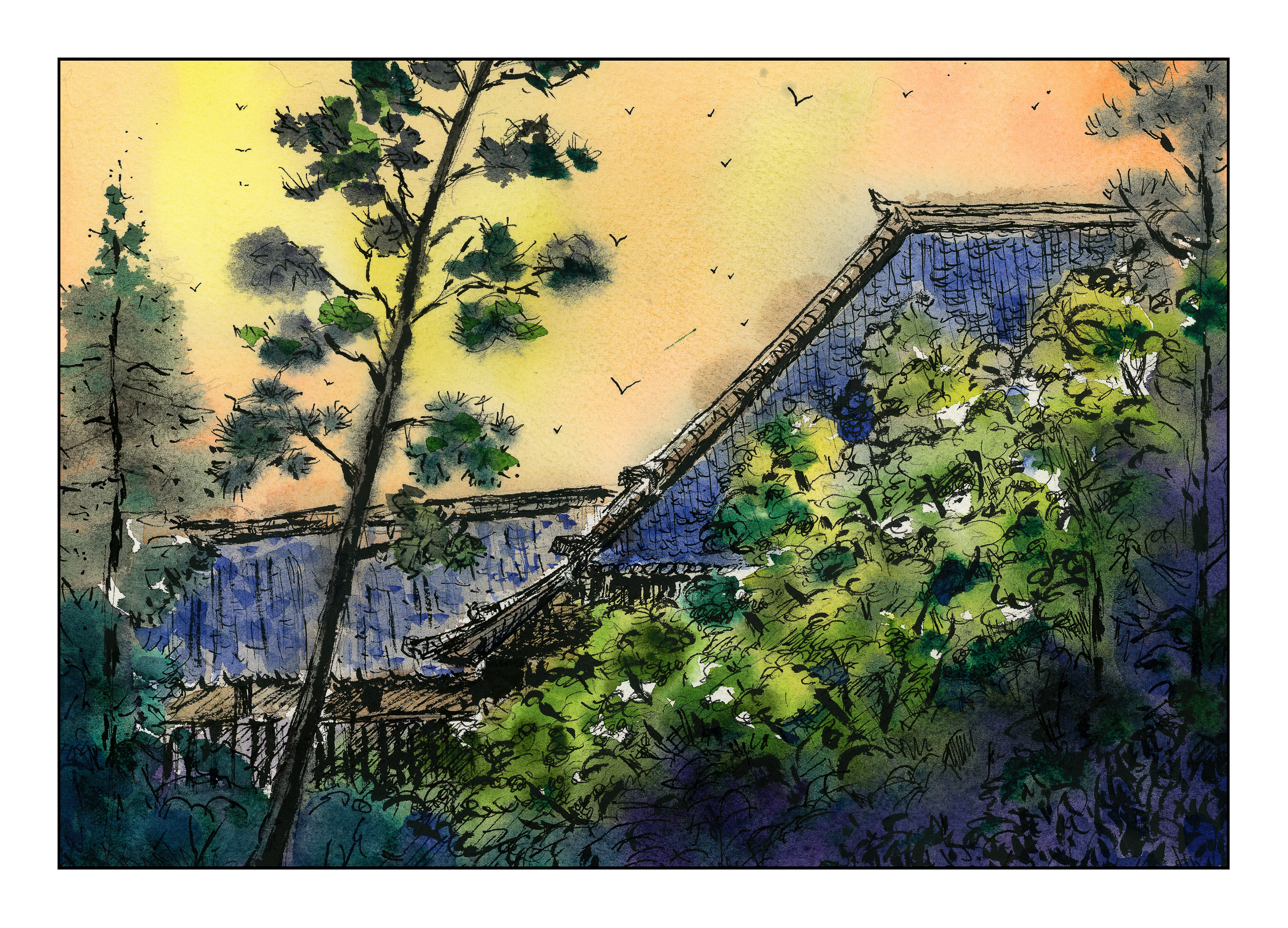
This is a rather eclectic picture as far as technique.  Pencil drawing, ink, watercolor, more ink, more water, and so on.  Paper is Arches cold press 140#, 9×12 inches.  I thought I would use a better quality paper this morning because I knew I would be using a lot of water.  It paid off.  A picture of a Japanese temple was the inspiration for this mish-mash, as well as the fact I felt like drawing more than anything else.

Inktober #7: Exhausted

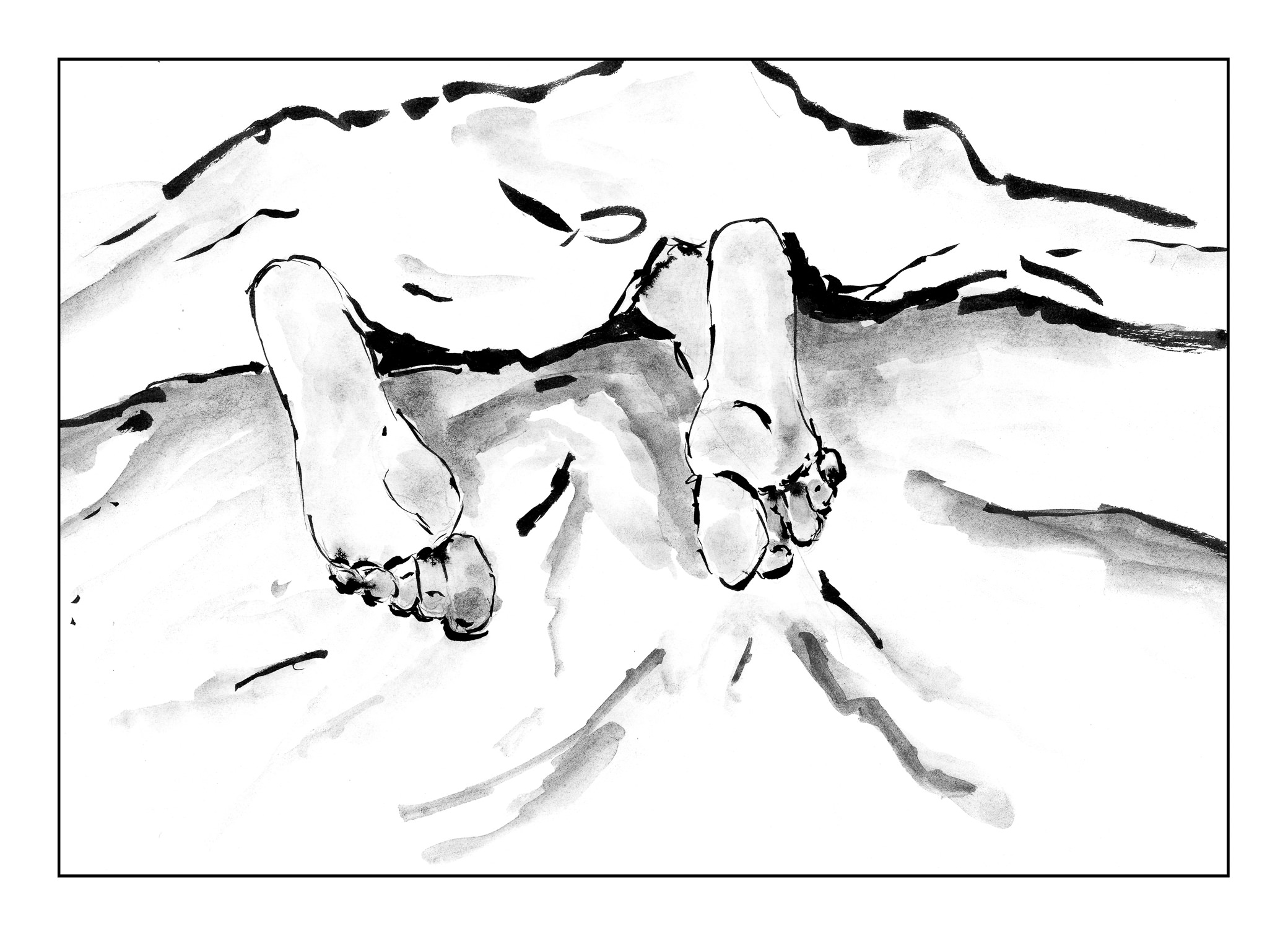
Somedays you just don’t want to get out of bed . . . too much partying, too much to do, whatever.  Crawl into bed, pull the covers over your head, and disappear for a few hours.  Great medicine in our crazy world!

This is a combination of a fude ink brush and water-soluble graphite.

Castle, No Lines

Besides doing the orchid yesterday, I sat down and did what is being called”direct watercolor.”  As in sumi-e, the artist thinks about things before committing brush to paper.  No lines.  No value studies.  Look, see, think, paint.  It is a bit of a challenge and rather daunting, but I think this is such an enlightening way to learn the art of brushwork, value, contrast, and so on.  I did some glazes here and there, to create contrast as well as to carry various colors throughout the painting.  I also worked with vignetting, considering the shapes of the four corners of the vignette as well.