
I have a dish
For my fish;
My fish is dead,
It has no head.

I have a dish
For my fish;
My fish is dead,
It has no head.
I always love a walk in the local botanical garden, but I haven’t been for awhile with one of our dogs. I fell down a hillside because one of them pulled me off balance – squirrel! – and am rather uneasy, but today I went. Luckily, nothing happened except beautiful weather, spring scents, new leaves, narcissus, and bulbs. I didn’t plan on taking pictures, but my trusty phone came in hand. Smudge brought her nose and one helluva good time.
The people who care for the garden do a wonderful job, and spring cleaning, or new year cleaning, came as the underbrush and detritus of last year has largely been cleared away. Only fallen leaves and new plantings – even my favorite old oak tree that usually has a pile of leaves in its center where branches grow was clean. Maybe the wind, maybe the fairies in the wood.

Because of my fall down the hill with Smudge, I decided to take the easiest paths I could find in the climb to the top of the hill. Switchbacks with low degrees of ascent and descent worked, and we had a wonderful walk.
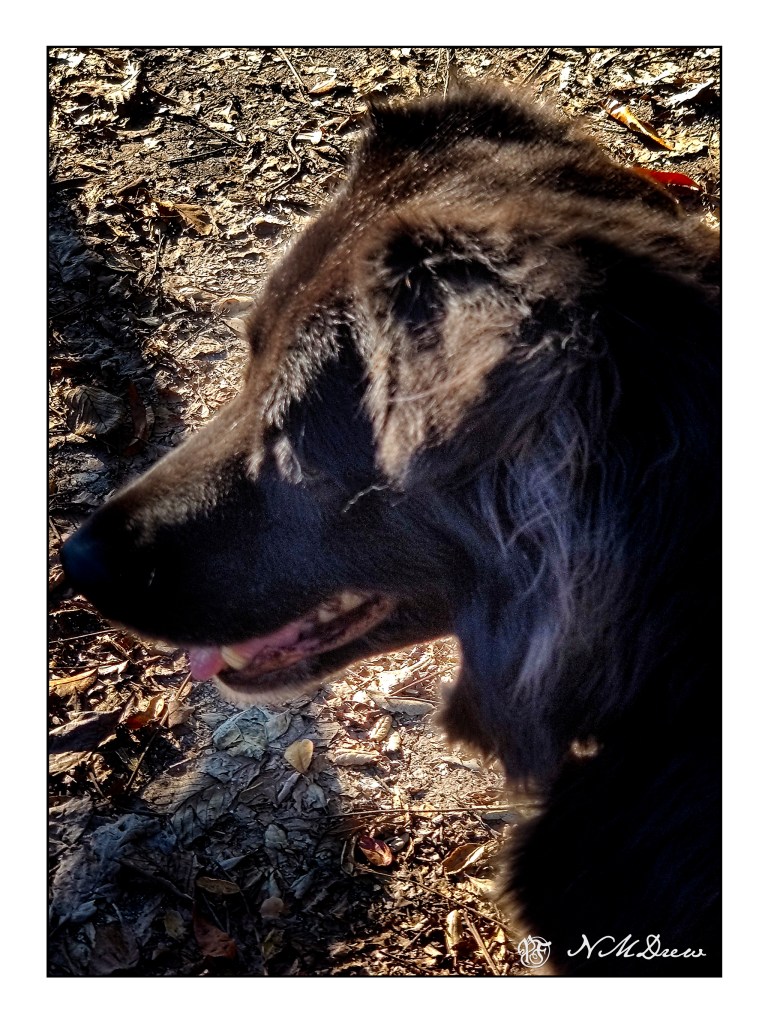
We spent a few hours wandering around, sitting on benches, observing people and plants, listening to squirrels and crows, seeing lizards climb trees and play hide and seek in the ground cover. Smudge sniffed and climbed up on the benches to keep me company.

This is a beautiful pine, and though I have no idea what it is (and no label to be found), it is at a corner of the garden, like an old and dear friend welcoming you back.

These bulbs are always so cheerful. They bloom for months and are a bright splash along the trail.

These caught my eye – last year’s foliage, or this years tinged by frost? (We have had some below 32F nights!)

This is my beloved oak tree. It must be 500 or more years old – young when the Spanish first came to the area? Who knows . . . .

I love looking for the narcissus planted throughout the gardens, and the daffodils, and the iris. They all bloom at different times.

The pine tree from a distance. The rocks lining the pathway are new this year!
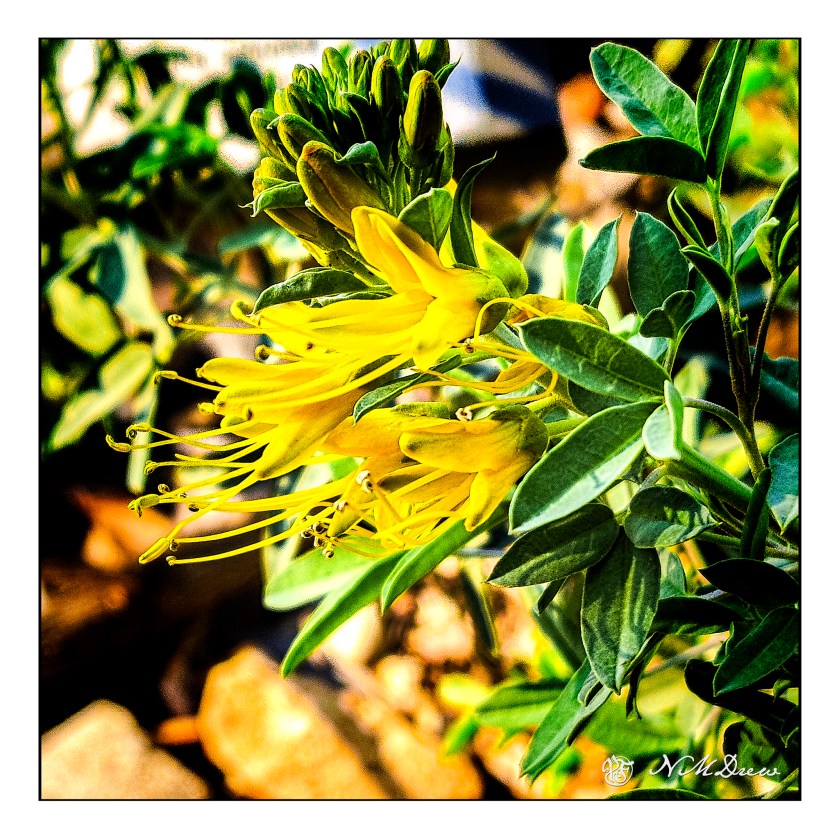
This is a native plant, and it’s rather a fun one. When the bladder pod to spread its seeds, the bladders explode and send the seeds flying in all directions.
Initially, I didn’t plan on ending up at the botanical garden; rather, the goal was the dog park. However, it turns out that on the third Thursday of the month, the dog park is closed for cleaning and maintenance. So, how lucky were we to be able to enjoy this wonderful day?
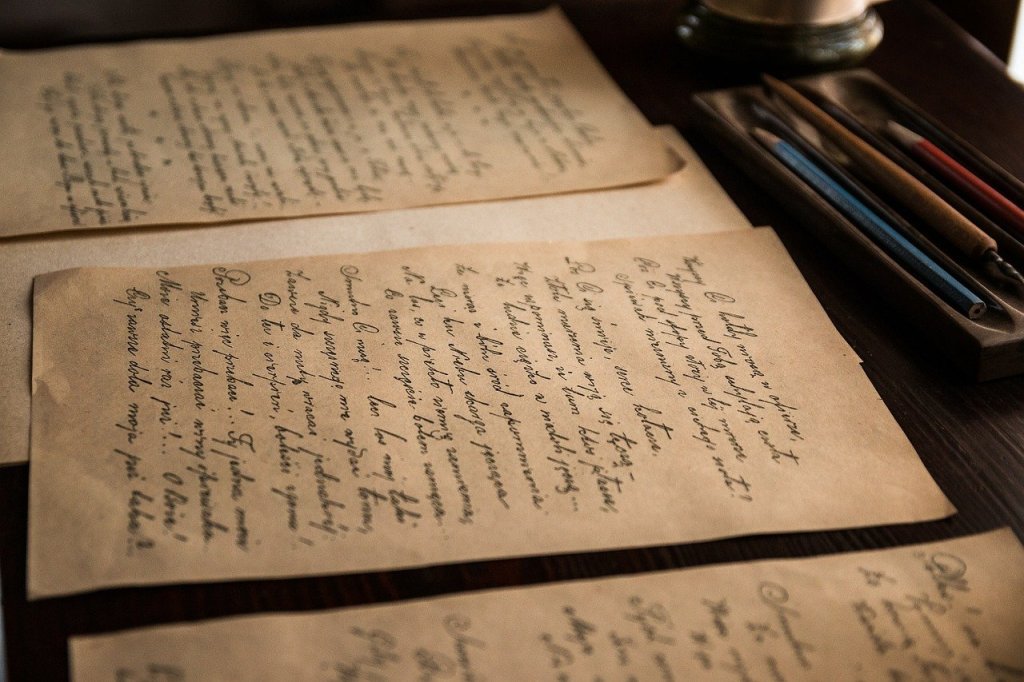
If you have read this blog for awhile, you do know that I have made iron gall ink on a number of occasions, as well as cut my own quills. I have tried my hand at learning Secretary Hand from the 1500s, but I never could get into it. Now, though, my iron gall ink needs replenishing, and soon enough I will get around to it – once the rains stop and I can let my galls and old wine ferment in the California sun. And, I do plan to make some red ink from sappan wood (sappen?), too, but that is for another day, when supplies show up.
I came across a recipe for ink in the form of a poem while looking up handwriting or copybooks from days of yore. It contains recipes for iron gall ink, but also ink made from lamp black (soot), which is what sumi ink is from, but also from wool! Wool?
Purportedly from an English book of handwriting entitled A Book Containing Divers Sorts of Hands, by John (Jehan) de Beau Chesne (Beauchesne) and M. John Baildon, and published in 1571, here is an interesting bit of rhyme:
To make common yncke of Wyne take a quart,
Two ounces of gomme, let that be a parte,
Five ounces of galles, of copres take three,
Long standing dooth make it better to be;
If wyne ye do want, rayne water is best,
And as much stuffe as above at the least:
If yncke be to thick, put vinegar in,
For water dooth make the colour more dimme.
In hast for a shift when ye have a great nead,
Take woll, or wollen to stand you in steede;
which burnt in the fire the powder bette small
With vinegre, or water make yncke with all.
If yncke ye desire to keep long in store
Put bay salte therein, and it will not hoare.
Of that common yncke be not to your minde
Some lampblack thereto with gomme water grinde "
I did look up this book online and found many references to it, but not a digitalized copy could be found. I would love to see it. As well, hHow correct or incorrect this poem is as far as original spelling doesn’t matter – it is rather charming, as non-standardized English spelling can be.
What is good about this poem are the specific amounts for ingredients in the iron gall recipe, which perhaps I shall try. Stale beer can be substituted for wine, and the rest has proportions which can be worked out for larger or smaller amounts. “Copras” is known as “copperas” and that is simply ferrous sulfate. “Gomme” is gum arabic. “Galles” are the oak galls.
I found it interesting that vinegar is a better choice than water to thin ink that has gotten thicker with time – evaporation I expect – as well as adding salt (in an unknown amount) to keep it from getting mouldy. Wine helps, but perhaps the salt helps even more. The wool – woll, wollen – was the new source of ink for me! Research was required, and using Google, I came across this video.
I have a feeling I am going to give this a shot, using some odd fleece I have rather than woolen fabric. It will probably be best done outdoors, as the stench could be awful and the smoke could set off the smoke detectors. It is also probably a great way to recycle your old clothes, if you are really desperate for yncke.
We all need to remember and be thankful for all we have – all we can do – in the face of challenges. Inspiration at its finest.
Happy Thanksgiving!
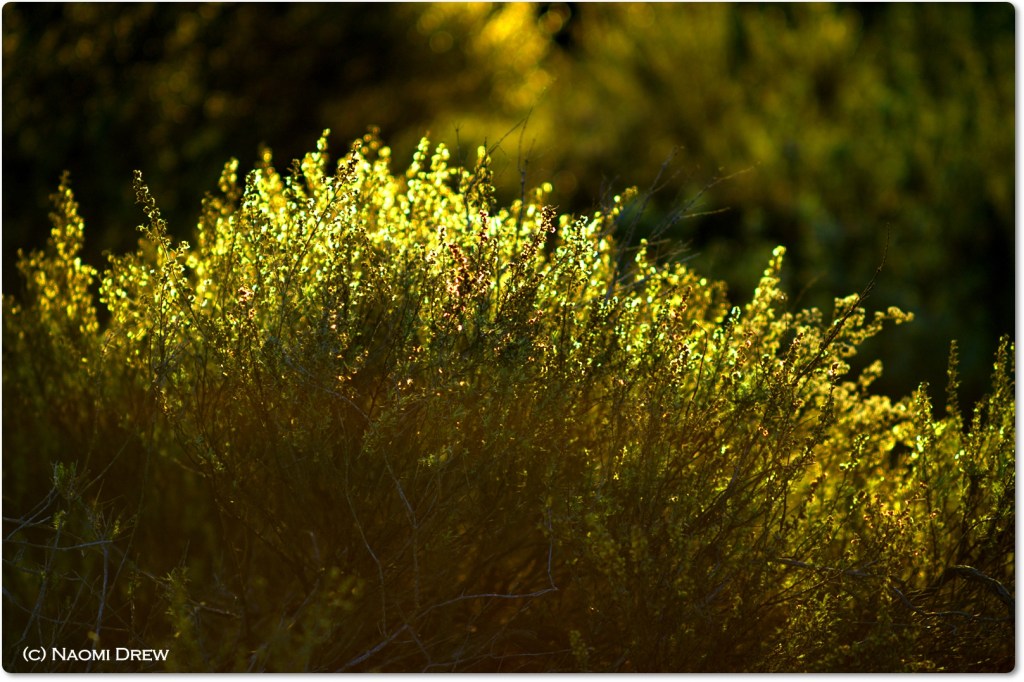
The studio window faces east. Every morning, if possible, I am up before sunrise, coffee in hand, reading or watching something on the computer, planning my day. I turn away from these activities to watch the sunrise.
Every morning is different. At times, I am up so early the street lamp is still on. Some mornings it is a sharp light against a dark sky. Other mornings, as of late, it is softened by the fog that has covered the valley. As the sun ascends, the fog may stay or go, and the light may be soft and golden, violet, or on a clear morning, the spectrum of colors. At times, if there are clouds, they can be lit with gold and pink.
Missing a morning’s beginnings seldom happens. To me, it is always an adventure in color and light, and this in turn makes me ponder some weird thing.
I am always glad to see the dawn – to hear the first birds – to see the birds perch on the redbud outside my window, or see the crows hopping on the eaves. It is always new and different, full of potential and hope.
This morning was no different. What was different is I went into the living room to open the shutters. A flitter to my right, and through the slats of the shutter, on the fig tree, a little bird, yellowish on the breast, was popping around, limb to leaf, eating figs or bugs. On the lawn, a crow was poking and prodding for bugs. He watched my movements a bit, as did the small bird in the tree, but neither flew away.
Mornings are, for now, eternal. When I am long gone, they will continue. Savoring the dawn is a wonderful way to begin any day.

