Today I have to head over to Simi Valley, where the fire I wrote about yesterday is still burning. Because I have to go there to get a crown fitted, I just checked out the situation online.
It’s called the Sandy Fire, and while still uncontained, a number of back fires have been lit to help do so. The fire is moving south of Simi, into the hilly country of the mountains on the southern edge of the city itself. There are homes here, but because of the nature of the place, it is difficult to build as well as remote. Unfortunately, though, some structures have been lost. Damage to wildlife is not to be dismissed, either, as the hills are home to many critters.

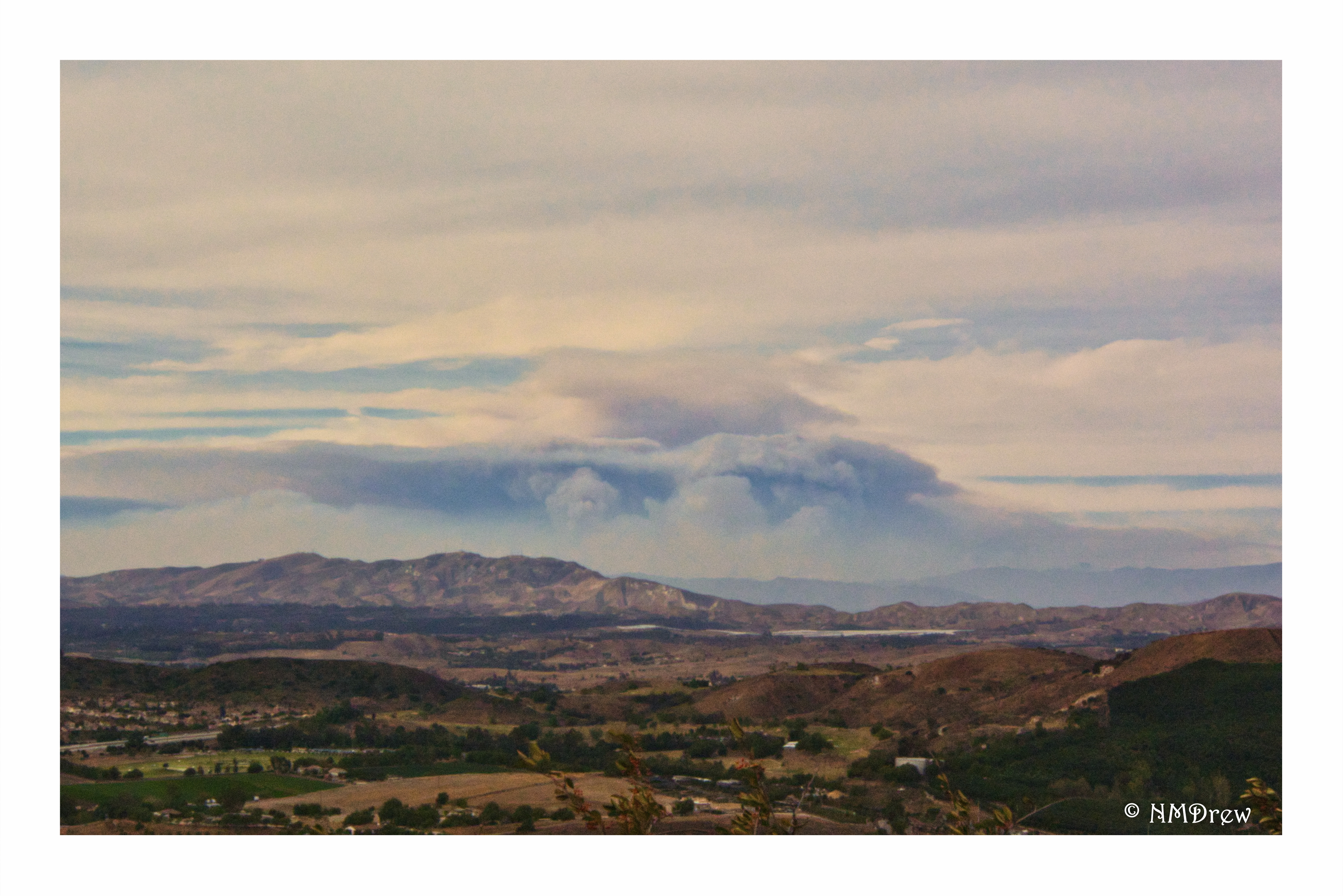
Above is a photo I took years ago. The fire spread from the mountains to about 20+ miles west to the sea. My in-laws were evacuated from Ventura in the middle of the night. No one thought the fire so far away could spread as fast and fiercely as it did, and in so short of time.
The wind is what is often the most devastating element involved in the fires of Southern California. We get what we call variously “sundowners” and “east winds” and “Santa Ana winds” and “Santanas” – sundowners because as the evening sets in, the cool air from the ocean draws the heated air from inland. East winds because the land is east, the ocean is west. And there are a lot of other reasons for these winds of which I know nothing!
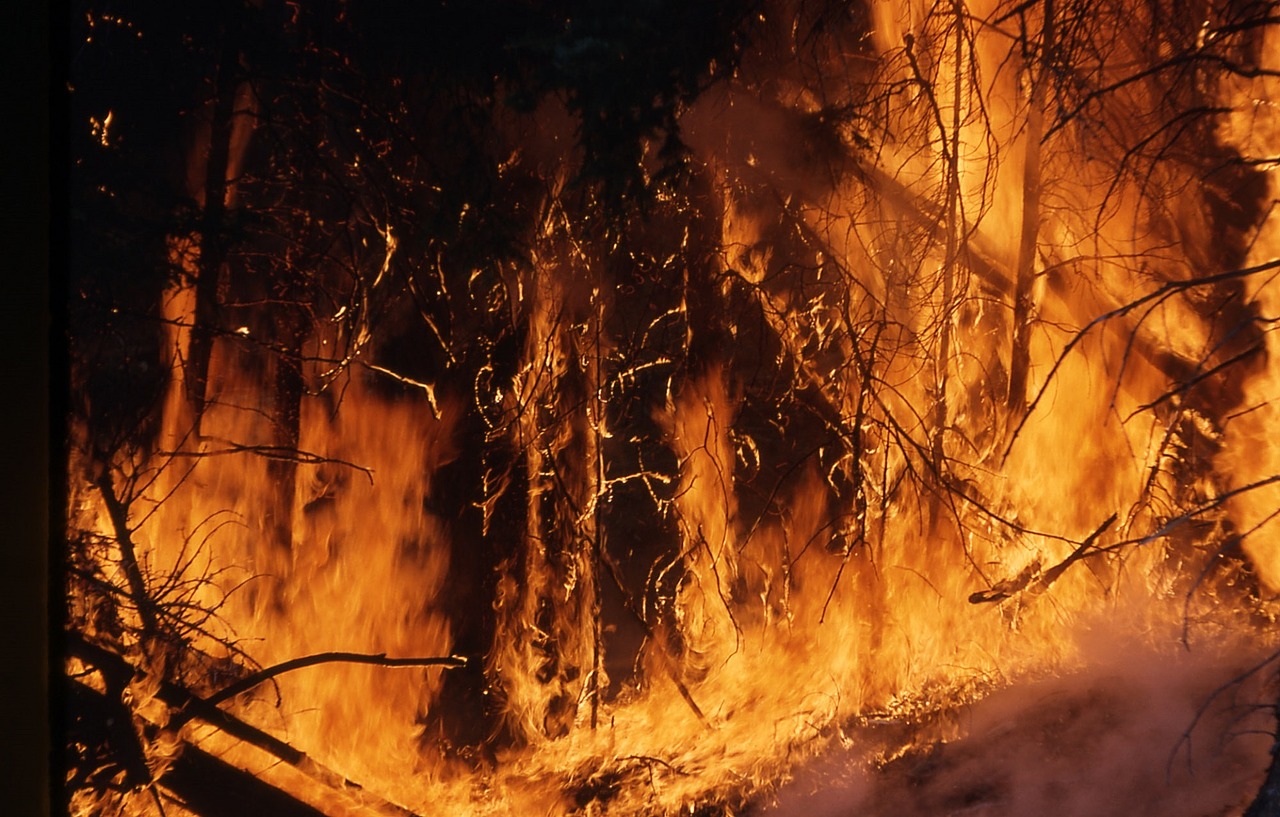
At times, these winds can be over 50 mph. Yesterday’s winds in my area were only 15 mph, but enough to make me uneasy. I always have my nose sniffing out smoke and my ears pricked for sirens. The rugged terrain means chasing fires is very difficult to impossible on foot. Helicopters with fire retardant and water help, but when the wind blows embers ahead of the fire, from mountain top to the next across an arroyo or canyon, the chase is on. It is this element – the embers – which can lead to large and devastating fires and damage.
Ironically, much of California and the west are environments which depend on cycles of fire. Native Americans often used fire to control the fertility of the landscape, and only recently has the Forestry Service begun to use their knowledge. Plants flourish in the burnt land, and many depend on fires for propagation of the next generation of plants. Human settlement disrupts this cycle. Thus, years of dried debris and overgrowth provide fuel. Wet winters giving way to dry summers do this as well.
Today, the winds are down from yesterday. Usually, a light steady prevails in my area, but even that can have its effects. I’ve lived in California most of my life, but I never get used to fires as a normal part of life. I loved the wind until I came fear its effects. Today the Sandy Fire is likely to be contained, but there are fires elsewhere that need attending, and more to come. Fortunately, family and friends offer us places to stay should we need to evacuate, as we have offered them.