I opened up a pad of 9×12 CP Arches and have been having fun all morning. Yesterday was a step back into the world of watercolor, and today was simply a play day to try out a few techniques. In particular, working with less water on the brush than I normally do. This is an effort to have a bit more control of the pigment on paper. Let’s take a look!
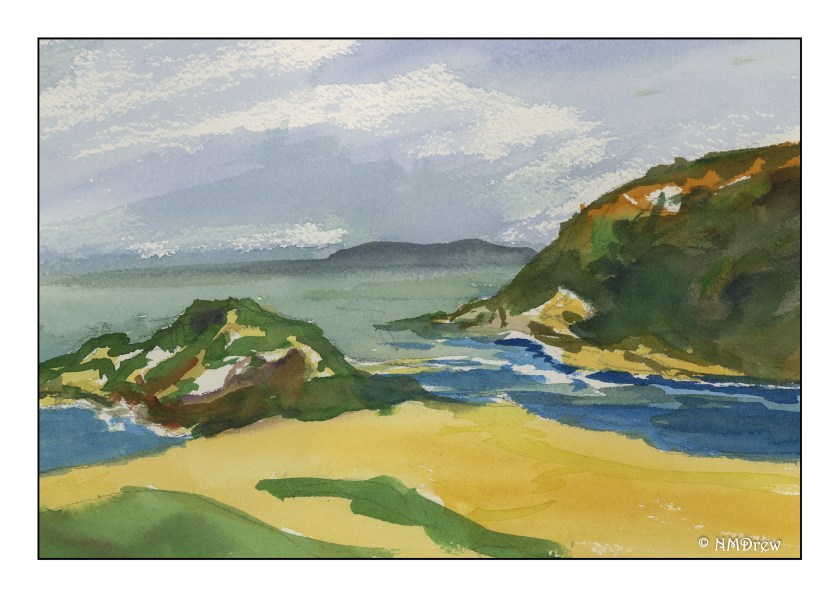
The above painting was the first one. Really a disaster! But it served as a warm-up project. In and of itself it is not awful insofar as I worked with less water from the beginning. This let me make bolder strokes as well as glazes and some wet-in-wet. The sky was my first attempt to work a rather loose sky with a much dryer brush than my norm. I worked more color into varying areas of the sky, blotting my brush on a towel before picking up the pigment.
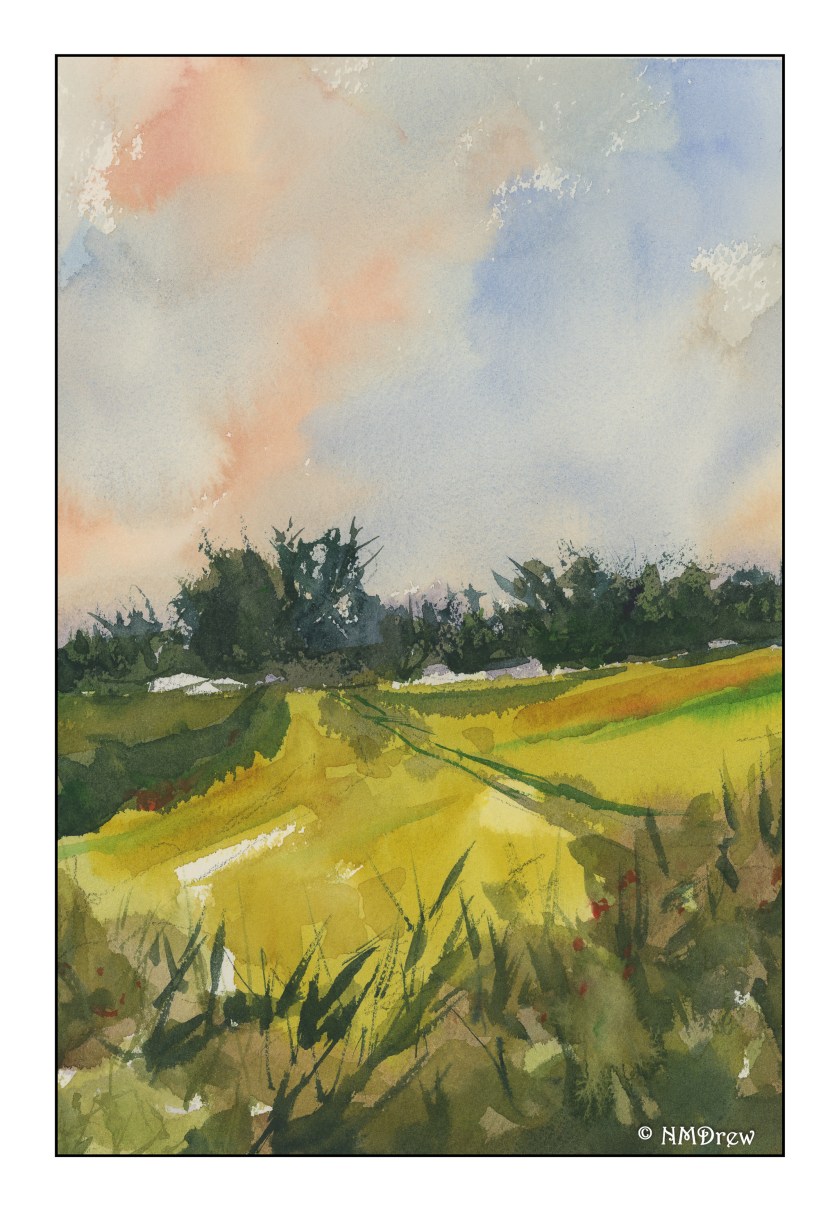
Again, the sky was a focal point in this painting. I chose to use a yellow tinged with alizarin, diluting the pigments extensively. From there, I dried off my brush and applied the colors. The same technique with the blues. Some blending, but the result is quite what I hoped to achieve. This same dryer-brush approach was used for the foreground and middle ground, as well as for the trees. Rather pleased with this one all around.

More dryer brush work but with the addition of glazes. This lagoon was a bit more challenging as the low tide leaves behind rivulets between the miniature sand bars. My feeling about this one is rather mixed, but I think it is more because it is outside my comfort zone.

Dryer brush, glazes. These dry California hills are really monochromatic. Browns and variations thereof. Yawn! The mountains I redid after the painting was done – too pale. Sadly, I messed them up a bit.
This morning’s work was well worth doing. I spent about 3 hours altogether and took the time to think after the first painting. Warming up is a good exercise as it reconnects me to what I want to do. Practice is never perfect but it is essential to any skill.
Not sure what is on tomorrow’s agenda.



 Ink, Yarn & Beer