This one got totally out of hand, but I sure had a lot of fun – and I am getting better acquainted with the Millford paper, which does hold up quite well to a lot of abuse.
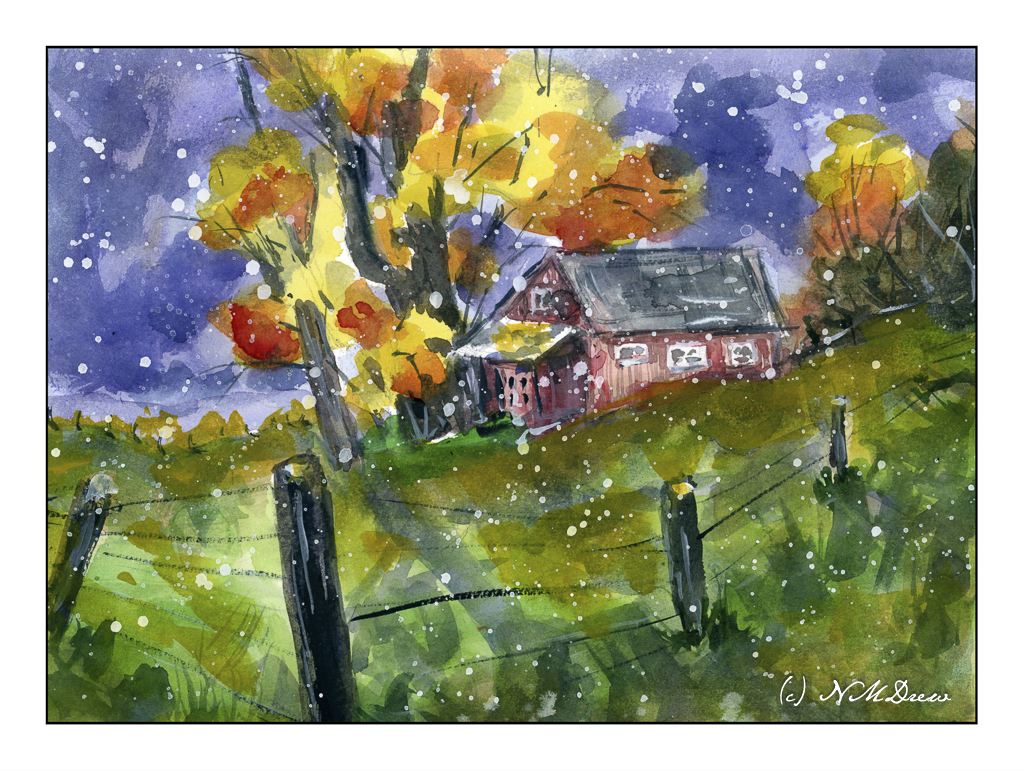

This one got totally out of hand, but I sure had a lot of fun – and I am getting better acquainted with the Millford paper, which does hold up quite well to a lot of abuse.
Even though seasonal changes in SoCal are subtle, elsewhere in the state, further north or at higher elevations, shifts in color and temperature are more apparent. The tilt of the earth changes the light, winter pushes trees to change colors and lose their leaves. Temperatures drop. While today is about 73F, two weeks ago it was in the 50s (no snow, yay!) and nights are chilly. So, let’s celebrate the shift of summer to fall, and now fall to winter.
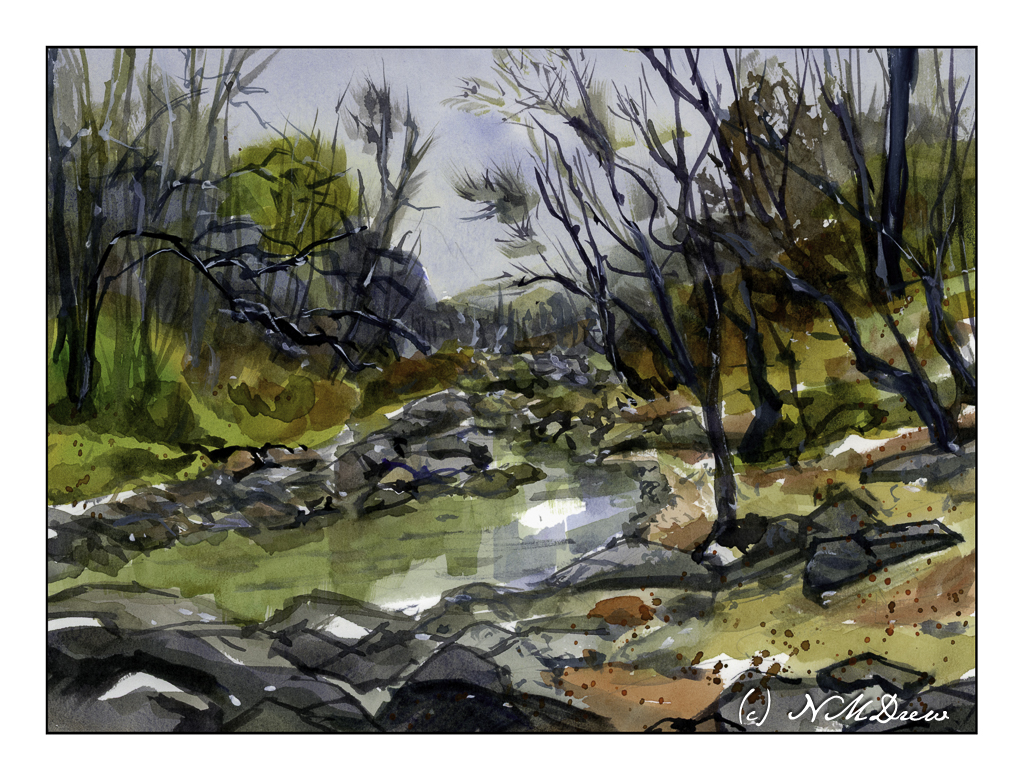
For me, this is a rather complex painting. Rocks and sandy shore, trees and brush, water, sky and reflections in the creek. Remembering the “rule” – simple big shapes, moderate shapes, details last, I worked by creating the most noticeable areas – or certainly the ones I felt could be the most challenging. This meant the creek in particular – keeping the water marked out. As well as that, the shoreline in the foreground coupled with bits of sandy shore on the right. After that, the rocks on the left and foliage of trees. I was all over the place working larger to smaller, light or dark, and then on to light or dark details.
Overall, I think this painting worked out. Analyzing its complexity and then breaking it into its larger components and areas of color helped. It is still not quite what I would have liked to produce, but much of it did succeed.
Watercolor, Hahnemuhle paper, about 10×12.

I’m getting too old to crawl around beneath things to get a photo these days!
From the archives – Dec. 28, 2010.
No, I don’t mean life. I mean trees and piles of leaves and undergrowth – all the stuff that makes up a good fall scene! Some trees have dropped a bazillion tons of leaves and others are hanging on to them. Years of detritus build up on the ground, creating a fertile place for new growth, plant, fungal, insect, which in turn supports other life in the wilder world outside the super market.
Anyone who has taken a walk in the woods or tried to photograph or paint this jumble knows exactly what I mean – it is really a busy-ness of color and texture and shape.
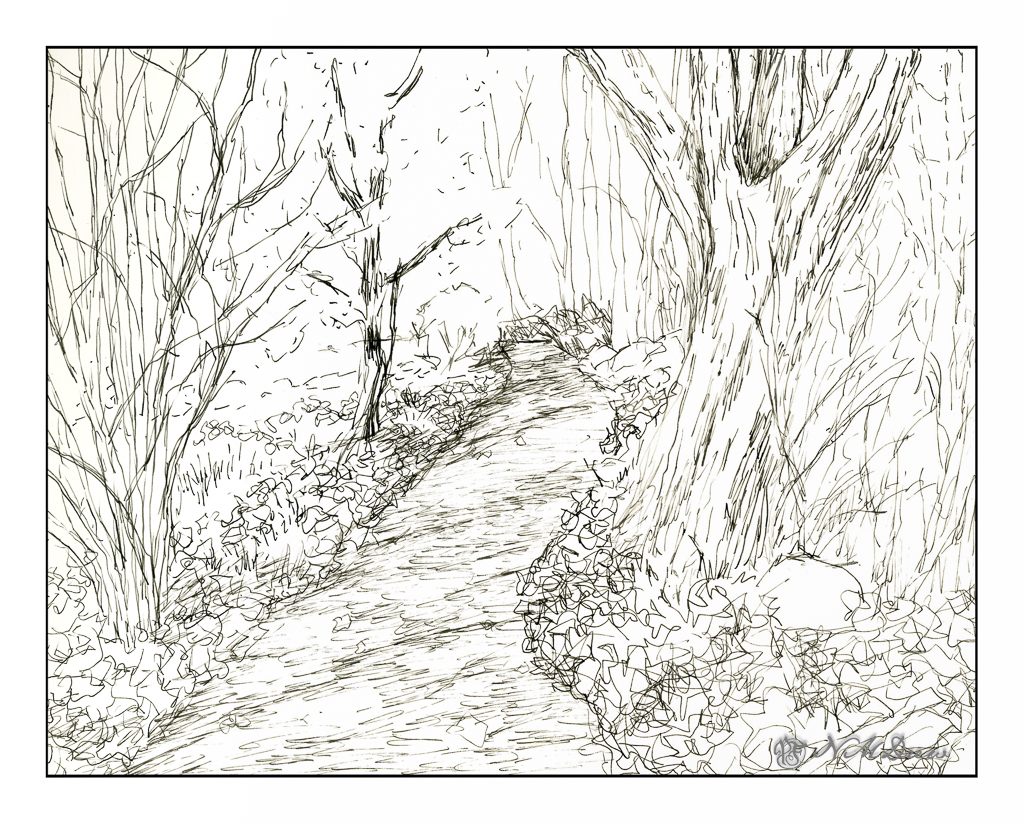
This is my sketch, done with a fountain pen and some Carbon Ink by Platinum. The paper is a bit rough so it could be what caused some difficulties with the pen nib – or the pen itself is not the best – or both. I tried to convey light and dark and texture with different pen marks. Straight lines to show trees and texture and the shadows of the trees across the pathway. Contrast is suggested rather than emphasized as I wanted to use paint to give the sense of shadows and so on. With that in mind, I pulled a palette of my out-of-the-tube paints rather than pan paints, cleaned them up and went to work.
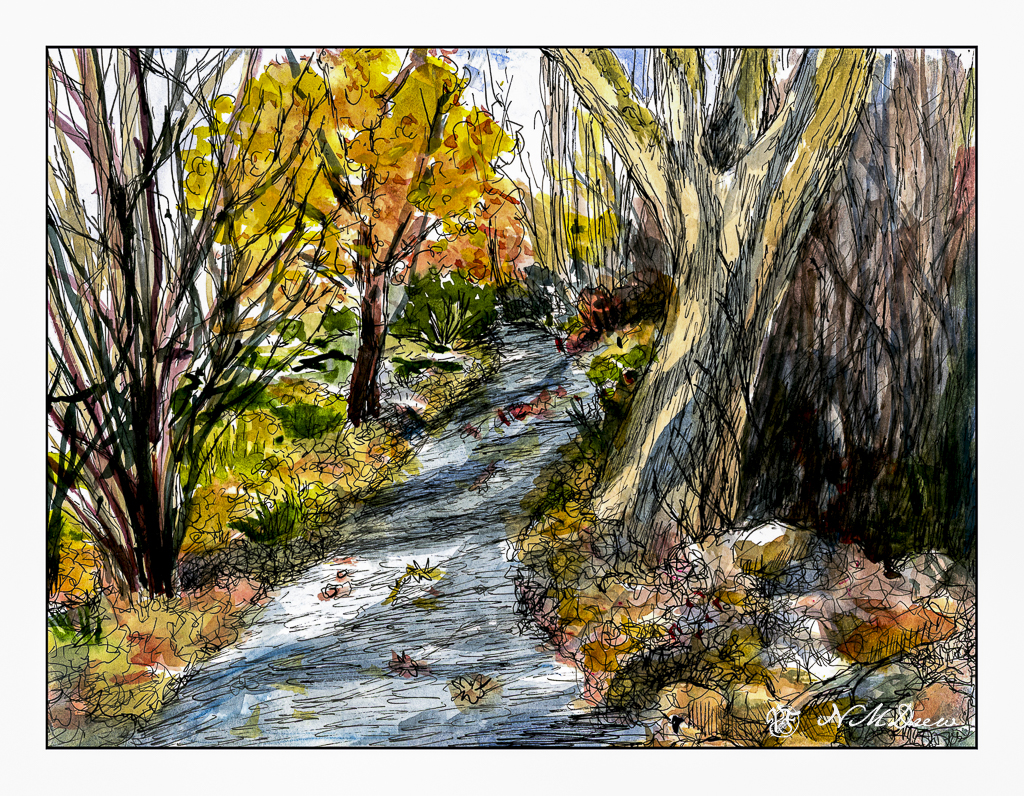
As you can see, light and dark are more emphasized with the use of color, as are the colors of the leaves and the complex shapes of trees on the left and undergrowth on the right. The leaves that have fallen have some variegation, depending on when they fell and how long they have been there. Green grasses and weeds peek through. There are a few rocks, too, and leaves on the pathway. Tree shadows fall across the trail and up onto the tree on the right. There is a brightness to the day despite the murk of the undergrowth.
After adding color, I waited for the picture to dry. I made some color adjustments. And then, back to the waterproof ink pens. This time I used Micron pens and my Uniball waterproof pens. Micron pens come in different nib widths (here 0.1, 0.2 and 0.5) and the Uniball is labelled as “fine” but in reality makes a darker, thicker mark than the Micron pens.
Overall, I am more pleased with today’s ink and wash sketch than the one I did yesterday of the plumeria. As usual, I did not do a preliminary pencil drawing but just worked from the end of the path and then moved back and forth to establish areas. I really like my tangled tree in the lower left and the shadows on the big tree on the right. The brightness of an autumn day is expressed. Now all I have to do is get to scuffling through those leaves and it will make my day.
Pen, ink, watercolor wash, on Strathmore Vision 140# CP paper, 9 x 12.
I am winding down the spring and summer container garden, weeding out dead plants, dumping pots of dirt, and deciding what to carry over for the spring season. There are still plants to enjoy, some permanent, others transitory. Trees stay around all the time, and as the season changes, so do they. Other plants, like succulents, flower but continue to stay fat and succulent into the coming colder months. Others straggle along, like the milkweed, and just seem to grow no matter what you do to them! Let’s take a look.
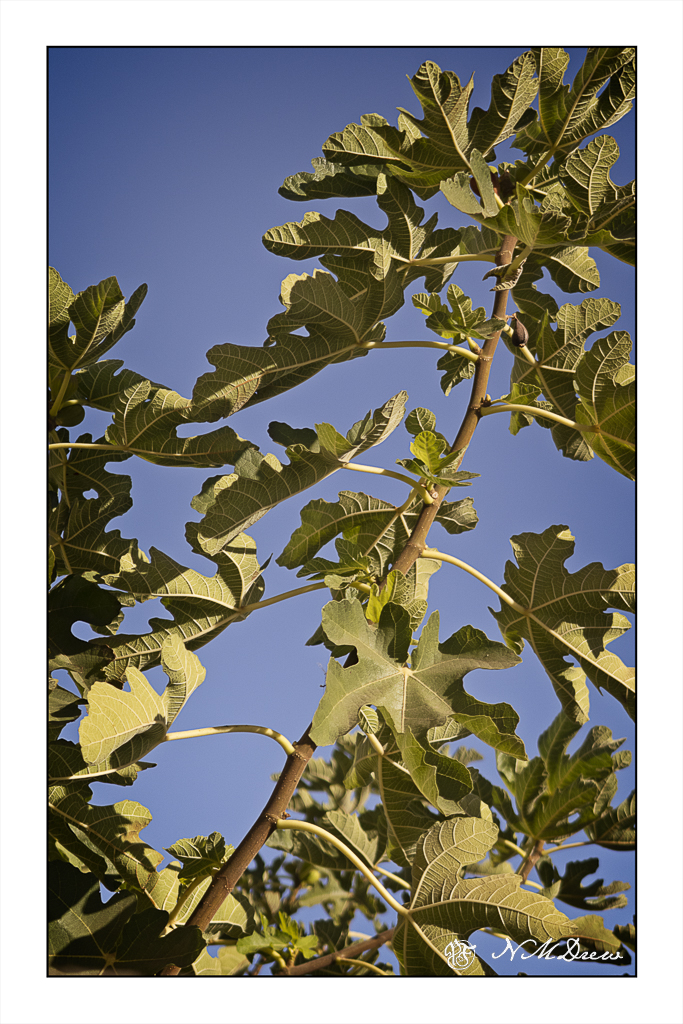
One of my favorite bits of the yard – the Brown Turkey fig tree. It needs to be pruned, but I had to wait for the gardener to work his magic and fill my clippings bin. I also need to sort out first year / second year growth to get a good crop next year, and begin at the top – it is way too tall for me to reach up!
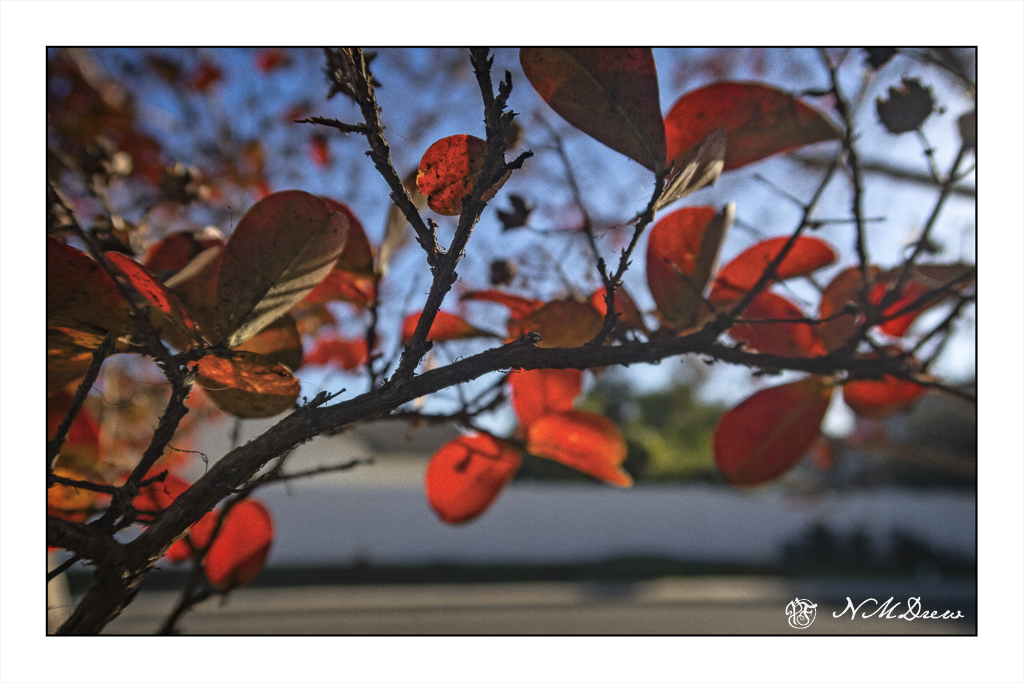
Another favorite tree is the Crepe Myrtle. It is a deciduous tree – something of a rarity around here. At present, its leaves are deep red and dropping. Against the late afternoon sun their brilliance is beautiful, especially against a blue sky. Once bare the delicate branches are lovely and graceful. Spring sees swelling leaf buds and soon clusters of deep red-pink flowers. And then the cycle continues after the flowers drop, and then the leaves.
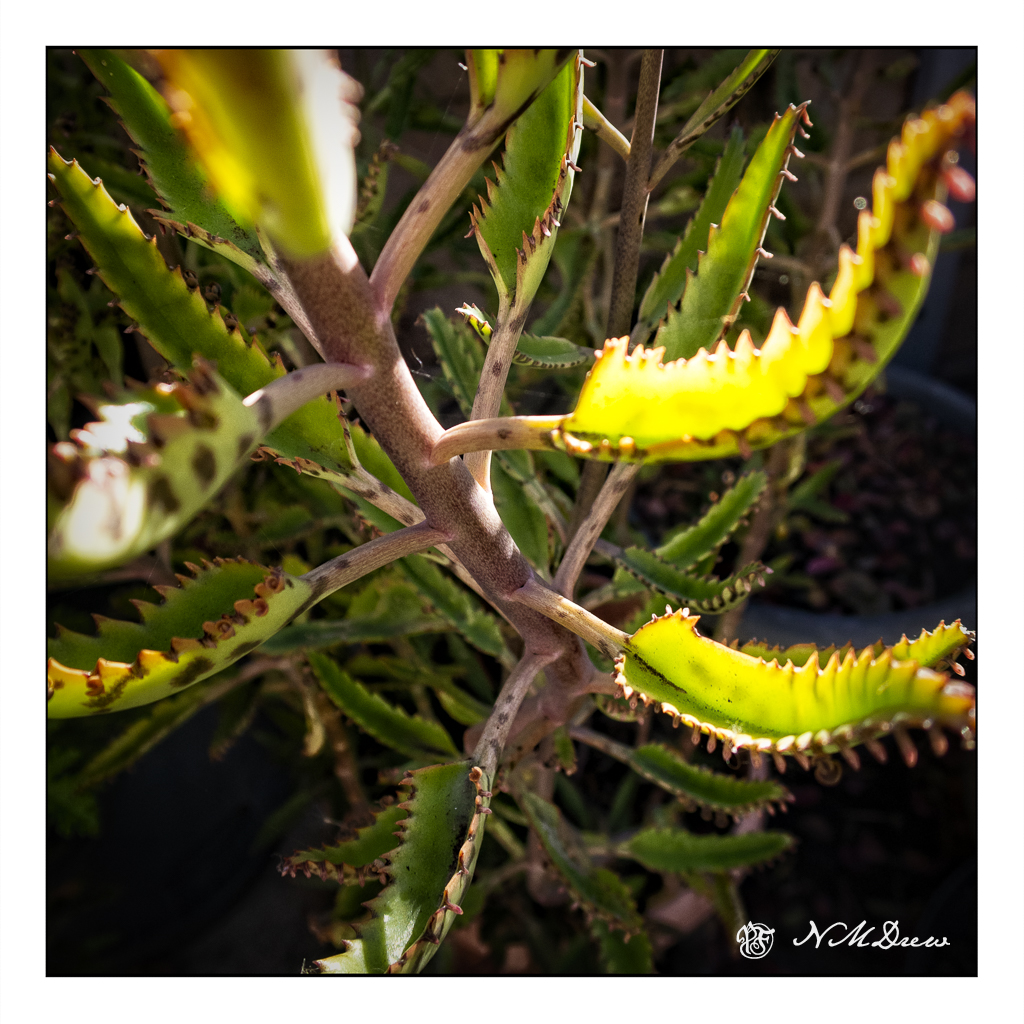
Succulents annoy and fascinate me. They don’t need much work and they are really hard to kill – perfect for people with purple thumbs. This one is in a pot with a number of others just like it, and as I wandered around to find something to photograph, the light on the – leaves? – branches? – was quite lovely.
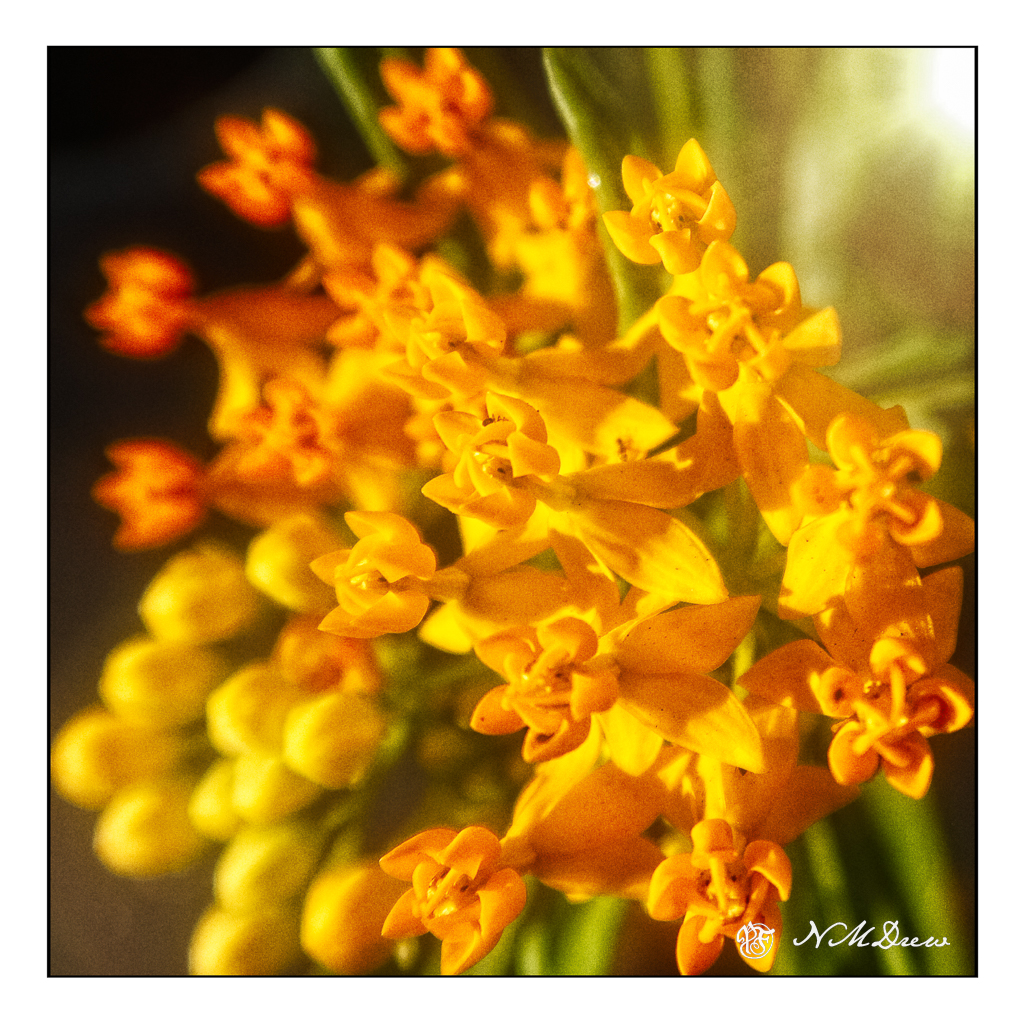
Milkweed for the Monarchs! This year my flowers were few and I did not set out to raise a bunch of milkweed, but despite that, the plant is stubborn and continues to show up in some of the strangest places. I have a number to be found in my container garden – mixed in with lilies, peppers, tomatoes, lavender, oregano, mint, succulents, and who knows what else!! I like the yellow ones the best, but have also had them in reds and oranges. Even if I forget to water things – or just don’t because of hot winds and cold weather – these plants just chug along.
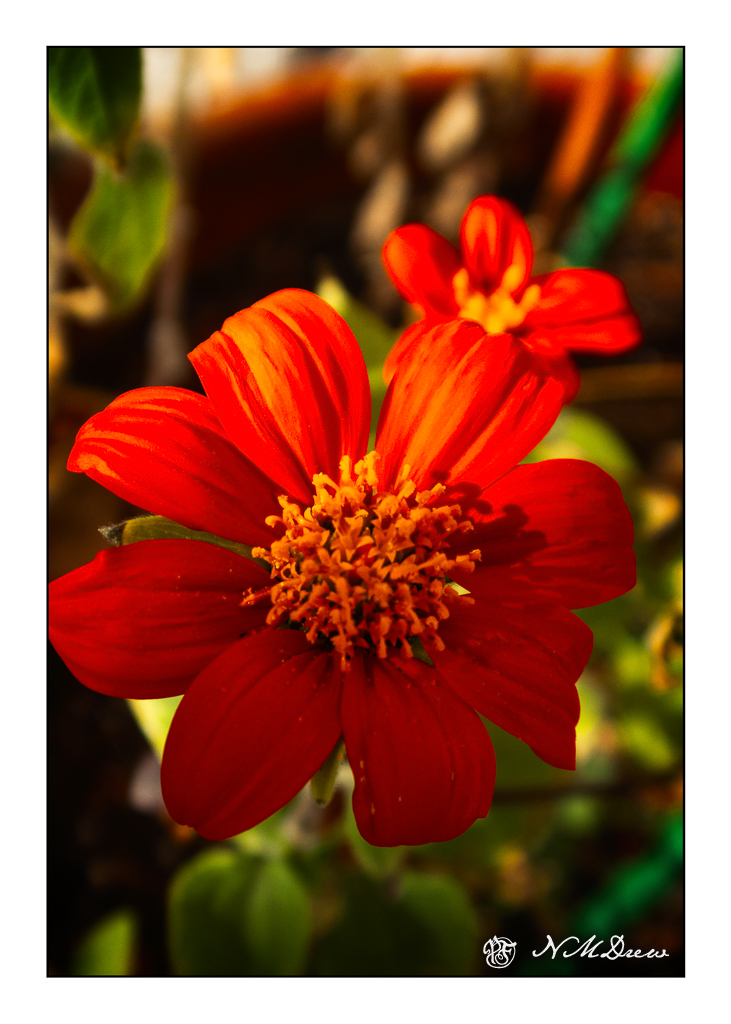
The last few sunflowers of the summer are hanging on – but these are not big and tall, but short and runty. Nonetheless, their brilliant colors cannot but add to your day!
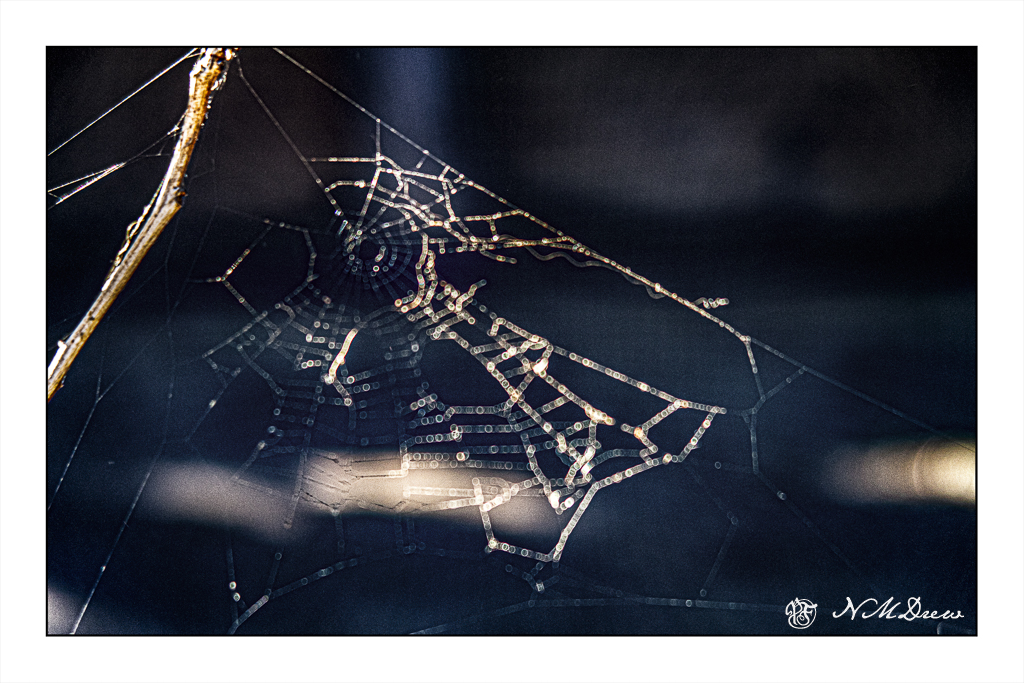
It’s windy this afternoon, but this little spider’s web caught my eye. It is strung up between a couple of small branches of the orange tree, dancing in the breeze. As a photo, it was hard to capture, but the twinkle of the light on the strands, however imperfect a photo, reminds us of the fragility and strength all around us in the natural world.
And now, indoors it is! Cold wind, 60F, and the cleaners are here and it is time to watch some Hamish McBeth and kick back a bit.
 Ink, Yarn & Beer