I read too many spy novels!
So, if this isn’t about the darker sides of life, what is this about? It is about watercolor painting. As you may recall, I have been trying to work on my drawing and painting, between other life activities. While I try to do one or the other daily, it doesn’t happen. The thing that is happening is a beginning of focusing on various elements of watercolor. Rather than just paint, I began to focus on retaining white space. White space in watercolor is the paper itself – that is the only way to get a “true” white when painting, unless you put in white paint, such as a white gouache. Many people frown on this. So, retaining white means you paint around white areas, which have to be considered as you lay down color, or using a rubber-based frisket. The frisket is great as you can paint right across it once it dries. Both methods have their advantages and disadvantages.
In addition to retaining white space, I have added another focus in my painting. Watercolor paper is painted on when wet or dry. Painting wet-on-dry means applying paint to a dry paper. Wet-in-wet means prewetting the paper, or painting onto paper where a wash is still wet. Wet-in-dry allows for hard edges. Wet-in-wet allows the paint to blur and blend, and how much it does this is dependent on the wetness of the paper and the slope of the easel.
 The above picture was from a photo I took at the Monterrey Bay Aquarium of jellyfish floating around in their water. The aquarium is backlit, and the light shines through the diaphanous membranes of the fish. This was simply ink, followed through with a bit of color. Drawing the jellyfish was fun – and in the lines of the tentacles, it almost became a dance with the jellyfish.
The jellyfish were drawn with a very fine point pen. The Joshua Tree was done with a thick, permanent ink pen, about 0.5 in diameter (I think). Here, the ink was used to create texture, with watercolor being secondary.

This is the point at which watercolor, ink, and white space became a focal point. I think these are a variant of snowbells, and they are found in the shade beneath trees. In such dim light, the white flowers are strikingly in contrast to the mulchy undergrowth, and in photos often are rather flat in appearance. This drawing demonstrates that flatness, but with the whiteness of the flowers preserved.
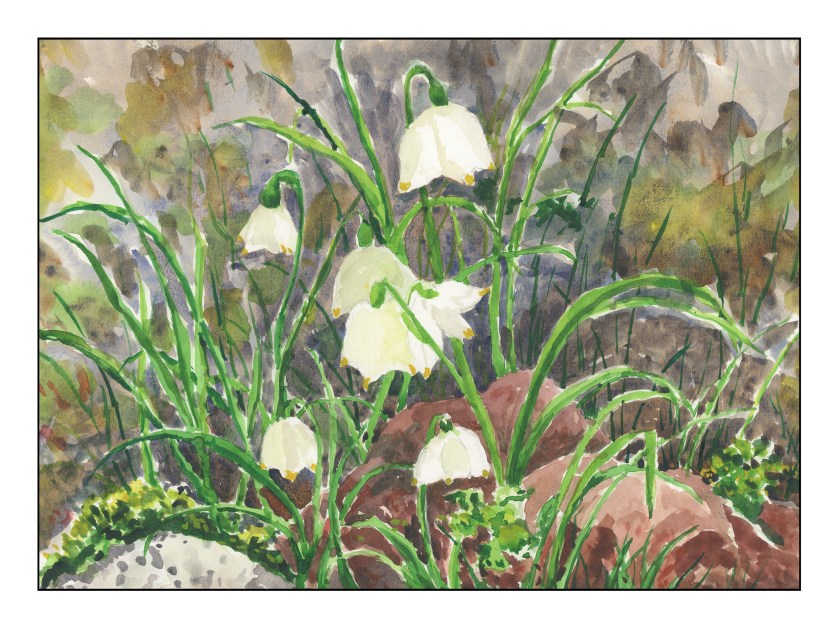
From the flatness of the line and watercolor drawing, I now worked on creating white in a dark painting. The flowers themselves look very flat because the paint I used to create – try to create – a 3D effect just pooled. The white is now filled with flat paint, which creates a flat picture. Here, the paint was applied wet onto dry paper, and the result is a bunch of hard edges. It is this realization that made me move into working a lot with wet-in-wet.
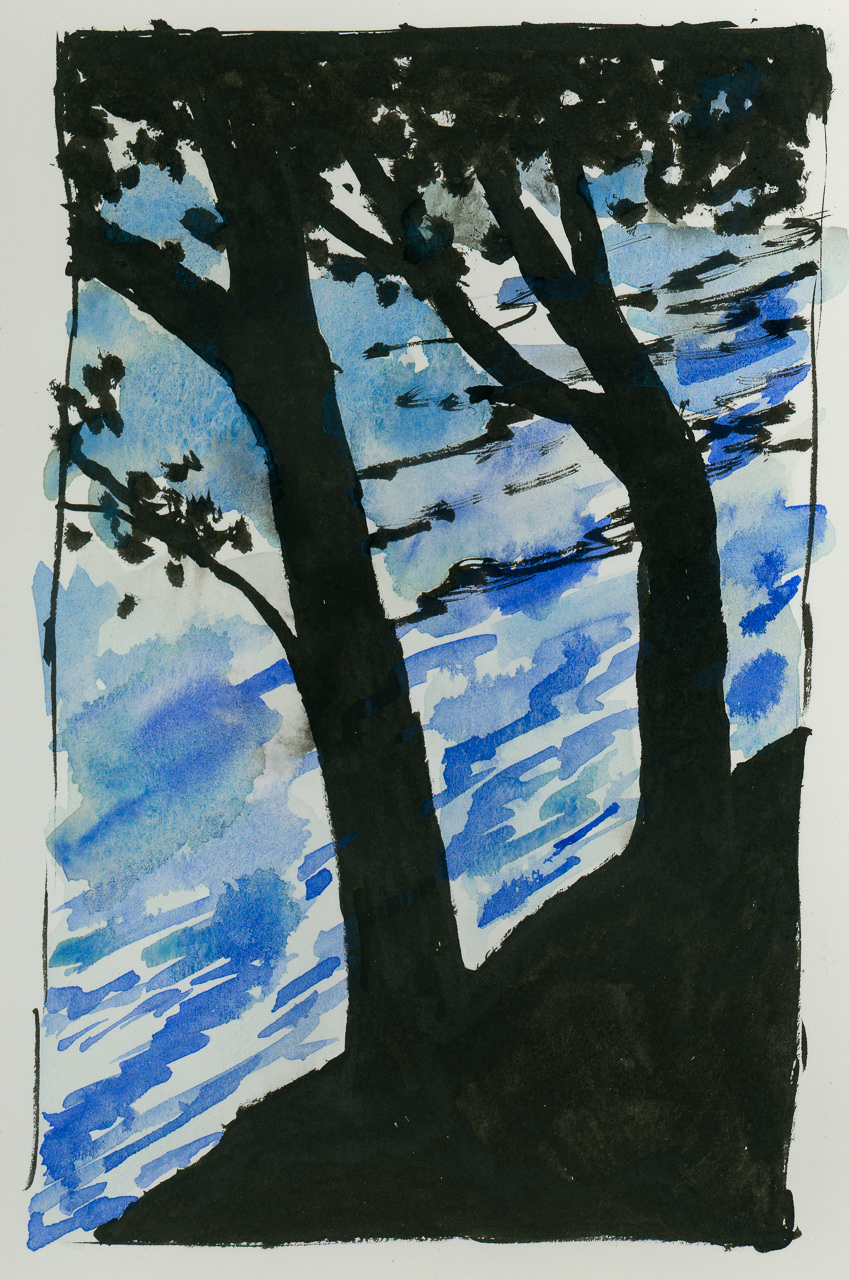
The pictures above are more attempts at preserving white, and working wet into wet. Probably the most successful one is the painting of the winter sky with the silhouetted tree. Click on one of the paintings to cycle through the images in a slide show.
From the deliberate paintings I moved to wetting the paper thoroughly with water for the first of the two paintings above – soaking the paper with my brush, painting into the wet paper, and then painting again into the wet paint. The fir trees were more deliberate. Here I tried to work with white space and with snow, trying to capture ways in which white can be interpreted with paint. Again, click on one of the paintings to see the slide show.

While doing all these paintings, I started thinking about watercolorists whose work I admire, and who, I know, did wet-in-wet particularly well. Winslow Homer is one of the best watercolorists of the 1800s, and his skies have always appealed to me. The painting above is my rendition of his painting The Palm Tree, Nassau. I changed a few colors and compositional elements, but I used this as an exercise to study how Homer may have painted. He used wet-in-wet on the sky; white space for the waves and tower, and varying techniques for the palm trees and foreground.
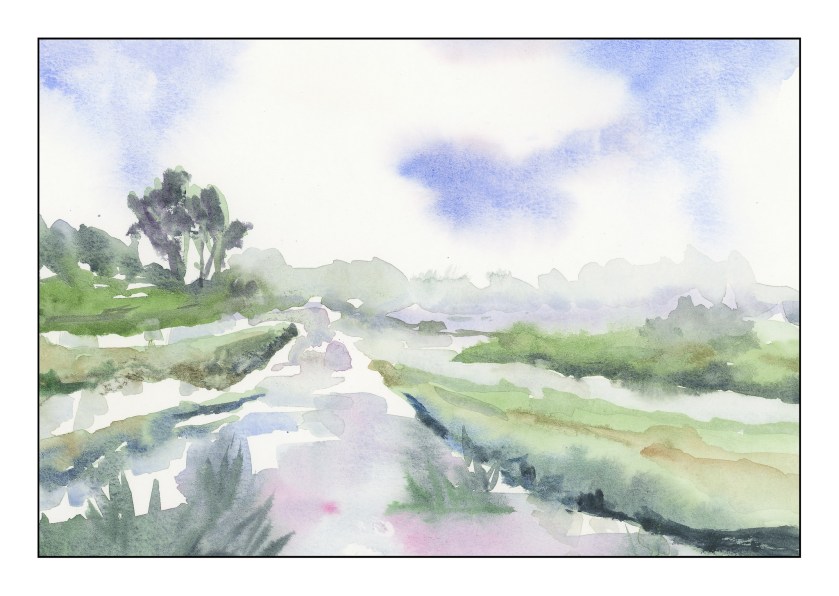
Besides trying to understand how an artist created a painting, I also searched YouTube for artists working wet-in-wet. I came across Edo Hannema’s channel and was so impressed! He is a master of wet-in-wet, as well as working with white space. I learned a lot from observing and copying his examples; this painting may be from one of his videos or an interpretation of one I saw online – don’t recall. I think seeing his work, and copying his exercises, has started my being able to move forward. I plan to follow his lessons more in the near future. His paintings have a lovely simplicity as well as demonstrate a finely honed skill in wet-in-wet. He is from Holland, so many of his paintings show very flat land, which for me is fascinating as I live in an area with a lot of hills and mountains and valleys.

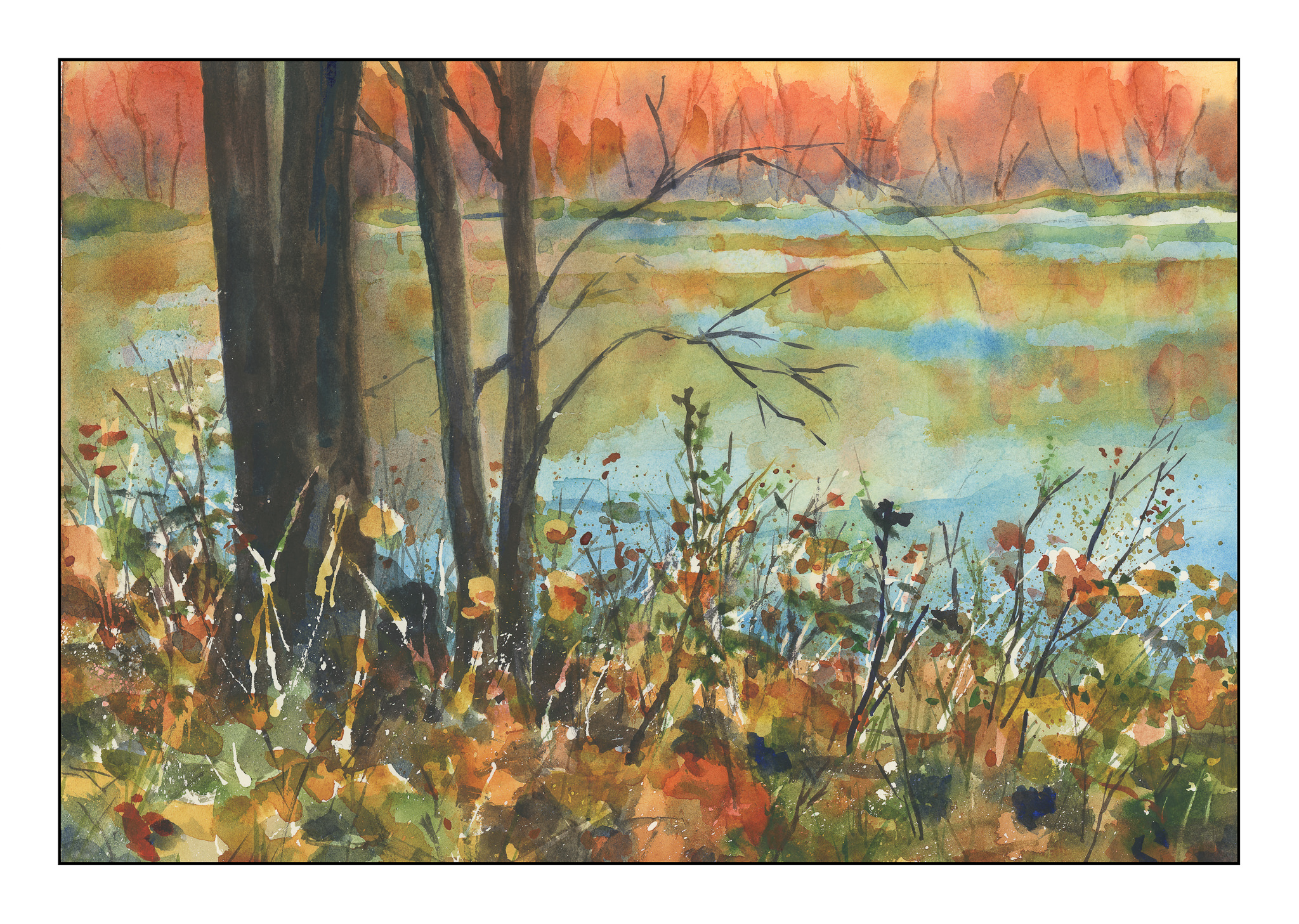
Finally, I did this one today. I was up at oh-dark-thirty, having my coffee, and thinking about all the things I have been painting over the past few weeks. It was time to try to paint something that used a lot of wet-in-wet, had a modicum of white space, and finally wet-into-dry, meaning wet paint applied over dried paint. I am pleased with what I have learned, from copying other artists’ works to my own experiments. Everyday is an exciting new adventure, and out of all of my interests and hobbies, watercolor is the biggest pleasure of all.
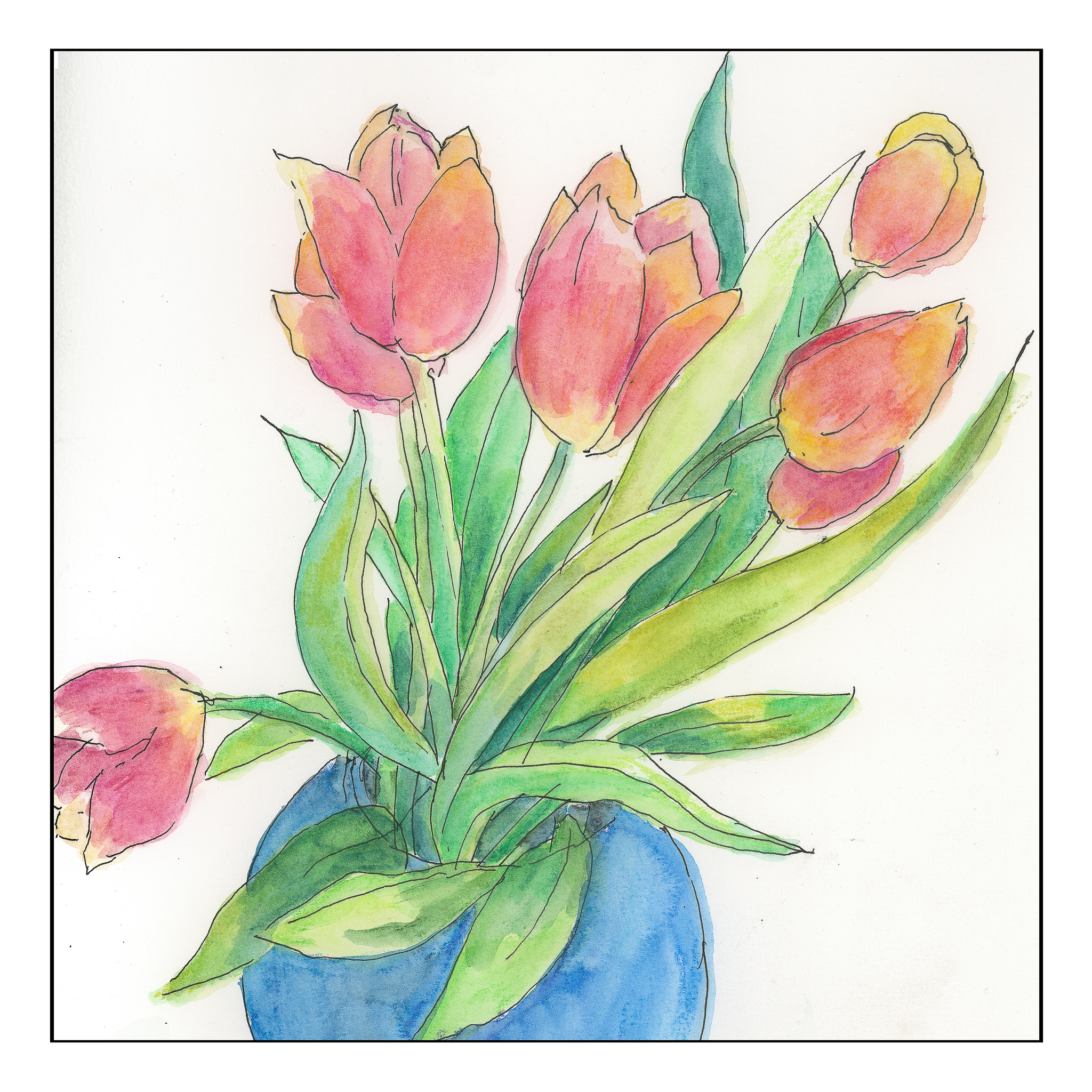
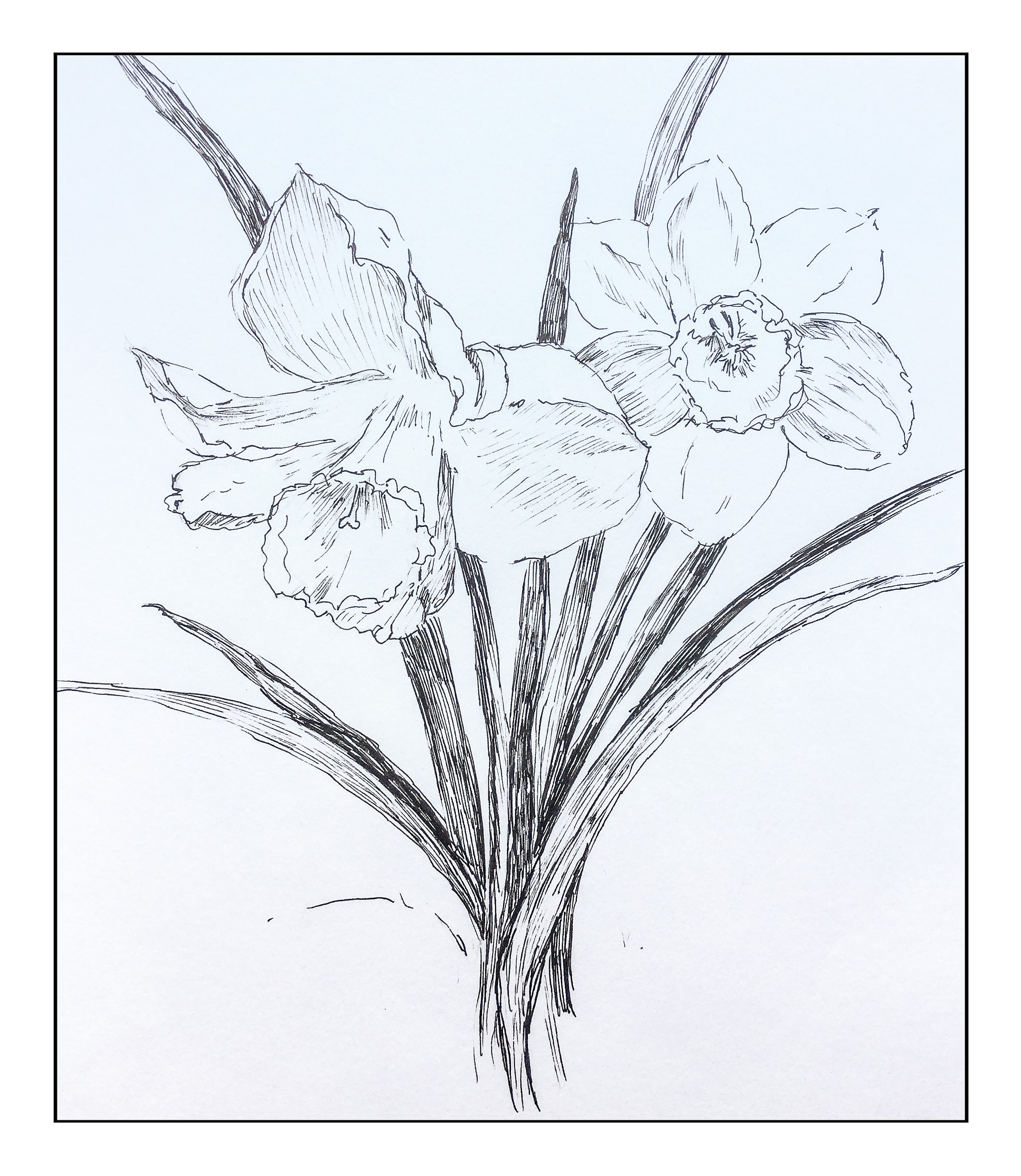
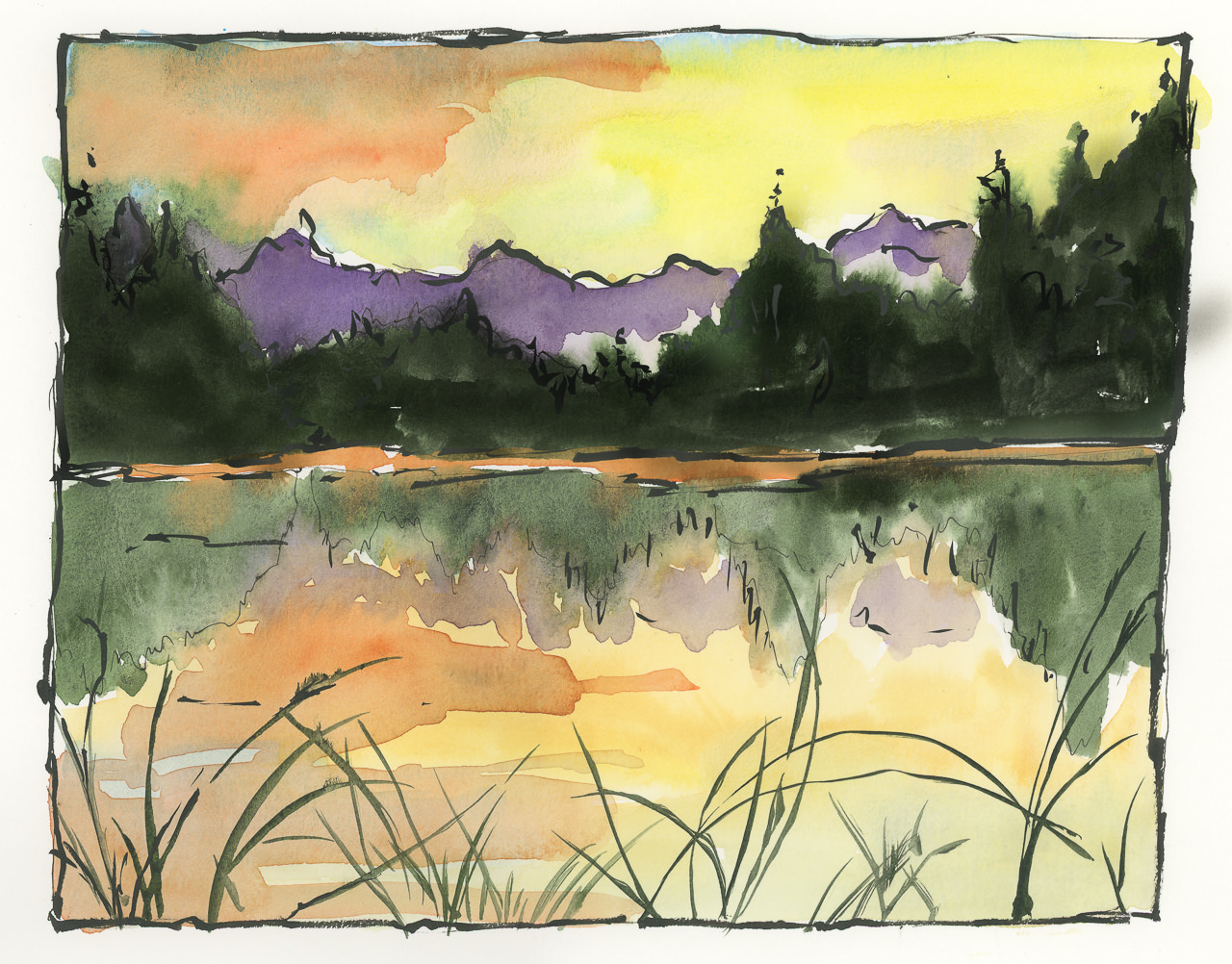
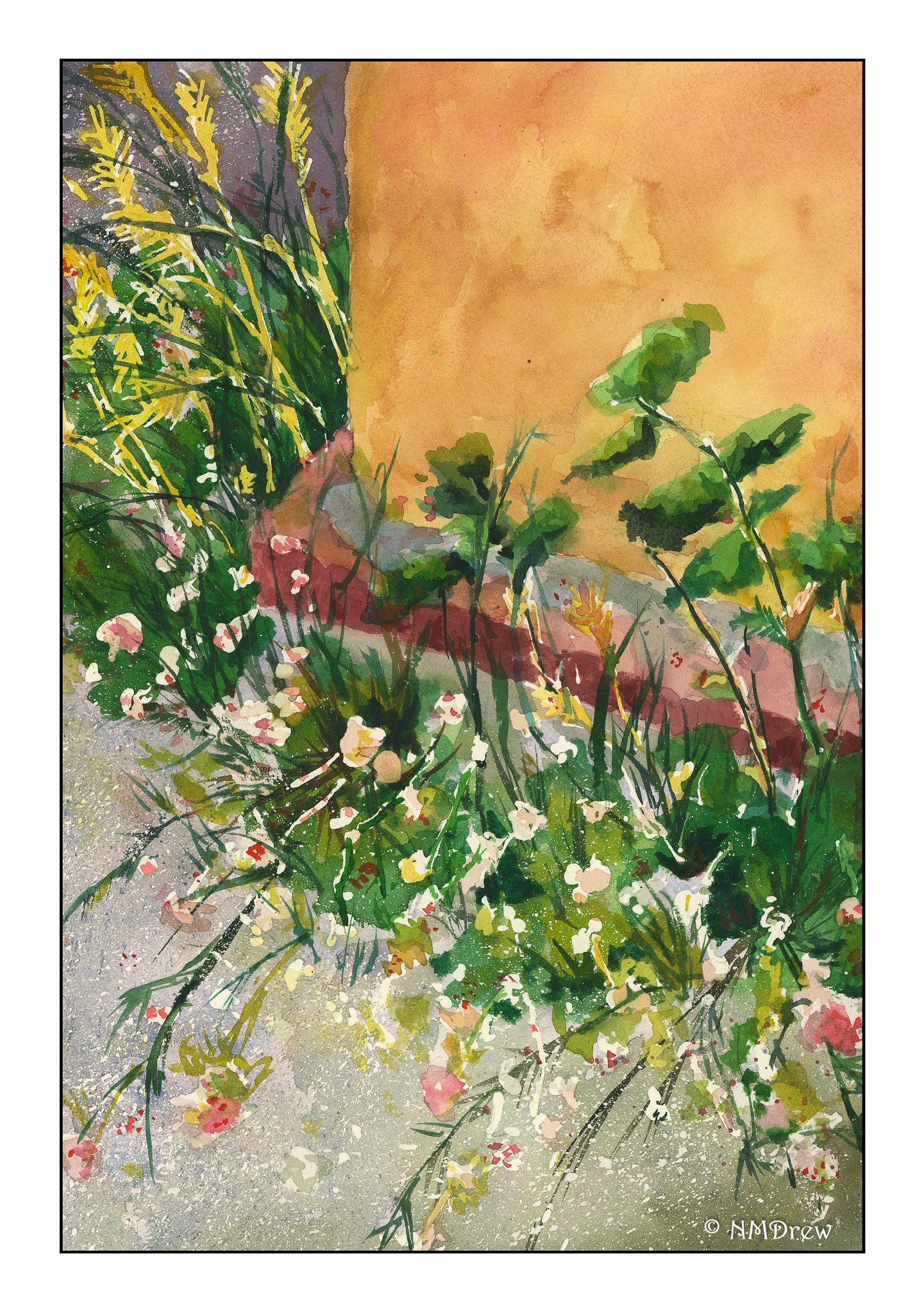
Below is a gallery of all the above paintings, and a couple of others as well. Enjoy!






 Ink, Yarn & Beer