Old Trees in Winter

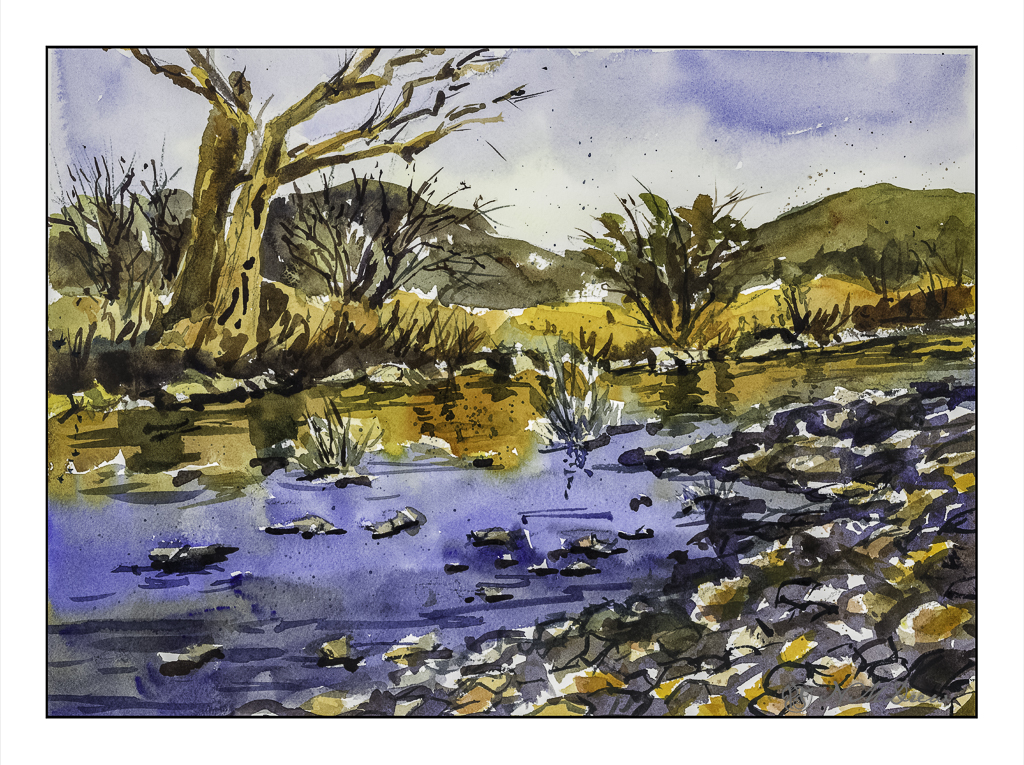
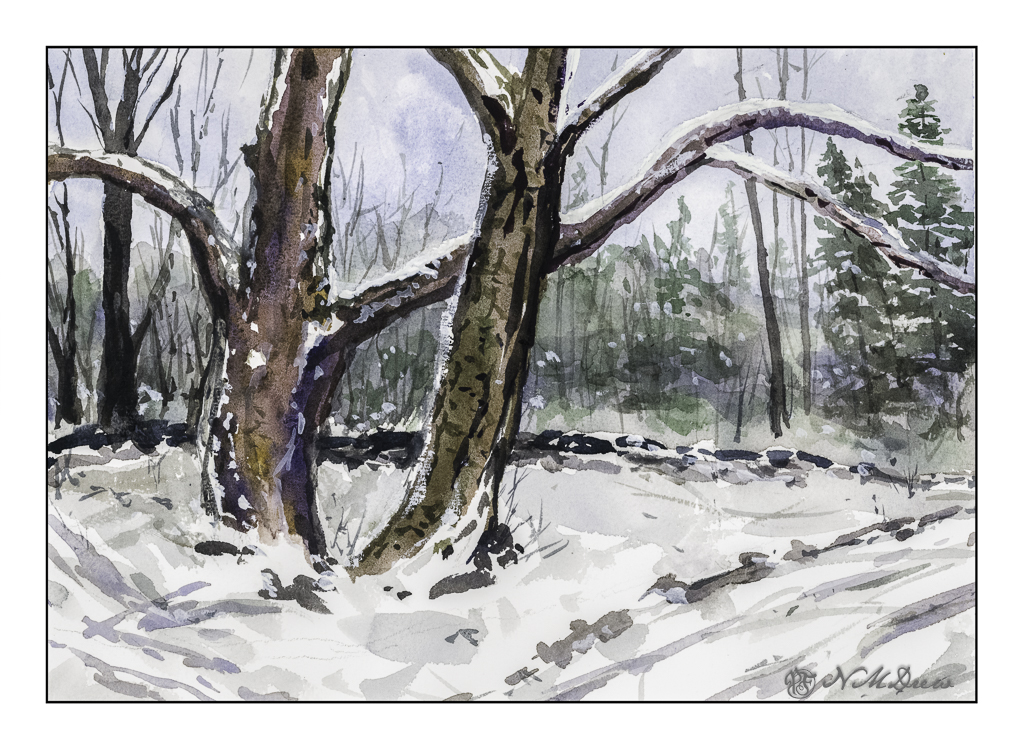
If you have been reading this blog awhile, you know I live where there is fire and not snow. Still, winter does come to my warm (ish) part of the world, and with it memories of tromping through the snow under spreading trees along a lake shore.

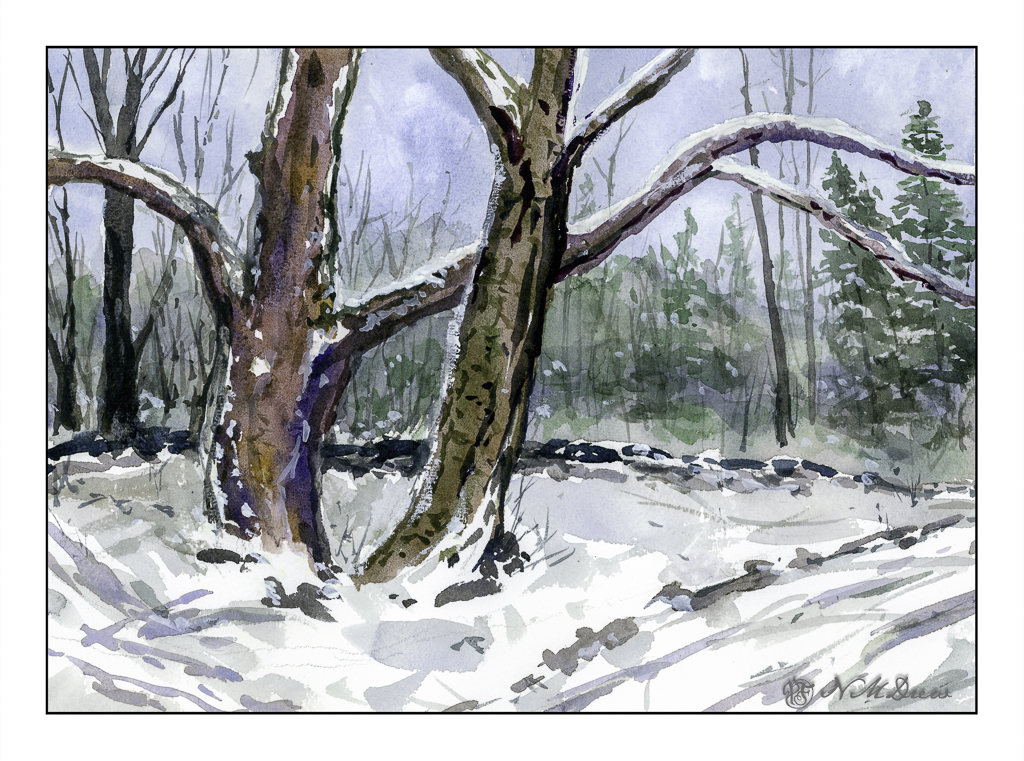
I use two software programs these days to scan my paintings – and I rather like the way they end up, similar but different. Above is the one using VueScan. Below is the one using Epson V600 and its software.

Epson software is more inclined to push colors, but in this case it does a decent job and pulls out more of the colors I put into the tree. Both scans are pretty much straight out of the scanner. Your choice as to preference!

Watercolor, Arches Rough 140#. Colors primarily burnt umber, ultramarine blue, Hooker’s green. 10×14.

Let’s Just Say It’s Colorful!

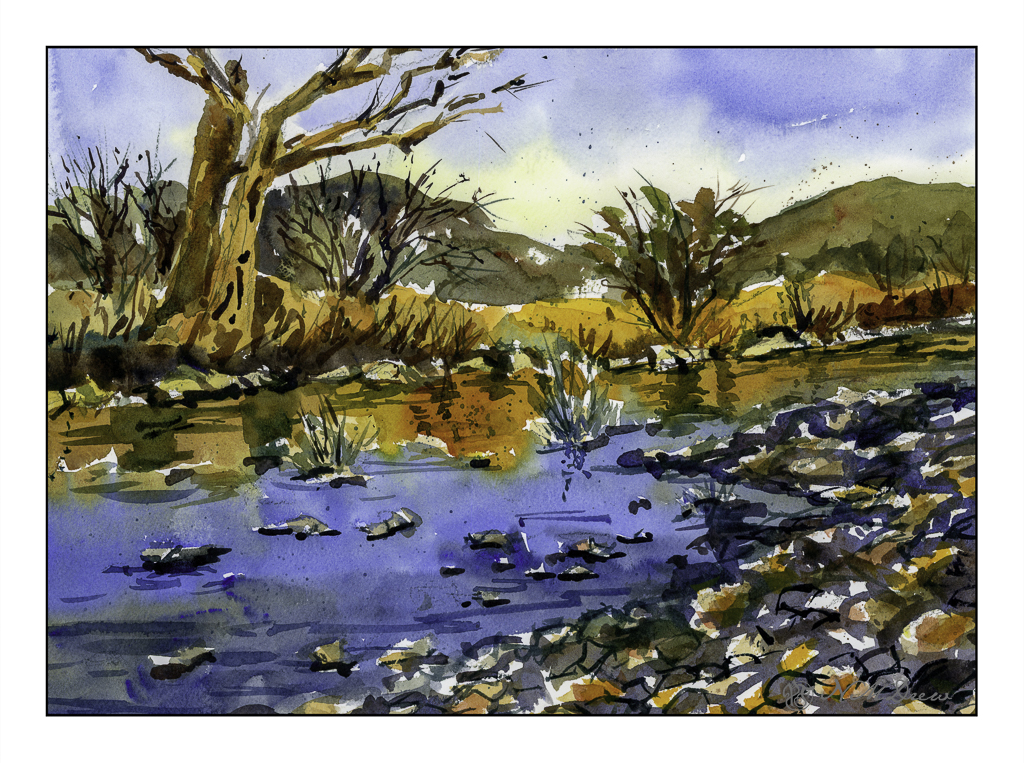
Autumn along the Virgin River is filled with trees turning orange and yellow from the greens of summer. The sky is bright, bright blue. The red-orange mountains all around are dynamic and rugged. The river is aqua and blue and green.

The light is full of contrast – bright, dark, shadow, reflections. The leaves add texture, as do grasses and trees and rocks. Wind plays through the canyons and trees. The whole world shimmers and vibrates with energy and color. Simplifying it seems impossible.

Watercolor, 10×14, Arches 140# Rough.

Land’s End, SF

I love San Francisco, like so many people. And, like so many people, I am sad to see how challenging it has become as a city in a lot of ways – homelessness, cost of living, among other things. Still, it has a lot to offer, and Land’s End is one of them. Part of the Golden Gate National Recreational Area, it is a beautiful bit of nature on the edge of the Pacific Ocean.

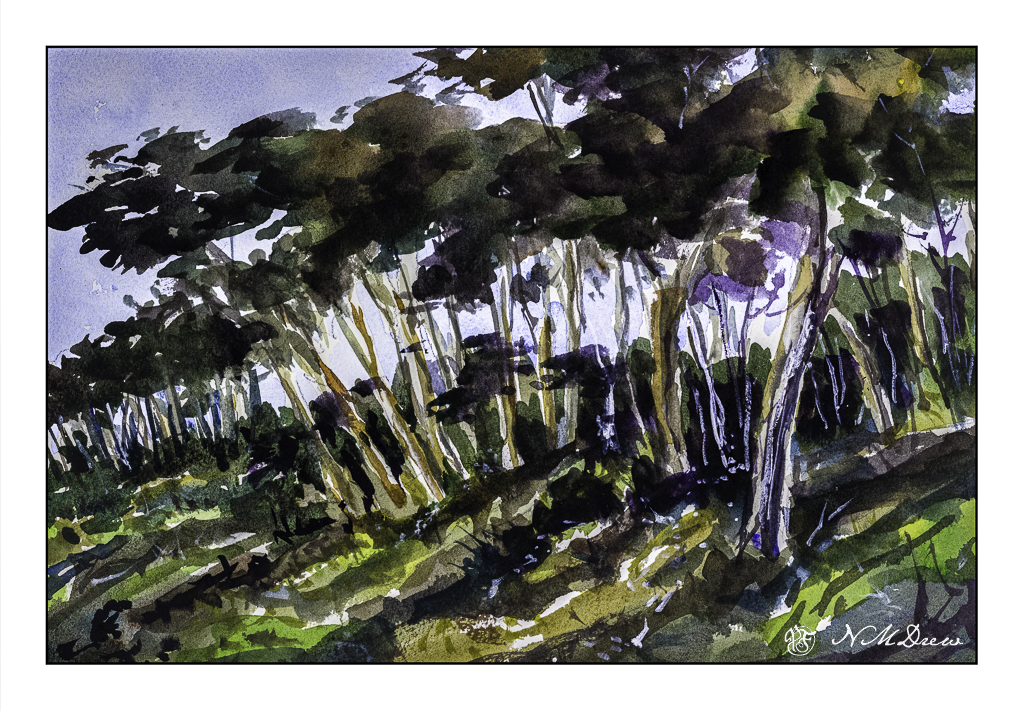
There are paths within Land’s End, and this row of trees on a bluff is a signature landmark of the area itself. Golden Gate National Recreation Area is wonderful, and I have spent time here, and in the city and around the Bay Area often, more so when I was younger. I had friends who lived in the city itself and have great memories of all it has to offer.

This painting was a bit of a challenge. The tree trunks are bright and clear in the foreground and sharply contrast the foliage of the trees and undergrowth. In the distance, the shapes of the trees and their leaves merge into fascinating shapes. What I find so interesting about these trees – I believe they are Monterrey Cypress – is the trunks and branches seem to vanish within the leafy canopy. The hillside is variegated in vegetation, and while I caught some of the bright green and dark browns, the lights and darks were evident.

I tried to paint as directly as possible, putting paint down and then, while it was wet, varying colors within the shapes. The foliage was a good example of this, as was the hillside below the trees. The sky was painted first and brought down between the trunks near, leaving the trunks to be painted later. Bushes were also painted this way. Finally, trunks and foliage, near and far, and final touches such as a bit of titanium white gouache and a few dots and lines here and there.

Watercolor, unlimited palette, Arches 140# CP, 10×14.

Color Triad, i

With the threat of fires and losing our house, I feel a bit crazy. We ordered a generator, but it would be ironic that it gets burnt up and our house. No, our house is not in danger, but it is so scary to be contemplating its loss, as well as realize people have died and lost everything. So, it is as if I have to grab onto life and what I love, from people and pets to things I love to do. Watercolor painting is one of them, and the artist whose work I enjoy the most is that of Canadian watercolor artist Shari Blaukopf. Her colors are fresh and cheerful, her personality soothing and calm, and her mini online workshops are always a pleasure.

So, today, her most recent one: Expressive Triads. In painting, a triad is three colors, all primary, but within that the colors vary. This first one, for her tropical scene, consists of Cobalt Teal, Hansa Yellow, and Organic Vermilion. We begin with mixing color swatches.

She also adds ultramarine blue at times, toward the end, to mix really dark values which can vary depending on how much yellow or vermilion you add to the mix. I normally don’t swatch but today it just seems so important to attention to details and savor them.

From there, a piece of 10×12 paper and a pencil sketch for the general shapes of the scene. This is from a trip Shari took to Florida. She points out the warmth and colors of the scene – yellow clouds, teal sky, grey sky / clouds. As she paints, she explains what she does, colors used, brushes, talking as she paints. She suggested that you watch her video and then paint along after watching it. It is a good idea!

Her first scene – one of three – is this one. Her videos explain each section as she does it. So this scene itself has three sections – the sky, the foliage, and finally details. I don’t want to give away her course details, but suffice it to say she is clear. I learn a lot from watching and then doing. The beauty of her video courses is their clarity and brevity and extremely reasonable pricing. I spent about 2 hours with this first painting – watching and then painting.

While her sky is representation of the tropical skies in Florida, here, in the midst of the fires in LA, this sky makes me think of the conflagrations flooding the news. Palm trees and semi-tropical vegetation is common here, so the yellow clouds and sky mixed with grey make me think of smoke and fire on the horizon. Our sky is clear, and let us hope it stays that way. The above picture is scanned unedited with Epson Scan software.

The above scan is with VueScan and is less intense – especially in the yellows. I wonder if I need to permanently switch the software to VueScan as it seems more accurate, at least with this painting.

Final Touches

Below, some final touch-ups to the painting. I blurred out the bloom in the sky below the upper telephone wire, added shadows to the eaves of the house, and painted in some lines to the trunk of the left side palm tree. Once more, scanned with VueScan.

Watercolor, Arches 140# CP paper, short course by Shari Blaukopf.

Impressions of San Gregorio State Beach

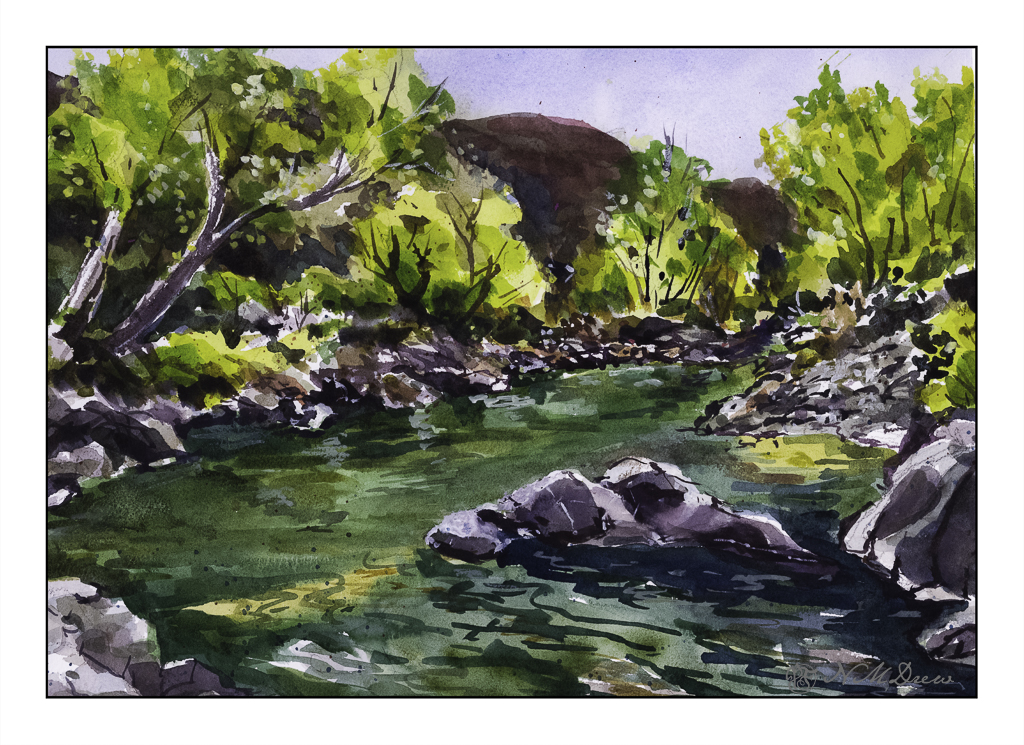
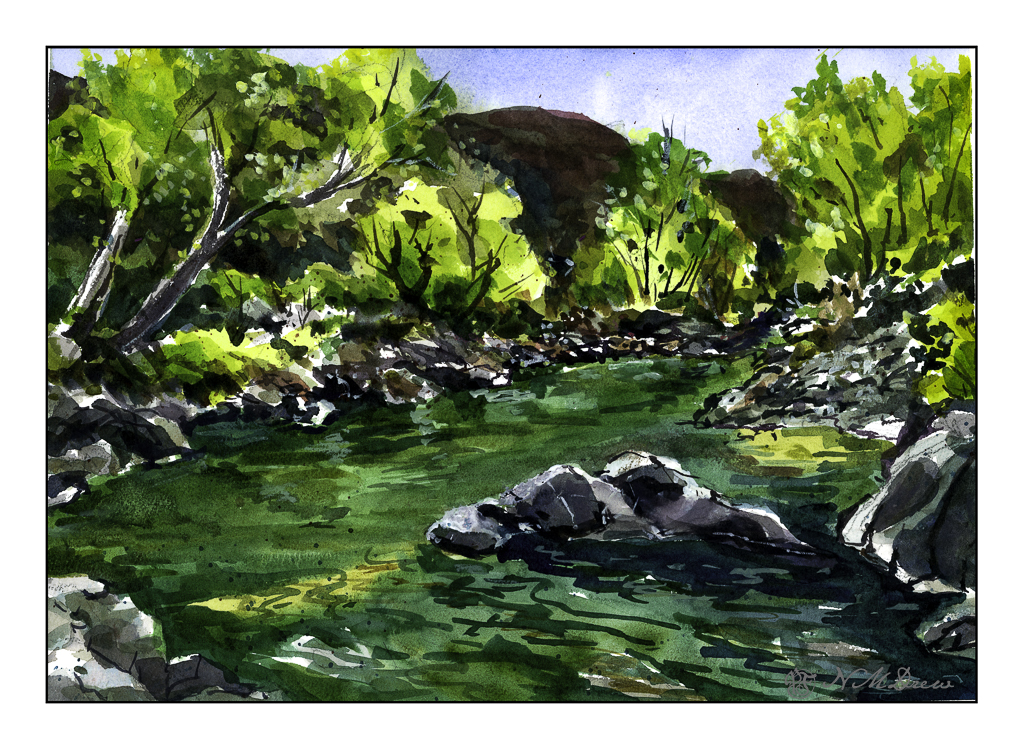
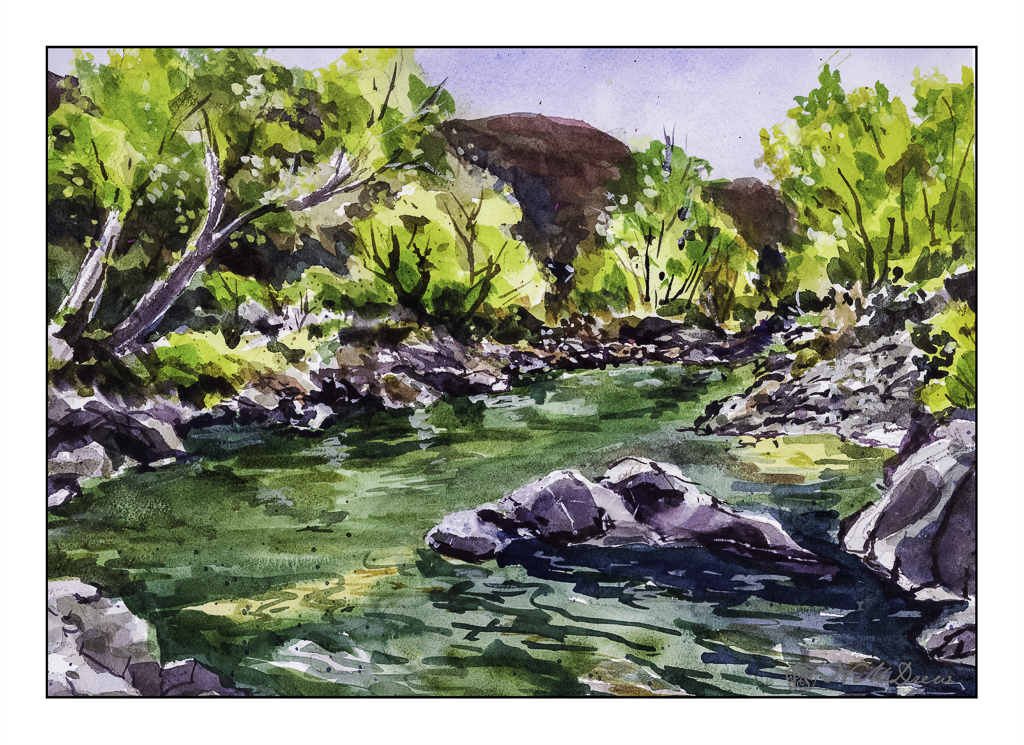
Scanning – sometimes I love it, sometimes I hate it. It is usually better than trying to take a photo of a painting though . . . .

I used Epson V600 Epson Scan on one of these; VueScan on the other.

Above was done using VueScan. It captures the colors better but is a bit dark. Below, the greens of the trees and bushes are better captured.

More of the colors show up using Epson Scan, but they are a little too intense.

Sigh.

The fact is that scanning and post-production can really influence how a painting looks. This goes whether the painting is scanned and interpreted using software, or photographed, and then interpreted and adjusted using software. If you look up a painting on the internet and then look at all the images of it, you know what I mean – colors can vary dramatically.

All this techno speak aside, I like them both for different reasons. Both do capture the moodiness of the original watercolor, which I like. Perhaps that is the most important thing – the mood is caught?

Watercolor, Arches 140# CP, 10×14.