Spring Bulbs on Paper

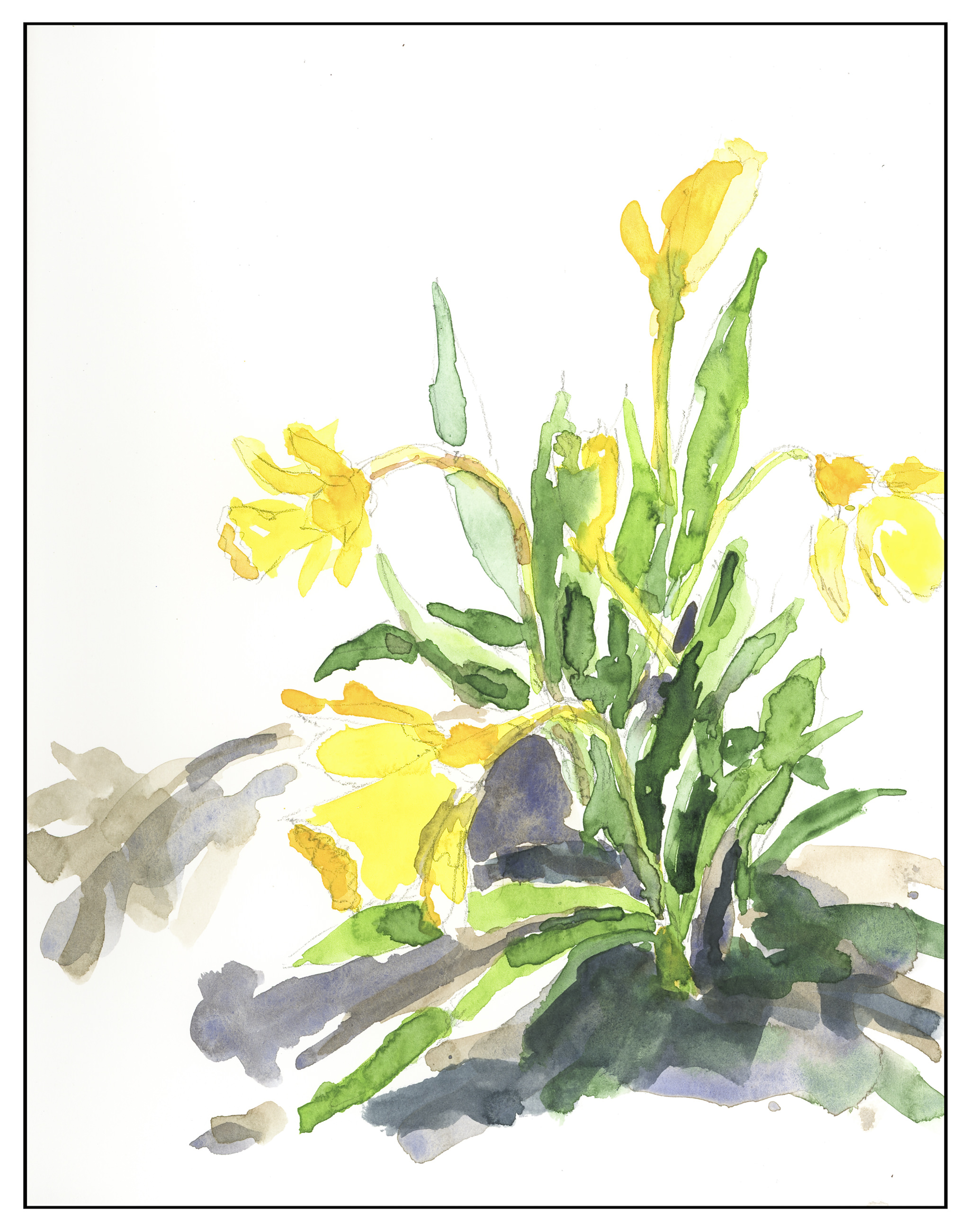
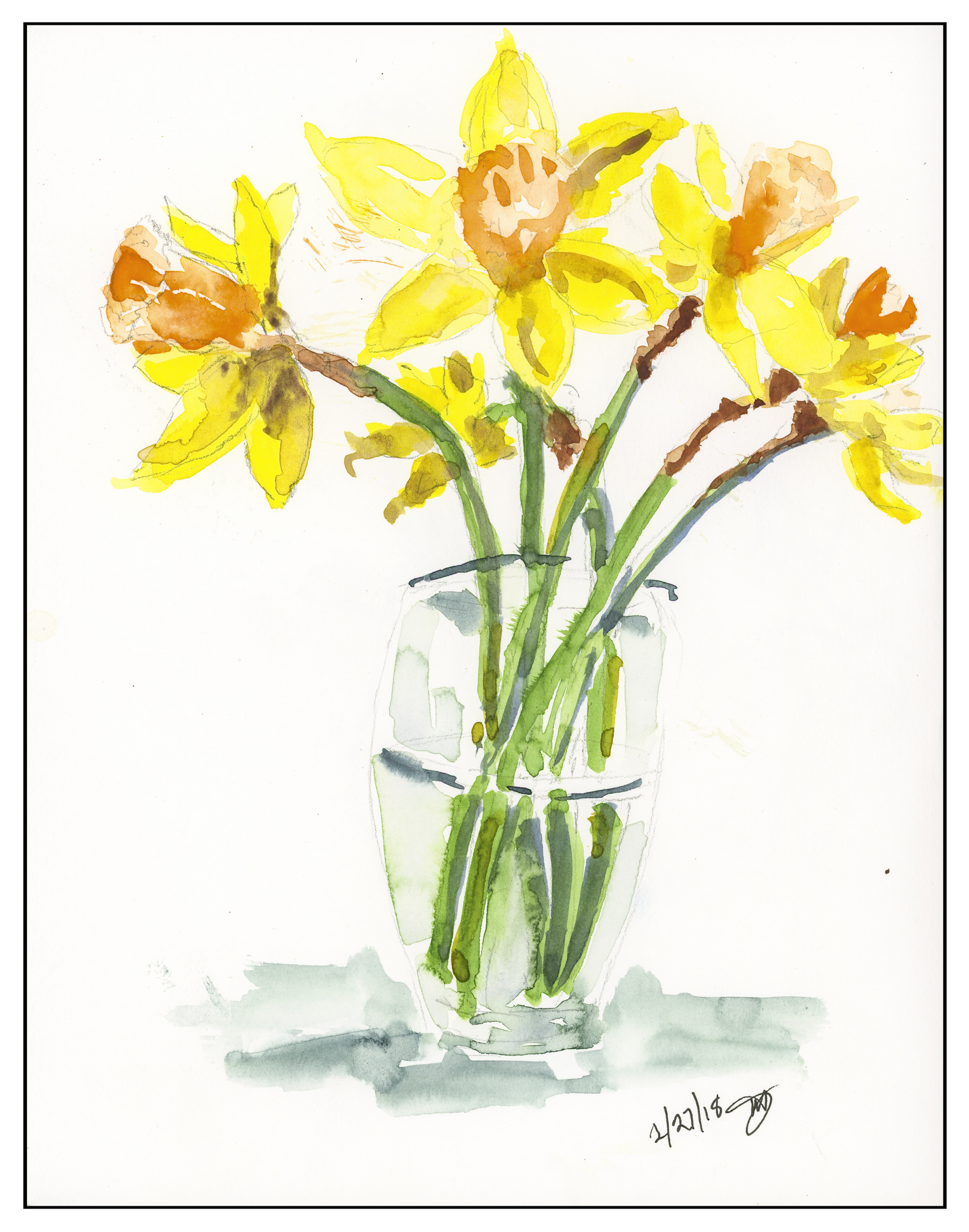
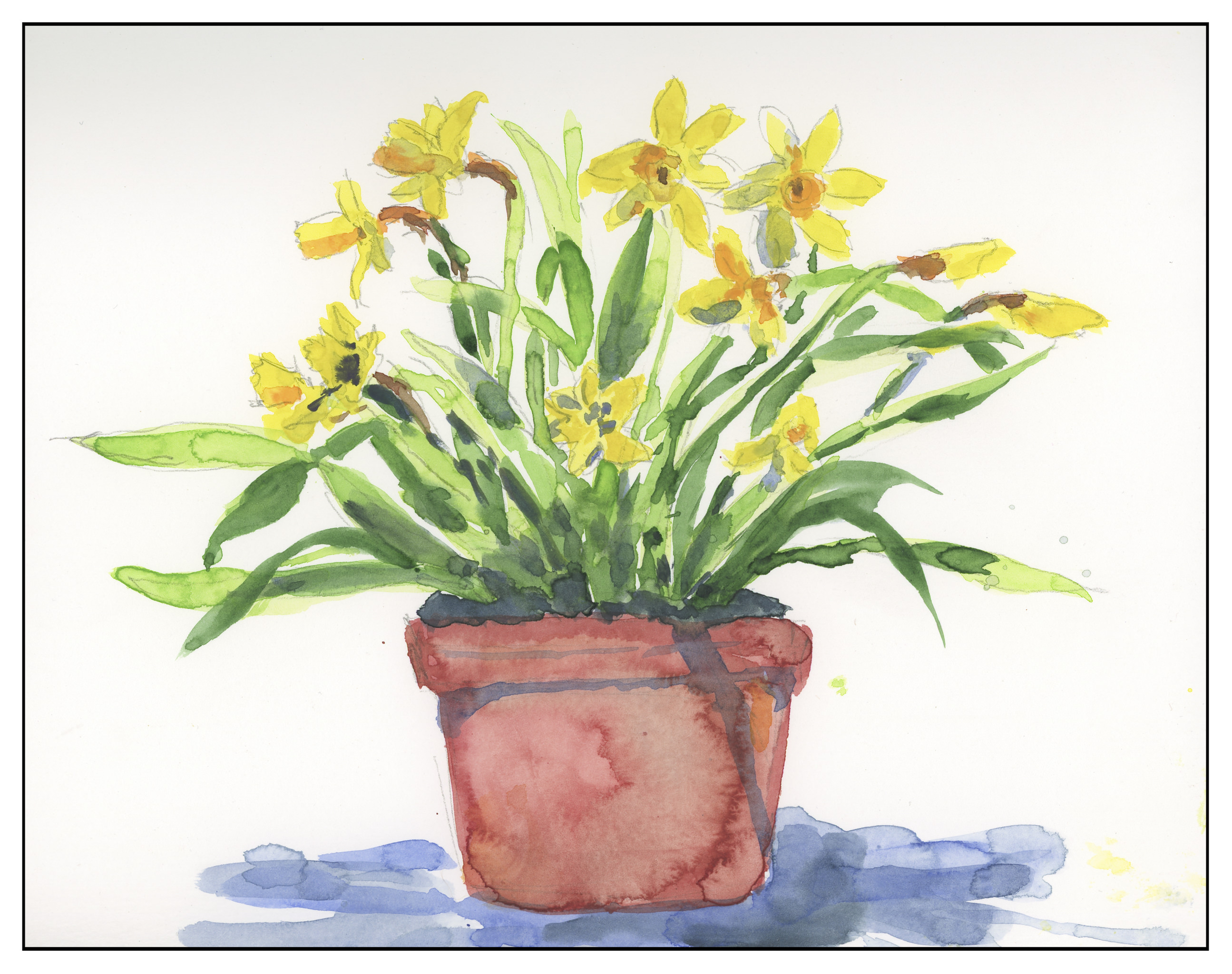
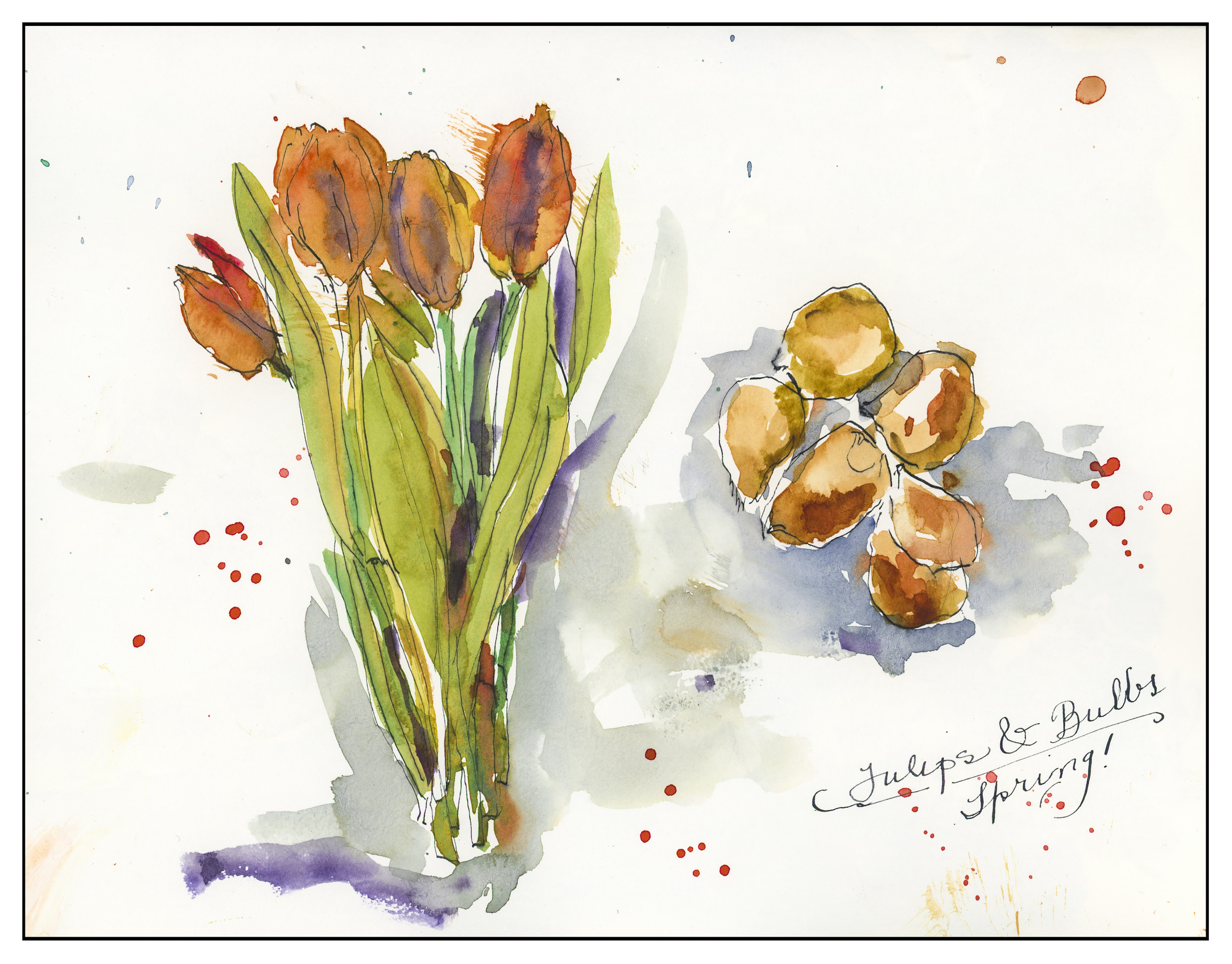
Winter is leaving and the bulbs are emerging.  In my own yard, freesias are in bloom, their sweet scent greeting me as I come and go from the house.  Other bulbs are found in the stores, as cut flowers or in pots.  Daffodils and tulips are the most common.  Hyacinths are rare.  Where I live, there is never snow on the ground, and if we are lucky, we get rain and a cold wind.  Having grown up in the middle of blizzard country, I miss the bulbs – but I don’t miss the weather!  So, here are some paintings of daffo-down-dillies and one of some tulips.  None are great, but all were fun to do!

Retrospective

I was rummaging through the files on my desk, and came across a collection of sumi-e ink, ink and color, and watercolor or acrylic paintings I did a long time ago.  Some of these are “aceo” size, which measure 2×3.5 inches, and others are other papers.  I used to sell these on Ebay, too.  Maybe I need to go through and scan some more – it’s like tea and madeleines – memories and reminders.

Monoprinting Magic

In my dotage, I am working toward art in my life on a regular basis.  While I haven’t pulled out my ink brushes and done sumi-e in a while, I have pulled out the watercolor brushes.  And the other day, I went to a class on monoprinting, which I knew about in theory, but had never done nor seen.  In reading, monoprinting is essentially a painting turned into a print using a variety of techniques.  Different surfaces can be used upon which to place the paint, and then different papers or materials can receive it.  The way monoprinting can be done is endless.  To read more about monoprinting, here is the link to the Wikipedia explanation.

There were two things I needed to buy for this class, which came through a Meetup group near me.  I got a gelatin plate from Amazon, and a roller / brayer.  Instructions including a mandate to wear old clothes and prepare to get messy.  We did!  It took a few good scrubbings to clean my hands off . . .

So, plate in hand, and brayer, I showed up.  Before each person’s seat was a lovely package, not in brown paper, but it was tied up with string.  Inside were stencils and silhouettes of objects, and all sorts of weird things (methought), including Q-tips and wine corks, to name a few.  And paper.  And a big plastic menu cover, which was later used as a surface to hold the paint for the monoprint, as was the gelatin plate.  The hard plastic released the paint less readily than the gelatin plate, and as a result more prints could be made, but the paint transfer was not as rich.

To my mind, which tends to want total control, I was in a land of chaos.  I remember wandering between my prints, wondering what the heck to do, and befuddles and confused about the whole thing.  I know this is how my mind works.  I also know that as I progress in my knowledge and experience in doing things, order is created out of the seeming chaos, and that is when imagination and creativity can begin.  Practice leads to understanding of what it is I do, and how to do it, and opens doors along the pathway of experience.  The creative process is its own reality.

Monoprinting needs space, supplies, and imagination, and a willingness to let things happen.  One layer of the print can lead to another layer.  Each layer creates its own universe.  While you may have an idea about what you want to do – the final product – it is also a world that creates itself.  I enjoyed it, especially the creative potential of it.  Did I create works of art?  Hell no, but I had fun – and that is a great reinforcement for future playtime with the gel plate and roller.


Sky, Interrupted

This morning I sat down to practice skies.  If I were to do the ones in my neighborhood, they would be blue.  That’s all.  Just blue.  Clouds are not a common sight where I live!

Anyway, so I scooted around YouTube and found some videos that had some good ideas.  One showed how to do lifting with tissue, advising not to scrub too hard on lightweight paper.  Important to know – I scrubbed a bit of the paper off.  Others used some rather wild color combinations, or certainly ones I haven’t thought about using.  Add to that, I wasn’t trying to accomplish anything more than playing, so it was altogether a fun way to start the morning.

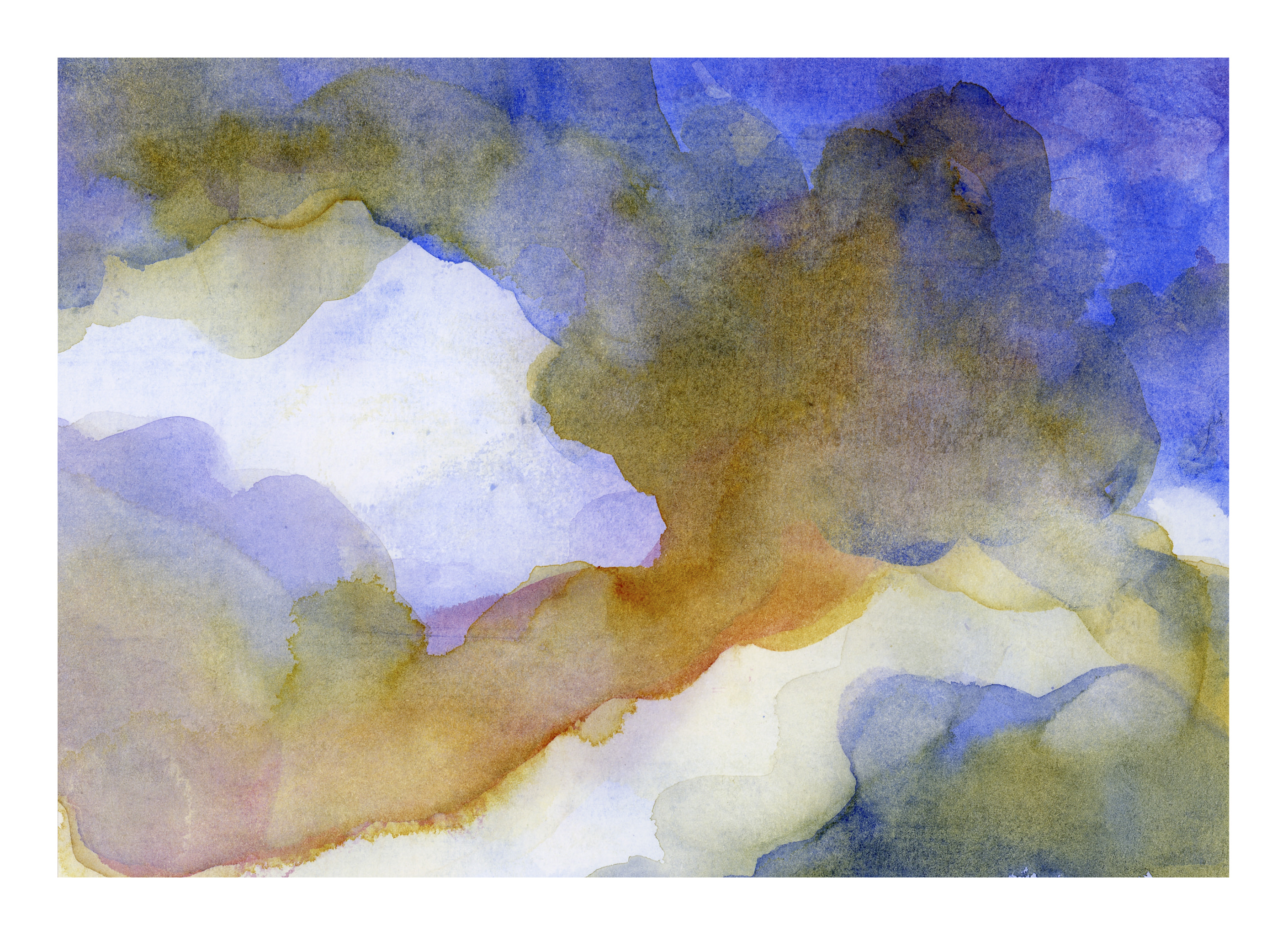
This first one is a combination of Sodalite Genuine, by Daniel Smith, Ultramarine Blue, and Quinacridone Gold.  The Sodalite is a color I picked up on a whim, put in my palette, but had never used until this morning.  It granulates wonderfully, and is a good charcoal grey.  I think I will be using it again.
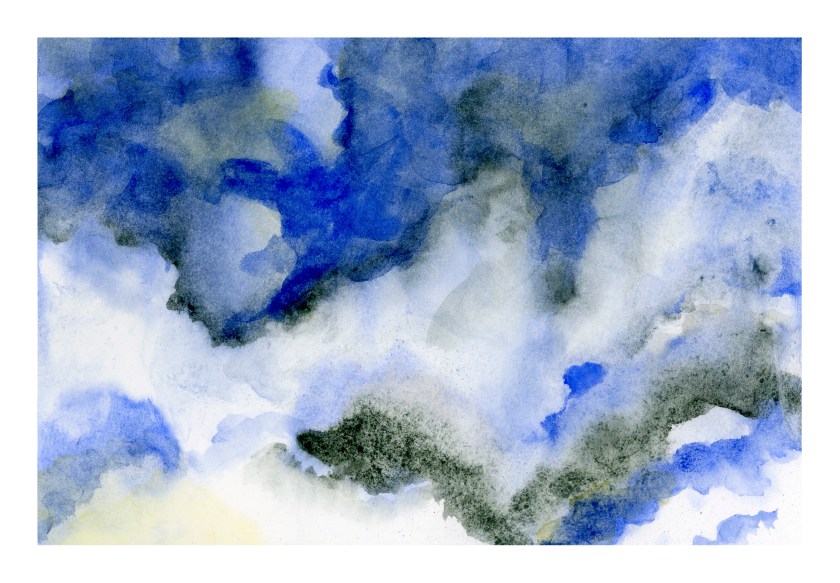
Then I started another one, wetting the paper once, letting it soak in a second time, and then wetting it again.  I am using Canson XL watercolor paper, which has a nice texture, is about 90#, and is a student grade paper.  I like it because it is working out really well for my needs.

After wetting the paper, I decided to start with a gradated wash, using the reverse side of another painting (to save paper, eh?).  The brush I used was a flat with rather stiff bristles, and the result was lines throughout the wash.  Oh, well.  Then I simply lifted the color off.  Then I began adding Carbazole Violet and Quinacridone Gold.

And then the phone rang!  My brother and his wife in Wisconsin calling, to wish us well for the holidays . . . . the painting was forgotten for the next several minutes, and this is the result.
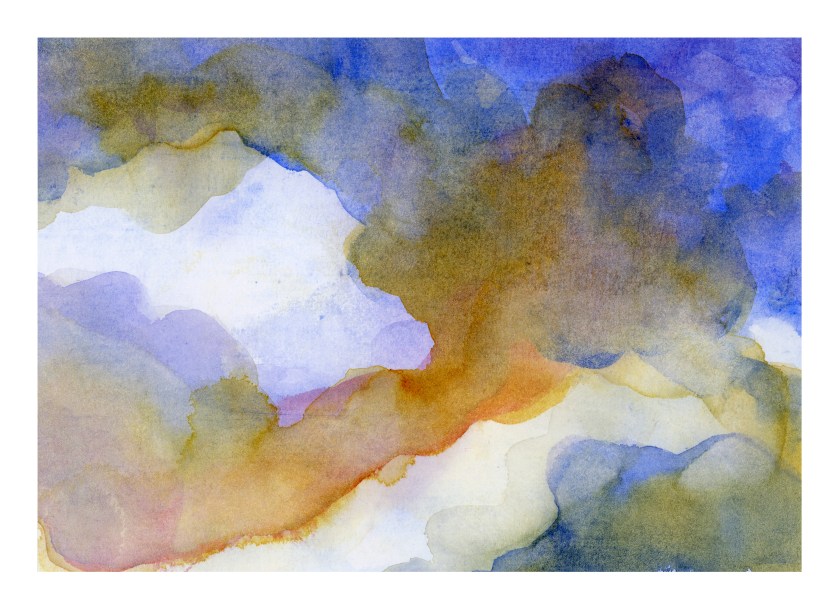
Regardless as to whether or not this last looks like clouds, the colors have a lot of potential for a dramatic sky some day.  I really like the colors!  I like both, actually.

White space.  No mud.  I must be doing something right!

Practice Present Presented

My sister-in-law requested hand-painted cards for a Christmas present.  She’s getting them!  Out of all of these, 6 were from exercises I did following Peter Sheeler’s YouTube painting tutorials.  What made them particularly useful, to me, was that many of them had a lot of white space in them, such as white snow or flowers.  The other thing was the simplicity of composition – a few trees, a stream, some flowers.  While they look easy, I did need to focus on the videos to follow the sequence of painting, as well as to focus on what I was seeing.  Of all of them, I think the stream was the most challenging.

From using Peter’s videos to practice with, and to create cards, I went on to do two based upon photos I have taken.  One is a prickly pear which really does sit on a heart-shaped paddle, and the California poppy fields at the State Preserve.  The latter made me think of Monet’s painting of a woman in a poppy field – the brilliant colors against a sea of green.  Our poppies in California are orange and yellow, so no reds, but mixed in with these colors are blues and whites and so many other colors it is hard to imagine that much of California once looked like that in the springtime!

Below are the different cards I did.  Click on one of them to start the slide show.