Watercolor Workshop, Day 2

Another day just painting!  What a pleasure to be able to do it!

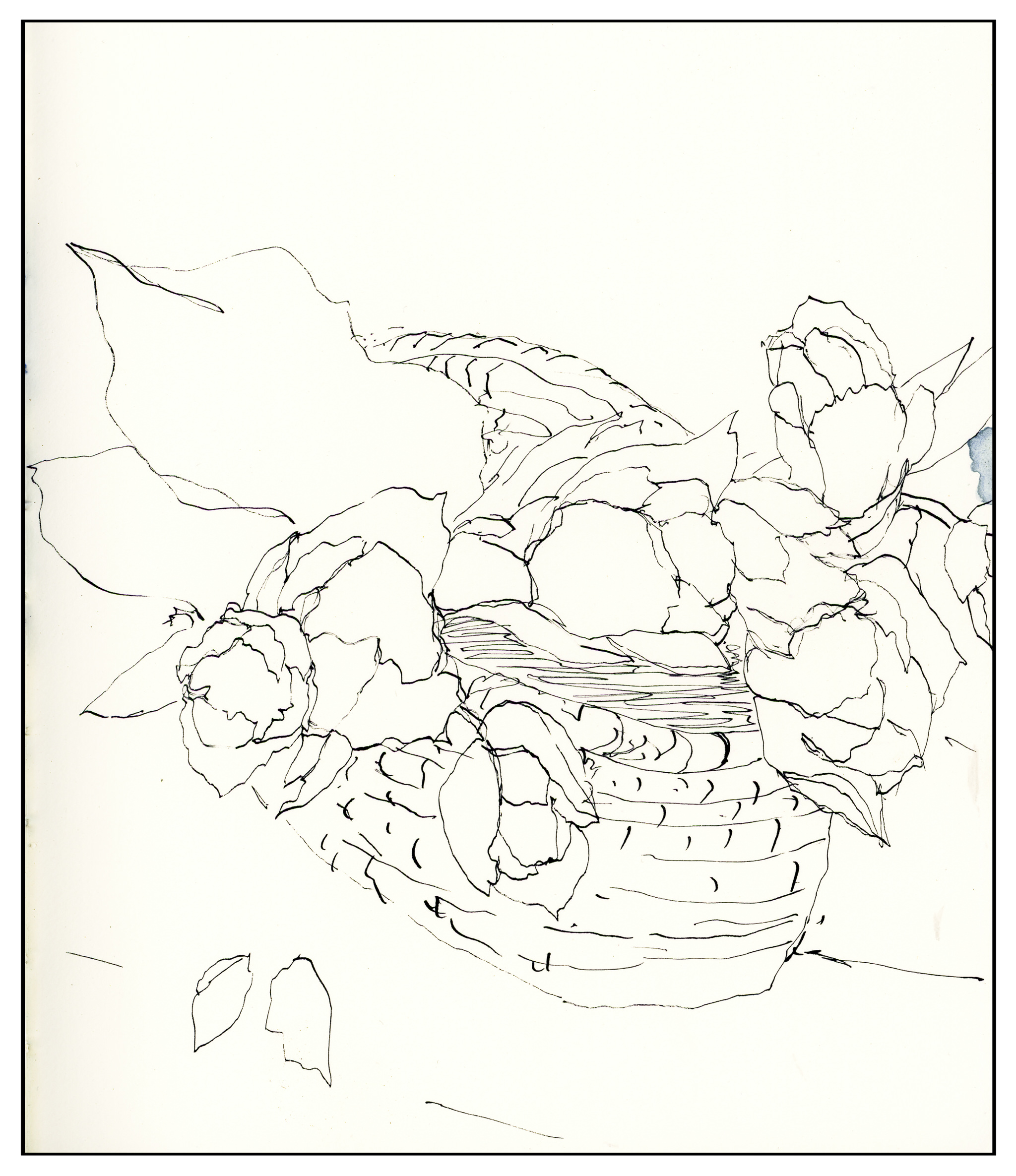
Today we did two different things.  Actually, three.  For warm-up, we returned to the quick three minute sketches, which eventually morphed into a still life with three objects.  Mine were a piece of dried corn, a plastic mushroom, and a plastic artichoke.  I was not particularly nimble this morning, but here is one I produced.

From there, we moved on to landscapes, but I will hold off for a moment on those.  We did an exercise which I found fascinating:  take one object and paint it 6 different ways.  I chose a really lovely fake pear – golden and red, reminiscent of autumn.  Take a look  . . . they are in a gallery format, so click on one image to be able to scroll through them larger than they are here.

This was a lot of fun to do – nothing I ever have considered as an exercise.  And then . . . we moved on to landscapes from photographs Brenda took, laminated, and brought to class.
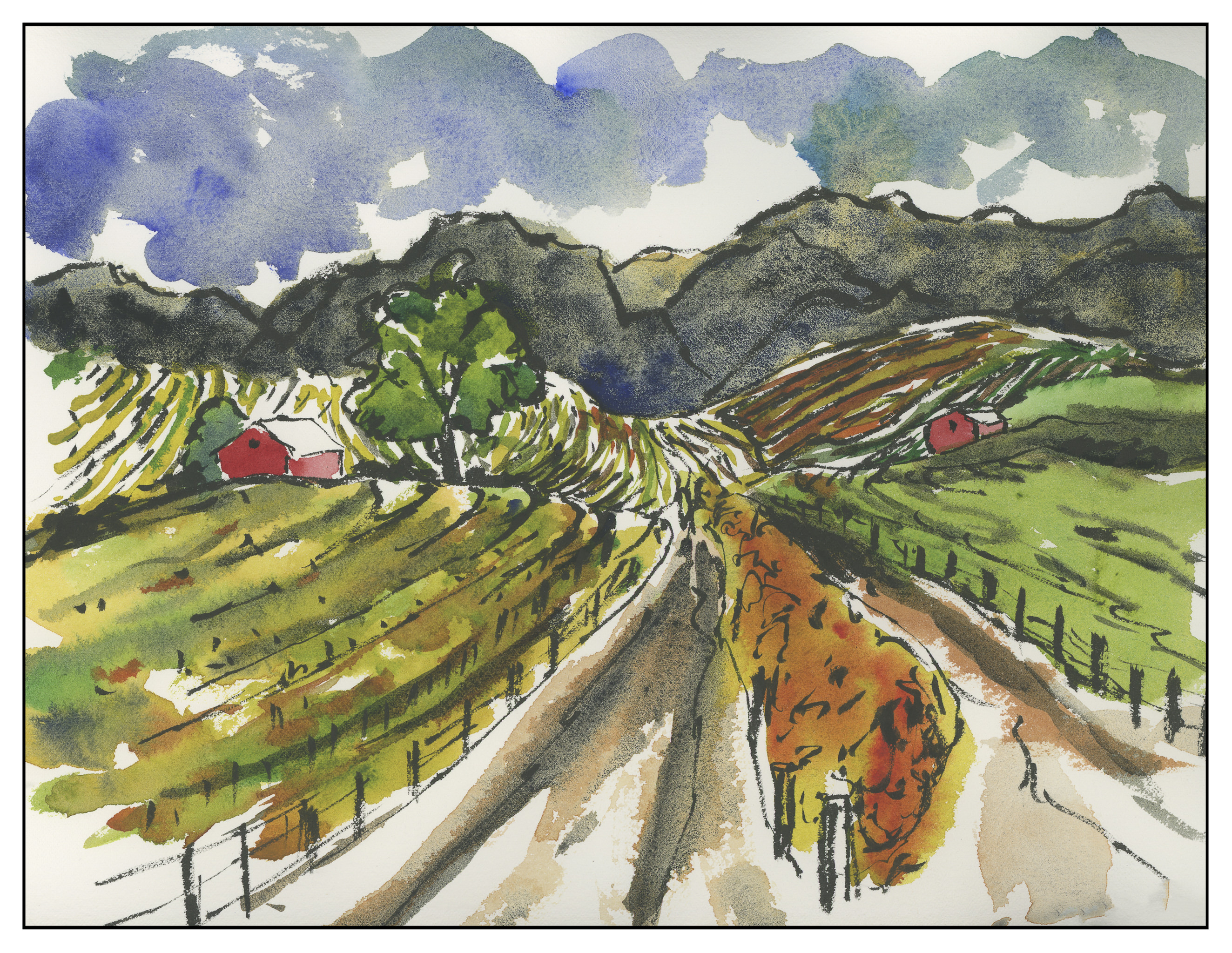
The idea was to take a photo and modify it.  This one is in the wine country of Northern California.
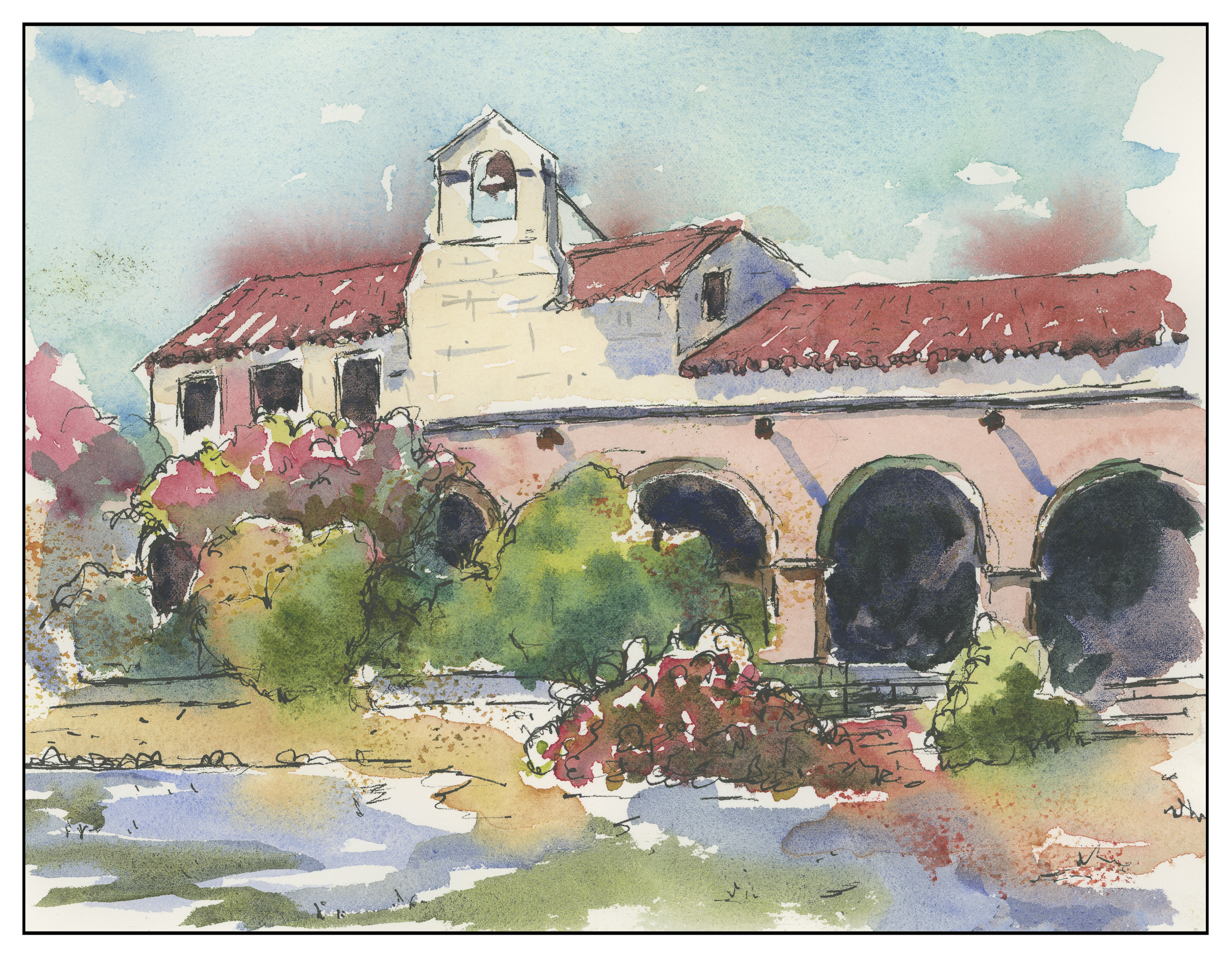
This one is, I think, in Carmel, but I don’t recall.  All the speckles are from the fact that it is a ghost image from a wet painting.  Truthfully, I was surprised it was a success at all.  All day I felt restless and unfocused.

Finally, this one.  I think it is the best of everything I did today.  The mantra for the day was draw, frame, paint.
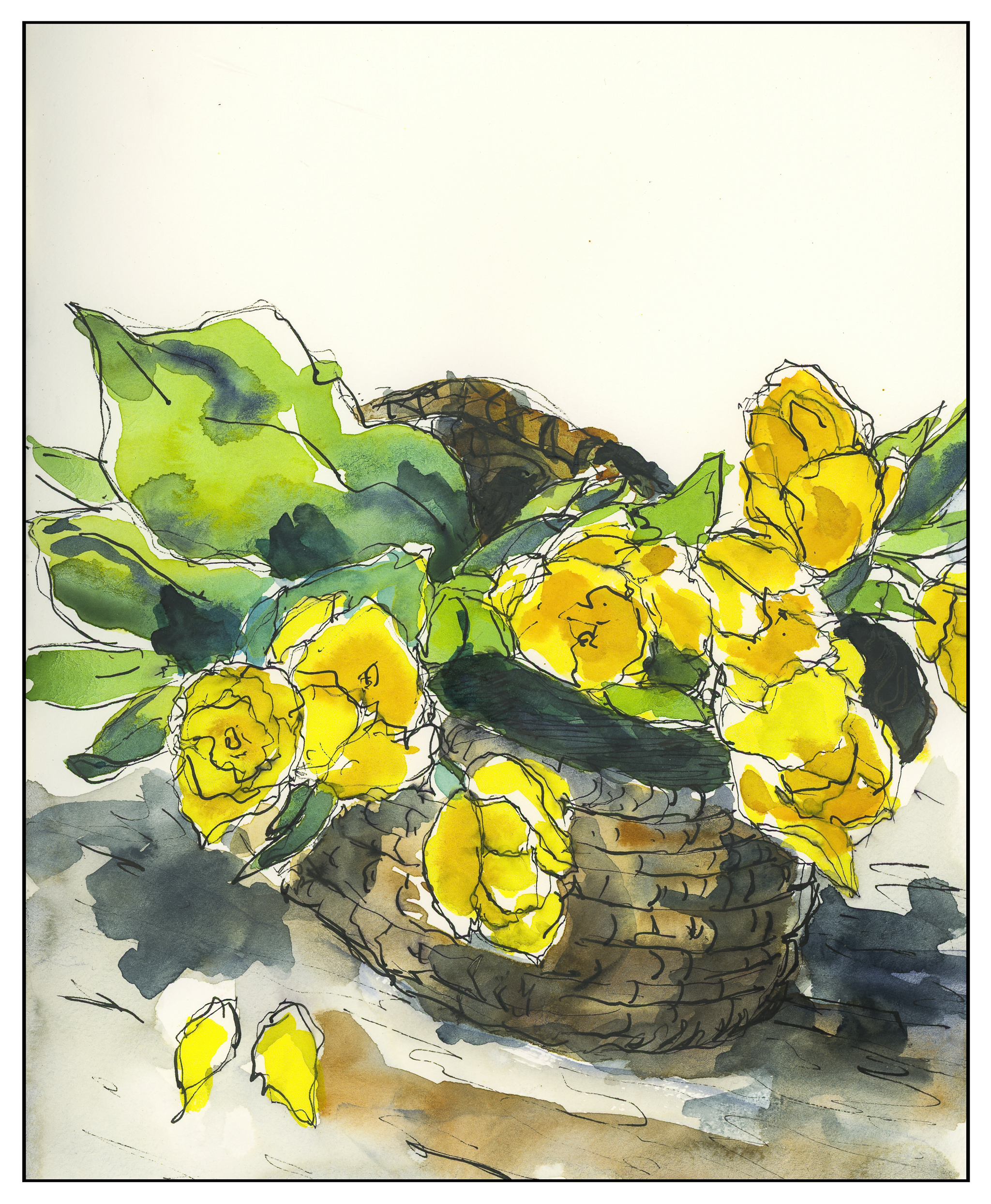
45.3 Tulips (Iron Gall Ink) – Painted

I should have done a value study here, but not in the mood, and not having a lot of time, I just decided to paint, hoping I “saw” the shadows enough.  Pretty tulips turned into a rather ugly mess!  Still, it is a learning experience, and the doing is often more important than the final results.  I am quite sure my paintings will be gone and not found in a museum.

Tulips (Iron Gall Ink Sketch)

We had a leak in the house, and the result was scurrying around doing everything else but find time to even think or go to work.  Finally, the leak was contained yesterday.  Towels and such could be put away.  Now we wait for insurance and contractors!

And finally, I can get back to drawing and painting.  This morning, more tulips, done with iron gall ink, prior to applying some paint.  Here ya go!

Tulips

Done with daffodils, and moving on to other spring bulbs!  While we don’t have the snow to enjoy melt as the flowers emerge, we still enjoy their seasonal appearance.

Tulips were always my winter favorites, along with hyacinths.  We never had daffs or narcissus.  So, homage to a childhood favorite, the first tulips of the season.

I tried to make an orange using Quinacridone Gold and Alizarin Crimson.  Not sure how well it worked.  The ink is iron gall in a Hand Book.

Direct Watercolor

The other day, I came into possession of a copy of Marc Taro Holmes’ newest book, Direct Watercolor.  In spirit, I am much of the same philosophy – little prep, direct painting, thinking ahead, seizing the moment, using colors directly, relying on imagination and happenstance and experience to create a painting.  All this requires is just doing it!  The “doing it” is the training – you do it, you think, you do again.  Like anything, practicing it enhances your skills and brings the mind-muscle memory together in ways that, if you were to consciously thing about, you could never achieve.

Marc mentioned some things I found particularly useful.  One is to create a silhouette of what you are working on – create the outer edges and then move inward.  Decide if edges are going to meet so that colors can bleed into one another.  Keep your edges dry if you don’t want things to bleed from one thing into another.  Let the painting dry, but don’t go over it extensively.  Other points he made is to work light to dark, large to small, but if you are working on something, do it directly – don’t dance all over the paper.

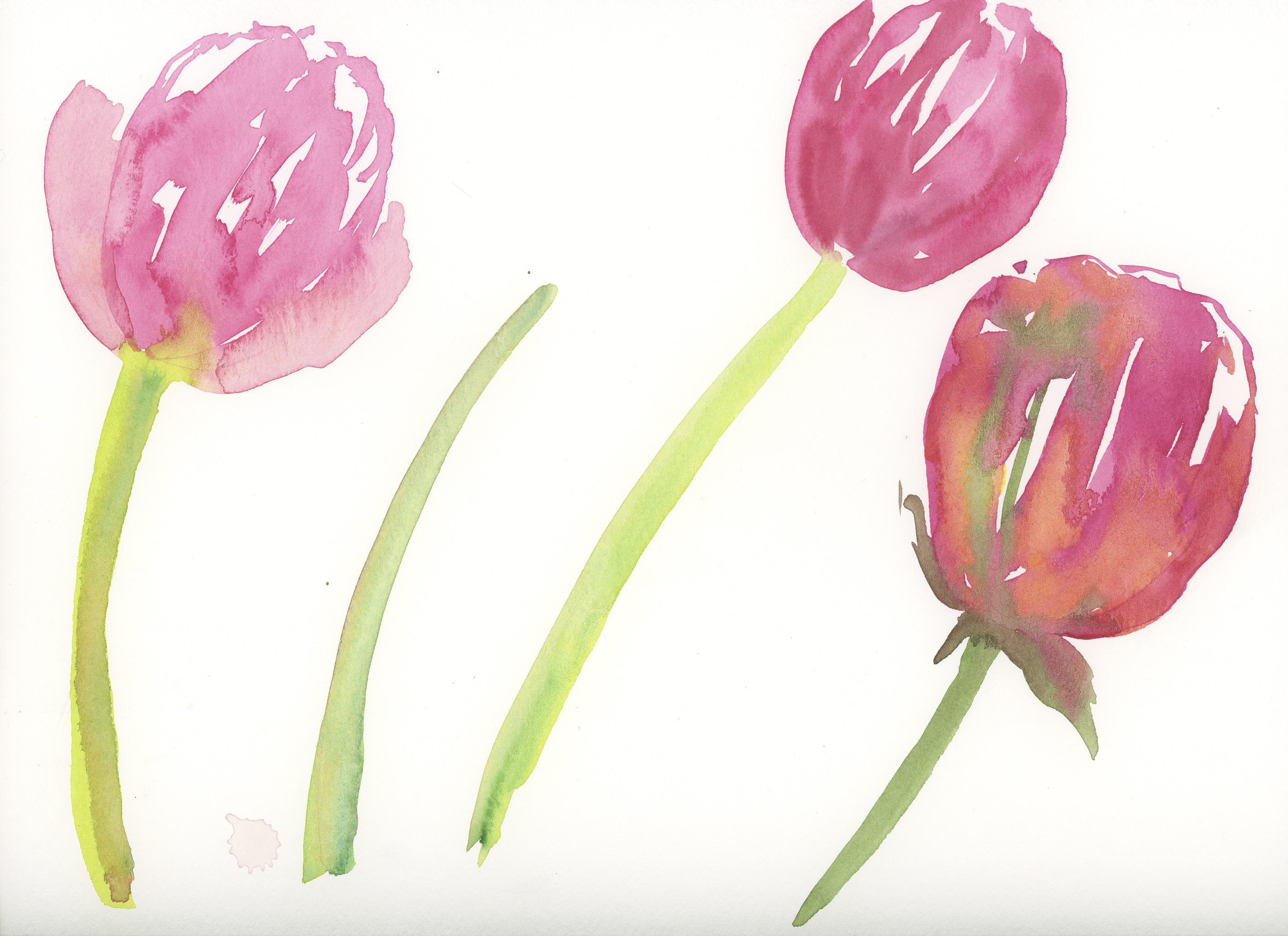
The silhouette appealed to me immensely, as well as the brushwork.  Here are some examples of brushwork and silhouette working together.  Once the edges of whatever I was painting were done, I then came in with varied colors to shade or define.  The colors really please me in many of these little sketches – the blending, the bleeding, the hard edge against the paper’s white.

Flowers make sense for the silhouette and then move in to blend colors.  Above, wet-on-dry.  Also, working directly while everything is still wet – as in the tulip on the far right.

Below, some examples of trees to create the illusion of a building (left) and another silhouette then molded to create a shape with shadow (top right).  Marc also mentions brushwork to show direction – and the importance to suggest.  The grassy strokes on the top left.  Finally, a bigger silhouette – here, Morro Rock –  created and worked on first (bottom right) before moving into other areas, specifically the dunes and plants in the foreground.

Quick sketches with valuable lessons.  While Marc’s book is not a “how to” book, it is a valuable resource for specific techniques.  The fact he is such a talented painter makes it look easy, but the truth is, he went from precise lines, to lines and colors, to direct watercolor with a great deal of effort and an entire change of mindset.