Scarborough Bluffs

More work on painting more directly in watercolor. It is becoming easier but it still presents a mental challenge. By nature – though experience shows otherwise – I think of watercolor as splashy and fast. Well, it is not! Patience is paying off as I am rather enjoying my latest forays into watercolors.

To enlarge, click on the image.
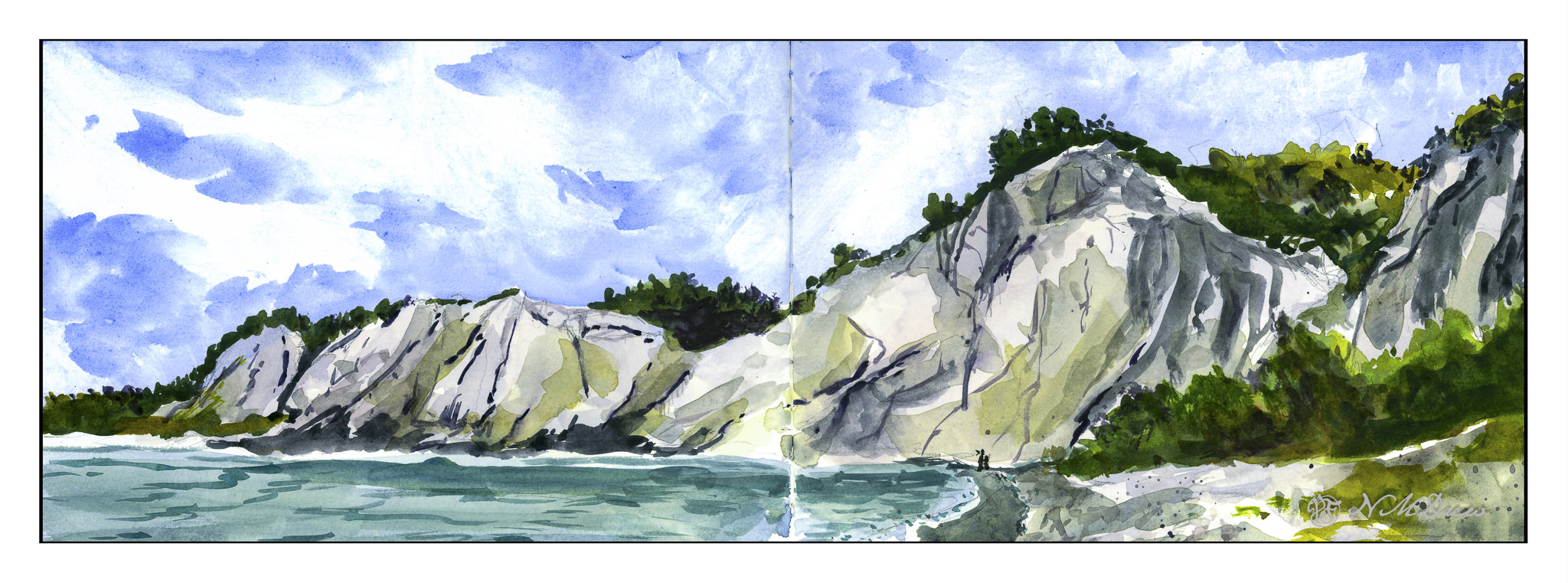
Once more, a panorama in my current sketchbook. This one is simpler, I think, than my previous one, so it did not take as long – about 90 minutes, including using the hair dryer to dry things off.

First, sketch in with pencil the entire drawing. From there, wet the sky, leaving edges for the cliffs and trees, though I really didn’t worry about the trees too much. I knew the trees would be using dark, thick paint. The bluffs, though, needed to be fairly free of color and water, though if you look at the far left, you can see a bit of sky color ended up in the bluffs.

Colors for the sky were essentially ultramarine and cobalt mixed together. I mixed a large area of wash and applied the color after wetting the paper. To create the clouds I blotted out a lot of color. This is always a fun and scary part of any painting!!

While waiting for the sky to dry a bit, I worked on the water, the shore, and the land mass on the right. The lowest tree mass, too, was done with a mixture of colors. I am not really satisfied with it, but it is okay and not too messy or overdone. Once these areas – sea and shore and shrubbery – dried I moved onto the bluffs themselves.

The bluffs will vary in color, depending on sky and time of day. I decided these should be bright as is the sky. Mixing up a light grey is a challenge, so I did a bit of cobalt, yellow ochre, and bit of what I think may be quinacridone rose. (Alizarin crimson would work, too.). I mixed together very small amounts of each and diluted it heavily. I used this to lay int he lighter areas of the bluffs, leaving some areas plain white paper. From there, darker shades, yellower shades, lines and fissures.

The final stages were details. Trees on the bluffs, some green along the right side shore, varying color in the water, shadowed areas in the bluffs, and splattered color on the lower right. Finally, a couple of figures to give scale – these bluffs are really tall!

Watercolor in sketchbook on 140# CP paper, about 8 x 18 inches.
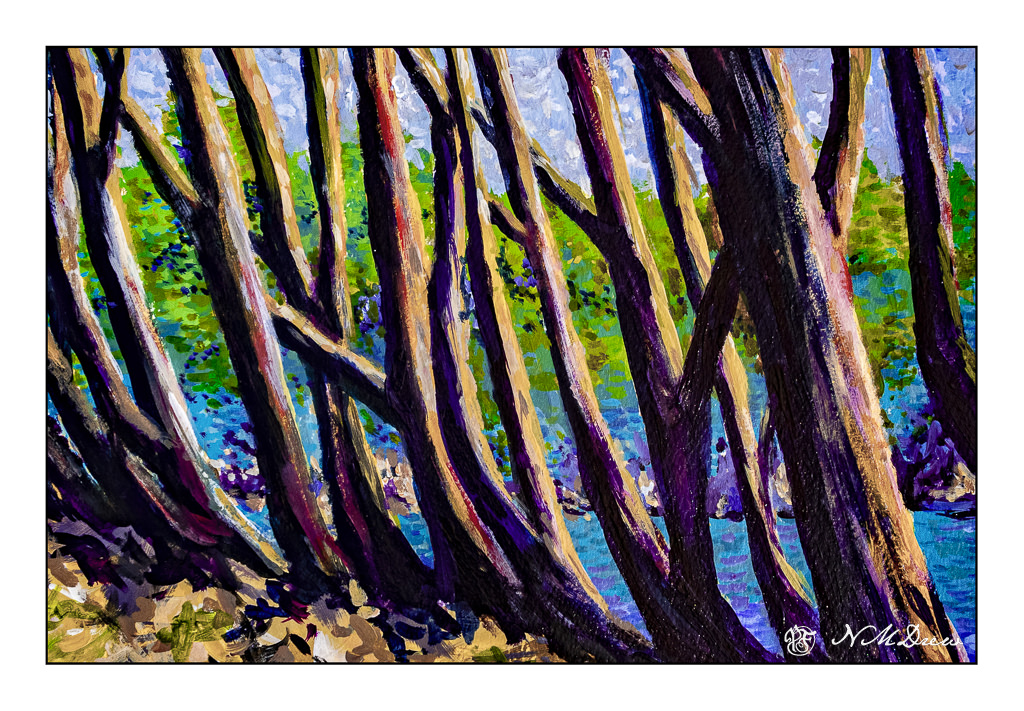
Through the Trees

Another view of Lands End in the SF area – this time through the trunks of the cypress trees along the ridge line.

This was a day’s project using liquid acrylic paints on Strathmore 300 watercolor paper. Neither photographs or scans really did this painting justice as far as the colors go. That sometimes happens when there is purple in a painting it seems. I like the composition but not sure about the final colors. In real life it looks better. And, it may be, too, the acrylics just never quite sit well with me. Both acrylics and gouache tend to be a bit too bright for me. Maybe I’ll try it in oils.

Acrylic on Strathmore 300 watercolor paper; about 11×14.

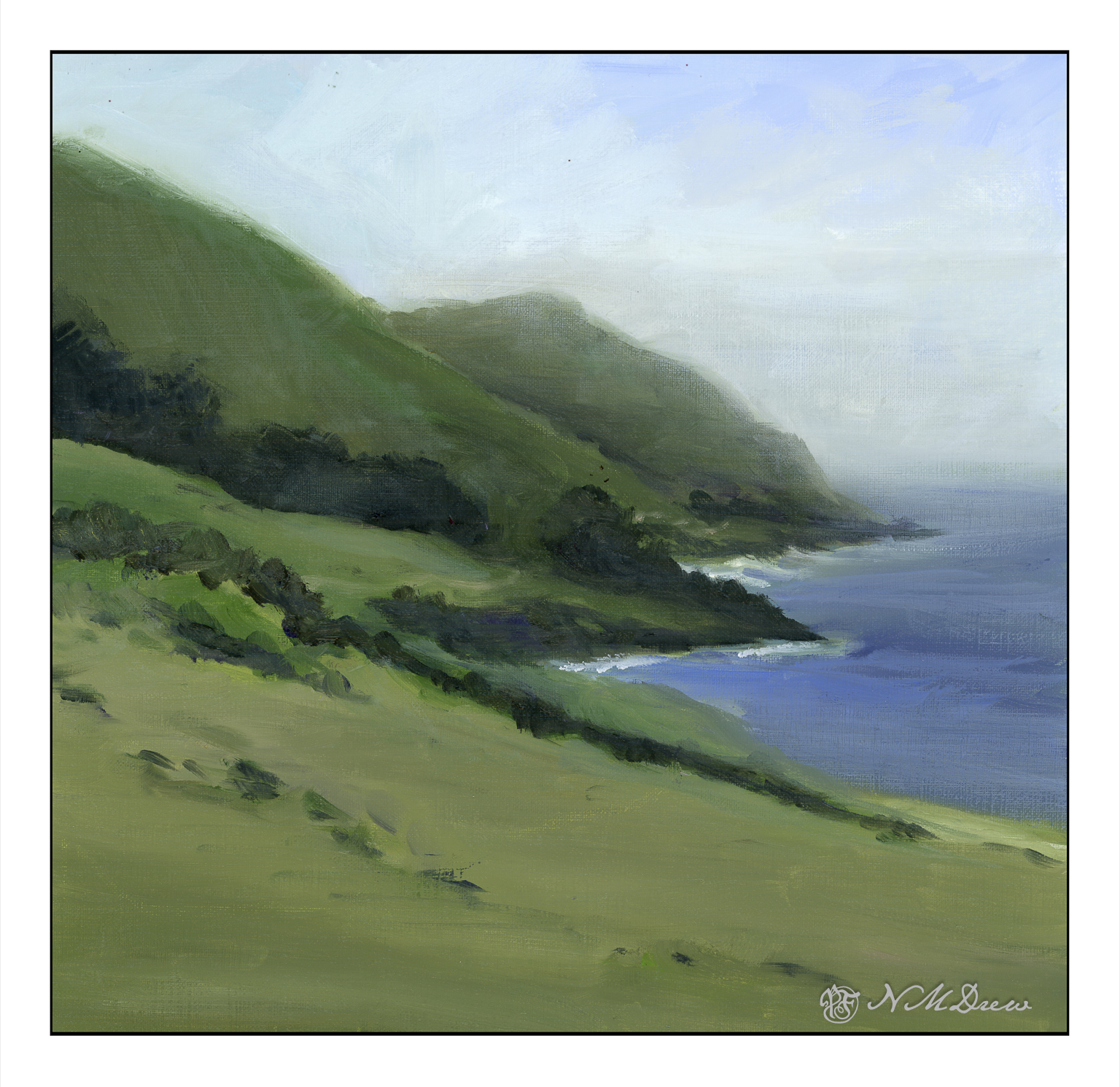
Big Sur, Looking South

Big Sur along the California coast is an incredibly beautiful bit of the state – at once wildly beautiful, in many ways easily accessible along Hwy 1, but delicate, too, as it is easily destroyed by heavy rains creating mudslides. Parts of it are rugged with mountains rising up and coming down into the Pacific Ocean. Hwy 1 skirts along, and it is always best to be the passenger so you can enjoy the wonderful views.

From where I live, you drive north, past Santa Barbara and then veer off on the 101 in an area marked on the map as Las Cruces. You could continue up the 101 up to San Luis Obispo, cutting west toward Morro Bay and then along the coast. Before you get deep into Big Sur, the mountains are toward the east, and there is a coastal plain. Slowly the landscape changes as the flatter areas disappear and the mountains move ever closer.

The entire drive is a delight. Coastal fog may drift in and out, and no matter where you look, the beauty is breathtaking. I have tried to catch this in the distance and along the horizon. The Canson XL paper is nice to paint on, and I used Gamblin Galkyd gel to speed up the drying time, but it sat in the garage this past week so I could ignore it and look at life away from the studio. Getting some time away from a painting is always a good thing as eyes are fresh upon the return. I was pleased with what I saw, and so scanned it, and present it to you for your viewing.

Painted on 11×14 Canson XL Acrylic / Oil Paper, about 10×10.

New Pen, New Ink

These past several days just seem to have been filled with stuff that needed doing, not necessarily things needed and wanted. Getting taxes done, going to the dentist, etc., are not my ideas of a Fun Life, but things Needing to be Done.

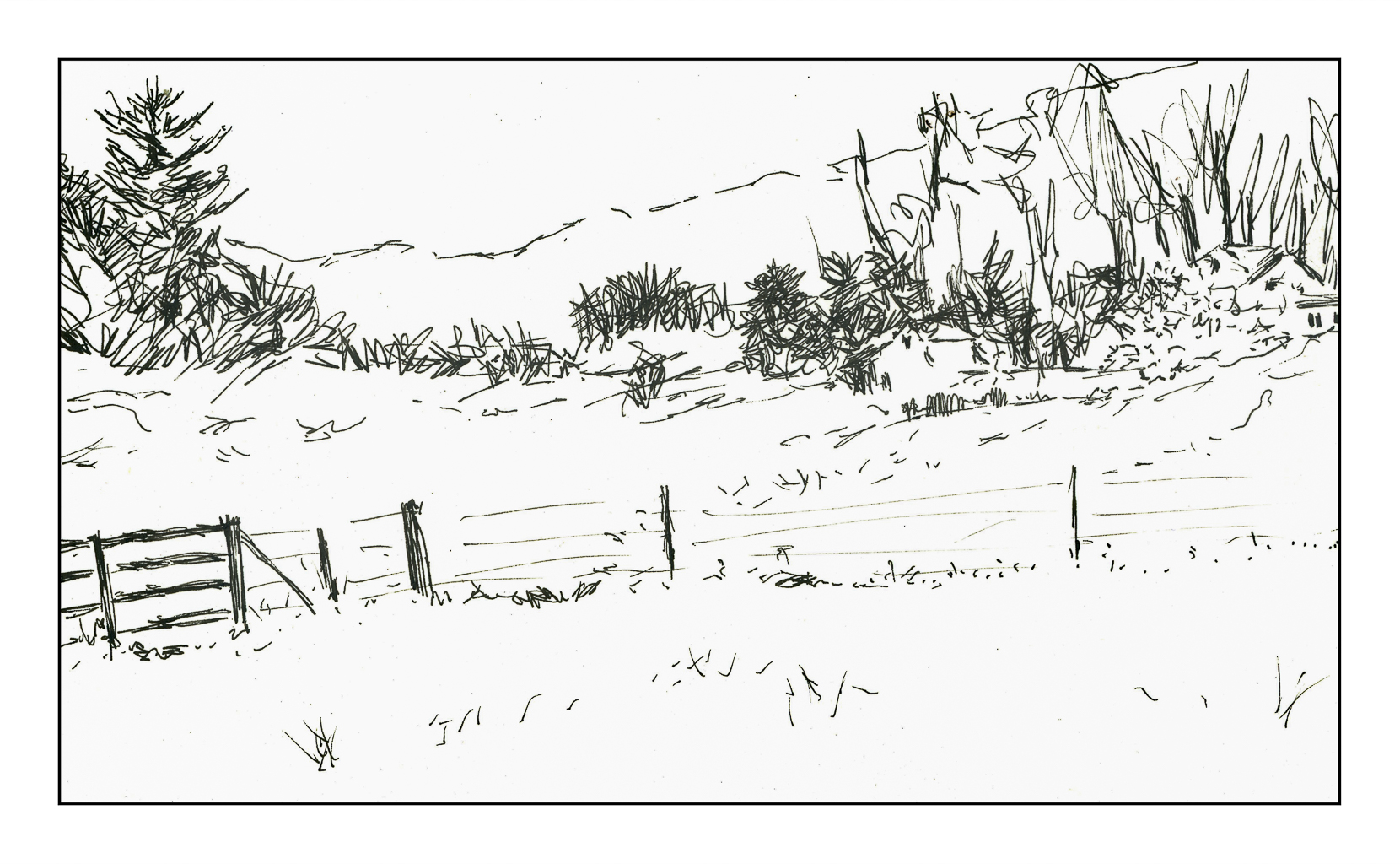
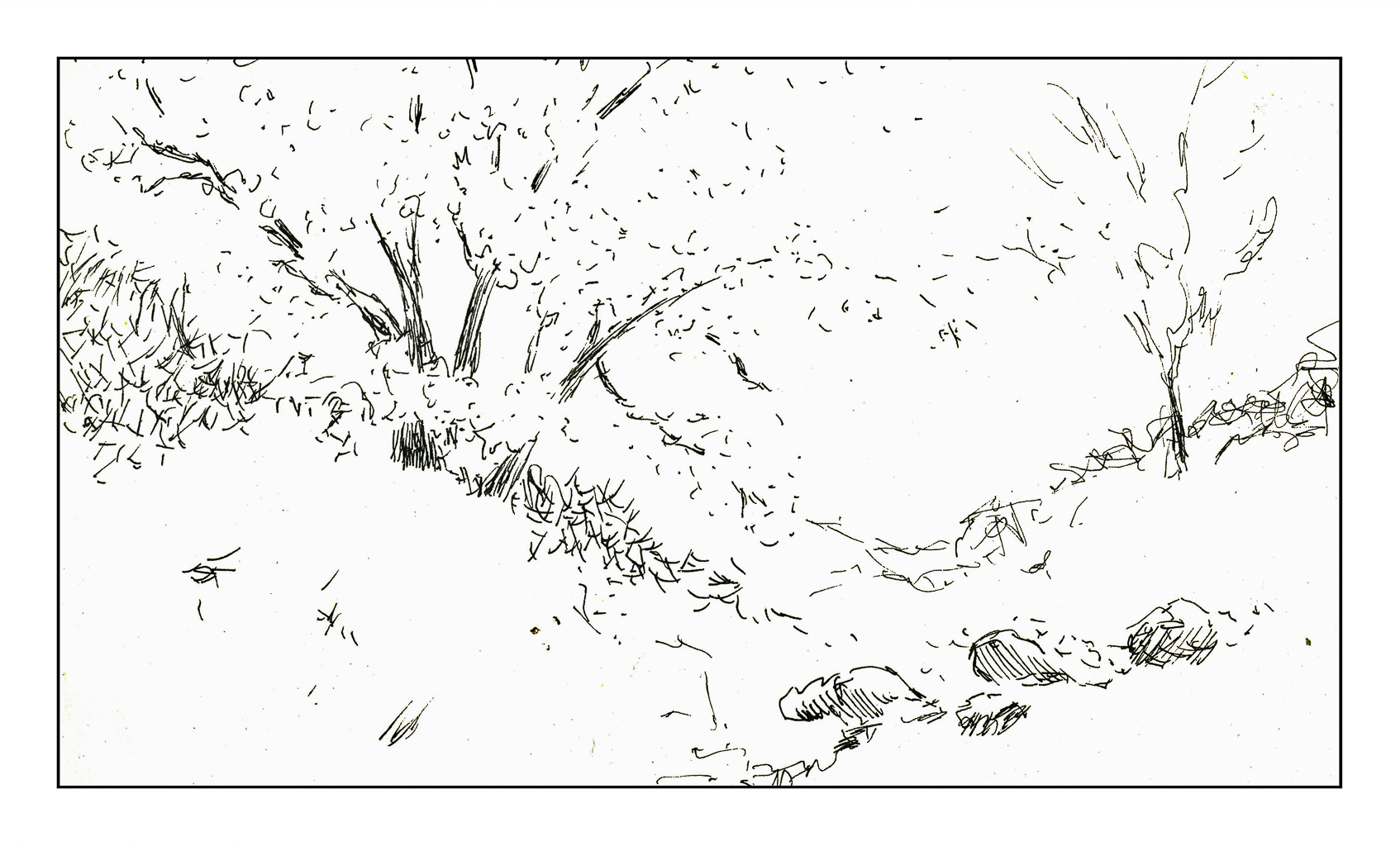
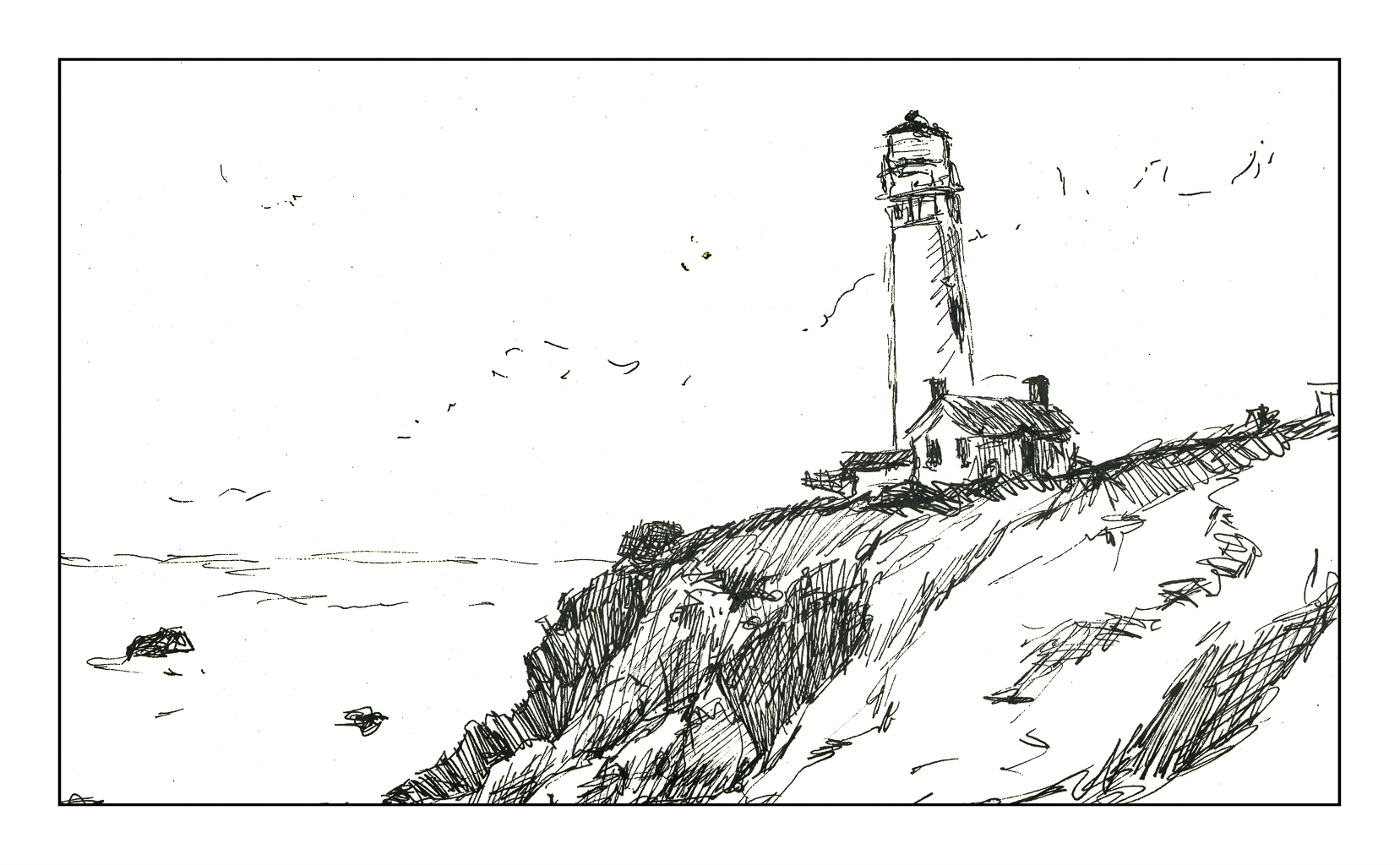
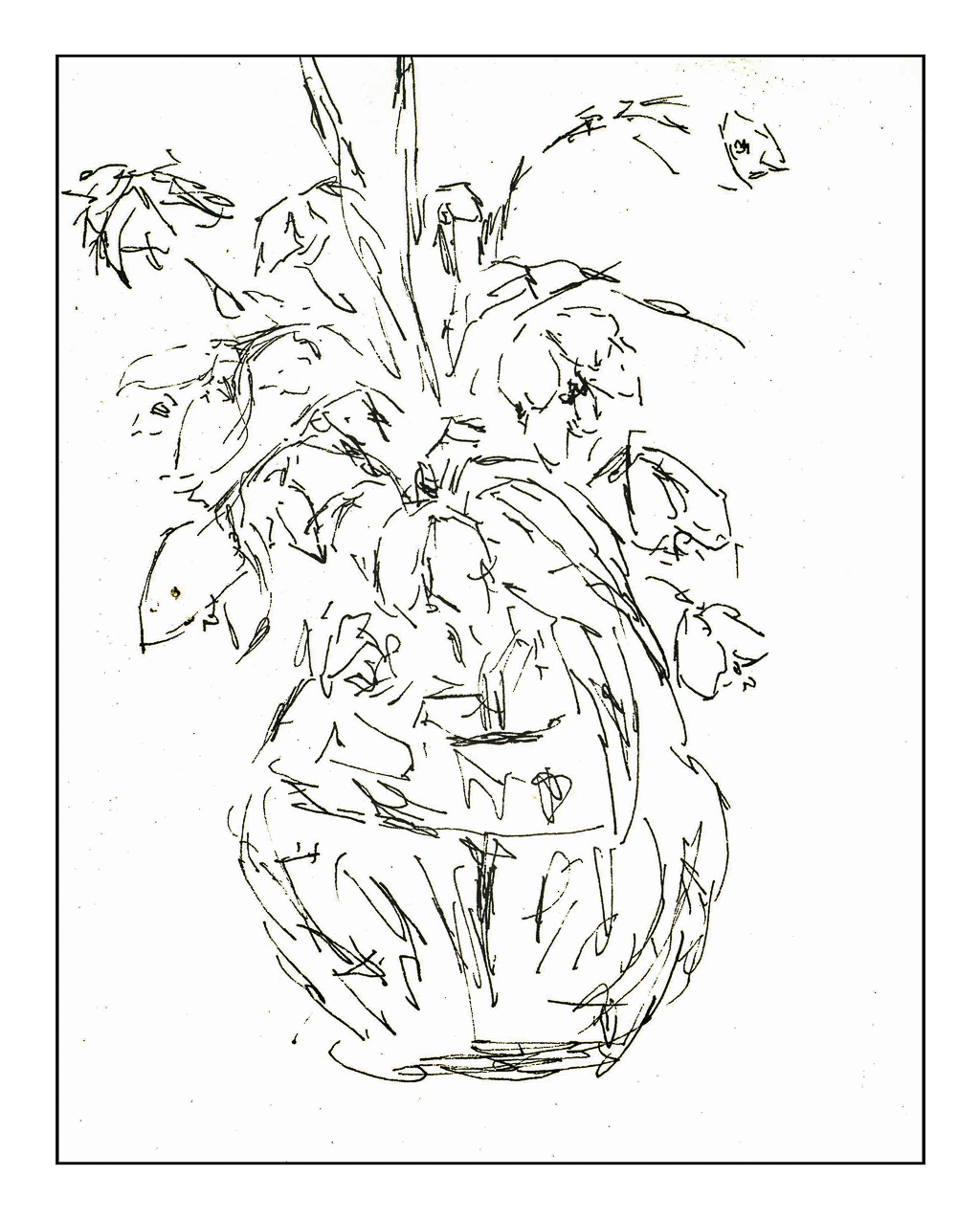
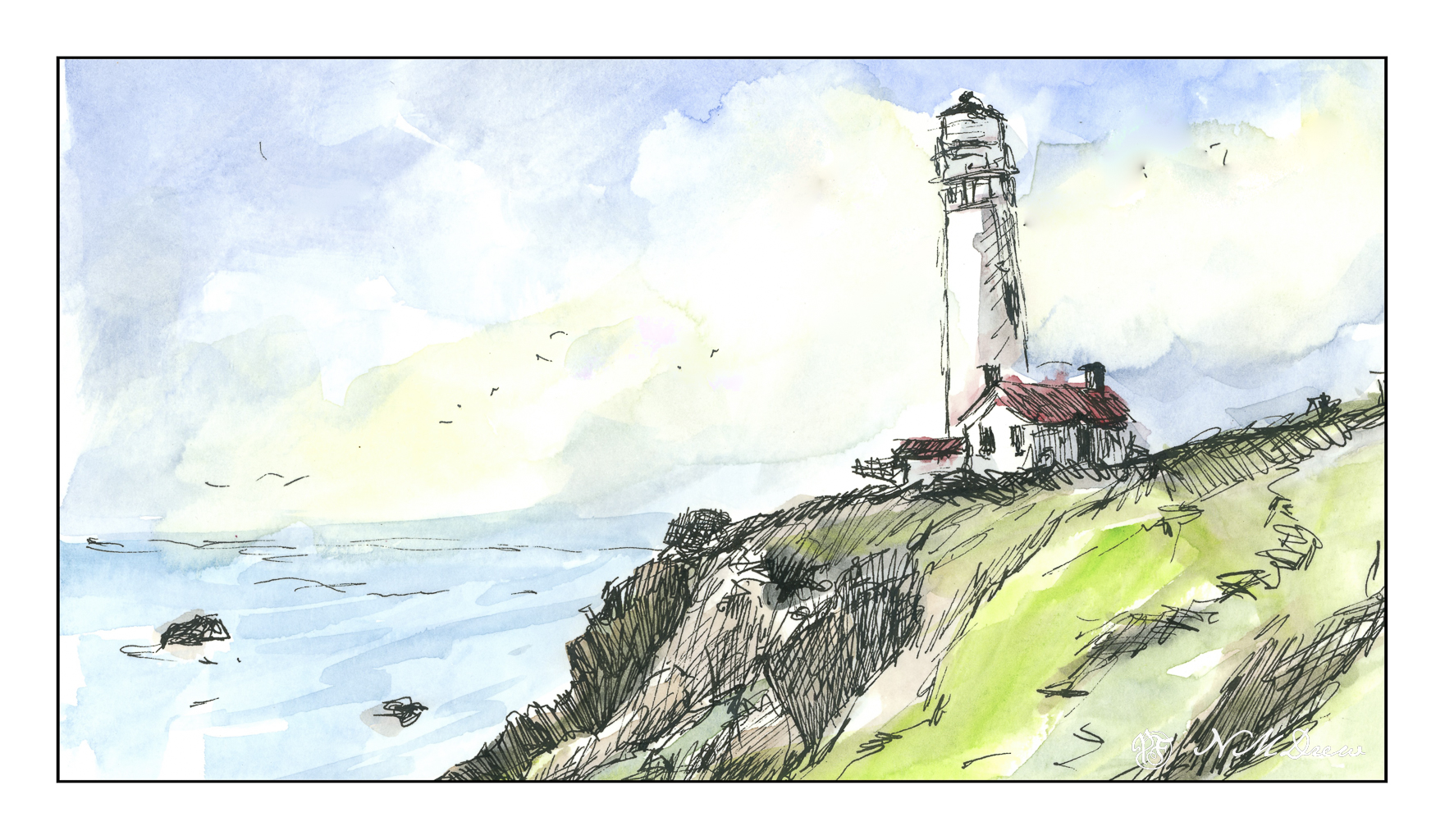
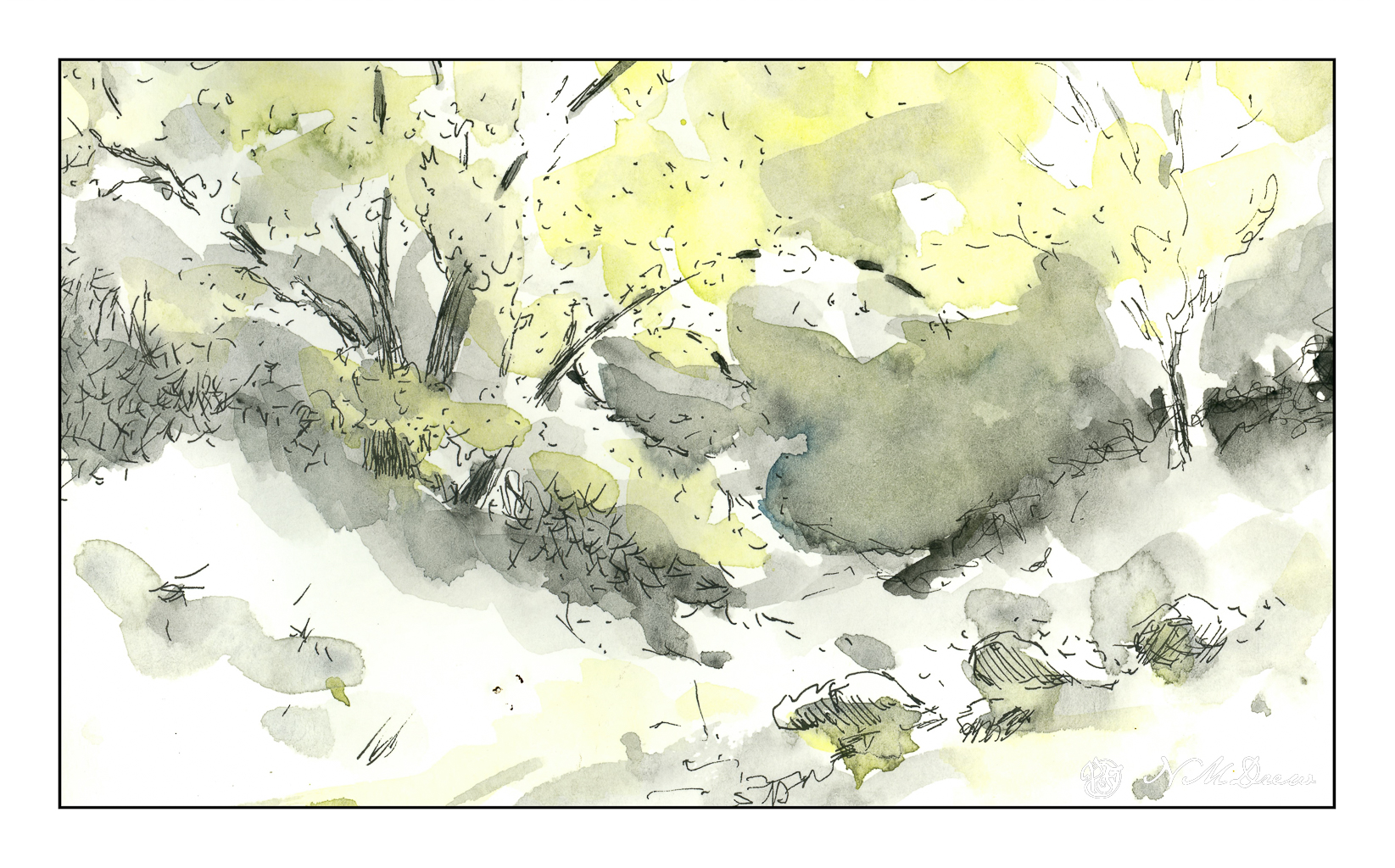
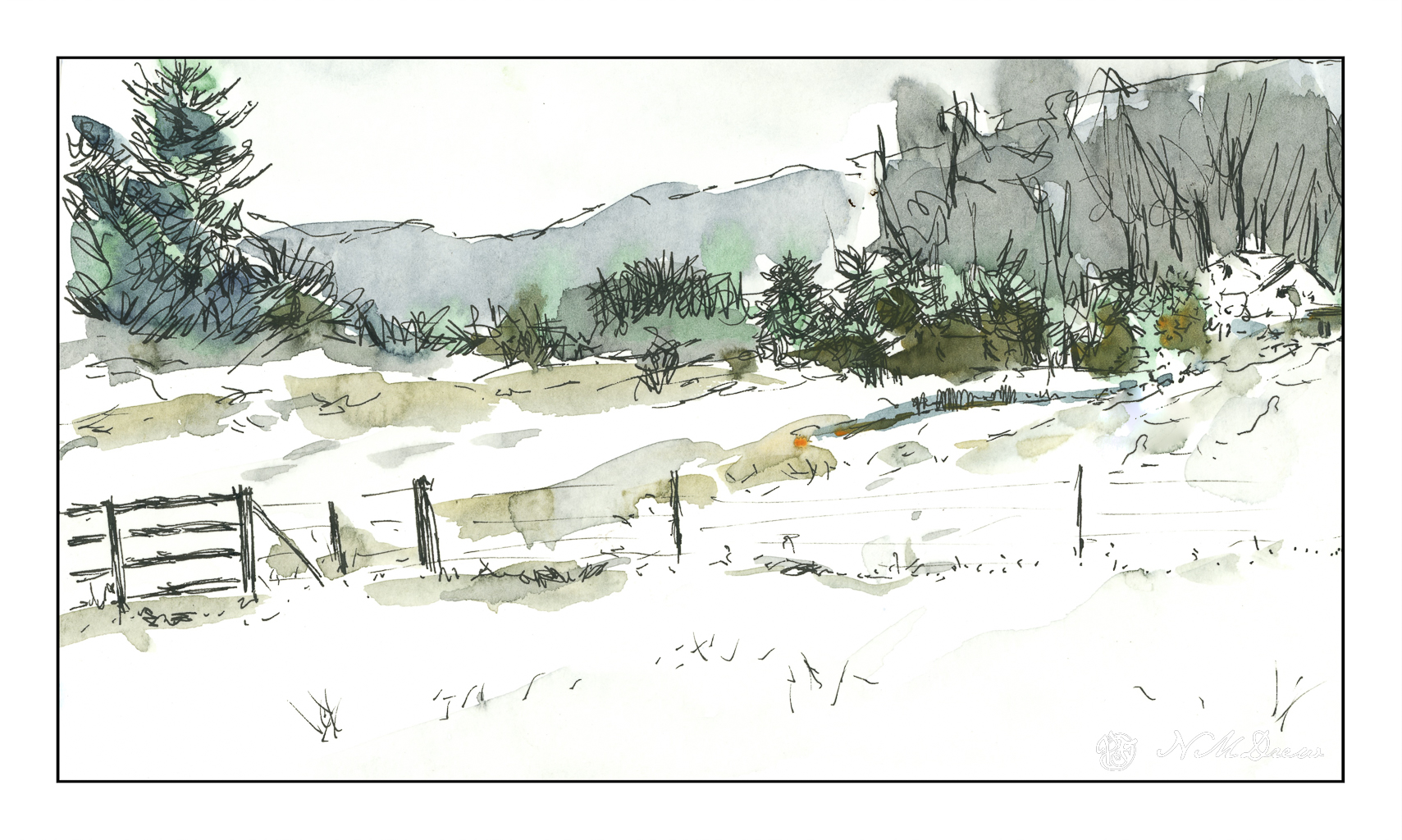
Despite duty, I have been putzing around. I realized that I don’t have a fountain pen and permanent ink for drawing any more as I lost a pen somewhere – which, no doubt, will soon be found as lost objects always are once replaced – and used up all my waterproof fountain pen ink. I now have a new drawing pen, a $17.00 job from Amazon with an extra fine point, and some of Platinum’s Carbon Ink, which is a long time favorite of mine for drawing. My Not Taken Vacation sketchbook was easily accessible, so off I went to the sunny patio to do some drawing. I used a few reference photos for ideas, and then began with ink and pen.

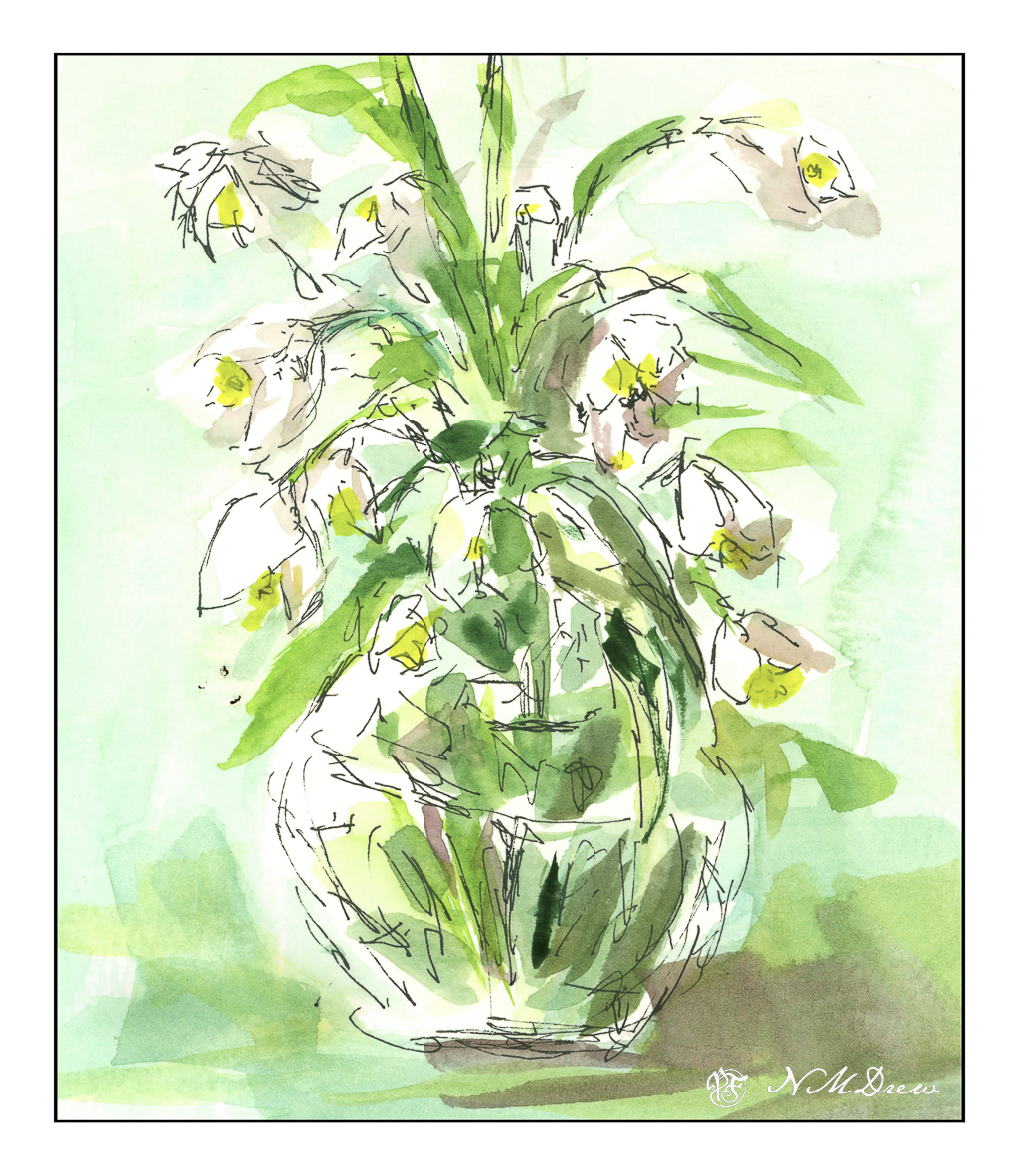
I chose to draw some snow drops in a vase, Pigeon Point Lighthouse here in California, a little cleft in the landscape, and a wintry farm somewhere. From there, my box of Schmincke pan watercolors, some water, and a brush. All this was sort of awkward as I have not done ink and wash for a bit, but it always feels so good to just sketch and paint, more so when it is out on a sunny patio on a beautiful spring day between last week’s rains and this weekend’s expected downpour.

I am quite pleased with my inexpensive fountain pen which came with the fillable screw adapter I prefer to cartridges, and coupled with the Carbon Ink, I think I have landed a rather happy combination for my drawing pleasure. Hopefully you like them, too!

After the Snow

There is a lot more “ink” these days than beer or yarn, but as far as those go, there is a lot going on in the background. I guess I will need to post some of my knitting projects or sewing projects (“yarn”). Cooking, too (the “beer” part). Paint (“ink”) takes up most of my time, though.

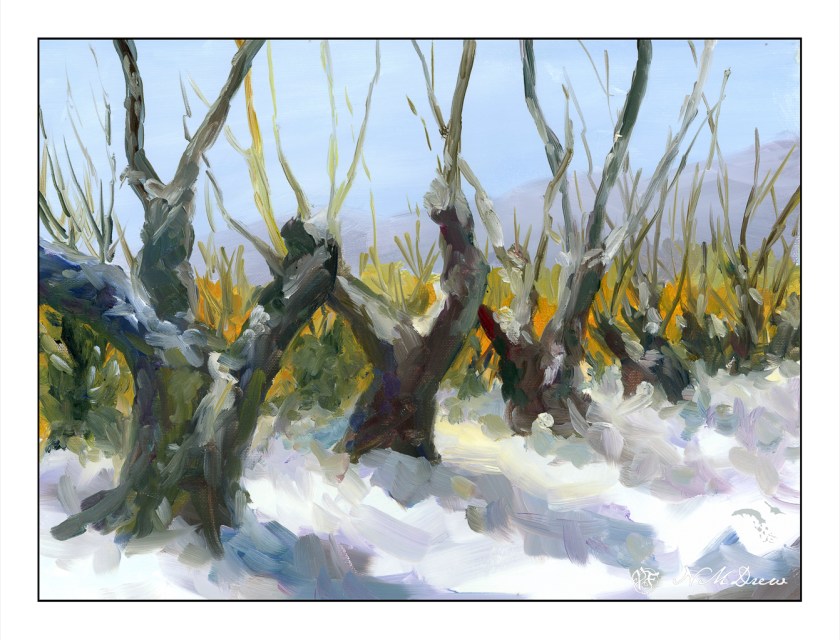
I am continuing with the oil paints and just love the sensuality of mooshing it around on a canvas! I also like being able to work on my sense of contrast – lights and darks – as I have done with a few pears.

When I am finished with a painting, even though I use low odor solvents, the smell lingers, more so when the house is closed up to keep it warm. Because of this smell, I have some drying shelves set up in the garage, which is pretty cold. It takes a long time for the paintings to dry unless I use Gamblin’s Galkyd Gel, and then they dry almost overnight.

Now that you know this, I painted this painting about 2 weeks ago using linseed oil as the vehicle as well as Gamblin’s solvent-free gel, but not the Galkyd. Drying time is very slow. I just got some walnut oil mixed with alkyd by M. Graham, which should speed up drying time and, I hope, give that lovely ooziness that makes oil paints a lot of fun. Maybe I will check that out later today.

I chose this subject to work on a few things: values, color, distance, depth, contrast. Overall, I am pleased with this painting. I like the brighter yellow between the tree branches on the right as I think it leads the eye in. Someone on a forum said it was too bright and might need to be dulled down a bit. That is something to think about, but my magpie self likes that but does see what the person means. But how much should that yellow-orange be dulled, and so on. Maybe I will play with it in PS.

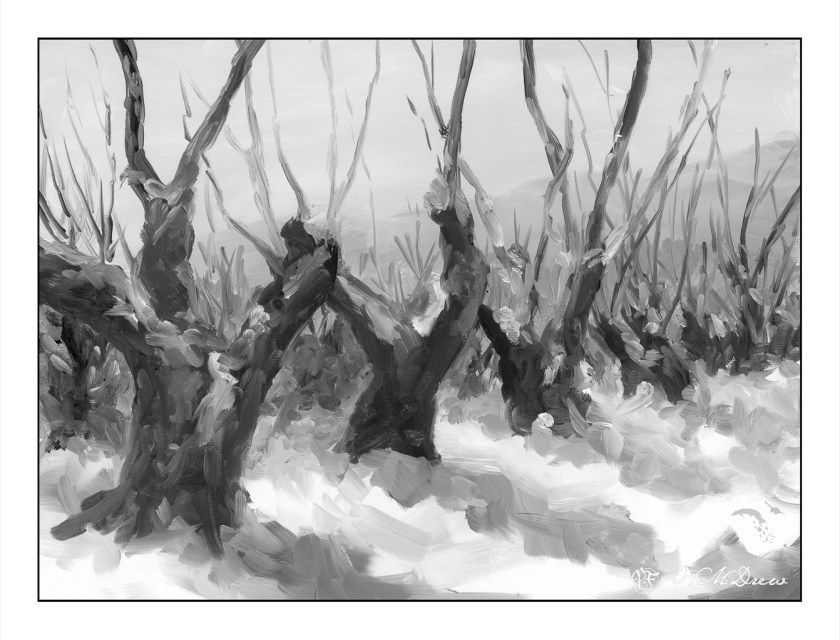
Above is the desaturated image. I do this to look at my values. Success! Isn’t it interesting to note that the bright yellow-orange becomes a middle grey when in black and white?

I have a couple of other paintings out in the garage drying. I’ll get those out in a few days. Scanning a painting is far nicer in result than photographing as there is minimal glare. The only problem with the scanner is that sometimes the software does not like to merge the sections – luckily I have a few different ones as back up and seem to work quite well.

11×14 oil painting on cotton canvas panel; scanned on Epson V600 at 600 dpi and 48 color bit depth.