Negative Painting: I Wanna Scream!

Okay, negative painting is not, not, not easy.  At least for me.  Back to YouTube.  This video was a really big help.

The guy is really funny – and does a really good demonstration.  This one was probably the most clear of all the ones I have watched.  Simple in execution, but sophisticated enough to produce something useful at the end of the video.  This is what I got.

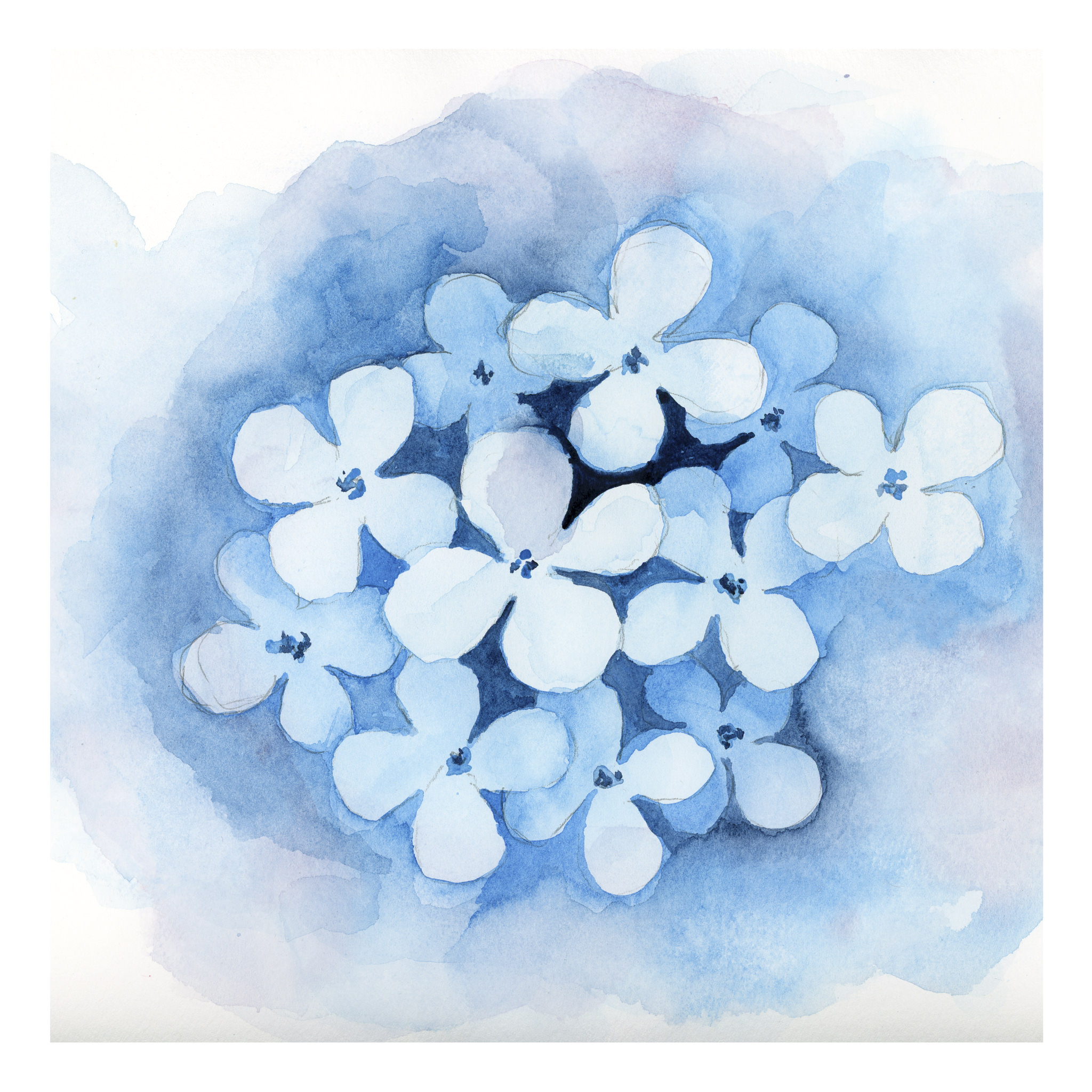
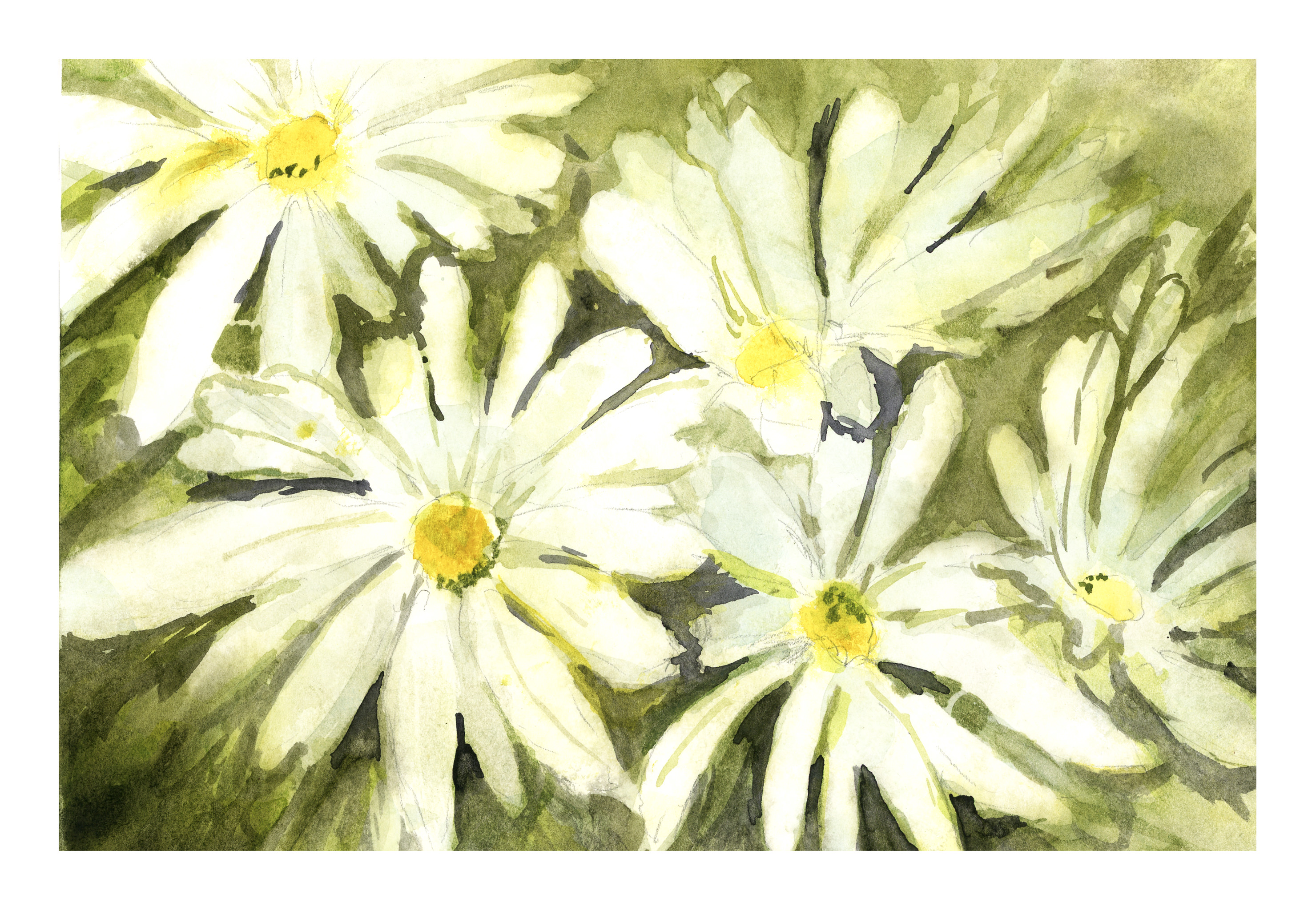
Then I watched another video – far more accomplished than I am at the present in execution, and once more, mud is the result and abominable flowers.  These are mutant flowers after some sort of environmental disaster!

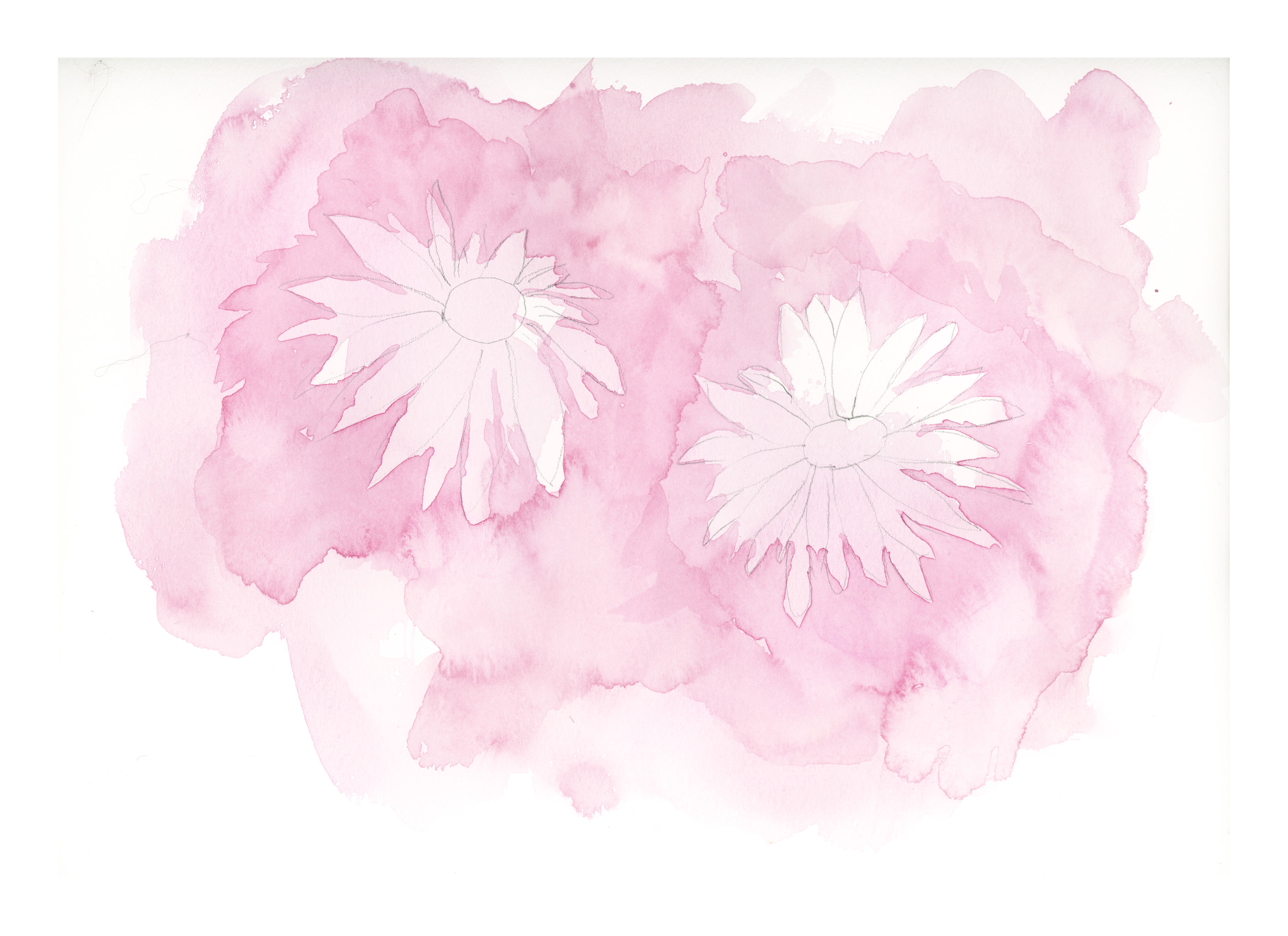
Ugh.  So, back to monochrome – this time, pink daisies from some picture on the internet.  This is the first layer of many, but maybe I can just work on very simple things and follow the 1-2-3-4 steps and then get a bit more advanced in execution.

Practice is not always a pleasant experience – but you do learn!

Holiday Cards: Birch Trees & Snow

As a present, my sister-in-law asked for some hand-painted cards.  Given I have enjoyed Peter Sheeler’s videos, I thought I would use his exercises as a way to practice painting, and fulfill a family member’s request for a Christmas present!  Here is Mr. Sheeler’s video:

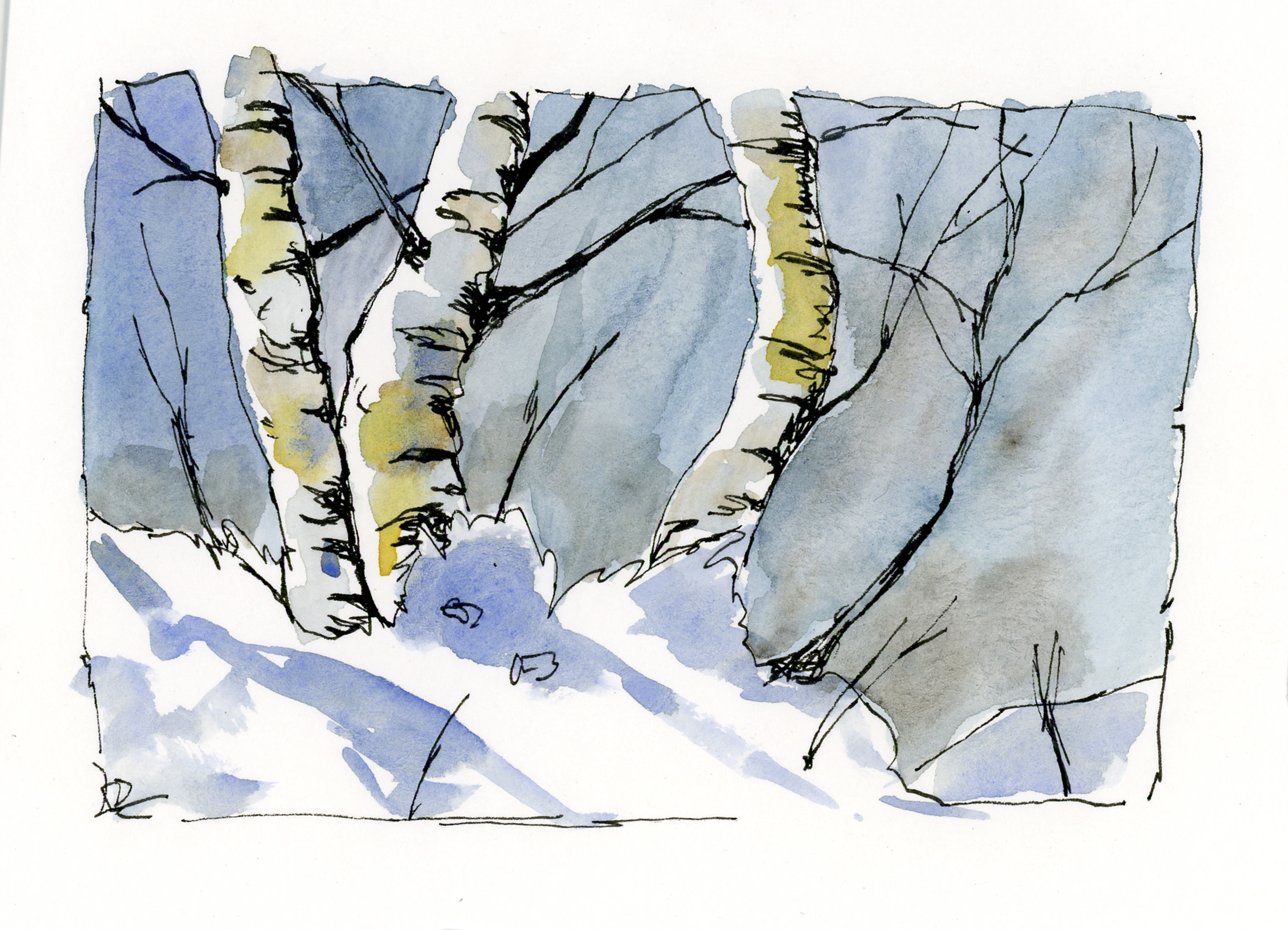
Birch trees are some of the easiest and most lovely trees to draw or paint.  The white trunks and white snow made for a good chance to work at keeping white space.  The other thing is that the palette was limited, which I am beginning to find refreshing – a lot of colors can be made from two or three.

Practice Present Presented

My sister-in-law requested hand-painted cards for a Christmas present.  She’s getting them!  Out of all of these, 6 were from exercises I did following Peter Sheeler’s YouTube painting tutorials.  What made them particularly useful, to me, was that many of them had a lot of white space in them, such as white snow or flowers.  The other thing was the simplicity of composition – a few trees, a stream, some flowers.  While they look easy, I did need to focus on the videos to follow the sequence of painting, as well as to focus on what I was seeing.  Of all of them, I think the stream was the most challenging.

From using Peter’s videos to practice with, and to create cards, I went on to do two based upon photos I have taken.  One is a prickly pear which really does sit on a heart-shaped paddle, and the California poppy fields at the State Preserve.  The latter made me think of Monet’s painting of a woman in a poppy field – the brilliant colors against a sea of green.  Our poppies in California are orange and yellow, so no reds, but mixed in with these colors are blues and whites and so many other colors it is hard to imagine that much of California once looked like that in the springtime!

Below are the different cards I did.  Click on one of them to start the slide show.

Trees, Shadow, Snow

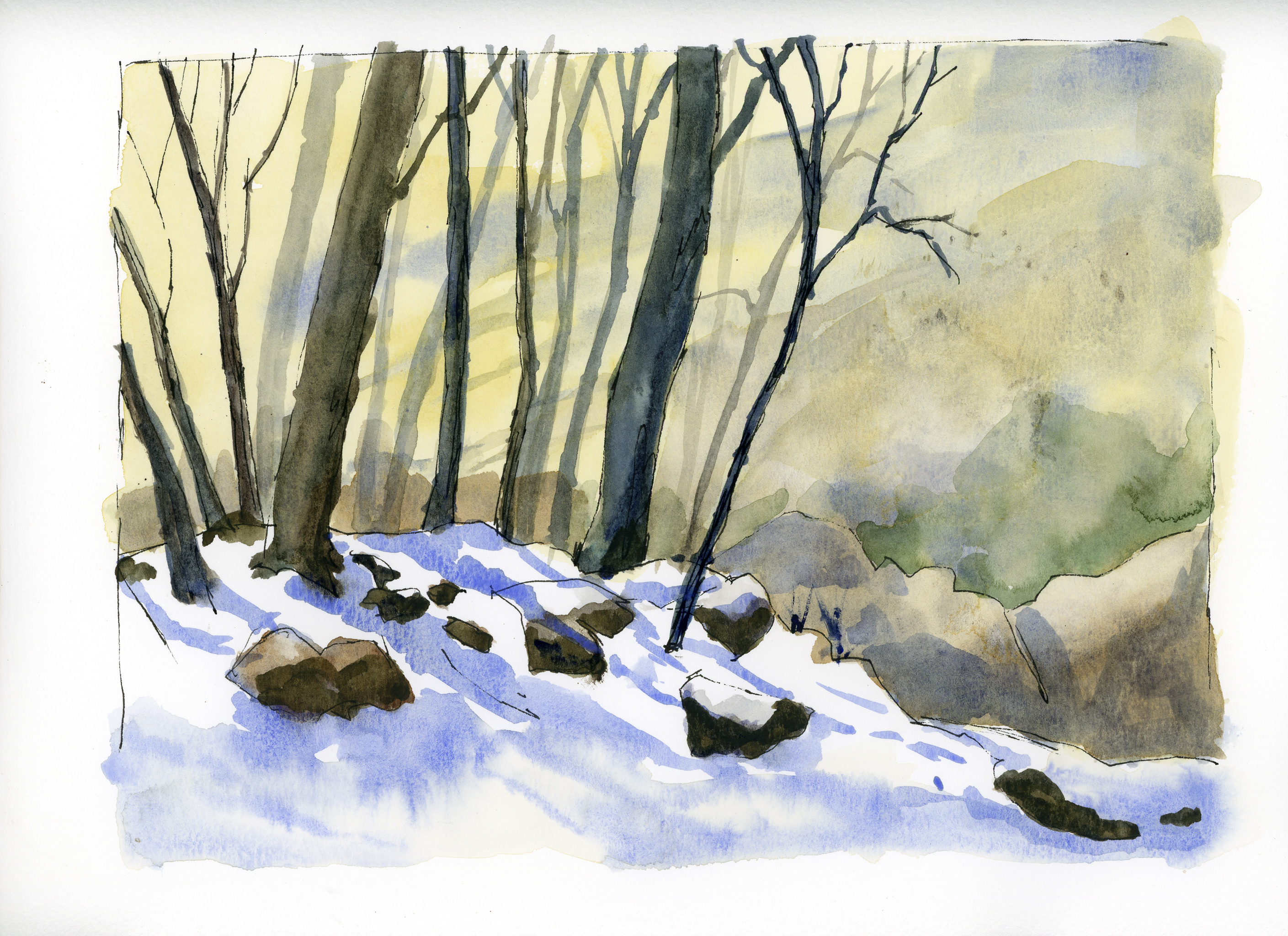
This morning, in a room only lit by the light of my monitors, and a half-drunk cup of coffee at hand, I decided to go ahead and watch Peter Sheeler’s video above, and try to do a painting.  I dragged out a bowl for water, a few brushes, and my travel palette.  I sort of know where my colors are, so what the heck – paint and draw away.

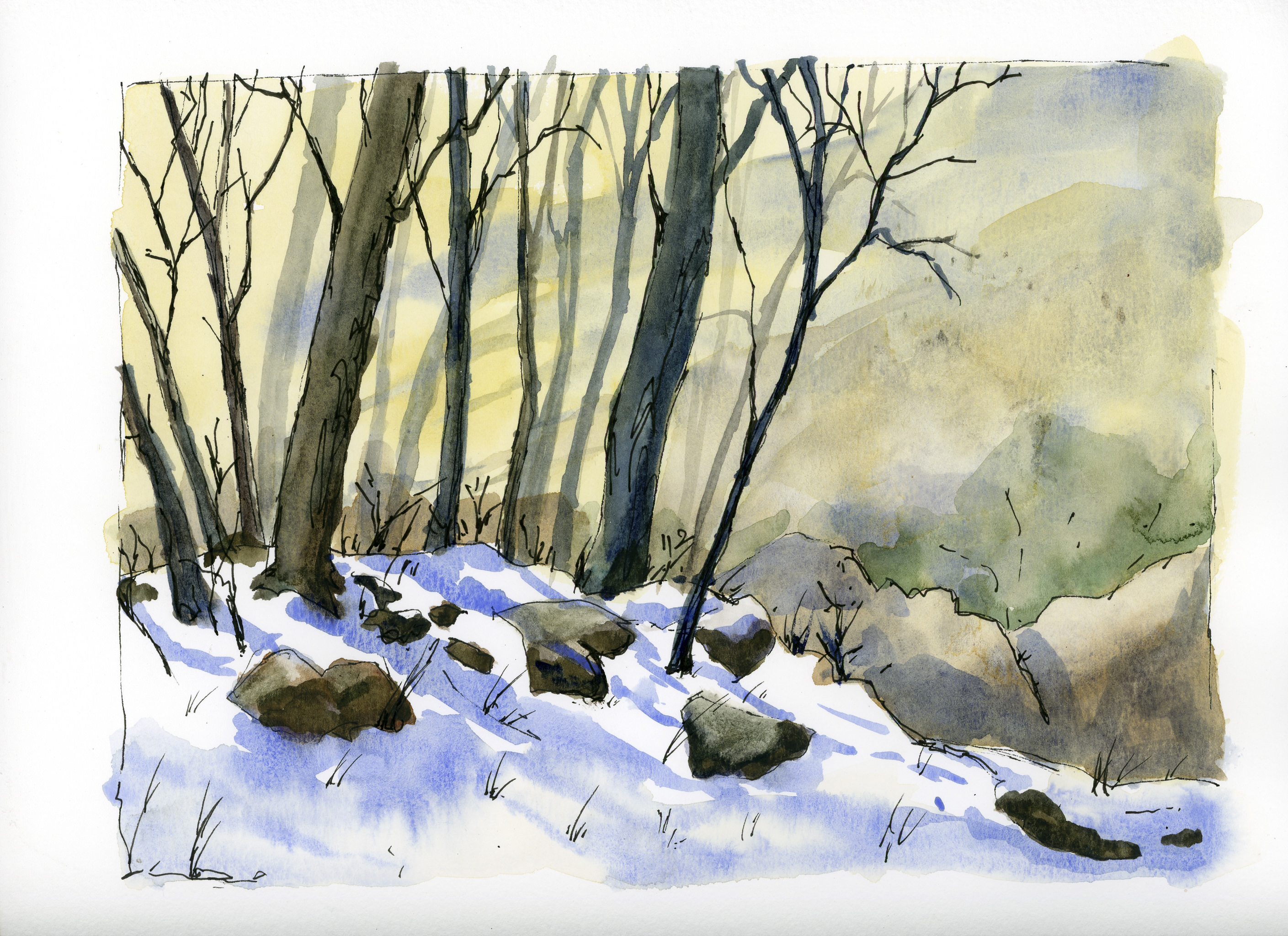
I pretty much followed what Peter did, but obviously his work is better than mine.  Despite that, I did learn a few more things.  One thing I have always liked – and will continue to like – is ink with color.  Using a limited palette is also fun as it really helps you keep yourself under control.  I think – remember, it was dark, and I was only half of cup of coffee into my morning! – I used yellow ochre, quin gold, a bit of viridian, a bit of alizarin, indathrene and ultramarine blues, and burnt sienna.  Some of these were just little dabs because I couldn’t see very well, but the main colors were the sienna and blues.

That said, below is a scan of my painting before putting in the final lines.

Objectively, it’s okay.  There are some nice areas, and there certainly is some white space (yay!  white space!), which is why I am focusing on snow painting practices.  Some good light – dark areas.  A nice bleed or two.  Other areas are dreadful, such as that greenish area on the mid-right side.

Below, the inked in version.

Frankly, I like the final one better as there is more definition.  Now – finish that coffee and jet off to work.

Have a fun day!

Book and Video Lessons for the Student: A Retrospective

I have picked up watercolor on a serious level, along with drawing and sketching.  I have neglected that side of myself for a long time, but have attempted to reconnect with that part of myself off and on.  Truthfully, it has been more off than on, but when I do delve into painting, it is such a pleasure.  Over the years, I have purchased video classes or viewed videos from a variety of people.  Today, I sat down and went through some of my notebooks and watercolor pads, and decided to scan what I have done to see if there is anything of value.

One person I have admired and enjoyed for a long time is Charles Reid.  I love his loose, wet, messiness in watercolor.  It works.  I have watched his videos and read his books, attempting to catch what he does – learning from the teacher by doing.  I have had some success, but I still tend to overwork and create muddy colors.

Another artist I have learned from is Birgit O’Connor.  Her approach is very different than Reid’s – not splashy, but controlled, thought out, and very disciplined.  The results are completely different, but valuable in that self-discipline and forethought are necessary to achieve results.  Reid’s discipline is from years of knowledge, such as how to paint negative spaces and create contrast.  O’Connor uses masking in varying forms, such as with contact paper and frisket to help preserve white space and create texture.

From both Reid and O’Connor, I have learned a lot . . . but without daily practice, it all is forgotten.  Besides needing to remember how to paint, how to manage color, I have also forgotten how to sketch.  Craftsy classes have proven to be helpful, with ones from Shari Blaukopf, Mark Taro Holmes, David Brody, and Kateri Ewing.  These classes range from urban sketching to an extensive, classical drawing class.  Each of these has proved, and is proving, to be very valuable.  Videos are some of the best learning tools when it comes to finding time to do and to learn.  Books with encyclopedic samples on how to do things are also great, such as Claudia Nice’s books on ink, pen, and watercolor, as seen below.

On YouTube, I have subscribed to multiple channels.  These range from using dip pens to lessons from extremely talented watercolorists and sketchers.  Of late, I have been working on negative painting – painting around things, rather than directly painting things.  This is in the hopes of learning to manage white space better.

It’s easy to use lines to compensate for a lack of contrast to define light areas in negative space.  The flowers are rather disastrous, but a lesson on YouTube (sorry, I don’t recall the video the trees are from, but it was fantastic!) was very helpful.  The key to that video was to paint from the foreground back, unlike in traditional watercolor, you paint from the sky down for the most part.

In addition to videos, books are an excellent resource.  I have a lot of books.  The ugly truth is that art books are damned attractive, but how many of them have I actually sat down with and gone through, step by step?  Not many.  In fact, none at all . . . until I came across a book by Jenna Rainey:  Everyday Watercolor:  Learn to Paint Watercolor in 30 Days.  Rainey’s painting style is not what I see myself doing, but what I do like is the “daily” approach and the short, structured lessons.  Thus far, I am up to Day 11, and have been really enjoying myself.  I’ve let go that nasty inner critic that expects perfection out of the gate, and have been loosening up, and doing some things that I like.

More than anything, I am happy to see I am not lacking ability – only self-discipline to work on painting and drawing when I have time.  Looking at what I have done is inspiring me to continue, despite frustrations and time.  Nothing like a retrospective to see what and where I have been, what I am doing now, and looking forward to what I might yet do.