Last Day of April – Morning Sketches

The last few days have been the quintessential spring days in Southern California – and I have been outside, but never enough. I planted some tomatoes and cleaned up some plants in the patio garden, basked in the sun, and have done very little. Today, though, pen and watercolor beckoned with the morning coffee, and the colors of spring and the outdoors called.
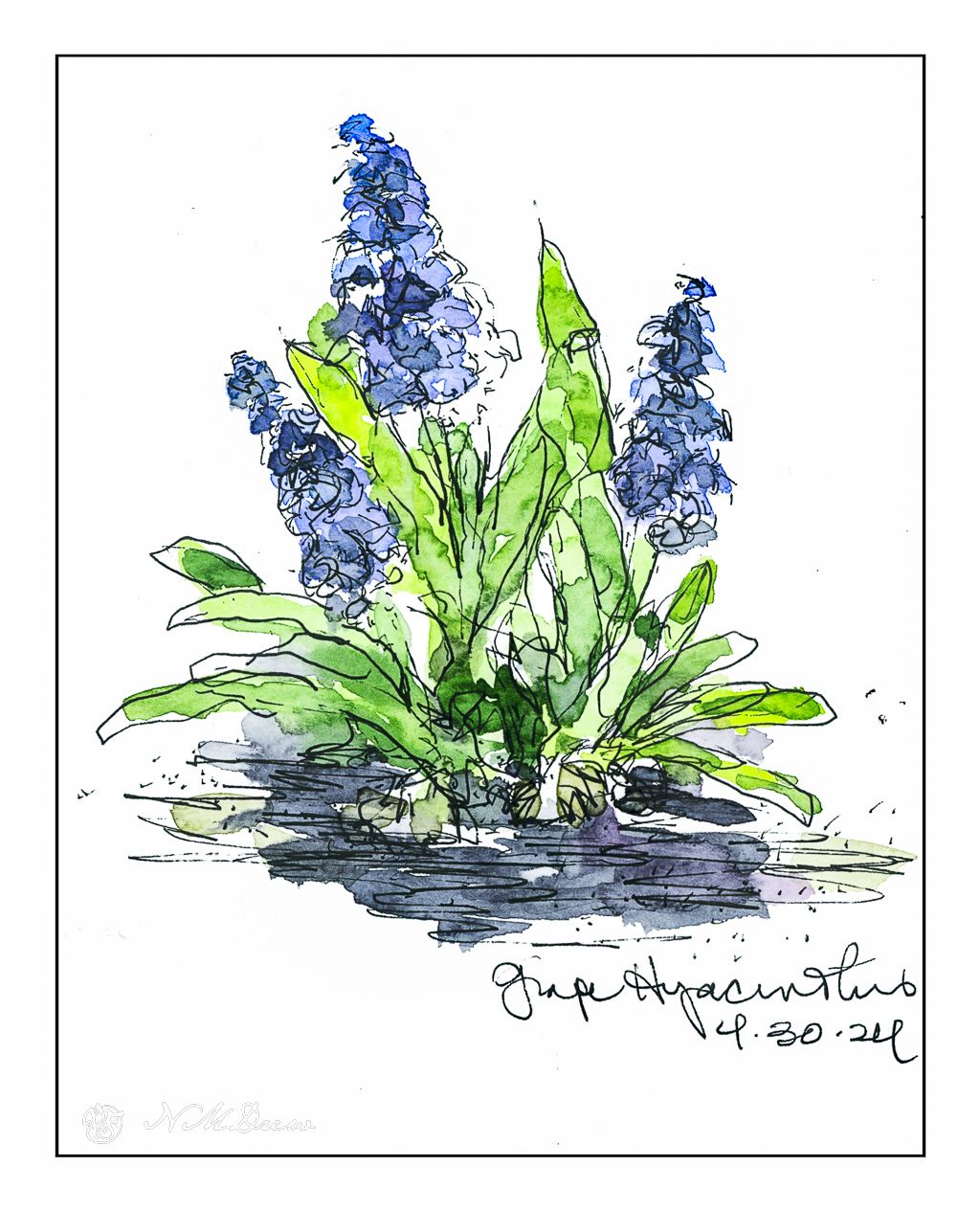
Grape hyacinths are so odd to me! I am used to the big ones, in pinks and blues and flower petals which curl outward. Grape hyacinths make me think of little bells. This is the first year I have ever grown them, and short-lived as they were, they were so much fun to see. Bulbs always make me happy, and I have a variety of them, such as iris, ixia, daffodils. Bulbs need to be hybridized for our warm California winters, so they are not so rare as they used to be, but never seem as exciting as they do when they flower in a patch of snow.
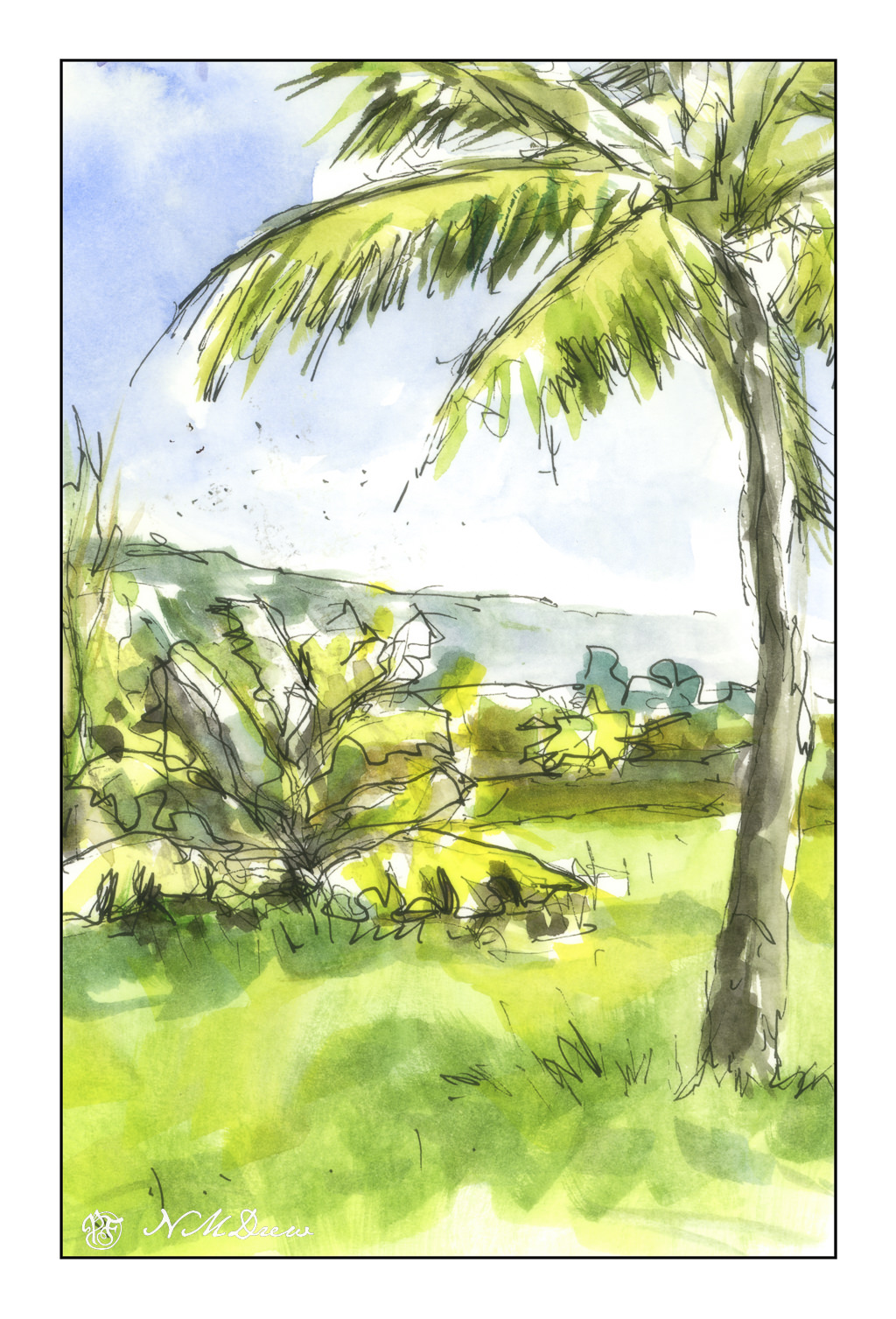
I was poring over some photos I have, taken by me or collected through Pixabay and other free online royalty sources. Palm trees and banana plants. I did this to practice dry brush on a wedge brush – nothing great but it accomplished what I wanted – a soft bit of blending, such as in the foreground.
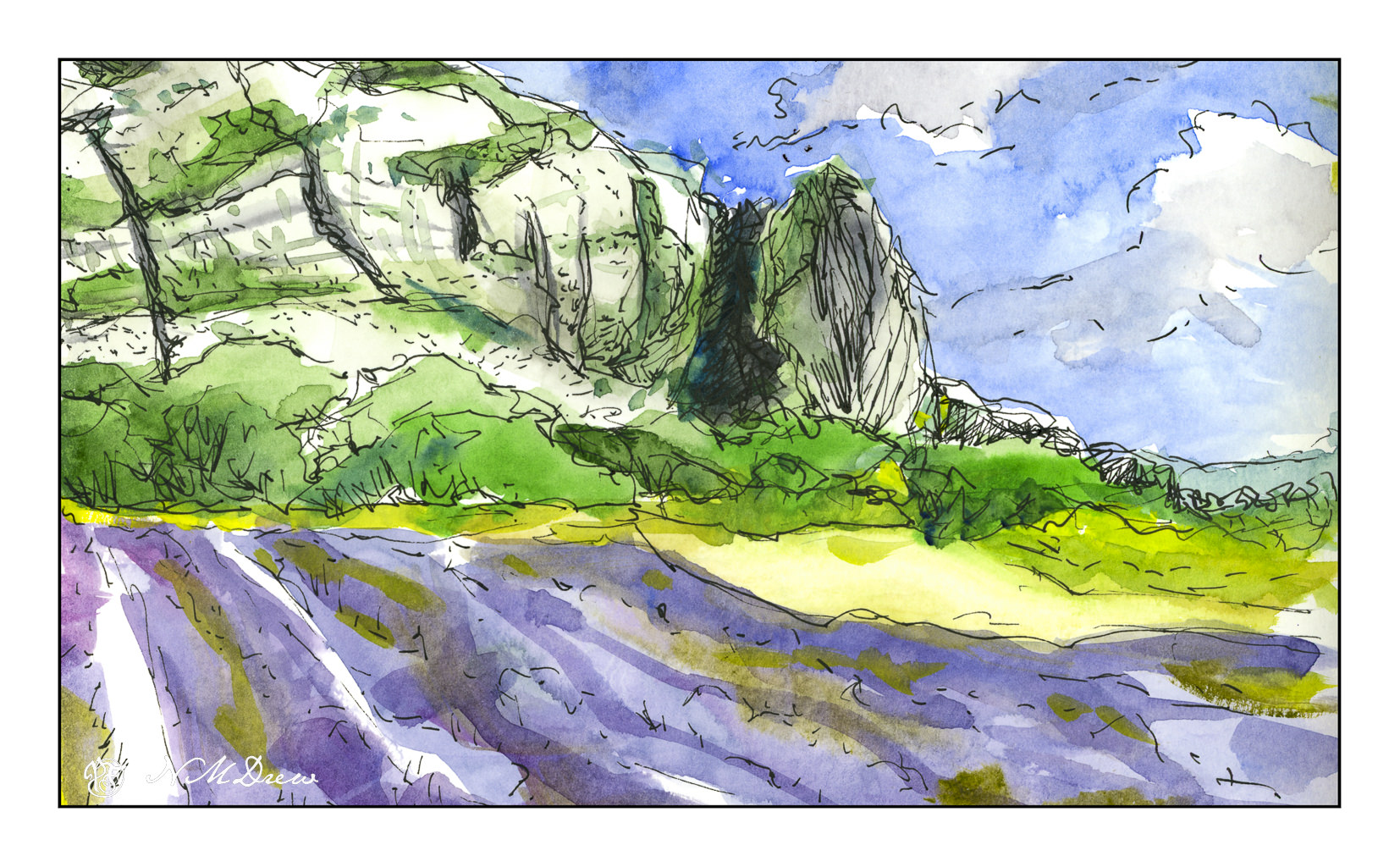
Once more lavender fields in Provence and other areas of southern France. In particular, mixing lavender that is bluish is a challenge; here, in watercolor, I diluted my purples with some blue and rose, as well as some greenish colors to suggest the lavender’s foliage. The scan didn’t do a great job. Additionally, I wanted to capture the texture in the rocky faces of the mountain, cracks vertically and horizontally in the bare stone.
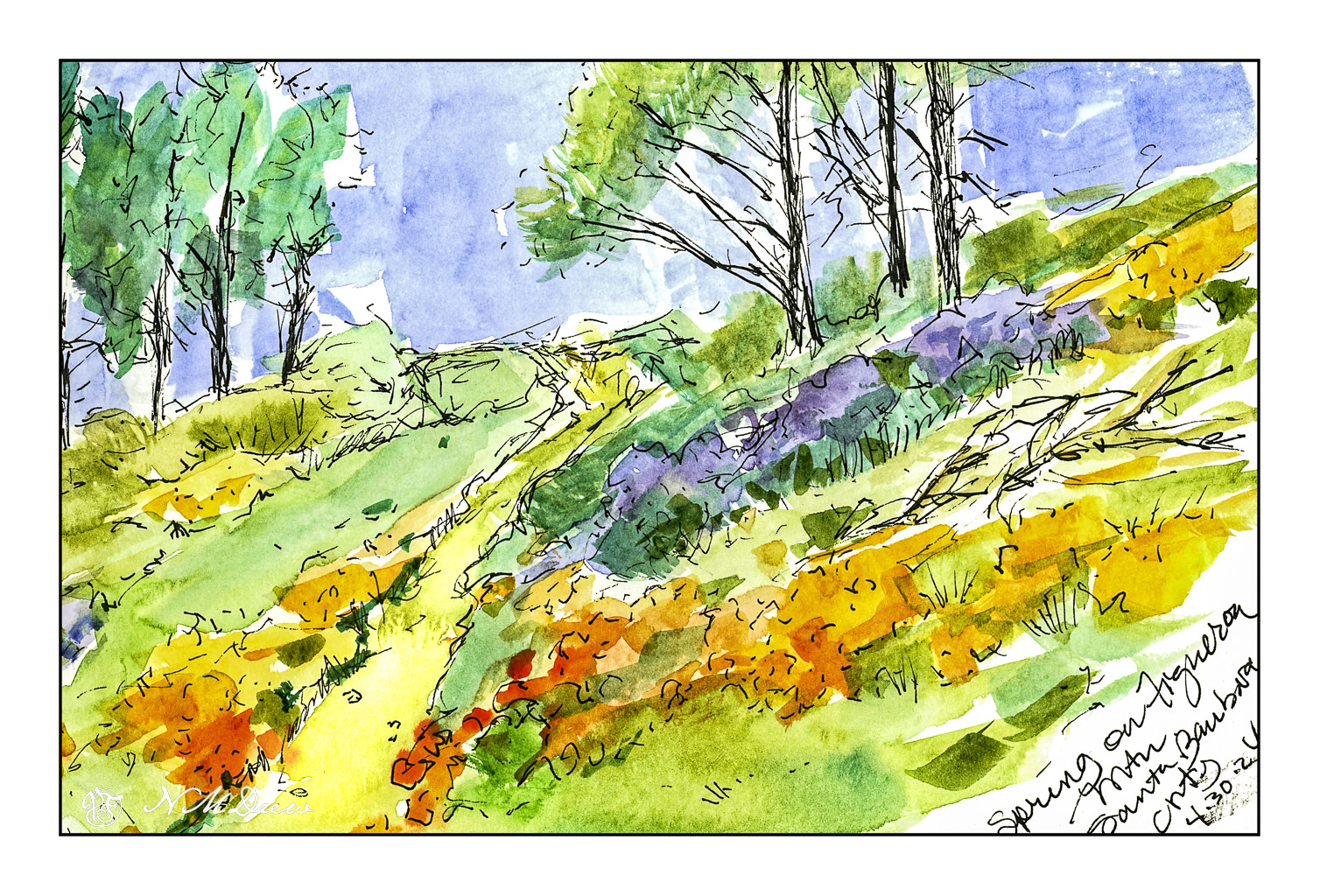
Finally, a favorite place of mine – Figueroa Mountain in Santa Barbara County. In the spring, lupines and poppies bloom, and the view across the Santa Ynez Valley extends for miles. To me, this is the epitome of a wonderful time of year in California. It is when the rains turn the hills from brown and dull to an intense display of yellow, gold, and purple.

Drawing with ink and watercolor is pleasant and relaxing, and doing it in a sketchbook takes away the desire to create a masterpiece. Here, exploration, play, practice.

Carbon ink on watercolor paper; Rosa pan watercolors.
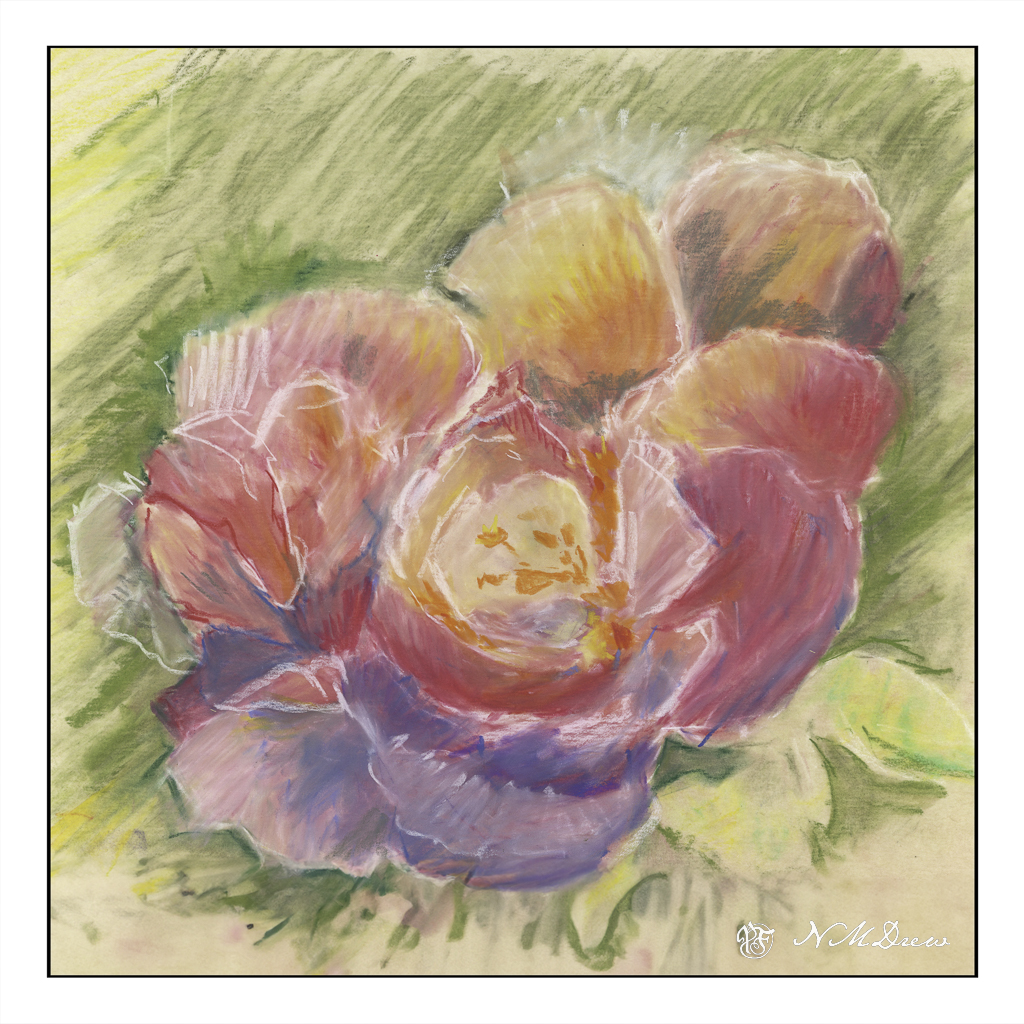
WIPs

WIP means “work in progress” – and here are my current ones. Both are causing me no end of frustration – but despite that, I am having fun (or so I keep telling myself).

This is a rose which might be turning into a peony or a flower from another planet. I am using 9×12 Uart sanded paper (600) and a couple of sets of pastel pencils. The larger set has 24 colors, the other has 12. I am trying to paint a light pink rose, but there is no pencil, even combined with white, which will give me what I want. So, I carry on, and eventually I will find a stopping point. It is fun to do, and as I am not taking it seriously, I can blunder off in many directions as I learn the quirks of pastel pencils. I have soft pastels, which would be far easier, but I am determined to finish this with what I started with.

Here, more painting with the fluid acrylics. The point is to paint white on white, and so that means really looking at what is white, and what is white in shadow or with reflected color. The center of the flowers are greenish yellow with a bit of black, and there is one stem which appears greenish in the reference photo, while all the other stems are black. I can see flaws in the paint where it was diluted with water, and the brush work is not the finest. I wonder if I will need to get out the heavy body acrylics for this effort – but, again, I need to practice to learn the quirks of the fluid acrylics.

So, there we are. Done for the day.

Flower Children, Rocks, Sky, and Mush

I had a bit of running around to do today, but made sure I had time to play. I am seriously trying to paint or draw every day, not just in between chores and appointments!

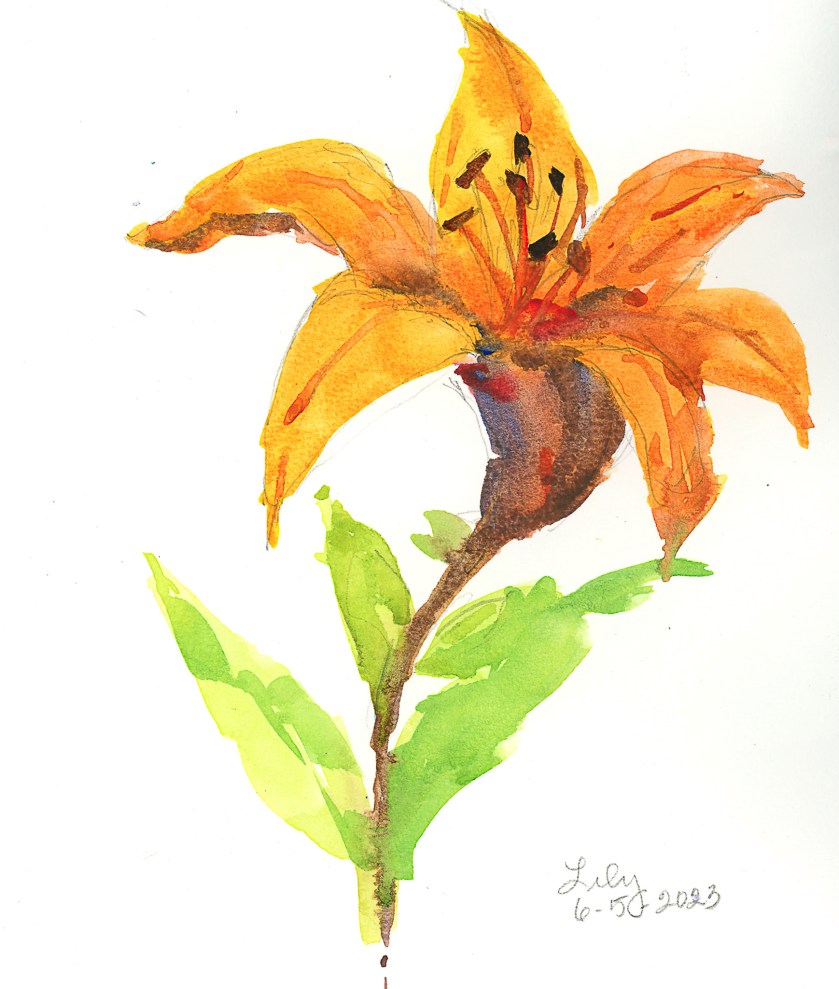
Today I was interested in playing with flowers. The first was a plein air painting of one of the lilies currently in bloom on my patio. There are a lot of them in bloom, but I decided one would be enough, to get acquainted with them, even though I see them every day, on a more intimate level. Not a great painting, but it was sort of a warm-up exercise to play with some new colors and palette layout.

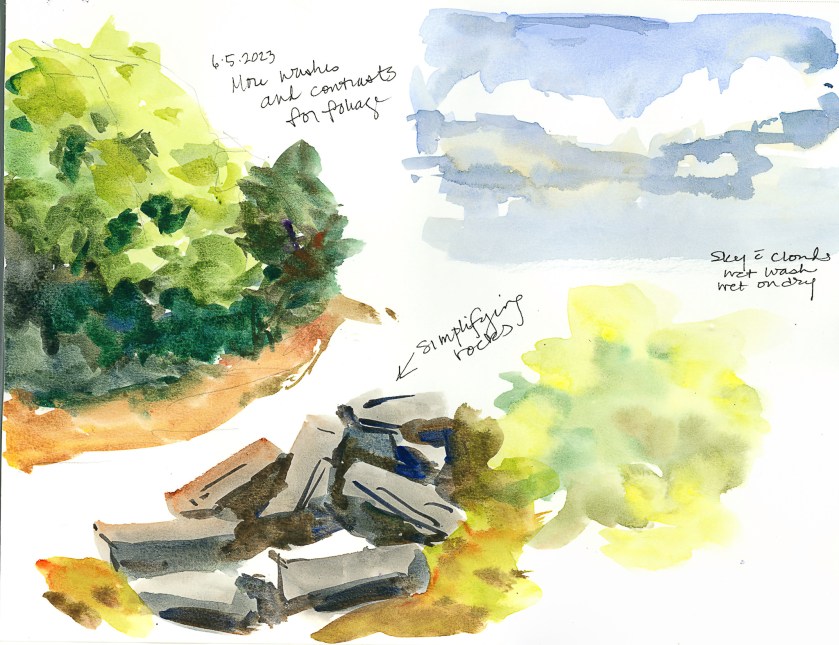
I am also using, again, some not-so-great paper, but I am getting used to it. I’ve spent some time getting it sopping wet – not really successful, but I am learning how to handle it. This is important as the next painting – the gladiolas below – was to see if I could manipulate washes on this paper. For skies, this is important especially, or large areas of color. Below, sky, rocks, and mushy trees and a color blob.

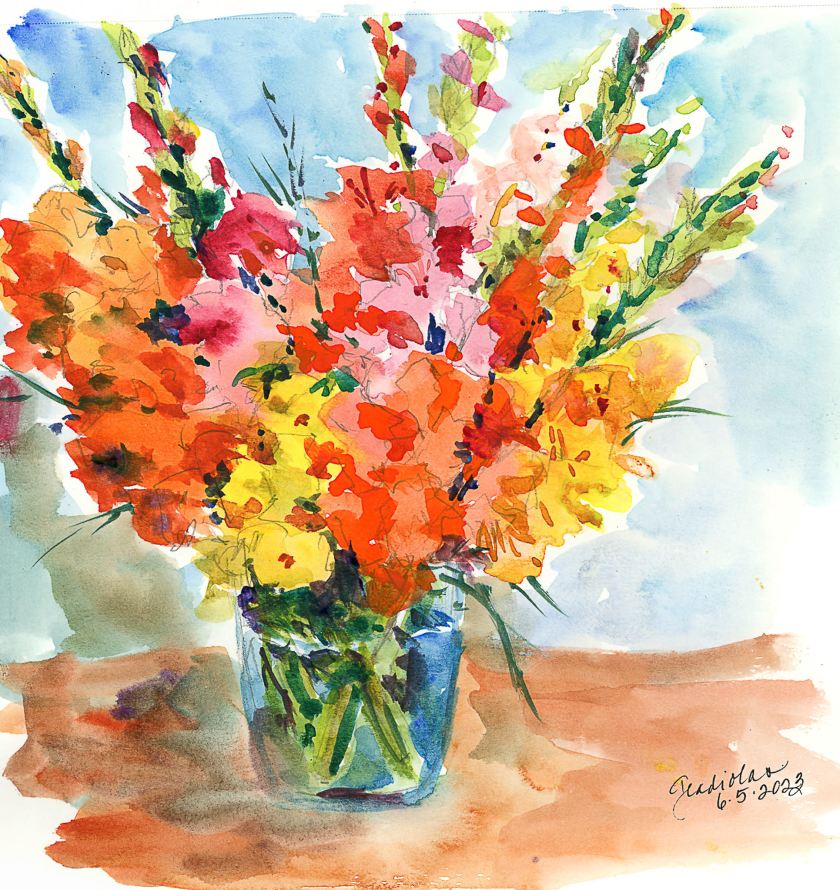
And finally, the one that I spent time and energy on. The idea was to make a painting of gladiolas (which are in a ridiculously short vase given how tall the flowers are!), making large areas of washes, and working in new and different colors as I moved along the flowers. Patience was needed, and a hair dryer helped things along, but thinking and plotting my painting moves with the air of a strategist was also part of the equation.

So, overall, today was a bit of a success. Nothing great, but I am rather pleased with the gladiolas – not the vase, background, or surface, but the point of the whole endeavor. I also am getting more comfortable with the paper and how it responds to lots of water. It is fairly heavy, and described as “rough” so it has a nice bit of tooth, and now that we are getting used to each other, it will definitely be a playground rather than work.

Morning Sketch 9 – Roses

Things are made up of shapes, and understanding their shapes and structures should – hopefully! – make them easier to paint.

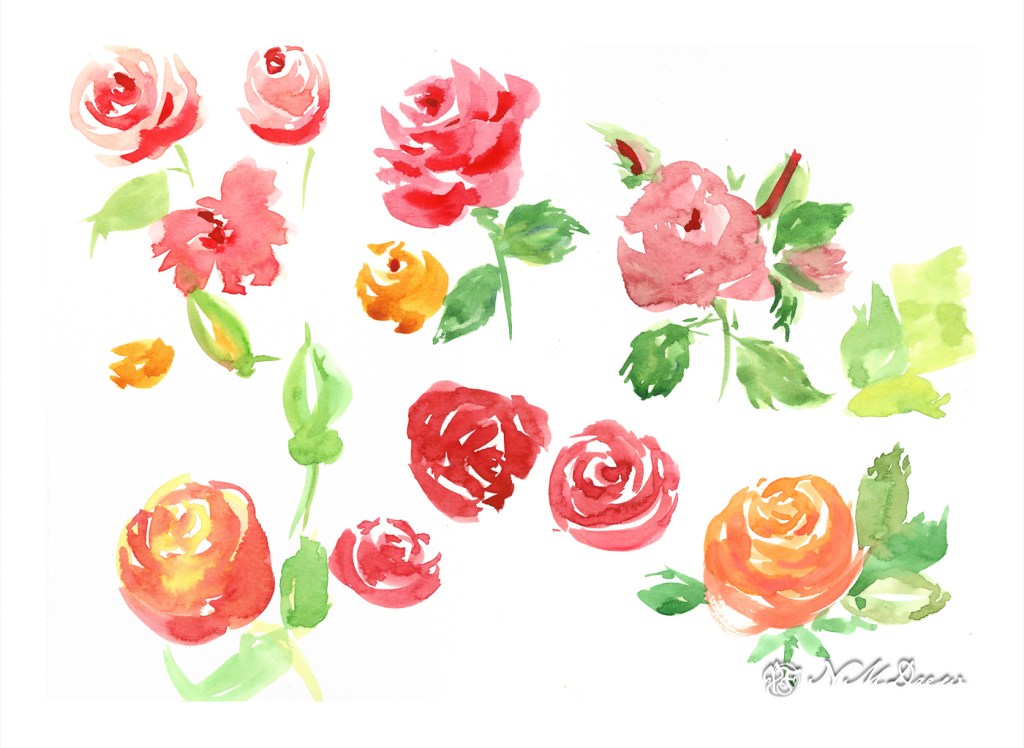
I have a small rose garden, and it always pleases me to see it in bloom. Most of the roses I chose for fragrance, but some I chose because I like them. So, as my roses come back to life after weeks of rain, it seemed fitting to paint roses.

A few videos later . . . open roses are shaped like tea cups. For me, try a coffee up. Paint them like a series of C shapes, but vary the thickness of the C strokes. These made sense. As well, when looking at the roses, I realized my way of seeing things to paint has shifted over the past year and suddenly they became easier to “see” – if that makes any sense.

Above, first play with roses.

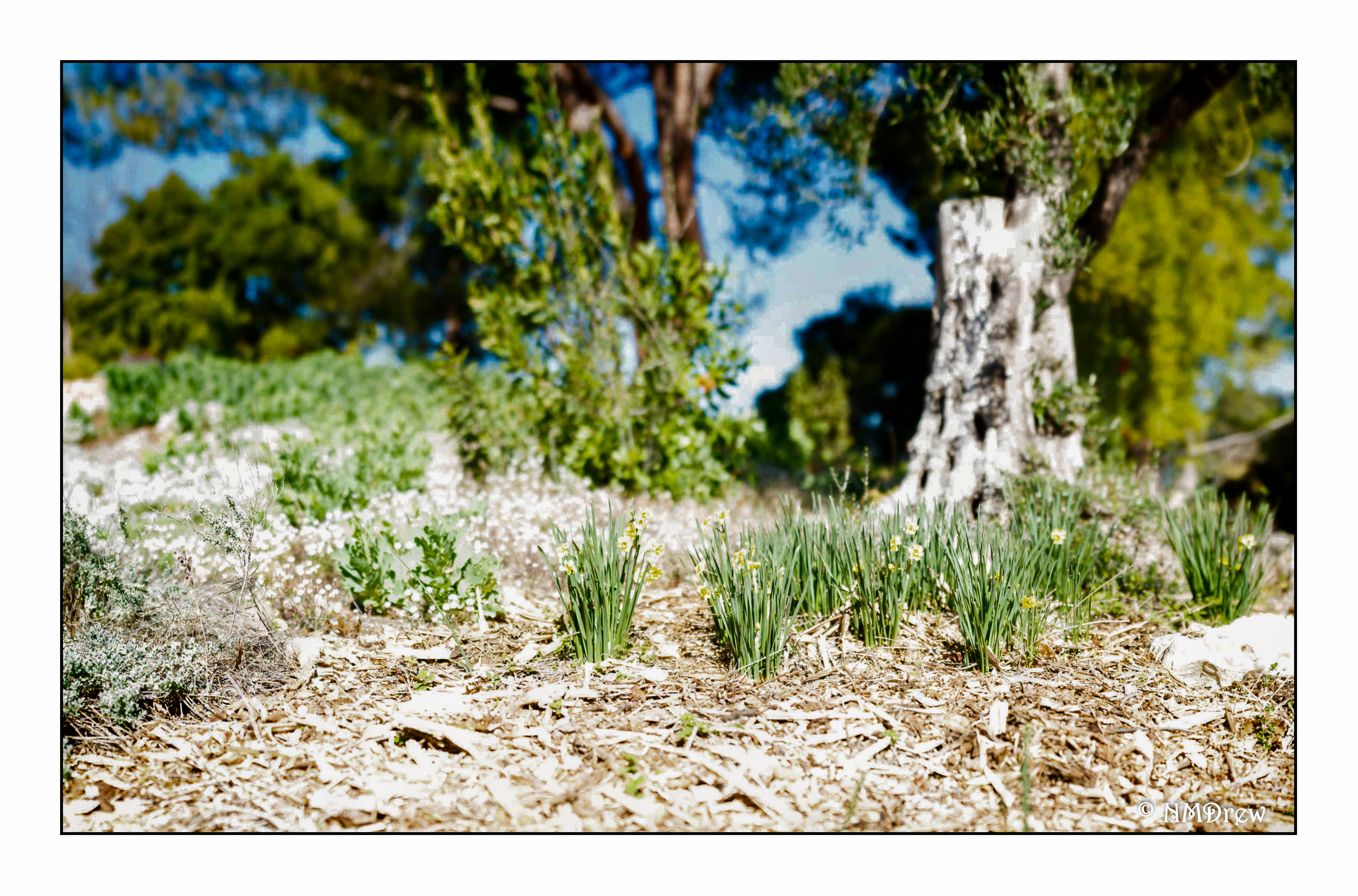
A Patch of Daffodils

This is a panorama shot with a very narrow DOF. The focal point could have been better, but it is the row of daffs in front of the trees. The third clump in the very front from the left is best in focus, but I probably could have focused on the blooms in the second clump. Oh well.

I probably took 60 or so images here, and got a really well-covered area. The point is to see the different layers of in and out of focus areas. The foreground is sort of in focus, then the daffodils, and then moving back, the trees become increasingly more blurred. Sometimes doing these big panoramas can produce exciting pictures – other times, rather meh to downright worthless.  If you enlarge the picture, you will be able to see the levels of focus more clearly.

The beauty of digital! So much can be thrown away, so much can be play, so much can be a learning experience that is cheap – film does not make this an economic adventure at all.