Flowers and Negative Painting

Negative painting is when you paint around an object. You can do this in any painting media, and it is really a good way to preserve the white paper for watercolors. As watercolor is transparent, painting over other colors influences the final result – for better or worse!

Today I decided to practice negative painting. Flowers are always a great subject (for anything!) – and a challenge, too.

I decided to start with an umbelliform flower – generic, no specific plant. If you know anything about flowers, think in terms of Queen Anne’s Lace or Cow Parsnip or Fennel. The flowers spread out over long stems branching off in a cone shape from a main stem. The shape is something like that of an umbrella, but the individual plant can be flat, convex, or concave. I chose a convex shape.

The first thing I did was pencil in the flower and stems. From there, a light wash of cobalt teal, diluted, to paint around the flower’s shapes. This took a bit of doing,and a bit of patience – to paint, and to let dry.

And, as you can see, the next step was to paint the flowers. The sun is above the shapes, so I tried to make the upper parts of the flower brighter than those bits directly beneath, and then with a spot of lighter ones further down the stem. By allowing the background to dry around the white areas my flowers were painted, in general, on a clean bit of paper. The colors are more clear. Yes, I did go in here and there later to paint onto the flowers again, and on the background, in an attempt to make sure I didn’t have any overwhelming pattern repeats and to help or improve areas I thought were not quite to my liking.

My next attempt is Spanish Broom. If you know what broom looks like, that is great – you know there are a lot of bright yellow flowers and buds which all clump beautifully together on a bush with dark green foliage. I did this background with the same goal as the umbelliform painting – keep white paper for more clear colors.

I took this painting a lot further than my umbelliform when it came to negative painting! I did 4 to 5 negative painting layers to get the sense of busy-ness of a Spanish Broom plant. I first added cadmium yellow, painting into the white paper and leaving some uncovered. From there, a bit of quinacridone gold or yellow ochre to add dimension to the flowers. Once these colors were dried, I went in with a slightly darker and more yellow green to depict leaves, and from there consecutive layers of darker and darker greens. In the end I diluted some white gouache into a greenish yellow mess on the palette to paint into the leafy areas.

As with the previous two flower paintings, I did a quick, simple outline in pencil. However, instead of painting the entire background and in between plants, I used the big green leaves of the Greater Celadine plant as a frame for its bright yellow flower, and greenish-yellow and dark green buds. Again, leaving white paper was important for the freshness of color.

The next step was to paint the yellow flower itself overall – no shadows or gradations until later. The yellowish-green buds were painted more wet-in-wet for blurring. I also painted some layers of darker greens and warmer greens on the leaves, and a mix of cadmium yellow and ochre for the shadows and stamens (pistils? – can never remember!) within the flower itself. The final touches were the fine hairs on leaves, stem, and buds. I used pure white for painting them on the colors, but added some lavendery green with the white gouache to paint onto the white paper in the background.

These exercises were time intensive, but in the end the focus and willingness to be patient paid off. I like each one for different reasons and I used each to try different ways of painting flowers. All of these are in my big sketchbook, and I am beginning to realize with each painting experience how much both a sketchbook and painting daily as much as possible are paying off. This along with losing a fear of failure a “formal” painting can bring are allowing me to explore and experiment in ways I never foresaw.
Potted

Every year I plant flowers in pots and in the little front garden bed outside the studio window. I let the roses alone along one side of the house, and the glads and fig tree, too. The front bed reseeds itself, and at times I add to it. The side patio, though, is where the fun often is to be found. There are some permanent plants, such as bulbs which return every spring. Then there are herbs and flowers and tomatoes (although not this year). Here are some of the lovelies I have in bloom today.

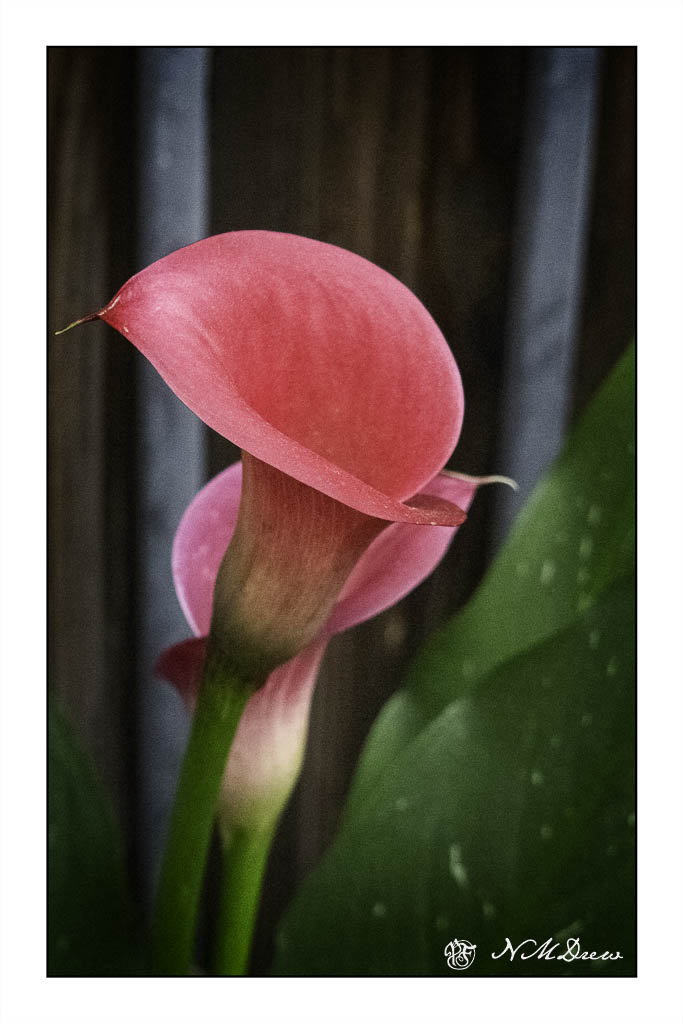
Red Calla / Easter Lilies
Ixia (?)
Ixia (?)
Sunny Sunflower!
Pansies from Auntie Am
Carnation Variant
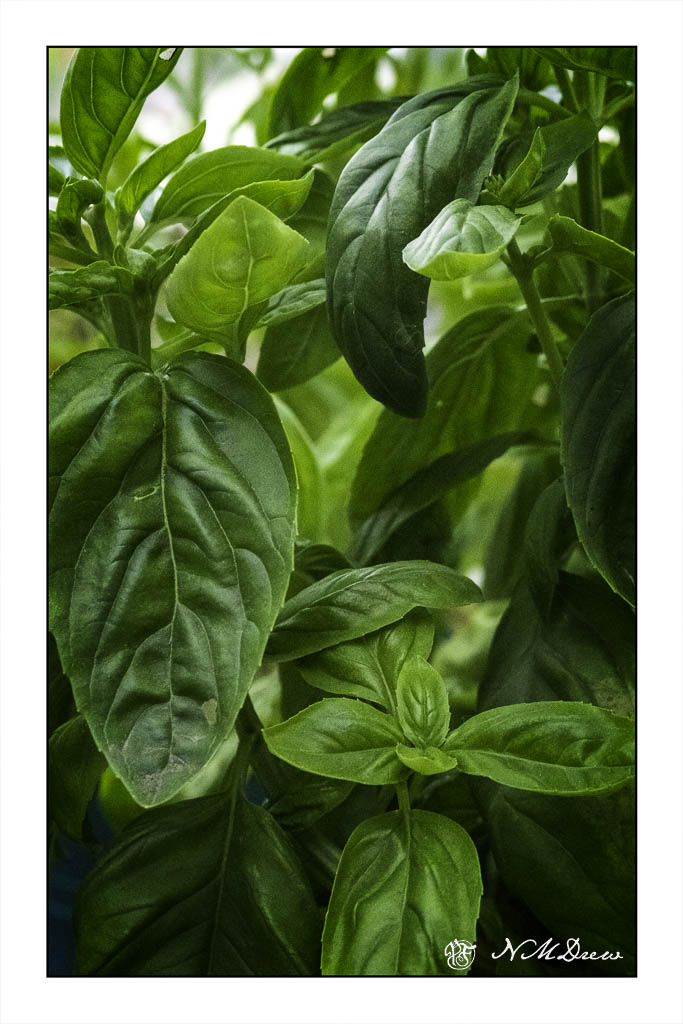
Basil, nee Rathbone
A Passel of Orange Lilies
Individual Lily in Bloom
Dianthus, Near and Far and Out-of-Focus
Mandarin or Tangerine on the Tree in a Pot on the Patio

And there you have a few. Some last a long time, others fade away in days. The joy of a garden, the cycle of life, the fragrance of flowers, the hum of bees – add a bit of sun, a good book, a comfy chair and birdsong, and a slice of heaven to be had and held.

Cosmos on a Summer Day

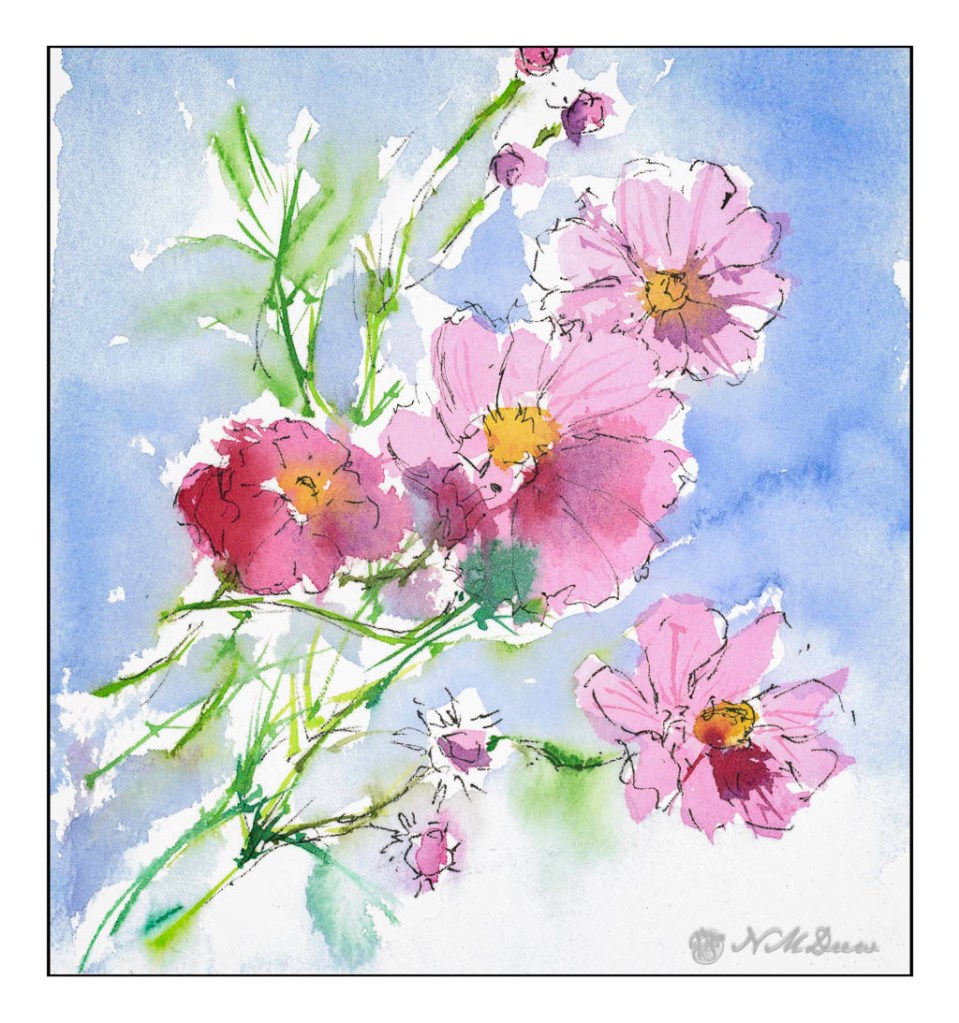
Yesterday I left a lot of the normal stuff undone, so this morning I had a bit to do! In between this and that, I looked out the studio window. My front garden is loaded with flowers – mostly yellow – but the pink cosmos are coming into their own.

I always enjoy their pink-to-red violet color, especially when silhouetted against a bright blue sky. Out came the watercolor sketchbook, a micron pen, and quick little sketch. Catching that pink is hard, and the shadows on the petals themselves even harder. Still, summer is here, the Solstice was here, and it is time to enjoy it all.

This afternoon it is off to the beach!

Potted Flowers without the Pots

I wasn’t interested in the flower pots these potted flowers are in, so I left them out. Now they are unpotted for your perusal.

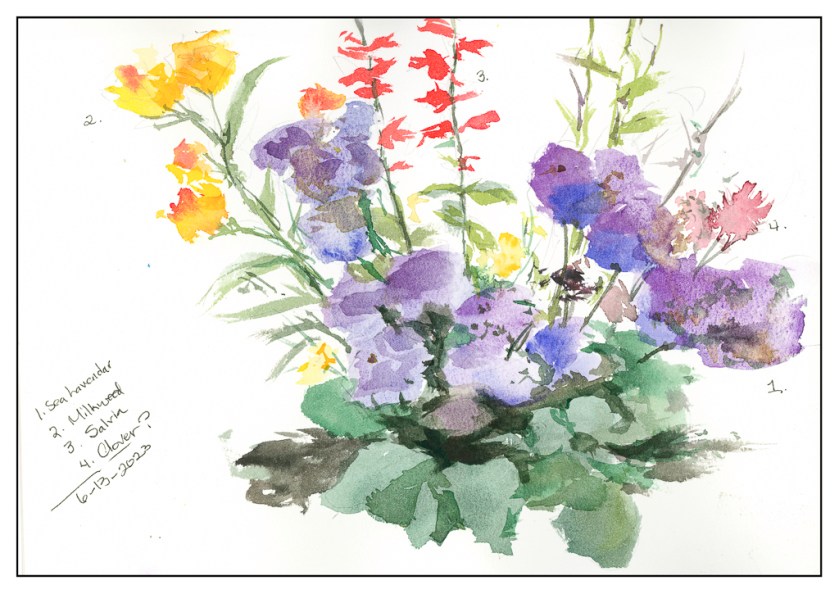
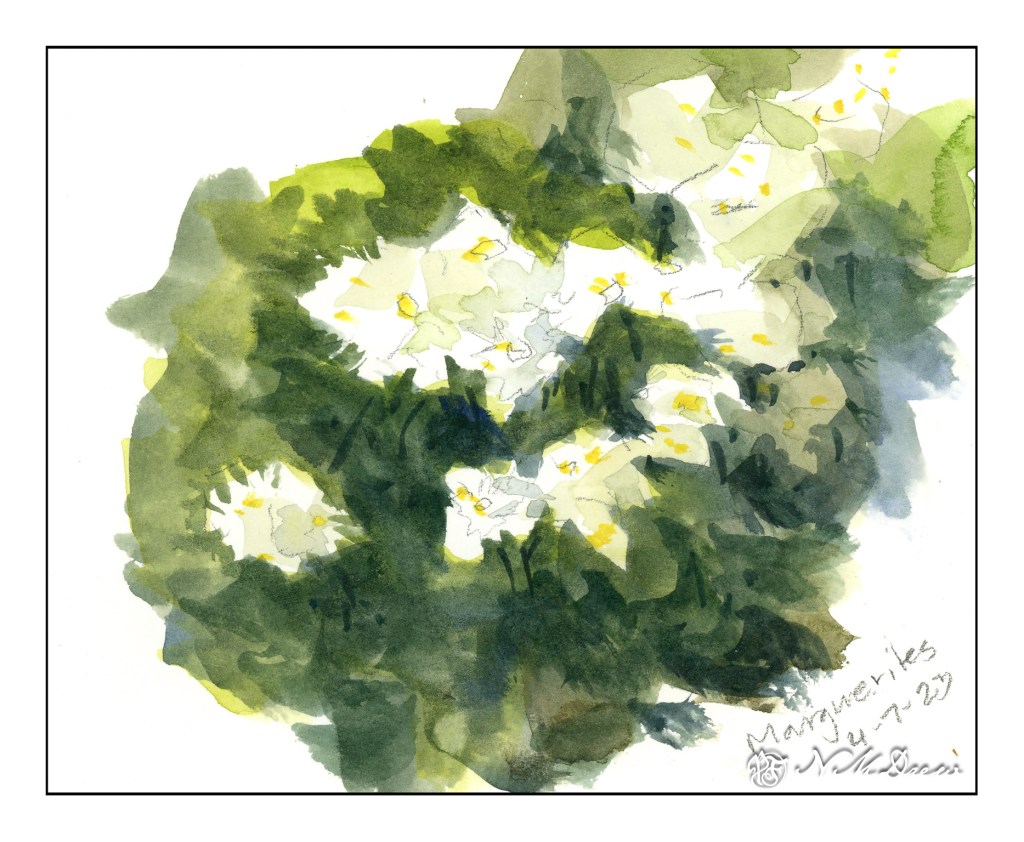
Above are what are supposed to be little daisies and some lobelia. More negative painting practice, which didn’t really work out, but I did try it, both around the daisies and then painting green onto green in the greenery.

Venery in the greenery anyone?

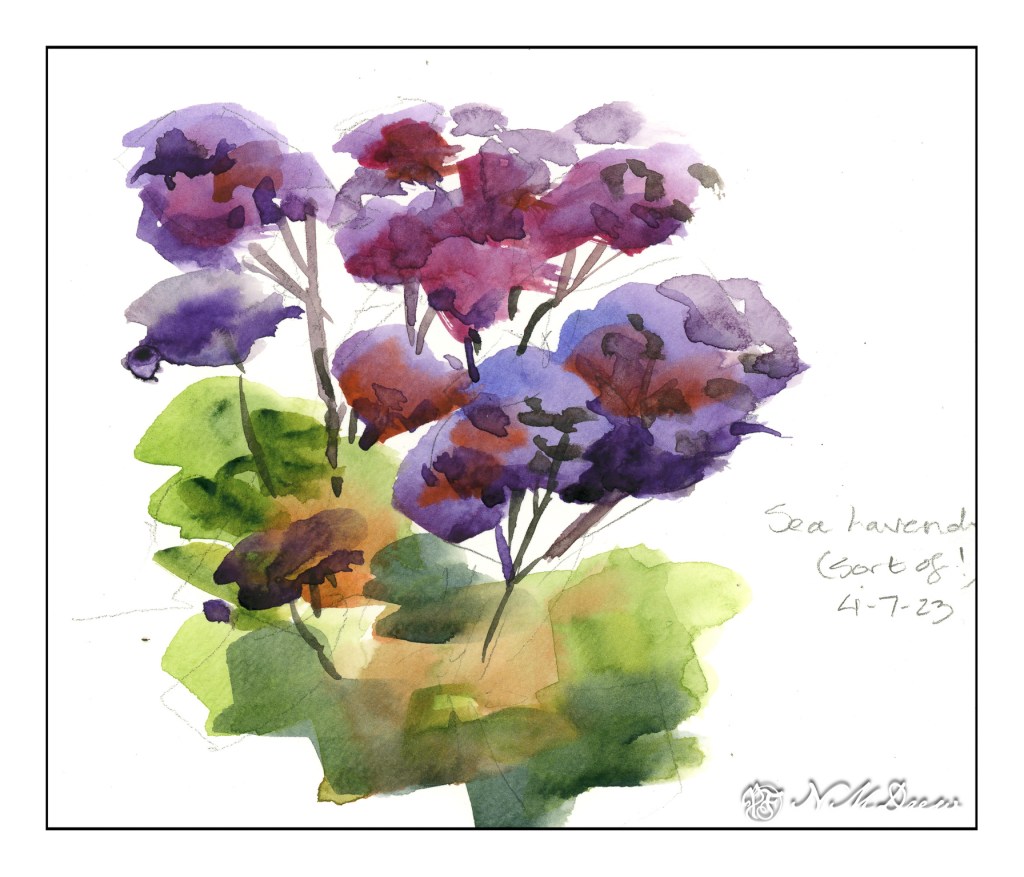
I am much happier with this painting than the first one. Some negative painting, such as in the leaves and in the lavenders of the sea lavenders. With both, but particularly the sea lavender, I also tried to merge colors in the wet washes. There was a cauliflower which occurred in the far right sea lavender, but too much working on it made it a bit more messy. My mind was on painting colors, not really on patience of waiting for things to dry a bit – hence the cauliflower.

I worked on these this morning, painting on the patio in a bit of a gloomy day, but it was certainly pleasant enough. Being outdoors while painting certainly is beginning to have its appeal; now I think I might take a handcrank sewing machine outside to enjoy more of this summery now sunny weather whilst I sew!

Mas Flores

Today’s post is batch of flowers done in a Hahnemuhle Watercolor Book instead of the sketchbook for yesterday’s post. Today I am using a “real” watercolor sketchbook that has watercolor paper in it. I could work with a lot more water without getting blooms or having the paper buckle as in the other book.

I also used tube paints that were on my palette, but found that the paint, having been there for awhile, was very dry. It was difficult to pick up paint in large quantities – just like on the pan paints. To fix this, I put several drops of water on each color and let it sit for awhile – maybe 10 minutes. Misting water on doesn’t suffice – I needed a small flood!

One thing I have done here is to focus on negative painting as well as carrying a plane of color with varying colors along the page. I tried to work light to dark, but other times I worked around the light areas to give them shape. All this is play, experimentation, just doing and then observing, thinking about what I did and what I want to do.

Outcome? Thoughts? A few of my own:

  • quit dabbing!
  • use really wet, saturated paint
  • use paint more directly without glazing
  • values

None of these are any good. They show my painting faults to a glaring degree. However, as practice, it will do very well.

Well, gotta run!