Afternoon Sketches

It’s a nice semi-sunny day this afternoon, and the wind is soft, the temp is about 70F. It’s perfect for spending a bit of time sketching in ink and color some of the remaining plants after the winter clean-out.
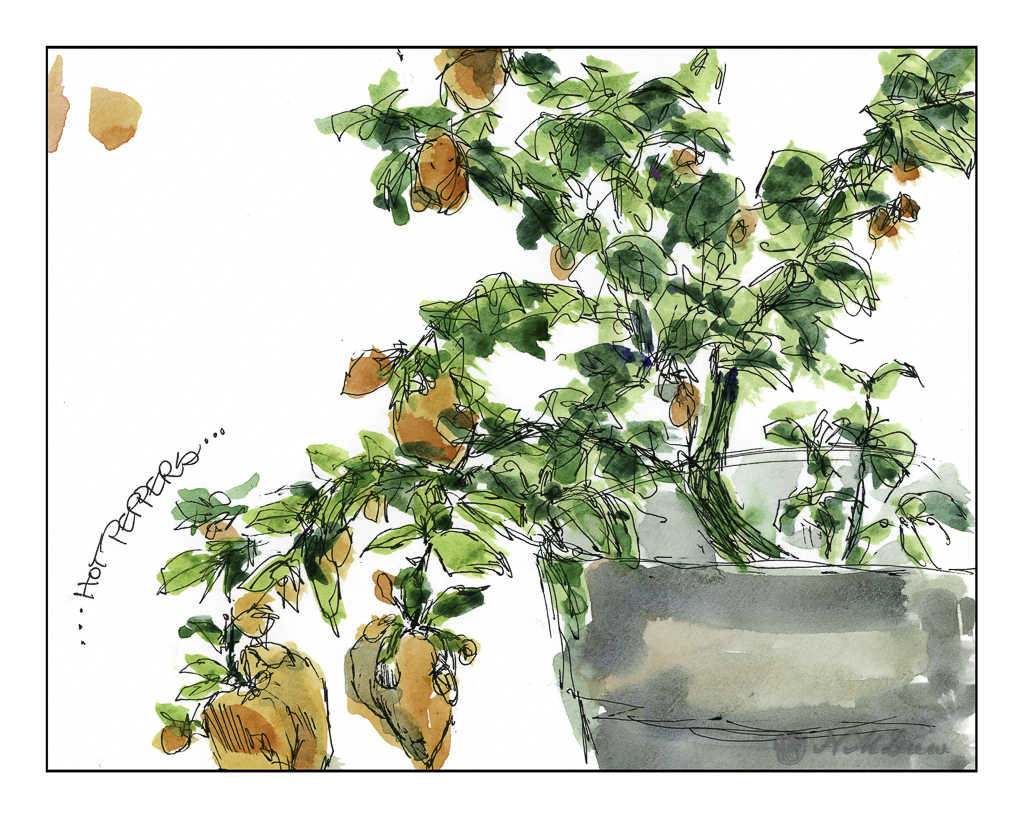
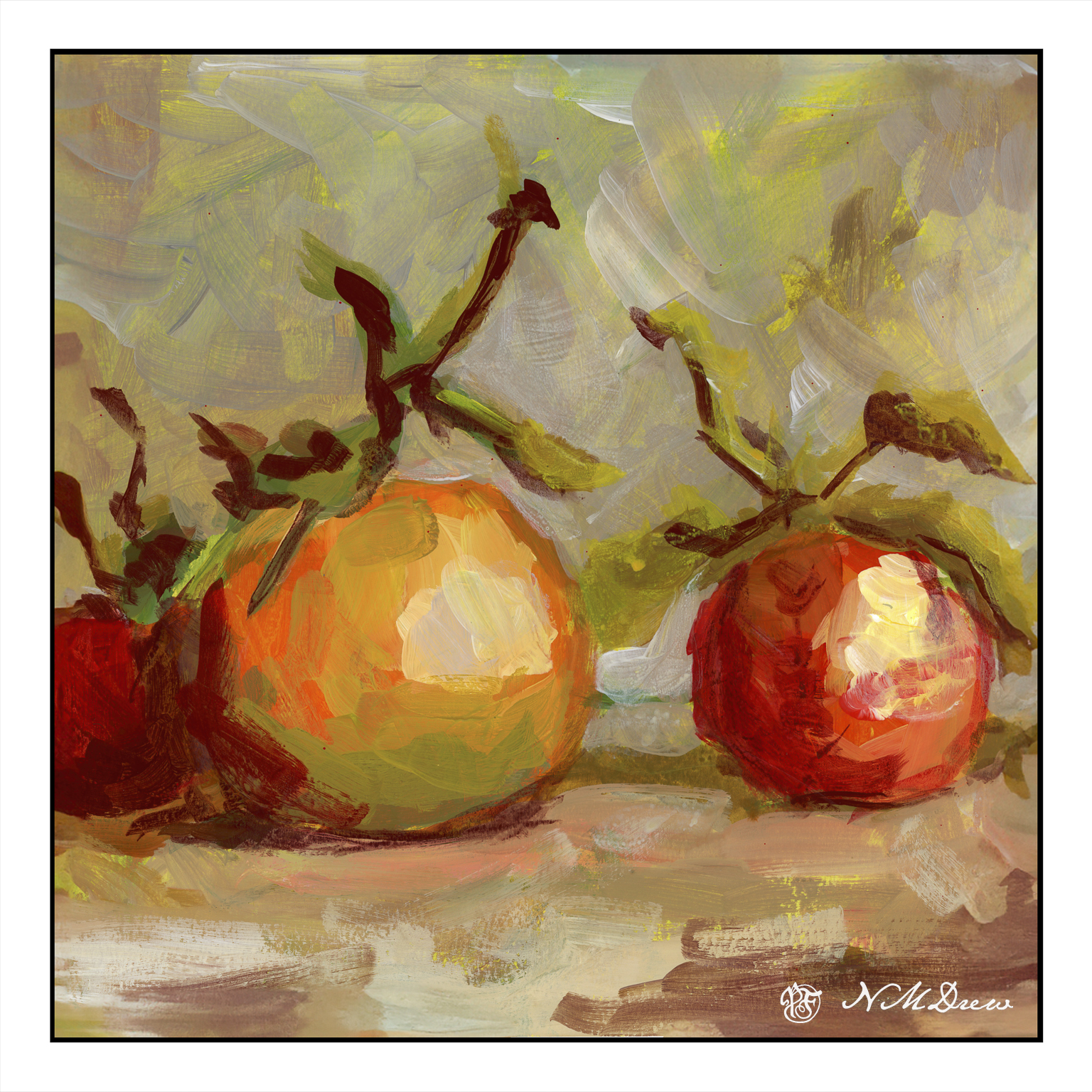
These hot peppers are from last year – and it appears they are getting some new ones! The little tiny blobs of orange are this year’s crop – I guess it is time to harvest some of last year’s fruit. We don’t know how hot these peppers are, but we should give them a shot.
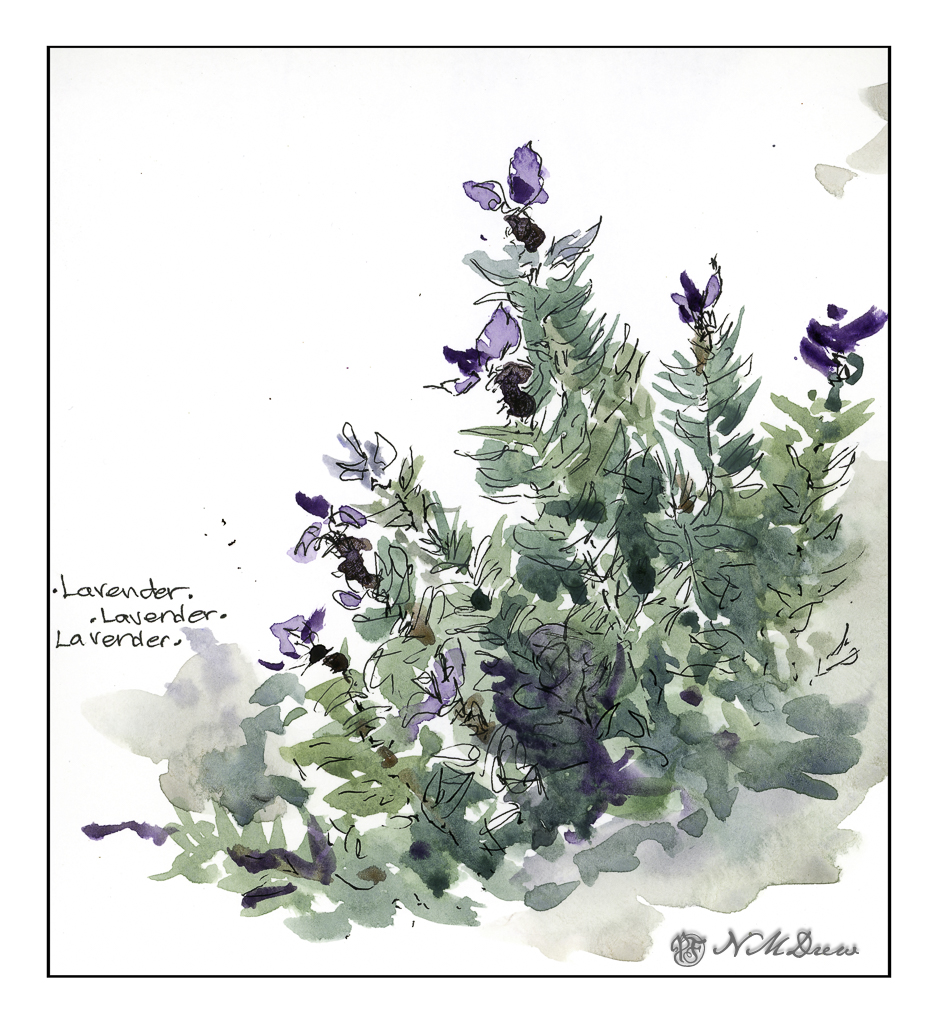
I have three different lavender plants. I am not sure which one this is – I have a tag, but am feeling too lazy to investigate. What appeals to me is the bright purple flowers above the soft grey-green foliage. They look like tiny purple butterflies to me.
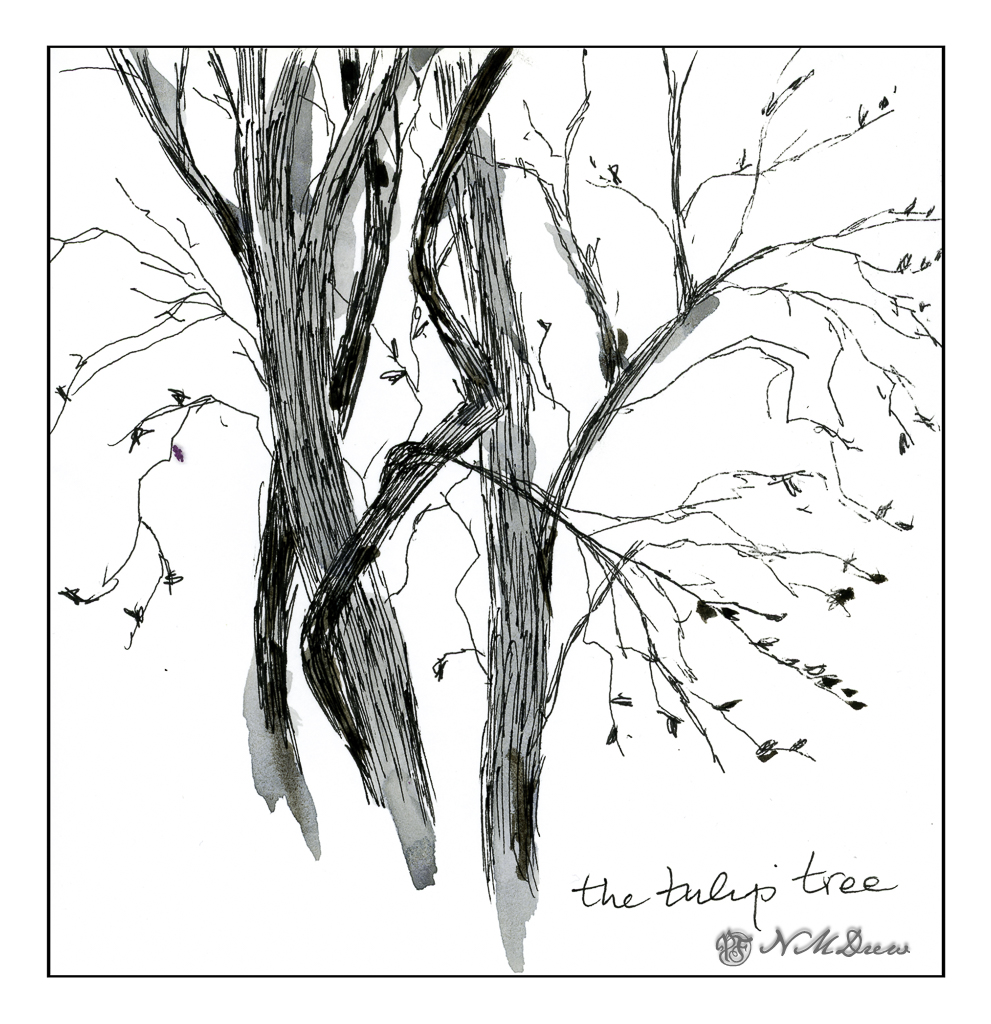
This is the tulip tree which graces my front yard. It’s a strange tree – not really a good one for a neighborhood. It tends to be brittle and branches can break and fall. We have had some 6 footers and then some fall onto the sidewalk below. And then it oozes sap all over the sidewalk. Birds love it – sparrows, crows, doves, and owls have been known to visit. The leaves are an interesting shape, and while it flowers, they are not showy. However, come autumn, the leaves turn an amazing yellow-gold and drop onto the lawn – and this is what makes it so beautiful to me. Add to that, right now the bare branches and twigs are just lovely against the sky.

Colors here are very limited. For the peppers I used organic vermilion, cad and lemon yellow, a bit of Hooker’s green and cobalt teal. The lavender was carbozole violet, and the foliage was a mix of lavender, Hooker’s, and yellows. The tulip tree is primarily the leftovers on the palette, so who know what the colors could be!

And now, time to head out for some fine Thai food provided by Auntie Am and Uncle Ed!

Autumn Trees, with Apologies to Wolf Kahn

Color always fascinates me, and two modern painters, Richard Mayhew and Wolf Kahn, are masters of it. They pay tribute to the natural world with their colors and whether or not the landscape is based on reality doesn’t matter. The subject matter and the colors are the point, just as the squares and rectangles of color are of such importance in the work of Mark Rothko.

For this study, I looked at several of Kahn’s pastels of trees and woodlands. His color choices range from contrasting and bright to subdued. Sometimes the trees are distinct from the background, other times almost camouflaged into the surrounding foliage. I decided to continue using linseed oil here and soft colors to see what I could do with blending and creating lines for tree trunks within the the woodland while keeping the visuals of Kahn’s woodlands in mind.

This was painted in one sitting, and as the paint was damp and pliable, it was fun to move it around, wipe some off, add more, and then use the brush to create lines and dots to suggest trees and leaves and open field before entering the woodland. As I painted, I realized that I could place lighter colors in vertical strokes between darker areas to create tree trunks. I used short horizontal strokes to suggest foliage.

Again, I painted on the linen-textured Canson XL Oil-Acrylic paper. Linseed oil allowed for easy movement of the paint. And, again, this painting has been taking forever to dry out in my chilly garage, but I scanned it anyway, and cleaned up the glass afterward.

I really like Kahn’s work, especially in his later years. I also want to explore color as Mayhew and Rothko have used it. Besides exploring colors, exploring the subtleties of one color and its variants within a given area will be fun. Mayhew and Rothko will be fun to emulate, as has Kahn, because the experience of copying is a form of exploration that adds to knowledge by doing, and that, to me, is the best part of all.

Morning Sketch 10 – More Roses

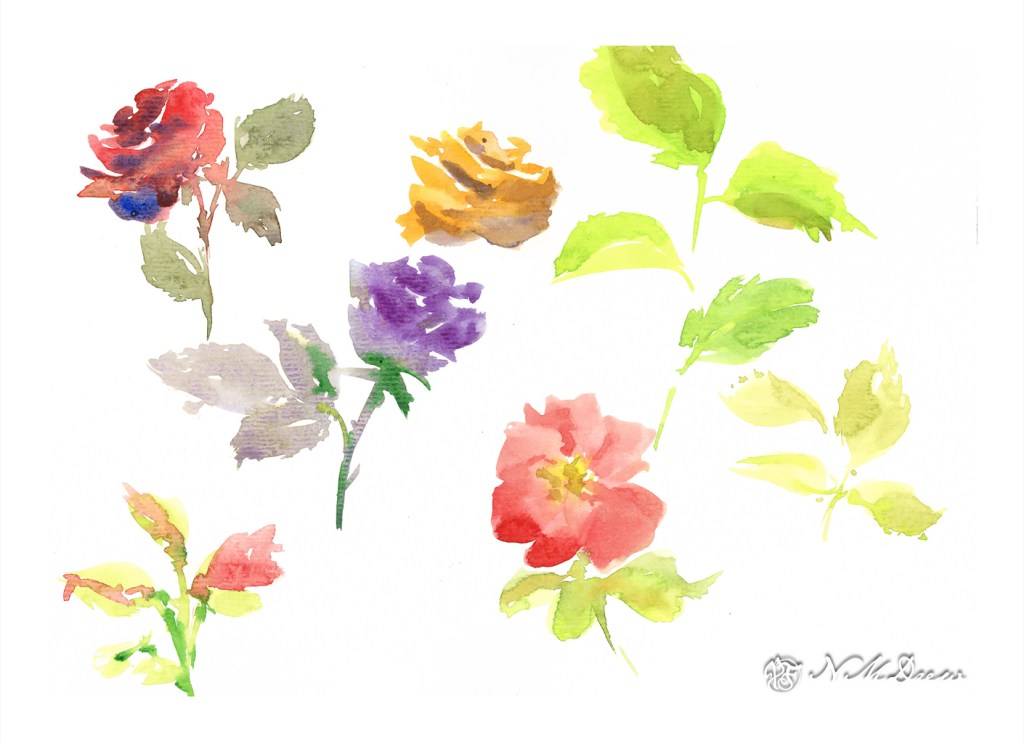
More roses – more C strokes – and then other kinds of strokes to make leaves. For the leaves, brush point on paper, squish down and move, bring brush up to another point. Just as in sumi-e! Then, while the paper and paint are still wet, take the tip of the brush and create little points around the outer edge of each leaf. Some roses have pointy leaf edges, others do not. I don’t think the Rose Police will come knocking on my door, though, so I am safe.

Roses in these kinds of sketches are easy enough to do. However, creating a successful painting of more than one sketchy rose is another story. Light, shadow, shape all begin to play together, and sometimes not very nicely.

Here, a rose with a simpler petal style than the classical tea rose. As a kid in the midwest there were deep red wild roses throughout the countryside, and here in California there is a bush as above along a local trail. There are about 5 petals around a yellow center, and the wild roses are messy things that are such a pleasure and delight to encounter.

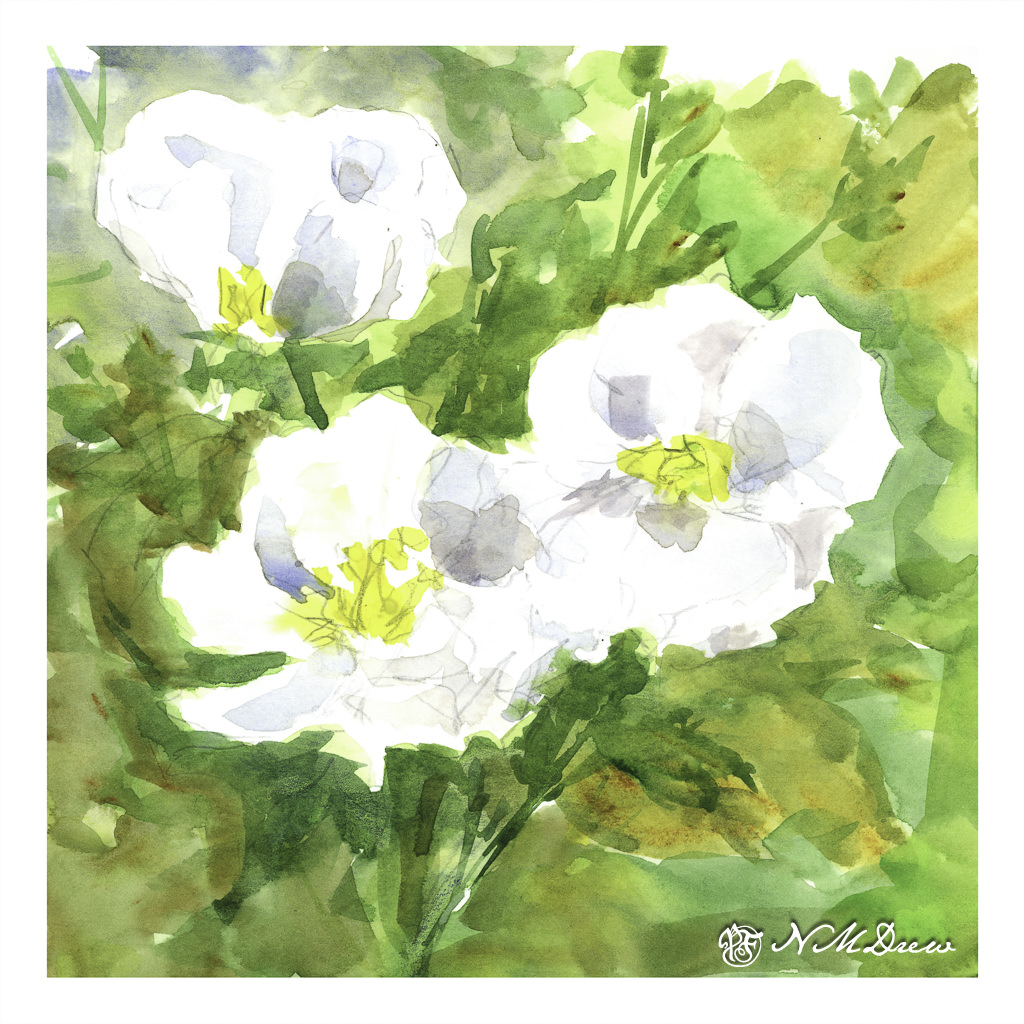
Painting a white rose is not easy because white is influenced by light and shadow and shade. Instead, you have to look at the colors in the white – light? dark? cool? warm?

The above little painting was a success, but it is only a sketch. A bouquet of roses will be far more challenging and I really doubt my ability to succeed there.

A Winter Morning

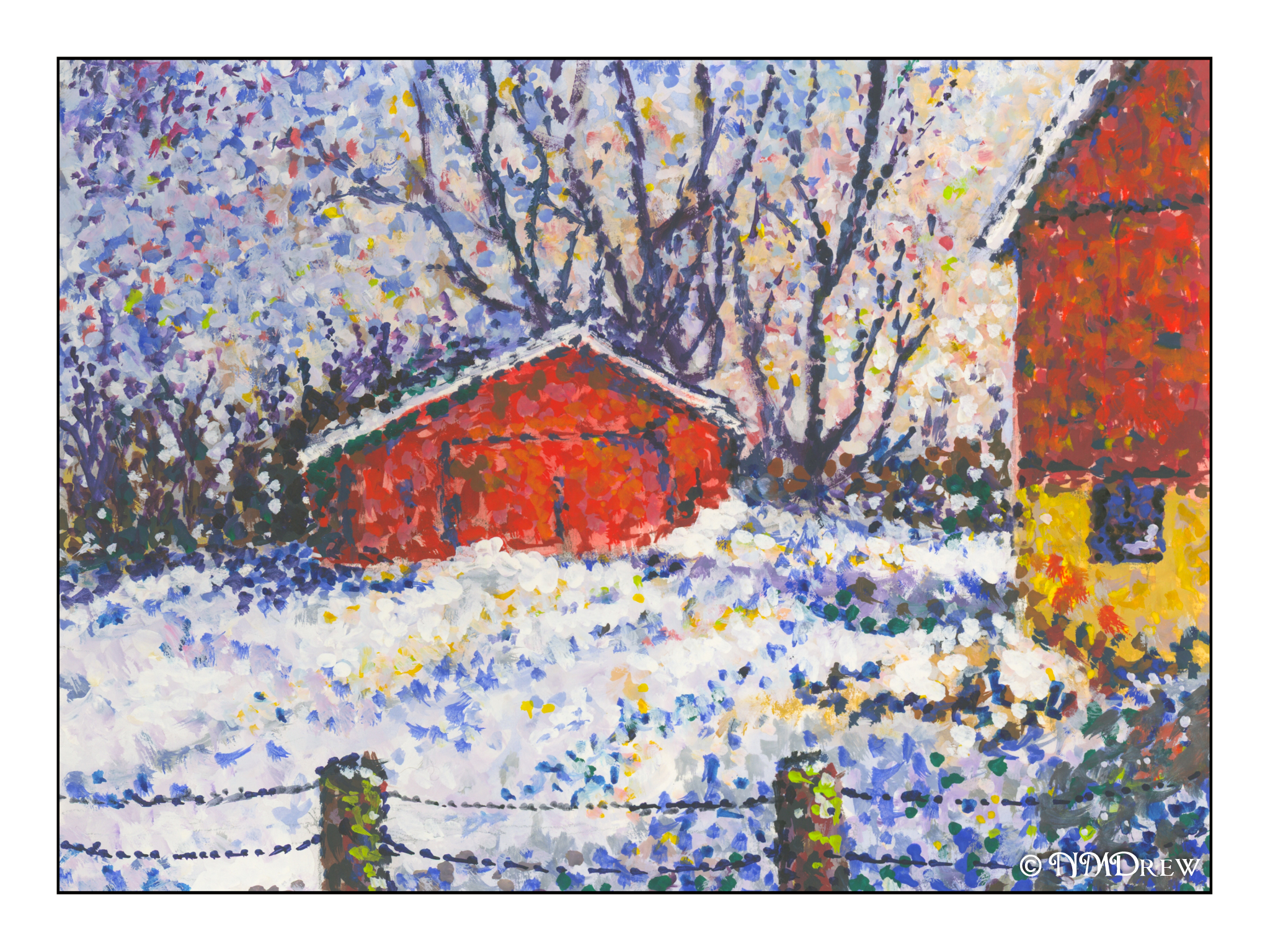
Still dreaming of snow and winter, but honestly glad not to be in the northeast! More snow dumped in 24 hours than was dumped all of last year. That is a lot of snow! Nothing like snow up to the roof, no electricity, and wondering how you are going to stay warm. When I was a kid, we burned oil for fuel, so heating the house wasn’t an issue as far as I can remember, but I do remember a few times when my youngest brother was in diapers, and there was no electricity to heat water. Frozen pipes, too, but that is usually easily solved by letting the water run gently through open taps.

I am continuing using gouache and Pointillism. Something in me just loves this, and I have started looking beyond Paul Signac and into contemporary artists. The graphic quality of Pointillism and the colors keep drawing my eye. Also, I am getting more “aware” (for want of a better word) of color interplay by using dots and mushing colors together.

Meanwhile, today in California it was a chilly 68F and I had to wear socks in the house.