
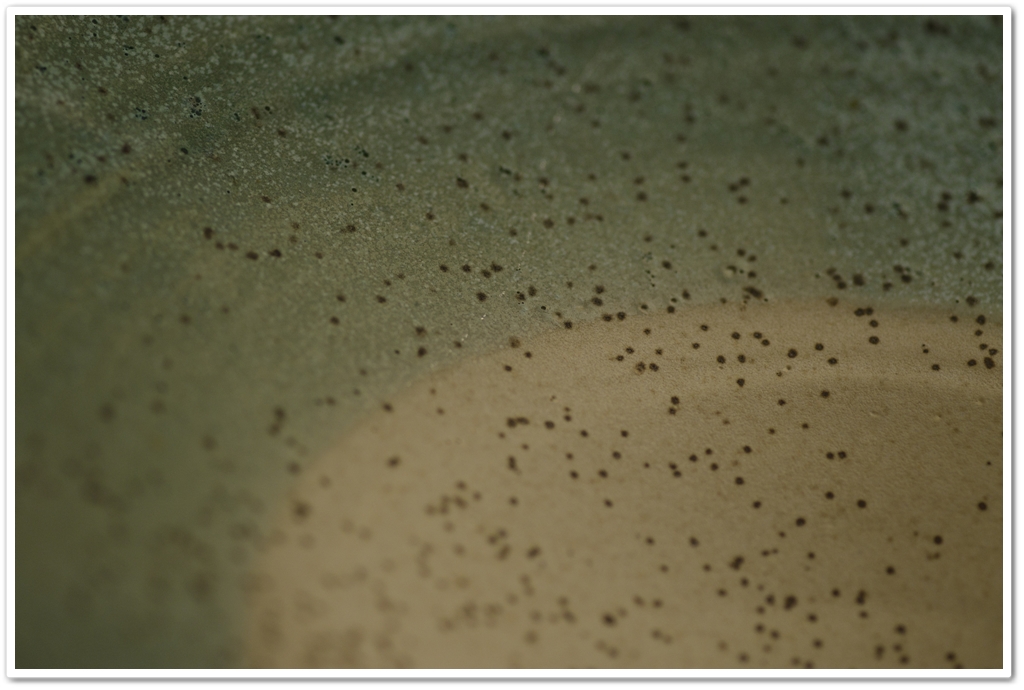
A Bowl, A Brush

Yesterday a friend who is a potter came over.  I’ve only known her a short time, but she is one of those people you like the minute you meet, and like even more as time goes by.  She brought some of her work to show me.  For some reason the term “organic” is the only way I can describe her pottery – it is earthy and elegant at the same time, and seems to be perfect for the clay.  I liked what I saw.

The point of the visit was sort of show-and-tell.  You show me yours, I’ll show you mine.     She wanted to learn about sumi-e and brush work so she can apply it to her pottery.  For me, this was a much-needed diversion from the technology of photography and post-processing software.  It also motivated me to dig out a rather large supply of brushes I have from Japan, bought for resale.  And it reminded me of just how peaceful it is to ink up a stone, and take the time to do something with my hands other than pushing around a mouse, doing dishes, or whatever.
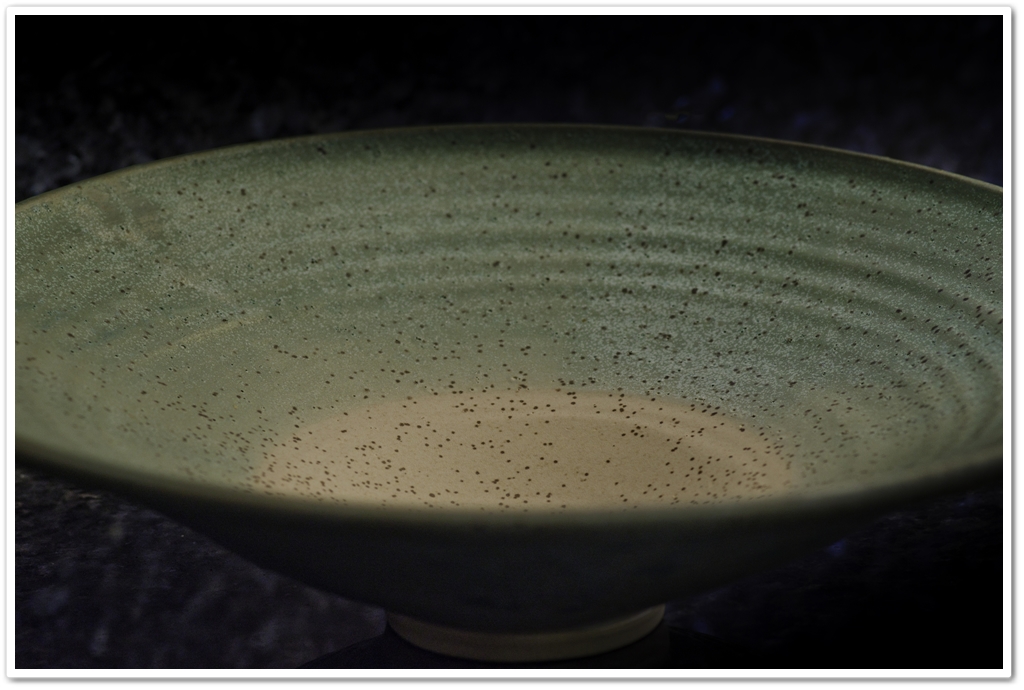
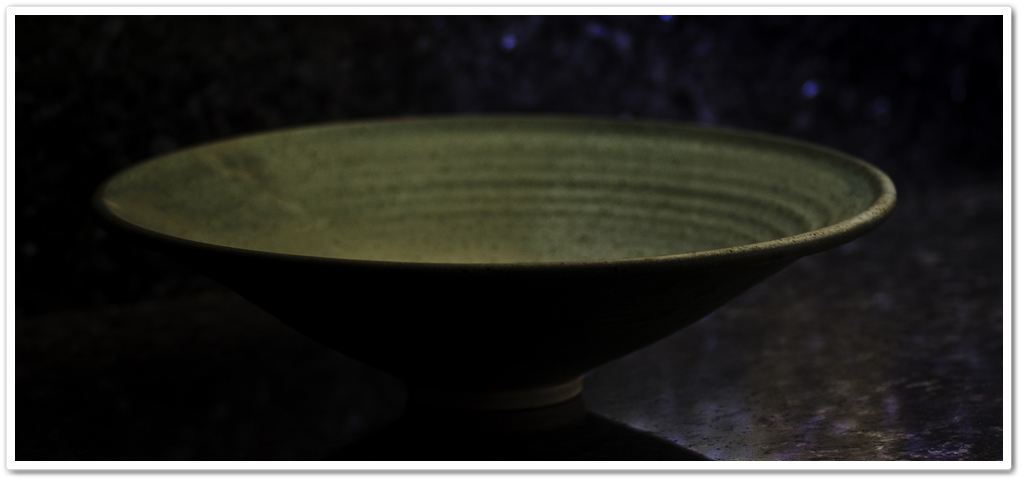
She is a lefty.  The movements I find difficult are easy for her, and vice versa.  Together, we went through a bit of paper, tried out different brushes, and have agreed to do some more of this.  She left with a stone and ink, a mosen, and a package of sulphite paper.  I got a bowl and the reminder to move away from the computer.  Maybe I will make some pottery with her at some time.
Iris, ii

I did my visual research.  I downloaded almost 100 different iris pictures, for color, shape, structure, position.  Too many to post here!  Also copies of famous prints and paintings – Japanese screens, Van Gogh’s fields.  Besides flowers, I also looked at leaves and descriptions.  I pulled out my “how to” books. And, I watched the videos from my last post.

Research

The iris is an impressionistic dream!  It is not a tightly structured flower, but more an explosion of color and shape.  Also, not all irises are bearded, even though there is a similarity of structure amongst the varieties, as far as I can tell.  The color variations are numerous, and vary from subtle to outrageously loud.  The most structured thing about the iris is the leaves, which are a perfect contrast in their simplicity against the frilliness of some of the blooms.

Each video provided some instruction, in shape, in how to move the brush, how to load the color.  Right now I am working in sumi ink alone, so that means grays, whites, blacks, and everything in between.  The paper I am using is a roll, and the paper itself is very absorbent.  This presents a bit of a challenge because the brush has to be very, very dry for control.  And then, waiting for the paper to dry enough to pick up darker lines, but not bleed them away into the already wet paper.

This is what I accomplished this evening.  The main focus of this painting venture was to think about, and to do, the brushwork.  Determining how to manipulate the brush to create given shapes and how to load the ink onto the brush is part of this practice session.  Because the throat of many of the lavender-blue-purple irises have a yellow throat, that pale color has to be represented by white or light grey ink.  Some irises are light on the tips, and darker toward the center.  How the stem attaches to the flower is also important, and deciding how to relay it visually also means deciding what kind of movements need be done with the brush, wrist, and so on.

I’ll stop with that.  Needless to say, the values need to be sorted out at some point!  These are all disasters in that area.

From Sadami Yamada's Book on Flower Painting
Following the Brushwork of Danny Chen's Video
Following Virginia Lloyd-Davies' Brushwork in Her Video

First Attempt Looking at a Photo

Painted from an Upside Down Photo - a la "Drawing from the Right Side of the Brain"

Upside Down Painting Right Side Up!