Collecting Little Things

I have been sewing prototype pockets for the kit car being made by Uncle Ed. It is the same one that Josh is making – the 818s. Ed is further along than Josh – retirement has its advantages – and is ready for some storage in the form of a side pocket for the car doors. Details are not necessary, but I plan to make another one today, slightly different, before going down to the Valley to visit him and Auntie Am tomorrow. I’ll maybe post something about the pocketses later.
All this has been a good break from my very unhappy watercolor painting of rocks. Frustration deserves a diversion from the frustrating thingies, so sewing was good. As well, I am really beginning to sort out stuff to take on our voyage, and one thing I am determined to bring is as little as possible, but plenty to keep me from wanting to scream with boredom and nothing to do with my hands. This means setting up a small watercolor kit with pan paints, brush(es), smallish watercolor sketchbook, and ink.
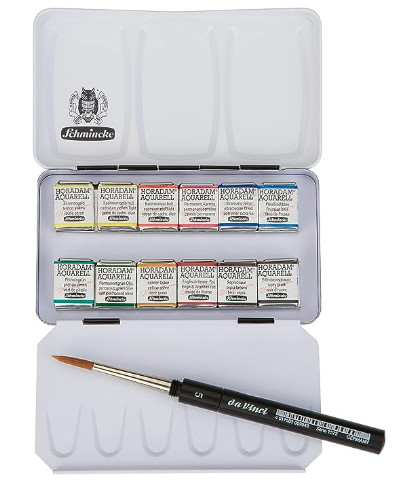
I finally decided on this small half-pan set from Schmincke – it includes a small travel brush, colors I am likely to use, and to which I could add more if I want, I think. I like Schmincke’s pan paints a lot as they are designed specifically for being in a pan, and this way, too, I don’t need to bring tubes with me. I will keep them wrapped up until I begin my voyage – no idea what crazy laws might prevent me from bringing them along.
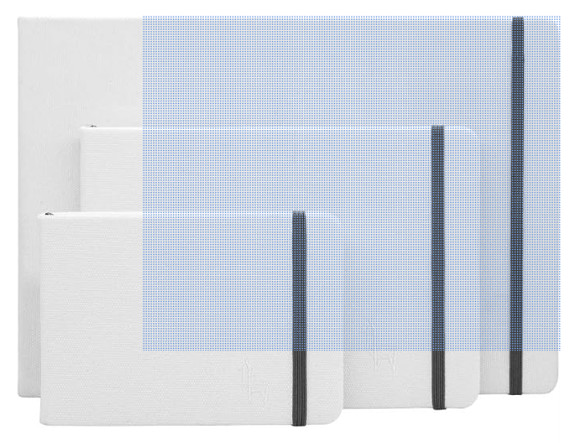
Awhile ago I ordered these Etchr watercolor sketchbooks, and currently am using the largest for my adventures. I like these a lot, and so I am bringing the middle-sized one along with me. The paper handles both ink and watery colors well, is about 5×8 inches (A5?), and can easily be brought along.
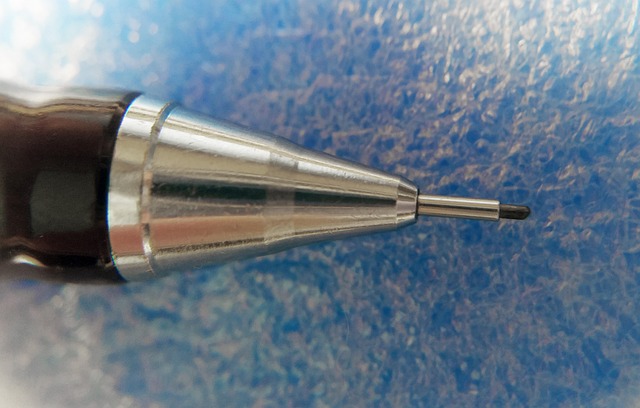
A good mechanical pencil with extra lead is also a requirement, along with a kneaded eraser, some Pitt or Micron pens with permanent ink, a collapsible water cup, and plastic eye dropper or two for wetting the paints. I will most likely stuff them all in a large waterproof zip baggie or something like that, as should anything leak, some things may be spared. I expect I will be doing inked sketches with watercolor, like below, during the trip.
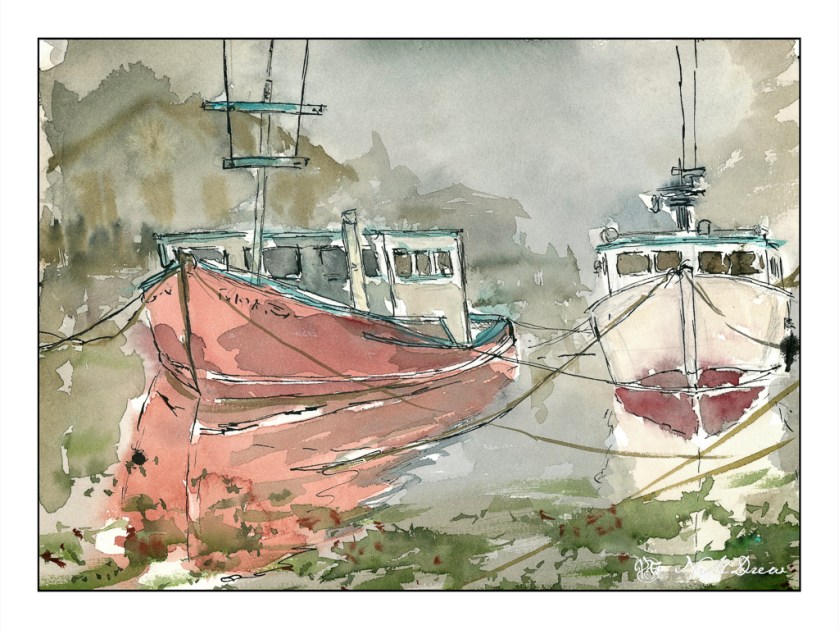
These kinds of sketches are easy enough to do, nothing to get too frustrated about, and bring back memories – as well as give my little hands something to avoid the devil’s attraction.

Packing for a trip is not easy for me – I am always worried about boredom, a lack of clean underwear, sweaty-smelling clothing, uncomfortable shoes. This trip is a real challenge for me as I am trying to be minimalist, yet still have enough for comfort, both mental and physical. Choosing what to bring is not easy – and trying to keep things small and convenient and useful and practical all at once is a huge challenge! I am collecting little things, bit by bit, surrendering to the need for saving space and weight, and rather enjoying the challenge.
Brushwork and Value in Watercolor

Watercolor Brush Strokes a la Sumi-e


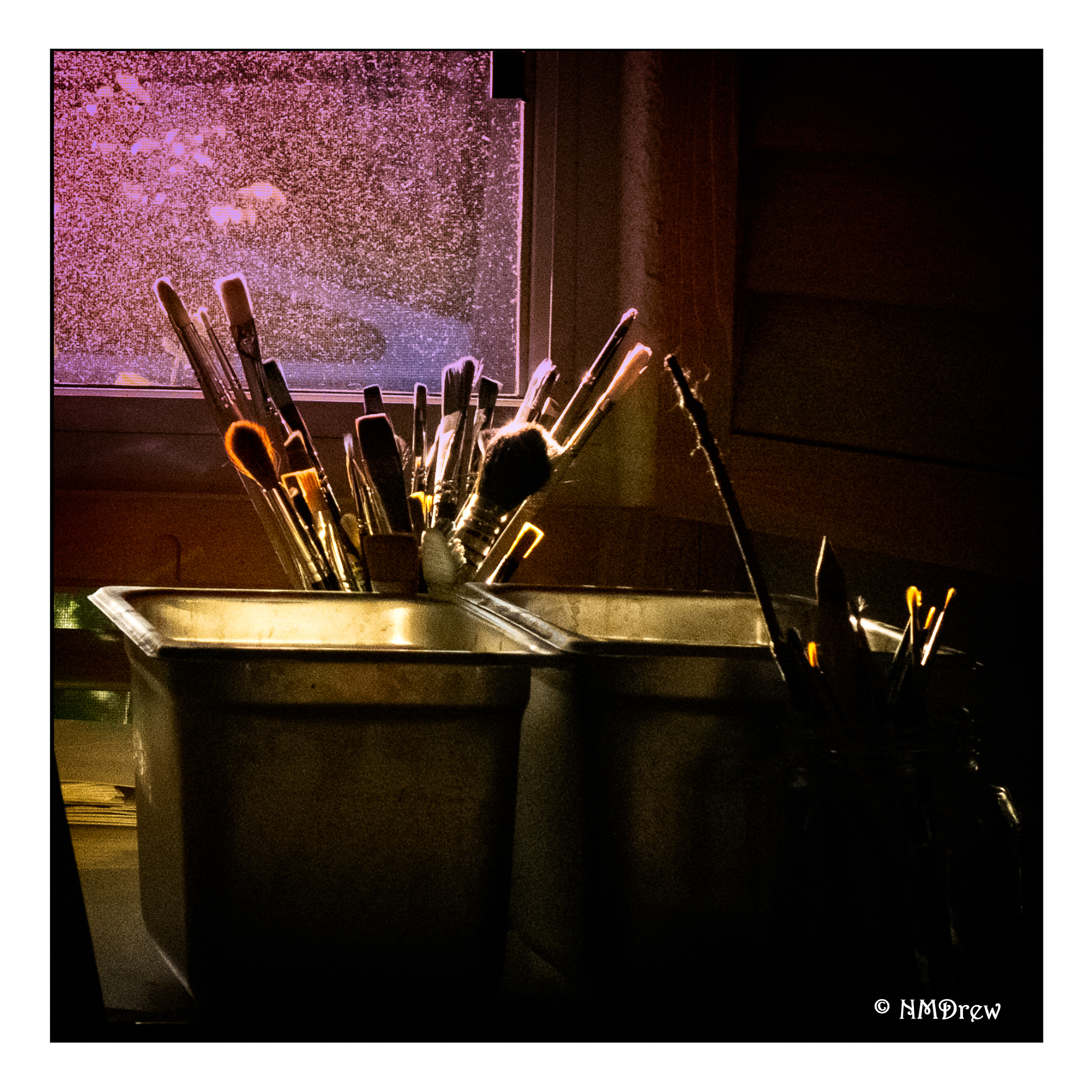
Having been doing sumi-e with some regularity for several years, I am finding it helpful in watercolor. Because the brush is the vehicle for watercolor, as it is in sumi-e, it is important to understand how the brush works.

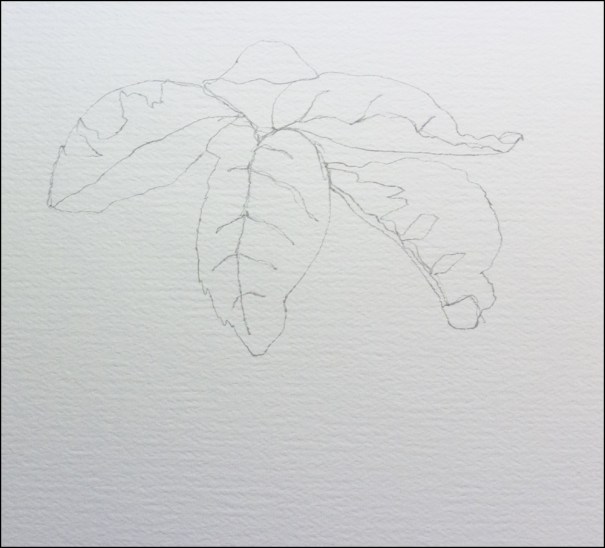
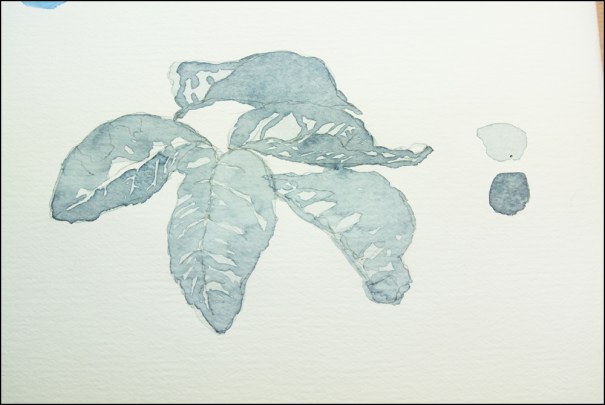
Pencil Outline

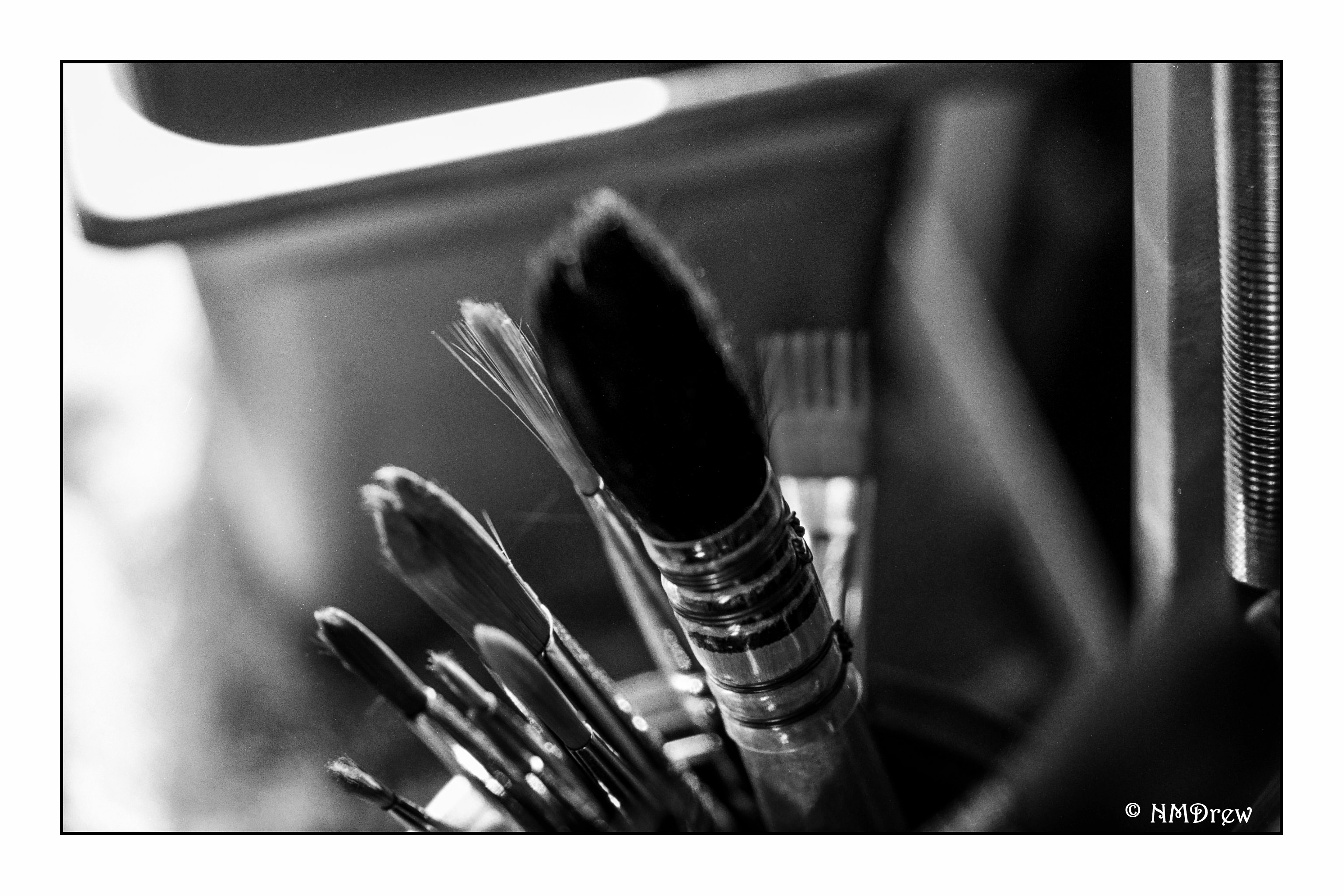
Kolinsky sable watercolor brushes can be considerably stiffer than the white-haired sheep brush used in sumi-e, but much more flexible than the wolf and horse brushes, which have darker, more stiff bristles. Basically, a western watercolor brush combines both qualities in one brush, but this does not mean that it is the same at all! A good point is important for a Kolinsky round (I am using DaVinci Maestro Series 10s and Escoda Series 1212) just as it is with sumi-e brushes, as is the ability to carry water and color.

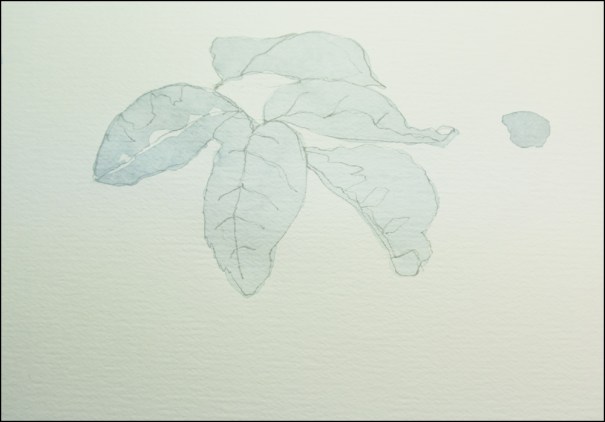
Layer 1

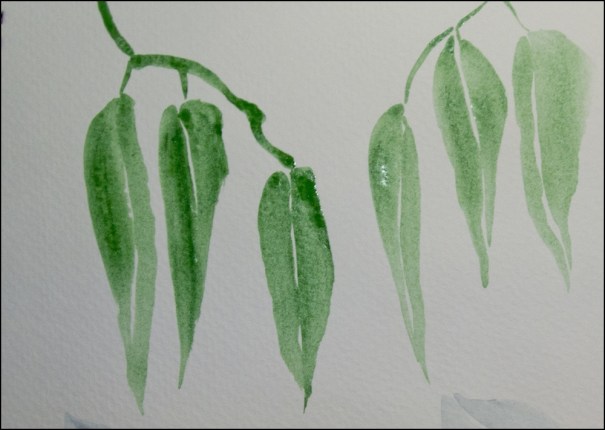
Many of the same techniques used in sumi-e can be applied to watercolor. These include brush strokes, such as increasing and decreasing pressure to change line thickness. Two or more colors may be applied to a brush, as in sumi-e when different ink intensities are applied. In Western watercolor, a brush stroke may be modified, working wet-into-wet, wet-into-dry, dry-into-wet, and glazing or layering colors. This does not work well in sumi-e, unless one is doing fine line Chinese painting.

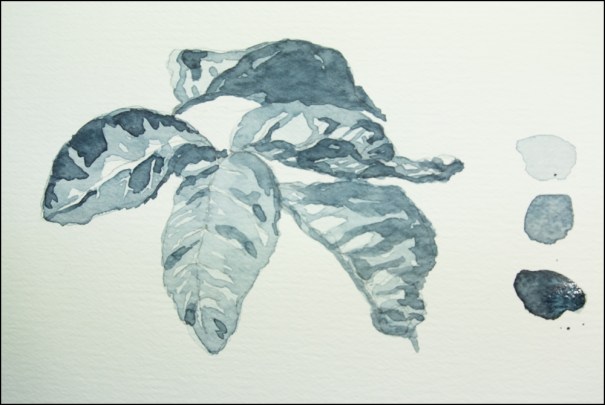
Layer 2

The major differences between sumi-e and western watercolor are responsiveness of paper. Japanese and Chinese painting papers are generally much more porous than traditional Western watercolor papers. Heavily sized Asian papers are used for fine line painting, where color layers are used, and bleeding of ink, so characteristic in sumi-e, does not occur. Western watercolor papers will vary in the amount of sizing used, and this, in turn, affects the absorbent qualities of the paper. Knowing how a paper responds takes time and practice, whether in Asian painting, or Western.

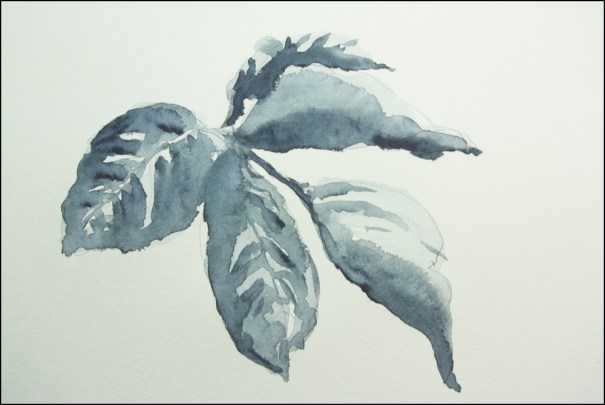
Layer 3

Value in sumi-e is achieved in how the brush is loaded. Ink can be very pale, and while it is still damp, darker ink may be applied to good effect. A sumi brush can also be loaded with pale ink, then a medium ink, and finally a tip or dark, or even one edge of the brush in dark ink. The stroke of the brush creates all the gradations. In watercolor, value is achieved by layering, as well as working wet-into-wet. Layering, also known as glazing, is the application of wet paint on a previously painted layer which has dried. Glazes are also built up light to dark. Wet-into-wet can be sopping wet, or in varying degrees of dampness.  In some ways, wet-into-wet requires more self-discipline than glazing, which requires patience and forethought.

Wet-into-Wet

Each painting technique, sumi-e and watercolor, have similar techniques, as well as some which are exclusive to that medium. The key is to learn from both, and to master each.

All these paintings were based on demonstrations from Linda Stevens Moyer’s book LIght Up Your Watercolors Layer by Layer.