With Lines, Without Lines

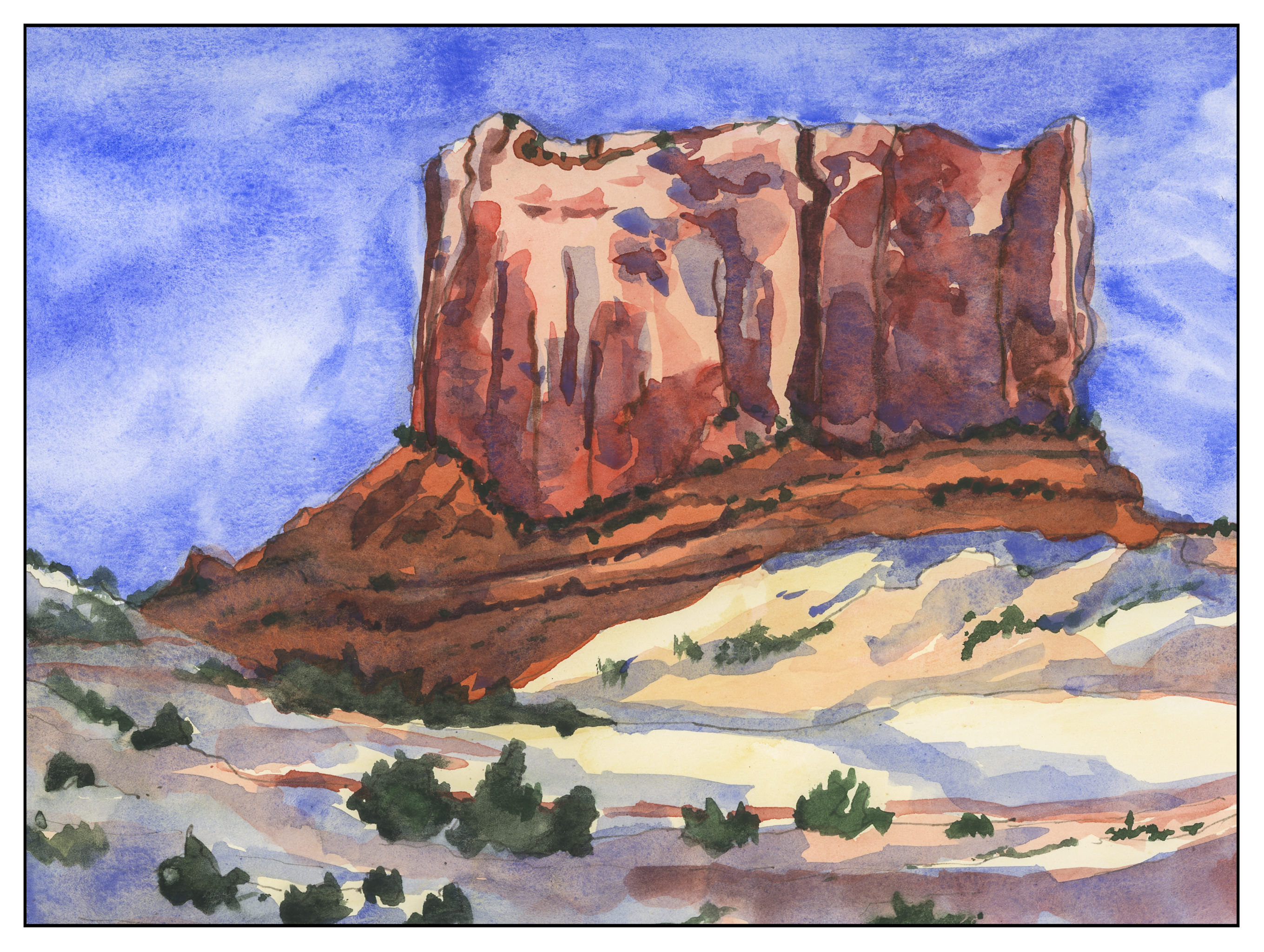
Yosemite: Reflections at Mirror Lake

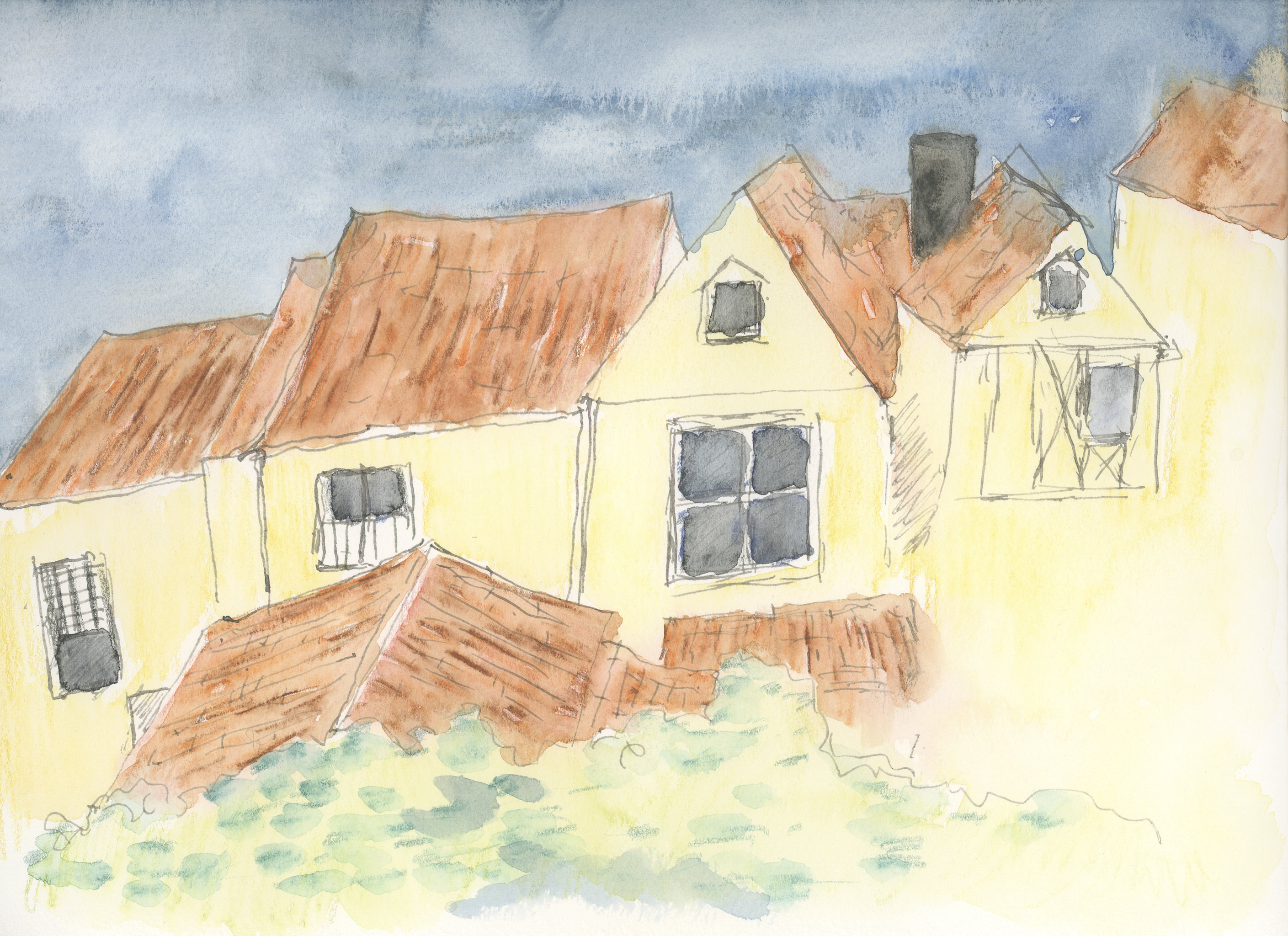
If you have been following this blog of late, you will know that I have been putzing around with watercolor on a more serious level than in a long time. (Really, more serious than ever before.) In the process, I have struggled with control of the medium, like all who begin with watercolors. Lines help when a painting fails, and sometimes lines add to a painting if that is part of its intended style.

Having done sumi-e for many years, I love lines and their expressiveness. I also like colors, and that is where self-control needs to show up the most. Think of Hawaiian shirts or 40s palm frond prints and you get the idea about my ideas of color – louder and more is the best!

This painting of Mirror Lake was very satisfying as I felt the use of sumi ink and colors worked well.

Grapes of Wrath (3)

The painting is inspired by a number of paintings I found when I googled “pears grapes watercolor” and chose images. There were a lot out there, and so I painted a number of grapes-and-pear paintings yesterday.

This is the one that pleases me the most. I like its painterly elements and the colors of both the grapes and the pears. It is the most controlled and thought-through of the series. I did not draw any pencil lines prior to painting it, but painted it freehand, recalling brushwork in sumi-e.   It’s easy to fall prey to haste in watercolor, to achieve a “painterly” look, but it really requires forethought, just as sumi-e does.

I did four paintings altogether in this series, which you can find under “My Other Lives” above.

Copying the Master(s) and Stealing (Their) Secrets

This book remains a favorite of mine, in part because of the history behind art apprenticeships, but also because it serves to remind that in all arts, a period of apprenticeship – with or without a teacher – is needed to gain mastery.  As I struggle with watercolor, I remember how I struggled when I was working with sumi ink.  In sumi-e, the brushes, ink, and paper are enough to make you scream.  Watercolor is perhaps worse!

What makes watercolor difficult?  For me, it is always a matter of less being more.  With colors, I am a magpie – all those colors!  I am hard-pressed to use only a few.  With sumi-e, you have one color:  black.  And shades of grey (50 if you want).  Another struggle is to not create mud.  I seem to be moving away from that.  And finally, lines.  I like lines.  However, I want to paint without lines . . . sort of like giving up training wheels on a bicycle.

At some point, I expect I will be able to master watercolor far more than I am now, but it is a long, hard haul.  And, I admit, one I am not very happy doing.  I wasn’t happy with the struggles with sumi-e, either.

Finding a master is not something easily done in this day and age.  Rather than being apprenticed to learn a skill or craft from a master, many of us go to school.  I am way past spending 4 years or more in college – I am an old workhorse – so I learn by observation.  This means finding an artist I admire and trying to copy his / her work, as well as subscribing to numerous YouTube videos.  I also have to learn by doing, which is the most challenging part.  A part of me expects to be perfect, and my temper flares when I feel frustrated.  That is when it is time for the proverbial deep breath, retreat, regroup, refocus, retry.  Patience is also taught with such apprenticeships!

Thus, in cruising the internet, yes, I do “steal” from the master.  In “stealing,” I learn about color and composition, light and dark, contrast.  I do not ever intend to pass someone’s work off as my own – that is not right.  But, if you go to a museum, you will find people sketching the work of a master.  Why?  To learn.  The best learning is by doing.

Various painters come to mind whose work I enjoy; when I find someone whose work I admire, I like to look at their paintings and try to figure out how they did it, the order it was done, and the colors used.  By copying I learn about color mixing and how to create an image that (might) work.  Every artist is unique, and each has something to offer.  There is a lot to learn from out there, and I am humbled by the talent I see.  And I learn when I copy from the masters.

Setting Up a Palette

I have a Quiller palette from years ago that was a complete mess.  Cleaning it up took a bit of time and effort, especially as it had not been used for years, and the paints were ancient.  Most likely, the colors could have been retrieved, but as I wanted to start fresh, I cleaned it up – not an easy task!  I soaked the palette to loosen old colors, and for about 2 weeks kept adding water to a particularly stubborn well, until finally the colors all came loose.

I filled it up this afternoon after considering the colors I have on hand, and the ones which I am currently using in a travel palette.  I decided to use the 18 colors I have in one travel palette, and then add others.  Some colors are totally new to me, such as the quinacridone colors (gold, rose), some cobalts (violet, teal, green), and newer variants of old standbys.  When putting in the colors, I found one that I had not labeled!  A mystery color – but it might be a yellow ochre, though it does not quite seem right.  Kind of funny since I was so meticulous (ha!).

Other new colors include indanthrene blue, which is a rather interesting and intense dark blue, rather an indigo, along with a couple of Daniel Smith real stone pigments – lapis lazuli genuine and sodalite genuine.  Old favorites are also present, such as the cadmiums, Hooker’s green, and Payne’s grey, along with the umbers and siennas.

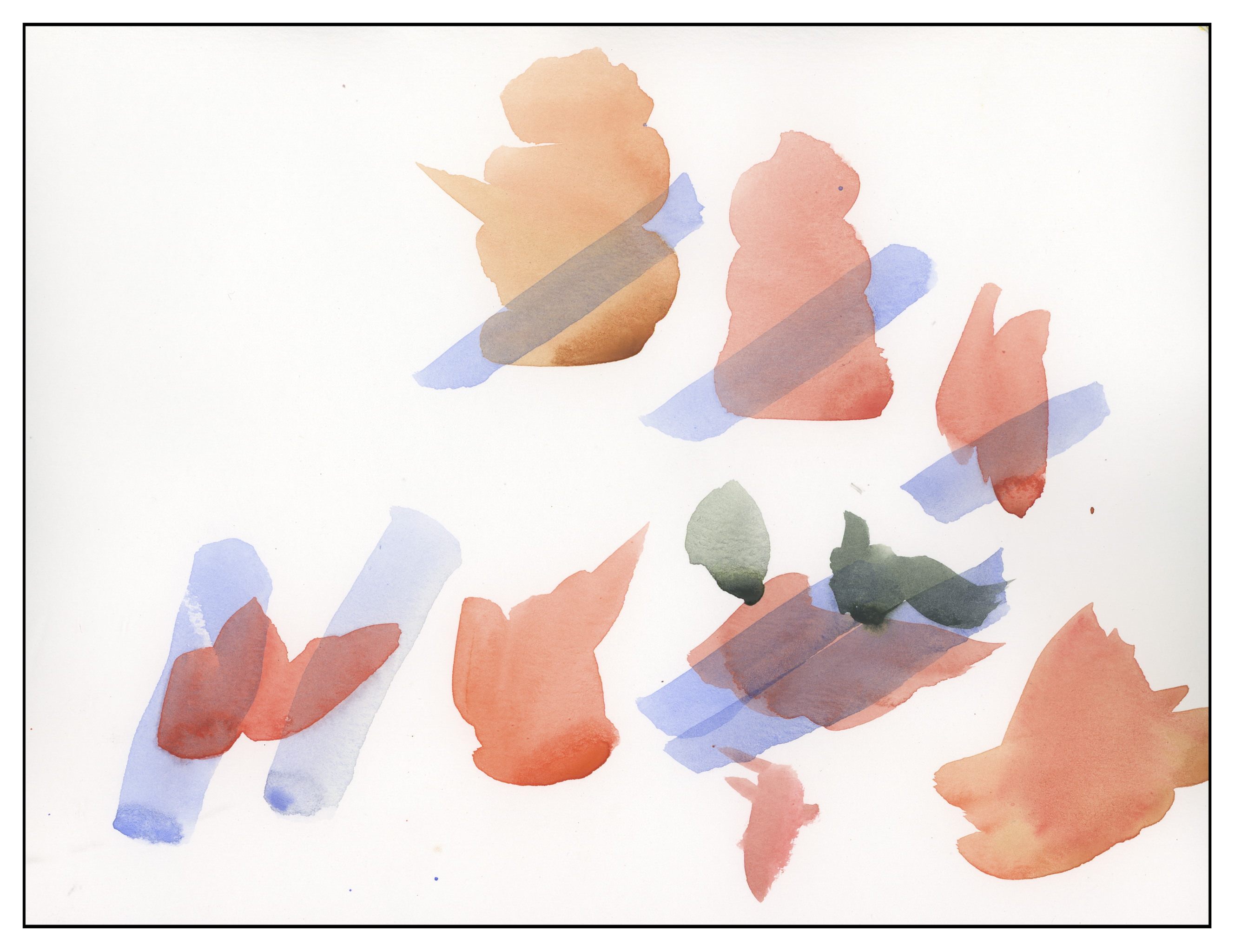
It was time to put together a larger palette for the studio.  Travel palettes are small, and not really conducive to studio work, which for me means a lack of freedom and a more stingy approach to color and water.  Travel palettes have limited space, but room to play is always welcome!  The Quiller palette is generously sized and has plenty of wells, which makes it a particularly attractive one for me.  Additionally, the wells are set up to indicate primary and secondary colors, with room for other colors in between, as you can see below.

Working with Contrast, or, A Day Without Mud

Today, my little Meetup group was really little.  Initially there were to be 4 of us, but one cancelled, and then the third unfortunately got very lost using her GPS.  She wrote she was 3/4 of an hour late . . . and we waited 10 minutes, too.  Next time I post a Meetup meeting, I’ll spell out directions, so hopefully that won’t happen again.

So, contrast.  I am dreadful with it.  And with painting things so that they look like things rather than blobs of color.  However, that is probably something that time and experience will cure.  Today, though, I did manage to not turn everything into mud – a major accomplishment, let me tell you!

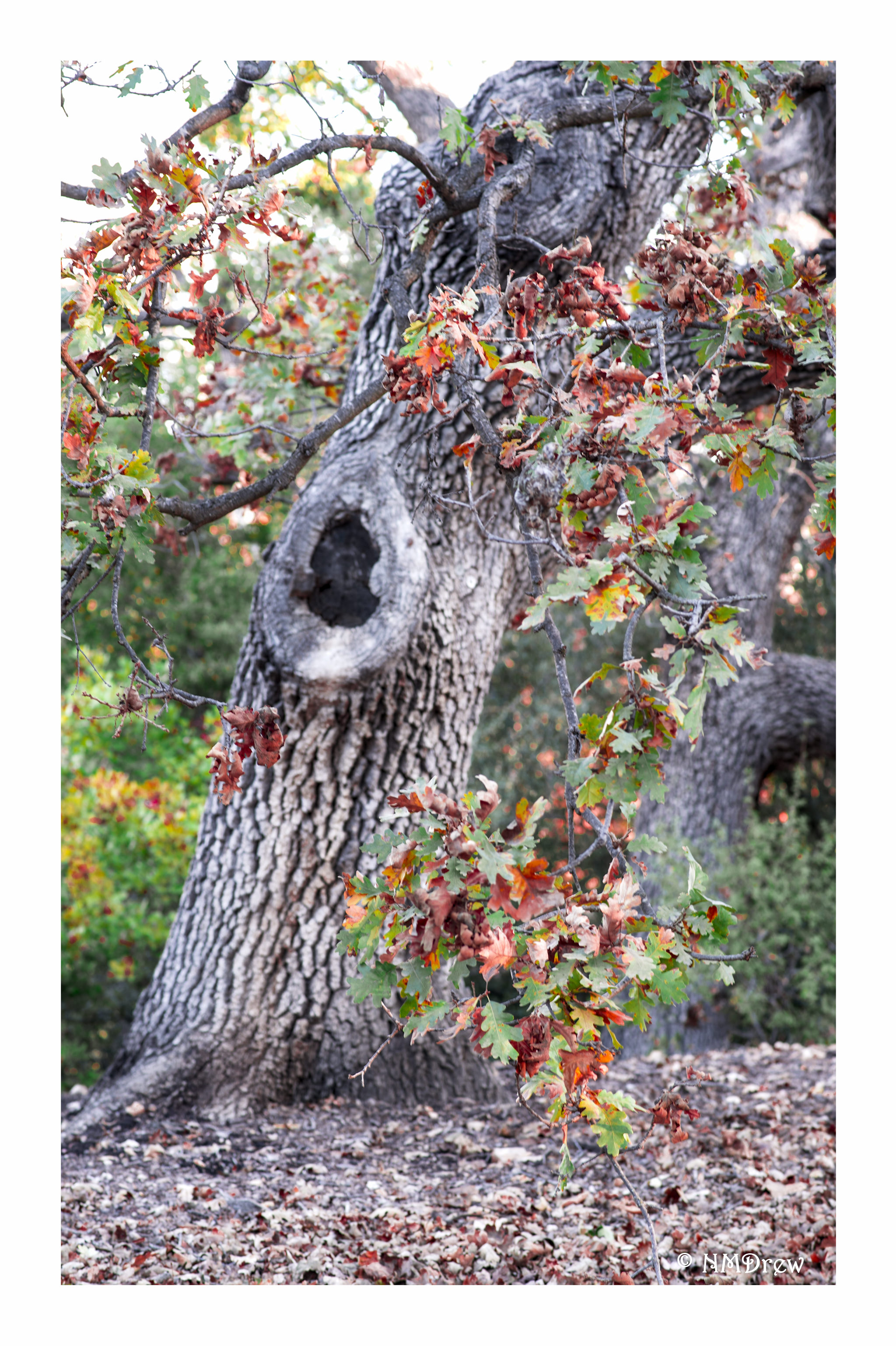
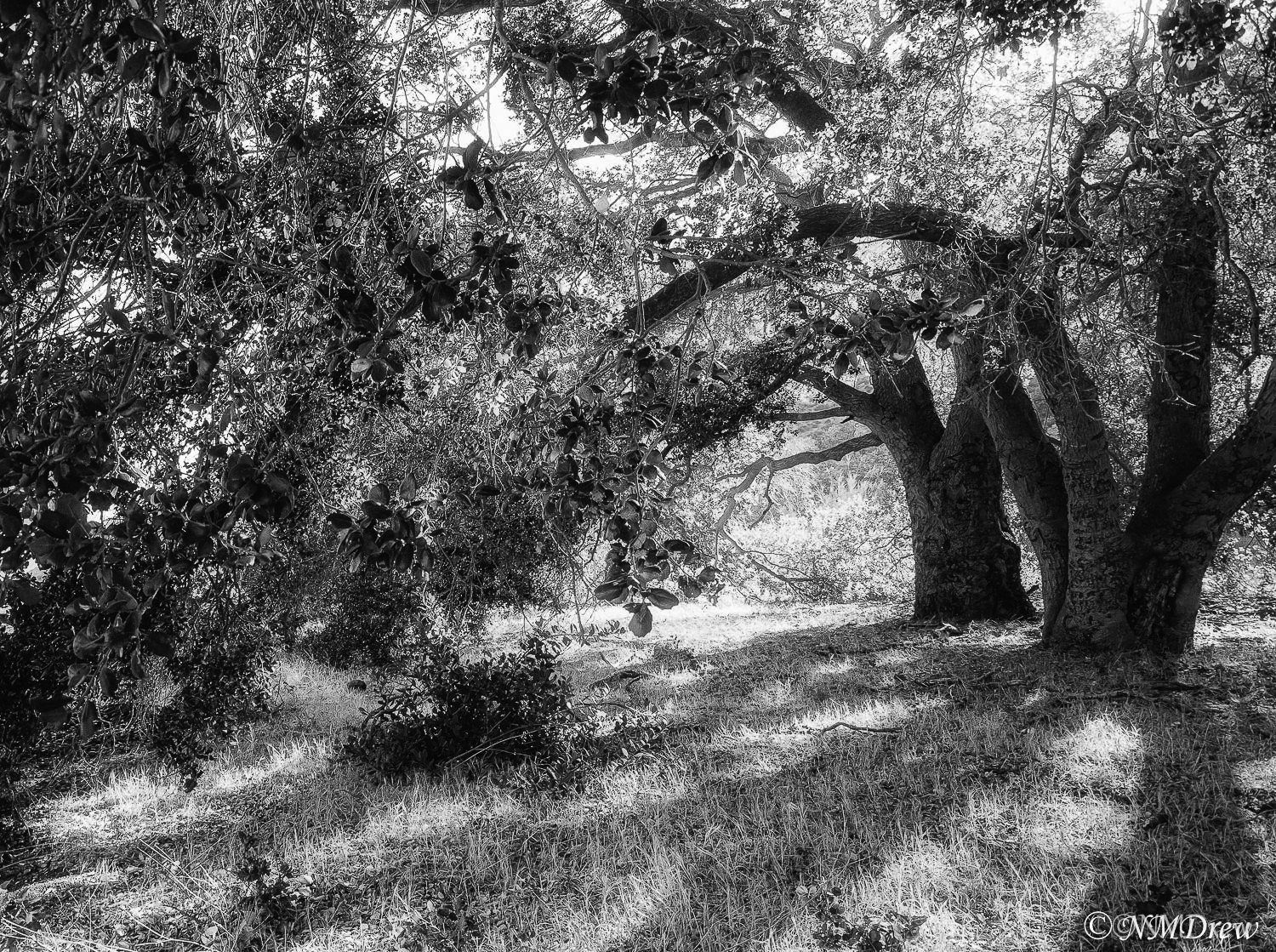
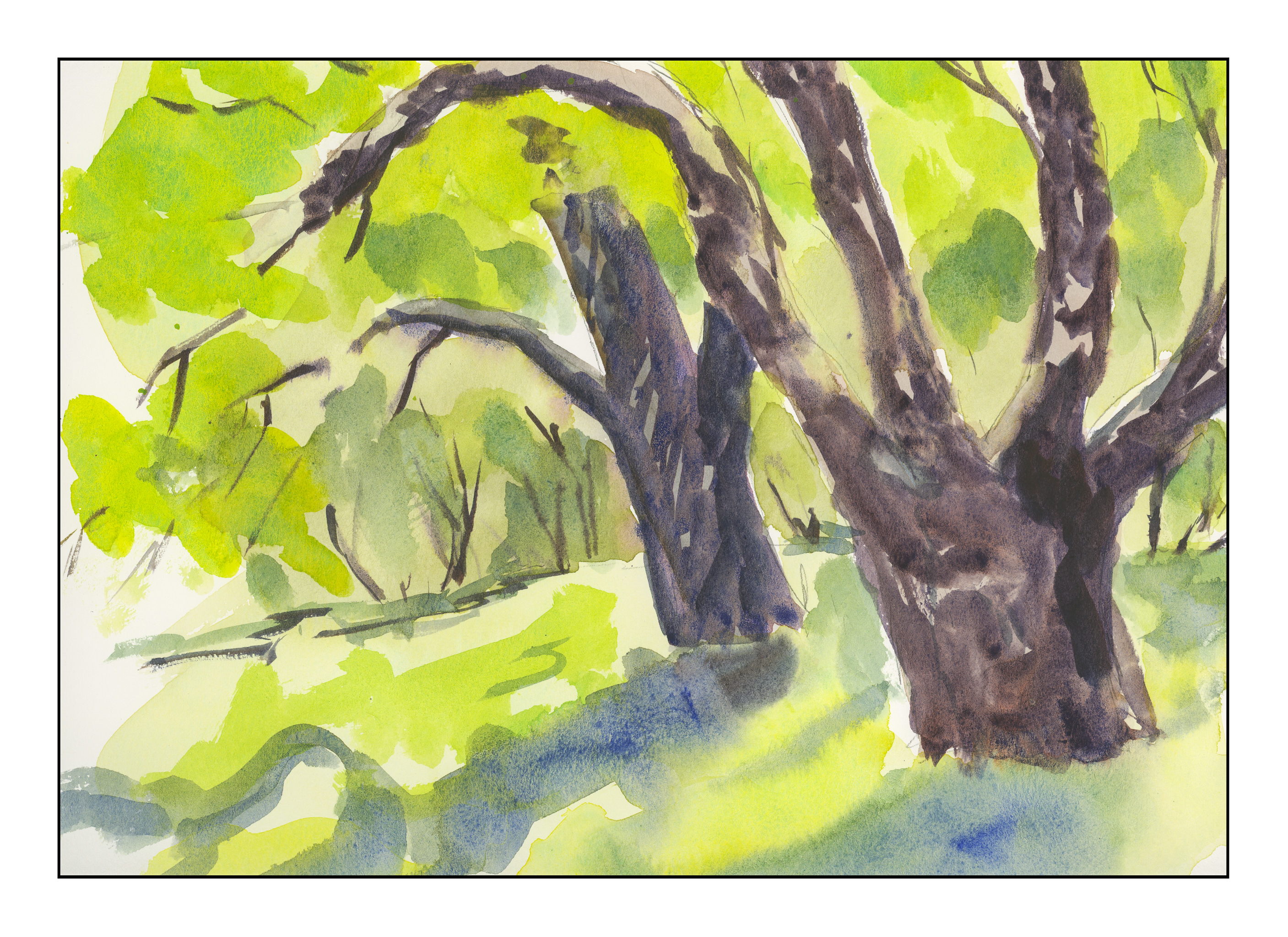
We went to a local place, the trail by the Chumash Museum nearby my house.  (The Chumash are a California tribe.)  We were there for about an hour.  I began with a pencil sketch, and then, color.  We were settled in a small oak grove, with dark and light contrast about as contrasty as you can get.  At the end of the hour, this is what I had painted, knowing full well I would look at it and work it a bit once home.

As you can see, I did leave areas of white!  Another first . . . As I was painting I made a monumental decision, too:  paint long horizontal stripes to represent the grasses under the trees, and the shadows crossing the foreground.  I sat there and painted stripes.  It was nerve wracking.  The blobby white areas were deliberately left for consideration later.

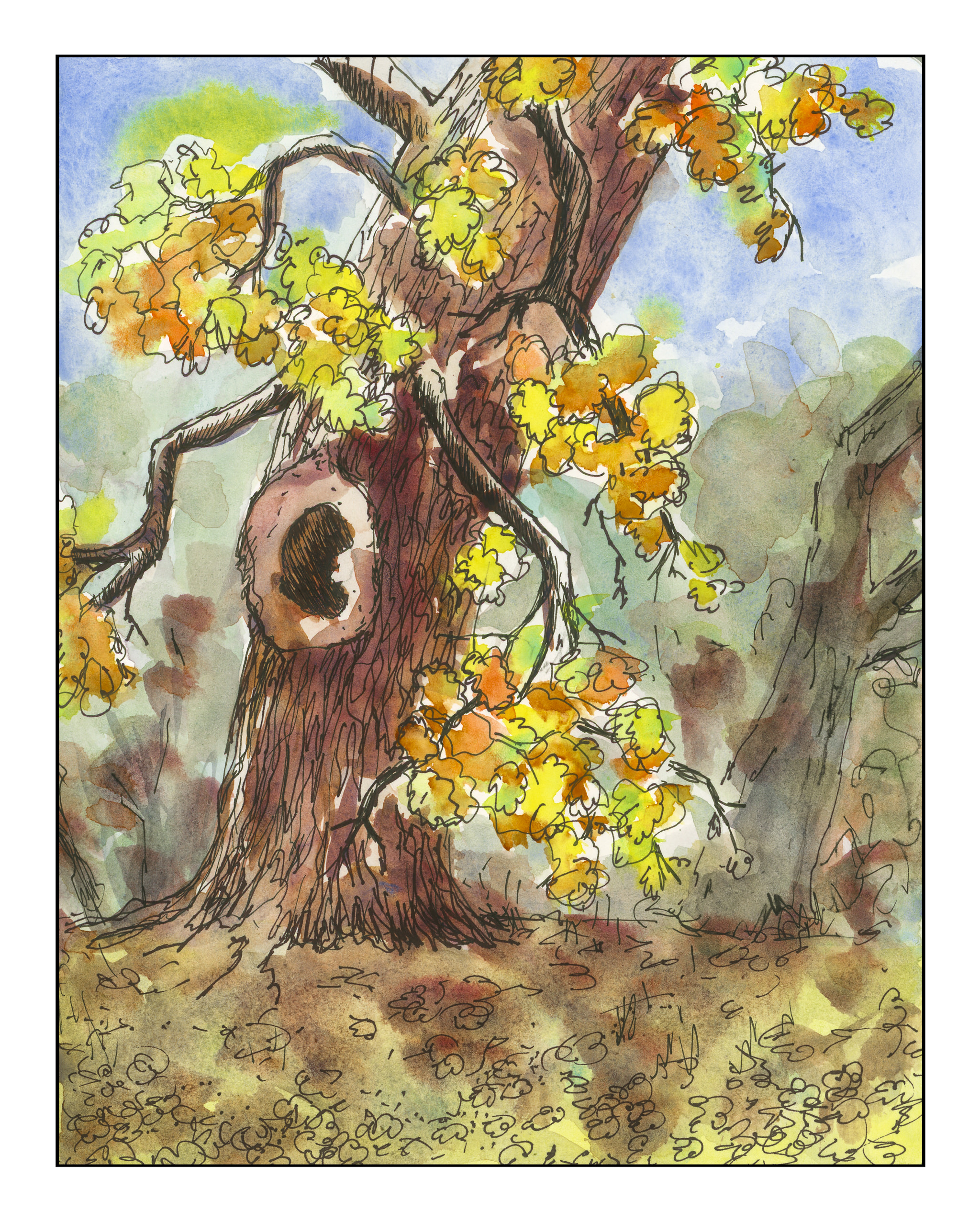
And once home, I looked at the painting.  Still a need for contrast, and a bit more detail.  More pen, more ink brush, more colors, and some warmth.

Overall, the one above came out okay, but if you look on the mid-right, to the left of the furthest trunk, there is a bit of an odd space, so I went in and worked it a bit with ink to try to mitigate it.  I found it very distracting.  Here is the final image below.

The area has a few more lines in it, a bit busier, but somehow more in keeping with similar areas of the painting.

My palette was somewhat unknown!  That is, I was not really sure the names of the colors as I was using them, but I do have a list of how they are laid out on the palette, which is why I can tell you now!  I used Koi watercolor brushes and the following paints:  Quinacridone Gold, Naples Yellow, Hansa Yellow Medium, Cerulean Blue, Cobalt Teal, Ultramarine Blue, Indanthrene Blue, Phthalo Green, and Burnt Sienna.  I used a Stillman & Birn Beta Series 8×10 inch softcover notebook, and scanned the images using my trusty, not rusty, Epson V600.