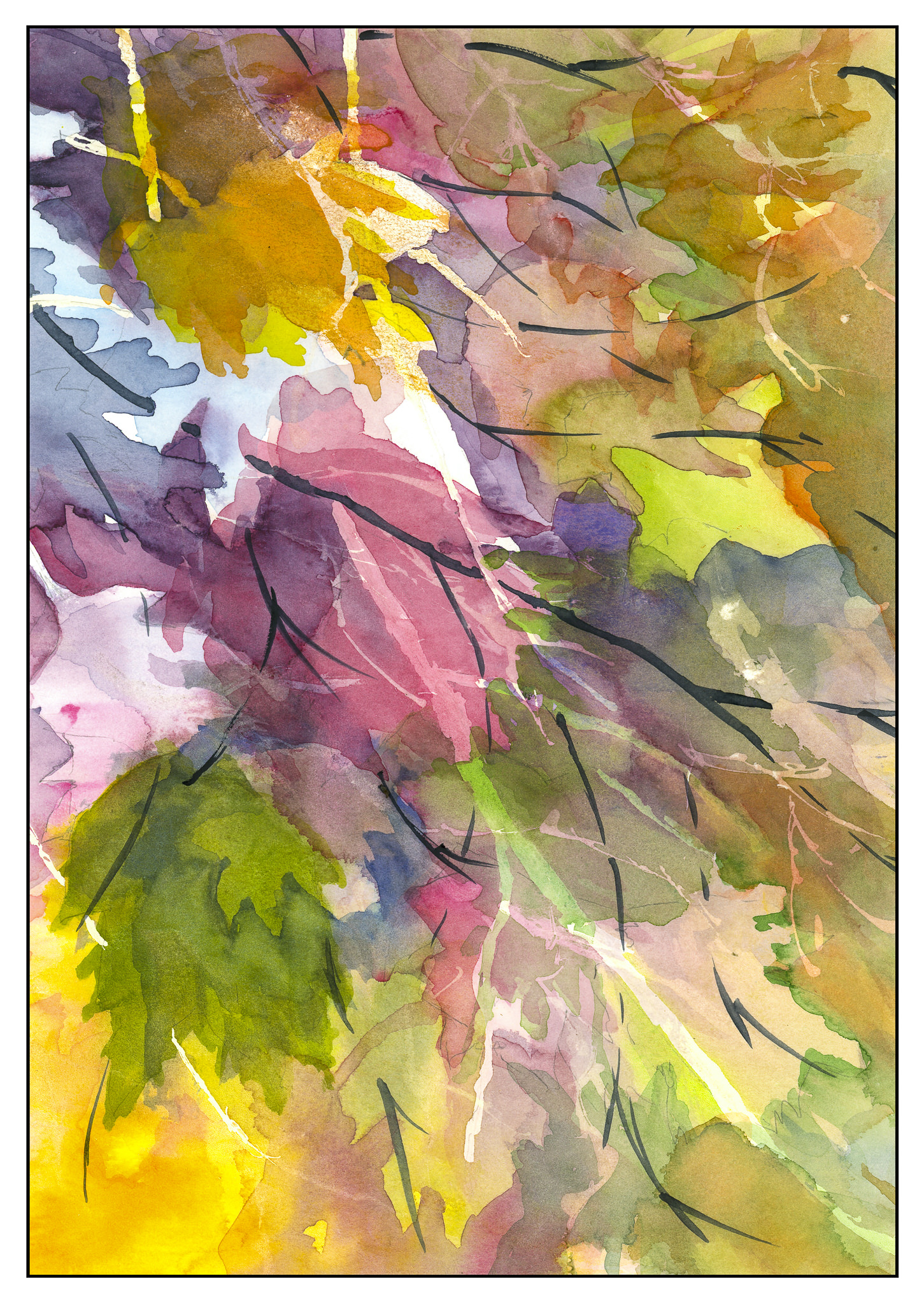
Back to work with a messed up wrist . . . wasn’t bad. After work, the sun was still out. In our yard, we have a beautiful vase-shaped crepe myrtle tree. It is sending out the first leaves of the season. I sketched this at sunset, trying to catch the complex interweaving of the branches and the delicate greens of the baby leaves at the tips of the smallest branches.
Category: Watercolor
Castle, No Lines
Besides doing the orchid yesterday, I sat down and did what is being called”direct watercolor.” As in sumi-e, the artist thinks about things before committing brush to paper. No lines. No value studies. Look, see, think, paint. It is a bit of a challenge and rather daunting, but I think this is such an enlightening way to learn the art of brushwork, value, contrast, and so on. I did some glazes here and there, to create contrast as well as to carry various colors throughout the painting. I also worked with vignetting, considering the shapes of the four corners of the vignette as well.
Watercolor Pencil Studies
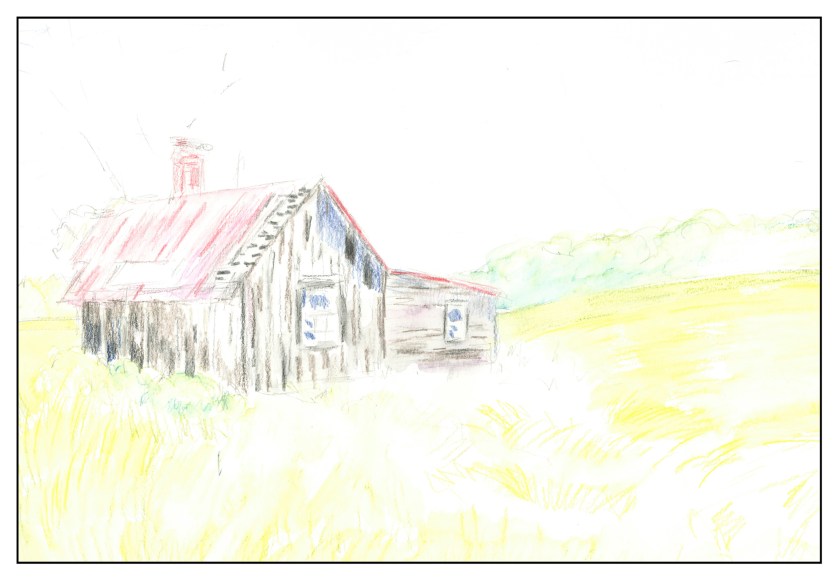
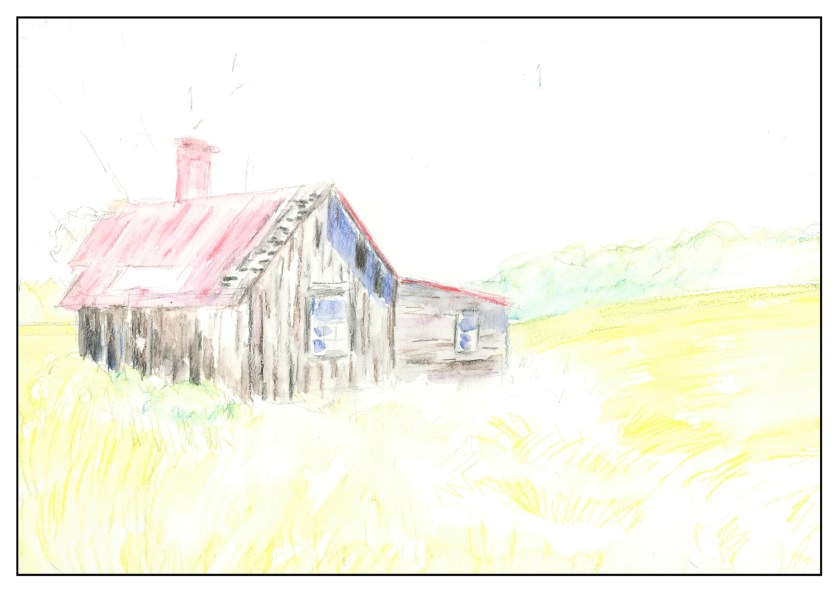
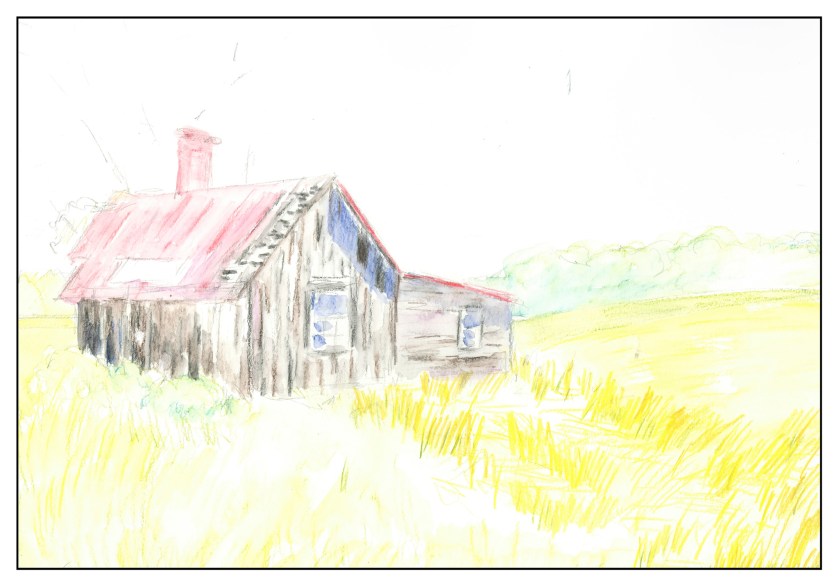
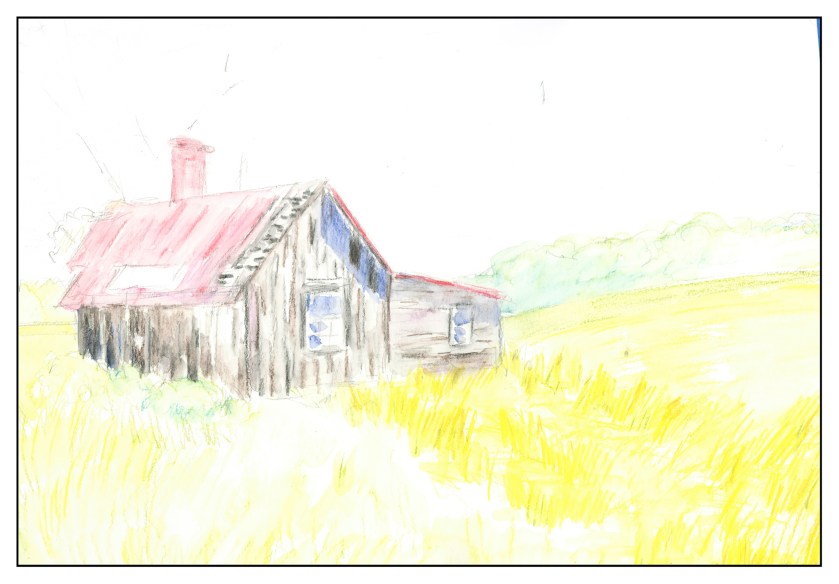
Even though I am trying to be a good patient and wear my splints all the time, it just isn’t possible. I am still limping around, too, so I am not doing much hiking as my knee still hurts from the fall. Rather, I am on the patio in the warm afternoon sun, away from those dangerous dogs! I had a few pictures, a bit of imagination, and some watercolor pencils. I decided to try them out in some rather different ways to learn how to better use them.
Above is a Black Phoebe. They live in the trees around here. Their feathers are darker om the head, and their faces are not quite so fat. I tried to get in line detail and then used a fine brush. Darkest blacks were from an ink brush.
Next, just a simple Japanese maple leaf, no lines, only pencil and water. I laid it on pretty thick, but it is still paler than what I would like to see.
Finally, Queen Anne’s Lace. Here I wanted to draw into negative space, so what better subject than white flowers? I used ink, and for the paler flowers in the background, I dipped my brush in water and took color off the pencil tips before painting onto the paper.
Once Waitlisted Weekend Watercolor Workshop
How’s that for a few Ws or so?
This past weekend I spent immersed in painting and drawing and sketching, all focused on watercolor. This lucky girl got in after being waitlisted to a workshop with Brenda Swenson, an excellent watercolorist, and as it turns out, a very good teacher. Three days of organized to increasingly looser structure was perfect.
Day 1 began with continuous contour line drawing and lost edges. At first I got it – and then didn’t – and then did again. These drawings then led to watercolors using lost edges to blur and bleed color into color – wet working with deliberate movement of color. This helps with reflected light. The mind fills in what the brush does not.
From there, on the second day, we moved into landscapes from photographs, all of which were provided by Brenda, and from which all the landscapes in this post are derived from. For some reason I couldn’t seem to think straight – I was restless and goofy and my mind was all over the place. Somehow, I managed to survive and produce a few pictures of value. The still lives I did sucked. Structure of the day, if I recall, along with the first was draw, format, paint. Formatting was finding a border for the image, where edges might break out of the line, and give an interesting look to the painting. Good graphics!
And on the third day, structure loosened. The focus was on painting vignettes. A vignette, I knew, had white around the borders of a painting – a piece of a painting. Brenda put it into a different perspective, on which I never had heard of – cruciform. Don’t touch the corners with paint, touch one or all of the 4 edges of the picture’s ostensible borders, and focus on how the shape – the negative space of the corners – looks in relationship to all the other.
Lessons each day, thoughts for each day. If I get another chance to attend here workshop, I will – if you get a chance, do it!
Now, a few things done during the workshop . . . click on a picture to see them bigger!
Ink, Color, Paper
For some time now I have been practicing “urban sketching,” which is a fun way to record what you see around you. Sit down, have a cup of coffee, take out the ink, color, and paper. Go to a park, visit a zoo. The world is around you!

Part of the process of this style of sketching is to realize the essentials of what you see in front of you. It is a good way to evaluate and decide what to keep, what to discard. By the same token, you learn about your materials. To me, one of the most important elements is the paper – how it responds, how it reacts. After a bit, paper becomes like an old friend – you know its nuances, when it’s in a good mood, when you are having difficulties. And, like people, you find you like some paper better than others.

I’ve picked up a number of sketchbooks, many with heavy paper to handle watercolors and ink. Handling a wash is critical. However, learning what a paper can and cannot do is also important, and part of that is just using it.

To date, I have a Stillman & Birn, Hand Book and Pentalic watercolor sketchbooks. Stillman & Birn doesn’t respond quite like I would like it to for wet washes, but it holds lines well. I need to practice with it more to get a sense of its personality. Hand Book seems to have better wash-handling qualities. Pentalic, so far, appears to be the best. I also have decided I like spiral bound vs. signatures.