
It Gets Overwhelming

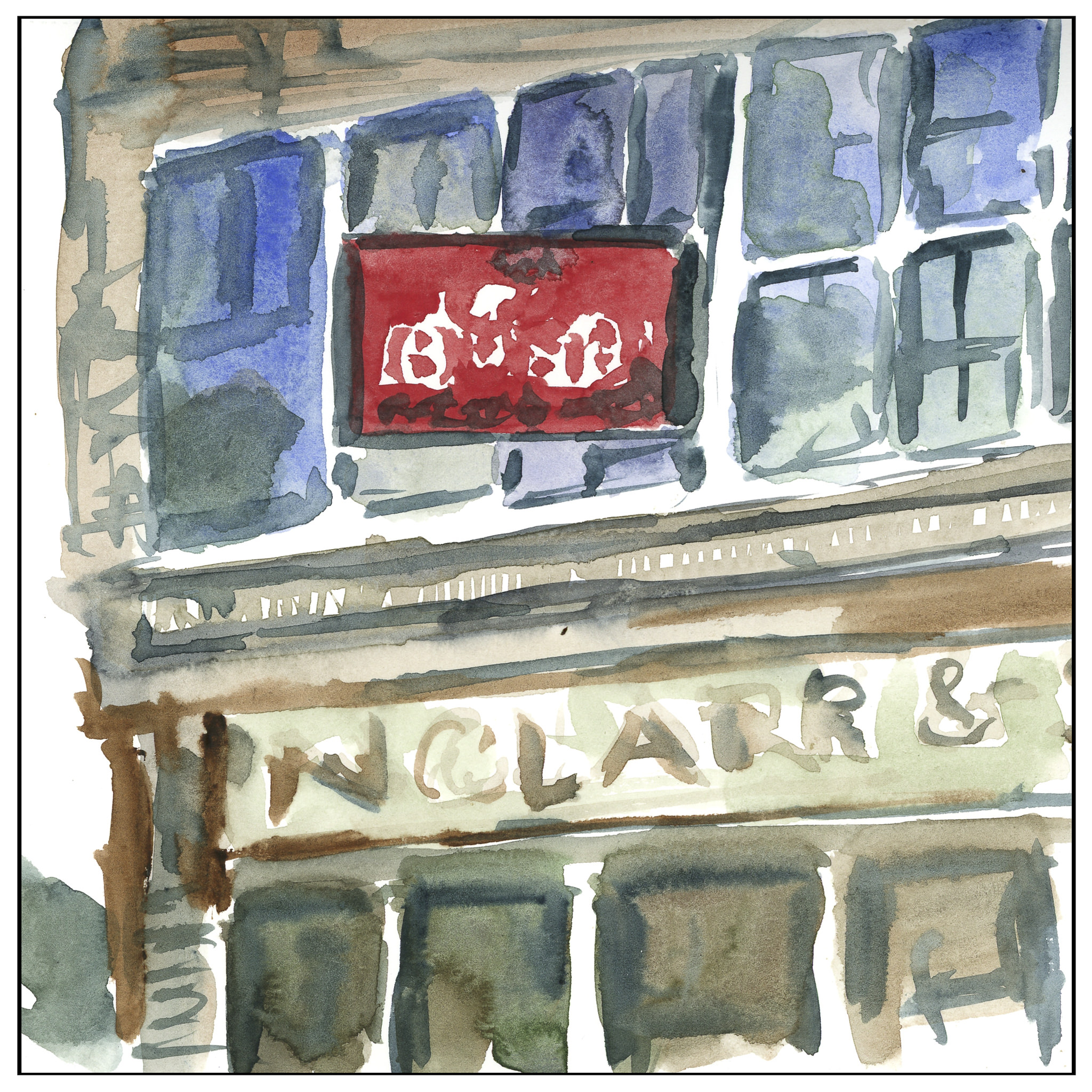
Returning to watercolor is becoming an obsession, and the more I look at the work of various watercolorists, the more I become mentally deluged with images and colors and styles and painters.  It is a seriously crazy-making experience!  Like photography, most of what I do is really not good at all – from downright awful to meh – but it also becomes rather distressing.  That’s when a break is necessary, like making chocolate gelato or going out for a hike or looking for a new pair of shoes.  Just do something different to break out of the ruts of daily life.Focusing on “direct watercolor” – painting without any preliminary drawings or value studies – is sort of what I am trying to do on a daily basis.  This is from a photo, and the study was windows and reds and buildings.  The proportions are off, and that feels like failure big time.  The colors were all the dregs on the palette, so most were muddy and not interesting, but determined not to waste paint, why not?  I also used a water brush, and that can make colors even murkier if you don’t squeeze out excess water.
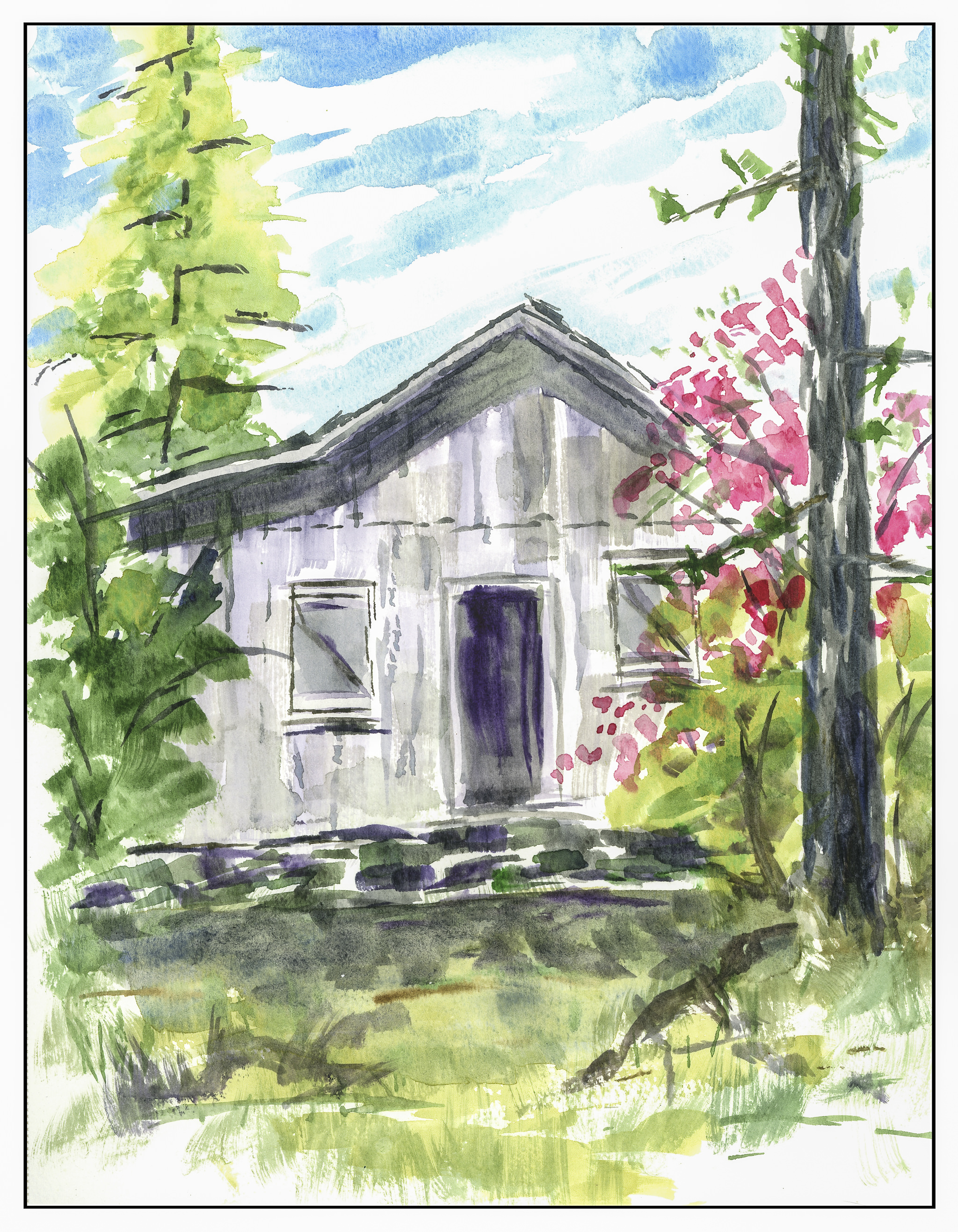
Another direct watercolor painting, this time limited to a 1/2 inch flat brush for everything.  The colors are cleaner, for sure, but the contrast of light and shadow are off.  The fun part was learning that yes, you can paint with only a flat brush.
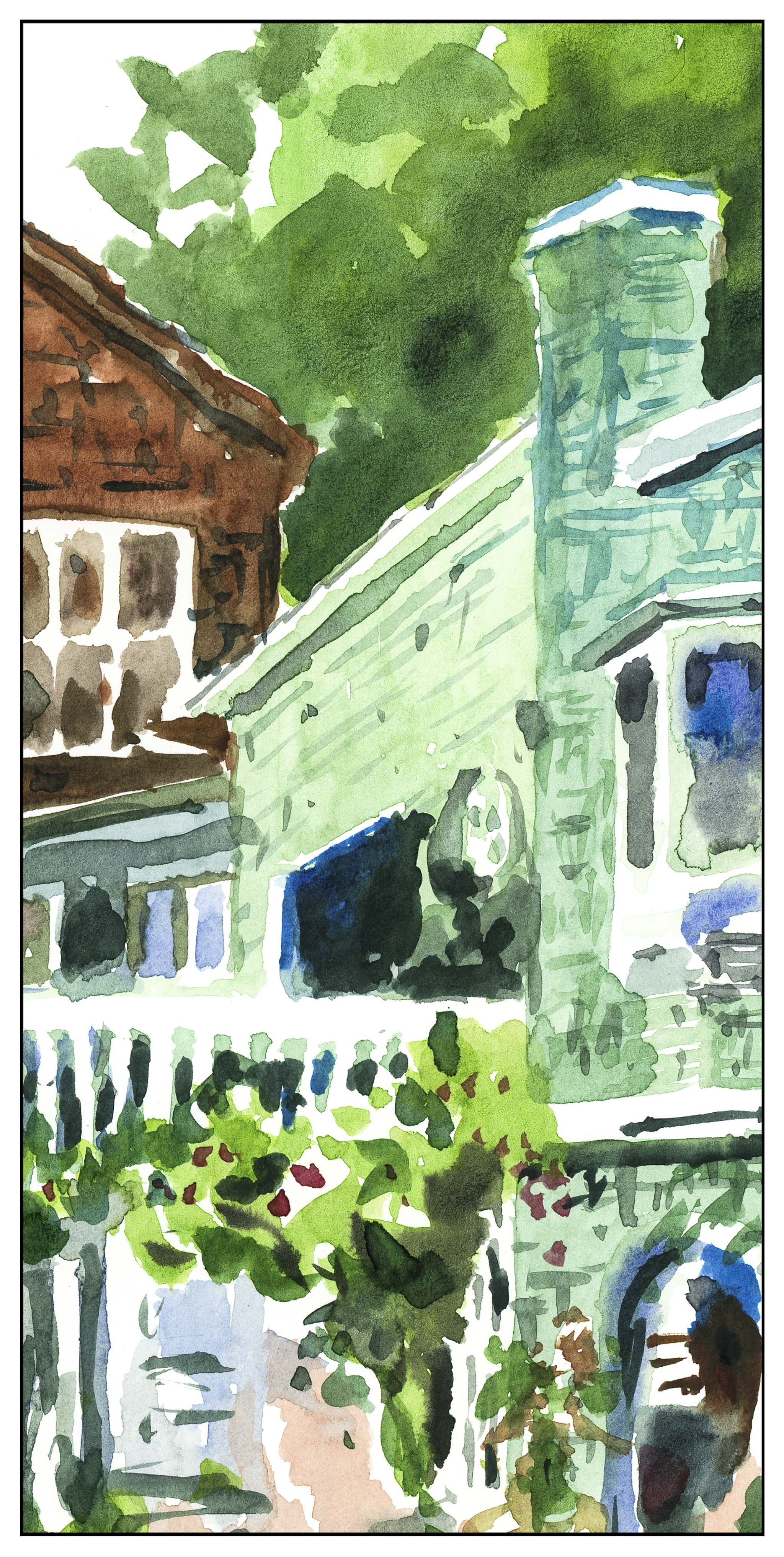
I admit, I rather like this one, because I like its brightness.  However, after I finished it, I got a good laugh over my totally unrealistic chimney (or whatever that thing is) on the top of the building in the upper right.  What dimension is that in?!
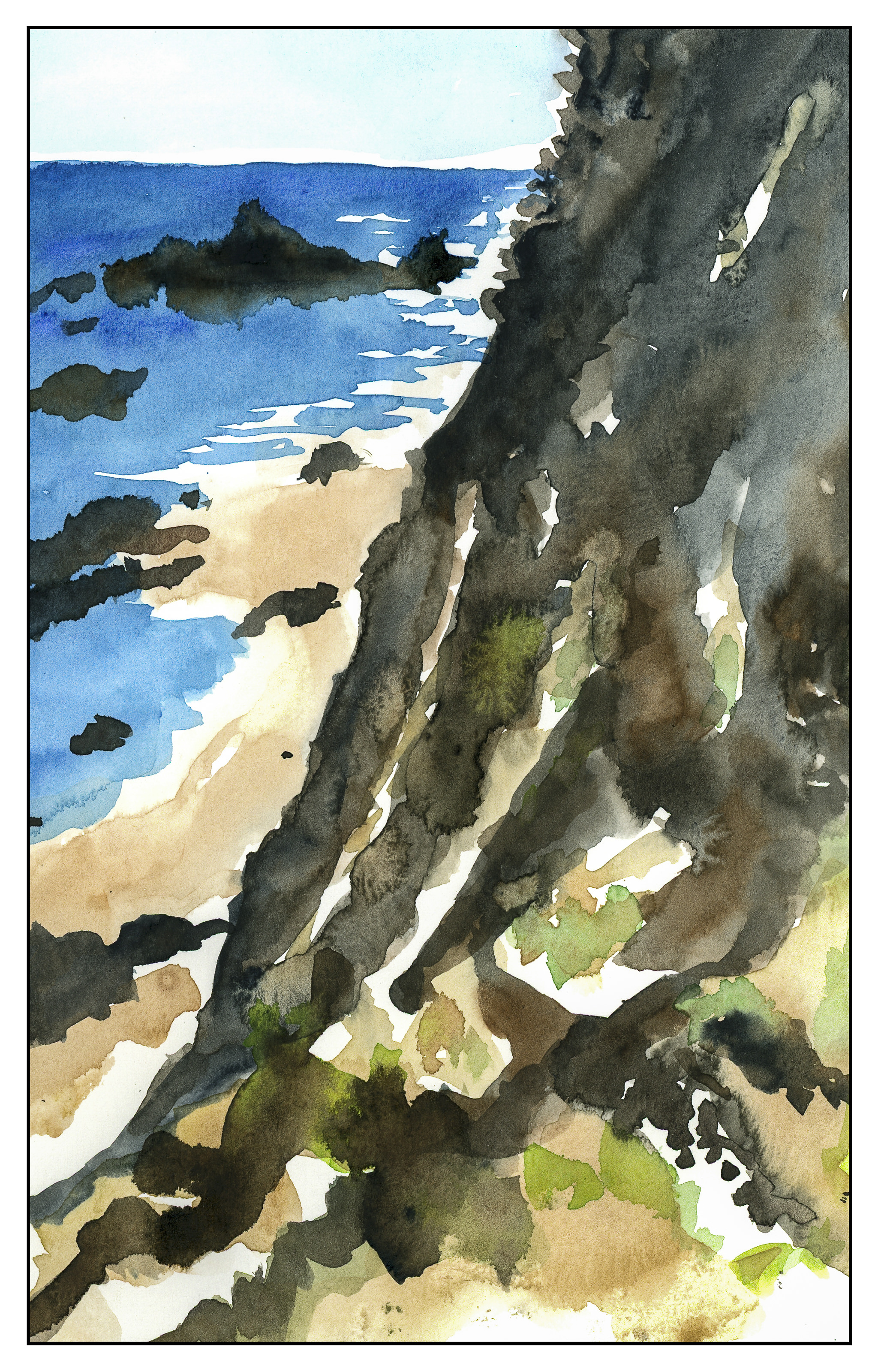
I think I am going to return to this one again, as it is from a photo I took a couple of years ago along the coast.  The bluffs are really intense.  The problem lies in rendering the ocean and beach below them – lack of depth and overworking.
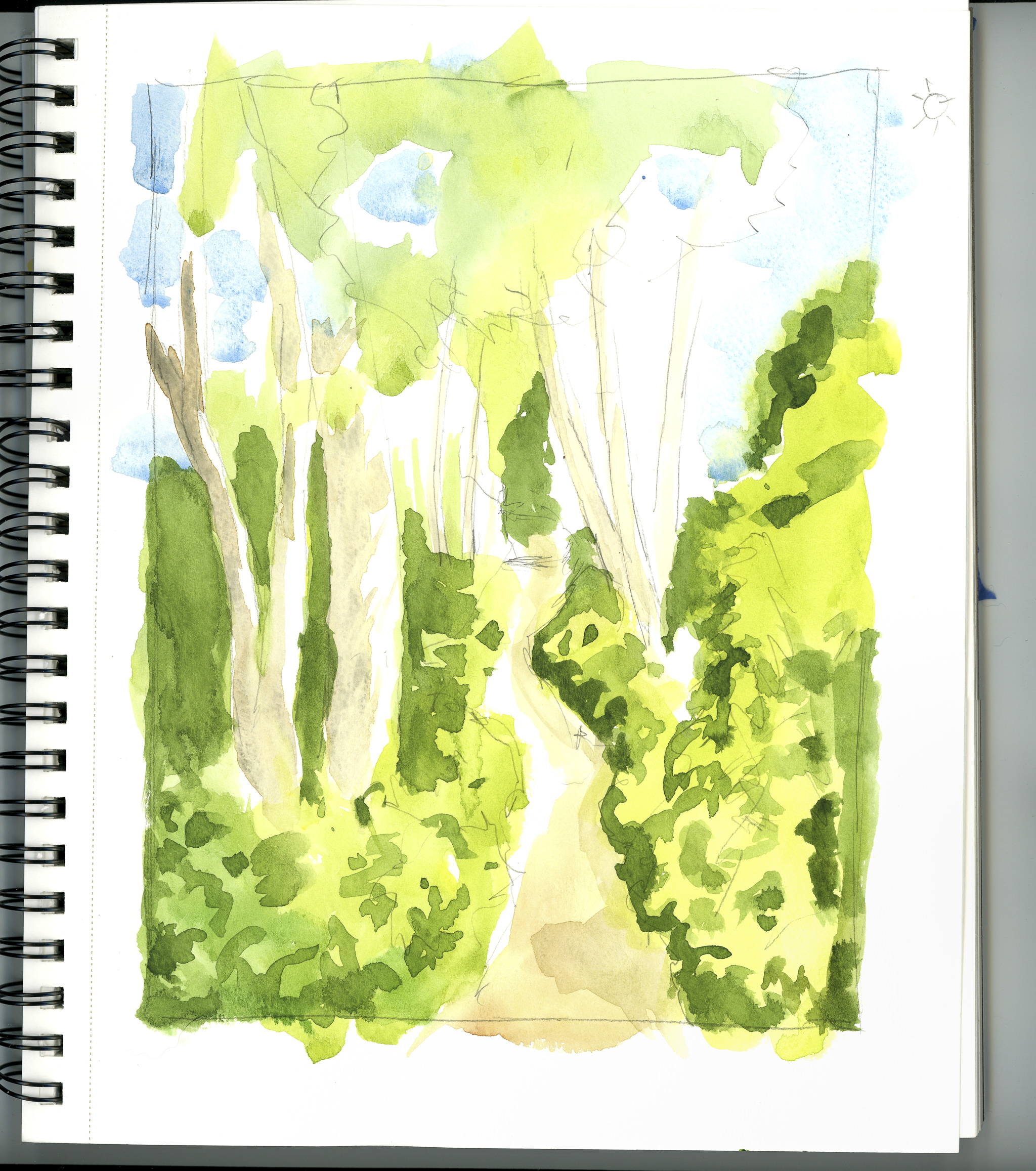
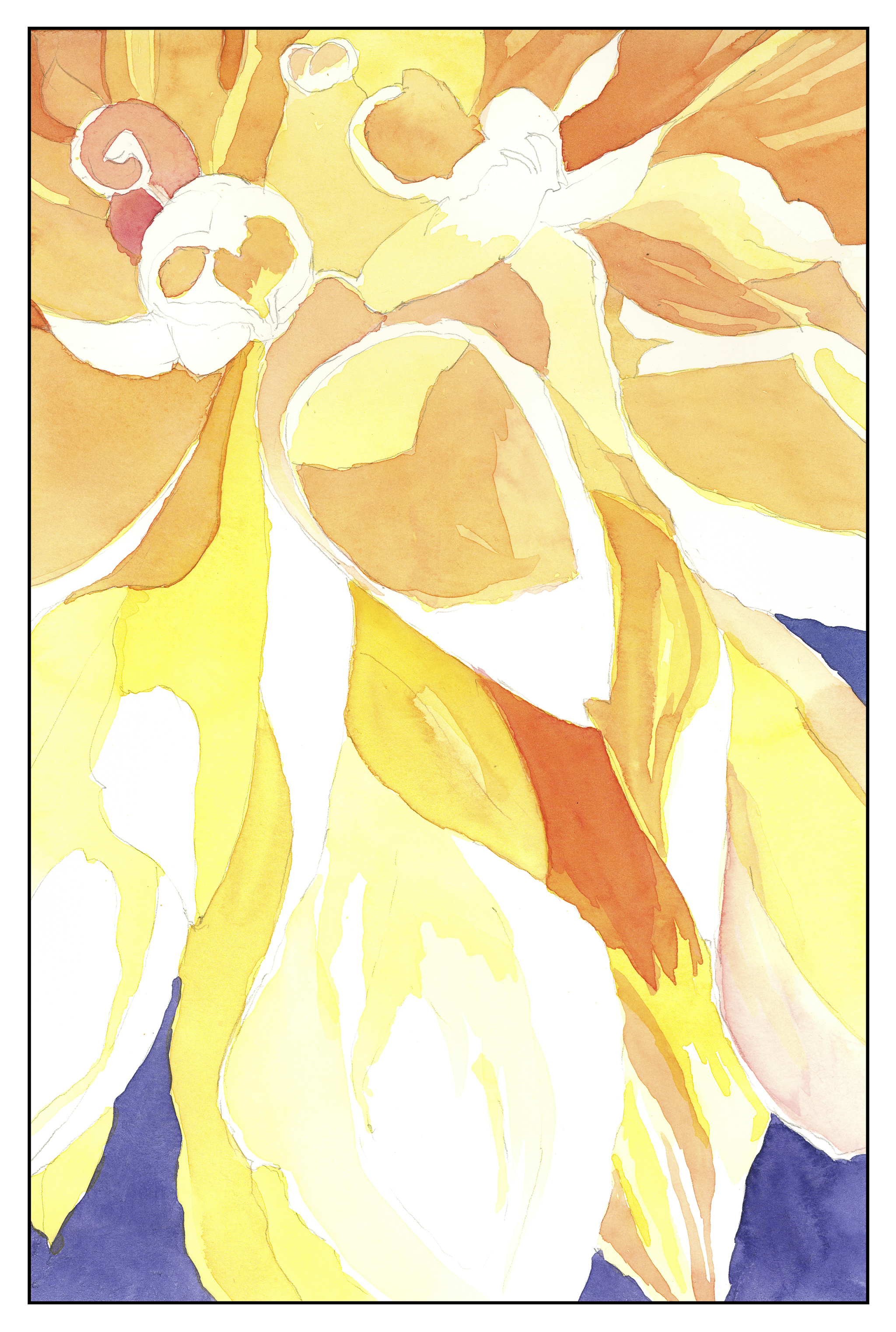
This is a WIP – from a black and white photo to consider light and dark.  I am going to try to work on this one today, or the one below, which is from a macro photo of a dahlia or similar flower.   I started this one in my Friday afternoon watercolor class.
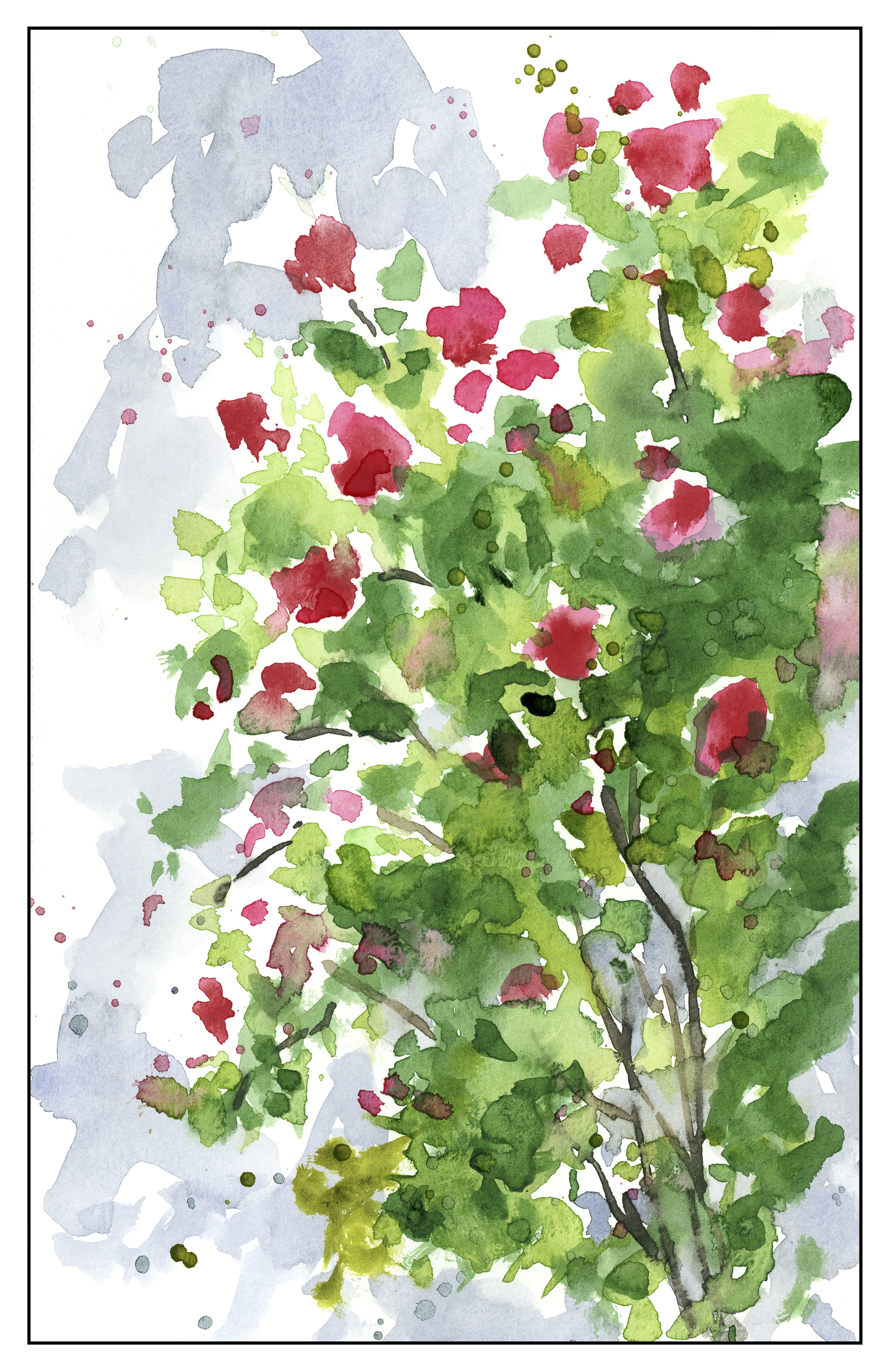
Lastly, sometimes just a quick interpretation can give a lot of satisfaction.  There is something about light-colored walls on a brilliant day, colorful flowers – here, a rambler rose – and dancing shadows.  I would like to do this one again, too, on a bigger piece of paper and a more formal and finished work.
Covered in Paint

A workshop all day Saturday, playing with Yupo (a plastic paper) and masking fluid.  What did I accomplish?  A familiarity with two unknown – unfamiliar – items.  I produced not a thing worth talking about, and truth to tell, if a friend at the workshop hadn’t shown up, I would have been down in the dumps – I FORGOT TO BRING MY PALETTE OF PAINTS!

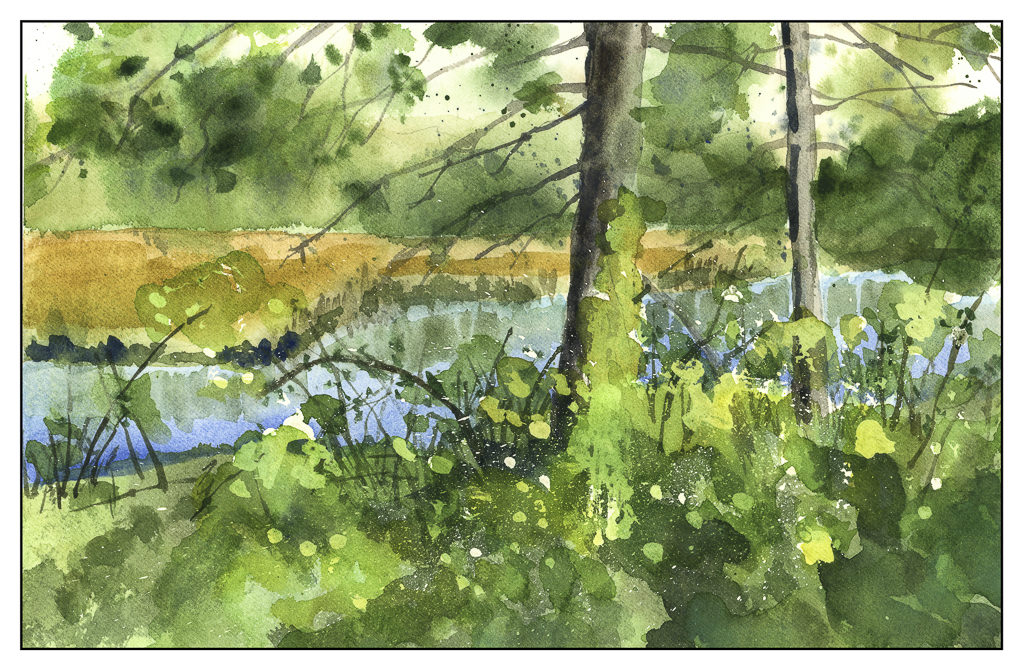
Oh, well.  But, it did get me rolling, and this has been a weekend spent immersed in watercolors and studying techniques by watching videos on YouTube, specifically, those by Rick Surowicz.  I followed two of his, one called “Creek’s Edge” and the other called “The Inn at Brandywine.”  His stuff is great.  The question is, will I carry his lessons into my own paintings, not copies?

So, here is what I did this weekend – the first is the “Creek’s Edge” and the second is my rendition of the “Inn at Brandywine.”

Cell Phone Reflections

Direct watercolor, paint what’s in front of me, no lines.  Those were my morning thoughts.  What is always in front of me in the morning is my messy desk, full of different debris, depending on the day and whether or not I’ve done any tidying.  As I pondered, oh so profoundly, I looked at the cell phone on my desk and really liked the reflections from my monitors . . . and here is today’s subject.

I worked to think more consciously and conscientiously about what I was doing.  First, the outline of the phone, on my rather ochre-colored desk, then the darks of the phone itself, followed by reflections and shadows.  I tried to be selective of where to touch different colors for bleeds.  Finally, I went back in and did some shadows and contrasts to make a bit stronger image.  In between, I worked carefully to avoid blooms and hard edges from backwash.

Penstemon

Penstemons are simple flowers – tall, elegant, plain – with an incredibly beautiful red-orange flower.  They are another one I photographed last weekend at the botanical garden.  Maybe today I’ll venture out to the cactus garden to see what blossoms may be up there!

Here, I decided simply on using a brush, a stiffer one than a red sable, to focus on how the brush responds to pressure, paint, and amount of water.

Old Shack

I went out to lunch, so that is why interrupted the first part of this post.  And, there were a lot of pictures to look at.  Now, back from lunch, and awake from a 2-hour nap, here I am.

The next step was to put in the grasses on the lower and the left of the picture, and the trees in the background.  Shape and contrast were the goal.  The grasses, again, were straight lines with a bit of curve.  In the background, I used 3 different colored pencils, and drew small, tight circles to convey the thick foliage of the trees in the distance; this was repeated in front of the shack.  Longitudinal lines were used to create the direction of the fields.

Once the grasses, field, and foliage were put in, I used water.  Short straight strokes for the grass were done vertically, some blending into other grasses, too.  The trees in the distance on the left and right were next, being careful to work around the straight lines of the building.  The sloping fields to the left and right were worked with short brush strokes, to keep the colors isolated in some areas, and blended in another.  If you look on the right, you will see the fields are yellow, blends of yellow and browns, and finally, below the trees, varying shades of green.  Lastly, I worked the grasses in the foreground, top to bottom left to right.


Next?  The sky!