Soggy & Boggy

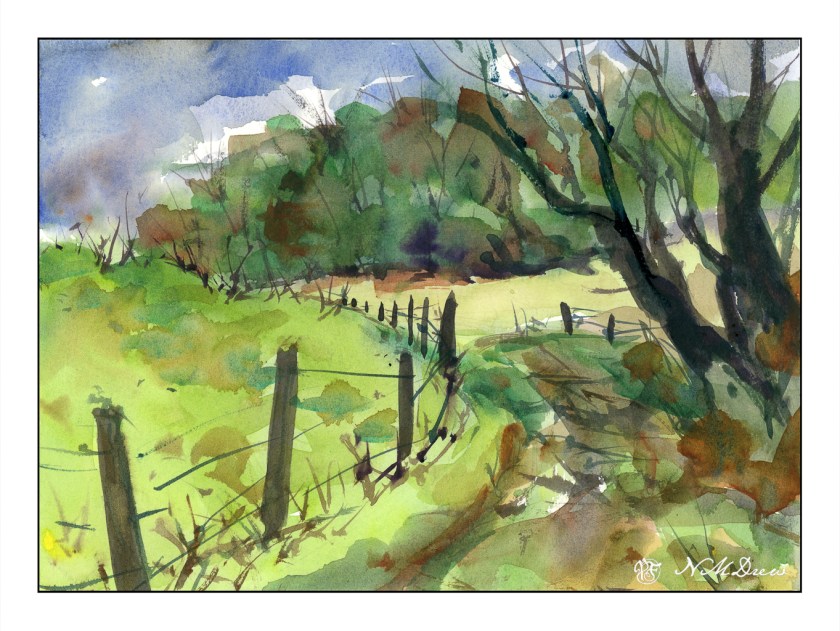
Today the rains are pouring down. The backyard is flooded and the pump is working to keep the water levels acceptable by shunting it out to the the street and into the storm drains. This is the second of the two Pineapple Express atmospheric rivers causing concern and evacuations throughout the county and elsewhere in California. There is charm to living up a canyon until the rains erode it all – I live on a small hill in a tract with a creek in a park a ways down the hill. I’ll settle for that! Our clay soil and poor landscaping creates a boggy lake in the backyard, held in place with our clay soil, but we are lucky overall.

And on a rainy day, oil painting is not something I want to smell throughout the house even though I did think about it. Watercolors called – because of all the water around me? Who knows – but rain brings green growth and soggy ground, and that is a delight in our dry, dry land.

Hahnemuhle CP 140#, 9×12, watercolor. 

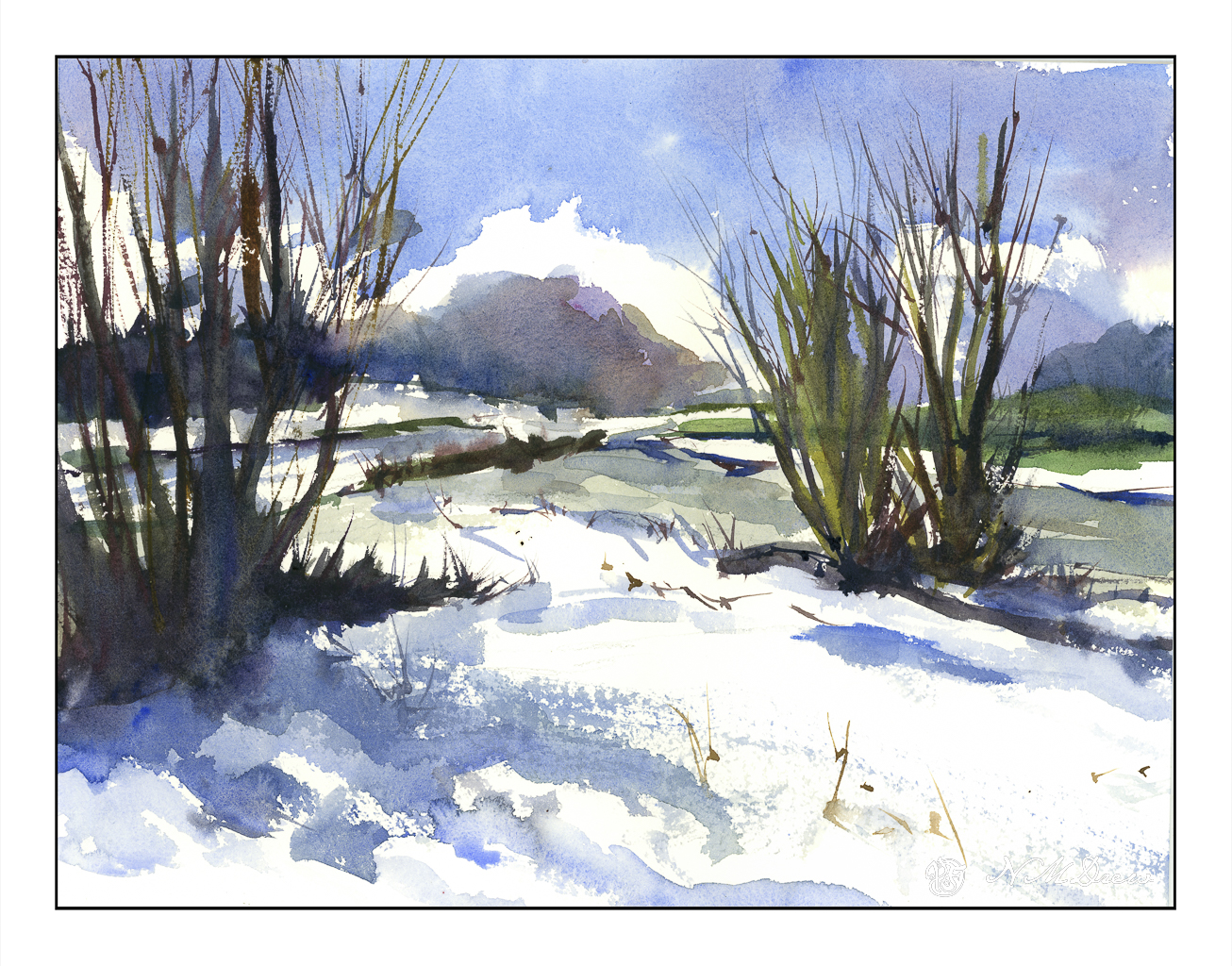
Winter in the Sonoran Desert

Winter is all over the place today – arctic blasts and cold temperature records. Snow in the South where snow is a rarity. Even the desert sees snow – a fact that never ceases to amaze me because to me a desert is hot, dry, and filled with sand and palm trees. Evidently not here!

First time using Hahnemuhle 140# CP paper, 9×12.

Bagged

Bagged

Yesterday I refilled an old travel palette with new watercolors. This meant rummaging through my paints, discarding dried up tubes of paint, and sorting them out. This is always fun as I get to choose my colors out of the collection that has accumulated over time as well as just clean things up. 

I don’t know about other people, but I really like my stuff – of which I have scads – to be organized and tidy in all its scaddiness. 

Baggies are great for this. Permanent markers label them, too, to help me sort things out. Categories include red, blue, yellow, orange, earth colors, teal & turquoise, violet, neutral-white-grey-black, green, and maybe a few others. If a color leaks, the baggie keeps things from oozing everywhere and when this happens, the offending bag is dumped into a bowl of water, the offending tube(s) removed, the rest of the tubes cleaned and dried, and moved into a new home. We are all happy.

Through Many Seasons

While the peasants needing food and firewood in the past centuries in England were kept off the king’s land, it has left a wonderful legacy of old growth trees, unlike, I understand, in most of Europe. Here in the U.S. we have many old trees, and the wilder parts of our country have many stunning examples.

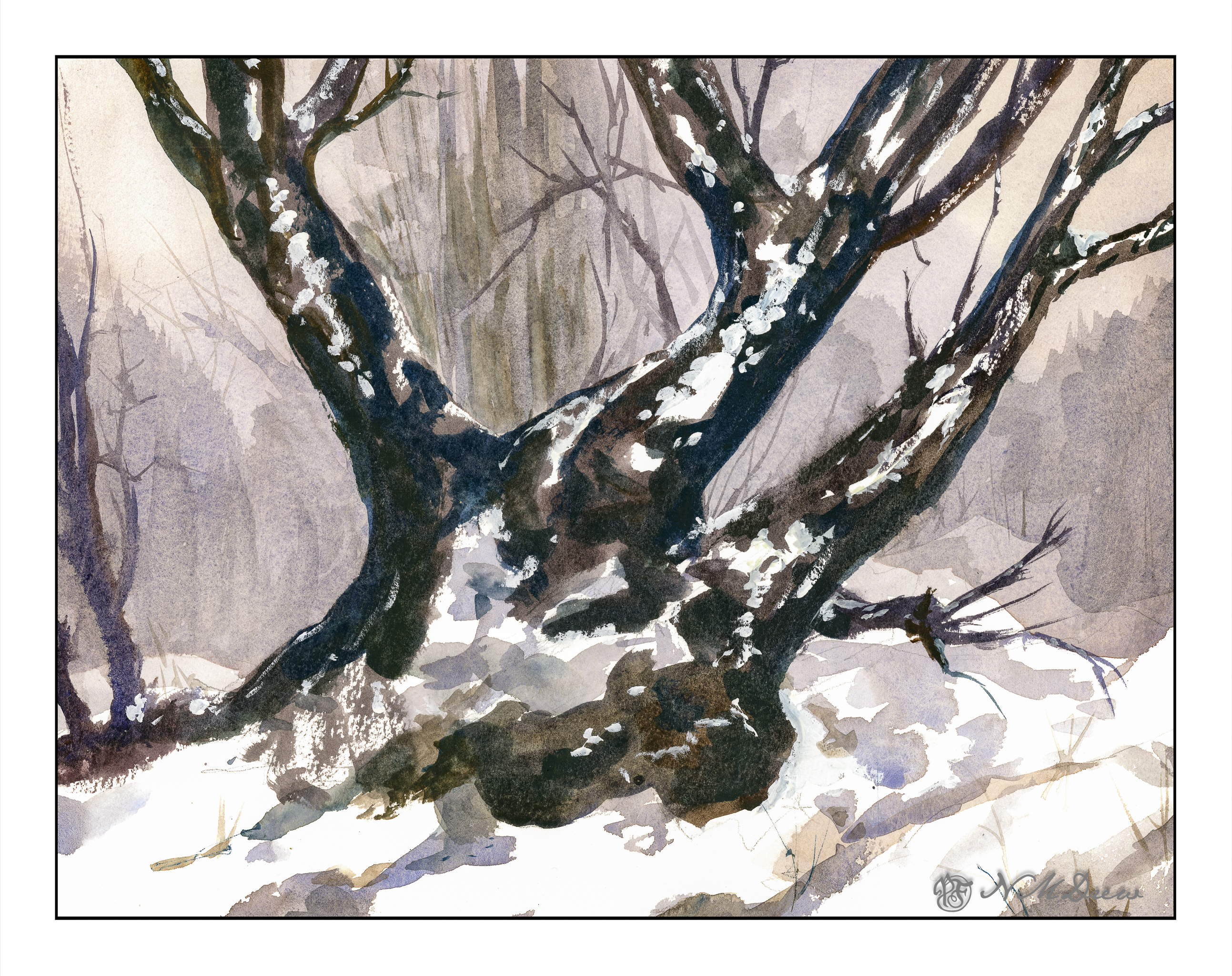
Personally, I am partial to oak trees because of their oddly twisting limbs and branches. As a kid in the mid-west, I grew up with a forest of oaks behind my house, and these trees have always held a special place in my heart. The Druids found them magical, and so do I. 

There are multiple species, distributed worldwide. Here in California, the overall objective is to give oak trees the protection they deserve, and while property owners can cut down trees, permits are generally required, and woe betide those who fail to follow those regulations. Sadly our fires are killing many.

A return to the theme of snow and winter. Can you imagine what these old trees must have seen through the years and years they have stood? Changes in forest, change in season, spring to summer to fall to the desolation of winter. For me, a tree is more than a tree – it is a legacy of times gone by as well as, in many ways, a hope for the future.

Kilimanjaro 300# cold press paper, 11×14, limited palette of blues, umbers, and siennas.

Winter Farm on Christmas Eve

Now to the northern part of the continent . . . somewhere in North America for winter on the a prairie farm, snow covering field stubble, early evening or morning. Cold, desolate, and heartbreakingly beautiful.

I spent the morning painting this on rough 300# natural white Kilimanjaro. I did it in stages. The sketch was light, with suggestions of shapes. Then the sky was wet and yellow, quin gold, and permanent alizarin crimson used to create the rosy golds. Once down, cobalt blue and ultramarine were placed to simulate sky being careful not to merge into the rose gold of the central cloud. As the sky dried, purple and alizarin were mixed with ultramarine to create the darker clouds. 

After the clouds were laid in, I did the dark trees, blurring some green into the still damp sky, as well as waiting for the sky and soft trees to dry. This was done to create the hard edges needed for the buildings against the tree line. The buildings themselves were left white as the trees dried.

From there, the snowy field was laid in with cobalt and ultramarine in a very light wash and using a 2″ soft brush. Again, drying. At one point, the 2″ brush was dried and dipped into lightly damp burnt umber and applied to make the streaks of brown for field stubble near and far. Then the buildings were done, and once the snow dried, more thin washes as glazes applied to the foreground snow, culminating in a streak of quin gold and then permanent alizarin to the middle of the painting, hoping to show a sense of light reflected in the still dark snow from the breaking clouds above.

After that, details such as dried grasses, windows, tree trunks and whatever were added as deemed necessary.

I am pleased with this painting quite a bit! It achieves what I set out to do – a winter scene, snow, clouds, and patience to wait and think about a painting before just diving in with brush and color. The 300# rough Kilimanjaro is 11×14 and a wonderful paper to paint on. More is needed in the future for sure.