Some thoughts on “On1 Photo Raw”

Today is the very, very first day that On1 Photo Raw is available for usage.  I think the original idea was to have a product ready to roll in October 2016, but rather than have a “finished” product full of bugs, they realized they had more on their plate, and held off until today, November 23.  I’m glad they did – and I am glad, too, that they realize that this really is a “work in progress” as it stands.

Personally, I love On1, and have been using them since version 8, which was a while back.  I use it with Lightroom.  What makes On1 great as a company is their support, ongoing consistent development, tutorials, and so on.  On1 products are sophisticated, and while they do not rival Adobe Photoshop for complexity, On1 products are far easier to use.  I prefer their brushes, spot and blemish removal tools, as well as the fact I can create presets which I can store.  At this point, the presets from On1 Photo Suite 10 cannot be used in On1 Photo Raw, but I expect they will have the ability to port them later on.  The one-up that Photoshop has is its “content-aware” fill.
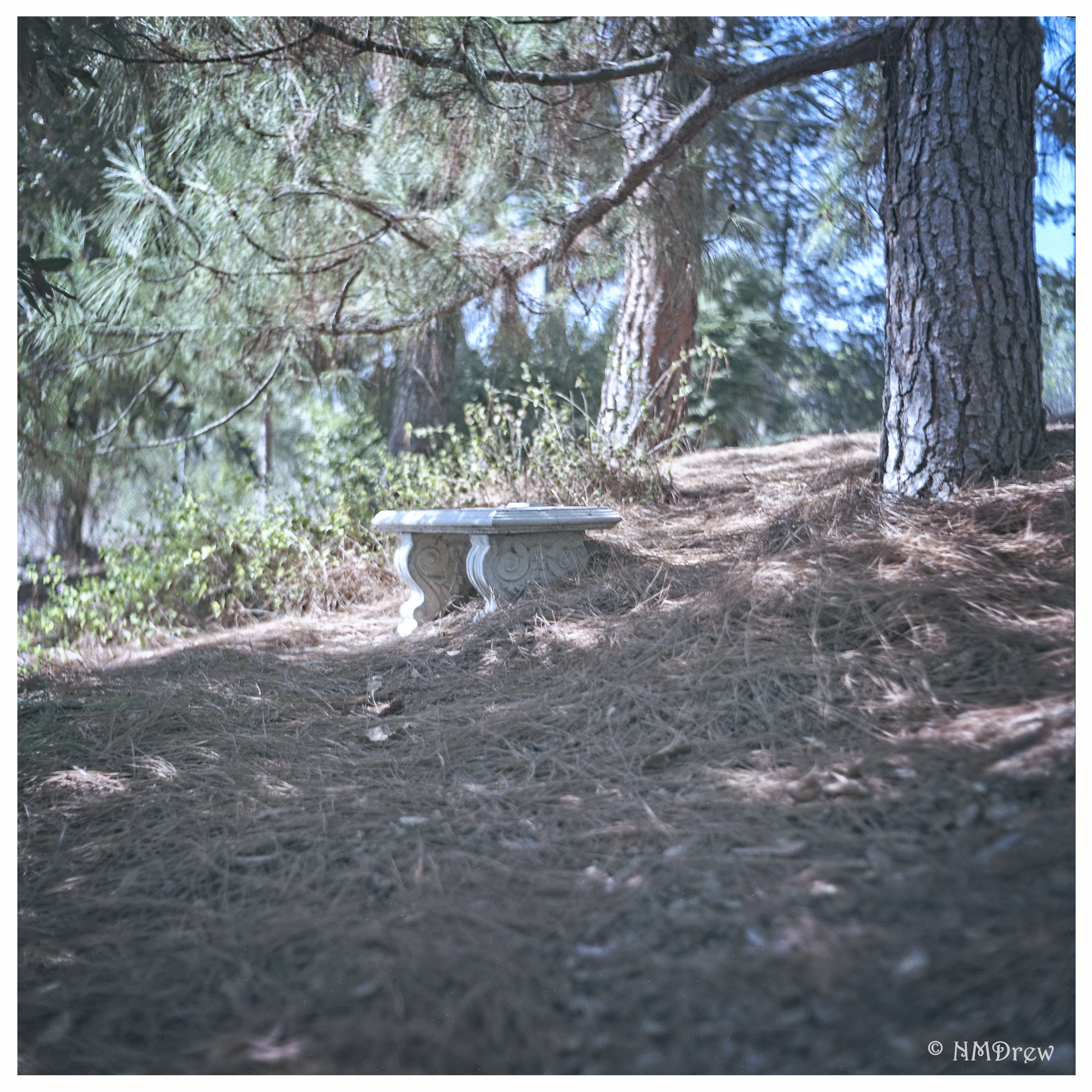
waiting-for-lovers

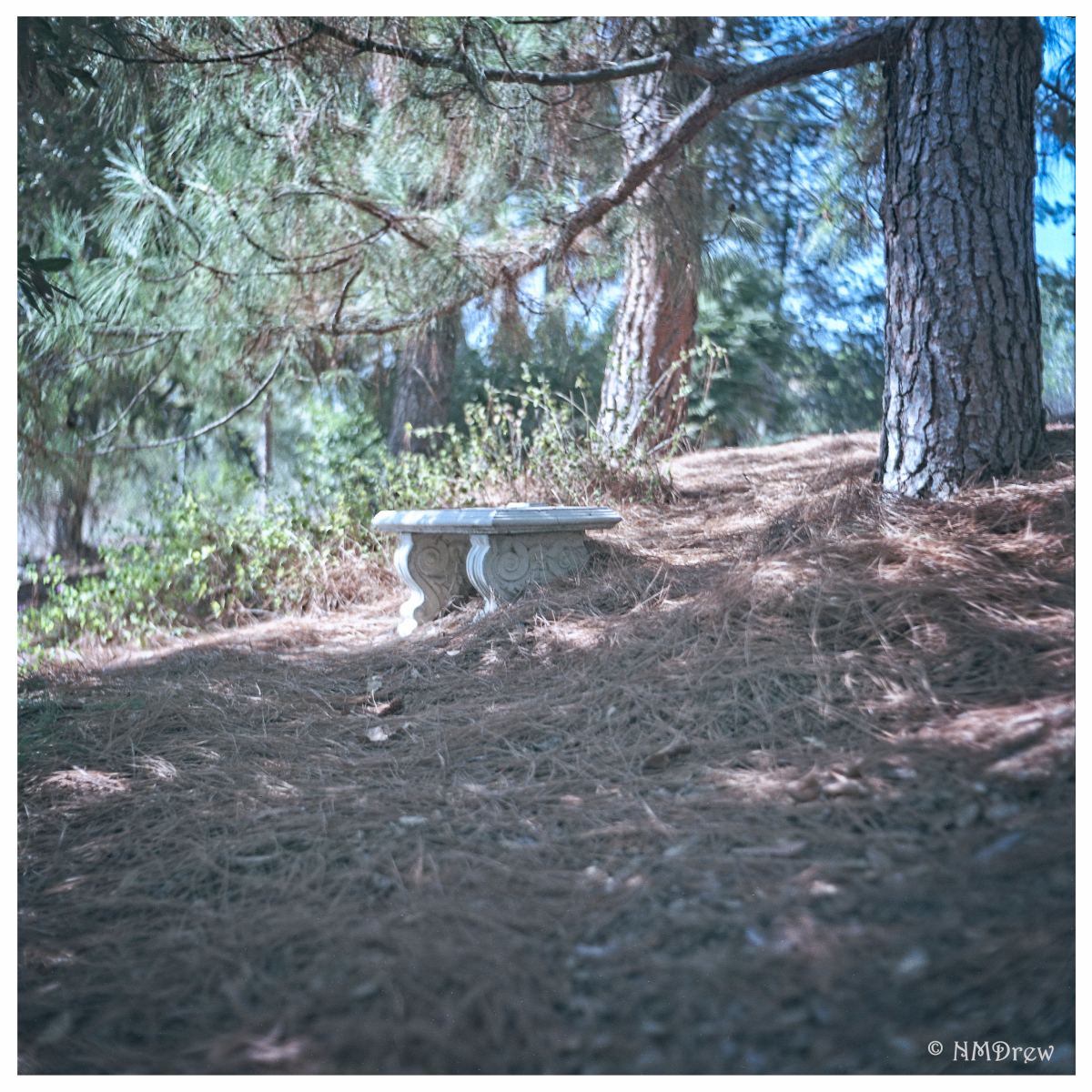
The image above, Waiting for Lovers, was edited using On1 Photo Raw.  It is a film image using Kodak Ektar 100 in a 1930s Welta Weltur rangefinder.  The lens is an uncoated Xenar – probably about 75mm – which has an ethereal quality to it that I really love.  Scanning the image with my rather dirty Epson V600 (I have since cleaned it), I ended up with a blue streak across the entire image.  On1 took it out quite nicely.  Spots and threads were also easy to remove.  I think On1 did something to their processing algorithm (or whatever), as the spot removal works very quickly.
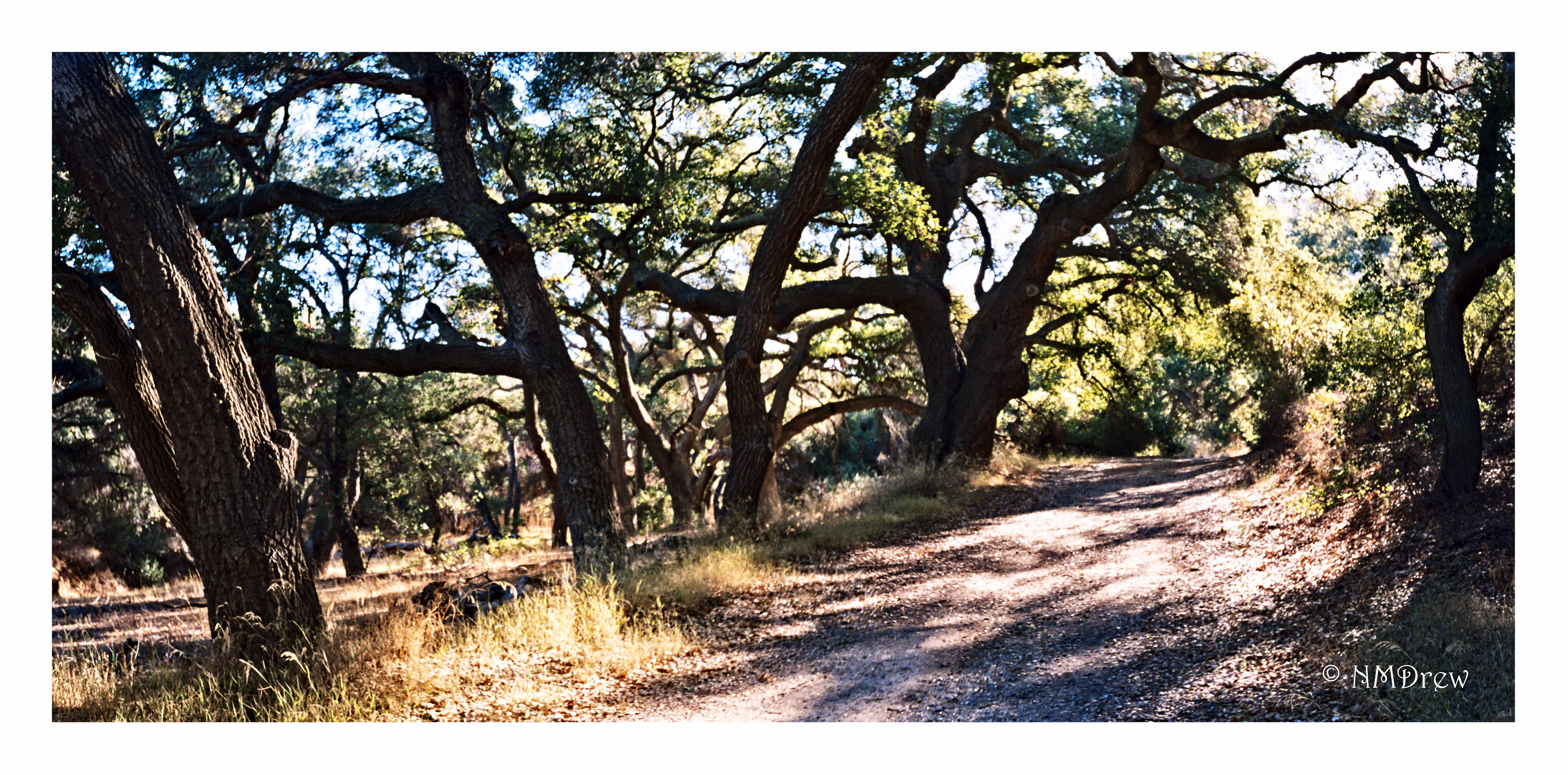
chumash-trail-1

This image is a pano stitched together in LR, and consists of two images taken with the Olympus XA4 and Lomography 100 film.  The only thing I did was perk it up a bit with some detail, in LR and in Photo Raw.  It is nearly identical to the SOOC image.
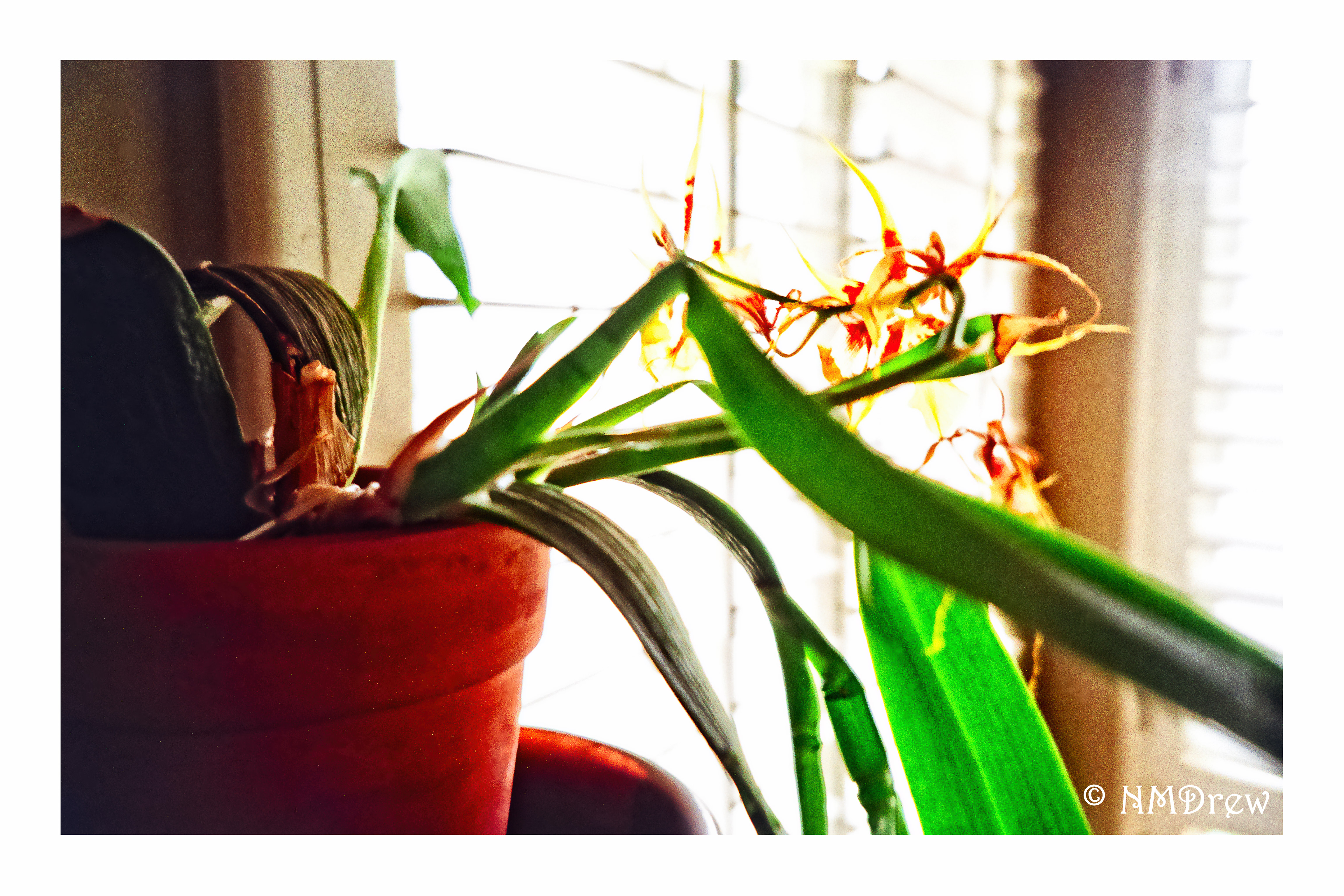
orchid-in-the-window

Finally, the above image was really pushed in On1 Photo Raw.  Spot removal, brush usage, presets, whatever.  This was an overall high-key, pale image, but I set it up to be contrasty and bright – possibly too much so – but wanted see what I could do.  This was also taken with the XA4 and Lomo 100 film.  Both of these two images were scanned using a Pakon 135 scanner.

There is so much software out there for photographers, that competitors to Photoshop seem to come and go.  My favorite and most consistent programs are Lightroom and On1.  I also use DxO v. 11, and while it is good for some things, it lacks the diversity of On1.  Capture One is good, too, but it makes me crazy as it does not make sense to me at times . . . but I admit, I have not put in time to using it as it has a higher learning curve, and is not, for me, very intuitive.  So, two thumbs up to On1 for its Photo Raw software – I think it will prove to be a real winner as they continue to develop it.

Project a la Hockney

I have been playing rather seriously with photography for about ten years now, starting with digital, and then moving into film.  However, for me, there is always something missing in photography, and that simply is working with my hands.  I get rather bored, to tell the truth, of photography.  I would rather do something with it, make something with it.

Coming home from Mammoth in August, seeing the desert, made me recall two things.  One was David Hockney.  The other was his photo collage – montage – joining – whatever – of the Pear Blossom Highway.  There is just something about it I have always enjoyed.

Last weekend I decided to do something about it.  I went out to the local botanical garden and took a whole series of images, all digital, to create something similar to Hockney’s Pear Blossom Highway.  Altogether, I took enough photos for about a dozen panoramas, ranging from about 20 images to 70.  It took a few days to process the images in post, and then to create a panorama, too, just to get an idea of what the final pictures could be.

I chose three that I liked.  The pictures above are one of the three I sent to the Costco photo lab to print as 4×6 inch glossy prints.  I have no idea if Costco will stick to my colors or not – no idea!  That is part of sending them to an inexpensive photo lab.  For 112 images, I am paying less than $20.00, so that’s a pretty cheap thrill.  And, they will be ready in a couple of hours, so the fun can begin soon enough.

From all the images above, the one below is the merged pano, done in CS6, to give me a bit of a road map – like cheating on a puzzle??

cactus-collage-2

Once I get the collage done with the prints, it will be interesting to see how it actually looks, compared to a computer-merged panorama.

Tourist Stop: Bodie, California

On the Road to Bodie

For what it’s worth, Josh and I went up Highway 395 to see what the Eastern Sierras has to hold. I’ve never been up there.

High Noon in the High Desert

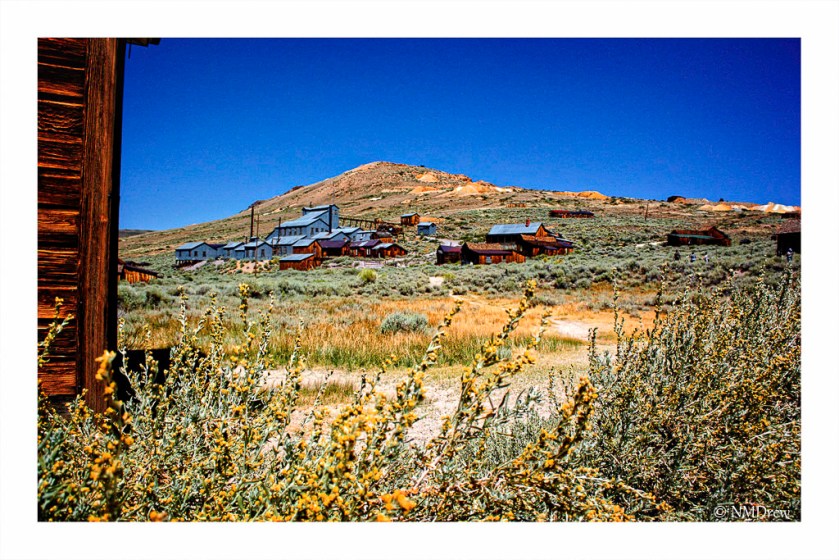
We decided to visit Bodie, the old silver-mining ghost town. It was amazing – not so much that it was a ghost town, but that at one point, it wasn’t a ghost town.The road in is about 13 miles long, the first 10 of which have been recently blacktopped, but the last 3 of which are gravel and washboard.  We were there under a noonday sun. Historically, about 5% of the original buildings remain, many of which had been destroyed by a fire sometime ago (1920s??).  While it is rather desolate and barren, visiting and learning a bit of its history, you are amazed to see the civilization of an age past come to life.

Click on the images below for the slideshow!

Old Things, New Things

Film

With film disappearing – and reappearing – it seems the only new cameras for film are made of plastic and don’t cost too much or else are quite expensive.  There is something to be said for both approaches, but the quality of pictures taken with a plastic camera are not as “good” to my eye as are ones made from better quality film cameras, whether old or new.

Lizard Mouth at Sunset Jimson Weed

Of late, I have been enjoying the usage of old folding cameras, made from the 1930s and into the 1950s, which use both 35mm and 120mm film.  Besides the folders, I do have some SLRs, but, those are for discussing another time.  The folders are weird (compared to today’s digital) and definitely slower.  I mean, you have to get the film developed, or do it yourself!  The majority of folding cameras use 120mm film, but 35mm did make its debut in the 1930s, popularized by Leica.

The Road Beyond West

When I become interested in something, I tend to end up with a small collection.  That is what has happened with folding cameras.  I have ones which range from 6×4.5 to 6×6 to 6×9, all in cm, not inches.  They use 120 film, and the results can be great to deplorable, but always interesting.  The 6×6 square format is perhaps the most challenging because the viewfinders are offset and the image – as is for all of these kinds of cameras (non-SLR) – but with a square format, the eye wants to move into the center.

A View at Sundown

Autumn in the Valley

So, here are some images.  I plan on taking some of these cameras up to the Sierra Nevadas next week, along with a digital or two . . .

Prickly Pear

Meanwhile, I hope you enjoy all these square images, taken with an early 1950s Perkeo II by Voigtlander, sporting a 75mm Color Skopar f3.5 lens, and Portra 400 film by Kodak.  Post in LR and other critters.

Another Walk on the Wild Side

Toward the River

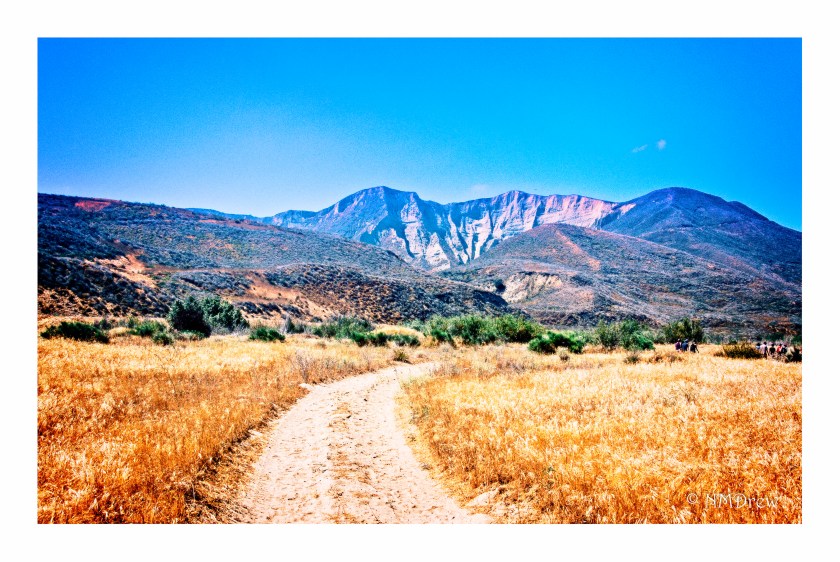
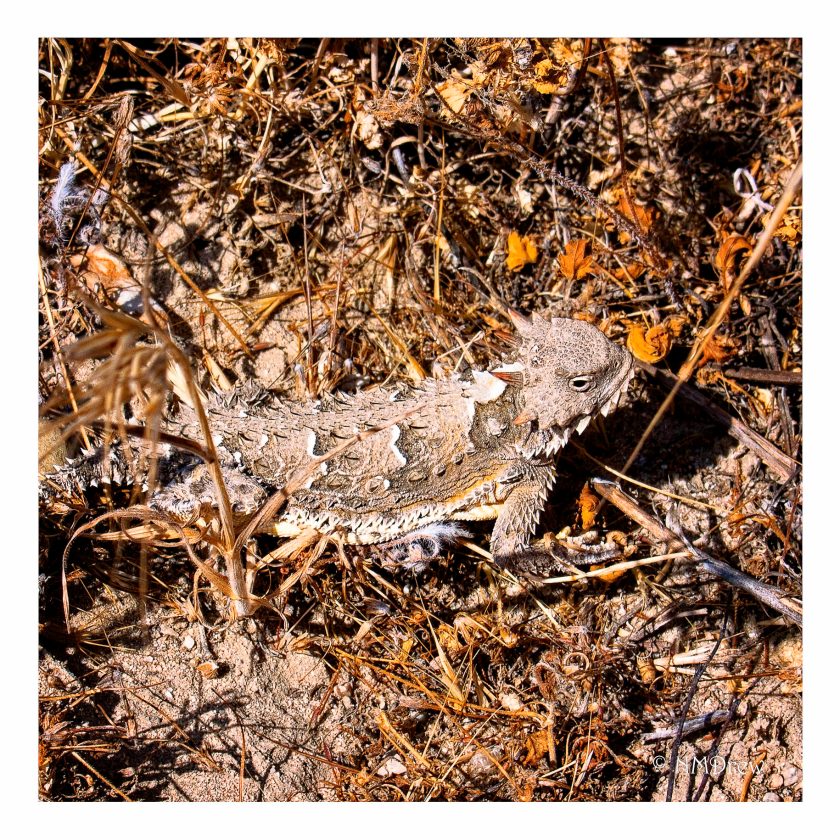
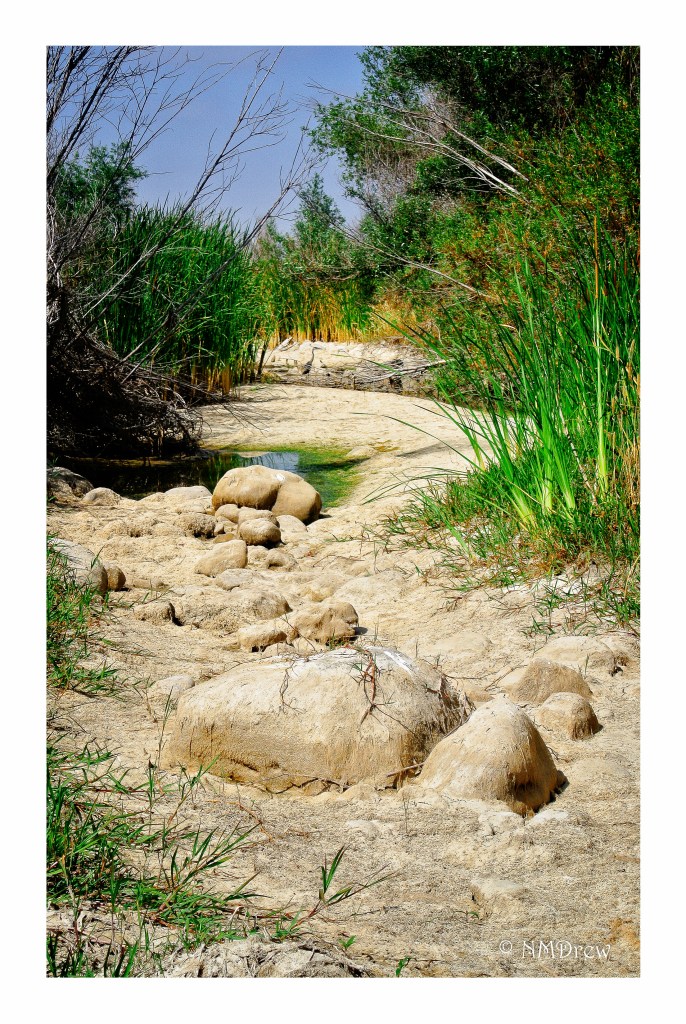
Meetup groups can be a great way to make connections, to do and learn about new things.  Lately, I have been going on walks with the local Nature Conservancy group, and enjoying it immensely.  I am amazed at what I see and what I learn.  There are a lot of sharp eyes – the leaders spot things I wouldn’t notice, like horned lizards, and mountain lion tracks.  Yesterday, we wandered over to Santa Paula, California, to explore the property the Nature Conservancy has there.  It is up against the mountains and along the Santa Clara river, which is one of the last open rivers in Southern California – “unmolested” as Amy (the leader) says.

Remains

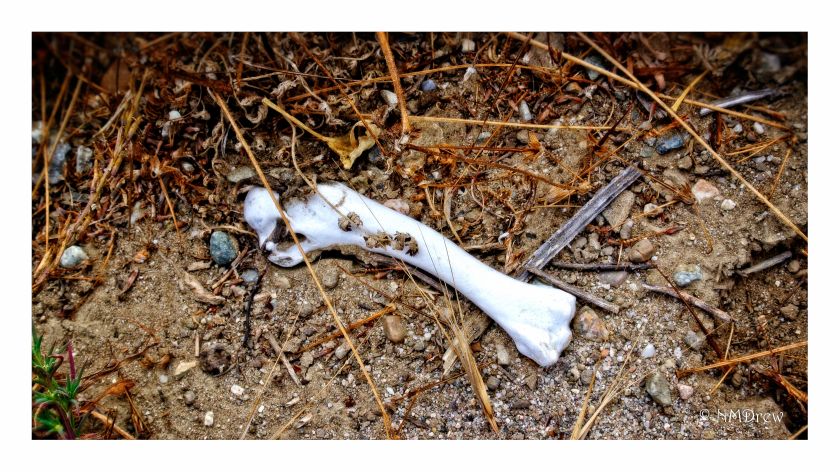
This hike consisted of a group of young men from a church in San Bernardino to a couple of young kids who found a horseshoe with the nails still in it and a feather from a red tail hawk.  All told, there were about 15 of us.  There were people I had met earlier – I expect they are regulars, as I am becoming – and newbies, too, who weren’t “new” to the world of nature, but just to me.  Some had amazing knowledge of plants and animals and the ecosystems involved.

Horned Lizard

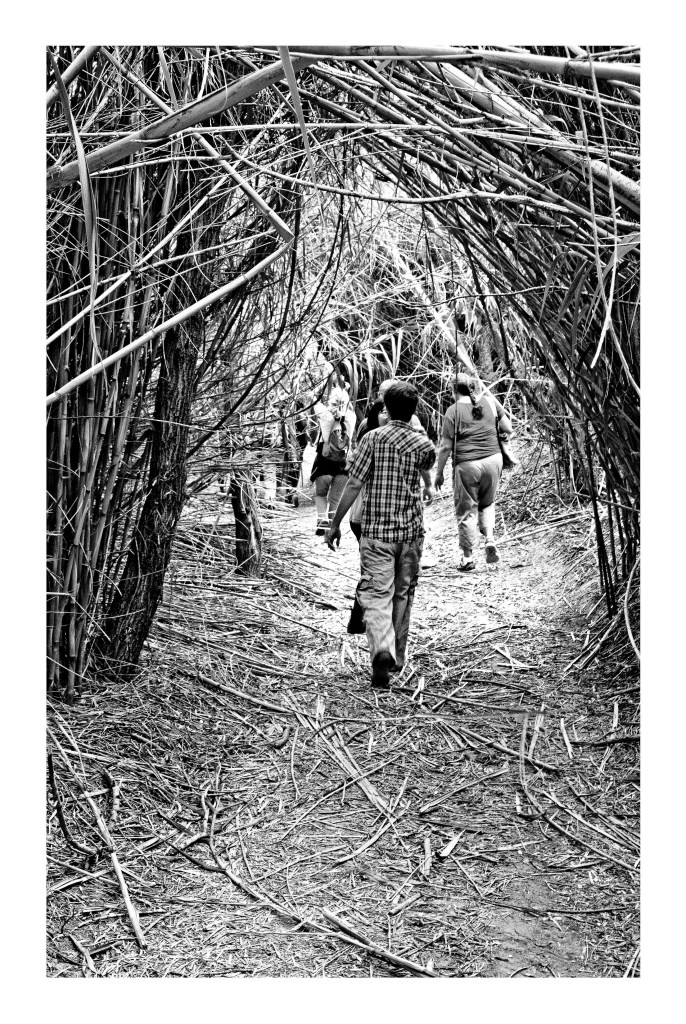
Probably the most interesting part of this hike, for me, was to learn about the invasive species here in California, and their negative impacts.  These plants include arundo donax, black mustard, and fennel.  They are everywhere.  The arundo donax is an import from India and was used to control flooding along rivers.  The problem is that it is very invasive and dense, crowding out native species.  Black mustard was spread (supposedly) by the Spanish missionaries as the wended their way up from Mexico into California, using it as way to mark the trail from Mission to Mission.  Finally, fennel (which has a taste similar to anise or licorice) is an import from the Mediterranean.  Each of these plants are very familiar to the California landscape, but extremely, extremely difficult to eradicate.  Each has changed the native landscape in its own way, not for the better.

Heron

Native species along the Santa Clara river include mountain lions, badgers, egrets, herons, coyotes, pond turtles, yucca, buckwheat, cat tails, bull rushes, black walnut, red tail hawks, and a lot of other plants and animals adapted to the dry climate.  The Santa Clara river itself is not a river as one might think – not like the Mississippi – but a seasonal one which varies depending on the rainy season.  Some years we might see it wide and filled, other years a bit more than a trickle.  Where we trekked there were scattered ponds, low areas surrounded by cat tails and clogged by the arundo.

Tunnel

Many people think that everything in So Cal is just a freeway . . . it’s not.  There are a lot of open areas filled with life.  You just have to get out to look for it!  Below is a gallery of images.