After the Snow

There is a lot more “ink” these days than beer or yarn, but as far as those go, there is a lot going on in the background. I guess I will need to post some of my knitting projects or sewing projects (“yarn”). Cooking, too (the “beer” part). Paint (“ink”) takes up most of my time, though.

I am continuing with the oil paints and just love the sensuality of mooshing it around on a canvas! I also like being able to work on my sense of contrast – lights and darks – as I have done with a few pears.

When I am finished with a painting, even though I use low odor solvents, the smell lingers, more so when the house is closed up to keep it warm. Because of this smell, I have some drying shelves set up in the garage, which is pretty cold. It takes a long time for the paintings to dry unless I use Gamblin’s Galkyd Gel, and then they dry almost overnight.

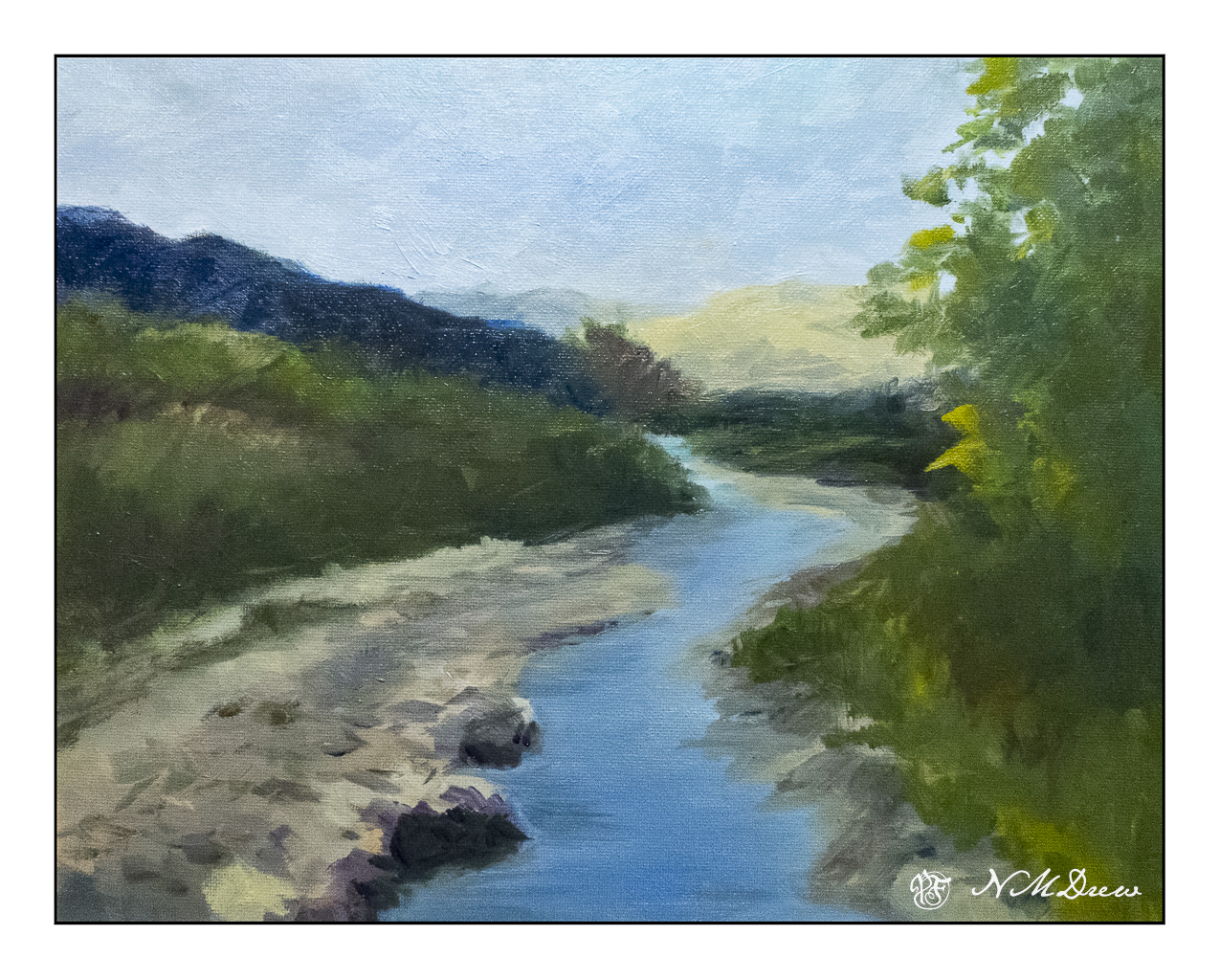
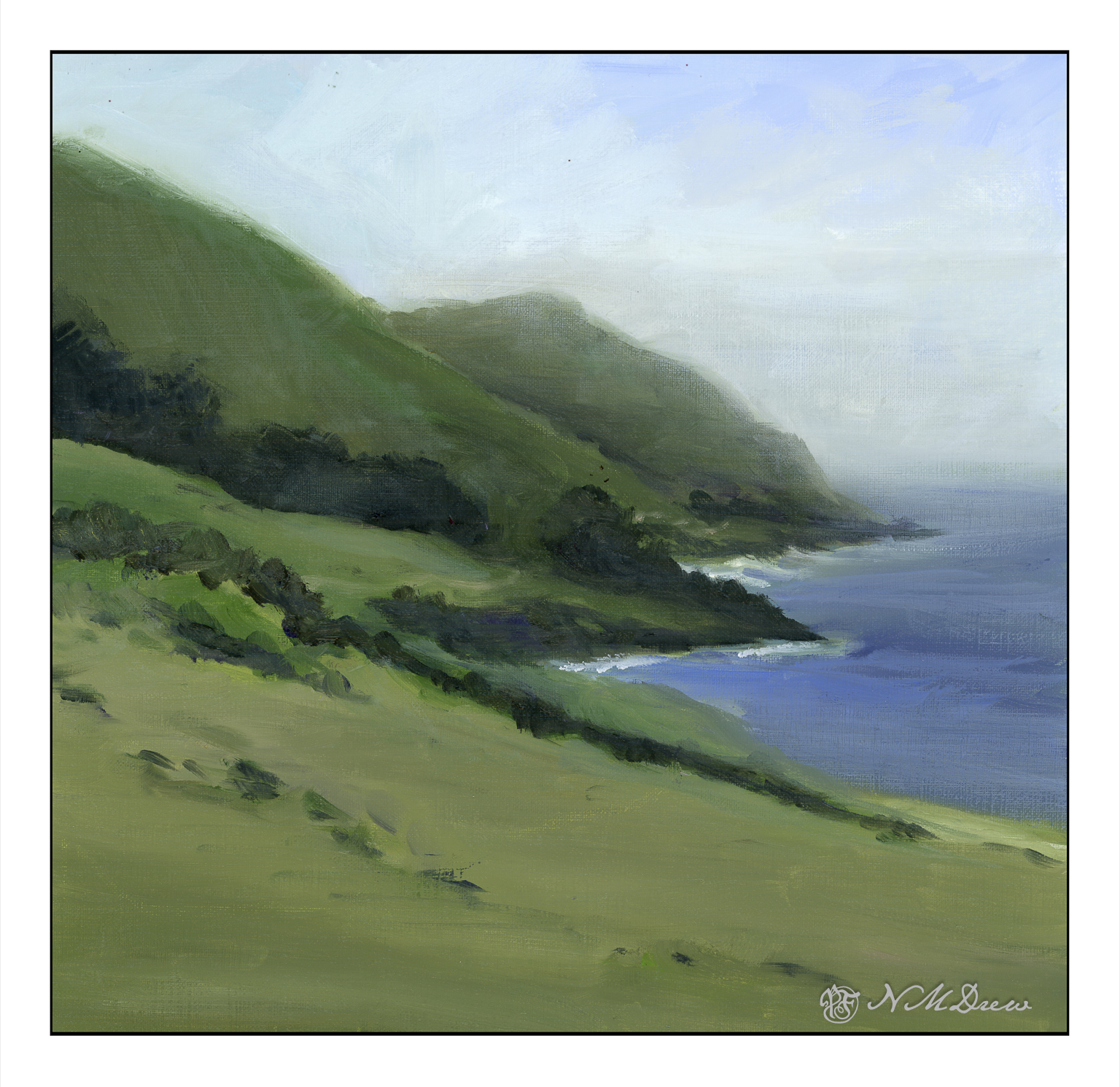
Now that you know this, I painted this painting about 2 weeks ago using linseed oil as the vehicle as well as Gamblin’s solvent-free gel, but not the Galkyd. Drying time is very slow. I just got some walnut oil mixed with alkyd by M. Graham, which should speed up drying time and, I hope, give that lovely ooziness that makes oil paints a lot of fun. Maybe I will check that out later today.

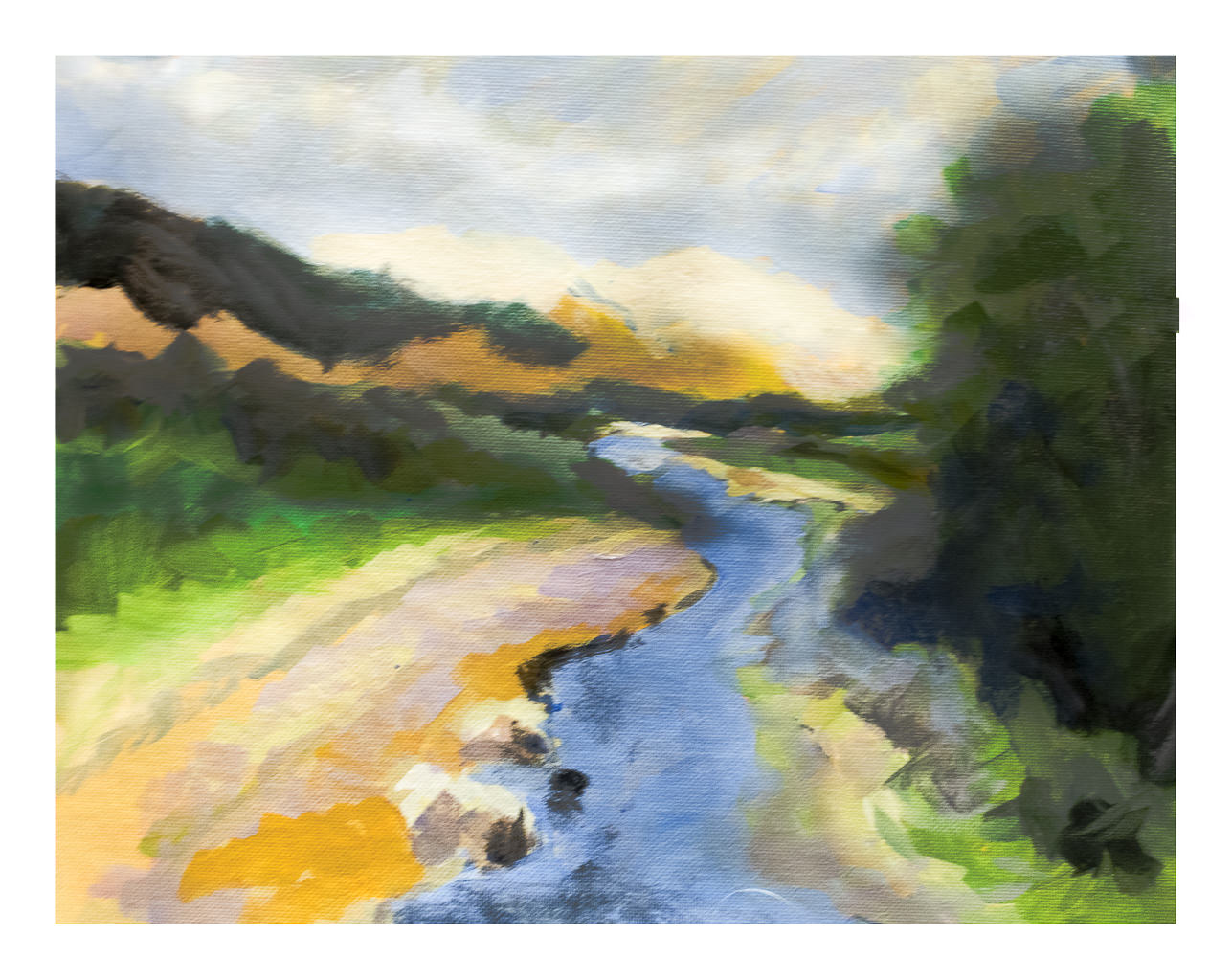
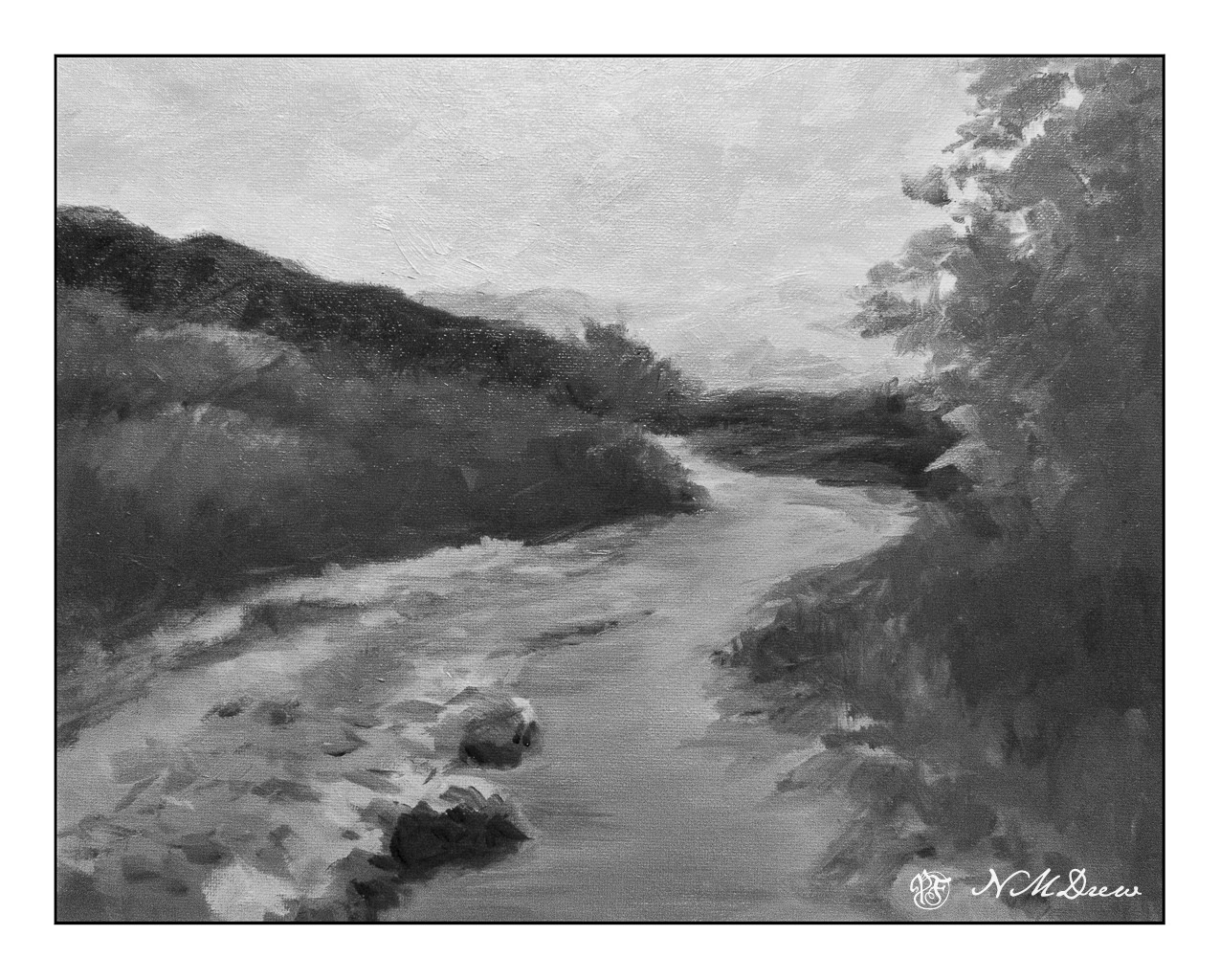
I chose this subject to work on a few things: values, color, distance, depth, contrast. Overall, I am pleased with this painting. I like the brighter yellow between the tree branches on the right as I think it leads the eye in. Someone on a forum said it was too bright and might need to be dulled down a bit. That is something to think about, but my magpie self likes that but does see what the person means. But how much should that yellow-orange be dulled, and so on. Maybe I will play with it in PS.

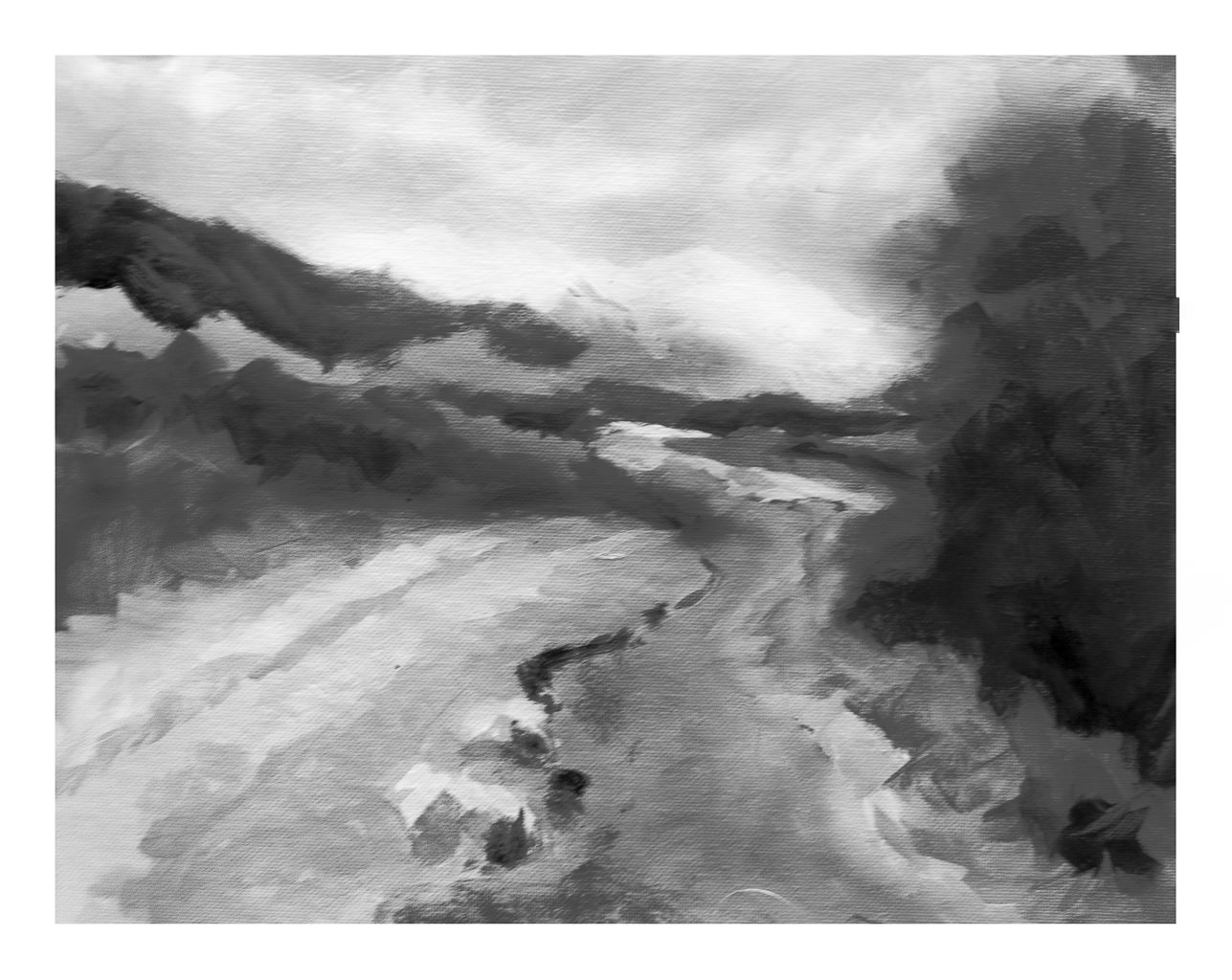
Above is the desaturated image. I do this to look at my values. Success! Isn’t it interesting to note that the bright yellow-orange becomes a middle grey when in black and white?

I have a couple of other paintings out in the garage drying. I’ll get those out in a few days. Scanning a painting is far nicer in result than photographing as there is minimal glare. The only problem with the scanner is that sometimes the software does not like to merge the sections – luckily I have a few different ones as back up and seem to work quite well.

11×14 oil painting on cotton canvas panel; scanned on Epson V600 at 600 dpi and 48 color bit depth.

Pear on a Reflective Surface

For the past 4 weeks I have been taking a short course in oil painting – we have not laid a bit of oil on canvas in this entire time period! Instead, we have learned so much about color – theory and real world (too complex for here) – contrast, tone, value, intensity, neutrality, and so on and so forth. Finally, in the last 30 minutes we finally got a painting demonstration of painting values on a pear. Some people painted along, but I just watched the instructor.

First thing, we mixed a dark value of burnt umber and ultramarine blue. Then we made a middle value grey by mixing in some white, and then the lightest value by adding even more white to the middle grey. After that, we used cad red light, cad yellow light, and yellow ochre, doing the same to each, but for the middle and darkest values, we added some of the middle and dark greys to darken and tone. I was really surprised to see the beautiful green the middle grey made when added to the yellow ochre, and I absolutely hated the cad yellow light’s greenish cast. Ugh. I rolled out cad yellow deep instead as it was much warmer and orange-ish.

The photo we used was blurred a bit, and then a notan (the rendering of an image into values of white through black, with shades of grey in between – in other words, a grey scale of the image) of the same was printed onto a piece of paper. We painted our values onto this paper, using the methods described above. Some people just kept their areas as values of color, but it made me a bit nuts, so I blurred mine together. The result was much more to my liking but more challenging, too. I made a lot of messes and lost my values quite often along the way.

Our teacher, Harvey, is really good. I have another 8 week session starting in a couple of weeks and I think it will be a good adjunct to a 4 week private class with him starting mid-March. Harvey is not just an artist, he is also an experienced art teacher as he has taught high school art for many years. Experience as a teacher is showing here – he is articulate, logical, and clear. No complaints, and I feel fortunate to have made his acquaintance – I like him, too, as a person, and that adds to the enjoyment of a class.

Oil on paper, about 5×7, value study of a pear. Colors used are titanium white, ultramarine blue, burnt umber, cad yellows and red, yellow ochre.

Practice

Over the next several weeks I am enrolled in a couple of oil painting classes. Acrylic paints really do frustrate me in a lot of ways, and please me in others, but it is time to work with oil paints on a more serious level. Let’s see where it goes.

To get ready for these classes, I pulled out some of my supplies. Of course, the oil paints come out – I have a smaller selection of colors than any other medium! I also have canvases in panel and mounted format. However, I did need to stock up on linseed oil, solvent, and other such stuff. And then paint.

Canvas mounted on panels is actually, I think, the easiest way to go. Canvas pads flop around and easily bend. Mounted canvas on stretcher bars takes up a lot of space but can provide a gratifying surface to paint on if properly and tightly mounted and prepared. For now I am using canvas panels which, while not super high quality, are relatively inexpensive and easy enough to prepare, if at all, prior to painting. 

I love pears! Painting them is far less tasty than eating them, but they are by far one of my favorite winter fruits. Here, some d’Anjous, all cuddled together. My focus here was brushwork and getting a sense of the unctuous quality of oil paints. Some people use the paints straight out of the tube, but I like mine to slide around a bit. It really makes for fun blending. The colors, too, were rather limited here for the purpose of seeing how they can interact. 

Here, more lavender fields. Why so many? It is because lavender and purple are honestly rather nasty colors to create from the standard mixes. I find that I like to have “convenience colors” on hand – namely, a good violet such as carbazole or dioxazine. Mixed with other colors and / or white, I get lavenders and such that appeal to me. I initially tried to just use variants of red, blue, and white for the lavenders, but gave up with frustration. Not worth the sweat! Maybe later I will master a good orchid lavender, but for now . . .

As with the pears, playing with the things you can add to the oil paints to thin them out. I used Gamsol and Soy-Thin, both low odor solvents. I didn’t use any linseed oil in either painting – that will come later – as will other things, such as drying agents like alkyds. 

The pears and the lavender field were painting on pre-gessoed 10×10 cotton canvas panels measuring 10×10 inches square.

Oasis

Today I decided to just paint and take it from there. No prelim sketch, some reference to this or that, but the point was to just paint and see what happens. It is really practice, and here I used oils. I just need to get comfortable with them and how they handle. That was the whole point of today’s painting. I think I will do more of these, just for practice. The masterpieces can wait.

Oil, 12×12, cotton canvas panel.

WIP: Trees in a Drought #3

I am not sure whether this is done, overdone, or not yet done! Certainly it is more finished than before – and I am not sure I even like it – so it is in the garage to dry and to be ignored for awhile.

Oil paints are proving to be a pleasure to use. Their malleability makes them easy in comparison to acrylic paint. Add to that, they don’t end up looking plasticky.

Compositionally this painting has little to offer. It’s just a study of trees and color and playing with paints. A learning experience by doing. For instance, I finally “got it” when using brushes – and why painters use multiple brushes in oils. You know how you always see the artist holding 2 or 3 or more brushes in one hand, painting with the other? It is – for me at least – a way to keep colors more pure without creating mud. That was an eye-opener. In water based paints it is really quick and easy to clean a brush, but not with oils. Okay, new thing learned.

Below is the photograph I used as the basis for this painting along with all stages of the painting itself so far.