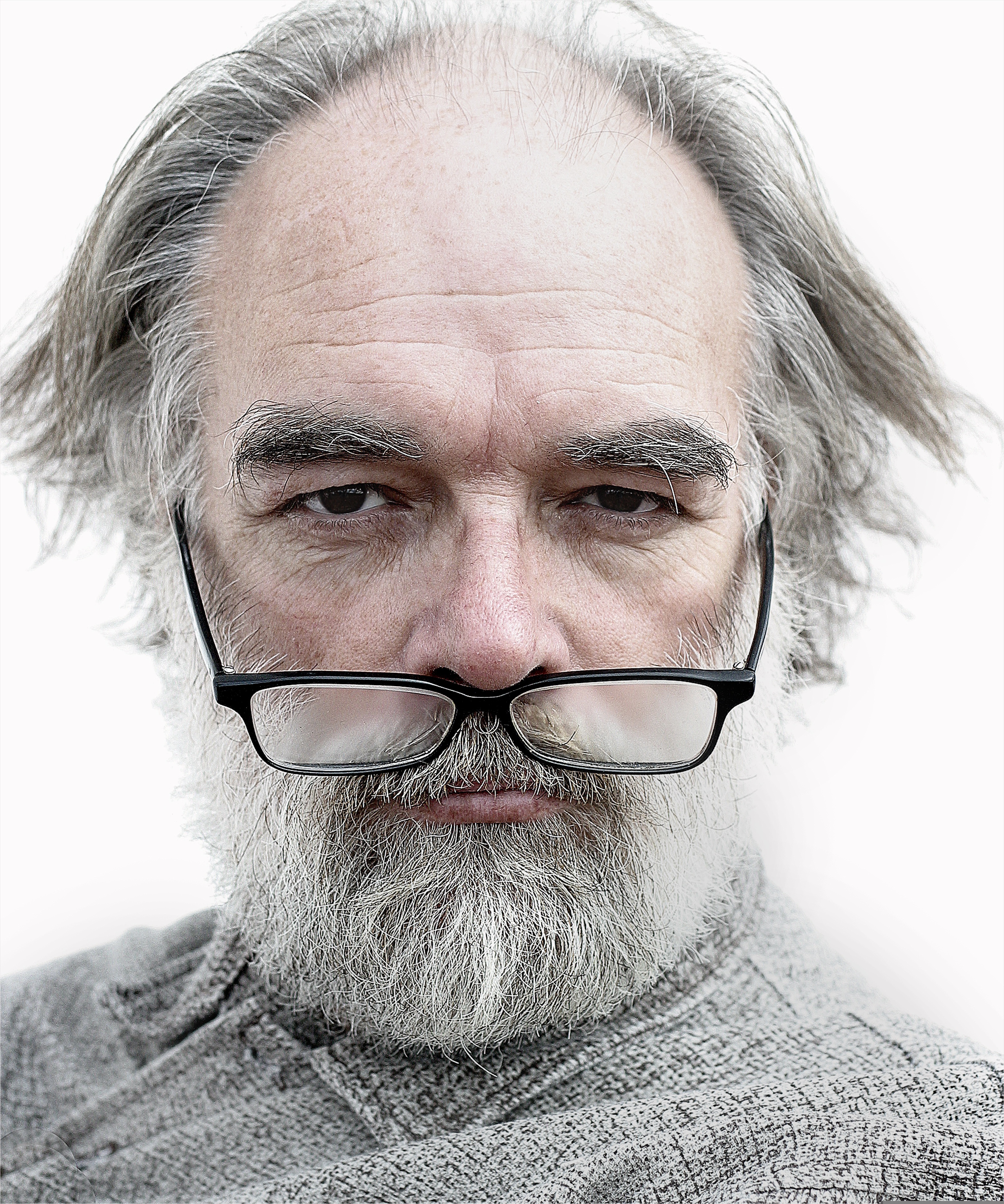
I have drawn people and done some half-witted attempts in paint, but this painting, for me, is my first more than half-witted portrait in paint. Source photo is from Pixabay.
9×12 canvas paper, Golden Fluid Acrylics. Limited palette of violet oxide, cobalt blue, yellow ochre, cad yellow, zinc and titanium white.
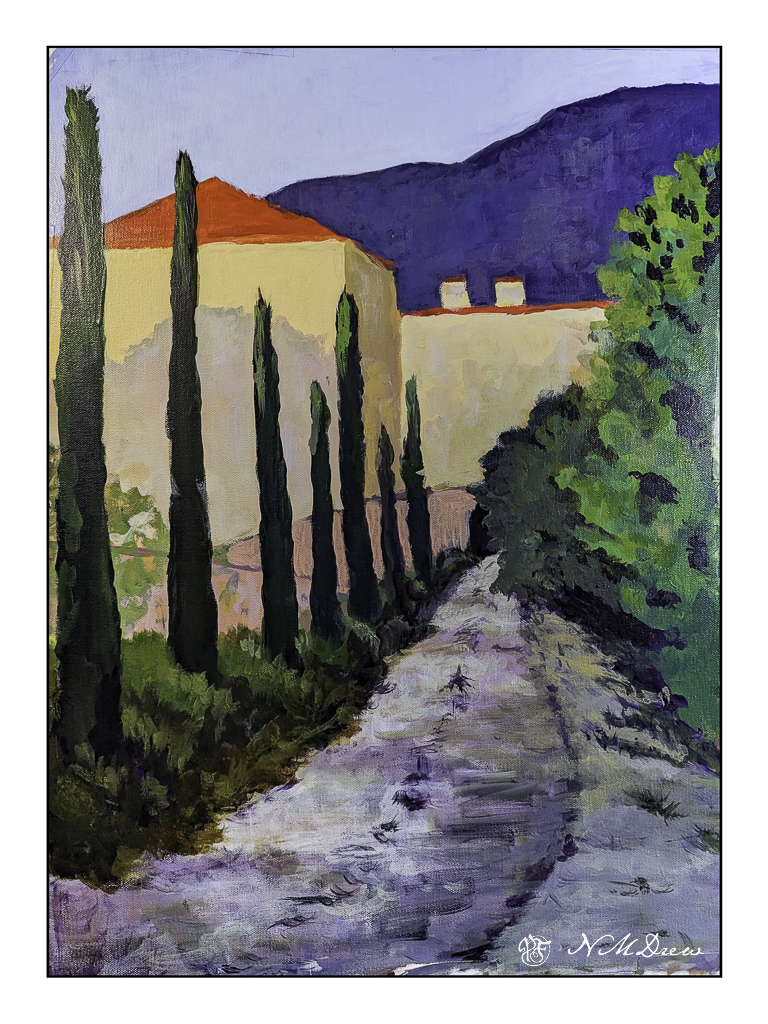
In between everything and all the organizing and deciding and packing and griping and whining and worrying and daily stuff, I did manage to start a painting. It’s on a bit of 14×18 inch Fredrix canvas, taped to coroplast, and on the easel. It has been through multiple iterations since its inception, and still has a way to go. I will finish when we return, and I am sure I will see it all with fresh eyes.
This is not a great picture – a photograph rather than a scan – but it does show where it now stands. I thought a painting of a road and building might be fun to do. I still need to put in windows and work a bit on the middle area where the two pinky curvy bits of architecture are, as well as some of the leafy trees on the left. The photo makes it a bit askew, but the roof lines are actually straighter in the painting.
I usually work in watercolor, and that is usually a more immediate event than returning to a painting daily for a few hours. In fact, it is an altogether new experience for this impatient person, and I am finding I rather like the time I have to come and go with a painting. Having it on an easel to look at all the time is also a new experience. It let’s me look at it and review it from where I sit in the studio, typing away about it or other things. I wonder how this newfound taste and appreciation for time and painting will play out on our trip.
With any art or craft, familiarity with it makes it easy to do. With familiarity and understanding comes the ability to explore using the knowledge you have acquired. I am pretty comfortable with watercolors and oils, but acrylic has always been a point of frustration as it dries so quickly and, to me, doesn’t have the qualities of oil paints. Gouache can be opaque or transparent, depending on how used; acrylics can be used in the same way. The difference between artists gouache (vs acryl gouache) is that the colors underneath the other colors can be re-moistened, and used to dissolve and create other colors. Acrylics, while they can work similarly to artists gouache, once dried, are dried, and there is no going back.
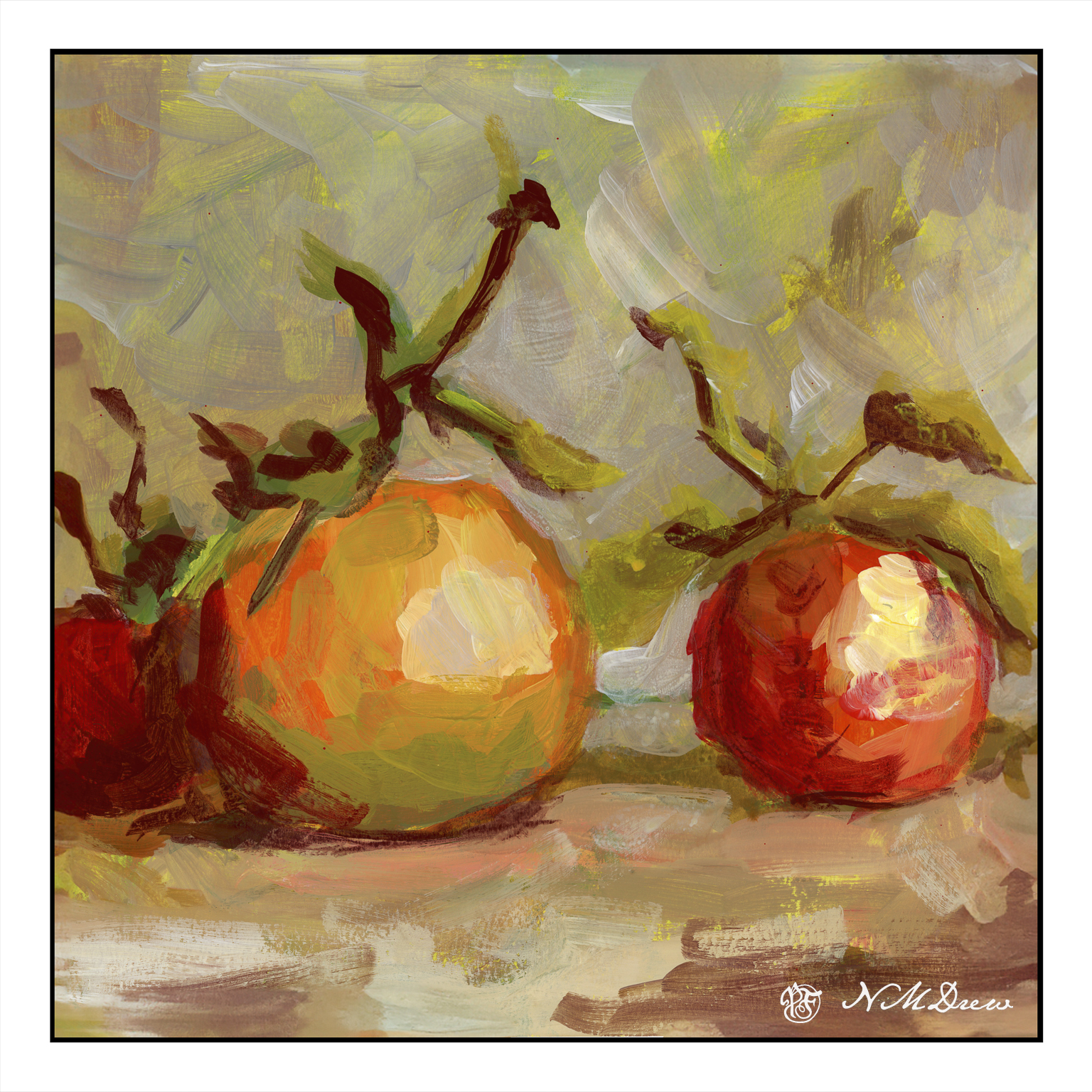
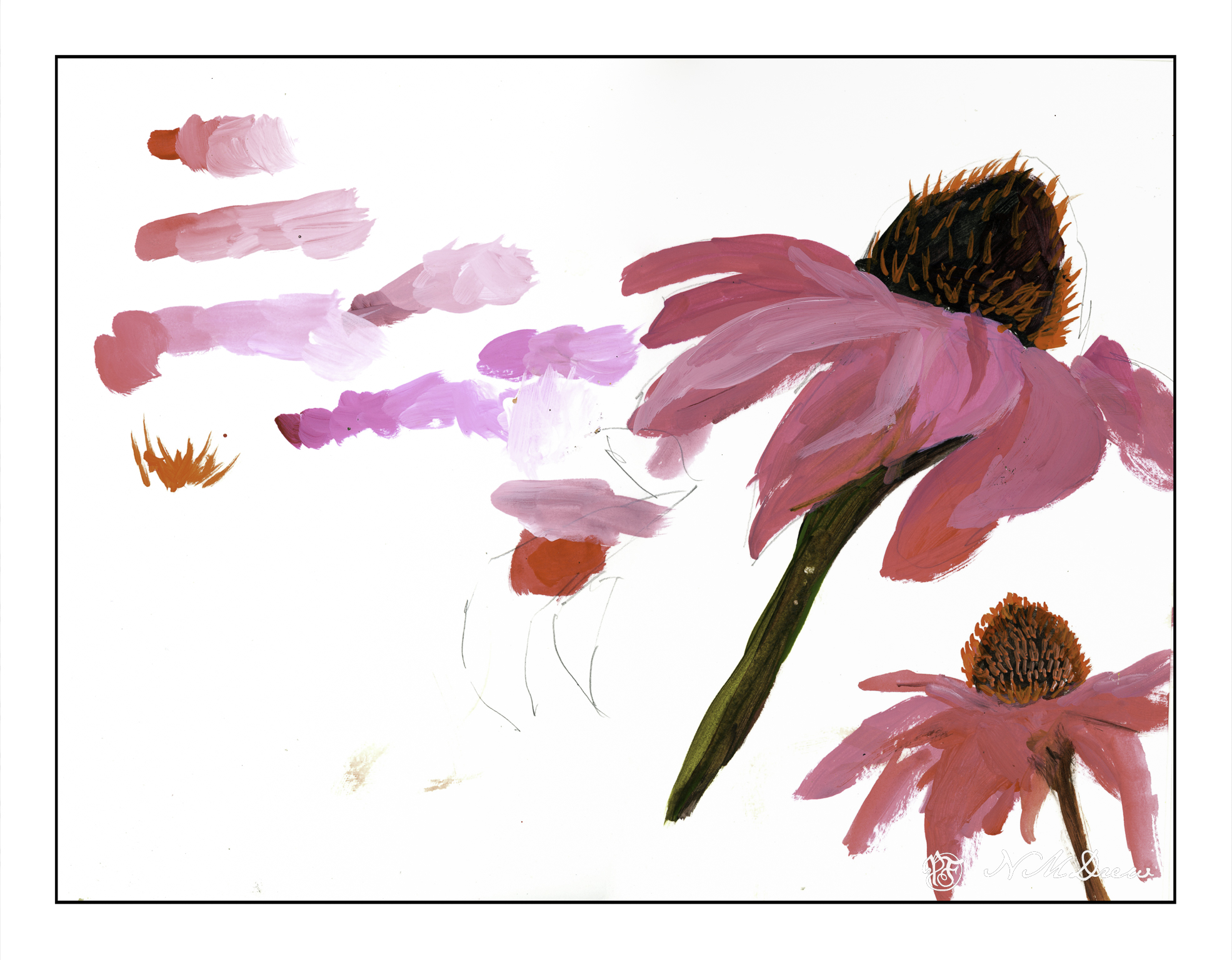
What I am trying to learn is how to use acrylics in ways that make sense to me. This is not coming easily. I like being able to sprawl my colors all over the place without drying, but this doesn’t work quite well with acrylics – unless using the heavy body paints on a sta-wet palette, the fluid acrylics I am using dry very quickly. To use them well I am trying out different ways of painting and mixing paints. Above, on the left, are colors straight out of the bottle and then mixed with white on the palette, increasing the amount of white with each brush dab. From there, I played a bit with painting cone flowers; the one on the lower right is more successful.
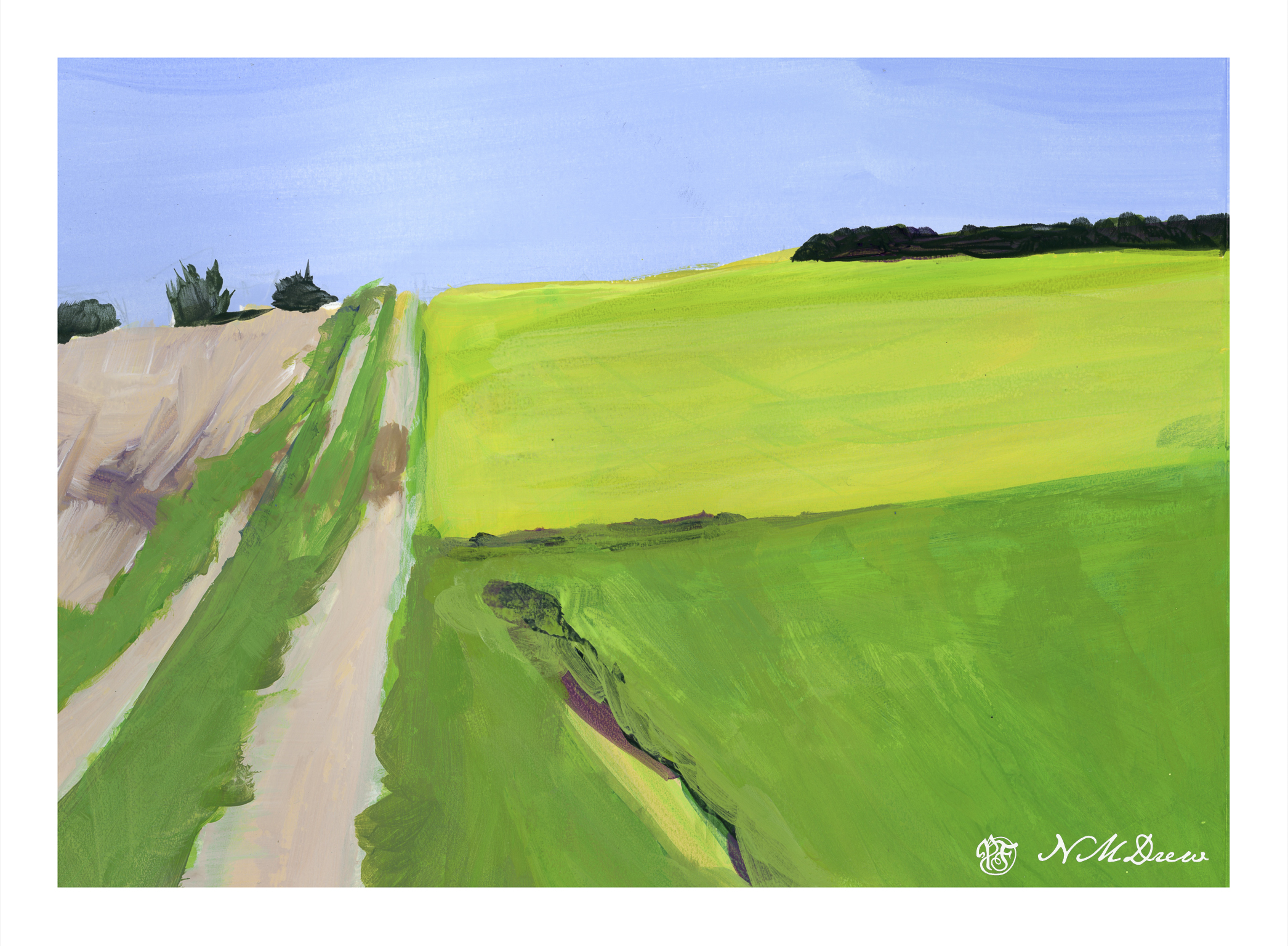
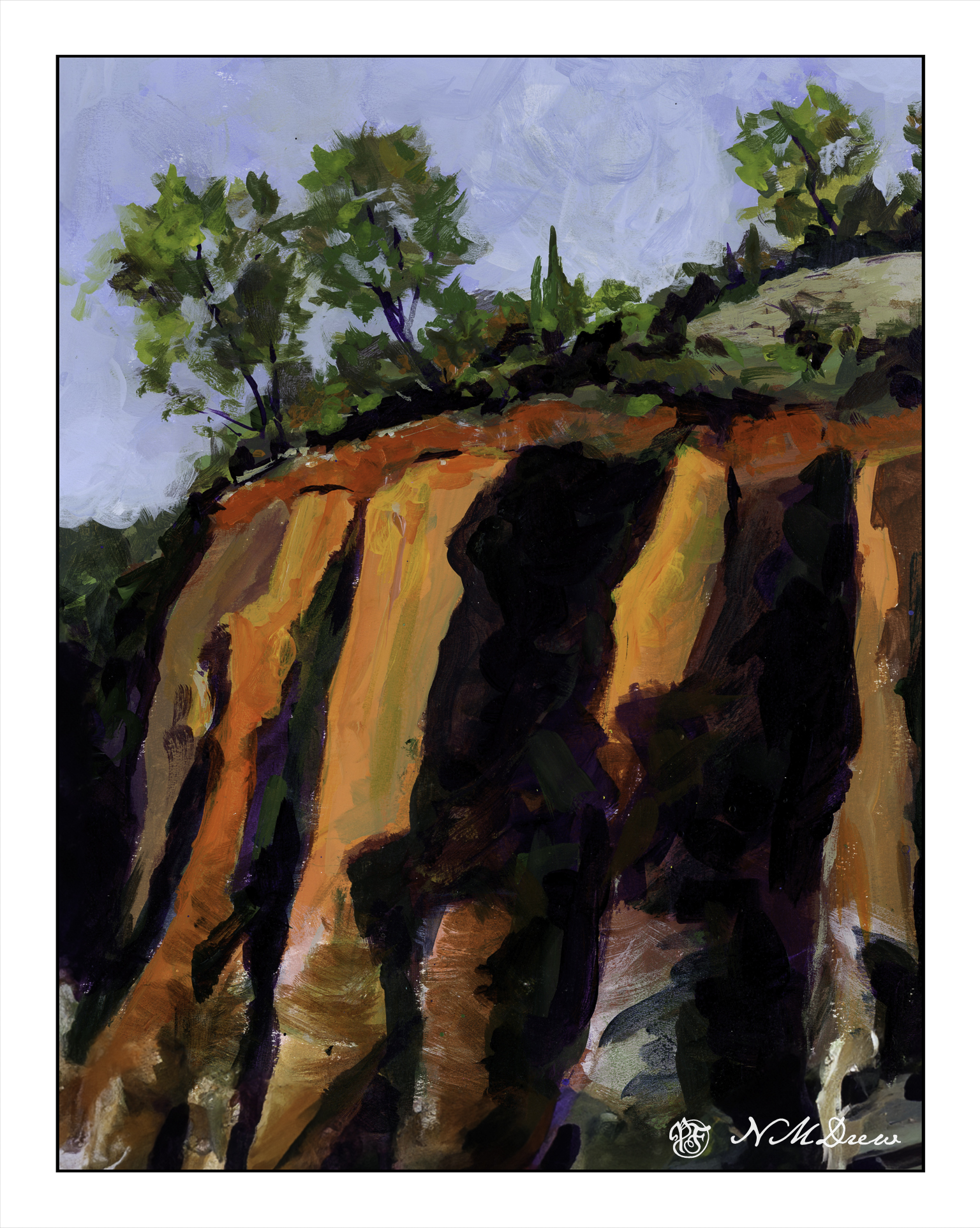
Playing is a way to explore. Above was play. Below is a “more serious” foray into painting with acrylics. I worked hard to make layers, and then return to add more color as I moved along. I just painted directly onto paper in a sketch book and practiced both painting and blending, painting directly on other areas, and bouncing around to work at making a bit of a harmonious or connected picture with similar / same colors used in various parts of the painting.
There used to be 4 trees in a row on the top of the cliffs – but then I looked at it and they were all the same shape and height. I decided to paint out the 3rd from the left. I had to paint the sky in a number of times, building up layers to hide the tree. It worked pretty well. I also played with my brush – I tend to dab, using the point of the brush – but here, especially for the tree foliage, I worked on using the sides of the brush. Additionally, I changed between very soft brushes and more firm brushes. These change how the paint moves and blends over the paper.
Practice can be fun – in any art – and by practicing and playing, new doors and experiences add to the skill set of the artist or craftsman.


 Ink, Yarn & Beer