Contrast Studies in Gouache

Today I set another painting goal: contrast. This means working toward bright whites and dark darks. Catching light is what art is all about, at least in photography and more realistic painting. I tend to struggle with contrast, more so when the colors are very similar. Today I decided to work on the light-dark contrast, but in the near future, monchromatic studies in black-grey-white and in variants of tone will be done.
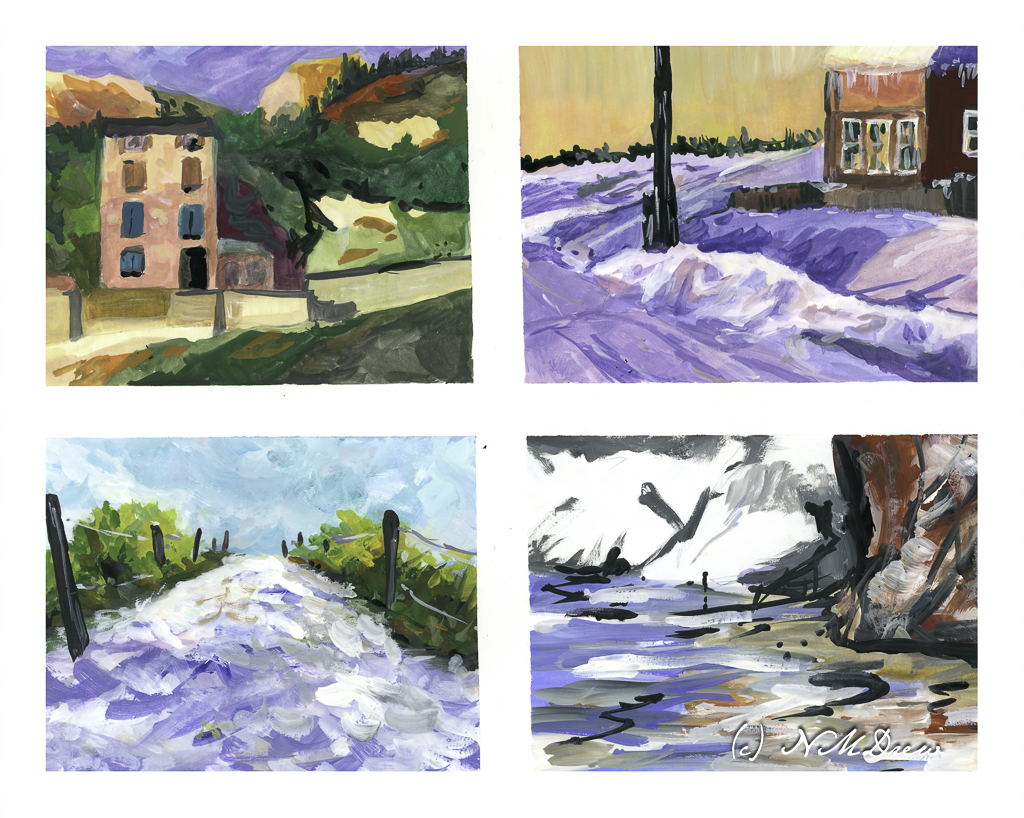
Today I chose a white, multi-media paper with a very smooth surface. I blocked off 4 rectangles on a 10×14 sheet of paper, so each rectangle is about 4×6. This is the single sheet I used.
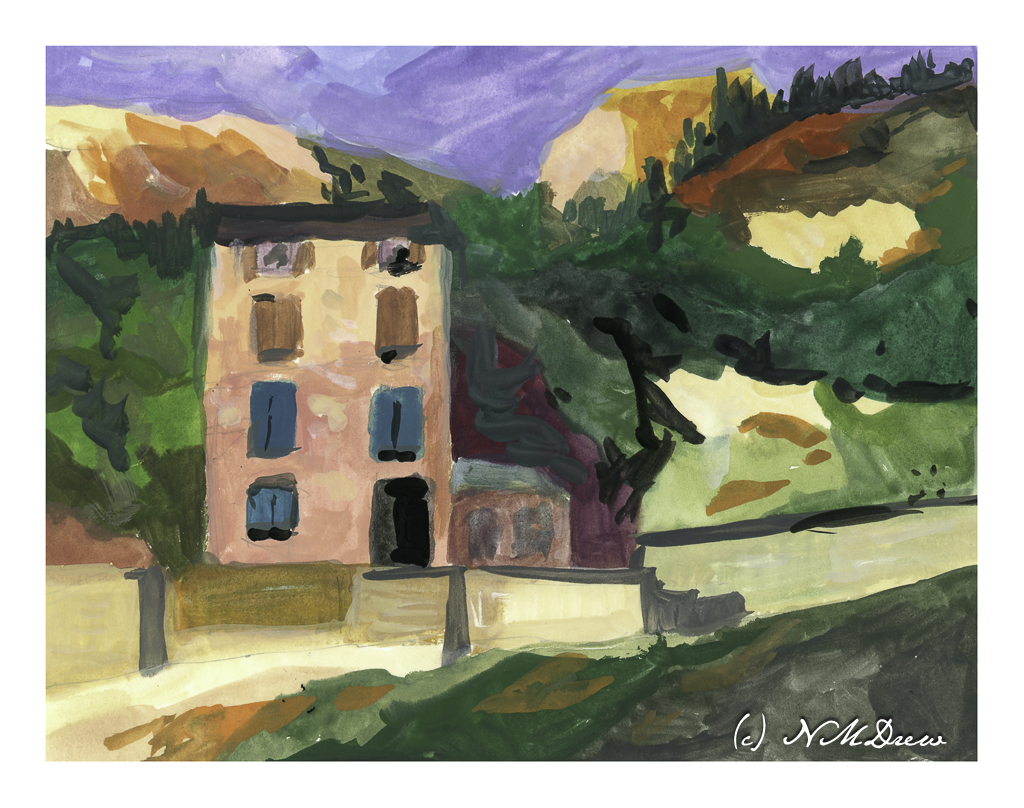
This is the first painting I did. I looked to have a shadow on the lower part of the building and the upper part in sunlight. The same for the various bits of light and dark rock and walls, or whatever they are, to give a sense of a strong light, perhaps from a late afternoon.
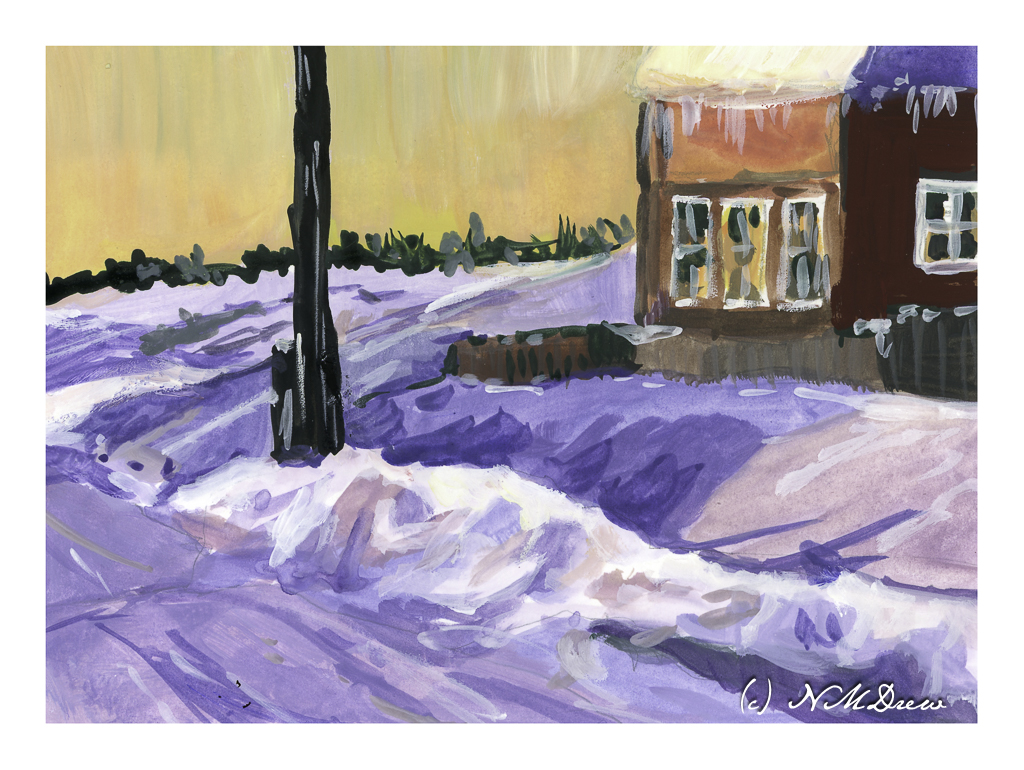
This painting was a bit easier to do than the first – I was warmed up. Here, I wanted to catch bright snow and shadows on snow and buildings. I used titanium white for the really bright bits of snow alongside the road. The contrast is much stronger than in the first painting, but the real challenge lay in capturing the snow – which is white – in shadows. I also put in some icicles on the building, which was rather fun!
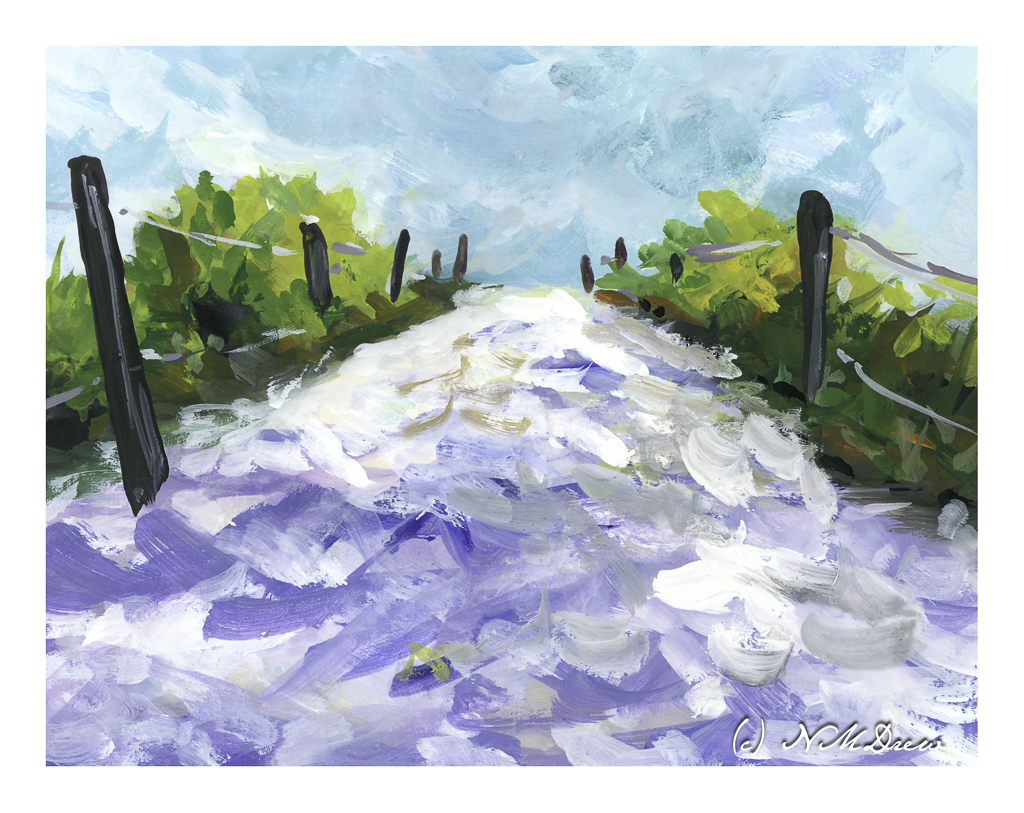
Moving from the dead of winter in the middle of nowhere, I now went for a bright day in the Caribbean. White sand, bright sky, brilliant light, strong shadows. I think this worked out fairly well and am rather pleased with my contrast.
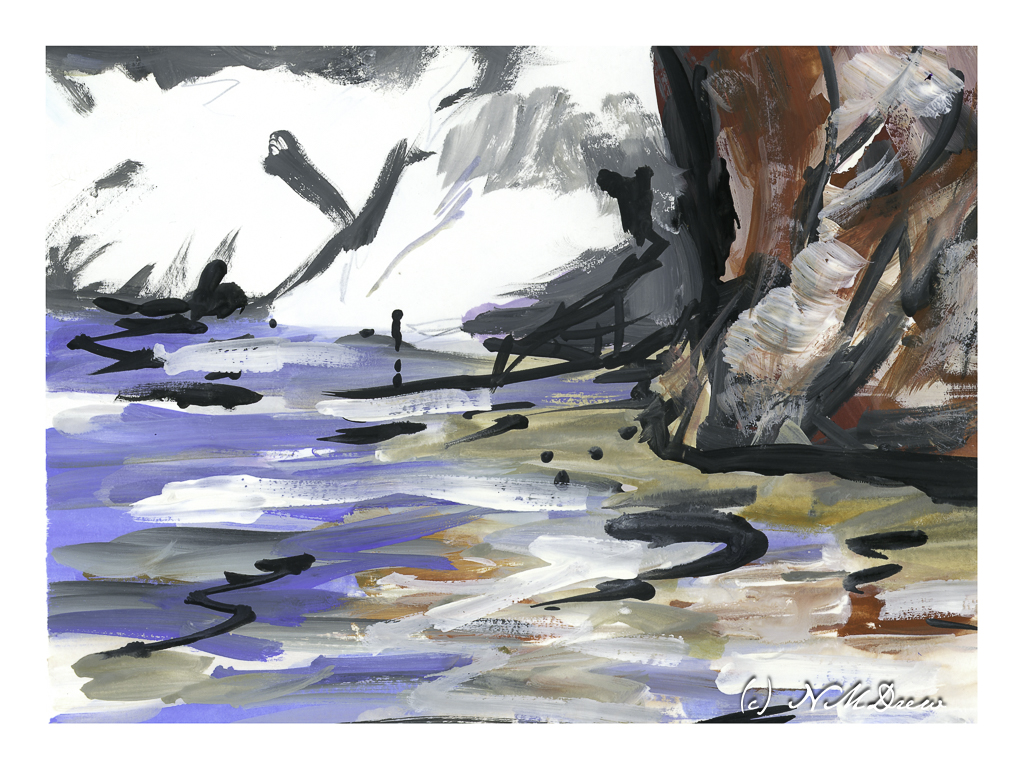
And this one? A crazy bit of abstraction of a beach, reflections in shallow water, and bright white cliffs in the background. I did this just to be “painterly” and use up the paints left over on my tray. Playtime with a bit of success.

Today’s activity accomplished what I wanted to do – strong contrast in different settings. There is a challenge in gouache insofar that colors are a bit odd in some ways. I played with colors as I mixed them trying to get a color you might call a “rosy glow” that could portray the golden light of a late afternoon or early evening. A strong white, too, with very little if any color added, was used for the cliffs and sand. More than anything, the experience of working on a lot of little paintings turned out to be a bit of fun because each painting had a slightly different area, or areas, of brightness and darkness.

Gouache, 10 x 14 paper divided to about 4 x 6.
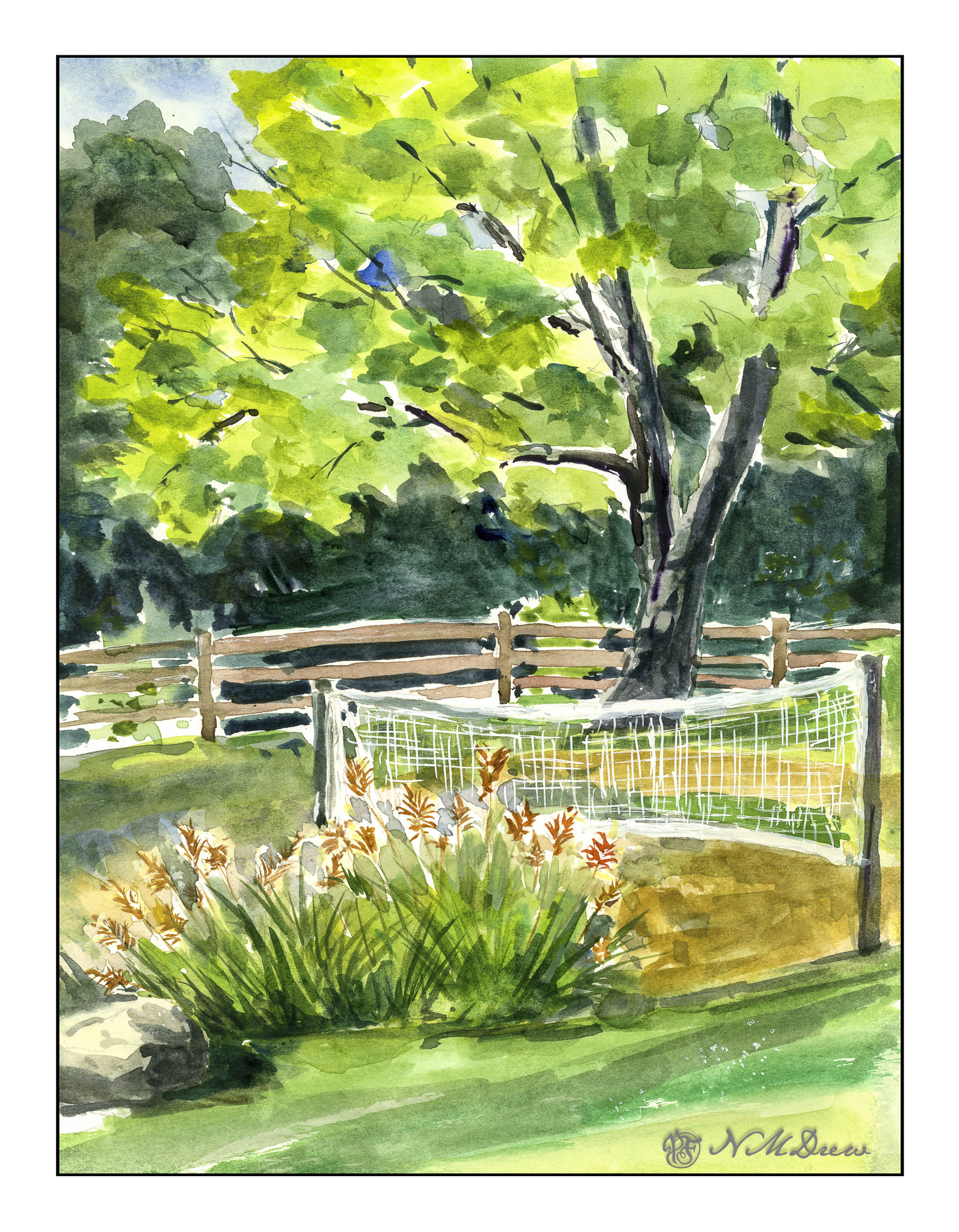
Volleyball Court in the Library Park

Every now and again a small group of us meets at the park behind the library in town. Usually it is on a Monday, and I have been able to make it to the last two after missing so many it has been months. It’s a very nice group of people, from pencil artists to painters, and we are led by our wonderful teacher, Steve. We are usually there for a couple of hours in the morning.

The park itself is a bit small, but there are picnic tables, party areas, benches, playgrounds, and volleyball courts. Add a pond and ducks and a lot of trees, and it adds up to a very pleasant place to be. Today, in keeping with my more direct approach to painting, I brought along the Vision paper so I would be forced to work without a lot of messing around. The point of this study was to preserve the white – or add white as needed – to the volleyball net. The rest was whatever! Of course, more direct painting was the other, secondary goal.

Watercolor, 9 x 12 Vision watercolor paper, 140# CP.

7 – 11 / 30

I got behind! So here we go – the 30-day challenge.

Day 7

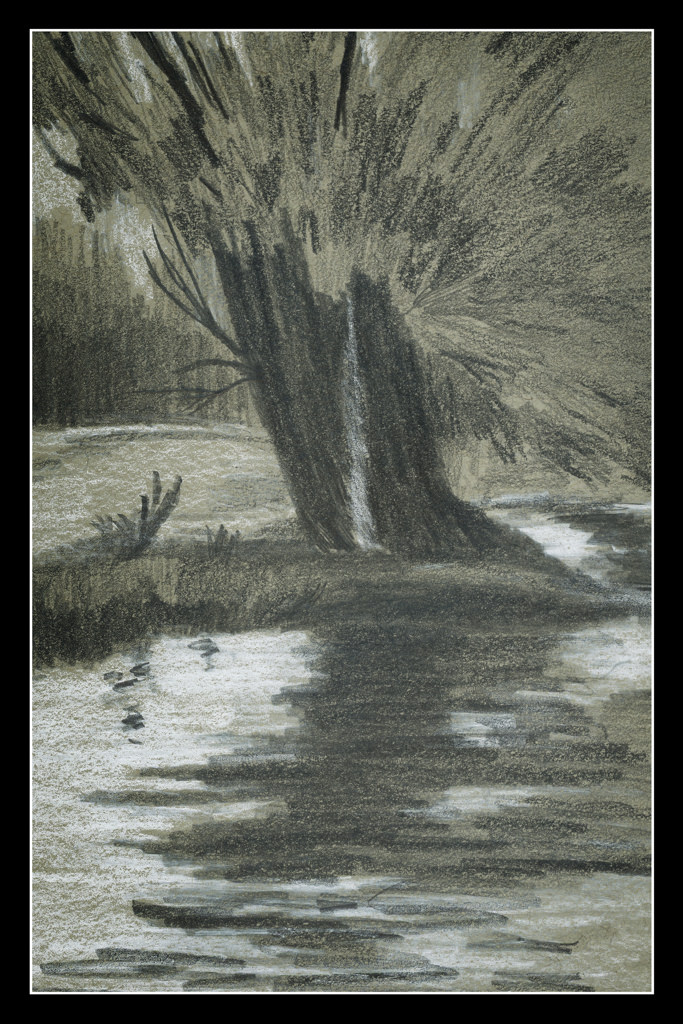
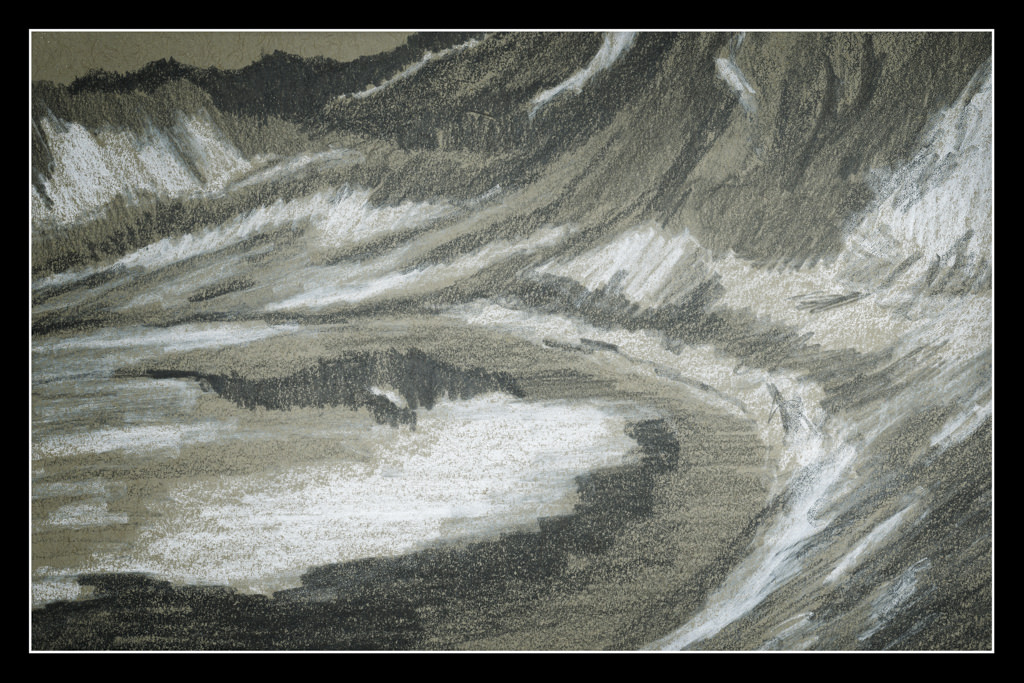
I found some grey stock when rummaging around. Graphite and white chalk pencil on grey paper.

Day 8

More of the same media as Day 7. This is a glacial lake with snow. Does it look like it or not?

Day 9

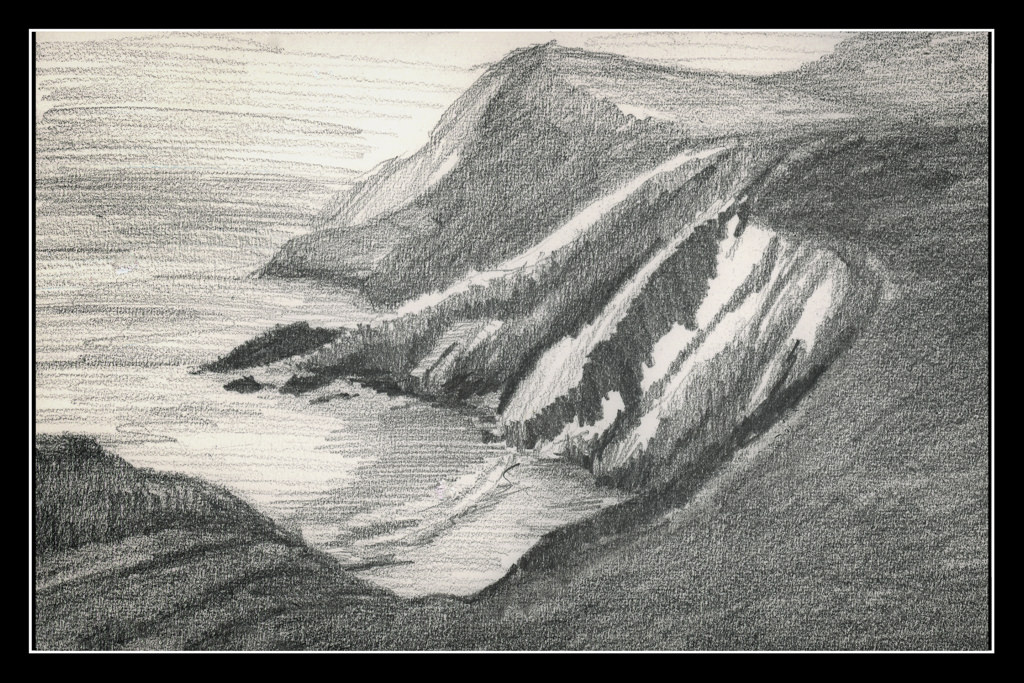
I like this one the best out of this series. It looks like it is supposed to be – a chicken!

Day 10

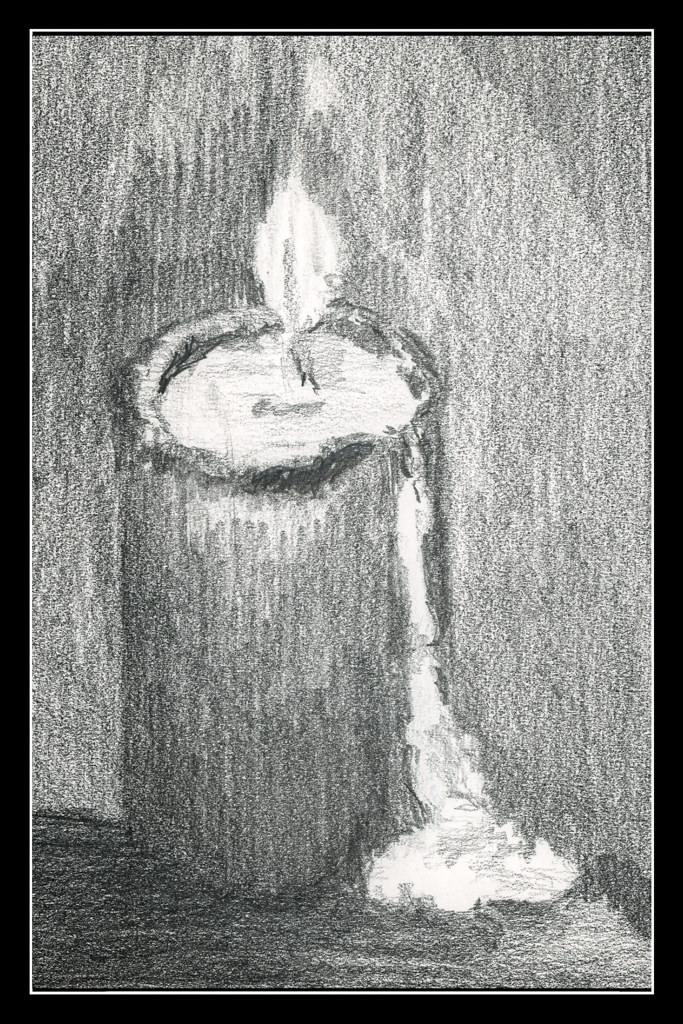
A candle, and back to graphite on white paper, just like Day 9.

Day 11

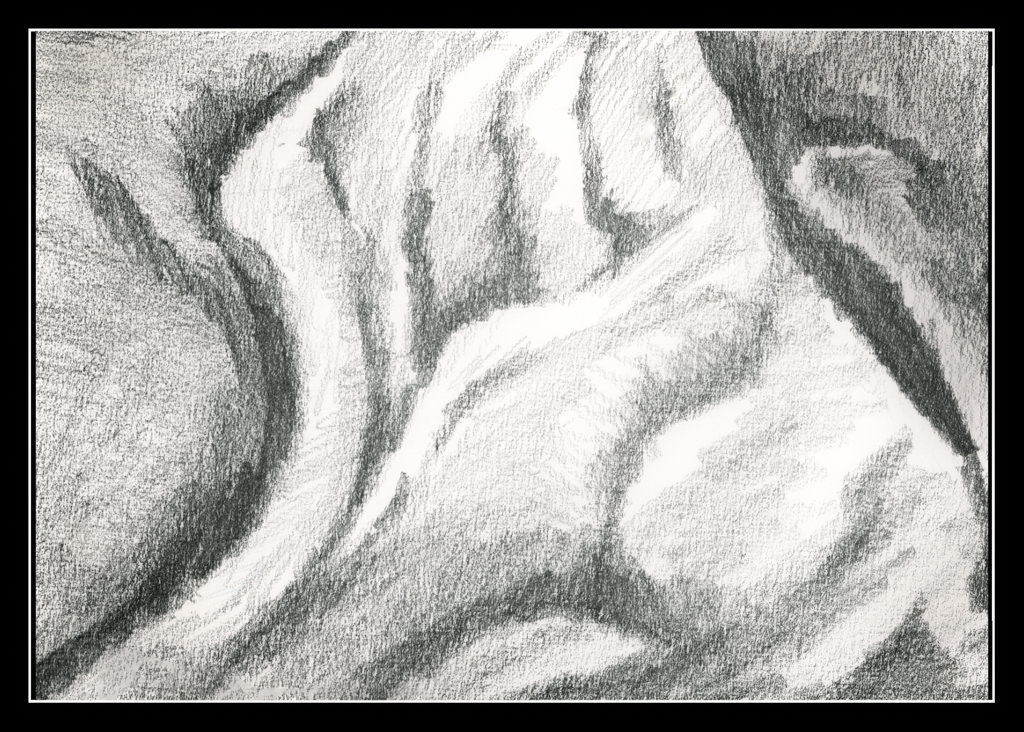
The soft melted wax dripping down the side of the candle for Day 10 made me think that perhaps some fabric would be another good exercise in soft surfaces in pencil. Again, graphite on paper.

And there we are – caught up. I couldn’t get to anything until this afternoon, so a daily drawing was not possible. The 30-day challenge is to do as many images, up to 30, in 30 days, but without the caveat that it has to be one a day at the most. In a way this really made for a sort of evolution in the drawings. Day 7 and Day 8 had the same idea – grey paper, graphite, and white chalk. It had its good points, but I think I prefer the graphite on white paper. The midtones are more easy to think about. I think these two studies helped make Day 9 as good as it is. From there, two subjects I never have considered – the candle and the fabric. Both work and don’t.

Again – how will I translate these value studies into color??!!

1st Colored Pencil Class

Nothing like learning a few things! I’ve drawn with colored pencils on a very causal basis, but what I learned today included: use of Saral, a waxy transfer paper; use of burnishing and blending pencils. Never heard of those before today, but used all three.

Where to begin? I got there 30 minutes late – I thought class began at 9:30 but, no, 9:00. Oh, well.

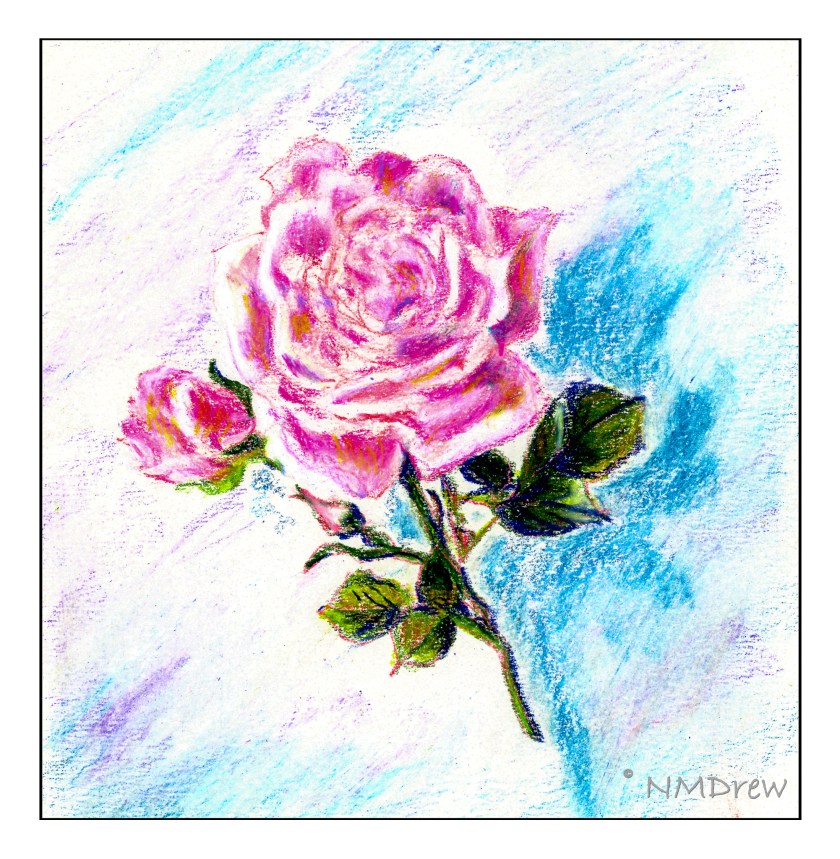
Subject was a rose. Place the Saral between the picture you are going to use as reference and the paper you are going to draw upon – like carbon paper. Press hard to be sure it is on the drawing surface. Then, remove the Saral, and use a rubber eraser to blot the lines. This lightens them so you can still see them, but not so dark they are obvious. The paper we used had a bit of tooth, to catch the colors, and we worked from light to dark, white to reds and pinks and into the greens of the leaves. The suggestion was to moosh up a background to keep the rose from floating in space, so I did.

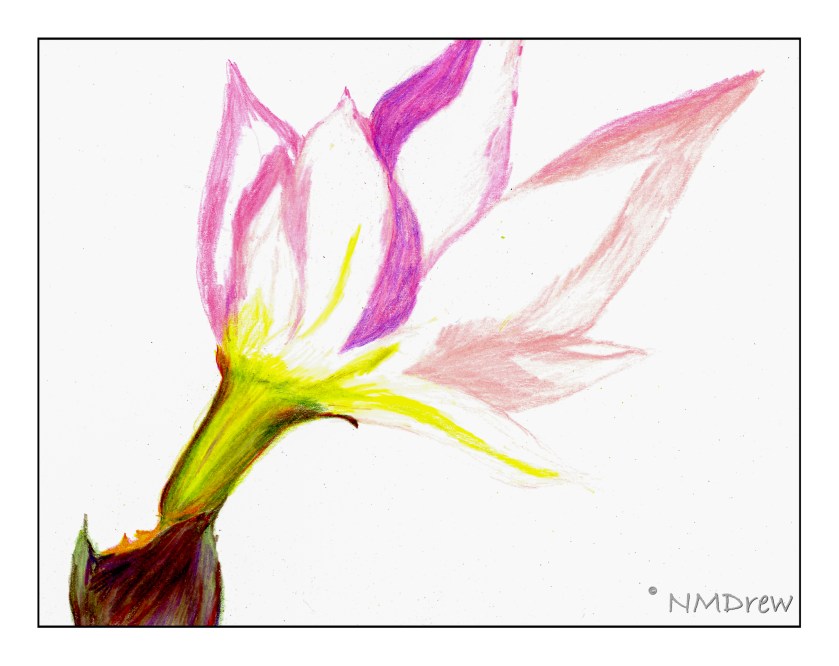
When I got home, I was interested in trying my hand on different papers. I have some bristol paper, which is a very smooth and very white paper.

This paper is so, so smooth that it is actually slick. As a result, colors are blended into one another very easily. I think the Prismacolor Premier pencils may be too soft for this paper and a harder, oil-based pencils, such as Polychromos, may be better suited for bristol.

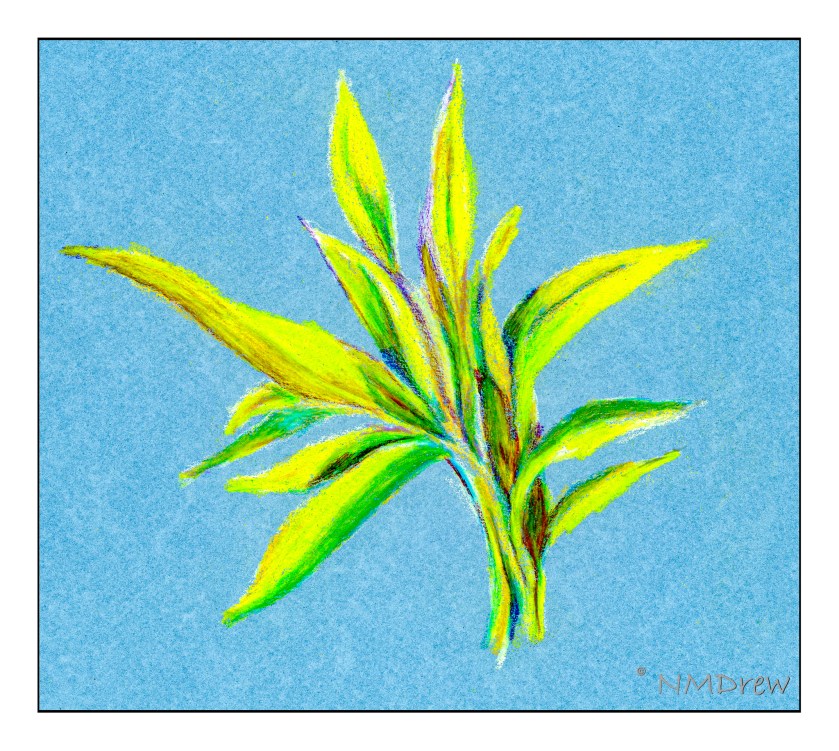
The next experiment was done on some of my MiTeintes pastel paper; here, a mid-blue. I sketched directly onto the paper, using a very pale yellow pencil to create the general shapes as well as limn in the lights and darks. I decided to look at values the best I could, as well as whether they values tended toward warm or cold. The sunlight was dappled on the leaves, with some bright yellow green, and other a deep, blue-green tending toward black.

Out of all of these, I like the galangal the best. I like it because I had gotten a better sense of how to use the colored pencils, learning some of their characteristics and qualities. The blue background adds to the picture. The light and dark colors worked pretty well, and remembering to use complementary colors to dull down shadow areas I think kept the vibrancy. So, for a yellow-green leaf, the shadow colors were a purplish red, or a layer or two of each.

I don’t know if colored pencils will become a big love in my life, but I do enjoy drawing. My Pencil Portrait class was a real joy. I think I learned a lot in it, and moving to colored pencils is interesting. Shades of grey in graphite now are translated (or attempted to be translated) into values in color – something that is very, very challenging for me.