Nowhere Barn

Addendum!

This is the second scan from the final one below.  I changed a bit of the elements after doing a preview scan – don’t know why the one on the bottom of this post is so, er, intense!

Now, let us continue . . . 

More perspective studies!  Today I did a single point study.

This time I created a single vanishing point.  This one is below the building, and above the road.  The idea for this is that the road ends up going over a hill or slope before the horizon, at eye level, is met.  I did a pencil sketch and erased it a billion times.  Finally, when I liked what I did, I erased most of the lines after inking it in.

Sort of a value study combined with a color study to see what I might like for color mixes in watercolor.  This paper is mixed media paper, so it is not the heavy Arches 140# cold press I like for most work.  I think the perspective works pretty well.

Well!  Aren’t these colors intense!  The scan for some reason just came out like this – the original is a bit more subtle – but I rather like it as I think it expresses the intensity of color that sometimes comes with lowering clouds and a storm.  Makes me think of my time as a kid on the plains of the midwest.

So, the final study does have decent architectural perspective, and perhaps even some atmospheric (lots of atmosphere, but more like pressure type!) insofar as I tried to simplify things.

I will continue my focus on perspective, and using it in different media.  Watching videos, referring to books, and just doing it is helping.

Tanglewood (Watercolor)

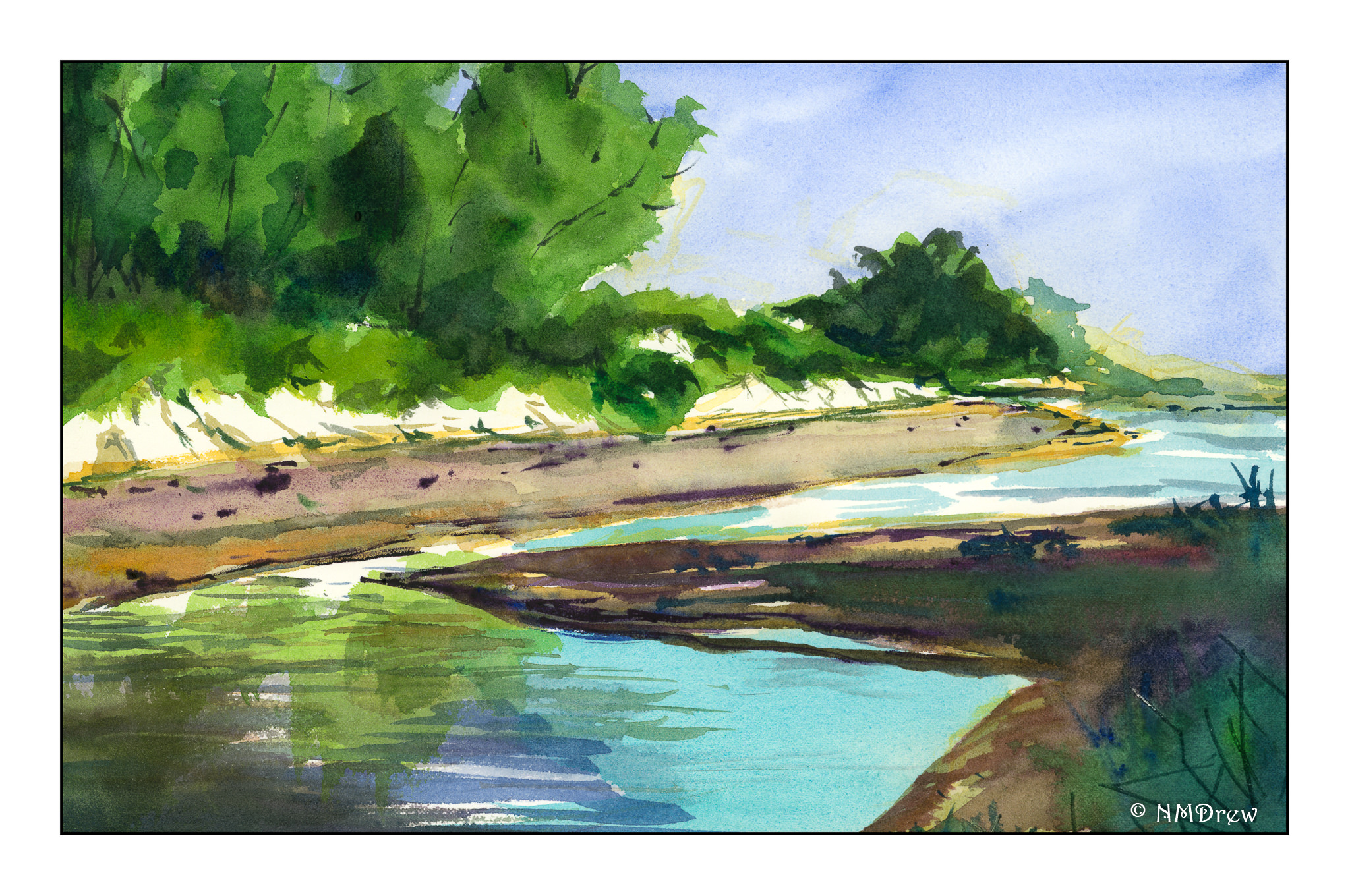
Here is the third painting in the series of three different media, this in watercolor.

For this painting, I used a piece of 16×20 Arches cold-pressed paper.  I laid down some frisket to keep the paper white for sunspots of leaves and the edges of the trees.  From there, multiple initial light washes to establish areas of color (ie sky, leaves, leaf mould, trunks) and from there just sort of let it happen until I was ready to remove the fisket.  Once that was done, greens and darks, and finally the rigger brush for tree branches.

Each painting has it good points and bad points.  Watercolor is the least forgiving of the three, but here I think I did a pretty good job as I do get a sense of the flickering light through the new leaves, and that really was the main point.  This painting and the gouache are my favorites of the three.

It will be interesting to perhaps try the pastel again as I ordered a set of 25 greens and just took possession of a Terry Ludwig Darks 2 set the other day.  The greens are Mount Vision and will arrive Friday.  The pastel was the first in the series, and now that I am comfortable with the values of the painting(s) more, a 4th try and a 2nd pastel may prove to be a good exercise!

Tanglewood (Gouache)

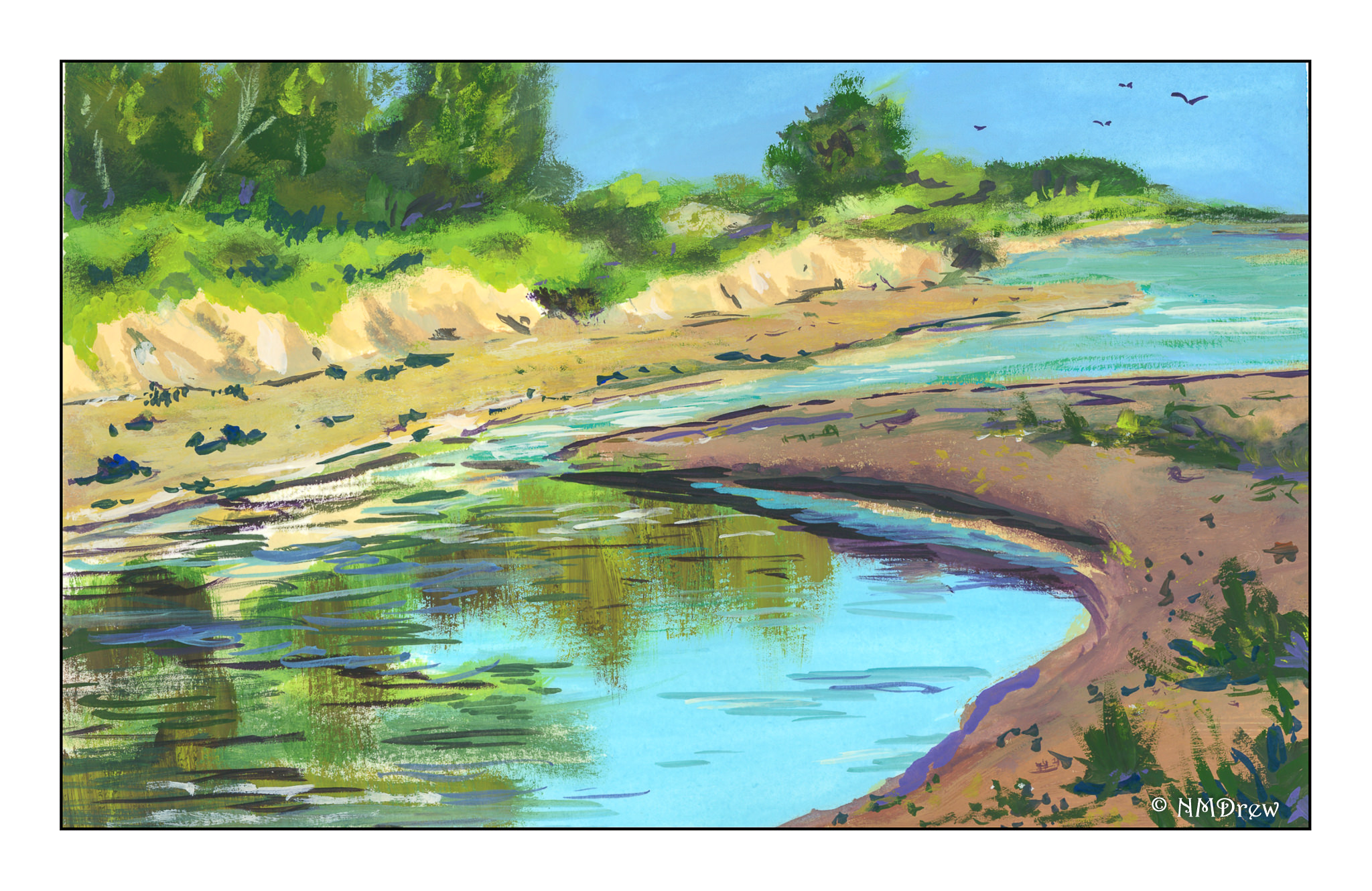
The second painting in my series of three, in three different media.  Today this is in gouache.  My previous post showed the photo from which these paintings are derived, as well as the pastel which I did the other day.

To date, I think this is one of the better paintings in gouache I have done.  Two differences here:  1)  I used hot pressed Arches paper rather than cold pressed.  2)  I made sure I kept my paints moist by spritzing them, and covering them with saran wrap between painting sessions – keeping the paints moist made the job of painting much easier.

Smoother paper (hot pressed) allowed the paint to move more easily on the paper.  Keeping the paint moist added to that experience.   I really put effort into keeping the paint about the consistency of cream and spritzed the paints when they stopped looking glossy.  The only area I rather wonder about is the right middle ground – I may want to redo that a bit.


Tanglewood (Pastels)

Another series of three to emerge from this Land of Pandemica, where house arrest prevails and imagination runs wild!

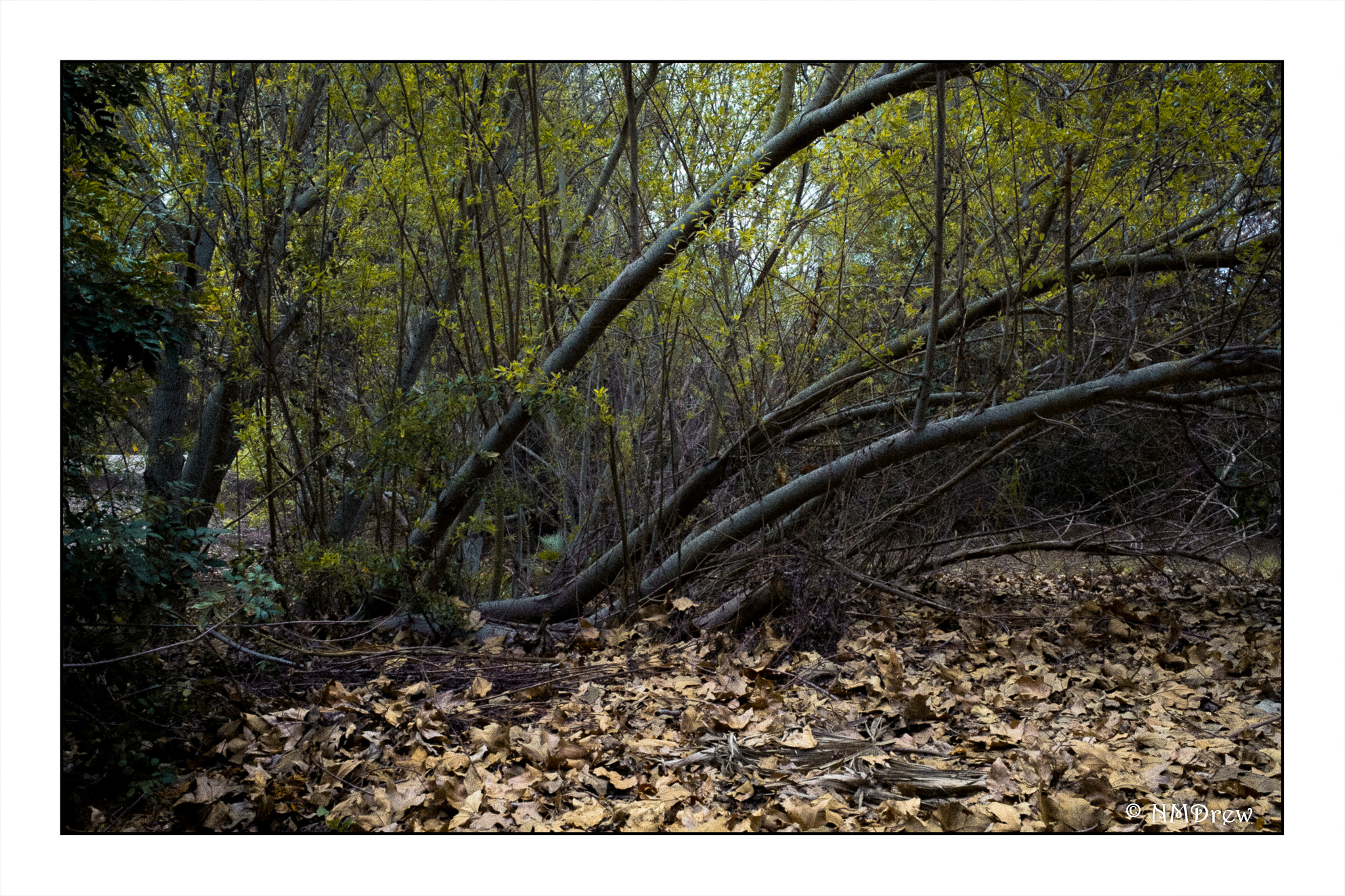
I took this picture about a month ago, just as the shelter-in-mandate order came down from on high.  I really like this picture because of its moodiness and the brightness of the leaves.  It looks pretty mysterious, but in reality that is an effect of the editing.  Still, I like it enough to give it an attempt for a number of reasons!  There is a rhythm in the trees and their curves.  The leaves on the ground lie fairly horizontally, while the green leaves are vertical.  All these conspire to challenge me . . . So, without further ado, below is the first attempt, in pastels as today is dedicated to pastels!

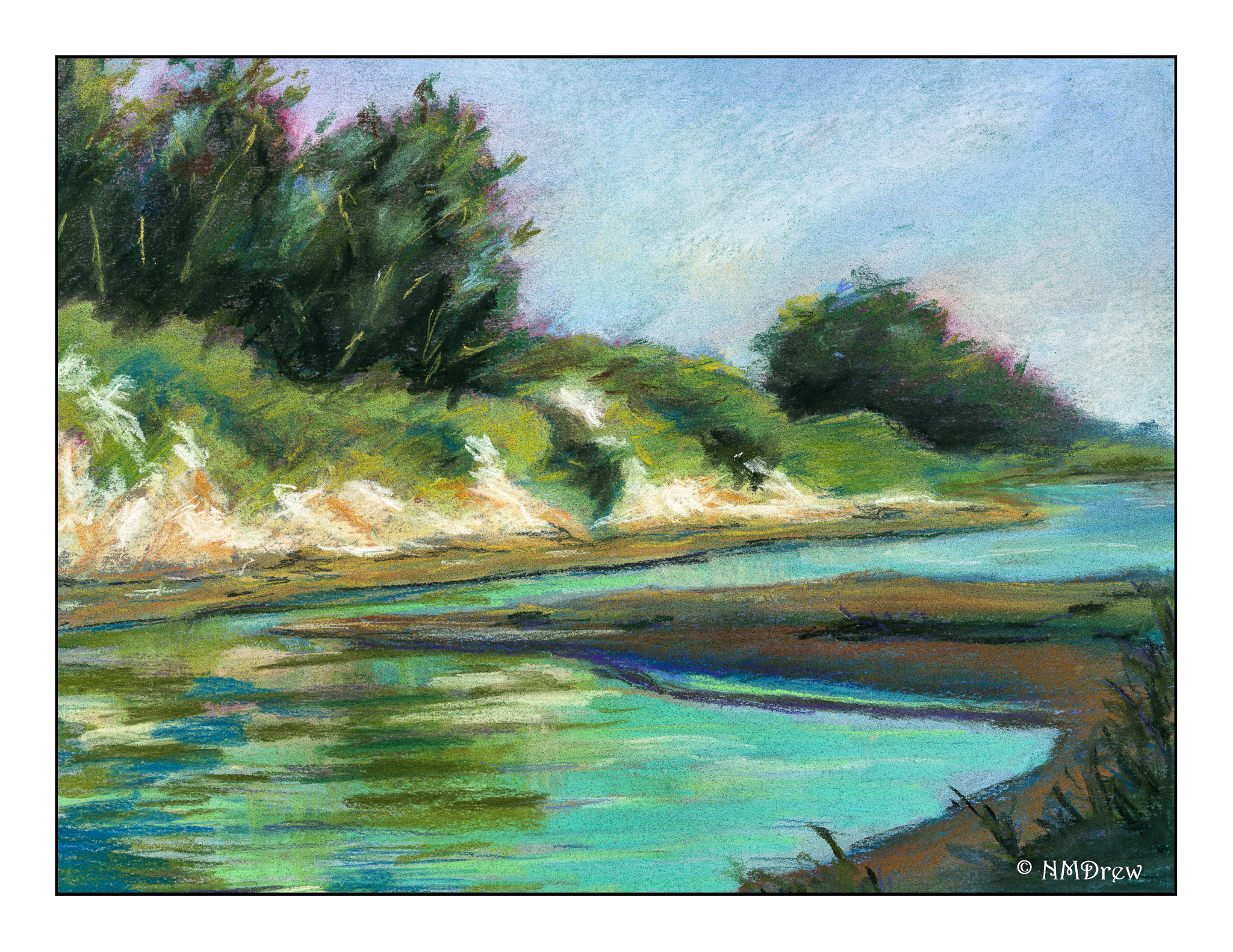
As you can see, I moved the leaves from vertical to a bit more diagonal.  I also added some “stuff” to the lower left corner as the original photo was pretty dark and lacking in detail.  The floor of last year’s leaves are more orange than beige.  I tried to pay attention to my marks – the stroke of the pastel stick – as well as to doing some negative painting to help the lighter areas stand out.

I am a fairly pleased with this painting.  Pastels are more forgiving than either gouache or watercolor – especially watercolor! – and because of this, I can think about contrast and structure a bit as I go along.  It may make the final one (watercolor) easier to do after the next one, which will be in gouache.


A Tale of Three Paintings

Over the last week I have been painting the same image three times, each time in a different media.   I began with gouache, moved to pastels, and did the final painting in watercolor. Doing such an exercise was really educational as well as pleasurable.

As you can see in the gouache, the perspective is totally off! I didn’t do much of an underdrawing, just a few quick lines, but I didn’t really check this point against that, as well as compare it to the photo. The result was an uphill beach, and a total lack of realistic perspective. I suppose it would look like htat if my head were on its side, lying in the sand or something! Anyway, it was a good lesson as I realized most of my perspective issues are simply the result of poor drawing techniques.

This next one is my favorite. Maybe it’s because I am just learning pastels and totally in love with them. Here, the perspective problem is solved. The cliffs look quite sandy in the picture, and in reality, they are. Along the coast where I live in California, cliffs tend to be friable, made of highly compacted but still fragile sand. They easily collapse, and it is really foolish to sit under them on the beach or to walk along there edges. After rains it can be especially dangerous, and one year a major landslide occurred and several people died. It was not good. So, I think these cliffs are pretty accurate representations of what our cliffs look like here.

Finally, watercolor. Perspective issues remain resolved, but a sense of distance prevails along the strand of beach on the opposite shore. Rather than overwork it, I left it as it was, still pondering how I could make a sense of distance as the beach veered off to the left and background. More blue? Less detail? I’m still befuddled on that one.

Altogether, using three different mediums to paint the same image was rewarding. Problems occurred in all paintings, many of which could be applied to others. Perspective is always an issue for me, so I really need to focus on it probably more than anything in landscapes. I know the rules, but need to find methods to implement them. Gouache and pastels are more forgiving as you can paint over what is underneath to a reasonable degree; watercolors are pretty much a one-shot deal. I think I will continue the 3 painting studies in the future as I learned far more than if I had only done one study in a single medium.