
Through the Trees

The Monterey Peninsula is a wonderful place to visit. The ocean, landscape, towns, history all work a kind of magic. I would like to spend more time up here in various areas. We went to Monterey and stayed on the border between it and Pacific Grove. Walking was the mode of transportation for the most part, and we probably put in about 10 miles in 2 days. Here is a view as we walked back from Lover’s Point in PG to Monterey.

I took my trusty, rusty, beat up and brassed Nikon FM2n and a few lenses. One day I had the 50mm f1.4 AIS on the lens; this day I had the Series E 100mm f2.8. I also used Lomography Metropolis film, and I will say I really liked it. It’s sort of grungy looking, but not grunged up (if that makes sense) artificially. It is not a sharp film, either. Rated at 100-400 iso, I set the FM2n to 200 and metered accordingly. This is a crop from a larger, rather boring image.
Cottonwood Creek

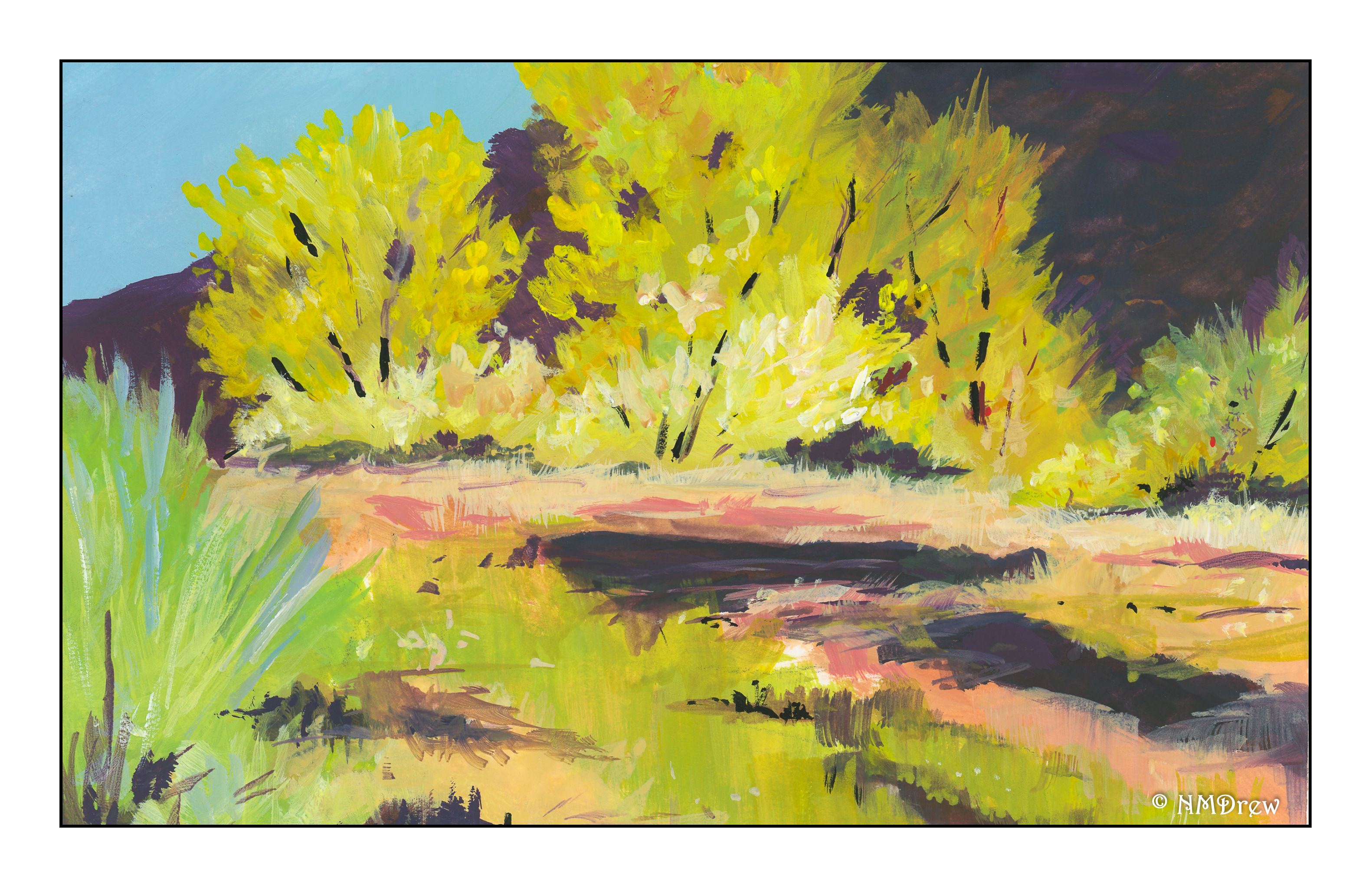
We are pushing 100F today, with east winds adding to the heat and potential fires. Thus, an autumnal desert scene seemed appropriate for today’s painting.  As I haven’t worked in gouache for quite some time, I thought it time to dig them out.  Variety is the spice of life, for sure.

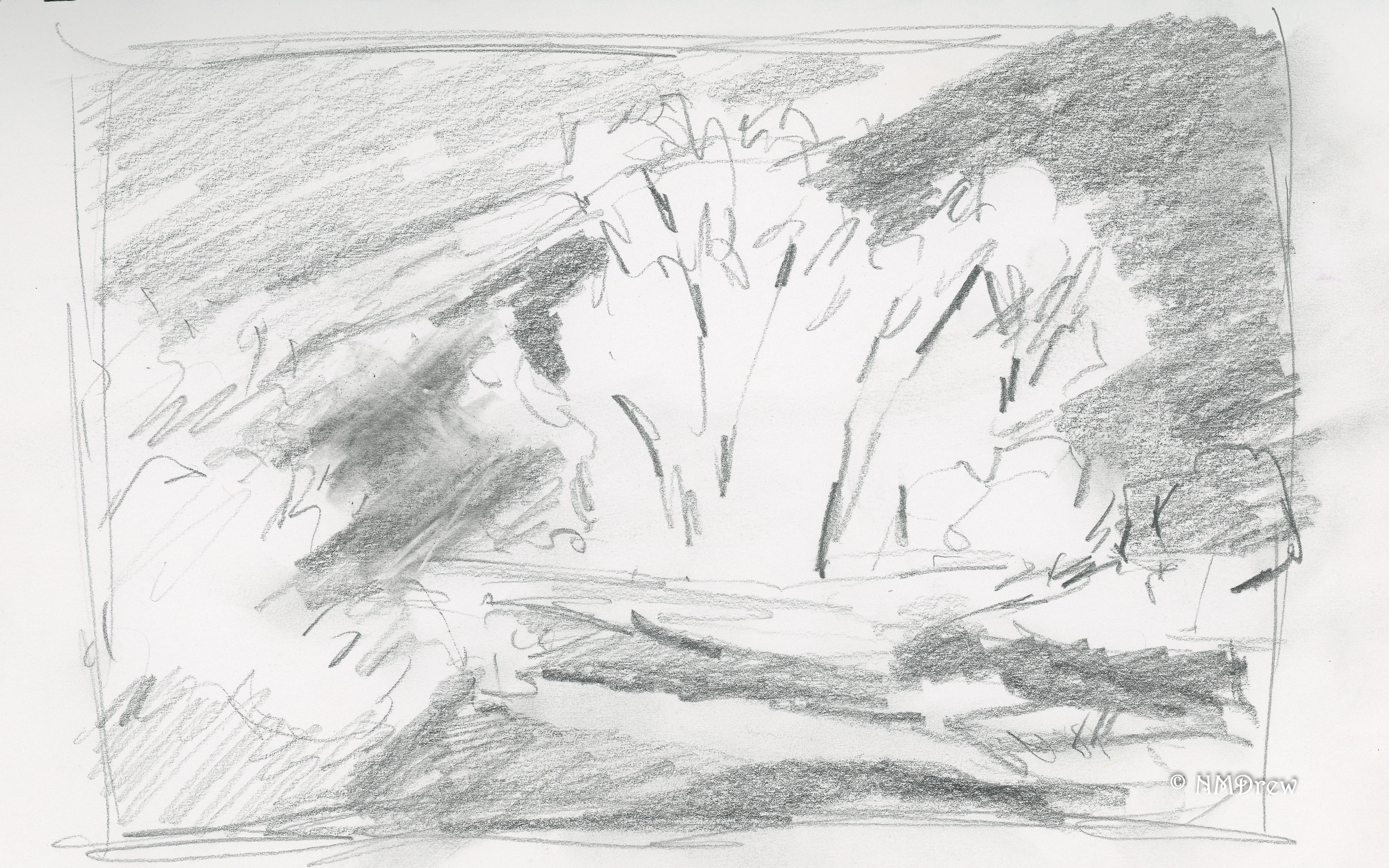
Before painting, I did a value study before I even sat down to paint.

I used pencil, as you can see below. I like pencil a bit more as I have a good range of pencils of varying hardness and softness, and that helped out in the light and dark department.

I won’t say that the value study did not help. It really did. What it aided in was setting up light and dark areas, of course, but also helped me see shapes, such as the trees against the dark mountain, as well as shapes in the creek in the mid to foreground areas.

I left the sandy bank of the creek and the reflections deliberately vague – hard for me when I want to put in a lot of detail! The focus of the painting is the cottonwoods, so too much detail in the foreground would compete with the more detailed painting of the trees.

Altogether, this was a pleasant diversion, and the value study was worthwhile (not that they take a lot of time – I am just lazy). The creaminess of gouache is fun and a completely different experience than watercolor or pastels. I used Holbein gouache for the most part, CP 140# paper. The painting is about 6×8 inches – the nature of gouache often means smaller paintings than watercolor or pastels.

Here’s to autumn!

Coastal Hills in Late Summer

Since I had all the pastels out from Tuesday’s class, before I straightened up the mess in the studio, I decided on another study. This time, the oak-covered hills of California. In spring, the hills are brilliantly green, often covered with wildflowers, such as poppies and lupines. As spring gives way to summer, the heat comes, and the grasses dry out. Perfect conditions for all these dreadful wildfires of late . . . Anyway, the coast can be socked in with the summer fog, but inland, the hills are under the brilliant sun. As you look toward the Pacific, you can see the “fog monster” lurking on the other side of the range.

Summer on Mt. Diablo

The end of summer and the brilliant greens of summer fade to brown and beige . . .

Here, I just wanted to make a light painting with simple washes. Usually I go for really intense colors, and it took a bit of work to get the sky light, as well as keep the colors of the distant mountains and grasses paler than my normal approach. The sky was easiest as I just blotted up my colors with tissue and used a lightly damp brush.

I’m rather pleased with the results, I must say.