
Tag: stone
Sea Treasures
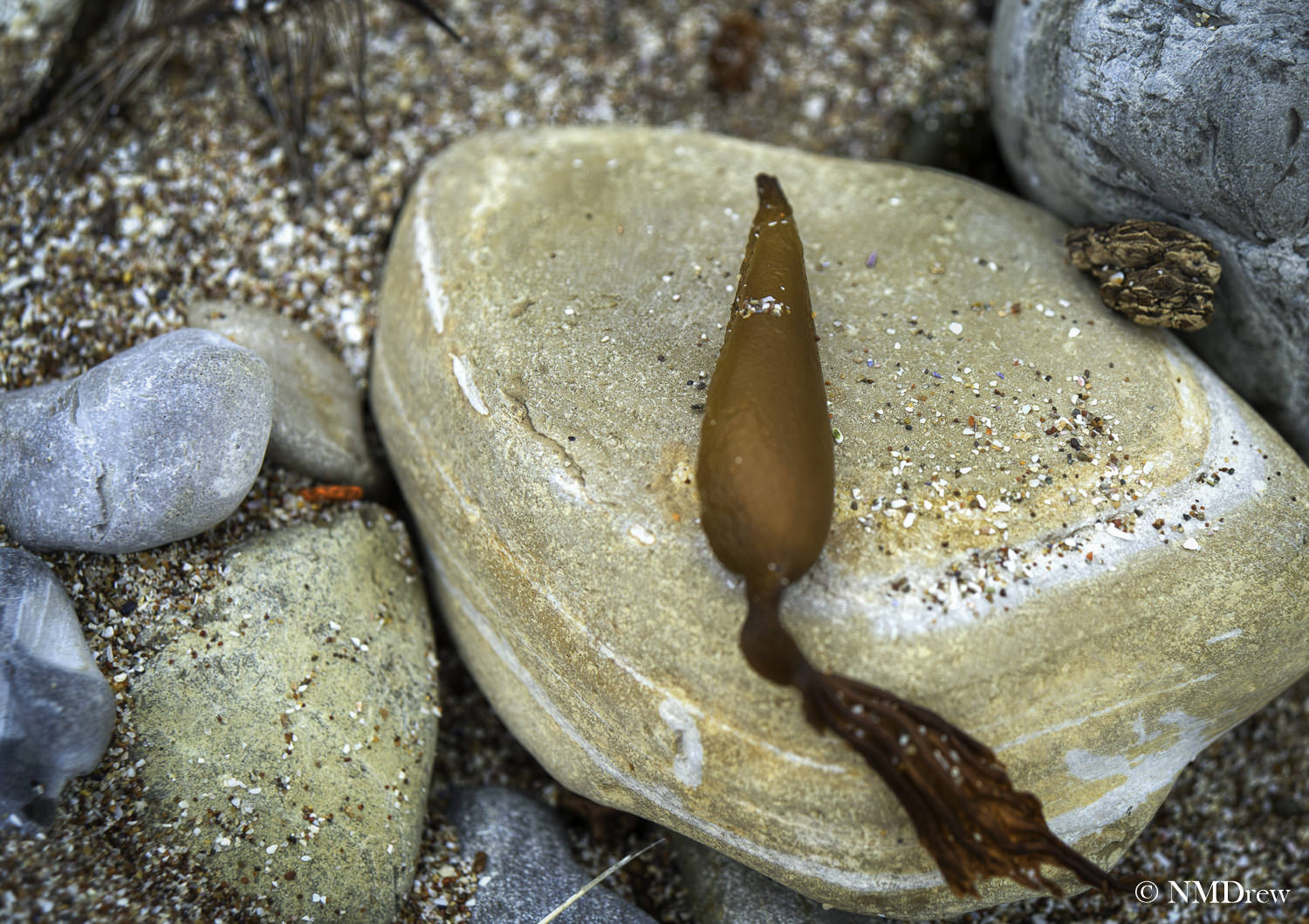
Besides Mr. Jolly Orange Feet, there are other wonders to be found at Montana de Oro State Park. We descended into a little cove onto a beach covered with sea detritus. Taking the time to look revealed all sorts of things, from 3 dead birds to sea shells to kelp bladders. The sand, pebbles, and rocks gave a beautiful background to it all.
The Blue Stone
The Four Treasures: Inkstone / Suzuri, vii
Every region has its artistic styles, as well as every time period. The same may be said for production of the suzuri, with a classical shape and style modified according to era and taste. The most common suzuri is a rectangular stone with a deep well on one end, and a flat surface sloping into it This makes sense, as it is practical and probably fairly easy to accomplish. Decorative elements and embellishments in the non-working areas are certainly possible, and I would be inclined to say almost inevitable for the expression of the carver’s creative force.
Besides the impact of regional and time preferences, the economics behind the stone’s production itself may be seen. Stones for the masses – the daily stone – are probably more plain than those for the aficionado, simply because of their utilitarian role. These can be made quickly, with or without attention to quality or aesthetics. Today, stones for tourists may be pretty but worthless as far as usability; other stones may be far better in quality and less ornate. A good stone is absolutely necessary, whether for calligraphy or painting, if you are using an ink stick.

Today’s stone is from Japan. It does not have a rosewood box, but it is very nicely encased in a kiri wood box. Unfortunately, I cannot read the label! (If anyone can translate for me, please let me know.) This is the only stone in my collection I have not yet used, and I am still deciding on whether or not I should – it is so beautiful as it is! Knowing me, though, I will at some point when I am not rushing around – I want to take the time to enjoy it.
I am under the impression this stone is carved from nachiguro, a lustrous black slate or river shale unique to Japan, and has been used since the Nara period (710 – 794 CE) for carving practical and ornamental items, such as suzuri, go stones, and suiseki, This stone is a sedimentary shale which originates in the upper side of the Kumano river in Japan’s Mie prefecture, and is characteristically very dark and shiny.

Many traditional Japanese themes and symbols may be considered by a master craftsman in creating a high-end suzuri, but this artist has taken a considerably more modern approach. The abstract elements of the lid are suggestive of many things, and certainly some traditional themes as well. Just in a glance, I can envision falling leaves or swimming koi. The carving is very subtle and pleasing, working very well within the smooth borders of the circle. To the touch, the different textures are smooth and rough at the same time, without any sharp edges.

The smooth elegance of the polished stone is a bit more rough on the grinding surface and the well, having the necessary tooth to create sumi ink. The borders of the well are polished and shiny, in keeping with the rest of the stone. The contrast of these two areas repeats the circular motif of the suzuri’s shape, as well as the framing of the lid’s pattern. The underside of the lid is as smooth and reflective as the underside of the lower portion of the stone. Even the underside of the suzuri well is smoothly finished, and follows the circular motifs of lid surface and underside, and the well. This stone is not especially old, probably produced in last quarter of the twentieth century. It is a large, heavy stone, measuring more than 8 inches (20 cm) in diameter.


I expect this stone could be considered something of a luxury item, for oneself or as a special gift. Given this, I cannot help but wonder if the beauty of the stone is all it has – can it be used to produce good ink? Even if it does not, there is something to be said for simply beautiful objects. The suzuri’s circular shape is pleasing, the lid’s carved surface intriguing, and the soft, candescent glow of the stone subtly elegant. Aesthetically, this suzuri is a sculpture to be appreciated in its own right.
The Four Treasures: Inkstone / Suzuri, iv
Ogatsu Inkstones
Another famous Japanese inkstone is the Ogatsu. The stone is a dark grey-black stone, to pure black. It is a type of slate which lends itself well to detailed carving. The stone is about 200-300 million years old, and is quarried in Kitakami mountain, near the city from which these suzuri take their name.
This video shows the carving of a traditional suzuri.
According to the website http://www.kougei.or.jp,
. . . the origins of the Ogatsu inkstone can be traced back to the Muromachi period (1392-1573). Then, at the beginning of the 17th century, two inkstones were presented to the military commander, Date Masamune, who was on a deer hunt on Toojima, an island off the Ojika Peninsular. It seems that he was highly delighted with the stones and reciprocated generously. Date’s son, Tadamune, also recognized the skill with which these inkstones were fashioned and engaged craftsmen to make inkstones for the clan. It then seems that he placed the mine from which the stone was sourced under a monopoly and did not allow outsiders to mine there.
The most important part of an inkstone is the houbou, or bed on which an ink stick is rubbed in a little water. It is the texture and perfect degree of hardness of this surface which is a particular feature of the Ogatsu inkstones. The stones are made from a type of slate and are either black or a deep indigo in color, have a rich luster and a smooth surface. Some highly fashioned, others are almost as they were mined. In all, 26 firms employ 88 people who are engaged in making these inkstones and there are also 4 government recognized Master Craftsmen.
These stones are elaborately carved, with lids, as well as left in a more natural shape. The photos below gives you an idea of the range in which they are produced.


 Ink, Yarn & Beer