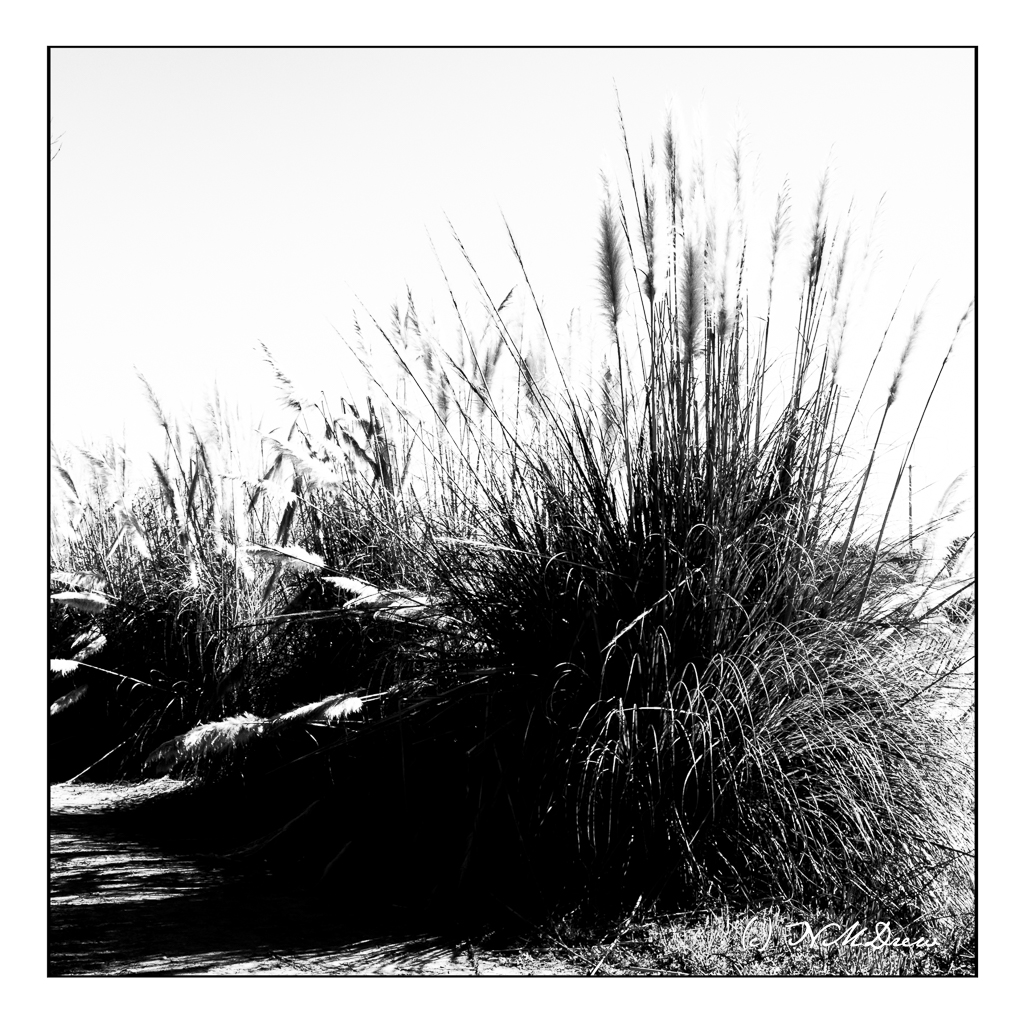
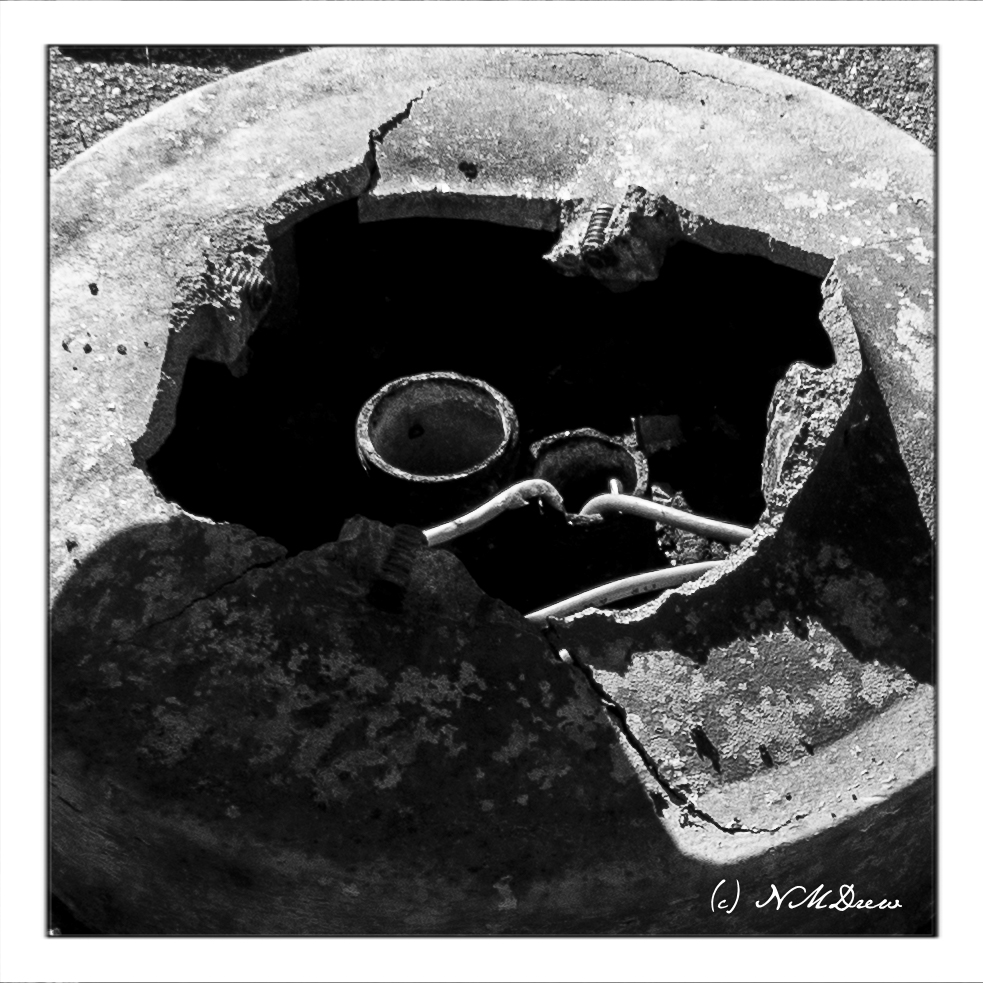
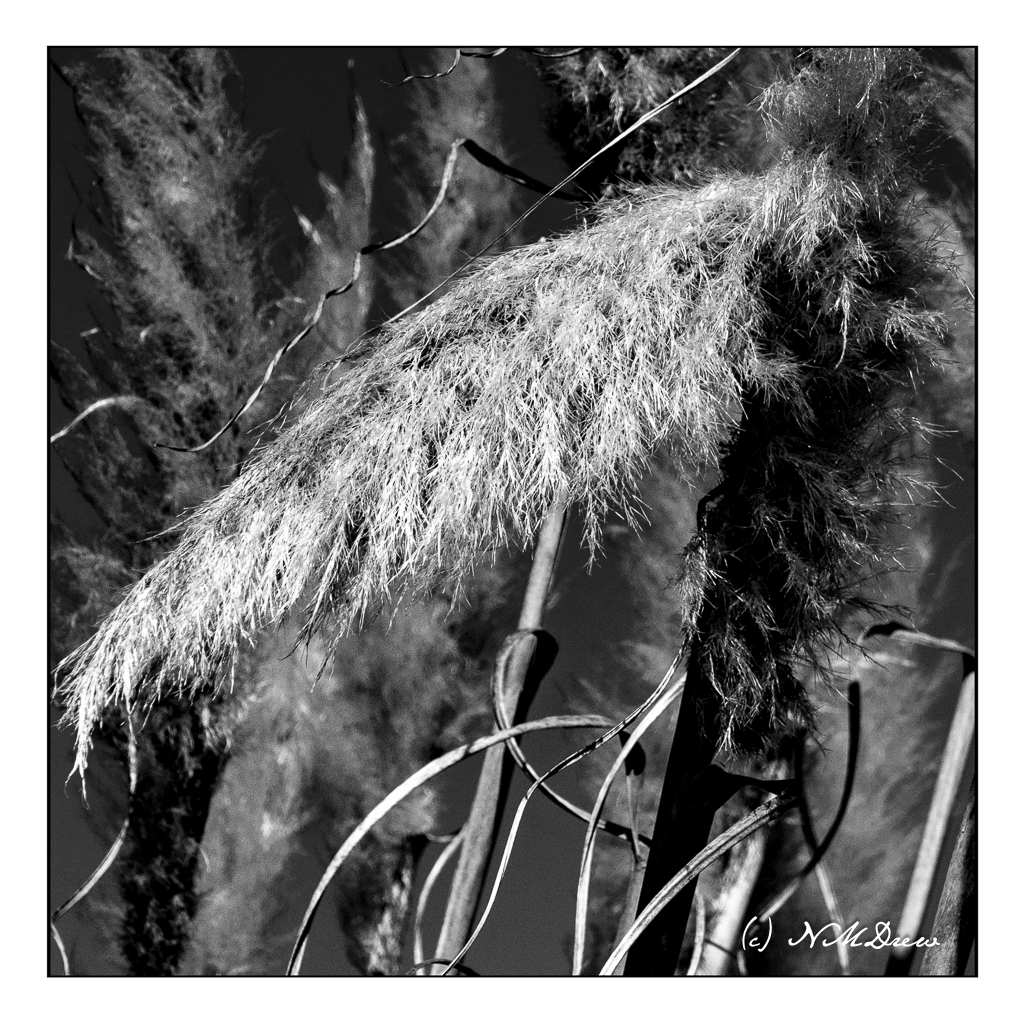
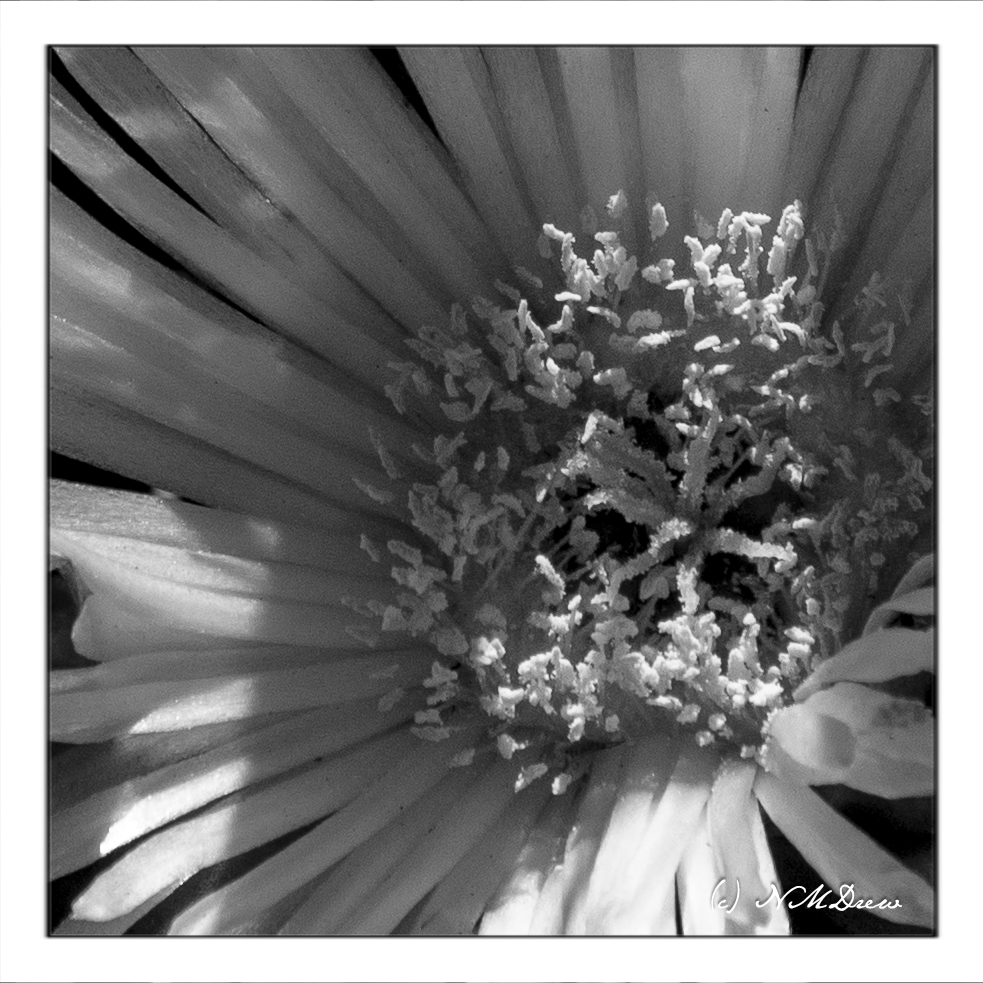
With the weather shifting from awful to delightful, and wanting to get oot and aboot, photography is always the excuse. As well, I have not been doing much in that arena. When I saw the Lens Artists Challenge #381- minimalist, black and white, I figured one way to get me moving was to edit some of the photos I took when a friend and I went to the settling ponds at a local water treatment plant. It is a dog-free bird sanctuary, and we saw egrets, herons, grebes, and a lot of others. It’s not a well-known place and the only person we saw was a man leaving with a spotting scope. My kind of place.
Now, whether or not these can be considered “minimalist” is up to you, but converted them to black and white, cropped them, sometimes severely to get a closer look, and how they hold up may be a bit dicey. Additionally, I pushed contrast, black and white, as well as dropping some of the highlights for a bit more detail.
Oot and aboot, 50mm macro and the Nikon Z6ii, sometime ago. I liked the shadow on the leaf. 50mm macro lenses are some of the best walk-around lenses, I think.
Over the next several weeks I am enrolled in a couple of oil painting classes. Acrylic paints really do frustrate me in a lot of ways, and please me in others, but it is time to work with oil paints on a more serious level. Let’s see where it goes.
To get ready for these classes, I pulled out some of my supplies. Of course, the oil paints come out – I have a smaller selection of colors than any other medium! I also have canvases in panel and mounted format. However, I did need to stock up on linseed oil, solvent, and other such stuff. And then paint.
Canvas mounted on panels is actually, I think, the easiest way to go. Canvas pads flop around and easily bend. Mounted canvas on stretcher bars takes up a lot of space but can provide a gratifying surface to paint on if properly and tightly mounted and prepared. For now I am using canvas panels which, while not super high quality, are relatively inexpensive and easy enough to prepare, if at all, prior to painting.
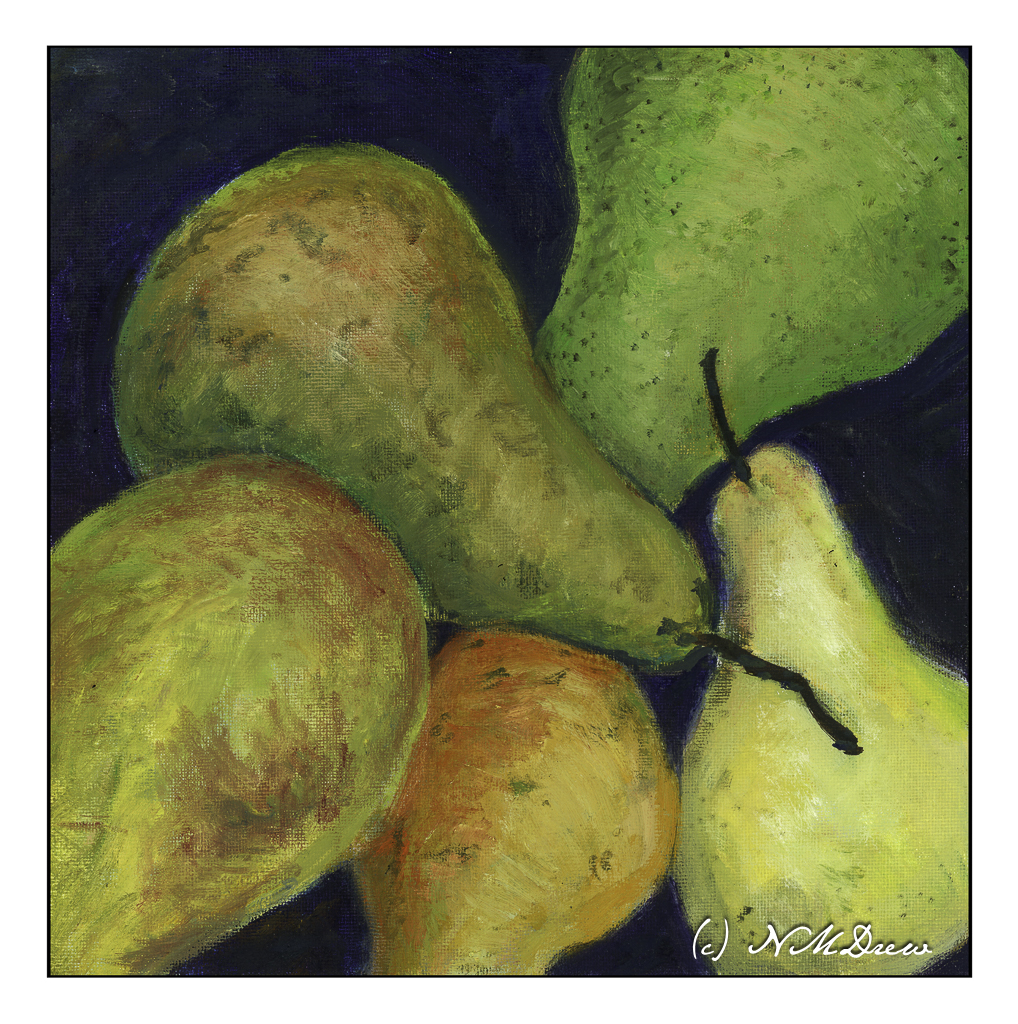
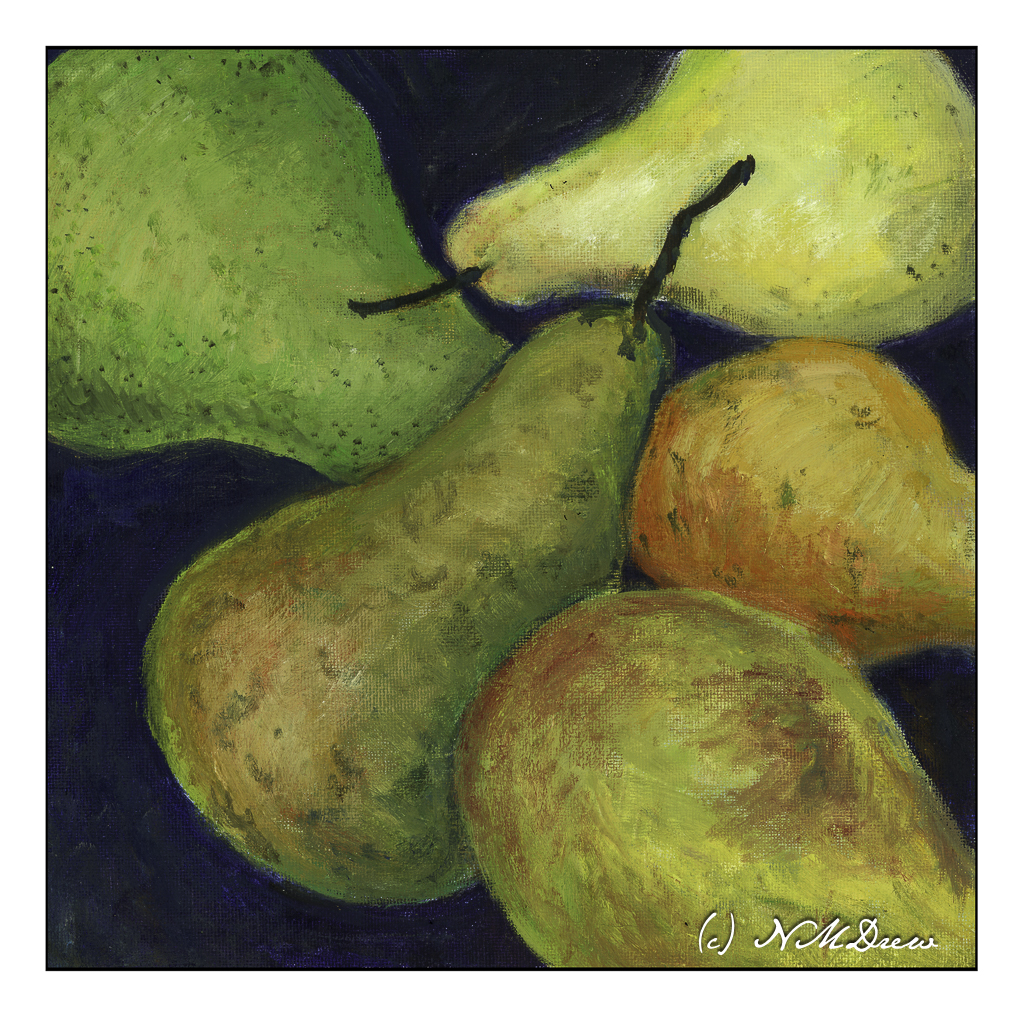
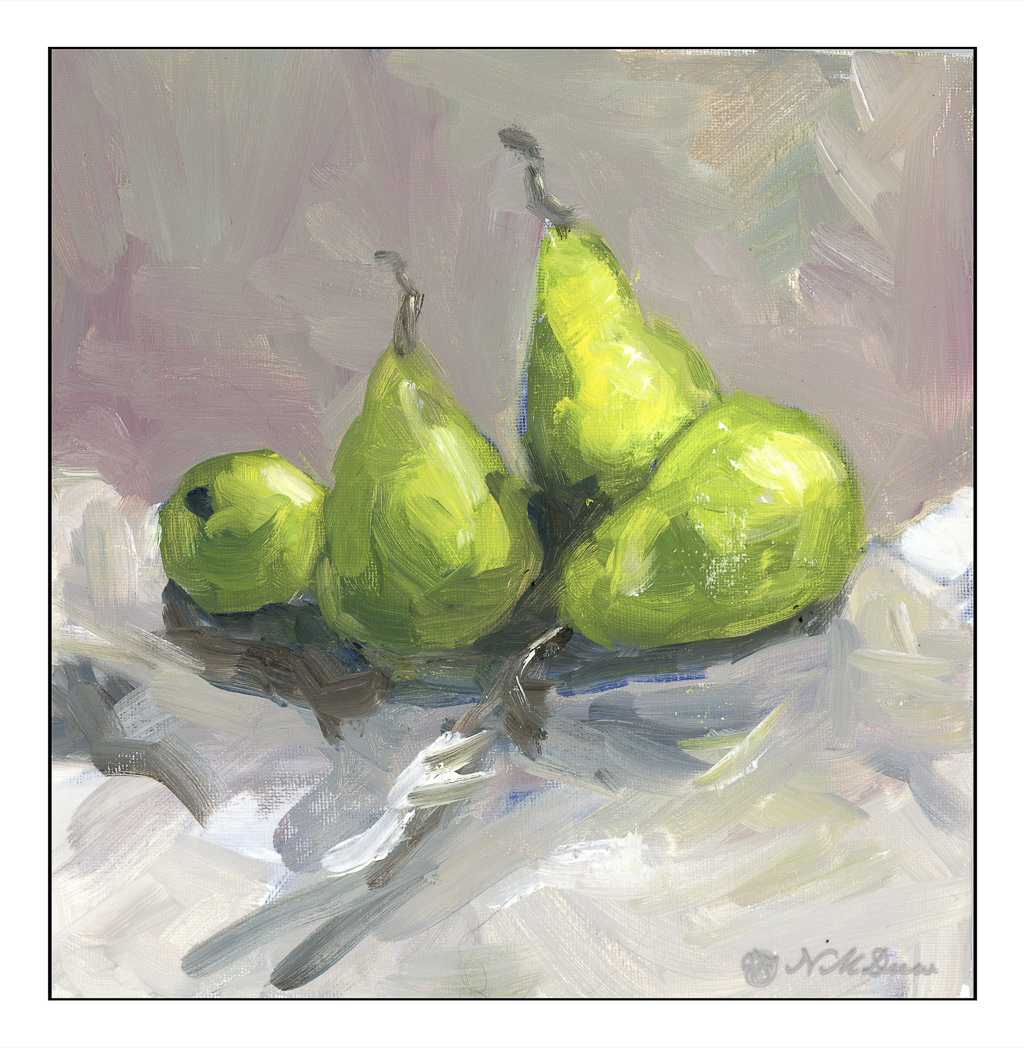
I love pears! Painting them is far less tasty than eating them, but they are by far one of my favorite winter fruits. Here, some d’Anjous, all cuddled together. My focus here was brushwork and getting a sense of the unctuous quality of oil paints. Some people use the paints straight out of the tube, but I like mine to slide around a bit. It really makes for fun blending. The colors, too, were rather limited here for the purpose of seeing how they can interact.
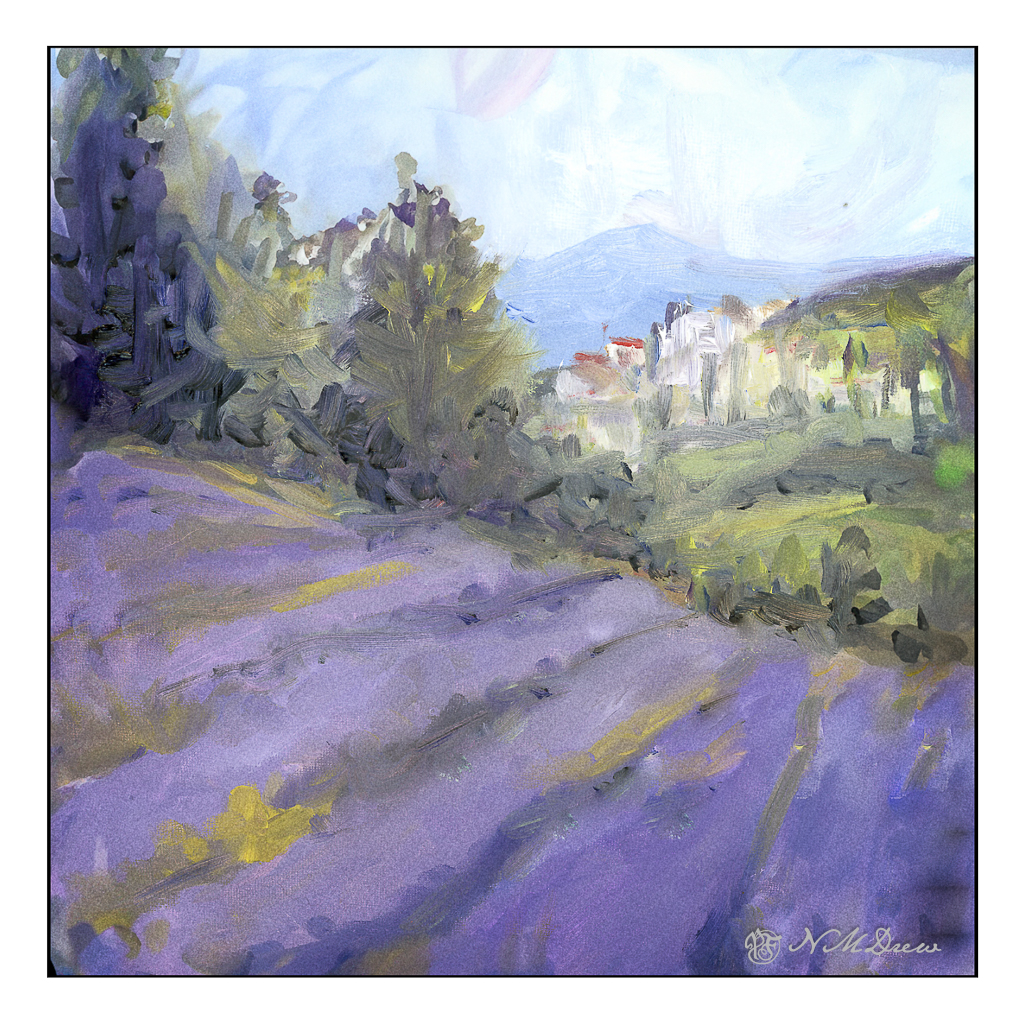
Here, more lavender fields. Why so many? It is because lavender and purple are honestly rather nasty colors to create from the standard mixes. I find that I like to have “convenience colors” on hand – namely, a good violet such as carbazole or dioxazine. Mixed with other colors and / or white, I get lavenders and such that appeal to me. I initially tried to just use variants of red, blue, and white for the lavenders, but gave up with frustration. Not worth the sweat! Maybe later I will master a good orchid lavender, but for now . . .
As with the pears, playing with the things you can add to the oil paints to thin them out. I used Gamsol and Soy-Thin, both low odor solvents. I didn’t use any linseed oil in either painting – that will come later – as will other things, such as drying agents like alkyds.
The pears and the lavender field were painting on pre-gessoed 10×10 cotton canvas panels measuring 10×10 inches square.
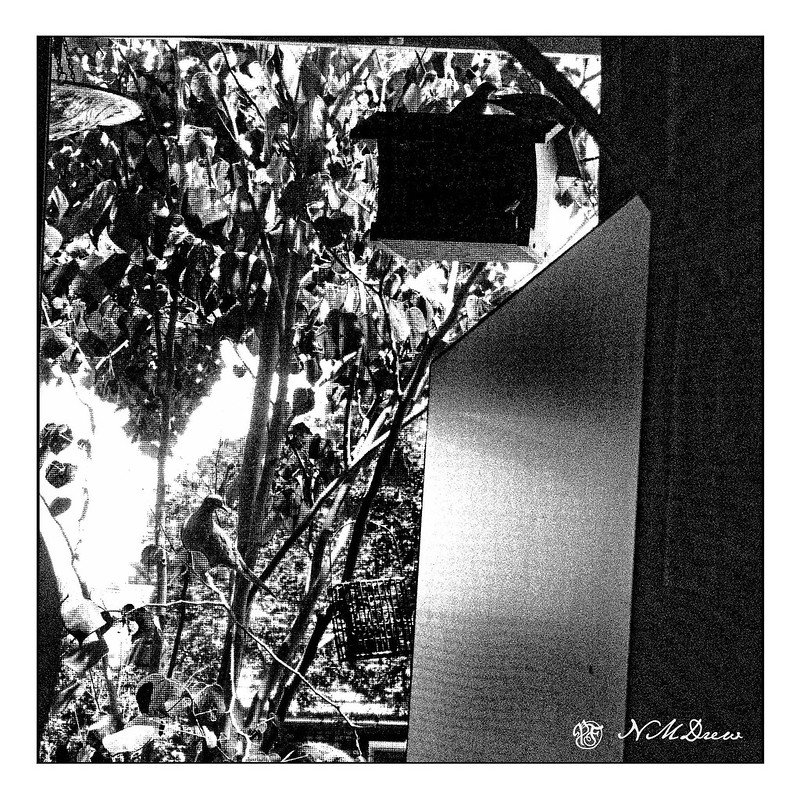
Besides doves and finches at the feeders, we have gotten squirrels and hawks and hummingbirds. It can be noisy or silent, the soft coo of a dove, and just funny to watch the finches jockeying for position to get to the seed. Beep! Beep! Beep!


 Ink, Yarn & Beer