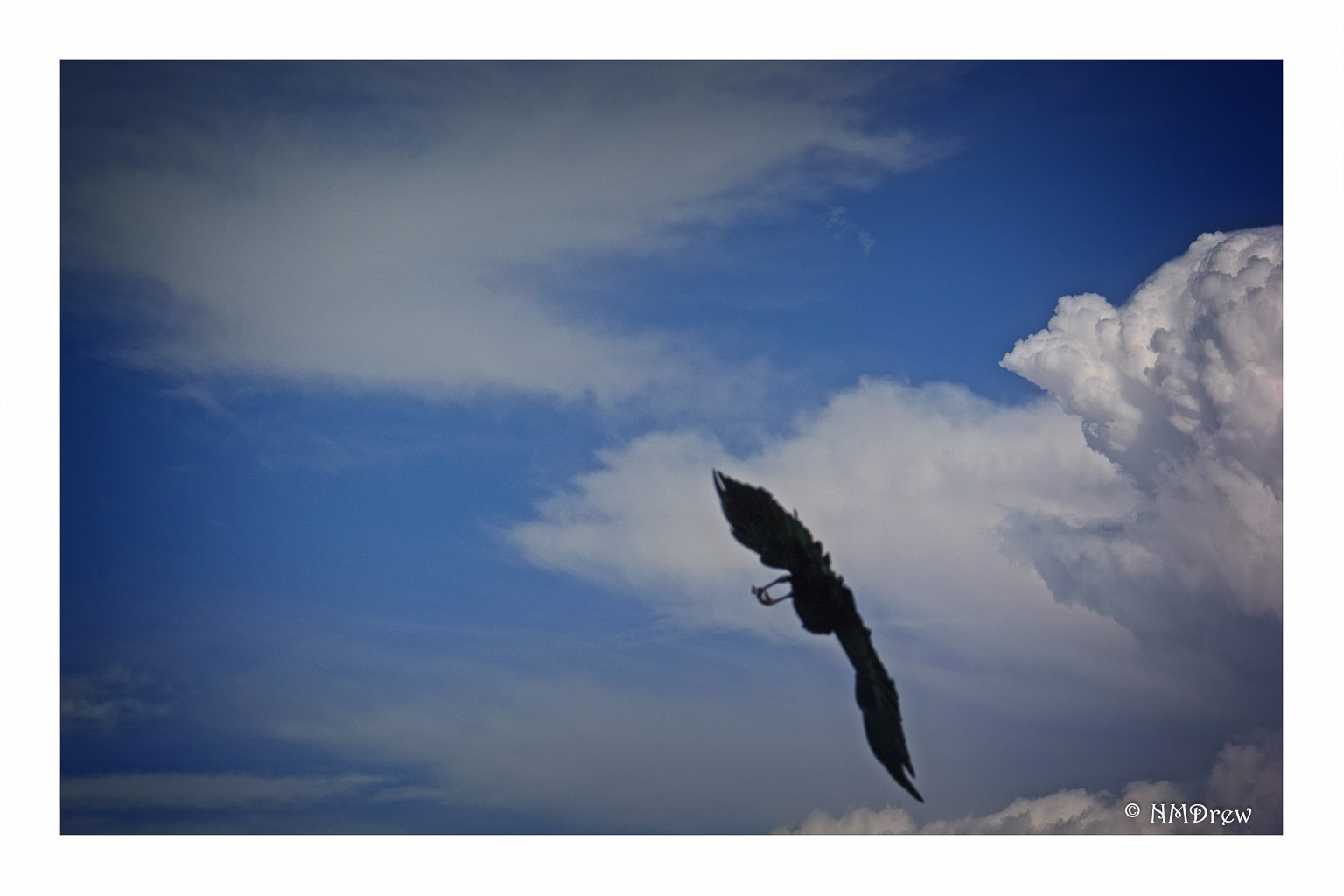
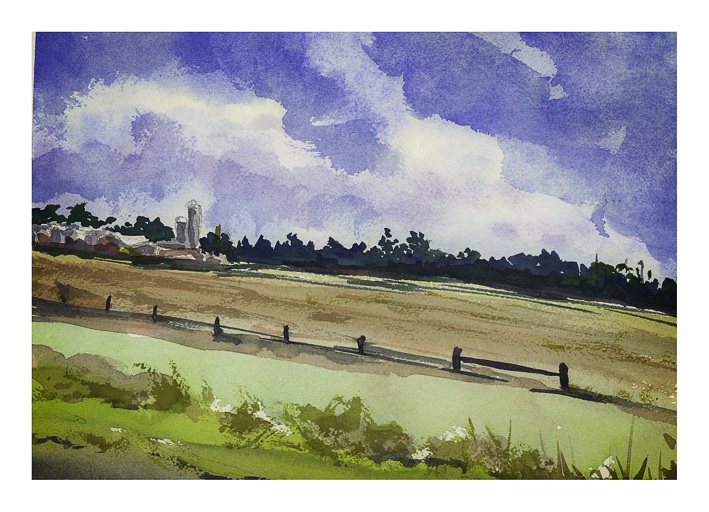
Out the Window

Driving day in, day out, it gets a bit old and boring unless you make it a point to look – and shoot fast exposures, too – out of the car window. I have a lot of shots! Nonetheless, the point of all these photos was simply subject matter for paintings. I don’t live in the midwest any more, but in a drying west coast state. Trees and poofy clouds are not my daily fare – so it is honestly a lot of fun to see what I get / got on the camera. It feels good to put a brush in my hand again after weeks of driving in a car!

On the Road, Part I

I have no idea how many parts this little saga will contain. At least two based on the title.

Last year we started what was supposed to be a three week road trip, or maybe a two week road trip, through California, Nevada, Utah, Colorado, New Mexico, and Arizona, before returning to California. However, post-vaccination Covid caught up with us, and we were grounded until declared “safe.” I felt like a naughty child!

Somewhere on Hwy 395

So, we are back on the road, and it is an odd experience. Travel actually requires a certain mindset, a patience with developing new routines while daily ones at home vanish. A road trip means sitting in a car for hours at a time. Josh the Esposo loves to drive, so I sit casually by, and observe the world flying by me. My camera is at hand, set to a fast exposure to catch things as they fly by on the roadside. Sometimes I get good ones. Sometimes I don’t get good ones. In between I am knitting mindlessly on a circular sweater that will be steeked upon my return.

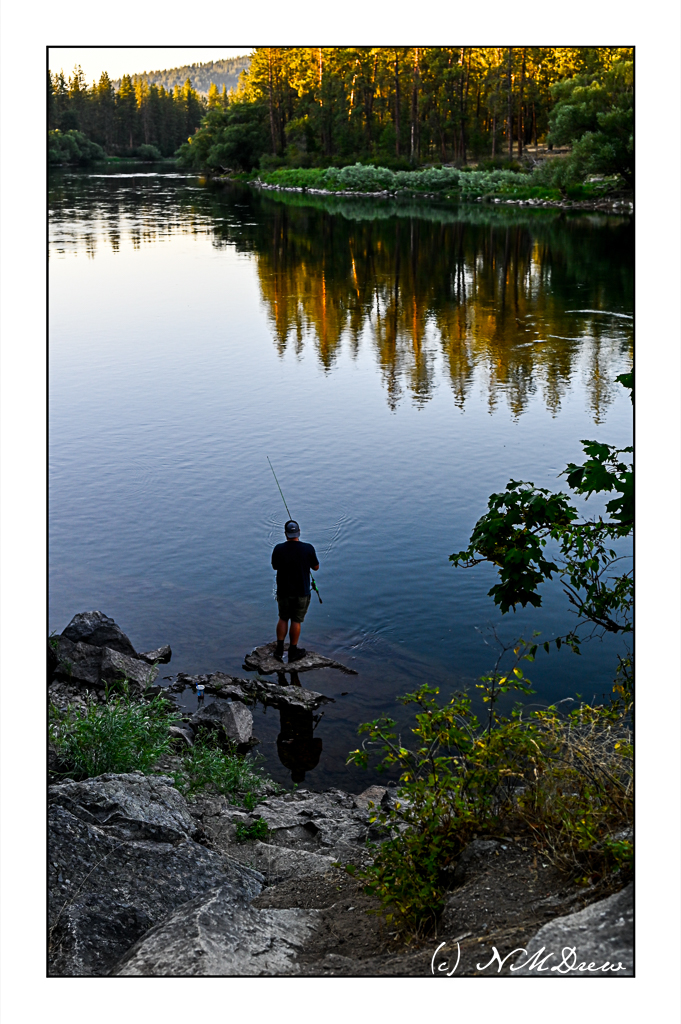
What I do get are memories of places that are beautiful or unreal in my current reality. The big one is water on the ground! As our water vanishes in the Southwest, it just hangs out in places like Oregon and Wisconsin and Montana. Rivers, creeks, lakes, ponds. The luxury of a 10 minute shower as opposed to the Navy shower.

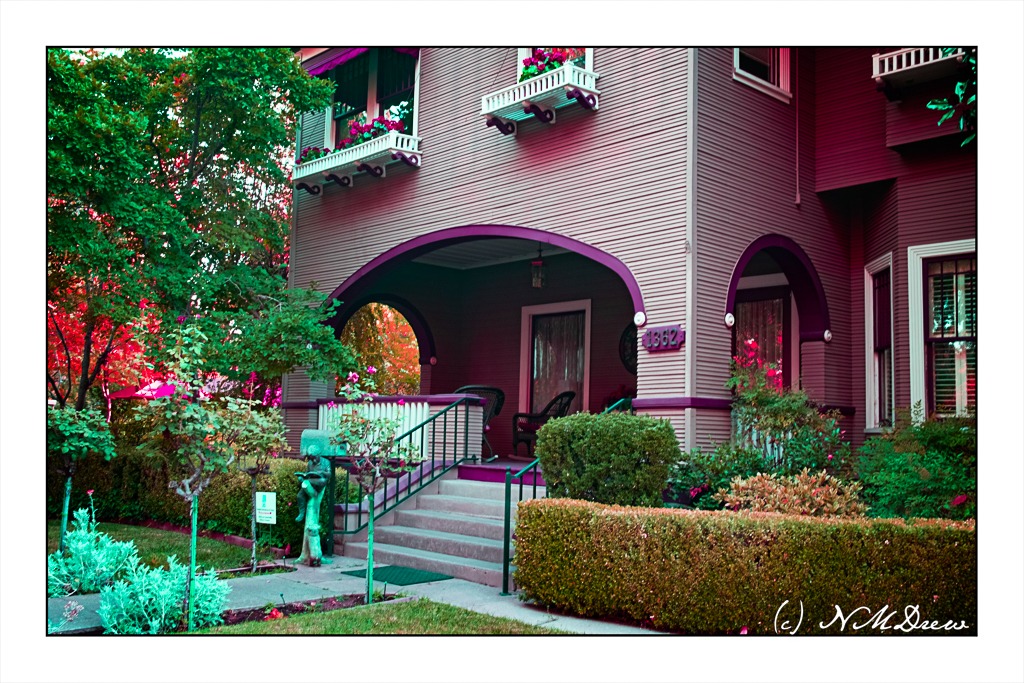
The Goodman House B&B in Chico, CA

This trip is one to Wisconsin to visit my younger brother, Kevin, and his wife Suzi. We have driven about 2500 miles (4025 km) to go half way across the country along a northern route. We started in the Los Angeles area, where we live, and drove 8.5 hours to Chico in Northern California. Perhaps a last stay in our beloved Goodman House B&B as the owners plan to sell – time to retire from the business. Dinner at the Sierra Nevada Brewery.

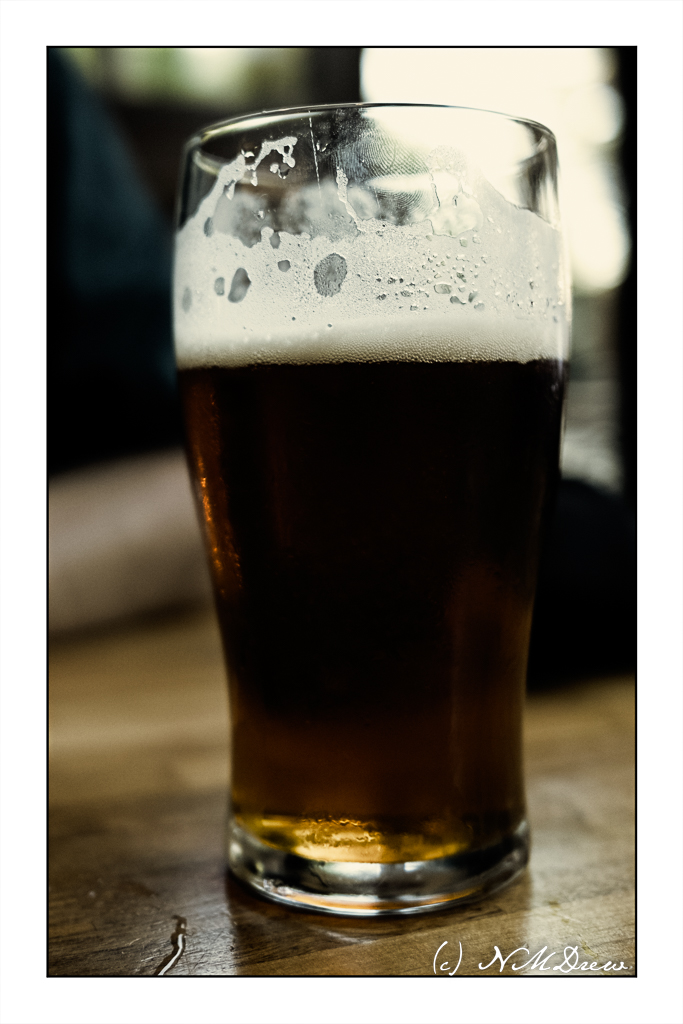
Local Beer is Good!

You can look up all these places if you want, but suffice it to say that Chico is a beautiful town, with new sections and old, trees and such that make it a charming place to visit and a pleasant place to walk around.

Street Scene in Chico – Trees and Shade

I did walk around the morning we were to leave for Bend, Oregon, where one of my oldest friends lives.

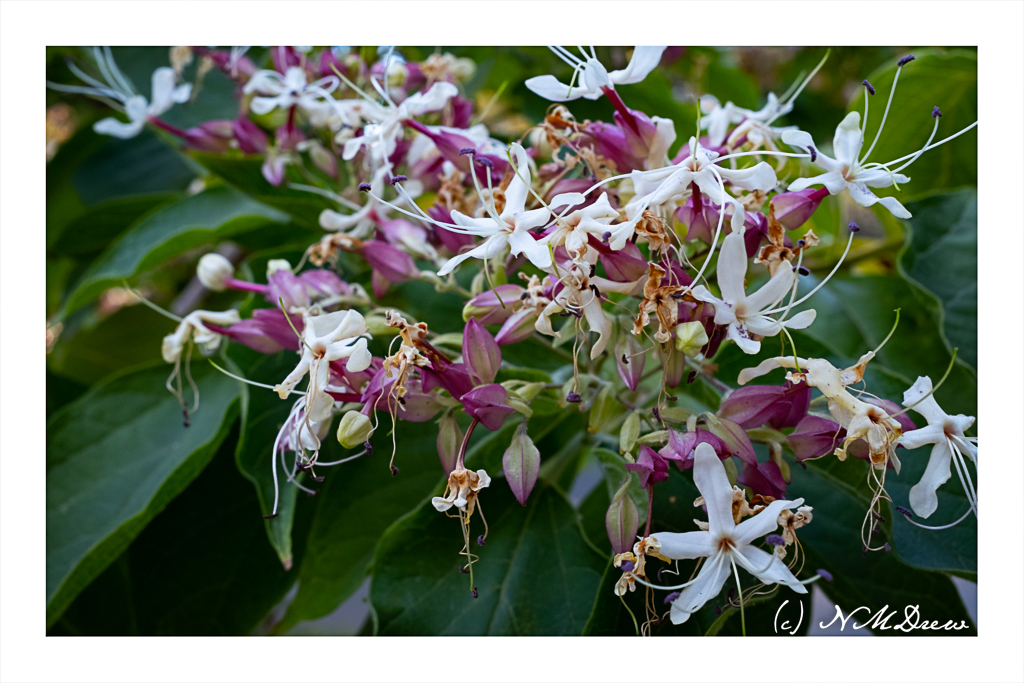
Morning Flowers

Light

The other day I was putzing around, looking at photography books, thinking about painting and drawing and photography, and something I read about Galen Rowell hit me.  He was always looking at the light – how it worked, what it looked like, what it was doing to the scenery.  Of course I have read about it – we all do – and thought about it a bit now and again.  However, that moment seems to have one of those clarifying moments in my creative life.

Last week I went out with my newly CLA’d Yashica D TLR camera (beautifully done by Mark Hama) and took some pictures, just to use the camera and see how it was working.  It was great – I had a serious issue with using it as the focusing screen was full of crud.  Anyway, I used Fuji Pro 400H as it has wonderful colors, but I had never used the 120 film.

When I went out with the Yashica, I thought about contrast, the differences between light and dark, but not specifically light itself.  I got some good images, just thinking about contrast, really obvious contrast, and more subtle contrast, perhaps in smaller areas.  While the processing was done in a local lab, my own post-processing was done by scanning the negatives with VueScan, my V600 scanner, and a new-to-me software, Negative Lab Pro (more about that in a later post).  I always increase contrast in post anyway – maybe it’s just my poor eyesight – because I like to have a clear picture.  Here are some of the images from that roll.

Because I was limited to 12 pictures at the most with the Yashica, I took my time.  I thought about contrast.  Plants against the sky, light coming up between the trees, backlit leaves – all of these are easily evident when contrast is considered.  More subtle color contrast, such as leaves on the same plant, some in shadow, some in sun, required more analysis prior to making the shot.  Other thoughts on contrast consdered were the contrast of light flowers against a darker background, or the light bark of the sycamore against the darker fence and foliage behind it.  In general, things worked.  DOF also adds to a sense of contrast when softly blurred items allow things more sharply in focus to come forward.

The same ideas of contrast came out when I decided to shoot a bunch of black and white images using my Canonet GIII QL17 and Kodak Tri-X 400.  Here are some of my more successful photos from that roll, again with the idea of contrast (not light) as a foremost thought – light against dark, dark against light.

Contrast, for me anyway, is not a subtle thing.  Short scale (less shades of grey) is really easy to visualize because the difference between light and dark is evident.  The images above are strongly contrasty, and to increase the contrast, I asked the lab to push the film +2 (whether they did or not, who knows!).  Long scale is more subtle, with variations between light and dark far more.

Yesterday, I went out with my Yashica D and a roll of Ultrafine Extreme 400 black and white film – only looking for light before taking a picture.  The idea of light – not contrast – was in my mind when I went out last week.  I looked for the play of light on the scene, not just contrast. This created a very different mindset.  I saw contrast quite clearly, but in looking at the light itself, and its nuances, made me look much more carefully.

It may be a bit before the roll is processed, but hopefully not.  We are planning a little road trip / photo shoot today up in the mountains north of us.  I want to use up film in the Yashica, as well as the film in a few other cameras.  Mountain road driving in a sports car with stops for a picture (or 2 or 3) is not a bad way to spend part of a day.

The Grand Grand Canyon

Needing to travel light, I took only my Chrome Book, my Nikon V3, the Olympus OM-1n, and the Olympus XA4.  I used up 3 out of 10 rolls of film, and probably blew one of those.  I thought I had used a 4th roll, and maybe I did, but cannot seem to find it.  I used a Chrome-OS based editor called Polarr, but found the Chrome Book a bit too small to do much editing.  I backed up all my images onto an external HD, a 1.5 TB “My Passport.”

The first stop on our trip was Flagstaff, Arizona, for two nights.  We stayed at the England House B&B to use as our jumping-off points for the Grand Canyon and Sedona.  Our hosts, Richard and Laurel, were full of great information, and sent us out to the Grand Canyon to a very specific spot from which we could peer into the depths of the Grand Canyon.  We made a few stops as we drove into the Grand Canyon National Park.

The first stop was the Desert View Watchtower designed by Mary Colter, who was quite an amazing woman.  If you have a chance to visit the Desert View Tower, take the time to do so.  Not only is the Tower a piece of fascinating architectural design and execution, the views are worthwhile.  Take the time to walk around it, find the little corners, and stop for a moment to appreciate the grandeur of the view and the vision of Ms. Colter.

From the Desert View Watchtower, we drove deeper into the park, following the specific directions from Richard and Laurel.  It is a pullout leading to a fire road, and about a 20 minute walk through a pine wood.  The air is aromatic, redolent with the spices of high desert plants – resinous and sweet.

Flowers and grasses grow between the pine trees, and old, dead trees have become architectural designs created by nature, with the details of their structure revealed in their craggy lines and intimate remains.

Finally, at the end of the road, a picnic area opens up at the very edge of the Grand Canyon, which drops below you a mile.  No fences protect you.  No one tells you not to jump.  You find a place to stop, and look, to hold on to.  Birds such as ravens and raptors fly above you, only to drop down into the Canyon.  The Colorado river, a deep muddy red, flows at the very bottom.  As the sun shifts and clouds move, the colors of the Canyon change.  It’s a mesmerizing, enchanting, and magical place – far too big and grand to be seen in one day.

I used the Nikon V3 with the 1 Nikon  10-100mm lens for most – if not all – of these images, with post in Lightroom and On1.