Rick & Me

About a year ago I found the YouTube channel of Rick Surowicz, and artist of considerable talent, and a formidably talented teacher.  In the space of just over a year, he has garnered 25K followers, and I am one of them.  Check him out if you don’t know who he is!

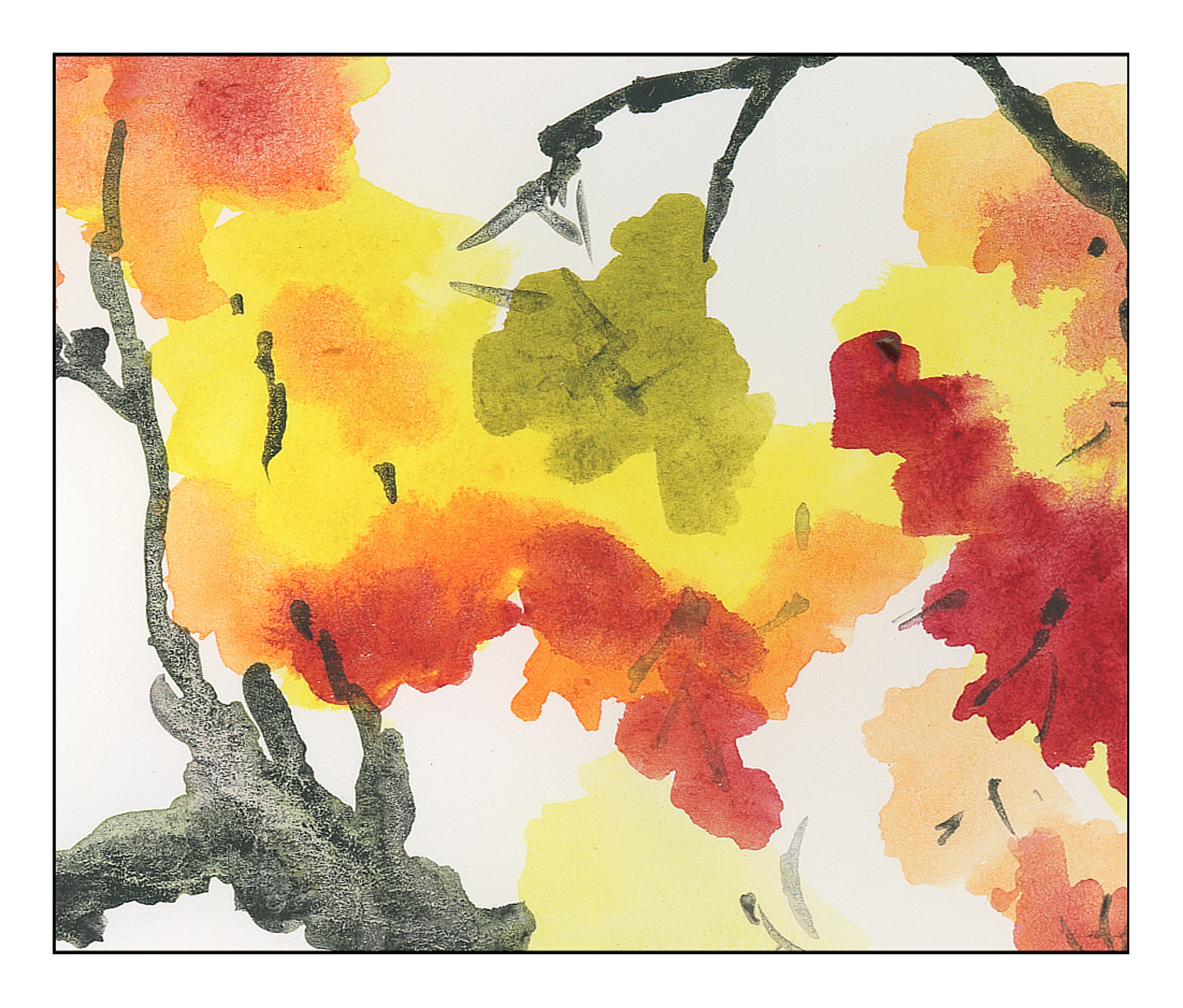
Anyway, I did two of his videos, both of which make use of frisket.  In general, I like to “travel light” – meaning, I like the idea of spontaneity for success, not thoughtful pre-planning.  The result for me is usually disaster and disappointment.  Rick’s videos are clear.  He explains what he does and why.  The results speak for themselves.  I decided to get off my don’t-panic-I’m-organic high horse and follow along.  These next two paintings are from his lessons, which I followed.  I can honestly say I enjoyed doing them, even in the moments of terror – that frisket!  those colors!  
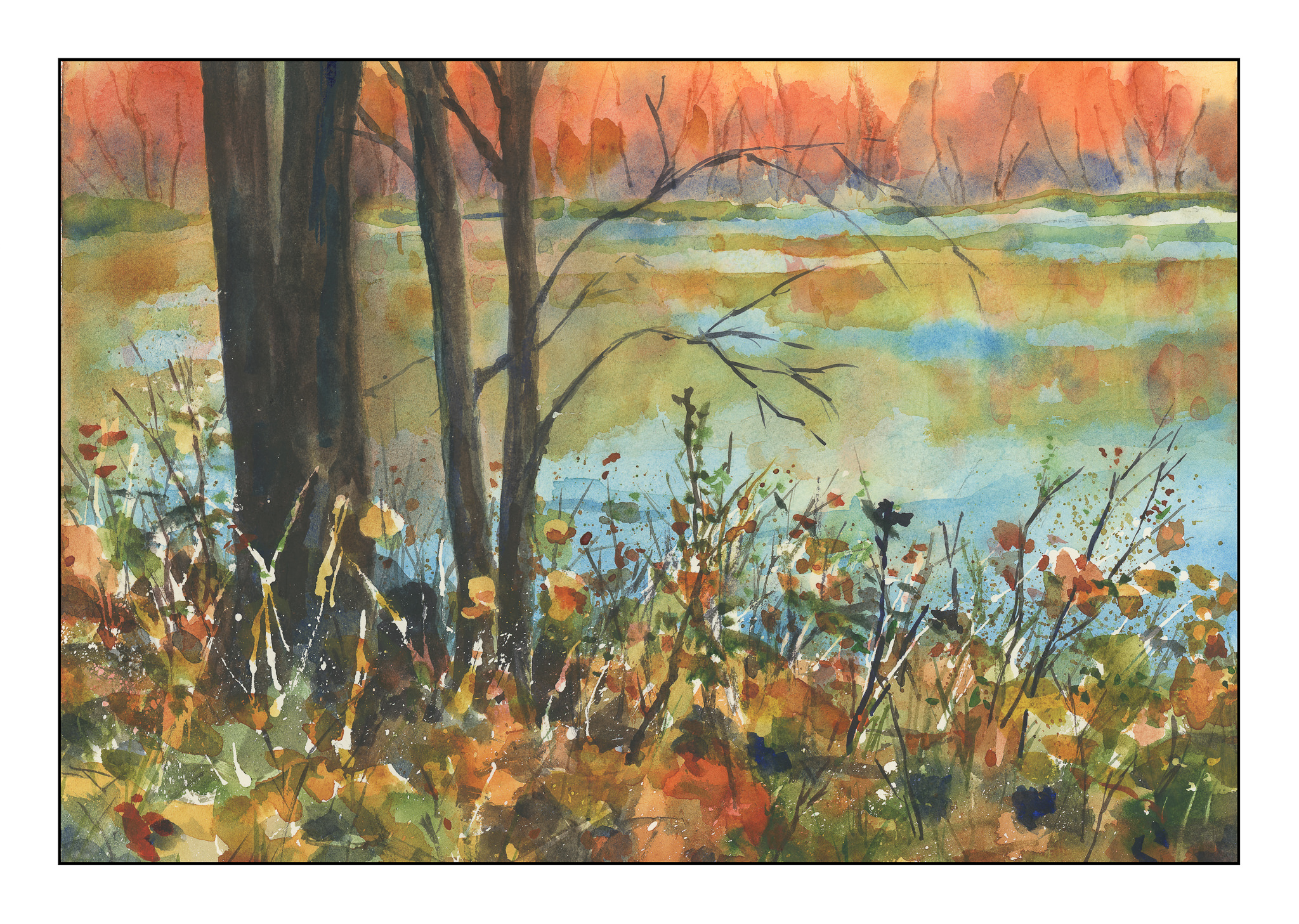
Each one of these paintings required the usage of liquid frisket. I applied it, let it dry, and got to work. The beauty of the liquid frisket is that it allows the application of broad washes across the paper without the loss of white paper, or having to do in painting or negative painting. This actually gives a bit more ability to be spontaneous and splashy than not using it! (Surprise lesson here.) I did each of these paintings over a two or three hour period, watching the steps in each video a number of times.

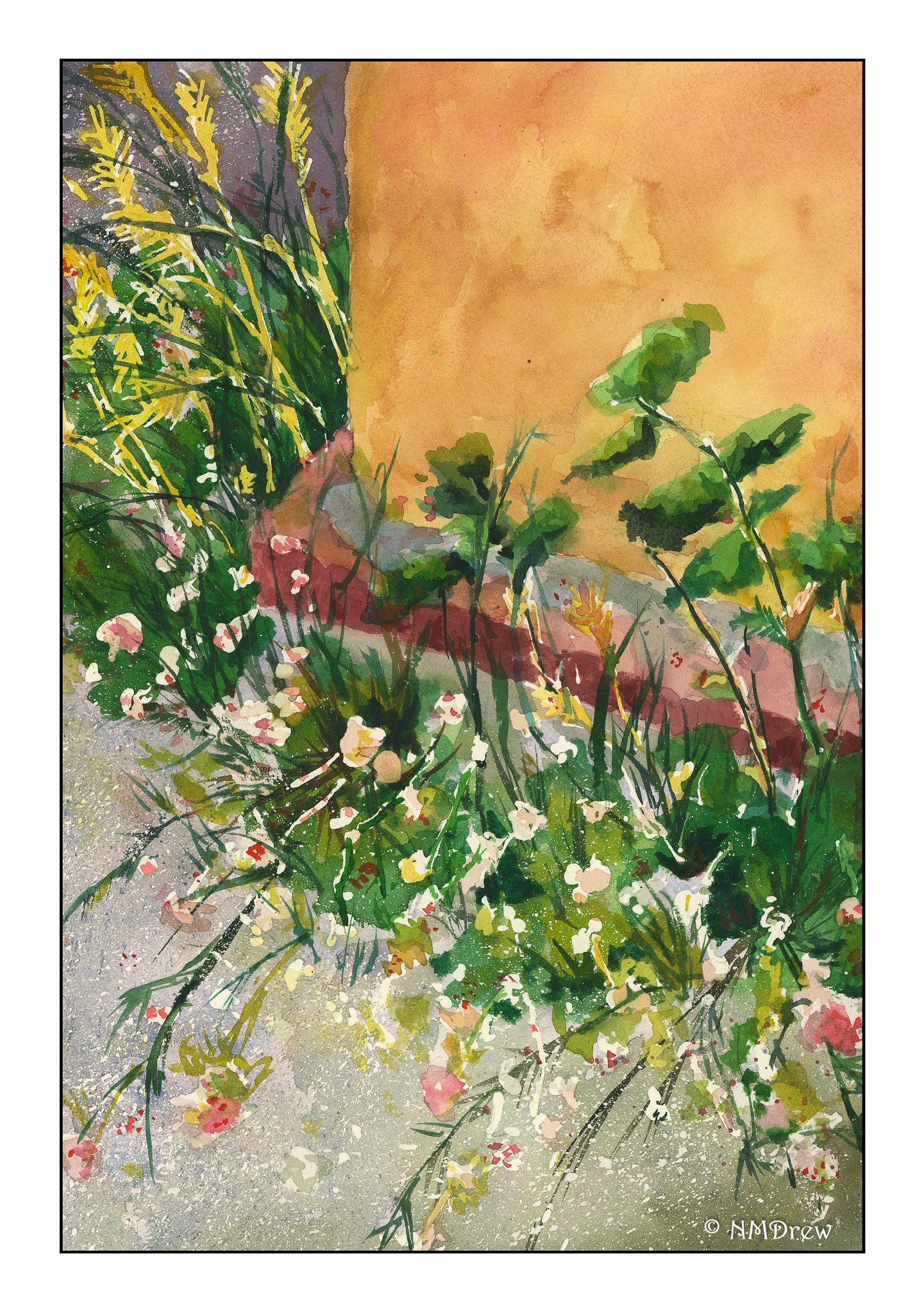
At some point, we all have to try our wings. I took a photo of a weed patch behind La Purisima Mission in Lompoc, California, last summer during a visit. There were white flowers – perfect for frisket – and yellowish grasses – also good for painted-over frisket after it was removed. This painting held a lot of terror, let me tell you! However, I am fairly pleased with the end result – simplification coupled with detail.
This morning, I did this painting, derived from a public-domain photo of an aspen grove. In the photo, light was shining from the right, and in looking at the picture carefully, the trunks of the aspens, which are a brilliant white, much as birch trunks are, were actually darker than the brilliant yellow-green foliage in the distance. I used frisket for the white areas on the right of the trees, and then, as I laid down layers of color, added more frisket here and there to protect areas of color. I did this for three or four layers until I finally removed it all, and then painted in areas needing more detail or contrast.

By following Rick Surowicz’s tutorials, I finally learned something. Frisket is not scary and can be an aid to a spontaneous or splashy wash as it helps preserve white paper. In the process of copying Rick’s process, I learned a bit about color, reworking areas, contrast, and whatever. I was also able to paint a representative of a bush or leaves rather than hankering to paint the details and losing the overall effect. I am thinking about redoing the last two paintings without frisket, just to work at white space without an aid. That will be more of a challenge I think than not using frisket!

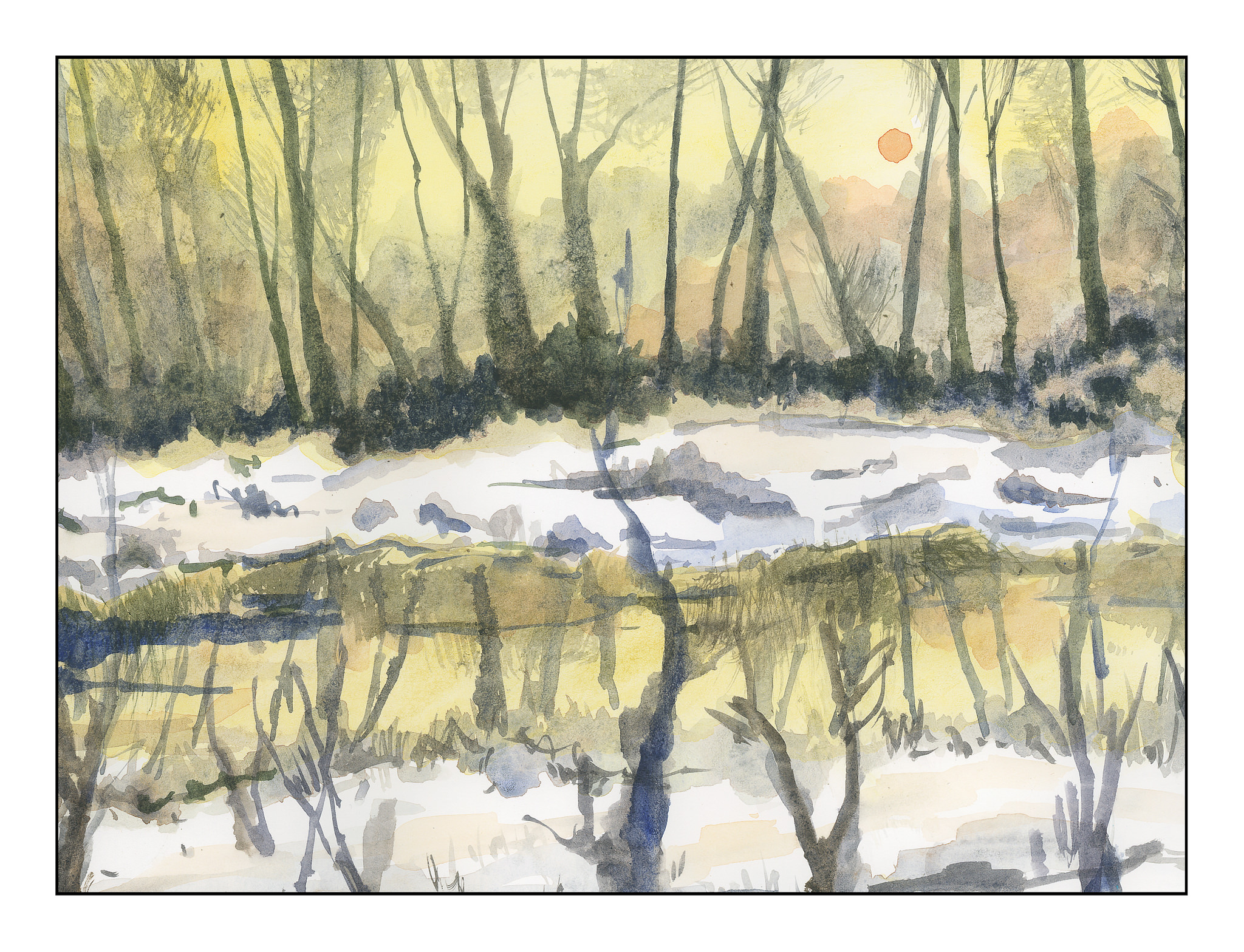
Study: Fall Lake by Rick Surowicz

Rick Surowicz has taken YouTube by storm, gaining a strong following of over 25K subscribers.  Pretty sweet deal considering he put his first video out in late May 2017.  This shows you Rick’s appeal.  His first videos were really good, but his later ones have continued to improve.  Frequently he does two videos – one is a very teacherly, with clear explanations of why he does this or that, what his thought process is, and the colors and brushes he chooses.  A second one is speeded up 2 or 3 times.  This allows the viewer to preview his longer version, seeing what is up ahead before diving into the longer, detailed video.

This is my 4th or 5th follow-along with Rick.  Given my more recent issues with representation of detail, not each busy detail, I thought I would do one of his studies today.  (I also am tired of sewing!)  Rick’s video is about 45 minutes long; this took me about 2.5 hours with stopping and starting the show.  It’s a great way to practice different techniques.

There are a lot of really great instructional videos on YouTube – you can – and I have – learn so much.  Right now, though, I have what I consider to be a serious problem:  what is my style?  Copying a masterful painter gives one skills, but the interpretation has to be personal.  I figure I am on the way there – it will sort of happen – but one thing I do know, I do not want to create chaotic paintings without good contrast, clean color, and strong composition.  Rick’s paintings have all three and make for good lessons.  They are very different than the detailed fruits and flowers of Anna Mason, but those very detailed paintings also teach things such as texture, detail, light and dark.  I have learned from those as well.


Simplified Details

Anyone who does watercolor or painting or drawing is well aware of the need to simplify details, especially in masses of color.  Every leaf does not need to be painted.  When we look, we see these details, and the effort to simplify them into areas of light and dark and midtones can be – and often is – very challenging.  Good artists make it look so easy!

The other day I was napping on the patio (I live in a warm part of the world).  When I woke up, I looked at the podocarpus trees along the back wall, and suddenly got the idea.  I saw the details of the leaves – each leaf – but I also saw the light and the dark areas.  That is when I realized I could do it – but it had never been in the front of my mind before.

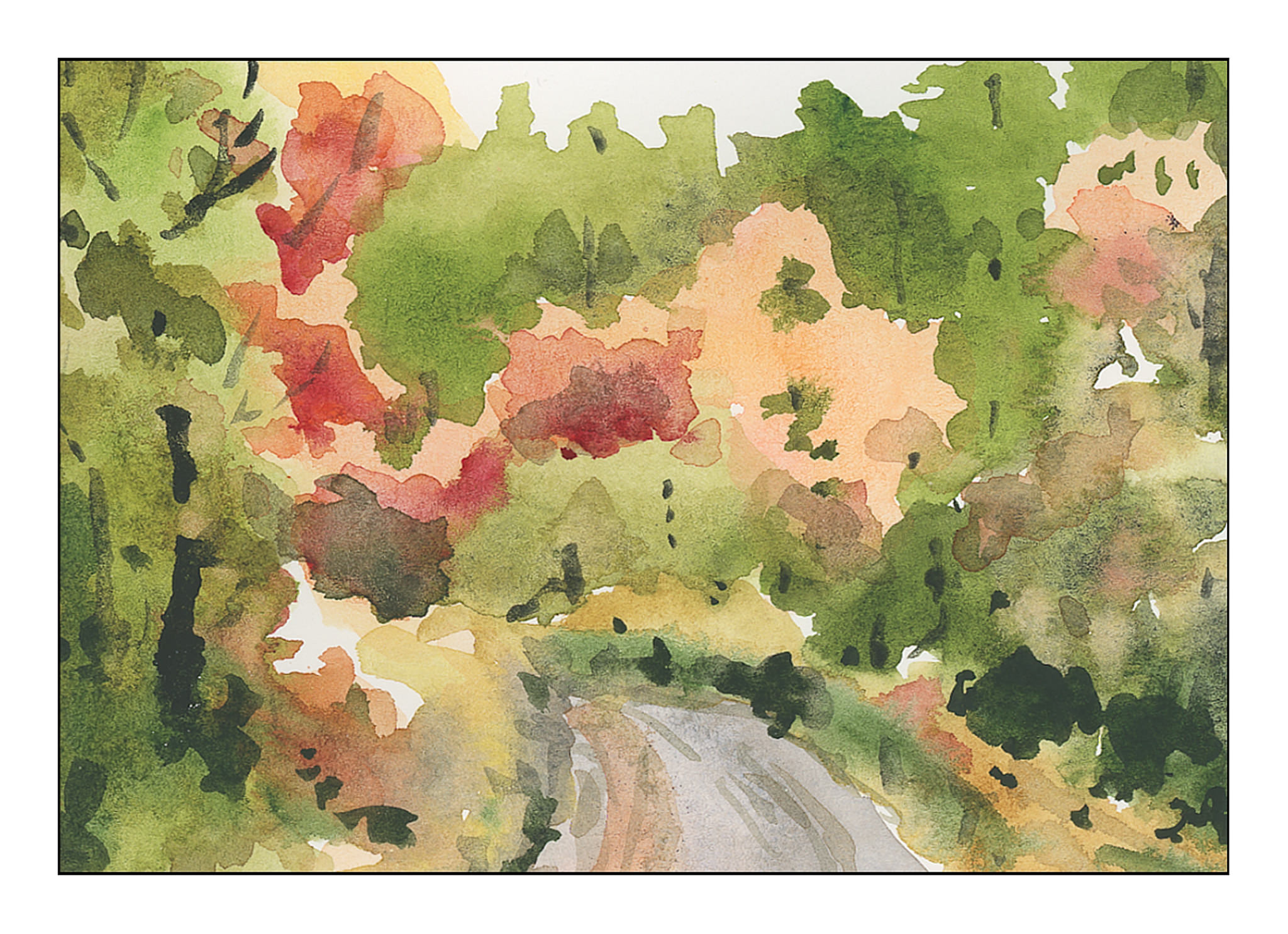
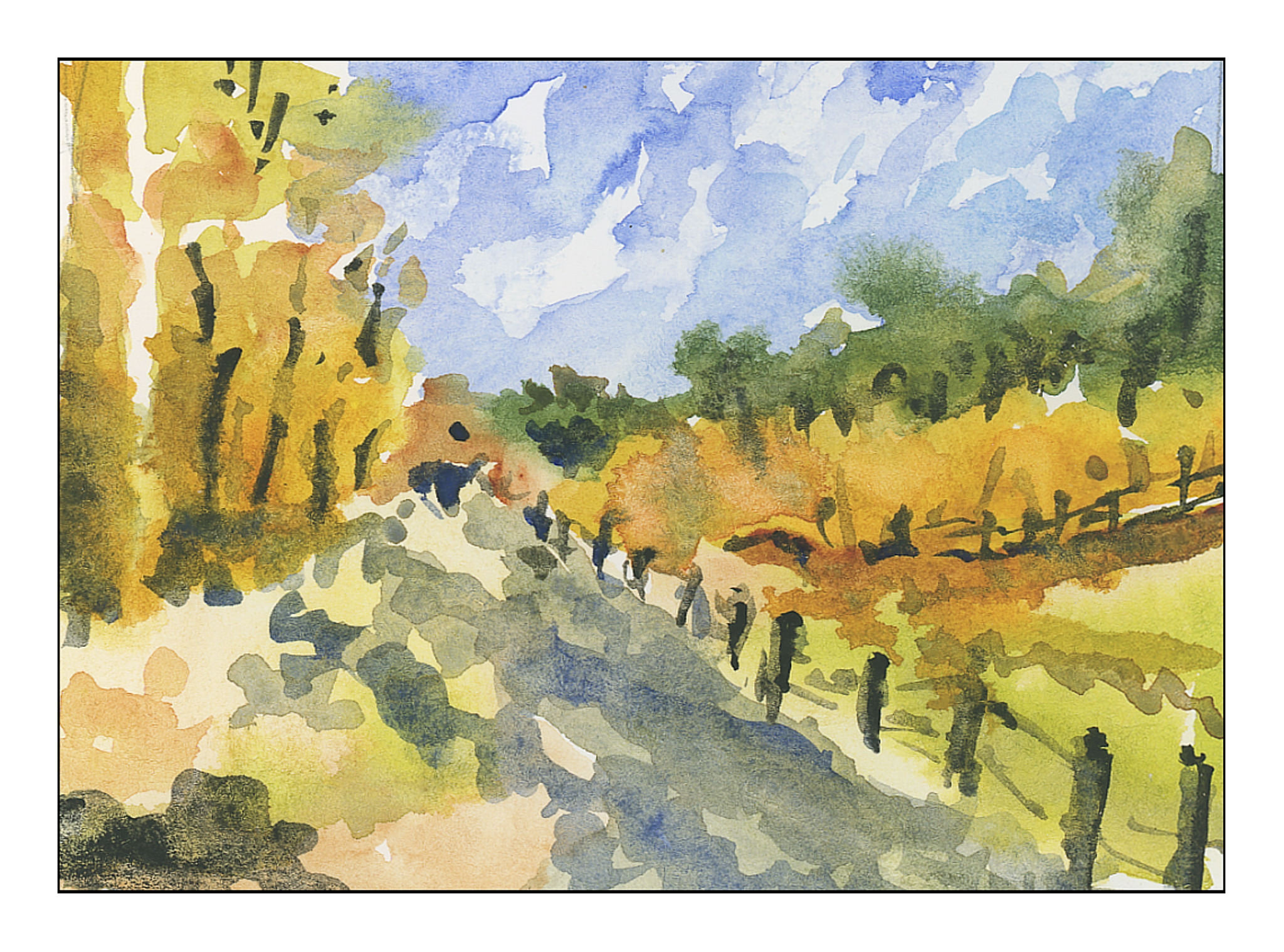
I went to work.  No outlines by pencil, just some reference photos labeled “foliage” in a search.  Varied pictures showed up, and here are my studies of simplified details.

These first three are thumbnails, about 3×4 inches in the order I painted them.

I did the above paintings yesterday.  This morning, applying the same tactic of no lines drawn, I used a 9×12 inch sheet of paper and painted out to the edges.  Again, the focus is on simplification of details into masses of color.

Success?  I don’t think any of the paintings are particularly good, but I do think I am getting that element of simplification I find so elusive in my own painting.

Keep It Simple!

I have been so focused on buttonholes that I am getting a bit nutso.  Painting is a totally different experience, and was a welcome break yesterday and this morning from the analytics of buttonholes!  If I do anything with sewing today, it will be later on.  In a bit, we are headed out to collect our supplies for Thanksgiving dinner, and that will certainly be another pleasant break.  I don’t know about you, but too much of any one thing becomes almost an obsession with me – analyzing and studying whatever.  Painting does require a bit of analysis, but it also has an element of sheer doing that makes it very different.  It’s very relaxing, and because it just has a life of its own, watercolor is a challenge and a tease as well as a very creative experience.

Anyone who does watercolor or painting or drawing is well aware of the need to simplify details, especially in masses of color.  Every leaf does not need to be painted.  When we look, we see these details, and the effort to simplify them into areas of light and dark and midtones can be – and often is – very challenging.  Good artists make it look so easy!

The other day I was napping on the patio (I live in a warm part of the world).  When I woke up, I looked at the podocarpus trees along the back wall, and suddenly got the idea.  I saw the details of the leaves – each leaf – but I also saw the light and the dark areas.  That is when I realized I could do it – but it had never been in the front of my mind before.

I went to work.  No outlines by pencil, just some reference photos labeled “foliage” in a search.  Varied pictures showed up, and here are my studies of simplified details.

These first three are thumbnails, about 3×4 inches in the order I painted them.

I did the above paintings yesterday.  This morning, applying the same tactic of no lines drawn, I used a 9×12 inch sheet of paper and painted out to the edges.  Again, the focus is on simplification of details into masses of color.

Success?  I don’t think any of the paintings are particularly good, but I do think I am getting that element of simplification I find so elusive in my own painting.

The Studio

I’ve had a room I call “The Studio” for years now – but somehow it has never felt especially complete until yesterday.  Why?  I bought a sewing table.  For the last 30 years I have had to clear off the drafting table or take over the dining table to sew.  It’s a nuisance for someone who really enjoys sewing but hates clutter.  Take things out.  Put things away.  Hate the mess of clutter.  Hate the urgency to put things away.  Thus, on a whim, when I saw this table, I bought it.  Because it was a floor model, it was marked down, but even better, it was already assembled!  At last, my sewing urges can be allowed to stay out in the open, at my whim and will.

Sewing has its corner.

Painting has its own corner.

Computer has its own corner.

Cameras and supplies are on the shelves, as are books and paper and paint and thread.

All is right with the world.