Nocturne Studies in Gouache

For some reason, gouache seems to be especially good for depicting strong colors and contrasts. In part I think it is simply because the colors can be so very saturated compared to watercolor. Their opacity also lends to this. Artist gouache is also water soluble, and you can re-wet what you have painted to modify it. You can hide mistakes, but you can also scumble and scratch and get some rather nice effects.
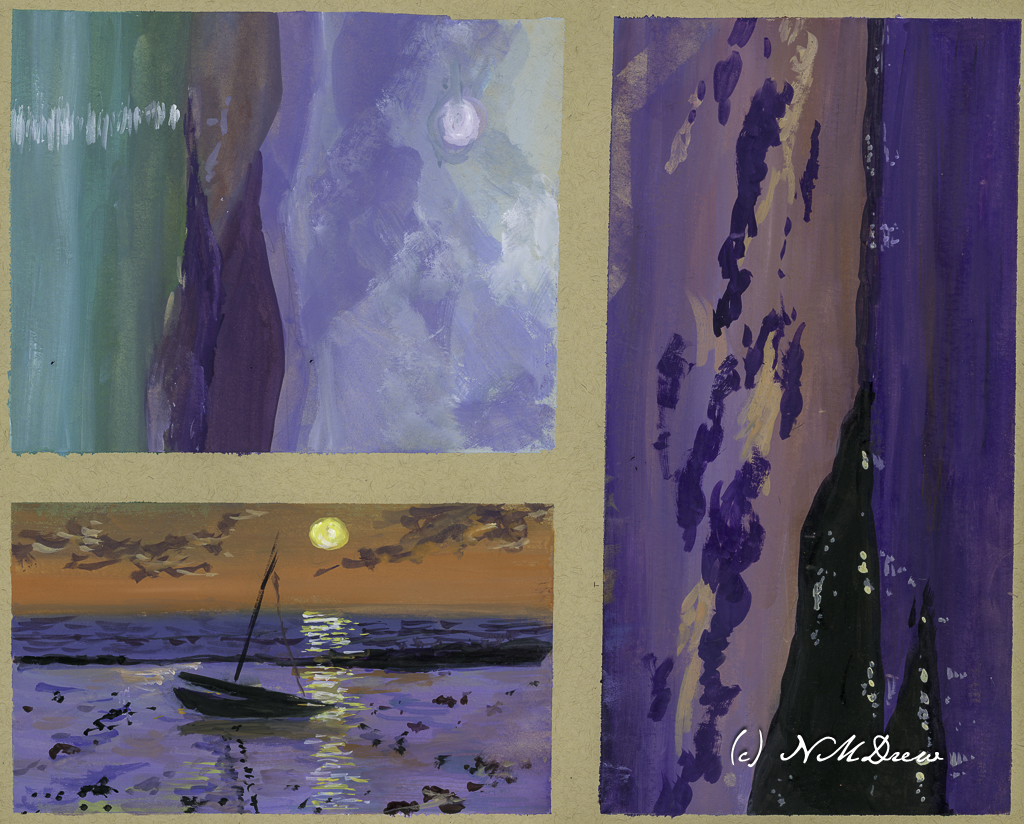
I divided up a sheet of tan paper which measures 11×14 inches. I used a lightly sticky artist’s tape to make up the different areas to paint. The first I painted is the large rectangular area on the right, and then on the left I did the next largest rectangle, and finally the one in the lower left corner. This image is directly from the scanner, so if you look carefully, you can see my mistakes which I corrected using Photoshop. The one in the lower left has 2 masts in the reflections – that is because I misplaced my mast and had to fix it for the final image.

Cheating? Well, if I were printing these critters, I would fix them, so for purposes here, I don’t think so. Also, these are all studies and the point is not accuracy so much as atmosphere – night, whether after sunset, before sunset, and on a full moon night.
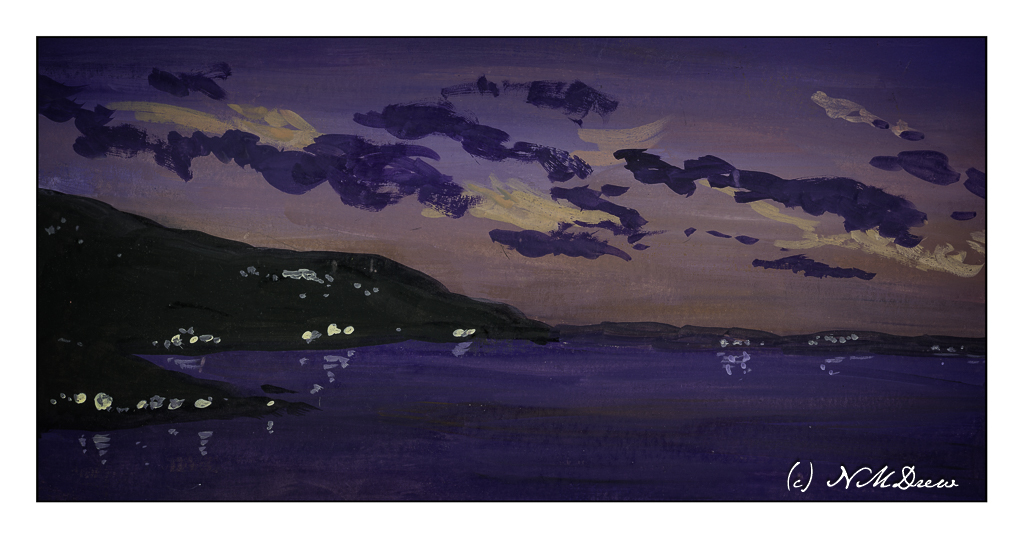
In the above painting I wanted here was a sense of dusk, when the sun is down and darkness is coming on. I worked with the sky, making it brighter than the water because with the earth’s curvature, the sky will still be bright. Lights coming on, too, add to the atmosphere, some warmer than others. And reflections, too, on the rather calm water.
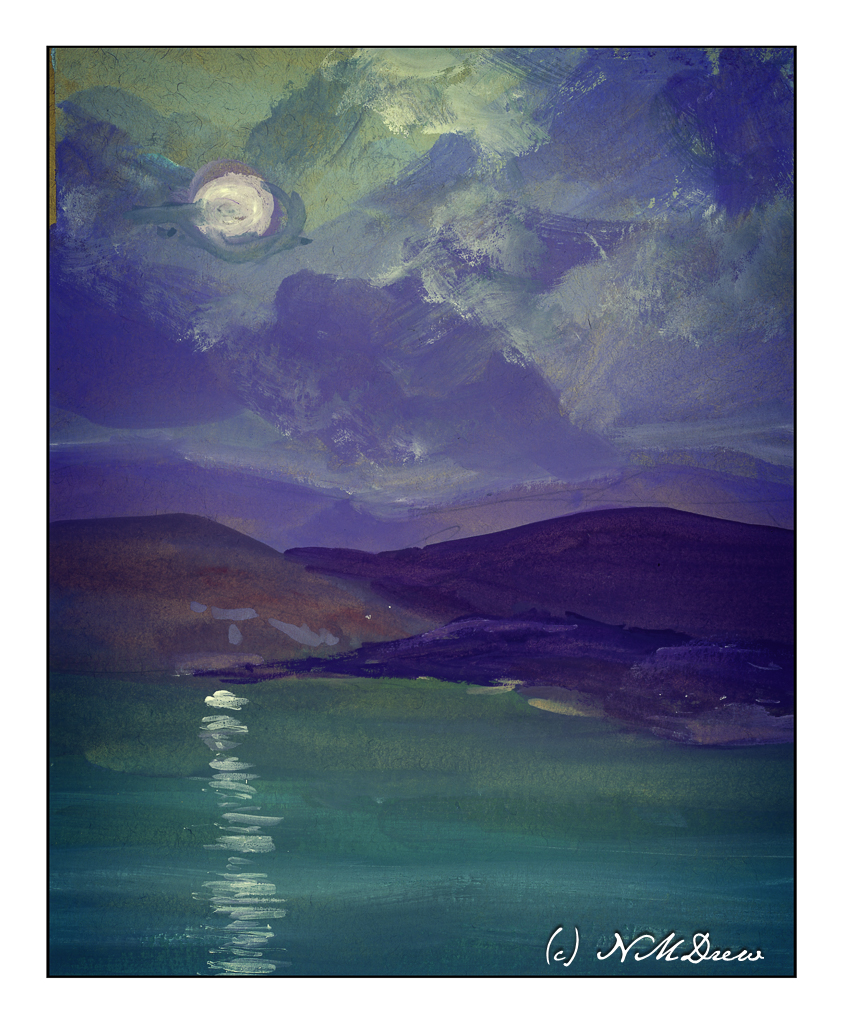
This one I played with in post because all of a sudden, in one foray of this or that setting, the light of the moon suddenly seemed to light up the surrounding clouds! I really liked it. Now, as far as the moon’s reflection on the sea – should it be more narrow closer to shore, and wider toward the bottom of the page, suggesting that is where the viewer is? The same applies to the painting below.
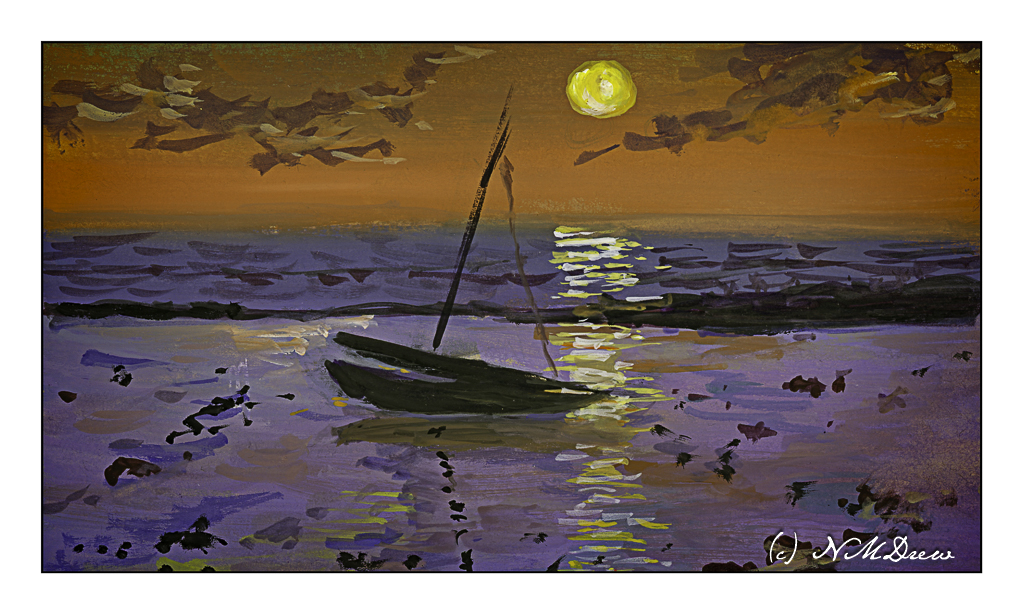
Once more, dusk. The sun is still out, but it is becoming increasingly dark. The sun’s reflection on the sea may need to be more narrow toward the horizon – again, something I need to check. What I wanted to do here was to get a sense of a boat resting on shallow water because the tide has gone out. The water is acting as a mirror and a bit of glass for the light above and the sand below.

Altogether, I had so much fun doing these studies! I want to carry them into watercolor, which I think could be extremely challenging, as well as into acrylic and oils. I also think that, much as I like the tan paper, it is very absorbent and perhaps I need to use a layer of acrylic paint or casein as a bottom layer for the paints. That is something to try later on.

As I post this, I have been awake about an hour. Rather funny to post a bunch of nocturnes as I watch the sunrise.

Now, back to my coffee!
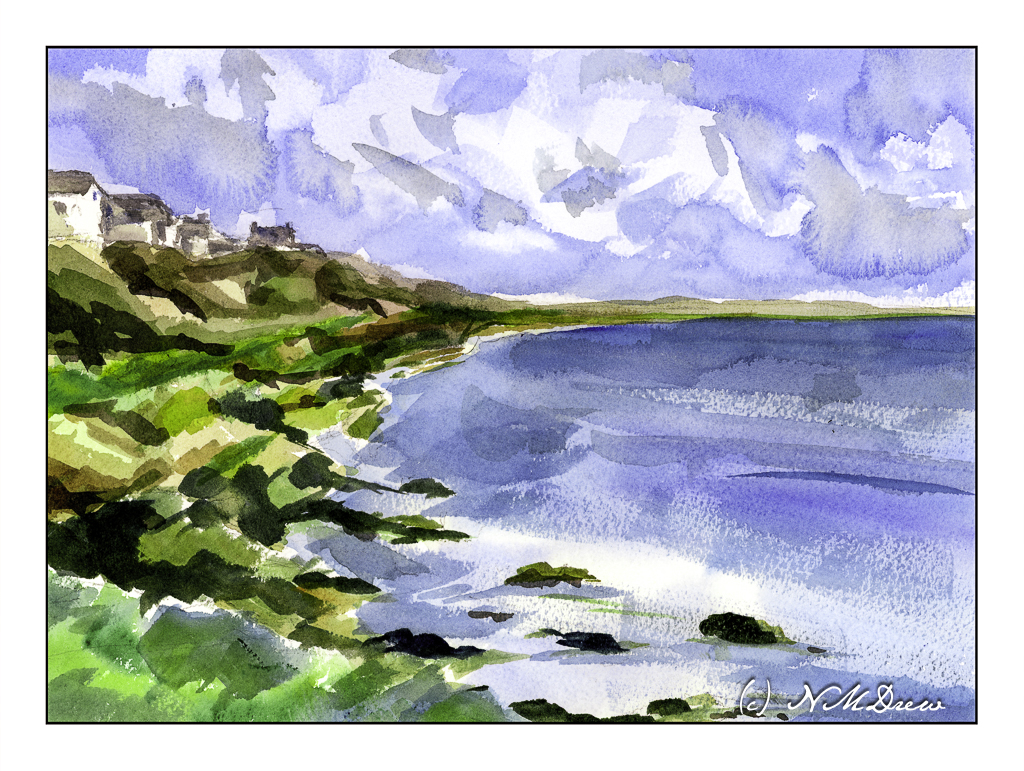
Cove

What can I say except this was one hell of a challenge! I wanted simplicity in the form of abstraction combined with atmospheric perspective. Well, the day is crisp and bright, a bit windy, and the light is harsh. Somewhere in there lays a bit of compromise.

The largest areas of the painting -sky, water – were laid in with very wet washes and allowed to dry.

The clouds were lifted out later and more blue, wet paint applied over the initial light wash. Shadows and shapes were created during this step.

The sea was a light wash with simple areas of white left behind in the foreground. Somehow the rest of it sort of happened using a large, flat brush. I find using flats really helps push the abstraction. The same can be said with the shoreline, using color to indicate plants, rocks, cliffs. The most “planned” part of the coastline were the houses and roofs. Dry brush with darker blues were applied with a wide 1″ brush to give the sea some dimension.

I had no idea how this painting would turn out. I like it for the simple fact I did achieve my desires for a simple, abstract painting which still has recognizable subject matter.

Wouldn’t it be great if we all liked everything we did? Maybe not – then we would probably never progress!

All on a Saturday Afternoon

There are times when it seems all the piddly little things pile up and I spend my days doing them, like a list of a million bits of this and that. It gets depressing. It is important to do more than just tasks and chores and the to-do list. Today, after spending too much time on oil painting and working on getting myself organized, I just pulled out the gouache and some paper and played.

First around, trying a paper that I haven’t tried before. This is an inexpensive cotton paper with a decent texture for watercolors, but too much texture for gouache. I had forgotten that gouache is much better on smooth paper. I chose flowers as it is summer time.

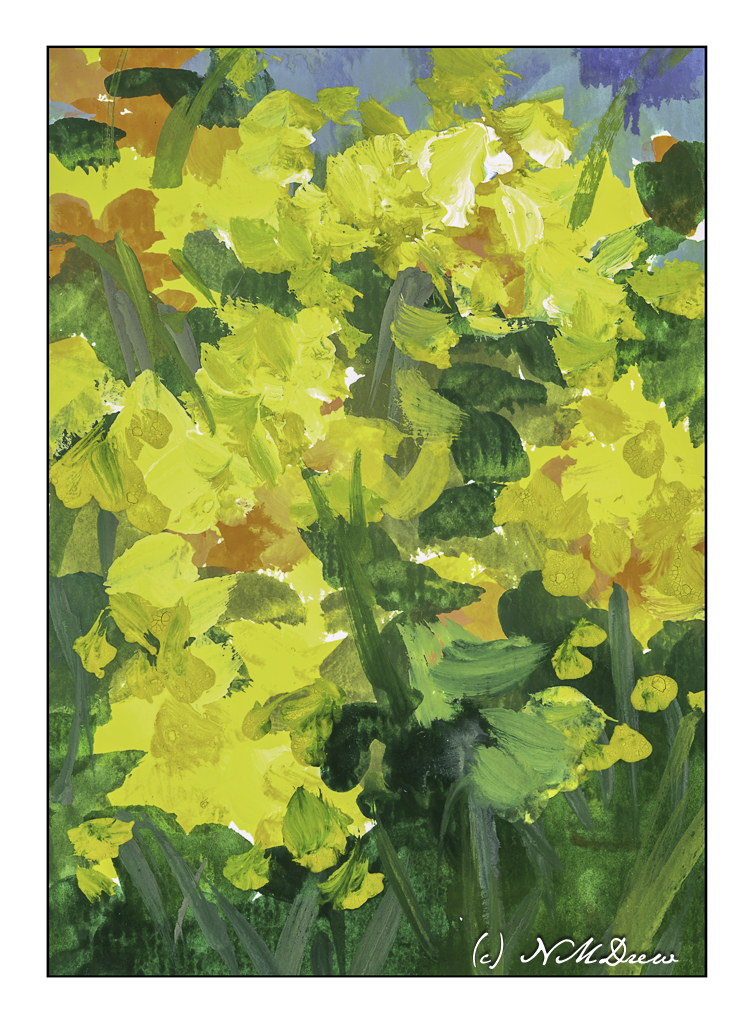
I have yellow cosmos – a bit past their prime – in the front yard. A tall, jolly mess!

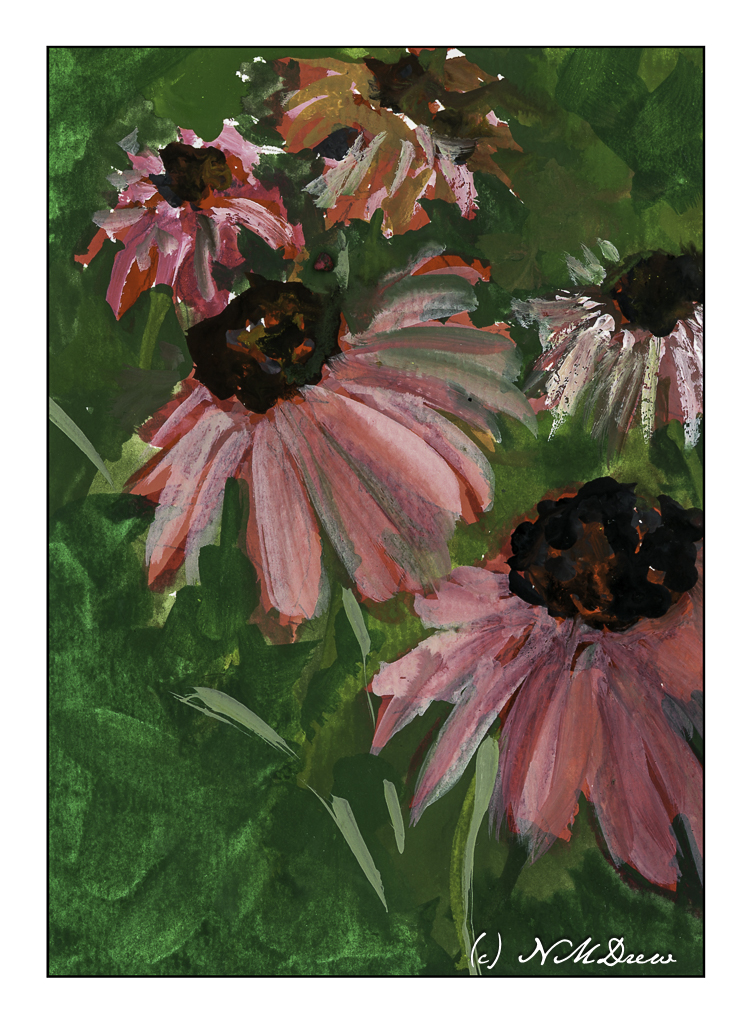
Here, echinacea. I often grow it, but this year did not. I like the way the petals fall back and the center is bright orange and black with bits of yellow. Not a good painting – too dark and messy.

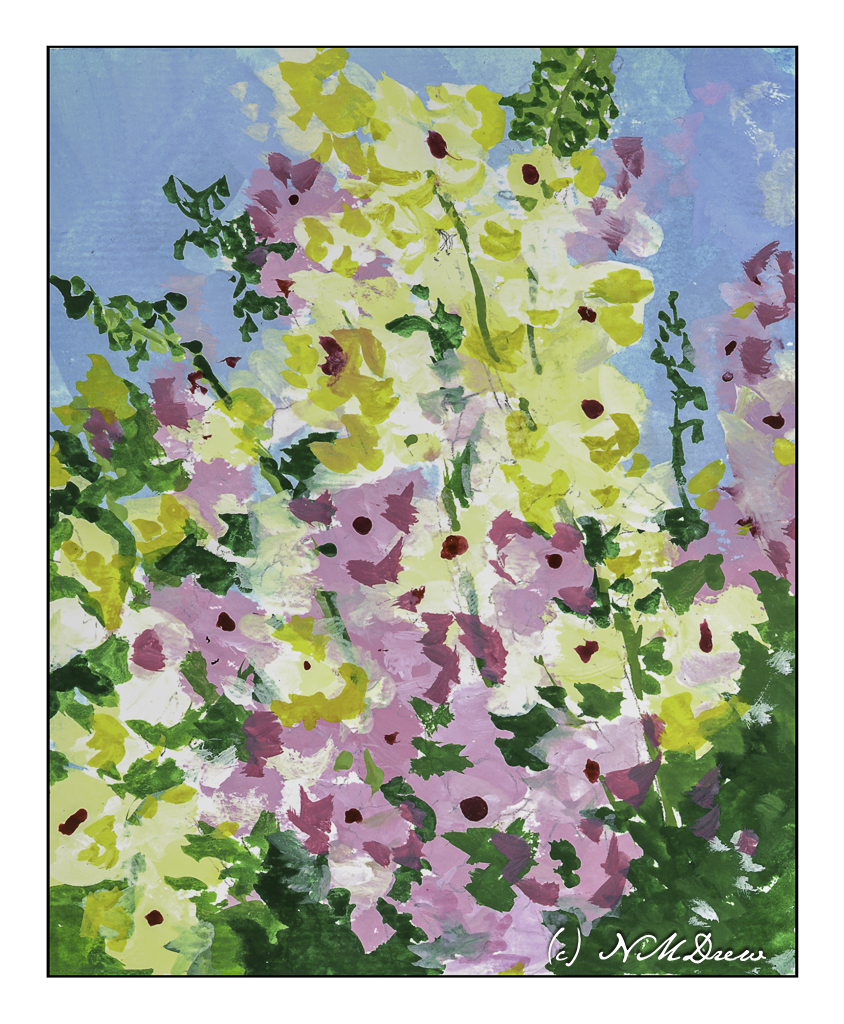
Mullein is a wild plant but it has been hybridized to grow in colors such as pale yellow, lavender-pink, and whitish. It is normally a yellow flowering plant with dark centers. I have thought of growing them but so far haven’t. Maybe next summer.

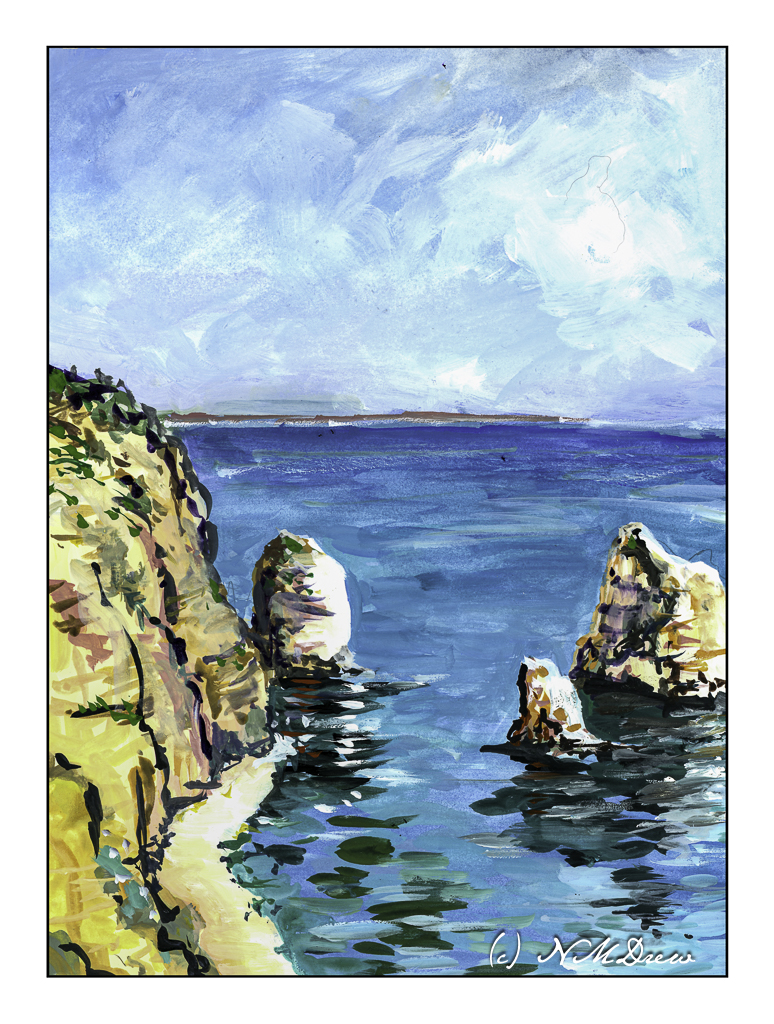
And then, I moved on to a smoother paper. Here, a coastal scene with rocks and sea and clouds and a distant shoreline. Here in California the coastal fog comes and goes, making for some chilly summer days!

I like this one the best, in part because it was easier to paint on smooth paper. Gouache is such a fun medium as it is easy to use, never looks real but does, and so on and so forth.

Altogether, a nice way to spend an afternoon outdoors ignoring the list of petty crap that seems to be dominating my life these days . . . .

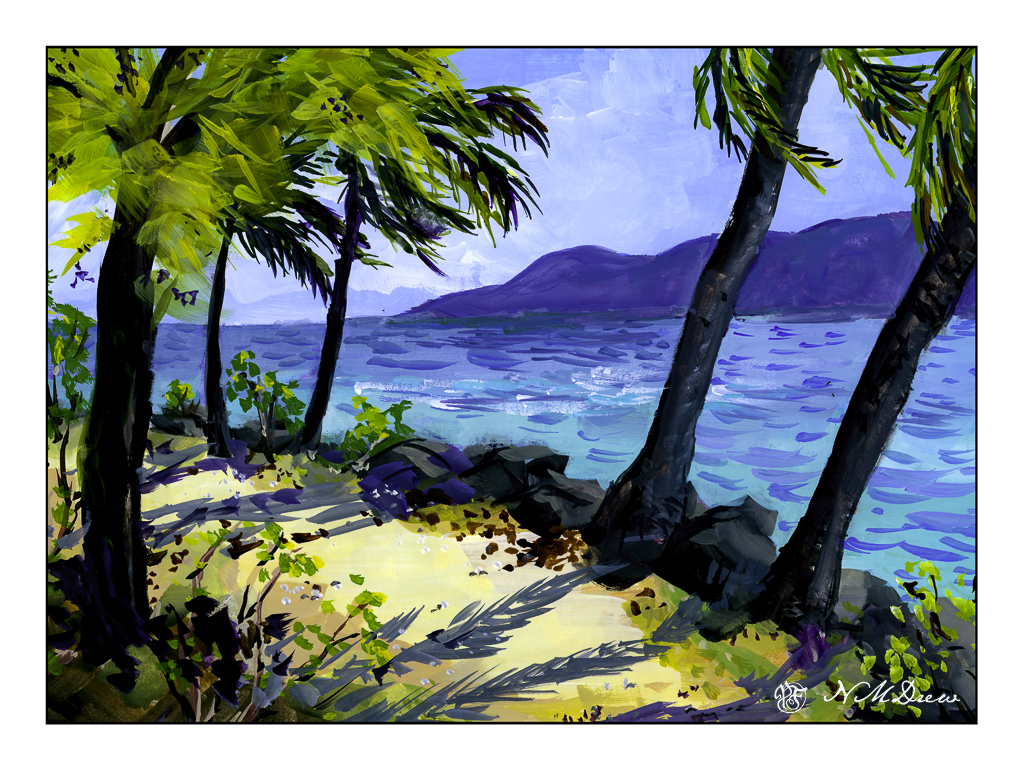
A Bit of Paradise

I’ve lived on both coasts of the US as well as been to a few other places. The color of water never ceases to interest me -blue, turquoise, grey, green, fluorescent!

Along with the waters, the intensity of colors is also dependent on where you are and the weather. Here in California, as in other dry climes, when the sun is out and the moisture in the air is very low, the light has its own intensity. This light changes with the seasons and the tilt of the earth. Landscapes without water problems are more abundantly green and often may seem softer simply as the water in the air creates an invisible filter.

Like many people who have enjoyed harsh winters, tropical scenes with palm trees seem like paradise! And I will leave that thought – paradise – up to your imagination!

Gouache, 9×12 Strathmore Vision 140# CP paper.

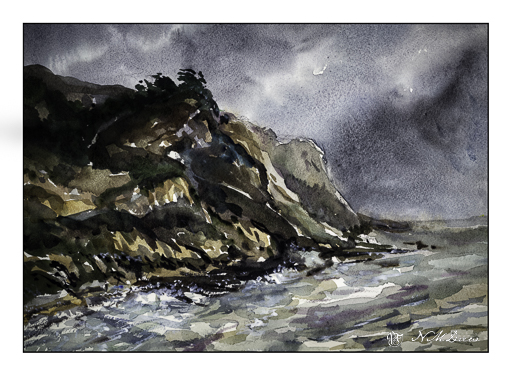
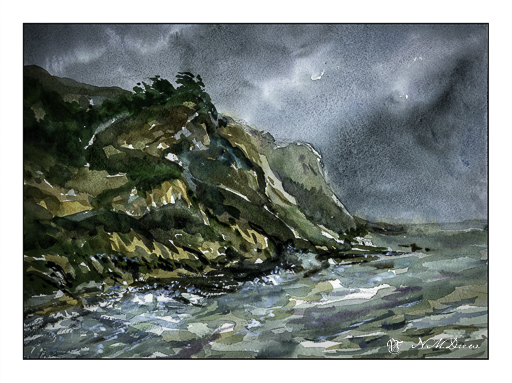
Impressions of San Gregorio State Beach

Scanning – sometimes I love it, sometimes I hate it. It is usually better than trying to take a photo of a painting though . . . .

I used Epson V600 Epson Scan on one of these; VueScan on the other.

Above was done using VueScan. It captures the colors better but is a bit dark. Below, the greens of the trees and bushes are better captured.

More of the colors show up using Epson Scan, but they are a little too intense.

Sigh.

The fact is that scanning and post-production can really influence how a painting looks. This goes whether the painting is scanned and interpreted using software, or photographed, and then interpreted and adjusted using software. If you look up a painting on the internet and then look at all the images of it, you know what I mean – colors can vary dramatically.

All this techno speak aside, I like them both for different reasons. Both do capture the moodiness of the original watercolor, which I like. Perhaps that is the most important thing – the mood is caught?

Watercolor, Arches 140# CP, 10×14.