Painting, Waiting

Watercolor is wet. It needs to dry. In a studio setting or classroom, a lot of people use hair dryers. You see it on videos all the time – brrrrrrr! But, outdoors, unless you have an outlet and a long extension cord, and want to annoy yourself, you just sit and wait for air and evaporation to get to work.
In Saguaro Land

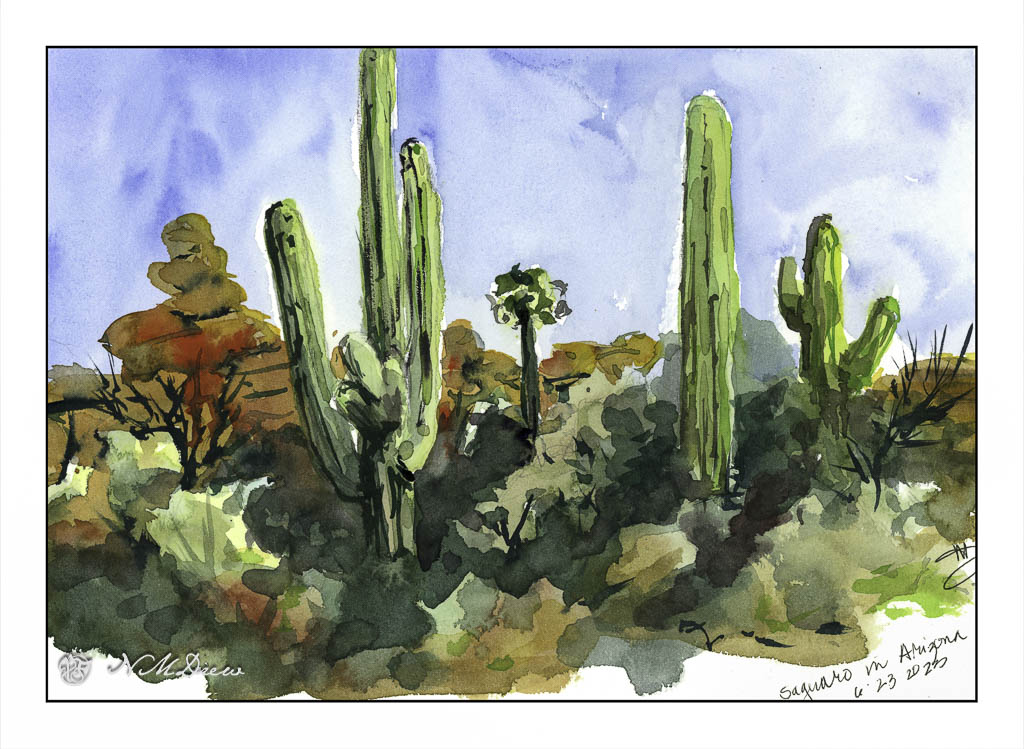
I opened up my big sketchbook – each page is about 9×12 inches – and it was a spread across the two sheets. Above, a more traditionally done sketchy watercolor. I did a basic pencil drawing and then applied color.

Last month we drove from north of Los Angeles out to Tucson for our Global Entry interviews. En route we drove through portions of the southwest I have not yet seen, driving east from San Diego along Hwy 8, at times just north of the Mexican border. The land was sparse and beautiful in a fierce way, and before we reached Tucson we drove through the Sonoran Desert, home of the mighty saguaro cactus.

What can I say? They are tall and strange, reaching upwards to 40 feet, with arms and branches against mountains and skies filled with drama. It was beautiful. As we were on a long drive – 8.5 hours – we didn’t stop. I took a bunch of lousy pictures out of the window, and these are the basis for the above painting. An impression, not a reality, although you know these are saguaro if you have ever seen one.

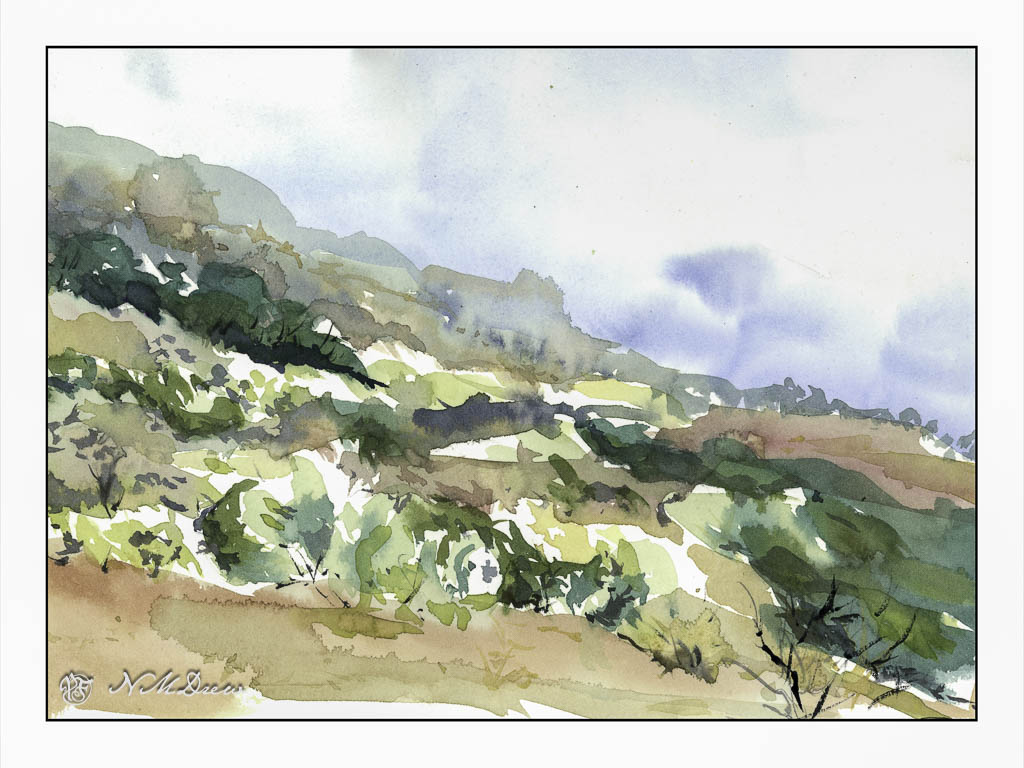
This painting had to be painted in stages, so my thoughts were what to do while waiting? I decided to do some direct watercolor and use a photo I had taken of the local landscape.
Below Mount Clef in Wildwood Park

Direct watercolor has no lines, and I have found it a wonderfully fresh way to see the world and to paint. It is also a challenge not to make mud, not to get carried away, and to think strategically. For me, the real challenges are negative painting and values. Because I am making sketches in a sketchbook and not something “serious” on a sheet of expensive paper, the direct watercolor and the more traditional studies are gaining traction.

I am learning a thing or two in my old age, and there is something to be said for that. Today’s painting was very satisfying. I spent it outside at the picnic table, a few supplies, a dog at my feet, and a kicked-back-who-gives-a-damn approach. And, I don’t think either of these paintings is half bad.
Escape!

I would say that for the most of the last 6 weeks the weather has been crap. In the 90s-100s F is way too hot. We have low humidity here, so the heat doesn’t drain you as it does when it is high, but day after day, week after week, of heat, is not fun. Throw some smoke and foul air in there, and welcome to what I think is becoming the new normal. California is burning. Colorado is burning. I guess we are not raking the forests enough . . .

Yesterday, though, was the first cool day in a long time. It was overcast and rather dreary because the sky is just a single shade of grey instead of the single shade of blue. When the overcast burns off, there are clouds to be seen, and they are such a delight! I headed out to a local open space area, Wildwood, taking my Instax Wide with me. I used it to shoot a select few images. I used my phone, too, to send some pictures off to friends. Everything is faded and dried up, but many plants adapted to the area sport bright colors though they are also fading for the winter.

There are a lot of fire roads running through Wildwood with trails leading off into more rugged terrain. I seldom venture into those areas unless with someone else. Safety first!

The prickly pear cacti (cactuses?) are laden with ripe fruit – the pears – and they are quite delicious to eat! Using leather gloves, twist the red pear off the paddle or use a knife. Pack it into a bag of some sort to take home. When you get home, turn on your flame thrower to burn off all the spikes. Take your knife and slice – tasty! Some local markets carry the pears, as well as the paddles. The paddles are also tasty and edible, and once their spikes are removed, slice them up and then cook them. Cooked prickly pear paddles are called napales.

Photographing these critters can be a challenge as there are other cactus around, and none are pleasant to fall into.

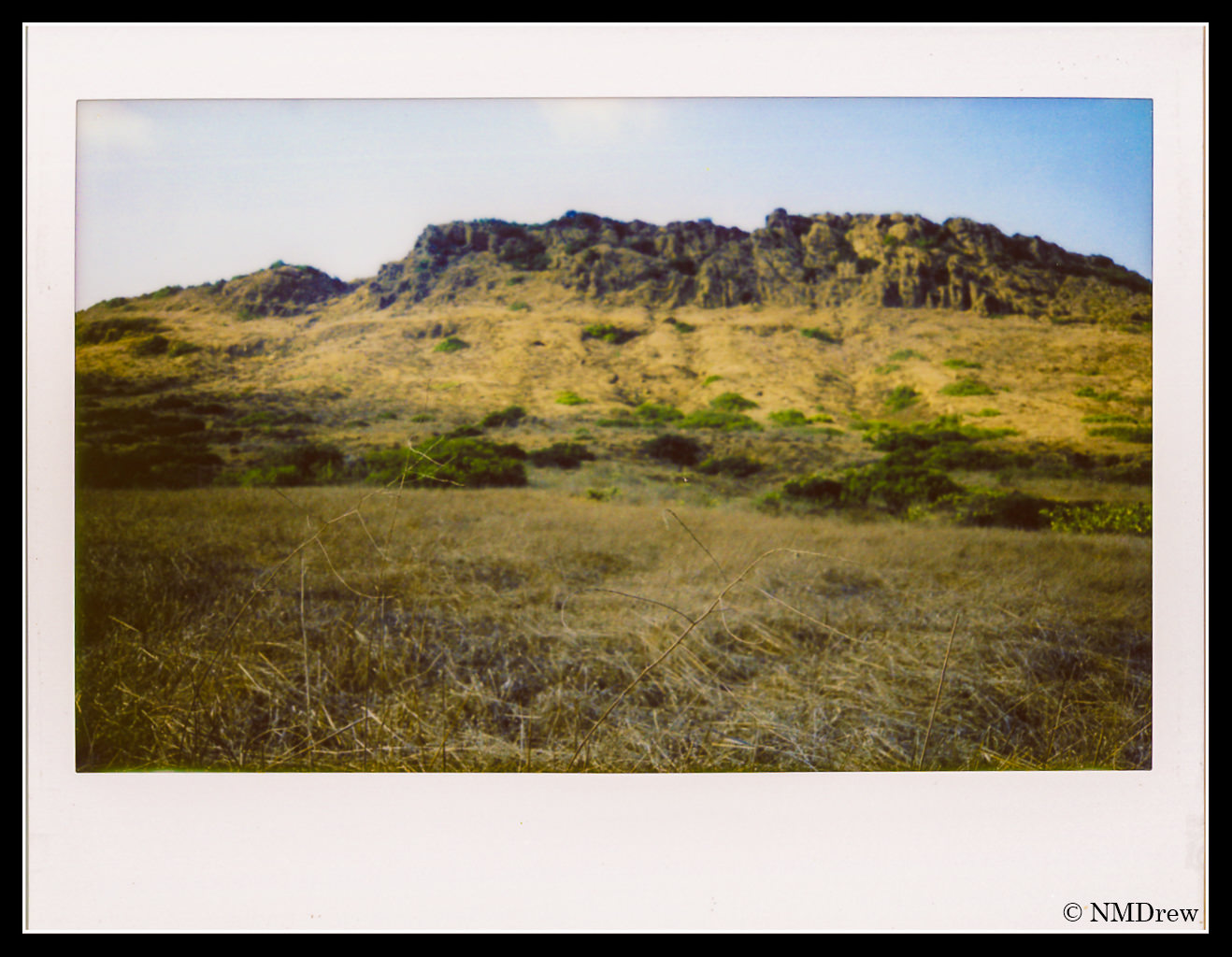
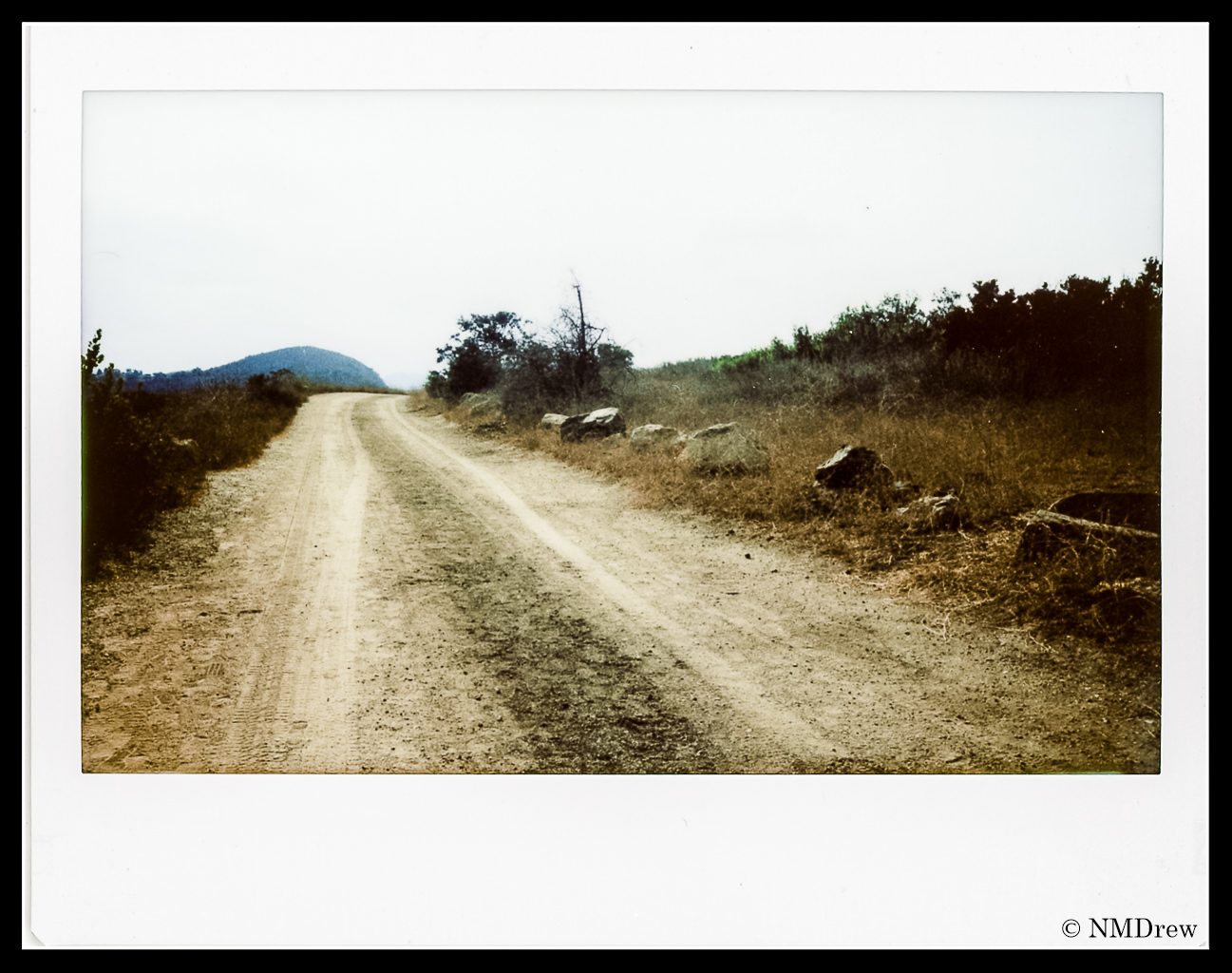
The road curves around a hill and this is the view you get. Mount Clef is part of a ridge that forms the northern part of my city, separating the Conejo Valley from the Santa Rosa Valley.

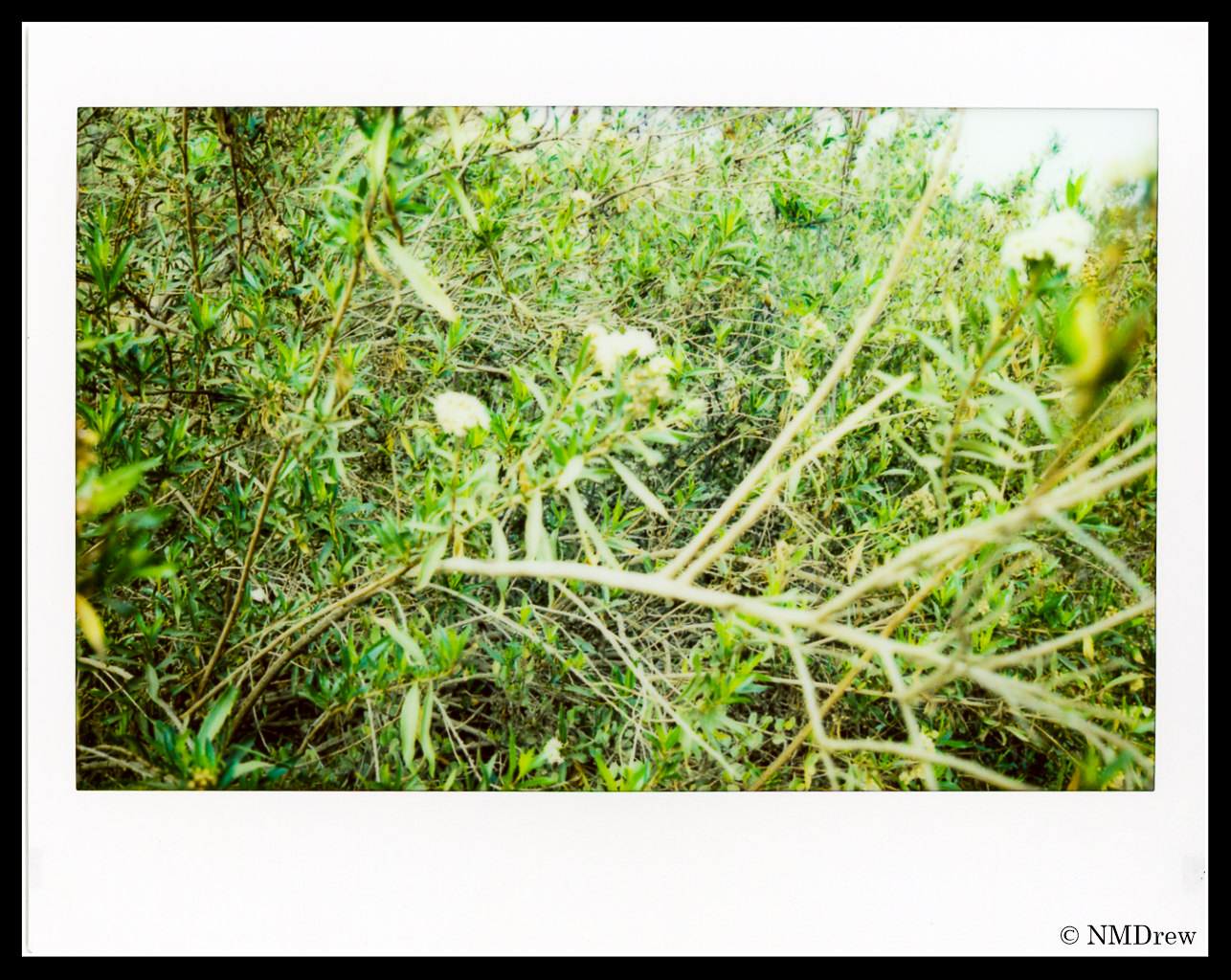
This is an name-unknown shrub which borders trails and roads through Wildwood.

I hiked about another mile and then turned around. I always like to see where I have been and look at the same things from a different viewpoint.

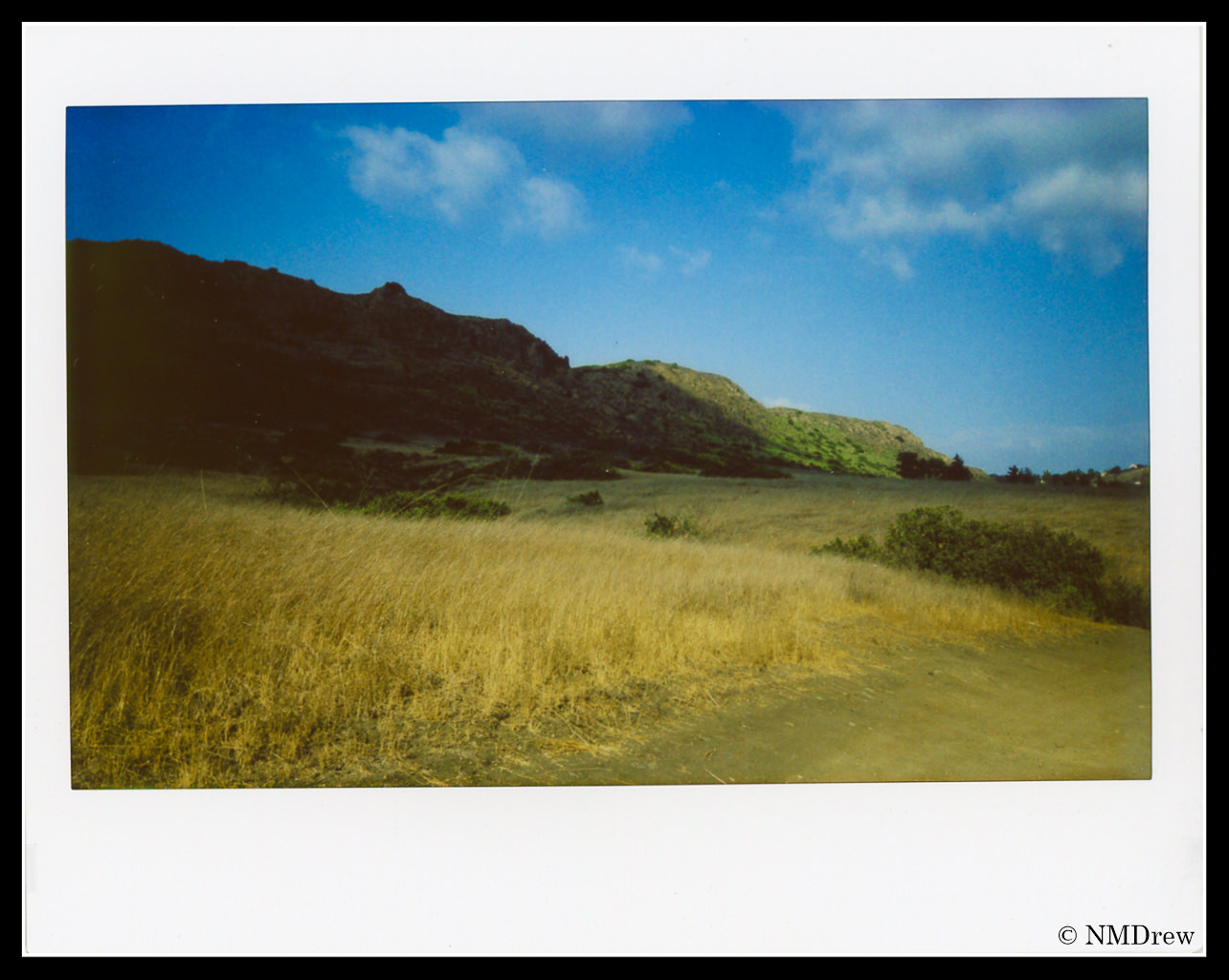
Here, the Mount Clef ridge moving east.

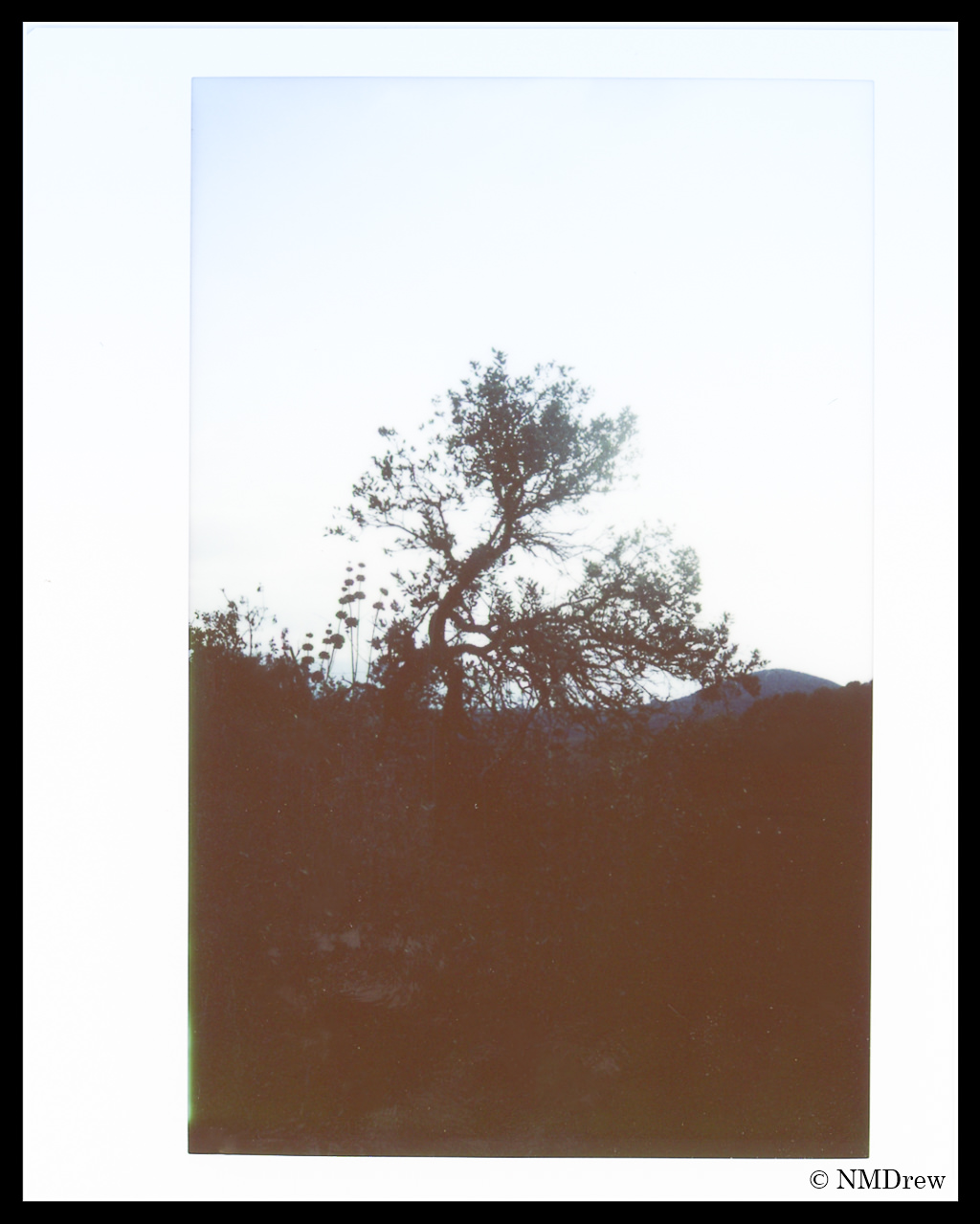
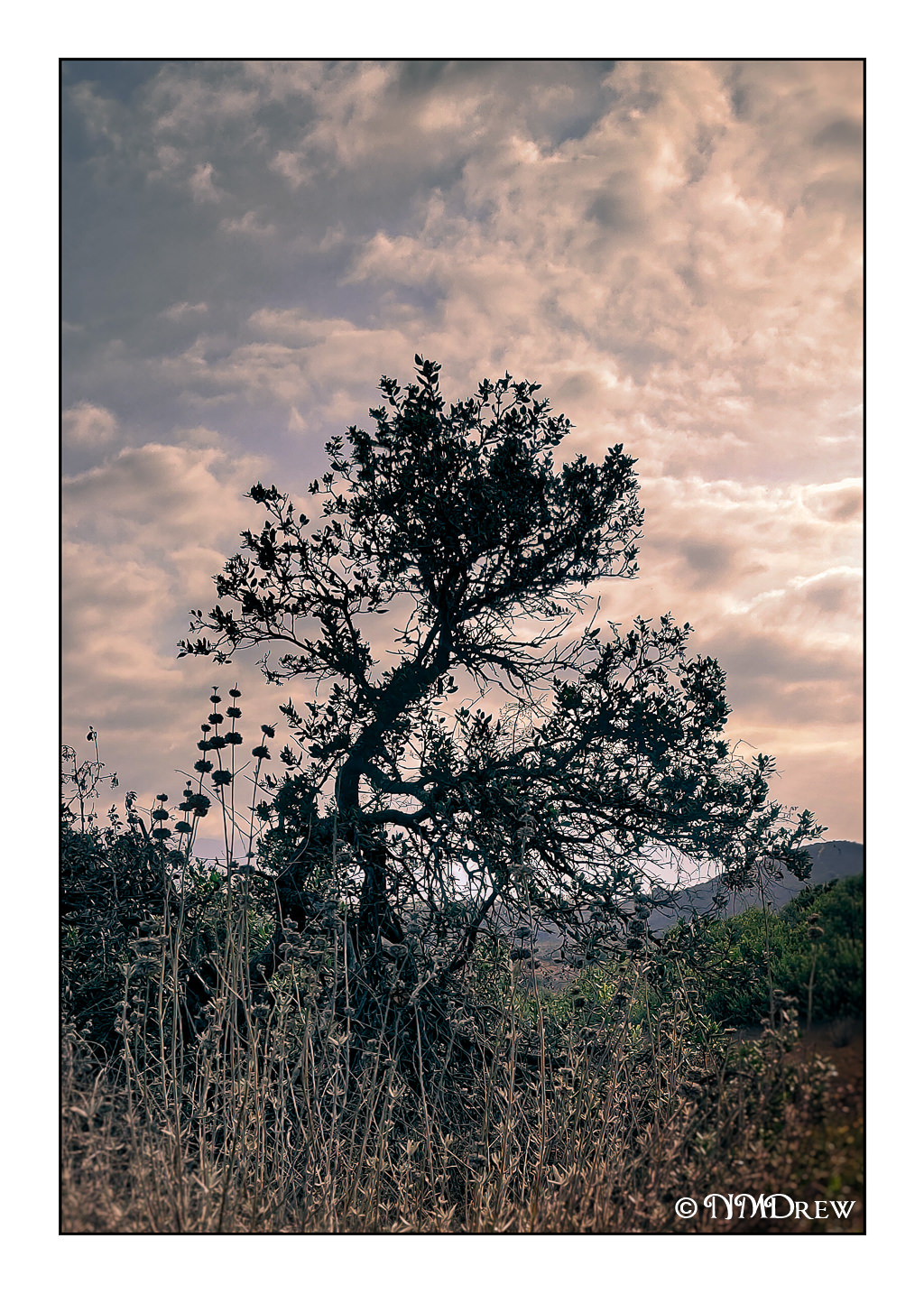
Back on my road, looking south toward the Santa Monica mountains. The day is later, the sun lower, backlighting mountains and trees

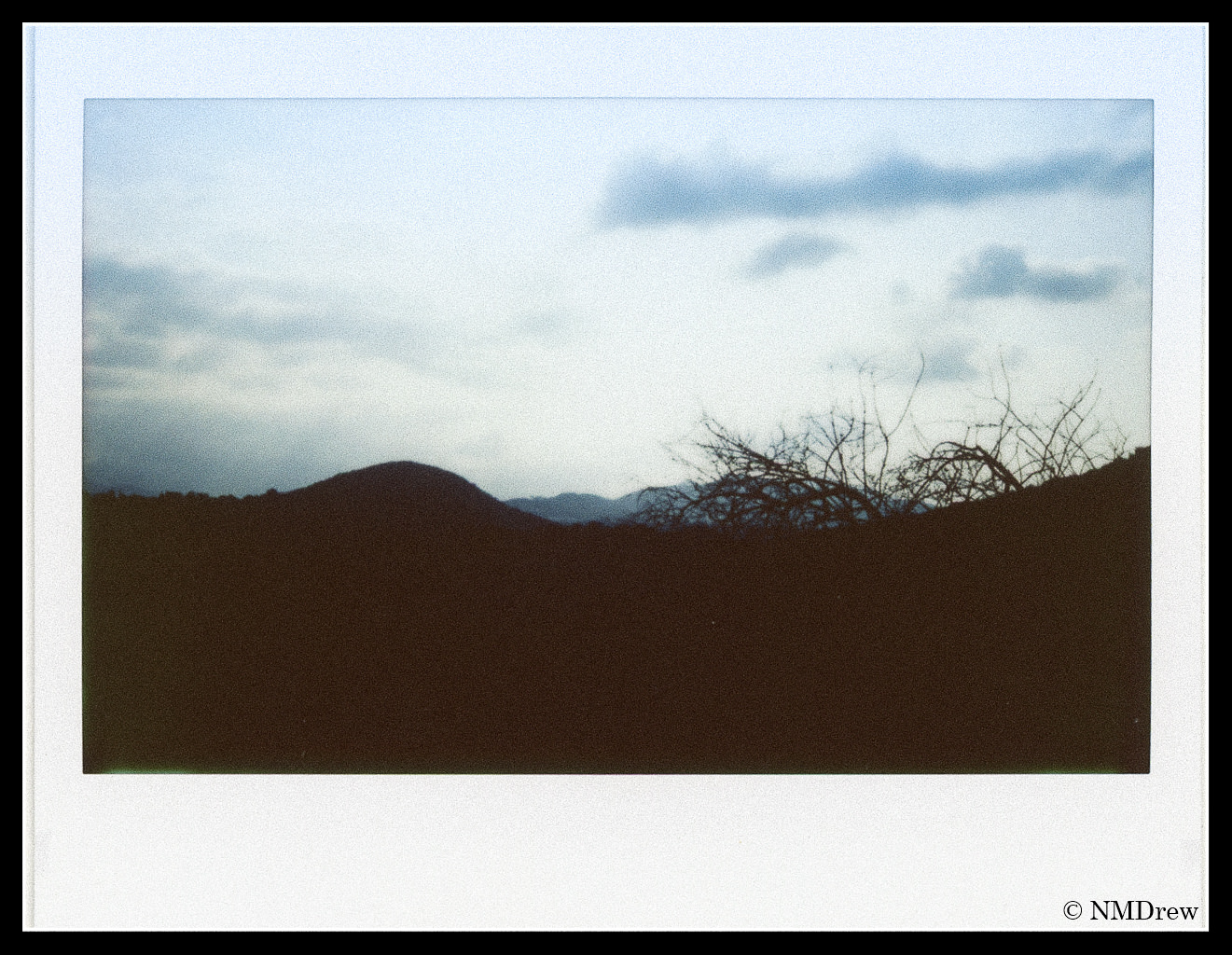
The Instax Wide doesn’t perform well at times, but this little tree’s silhouette is so expressive – the twists of the branches against the sky always catch me when I walk past. Below you can see what the Instax missed and the the phone camera caught.

And home I went.

A View of Mount Clef

Another photography film panorama, this time with only two images.  Mount Clef is not really high – probably only a few hundred feet off the valley floor.  Where I live, it is a series of valleys, located within the first mountain range in from the Pacific.  Nonetheless, the hike up Mount Clef provides views around, out to sea, and into the deeper valley – the Santa Rosa Valley – behind the ridge.  Right now, it’s rattlesnake season, so one treads carefully, on the trails, and looking around as you walk.  Dogs are tightly on leash, if you have any brains.

14 / 365 Pond at the Corner of the Path

14-365-pond-at-the-corner-of-the-path

The rains have begun to turn our dreary California landscape into a bright green.  This little puddle is now a pond.

While a lot of California is considered to be “out of the drought”, where I live, we are still considered to be in drought conditions.  We have more storms on the way, which will help with our drought, but the aquifers are still below normal levels.  Unless California considers continuing stringent water control and water storage problems, these rains will mean nothing if we have little rain in the years to come.