Mellow Yellows

Today I did what I had hoped to do yesterday, but I painted a temple instead.  So, this afternoon, I sat down with my studio palette and decided to take a good look at the yellows I have, use them individually, as well as mix them.  The colors include aureolin, new gamboge, raw sienna, cadmium yellow, hansa yellow, quinacridone gold, raw sienna, and “mystery yellow,” named thus because I didn’t label it!

Above are my first paintings, mixing colors and not happy with the results.  So, I did pure color studies of the lemons to see what I could get.
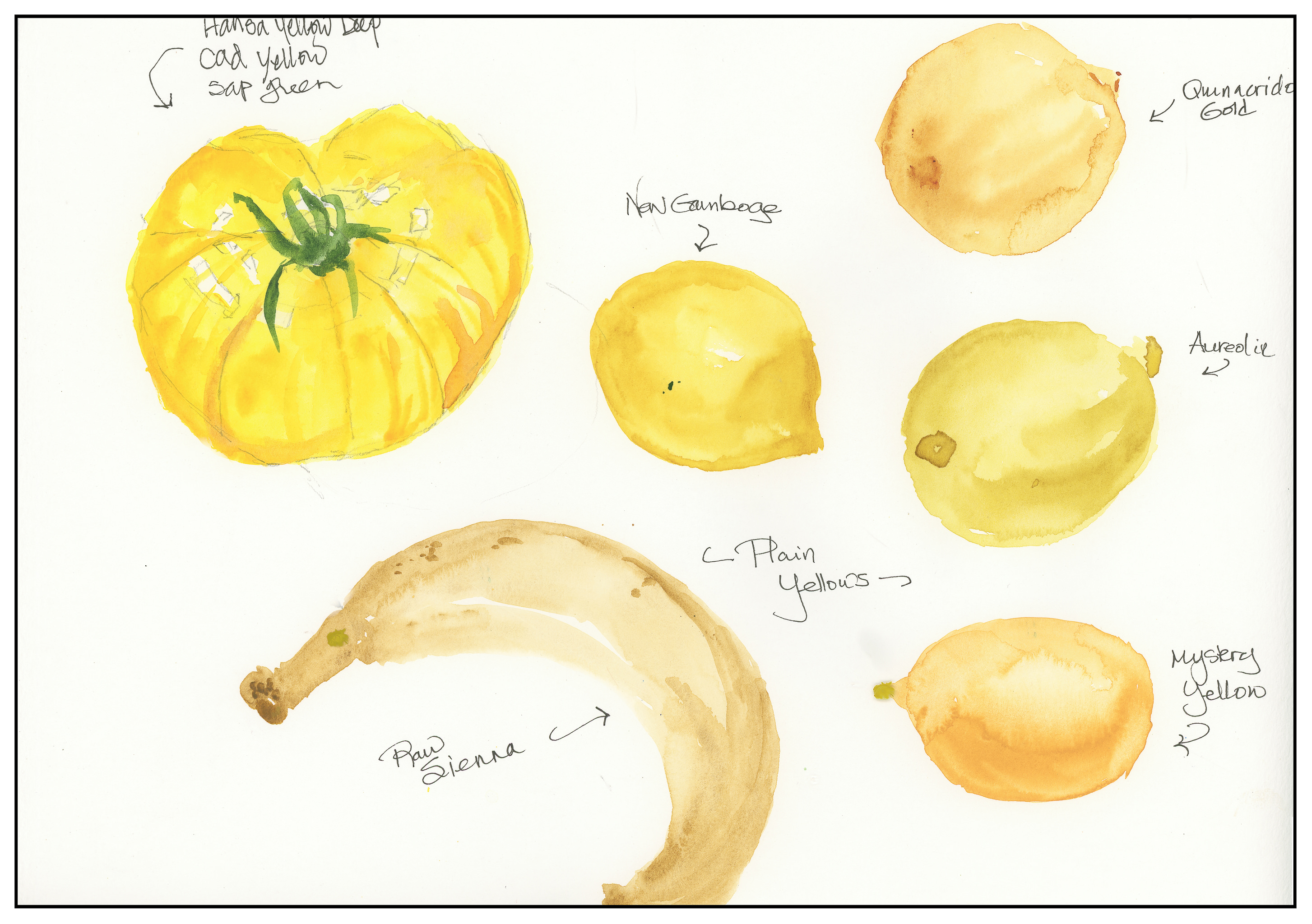
Above, pure colors in varying densities to see what they could do.  It was quite interesting!
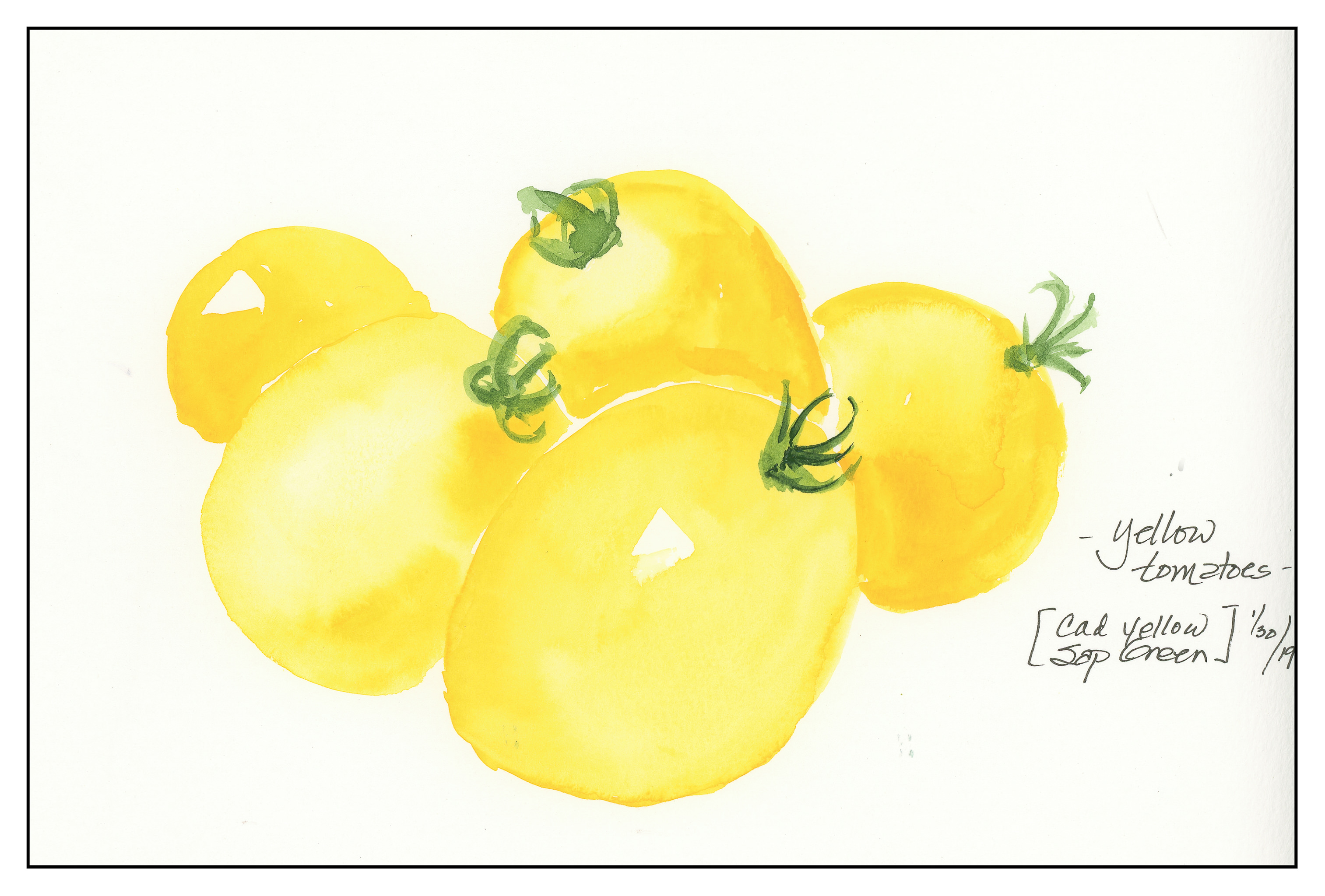
In the studies using only one yellow, I varied the density of the paint from very watery to rather heavy.  I did the same in the above picture with sap green.
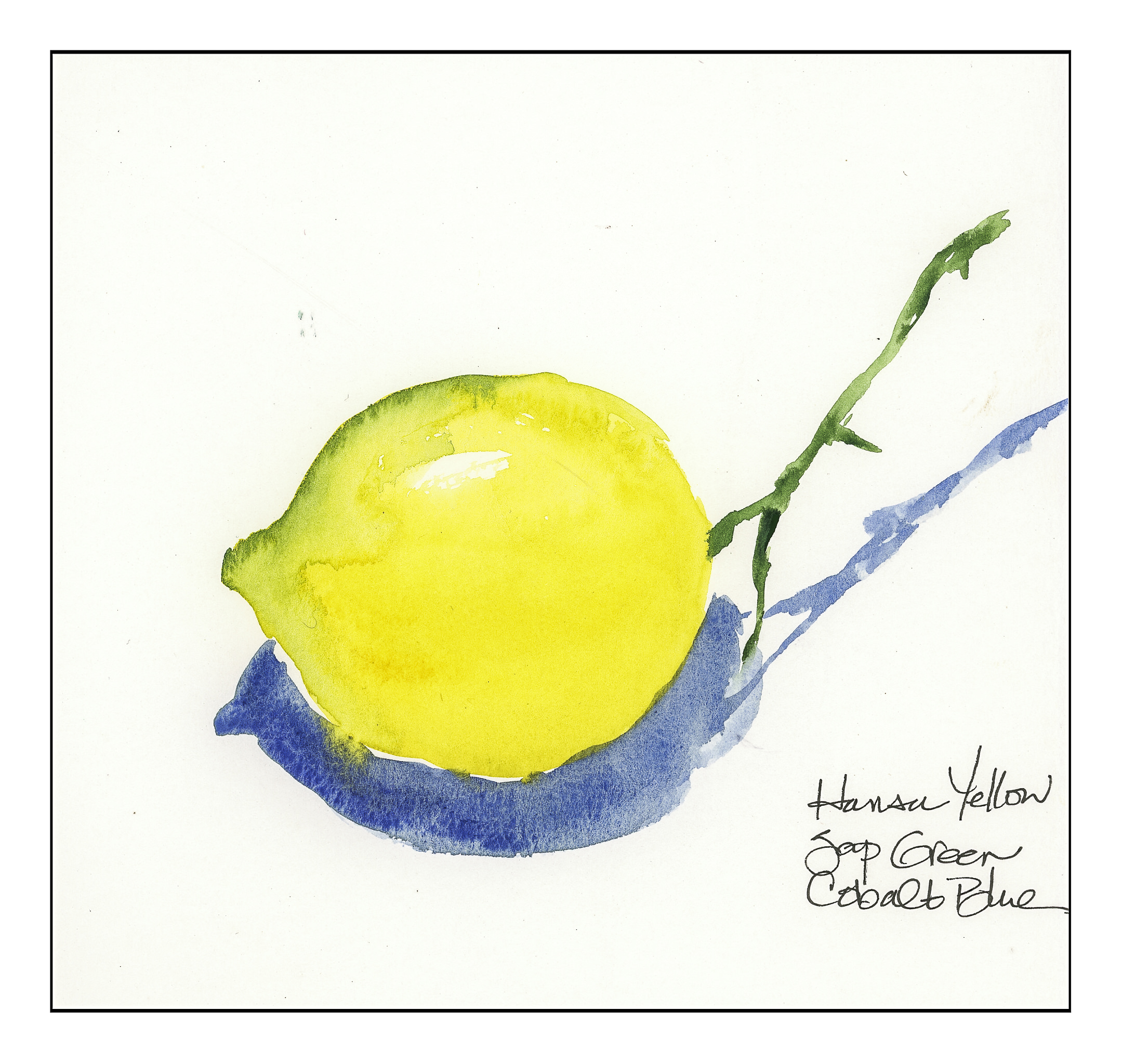
In this one, I used pure hansa yellow, sap green blended into the yellow, and cobalt blue for the shadows, with some bleed from the lemon.  The stem was pure sap green.
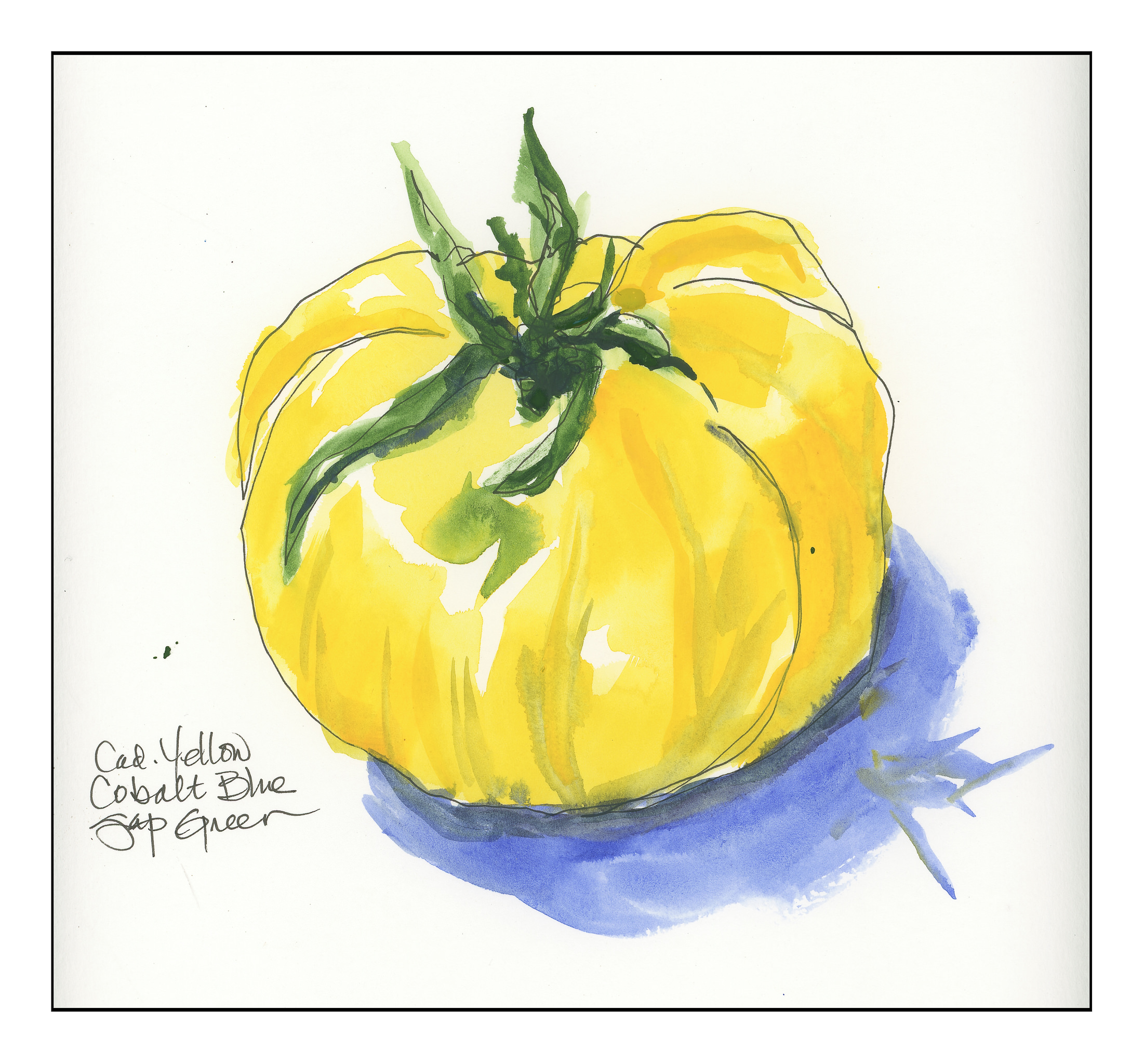
Heirloom tomatoes are always interesting – they are rather like aliens in the produce department!  Again, limited palette with varying uses of the colors individually and mixed.

Another alien, but this time I created a swatch of the colors as I did the painting.

If you want to scroll through the paintings, click on an image above.  I like doing that because I see things in a sequence.

Anyway, I really got a better sense of the yellows and how I might use them.  Cadmium yellow, hansa yellow, raw umber and raw sienna are my most-used yellows, but can see where others may be valuable, such as in shadows and so on.  Hansa yellow is a cold yellow, in my opinion, and the warmth of the cadmium yellow cannot be beat.  For rotten bananas, raw sienna isn’t too bad!


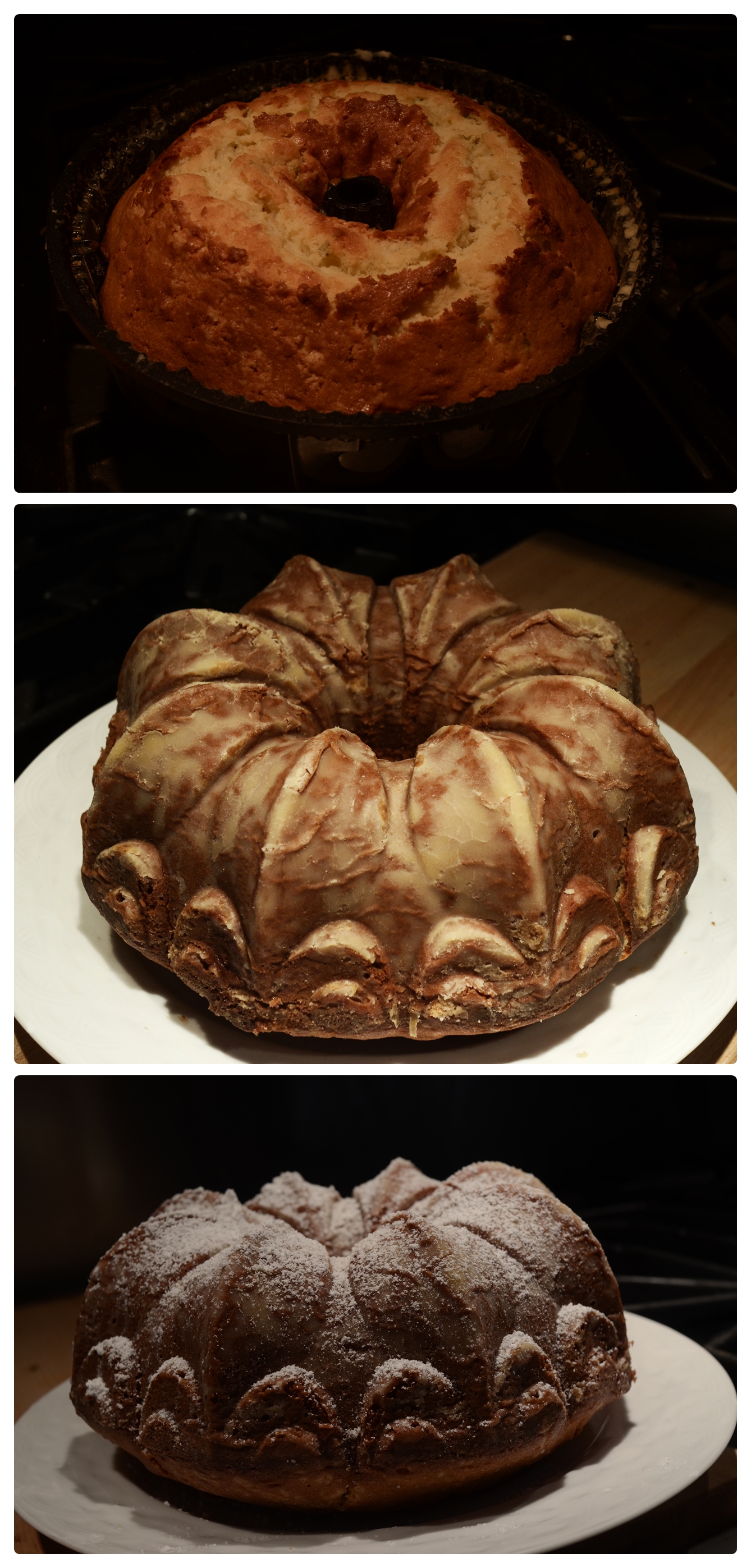
Lemon Verbena Cake

I have a beautiful lemon verbena bush in a pot on the patio, and each time it blooms I think I need to do something with it.  For some reason, lemon verbena pound cake struck a cord, and over the past several days I have been looking for something that sounds good.  Nothing really did, so with a few web recipes, and some cook books, I made up a recipe.  I dragged out the big grey monster (a.k.a. the Kitchenaid Mixer), bowls, pans, and assembled myself a cake with fresh lemons from the neighbor’s tree, lemon verbena from my bush, and a bit of elbow grease.

Lemon Verbena Cake

2 sticks (l c.) sweet butter
2 c. white sugar
4 eggs
2-4 T. fresh lemon verbena leaves, rinsed and chopped fine
Lemon zest from 1 or 2 lemons
Juice of 1-2 lemons, placed in measuring cup
Half-and-half to make one cup, added to measuring cup with lemon juice
1/2 t. salt
1 t. baking powder
1 t. baking soda
3 c. King Arthur’s unbleached white flour

Method

Preheat oven to 325 F for convection oven, or 350 F for regular oven.  Place rack in middle of oven.

With about a tablespoon of soft butter and some waxed paper, thoroughly grease a 10-inch bundt pan.  Make sure to get every crevasse and nook filled up.  Dust with a generous amount of flour, and tap out remainder.  Set aside.  (I took my butter and pan outdoors to hasten the process – hot sun, melty butter!)

In mixing bowl, beat together butter and sugar until light and creamy.  Add eggs, one at a time, beating in thoroughly.  Add chopped lemon verbena leaves and lemon zest, beat some more.

In another mixing bowl, sift together flour, salt, powder, and soda.  Alternately add the half-and-half with lemon juice (it will be curdled by now) and a third of the flour.  Liquid-flour-liquid-flour-liquid-flour.  Beat very thoroughly after each addition, scraping down the sides as necessary.  Be sure to really beat the batter a lot – the more the beating, the finer the crumb.

Bake for 60 to 75 minutes (1 hour to 1 1/4 hours).  Test by inserting toothpick into cake – if it comes out dry, cake is done.  Also, check to make sure that the cake is pulling away from the pan edge a bit.

Pray to the cake-baking gods!

Cool cake on rack 5 – 10 minutes.  With small knife, gently pry away cake edges from pan; tap on pan multiple times to loosen.    I banged on the bundt pan with a wooden spoon after I took the cake out from the oven, and used a filet knife around the center tube and around the edges of the cake.  After this, I placed a plate under the cake, tapped some more, and it came out very nicely.

My cake took about 1 1/4 hrs. to bake; I let it cool 15 minutes before inverting it onto a plate.  While the cake was still warm, and I wanted to flatten the bottom a bit, I pushed on the cake with a towel until I was happy.  Also, I think my generous buttering of the pan, along with a proper cake-god dance, did the trick.  I finally just dusted the cake with a bit of powdered sugar, through a sieve, because I do not care much for glazes.

Altogether, I am rather pleased with myself!

Lemon Shortbread Cookies

Where I live, people give me lemons.  Lots of them.  I use them in cooking, in my drinking water, and wherever else they might be needed!  Right now I have about 40 sitting around, so yesterday I put them to work.  Here is the result . . .

Lemon Shortbread Cookies
2 1/4 c. white flour
1/4 c. cornstarch
pinch of salt
1/2 c. sugar
2 sticks unsalted butter, softened
1 T. finely grated lemon zest

Preheat oven to 300 F for a glass pan and / or a convection oven, or 325 F for a metal pan, not using convection. Place rack for cookies in lower third of oven.

Pan size: 8×12 pan, or use a 9×13 pan, and don’t spread the dough all the way to the edge of the 9×13 pan’s short side.

Whisk together cornstarch and flour in a bowl. Set aside. In another bowl, beat together the softened butter and sugar until light and creamy. Add the flour-cornstarch mixture and beat in until crumbly. Knead by hand to mix the dough until it is smooth and pliable in the bowl, about two minutes.

Using the butter wrappers, or other fat, lightly grease cookie pan. Pat (I mash!) the cookie dough into the pan. Prick the cookie dough with a fork. If you are feeling creative, you can also use a cookie sheet and parchment paper, and shape the dough into circles. You can also use pie pans for circular cookies. Just be sure, no matter what you use to bake your cookies in, to prick the dough with a fork in several places.

Bake the cookies for 30 minutes, more or less, depending on the size of pan used, and thickness of cookies.

Note
In my opinion, this is the best shortbread cookie recipe, and can be used as the basis for any shortbread you might desire. I’ve added chopped candied ginger, and espresso powder and chocolate chips, just to give you a few ideas. The cookies are light and tender, but very rich. Perfect with ice cream or coffee. We like them for breakfast, too, but shhhh! Don’t tell!

Blueberry-Blackberry Cornmeal Scones with Lemon

Scones before topping with kefir and sugar

Sunday morning breakfast – what to make?  Blueberry pancakes?  Muffins?  Go to ‘fridge, no eggs.  No one wants to go to the store so . . .  scones!  And scones it is, as there is butter and everything else you need in the house to make scones.  But, I have only 1/2 c. blueberries and about 1/2 c. of blackberries, so this is what we’ll use.   The result:  A made-up recipe filled with juicy, fresh berries and a slightly crunchy texture.  Enjoy!

The Recipe

2 c. flour
1 c. yellow cornmeal
1 T. baking powder
pinch salt
3/4 c. chilled butter (1.5 sticks)
1/2 c. white sugar
grated zest of one lemon
1 c. 1% kefir
1/2 c. blueberries
1/2 c. blackberries

Scone before baking, with kefir and sugar topping

Preheat oven to 425 F. Spray cookie sheet with oil or use parchment paper. Cut butter into chunks. Combine flour, meal, powder, sugar, salt, and lemon peel into mixing bowl. Add butter. Cut butter into flour mixture, or work by rubbing through fingers, until blended and crumbling. Mix berries into flour mixture to coat. Dump kefir into flour-butter-berry mixture and stir up quickly with a fork. Dough will be soft in texture. Flour cutting board very generously. Put dough onto board and work into ball. You may need to add more flour as the dough is wet. Continue until dough will hold a light amount of flour. Cut ball in half. Shape each half into a ball, adding a touch of flour if you need it. Flatten into circle 1″ thick. Cut each into 6 wedges. Place on cookie sheet. Using paper towel tip or pastry brush, coat the top of each scone with extra kefir and then sprinkle lightly with sugar. Bake in top 1/3 of oven for 20 minutes. If you wish to brown the scones a bit, broil them briefly. Yield: 1 dozen scones.

Ready to eat!