
I am an unabashed Charles Reid fan when it comes to instruction books and videos and style in watercolor. I love his loose style and the way his colors flow in and out of each other without getting muddy. Honestly, I am really a novice when it comes to watercolor painting – and mud is my usual result. Somewhere in the past 6 months a part of me just quit worrying about what I produce, and this gave me the freedom from self-criticism (and condemnation) about what results I get. I don’t care anymore, and this freedom is opening up doors which have been slammed shut by my unrealistic and unrelenting worrying. It’s a great feeling!

Having a bunch of watercolors and supplies on hand, I dug out some water brushes and my traveling palette. Out on the patio, with earphones on to listen to a spy novel, a bunch of paper towels and some water, I pulled out Reid’s book. My watercolor pads came along with me, as did my coffee, water bottle, drawing pencils and who knows what else. The verbal distractions of the audiobook keep me from getting too emotional about my practice pages. I propped up Flower Painting in Watercolor and got to work, reading captions and color suggestions, drew some rough sketches from Reid’s exercises, and got to work.
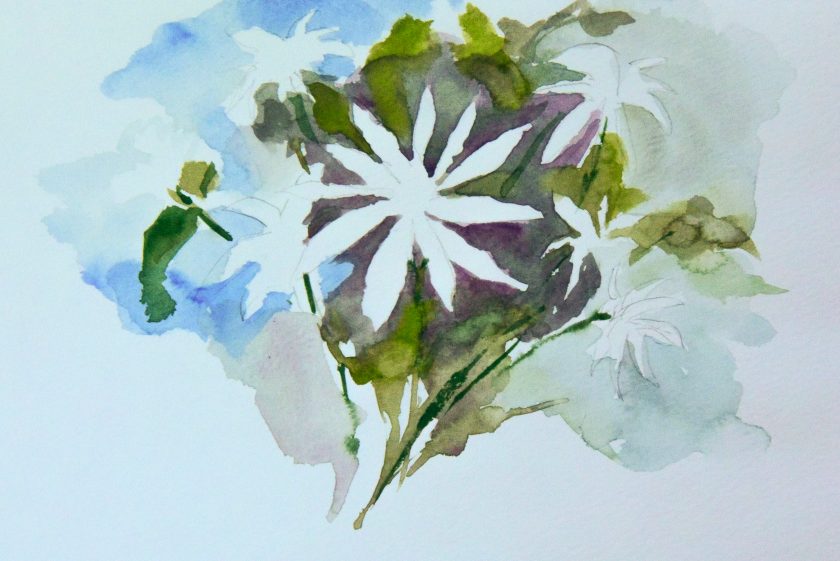
I think one of the hardest things to do is to leave white paper. I just want to paint it all up. And I also want to just keep going on – and this creates mud – without pause for paper to dry and paint to settle. Rush, rush!

Well, I did succeed somewhat. The crocuses above are one of Reid’s studies, and I was pretty pleased with it. In reality, it doesn’t look half as good as the photo, but then it is on a piece of messy paper with scribbles on it and test swatches of color.
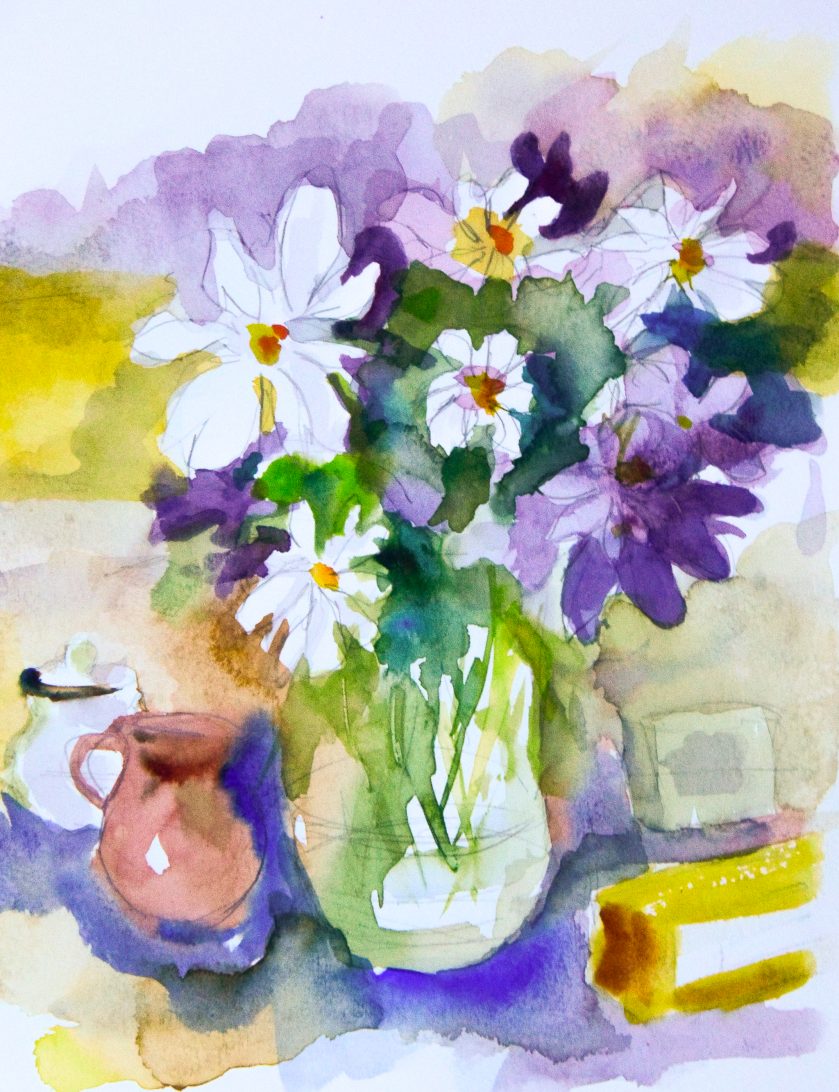
This was a quick study, more white space being left open. I went back after I finished this study to use my pencil to add some shape to the white flowers. I like lines – and it is a problem I find with my own sense of a “successful” painting – I need lines to define things. Sometimes lines work – sometimes they don’t – but I do love the Renaissance ink studies I’ve seen, and lines have always held my eye. Lines are expressive – but so are shapes of color.

Here, simply color shapes to imply a flower or a leaf. My experience in sumi-e brush painting makes my understanding of controlling a brush – even an inexpensive water brush with nylon bristles – much easier.

One thing Reid pulls out is shapes without definition – just implication of form. This is great practice for my line addiction!
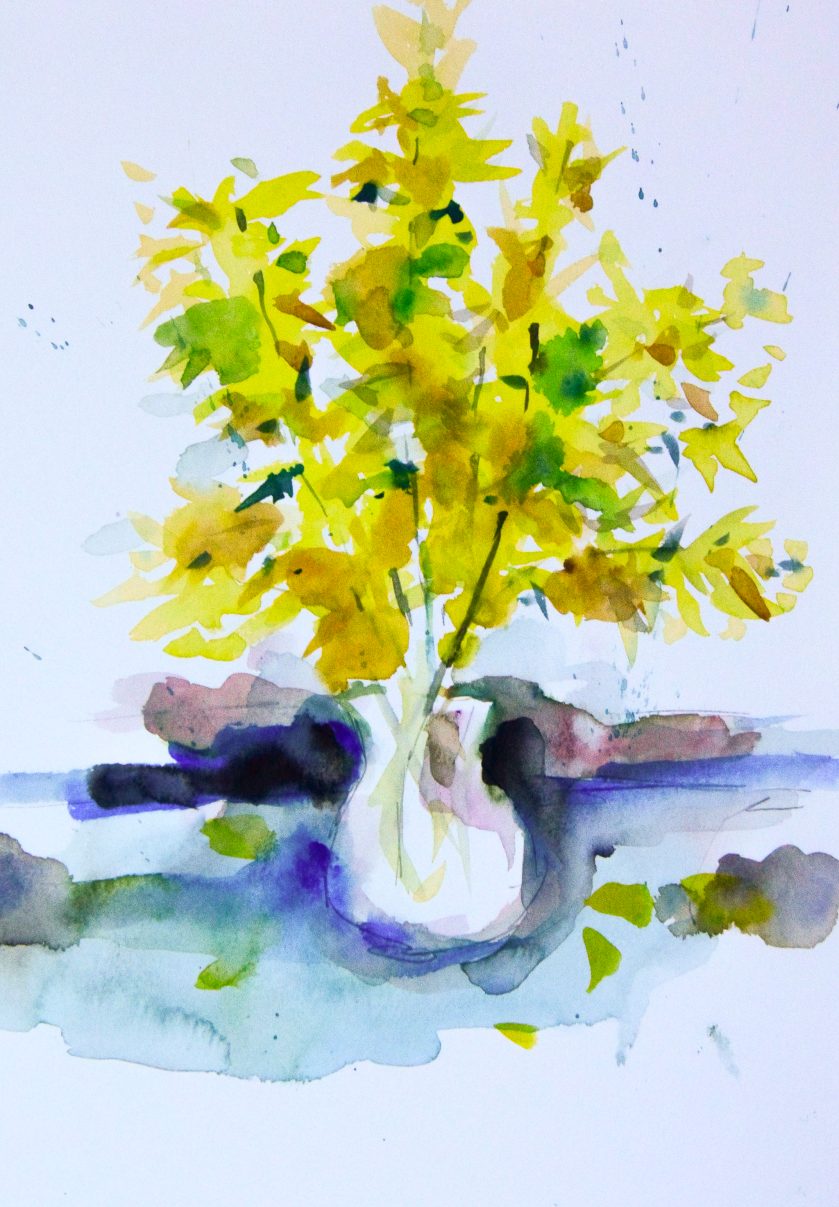
Another issue I find is contrast and value. It’s hard for me to really get these right in a painting. Reid mentions he makes his dark not super dark – not black – but installs a medium dark early on to establish value. I struggle with this but with more practice I think I will get better at this.
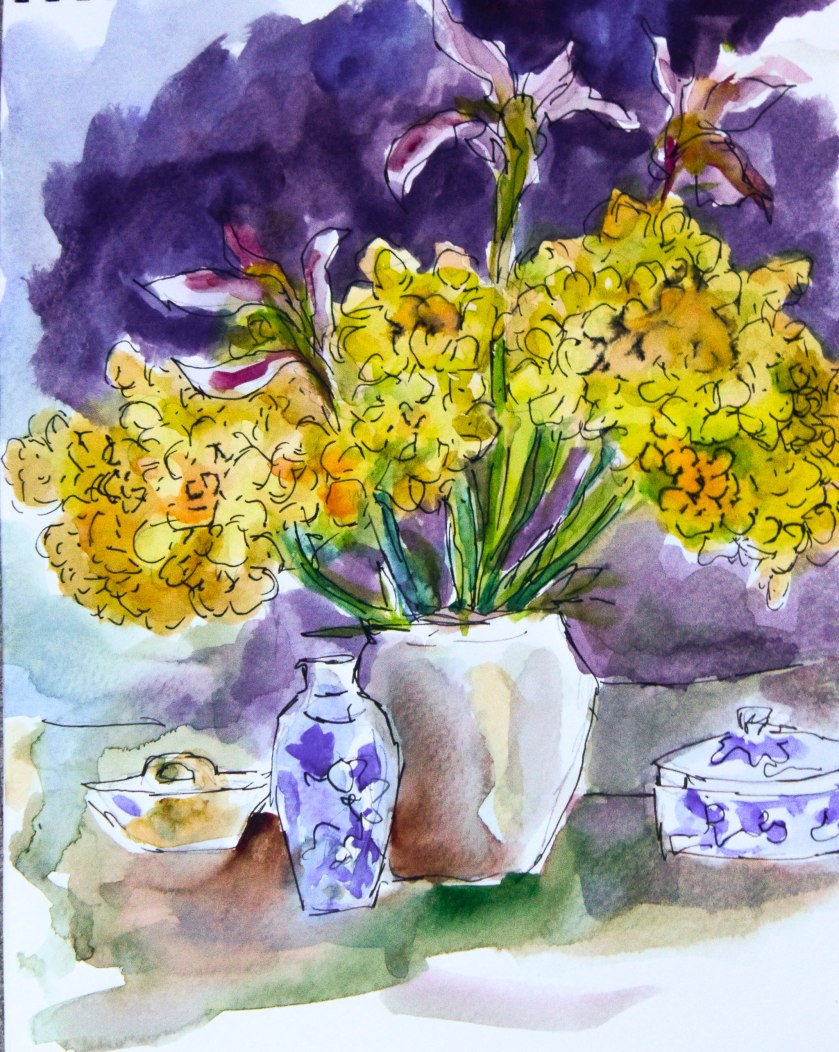
And here is the last one . . . not the best, but one which does have some good areas of contrast, and black lines from an India-ink pigmented pen. Sketchy, painterly, and totally fun to do!
Quality paper is a must-have. I have some tablets that I bought which I absolutely hate because of the texture and sizing in the paper. However, I used them up and ordered more of the Canson’s Montval paper, in a spiral booklet form, 9×12 with 20 pages. It’s a good working size – and it’s good paper, with a nice texture and sizing which doesn’t blotch up and look horrible. It’s also very reasonably priced. The Schmincke paint box may have Schmincke paints in them – or not. My paint supplies include Schmincke, Winsor & Newton, Daniel Smith, Holbein, and M. Graham professional-grade watercolors.
I’m glad I sat down to paint – it’s such a wonderful feeling and one which gives me satisfaction. Did I produce anything worthy of framing? Not at all. But working with my hands, seeing some success, is something which cannot be described – only experienced. You know what I mean! It’s like love!



 Ink, Yarn & Beer