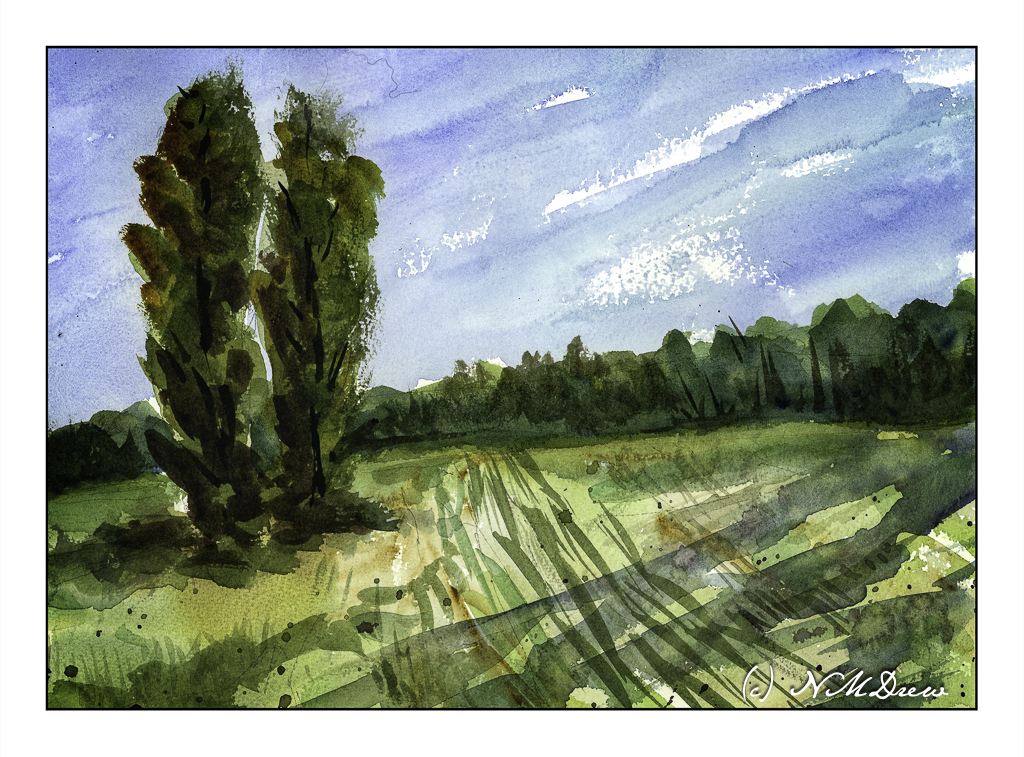
Two Trees in a Field

Once more, it is hot and sticky, but not as miserable as yesterday. Today, I am a bit more energetic but still not running around in the 90F and then some heat. And I am in a far better mood, too! No flies. No mosquitos. And a replacement package for the stolen one arrived today. Now, September is here, and though summer is not yet over, Labor Day (American holiday always on the first Monday of the month) is, for many of us, the official end of summer.

The end of summer means the fields are mown, crops and hay gathered in. Tracks and stubble leave lines behind in the shorn meadow. Heat, light, late afternoon.

That is all that this painting about. I did it after the one I posted the other day and, as with the other “Two Trees”, I am happy with the results here. I like the long shadows in the lower right, but if they are realistic or not is not the point – they just make for a bit more of an interesting picture!

In landscapes, you are the goddess of your painting!

Watercolors, Arches rough 140# paper, 10×14.
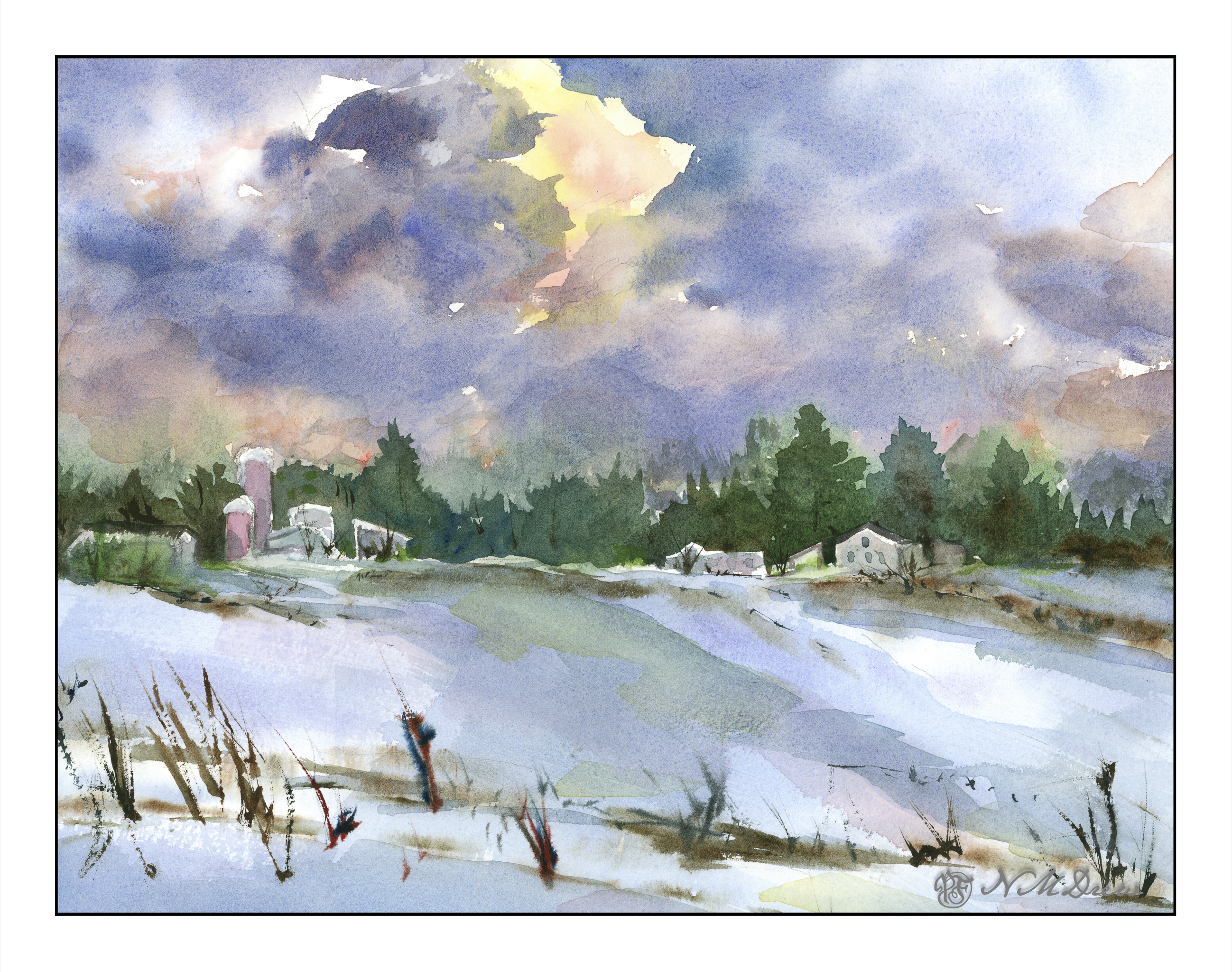
Winter Farm on Christmas Eve

Now to the northern part of the continent . . . somewhere in North America for winter on the a prairie farm, snow covering field stubble, early evening or morning. Cold, desolate, and heartbreakingly beautiful.

I spent the morning painting this on rough 300# natural white Kilimanjaro. I did it in stages. The sketch was light, with suggestions of shapes. Then the sky was wet and yellow, quin gold, and permanent alizarin crimson used to create the rosy golds. Once down, cobalt blue and ultramarine were placed to simulate sky being careful not to merge into the rose gold of the central cloud. As the sky dried, purple and alizarin were mixed with ultramarine to create the darker clouds. 

After the clouds were laid in, I did the dark trees, blurring some green into the still damp sky, as well as waiting for the sky and soft trees to dry. This was done to create the hard edges needed for the buildings against the tree line. The buildings themselves were left white as the trees dried.

From there, the snowy field was laid in with cobalt and ultramarine in a very light wash and using a 2″ soft brush. Again, drying. At one point, the 2″ brush was dried and dipped into lightly damp burnt umber and applied to make the streaks of brown for field stubble near and far. Then the buildings were done, and once the snow dried, more thin washes as glazes applied to the foreground snow, culminating in a streak of quin gold and then permanent alizarin to the middle of the painting, hoping to show a sense of light reflected in the still dark snow from the breaking clouds above.

After that, details such as dried grasses, windows, tree trunks and whatever were added as deemed necessary.

I am pleased with this painting quite a bit! It achieves what I set out to do – a winter scene, snow, clouds, and patience to wait and think about a painting before just diving in with brush and color. The 300# rough Kilimanjaro is 11×14 and a wonderful paper to paint on. More is needed in the future for sure.

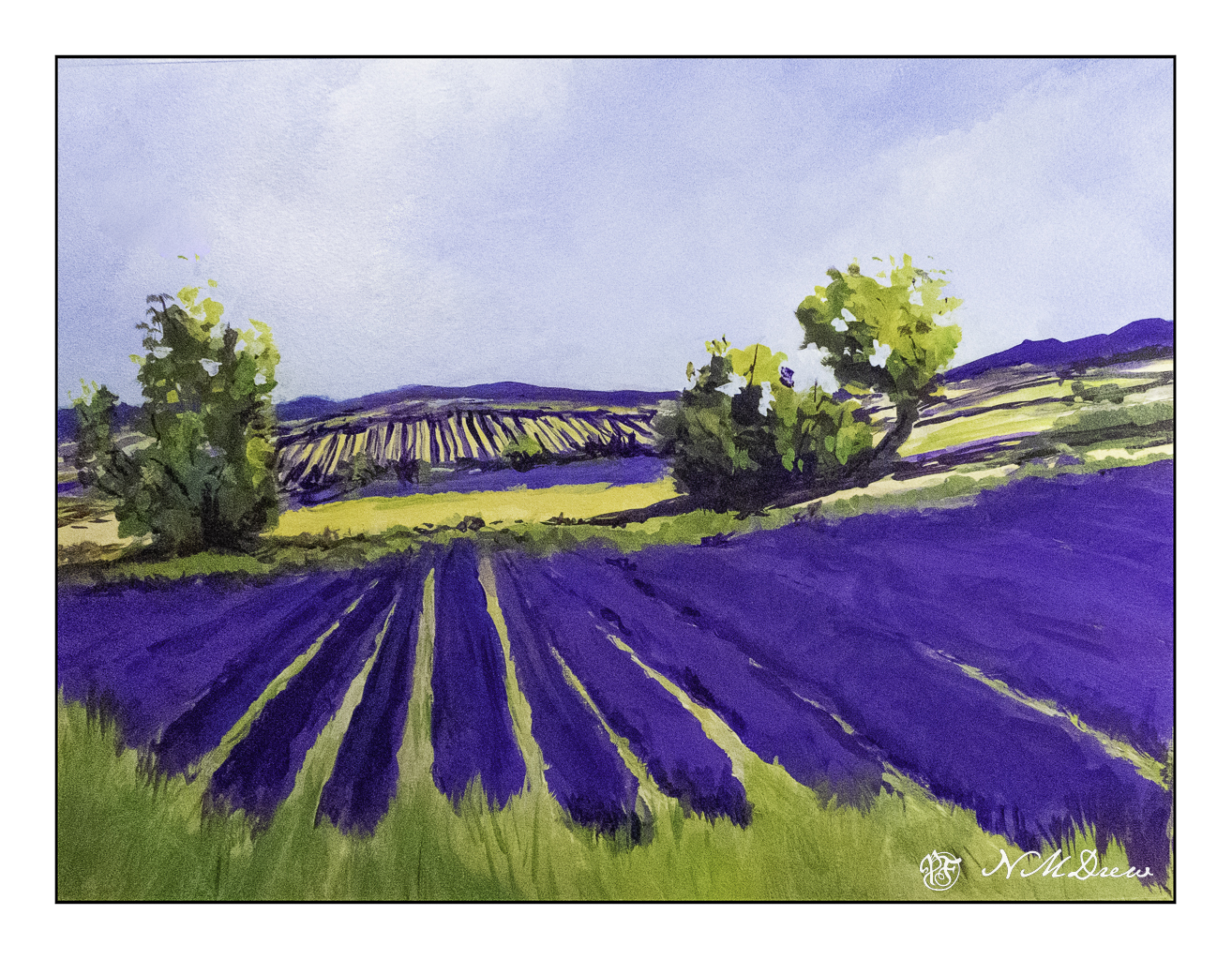
Lavender #2 – Stage 2

With a hurricane, what else can you do beside bake bread and listen to music and watch TV or read a book?

Paint, of course!

Below is Stage 2 of my Lavender #2 of yesterday. I worked on brushwork, details, and all those other lovely things. It is still mounted on the coroplast and taped down, but I like to see what I have by importing the image into Lightroom and then adding a frame. It does help me see things.

I am not too sure where I am at with this painting – I rather like it, but it is a bit more fiddly than I want it to be. I tend to dab – other people I know tend to use short vertical strokes. What I would like to see is an effective stroke, simple, long or short, in my own work. Not easy to do . . .

The rain is falling with a soft sound – the air is cool – and the birds outside the studio window are twittering away. Time to get away from the lights and the lavender and enjoy the peacefulness of the day.

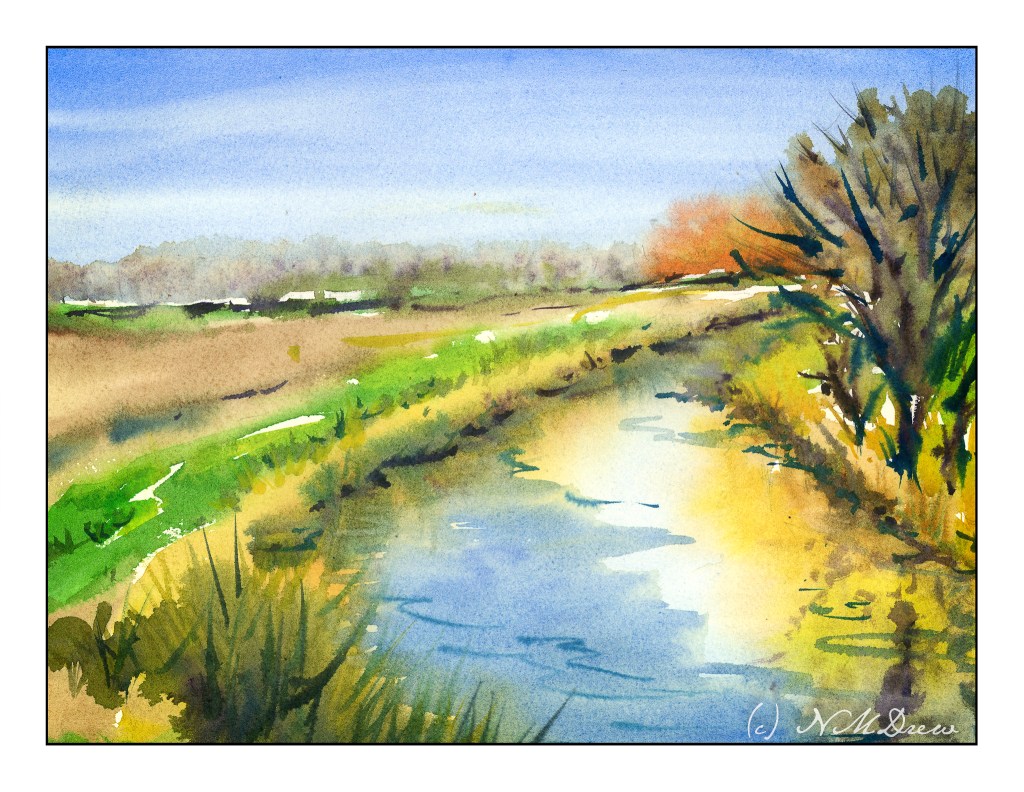
Changing Seasons

It is really important that if you study art that you make studies! I’ve been following along in my haphazard manner a number of teachers I like, online, and am trying to implement what I am learning. Or what is being taught – and then working conscientiously to absorb some of it. Being a magpie doesn’t help as I am so easily distracted by this and that. Focusing on one thing really helps bring mastery, but I get bored with doing only one thing. I know a lot of single-minded people, and I rather envy them. However, we all have to follow our own drummer.

The focus here is to lead the eye to the orangish, autumny trees in the distance. The water does it primarily, but I hope the curves of the field do, too, as well as the lines along the horizon. I am not too thrilled with the trees on the right, but c’est la vie.

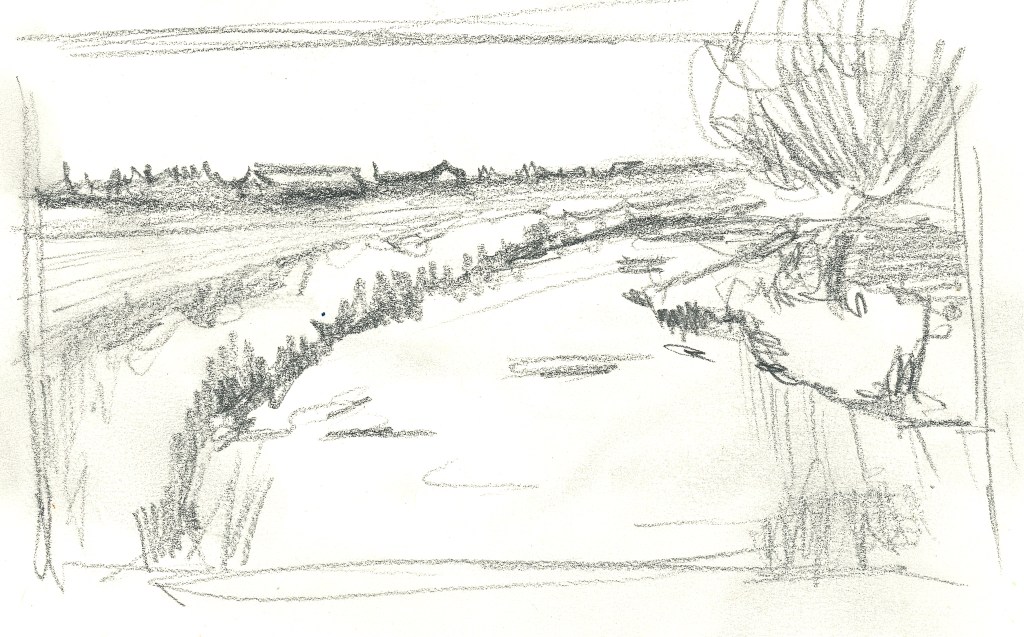
So many artists say a value sketch is important. I like to think I can create the values in my head as I become more sophisticated in my abilities. I have decided to create some kind of preliminary sketch before painting as a habit and that is not an easy task for me – even if it only takes a few minutes. Well, the one below is not really a value study, but it did help me work on some compositional elements. Hmmm.

Kilimanjaro rough 140# paper; watercolor.