
In a lot of ways we just take paper for granted. It’s everywhere. In the arts, though, paper can be more than important – it can be critical. Its qualities can determine how you work, what you do, and so on. In watercolor, paper sizing, texture, and fiber content all play a role. As well, how the paper is handled by the artist, meaning (in this post) how much water is used with the watercolor paints, and if the paper is dry or wet when paint is applied.
The other day, I was watching a YouTube video by an English artist whose work I enjoy: Andrew Pitt. In particular, I was watching how he handled skies with a limited palette of colors (Winsor Newton’s Light Red and Cobalt) and the paper he used. By chance, I have both of his choices – Arches Rough 140# and Bockingford CP (he has 200# and I have 140#). Arches is externally sized and Bockingford is internally sized. Arches external sizing creates a harder surface which does not absorb water as easily as does the internal sizing of Bockingford. You have to work more quickly with the Bockingford than with the Arches.
With this in mind, I decided it was time to tackle skies. I do them all the time, but it was fun to focus a bit more solidly on the subject of the sky itself as well as how wet-on-dry and wet-in-wet worked with the different papers. Watching Pitt’s video a did one thing in particular which he suggested: I kept my brush on the paper when I painted as long as I needed to create a specific area – the sky or a cloud.
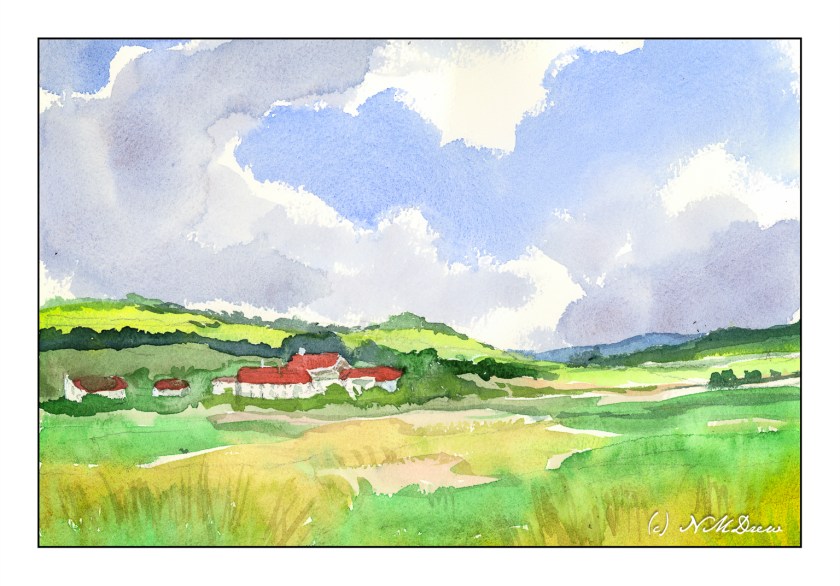
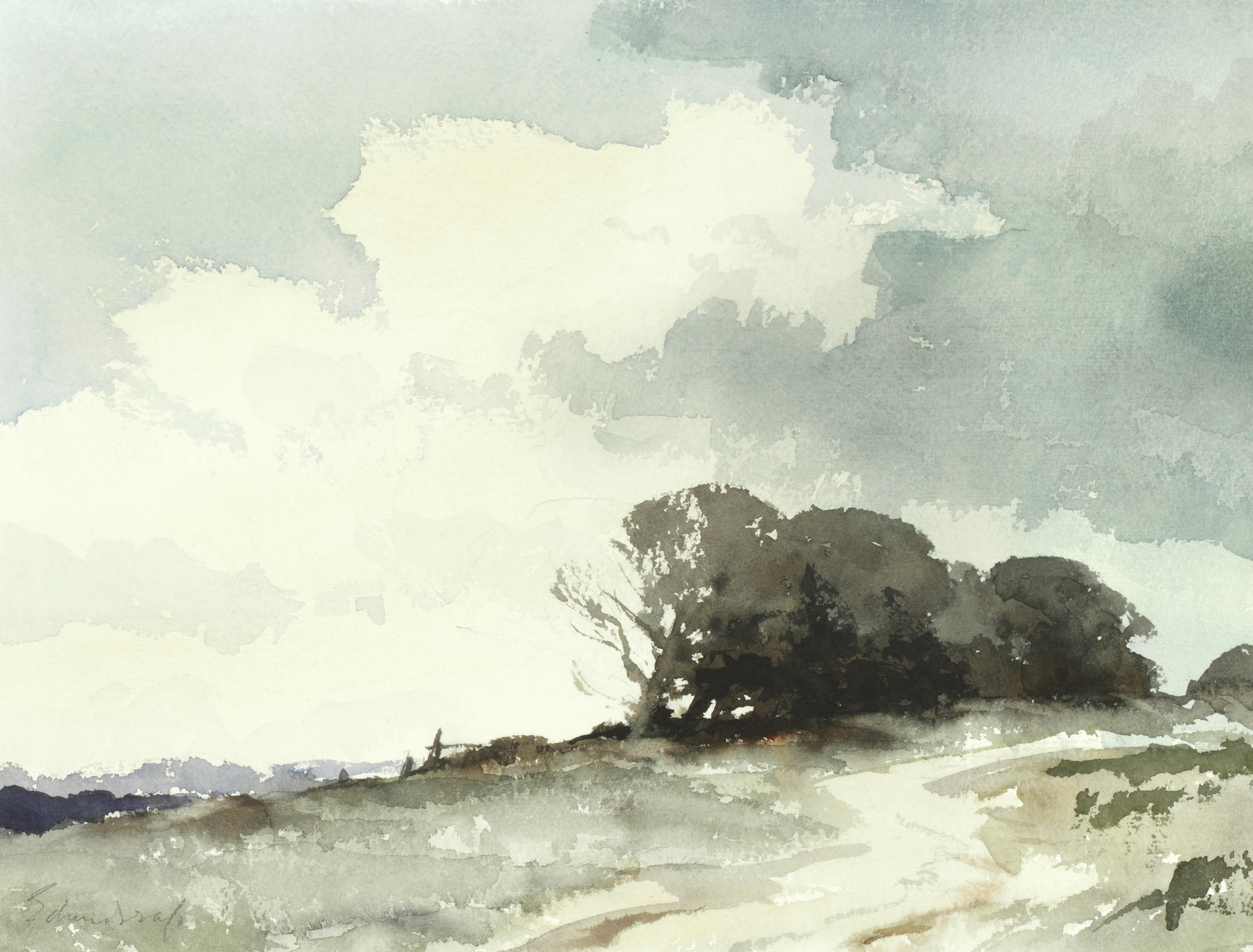
In the above painting, as with Pitt’s sky, I used only Cobalt and Light Red. Here, I used Arches Rough and used a wet brush on a dry surface. First I did the sky in blue. Rinsing the brush a bit, I mixed Cobalt and Light Red together, varying the amount of color and pigments. The lighter greys have more water, the darker greys have more pigment. The white is clean paper without any paint.
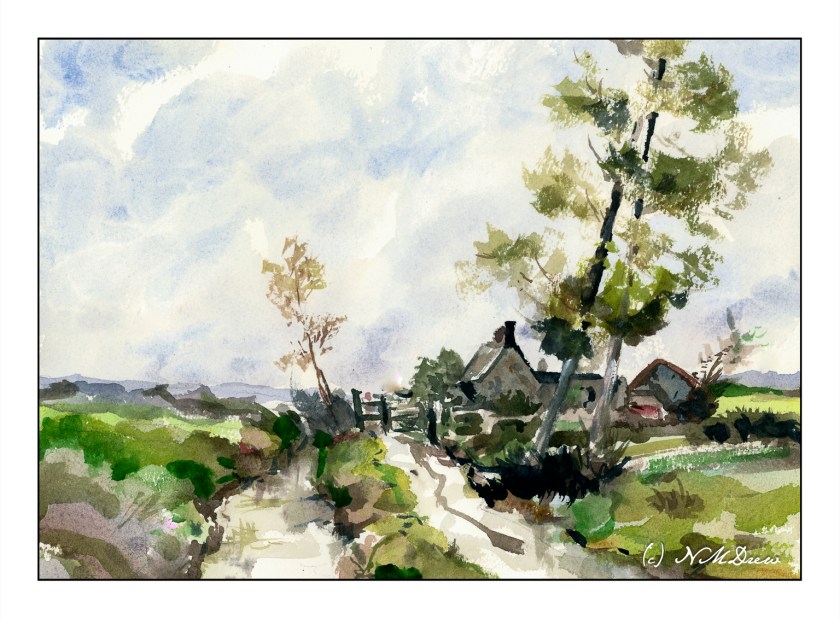
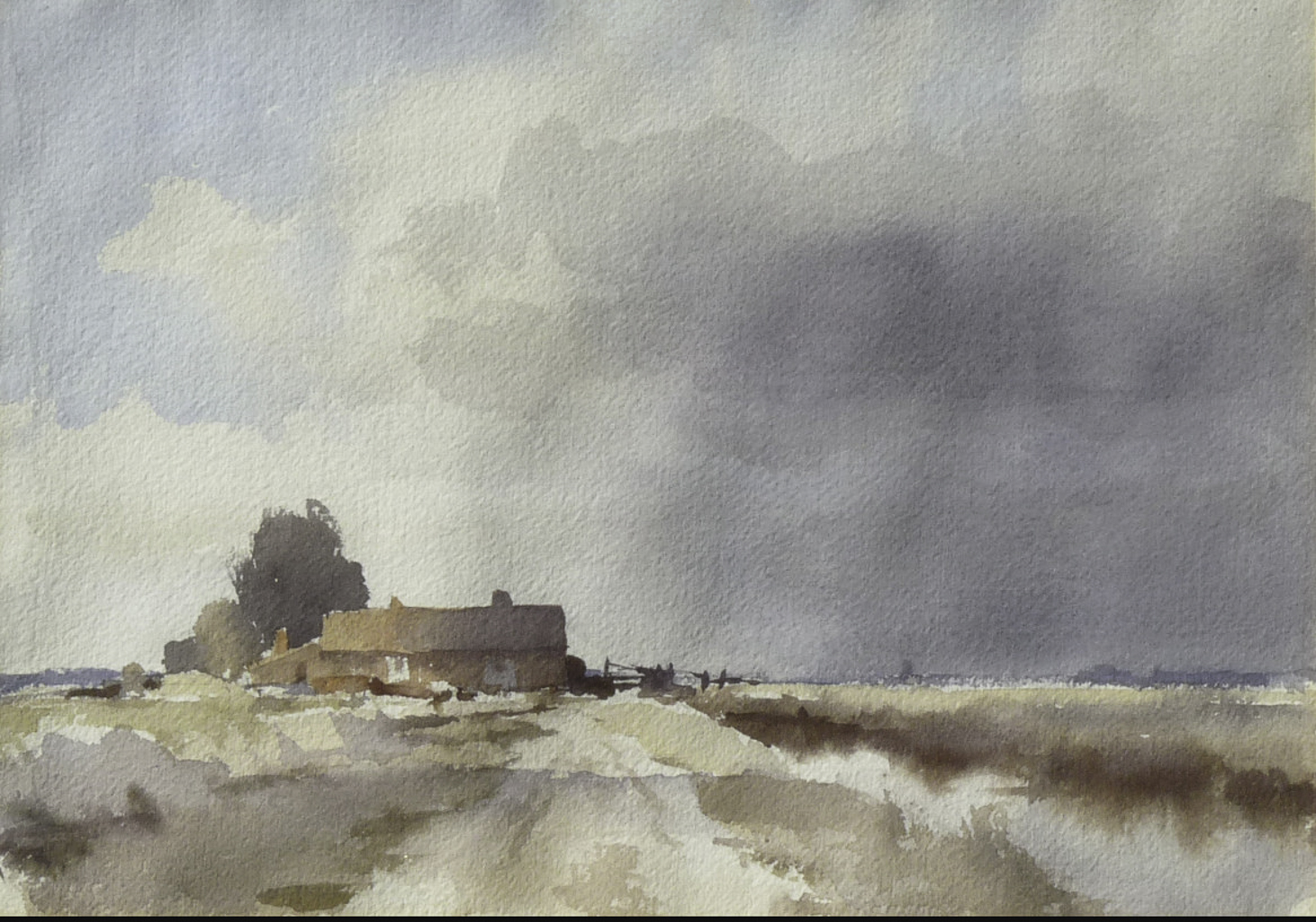
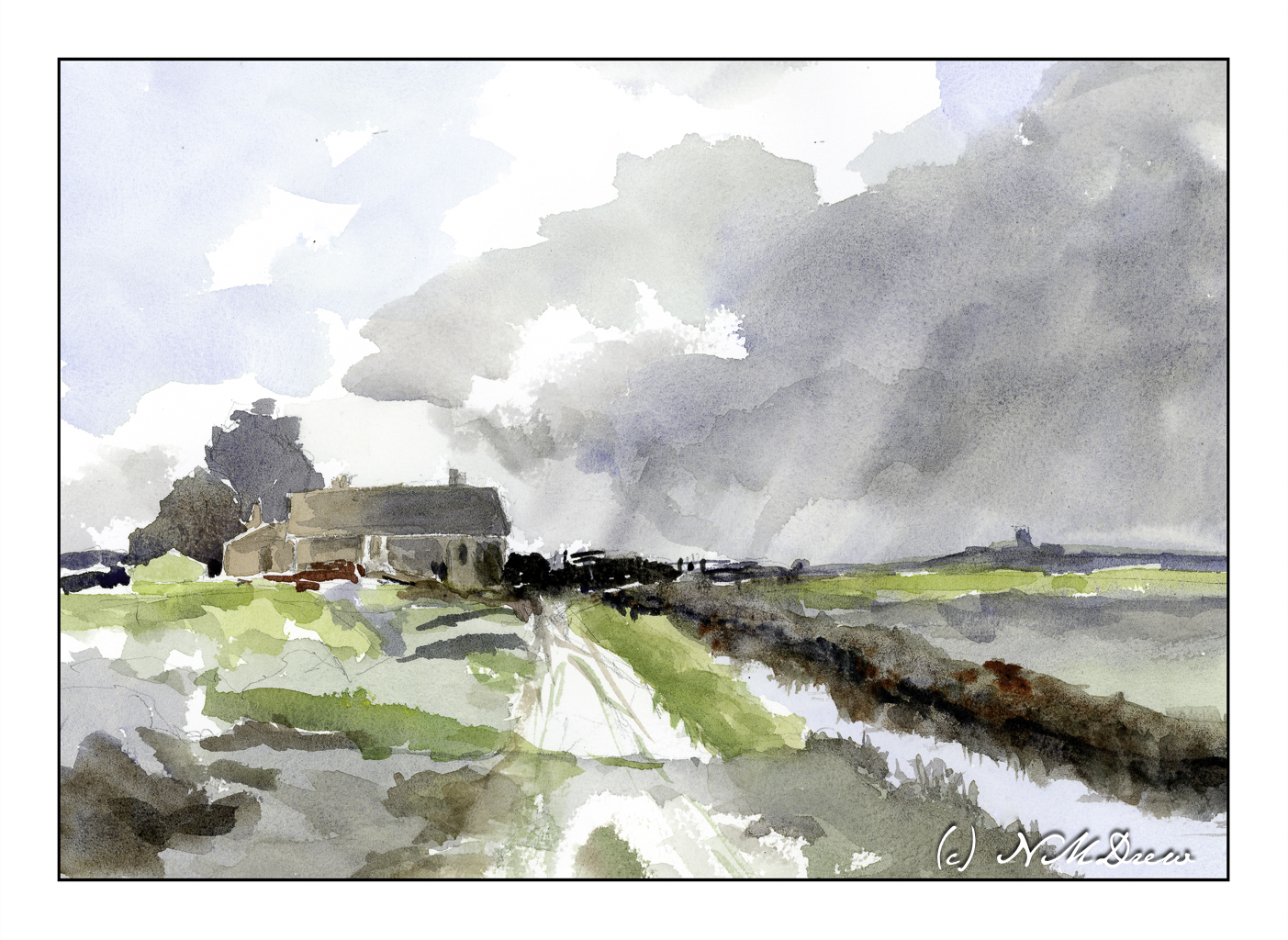
For some reason, Edward Seago wandered through my head as I was painting the first picture. I really like his paintings of the damp skies of the English coast. I figured a master(ish) copy of one of his paintings wouldn’t hurt. This is my copy of his “Farm Near Somerton – Norfolk” – not as simple as his, but the sky was the focus. Here, Arches rough paper, dampened, and then painted with dilute watercolors. As with the wet-on-dry painting, the Arches allowed more control than I have found on other papers, such as Bockingford.
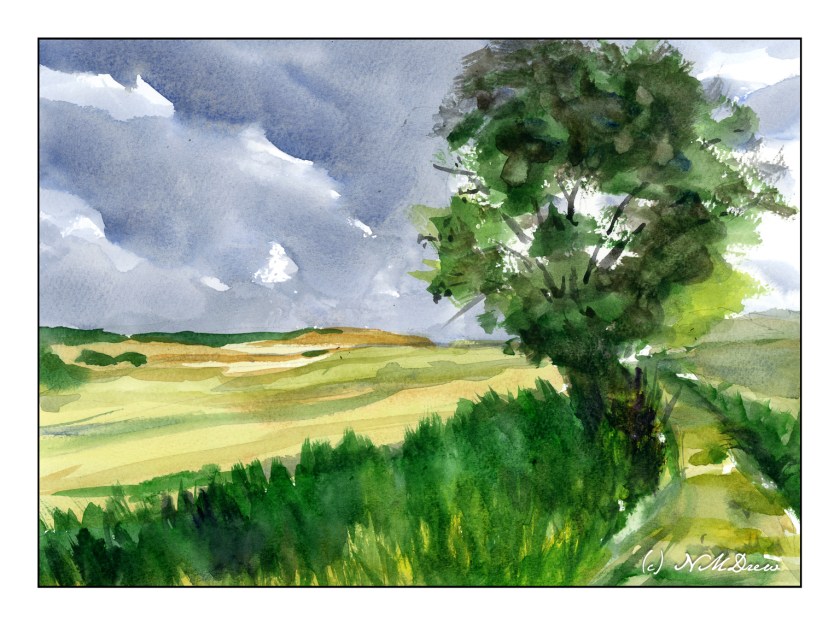
Moving from Arches rough paper to Bockingford 140# CP paper is a different experience than with the Arches rough. The above painting is wet-on-dry, meaning the paper is dry. The Bockingford absorbed the water more quickly than the Arches, and this meant I had to work more quickly, moving the brush and colors more rapidly across the sky. It required a bit more forethought as to where I wanted to place colors. I could pause and think with the Arches. Not so here – I had to plot! Again, cobalt and light red in varying combinations, but a strong mixture to get the dark clouds.
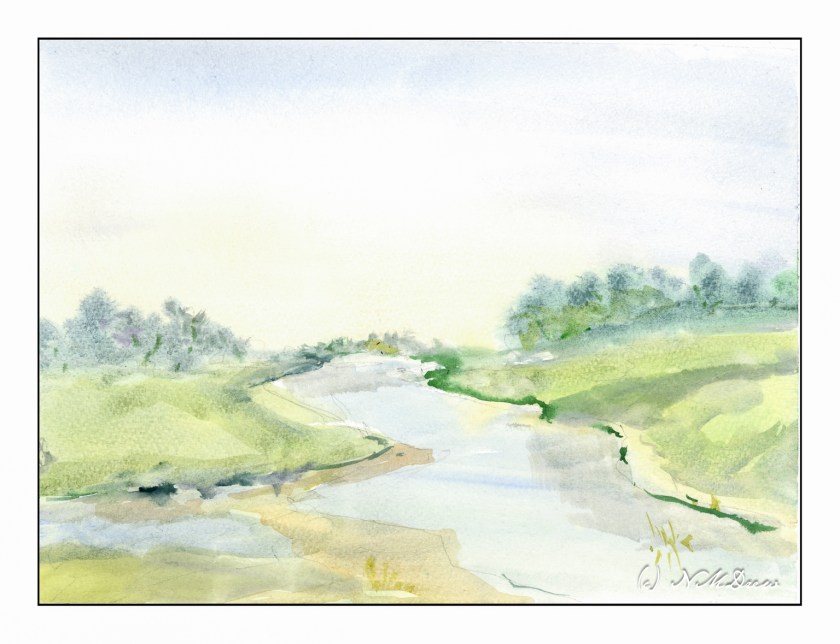
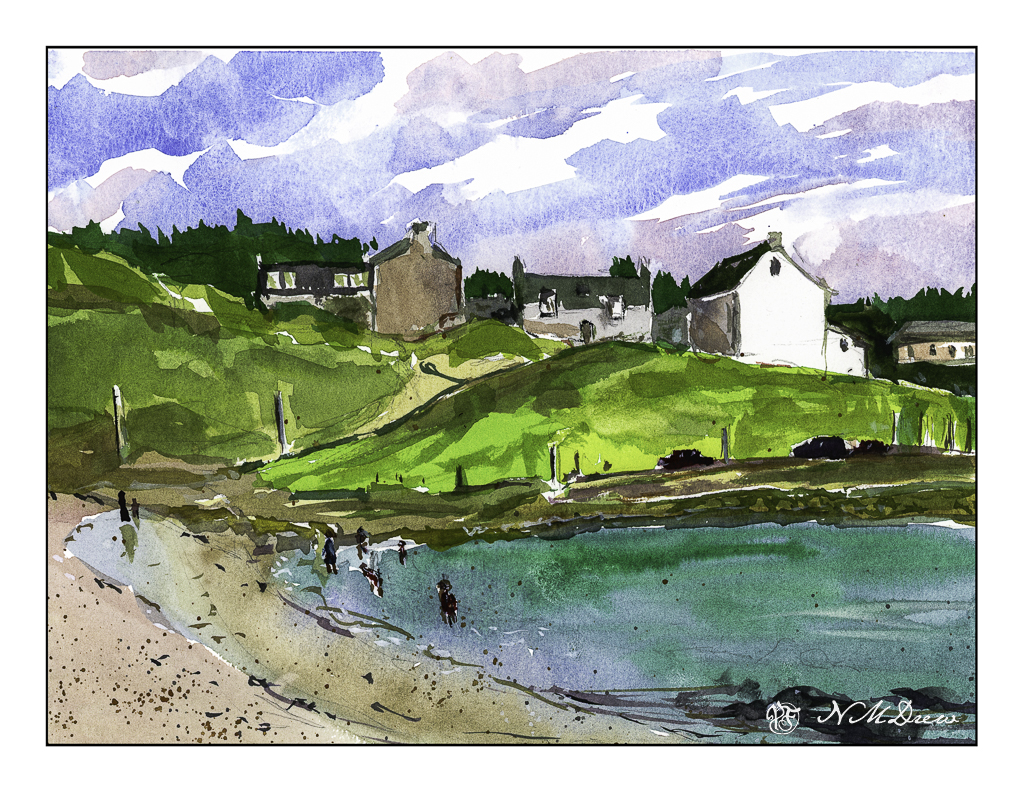
And finally, wet-in-wet on dampened Bockingford. I dampened the paper and let it sit a bit to absorb the water. As this was going on, I mixed very thin washes, mostly water and a bit of pigment. The initial wash was in the lower sky using raw sienna. The upper sky was cobalt or ultramarine, very thin as well. From there, everything else was painted with very thin paint onto damp paper. The dilute paint made for high key picture, so for a bit of contrast I added darker lines in Hooker’s green and Payne’s grey to paper in different degrees of dampness.
Overall, this exercise in paper and paint was a lot of fun. I learned a lot about the paper and its characteristics. Knowing your paper, just as you know your paints and brushes, makes the work of painting less work, if that makes any sense.
In conclusion, Arches rough allows more time to think and application of a lot more water than the Bockingford. Both are excellent papers with different qualities.
Now, go paint!

 Ink, Yarn & Beer