All on a Saturday Afternoon

There are times when it seems all the piddly little things pile up and I spend my days doing them, like a list of a million bits of this and that. It gets depressing. It is important to do more than just tasks and chores and the to-do list. Today, after spending too much time on oil painting and working on getting myself organized, I just pulled out the gouache and some paper and played.

First around, trying a paper that I haven’t tried before. This is an inexpensive cotton paper with a decent texture for watercolors, but too much texture for gouache. I had forgotten that gouache is much better on smooth paper. I chose flowers as it is summer time.
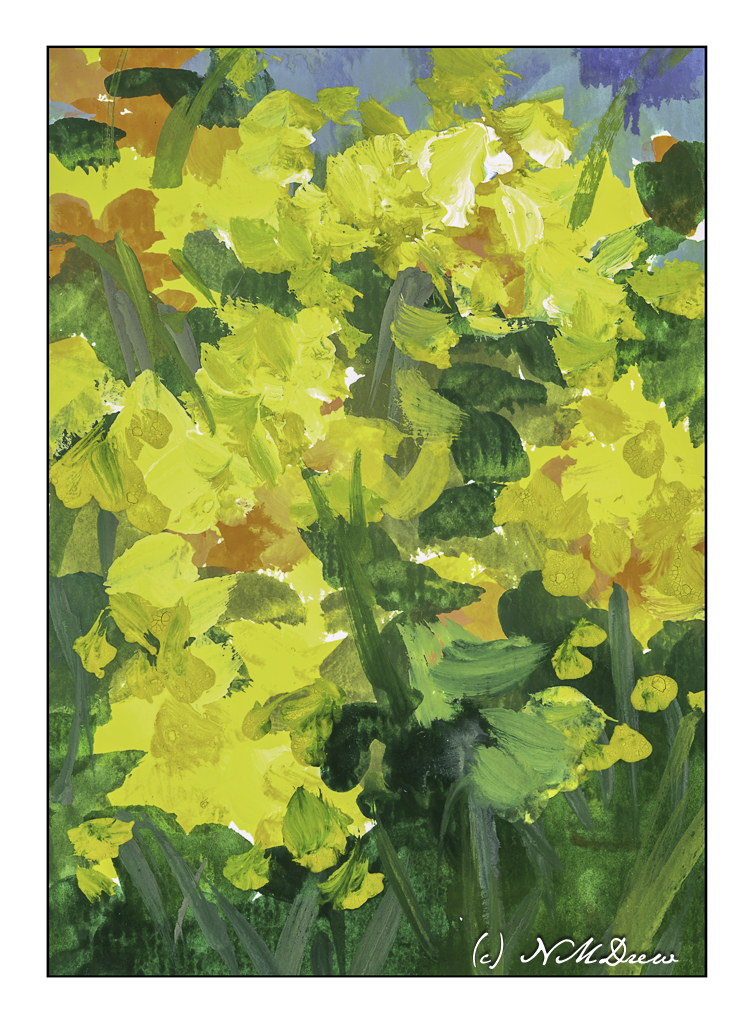
I have yellow cosmos – a bit past their prime – in the front yard. A tall, jolly mess!
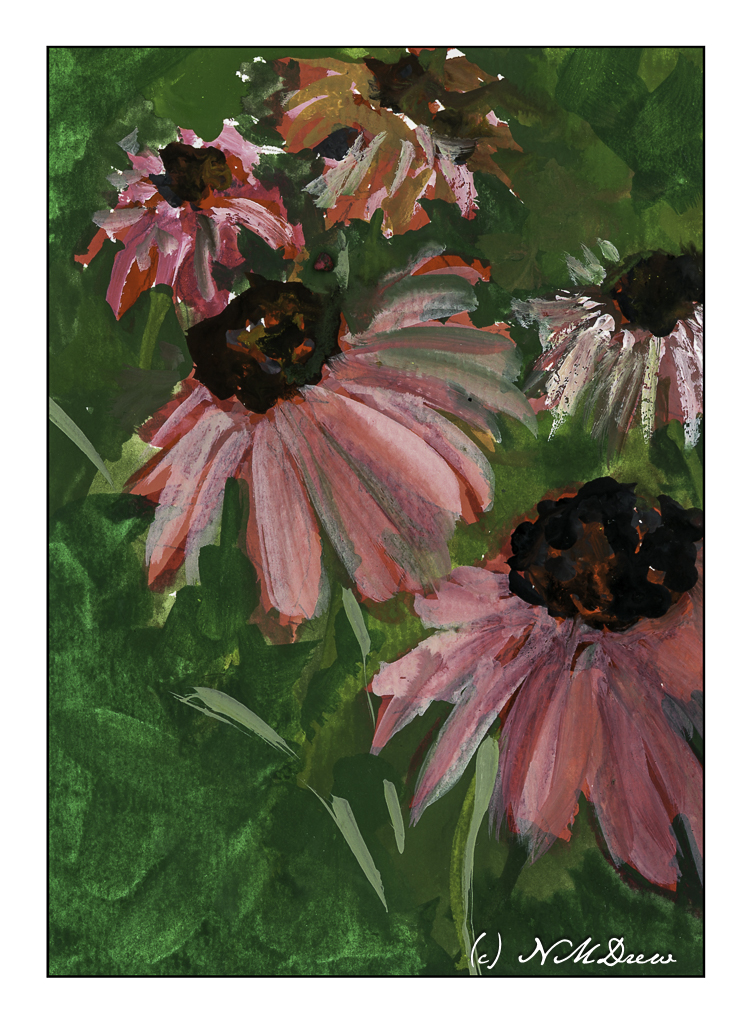
Here, echinacea. I often grow it, but this year did not. I like the way the petals fall back and the center is bright orange and black with bits of yellow. Not a good painting – too dark and messy.
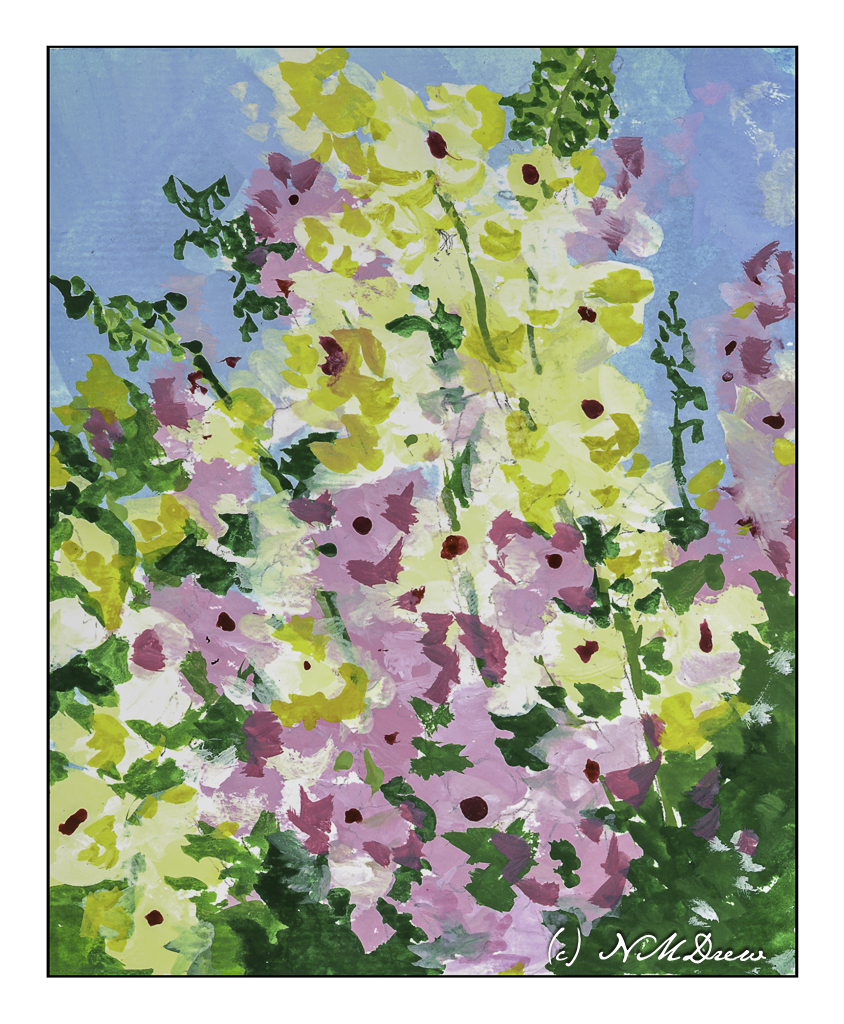
Mullein is a wild plant but it has been hybridized to grow in colors such as pale yellow, lavender-pink, and whitish. It is normally a yellow flowering plant with dark centers. I have thought of growing them but so far haven’t. Maybe next summer.

And then, I moved on to a smoother paper. Here, a coastal scene with rocks and sea and clouds and a distant shoreline. Here in California the coastal fog comes and goes, making for some chilly summer days!
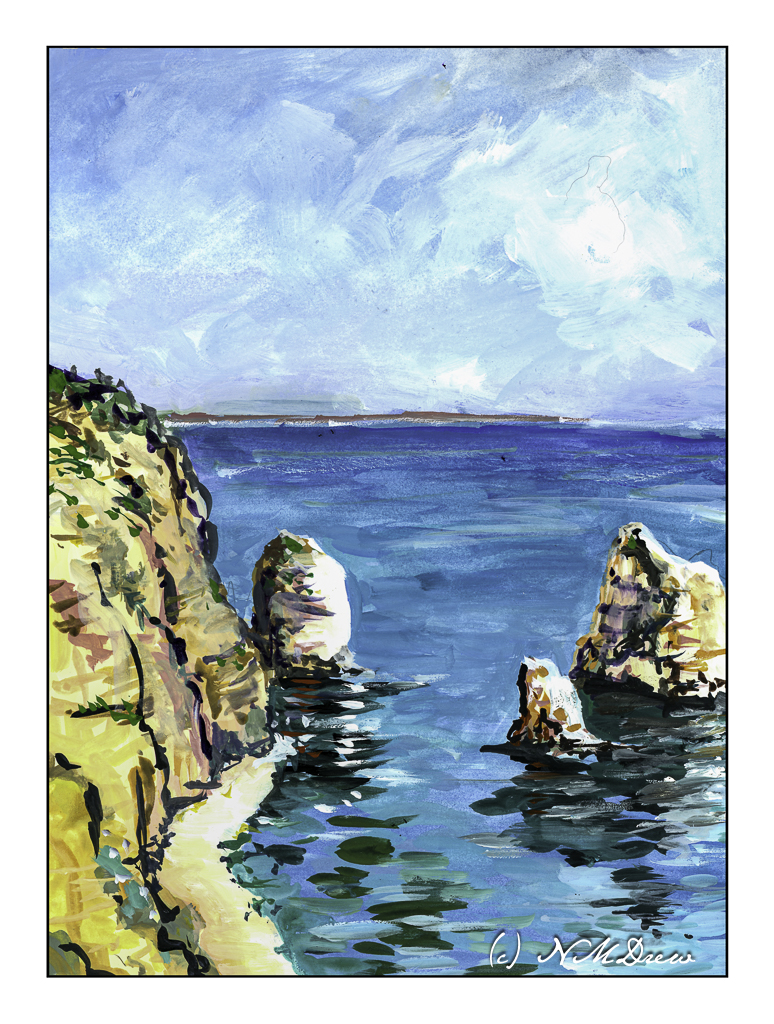
I like this one the best, in part because it was easier to paint on smooth paper. Gouache is such a fun medium as it is easy to use, never looks real but does, and so on and so forth.

Altogether, a nice way to spend an afternoon outdoors ignoring the list of petty crap that seems to be dominating my life these days . . . .
Practice

With any art or craft, familiarity with it makes it easy to do. With familiarity and understanding comes the ability to explore using the knowledge you have acquired. I am pretty comfortable with watercolors and oils, but acrylic has always been a point of frustration as it dries so quickly and, to me, doesn’t have the qualities of oil paints. Gouache can be opaque or transparent, depending on how used; acrylics can be used in the same way. The difference between artists gouache (vs acryl gouache) is that the colors underneath the other colors can be re-moistened, and used to dissolve and create other colors. Acrylics, while they can work similarly to artists gouache, once dried, are dried, and there is no going back.

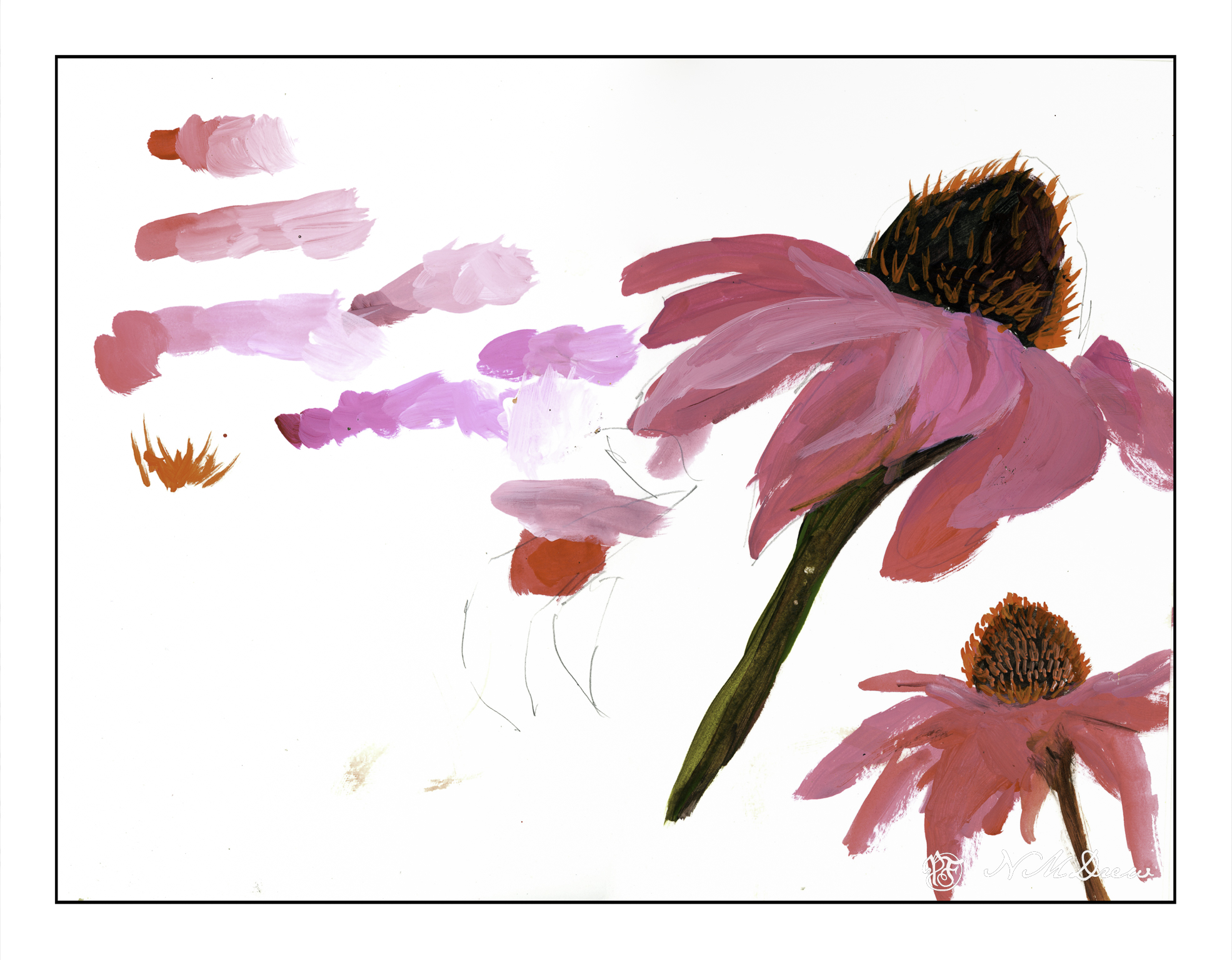
What I am trying to learn is how to use acrylics in ways that make sense to me. This is not coming easily. I like being able to sprawl my colors all over the place without drying, but this doesn’t work quite well with acrylics – unless using the heavy body paints on a sta-wet palette, the fluid acrylics I am using dry very quickly. To use them well I am trying out different ways of painting and mixing paints. Above, on the left, are colors straight out of the bottle and then mixed with white on the palette, increasing the amount of white with each brush dab. From there, I played a bit with painting cone flowers; the one on the lower right is more successful.

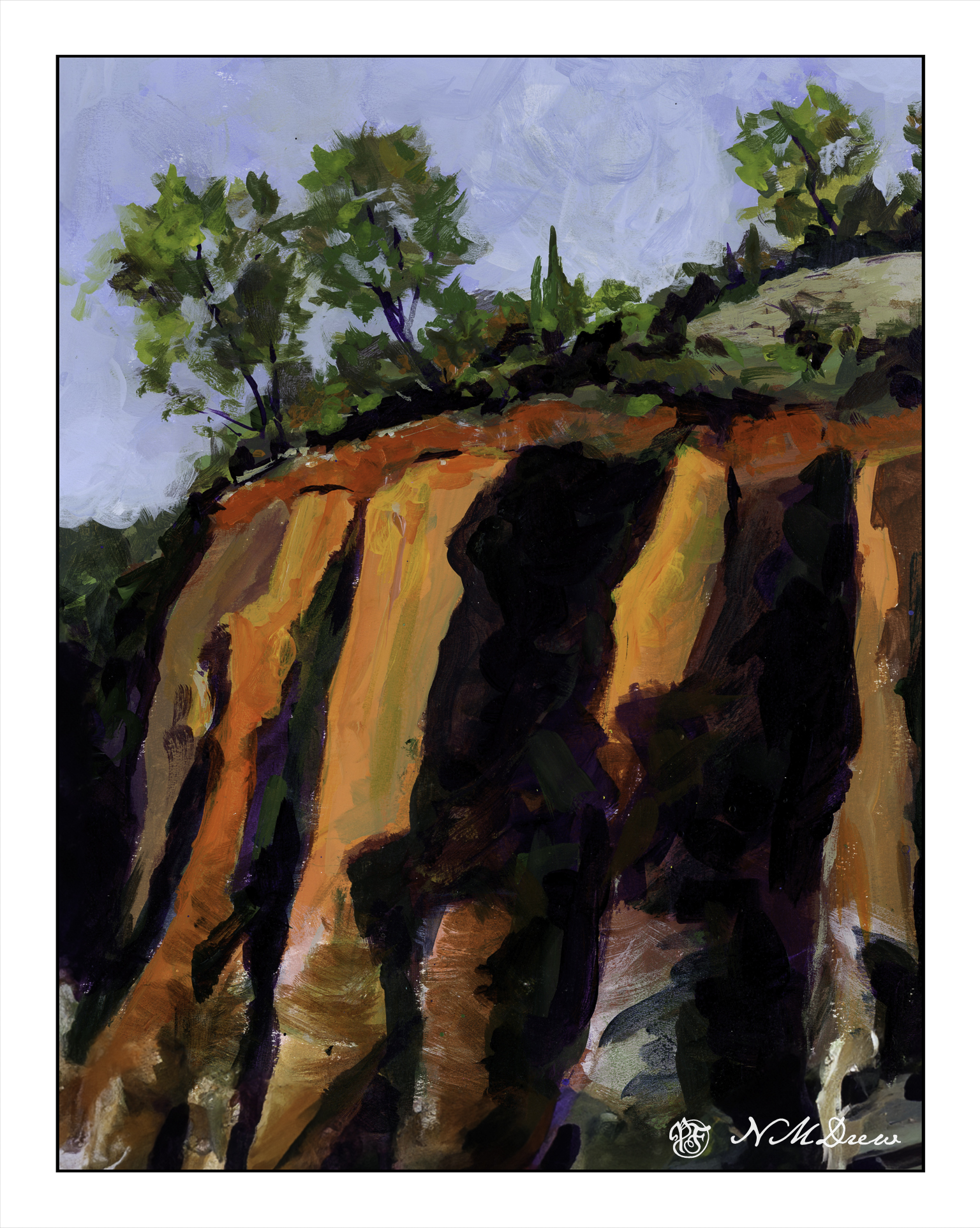
Playing is a way to explore. Above was play. Below is a “more serious” foray into painting with acrylics. I worked hard to make layers, and then return to add more color as I moved along. I just painted directly onto paper in a sketch book and practiced both painting and blending, painting directly on other areas, and bouncing around to work at making a bit of a harmonious or connected picture with similar / same colors used in various parts of the painting.

There used to be 4 trees in a row on the top of the cliffs – but then I looked at it and they were all the same shape and height. I decided to paint out the 3rd from the left. I had to paint the sky in a number of times, building up layers to hide the tree. It worked pretty well. I also played with my brush – I tend to dab, using the point of the brush – but here, especially for the tree foliage, I worked on using the sides of the brush. Additionally, I changed between very soft brushes and more firm brushes. These change how the paint moves and blends over the paper.

Practice can be fun – in any art – and by practicing and playing, new doors and experiences add to the skill set of the artist or craftsman.

Echinacea

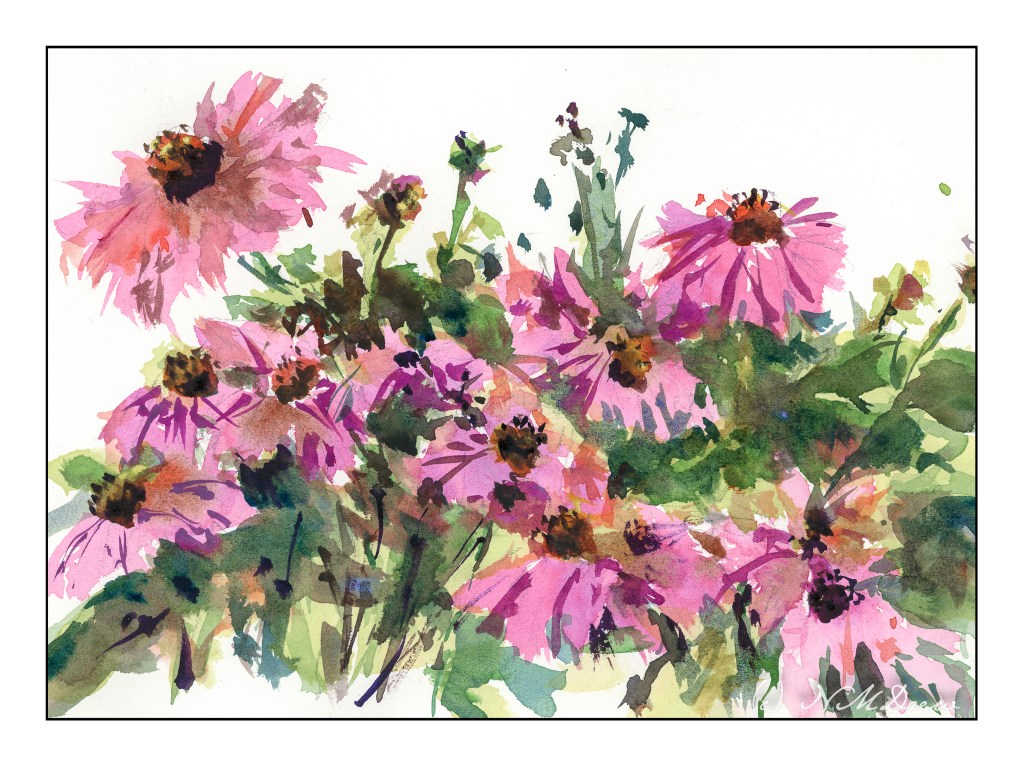
I think this is the first original flower study I am happy with. The reason is that it has the looseness of style I have been trying to get, a brightness of color, and decent contrast.

I began by wetting my paper on both sides after drawing in the basic flower shapes, some stems, and leaves. All of the pencil lines are simply guides, but it did help. From there, I did the flowers with a wet wash, more water than pigment, to suggest the basic flower petals. From there, leaves in a light yellow green with the plan to paint darker colors over petals and leaves. Once I had those general shapes in, I placed the flower center in, allowing it to bleed into the leaves and petals as it would. Then I dried it with the hair dryer.

More washes came along using more pigment and less water, but still wet. I tried to suggest leaves and shapes, painting around the flower to create indents where the petals fell over the leaves in an attempt to create some depth. Again the hair dryer, probably multiple times. Finally details with a fairly dry brush, thicker pigment slightly dampened with water. This was done for some of the stems, the flower centers, and a bit here and there.

I am using my new palette, but I don’t think I really like the alizarin crimson that much. It is the “permanent” variety and seems rather dull to my eye. I tried to liven it up with other colors, like some blue and red and orange in different areas, but it is not as vibrant a red violet I would like. I will need to do a bit of research here.

So, at last, a sense of being able to paint flowers in a manner pleasing to my sense of what a floral watercolor should look like.

9×12 CP Arches, 140 lb.