Evolution

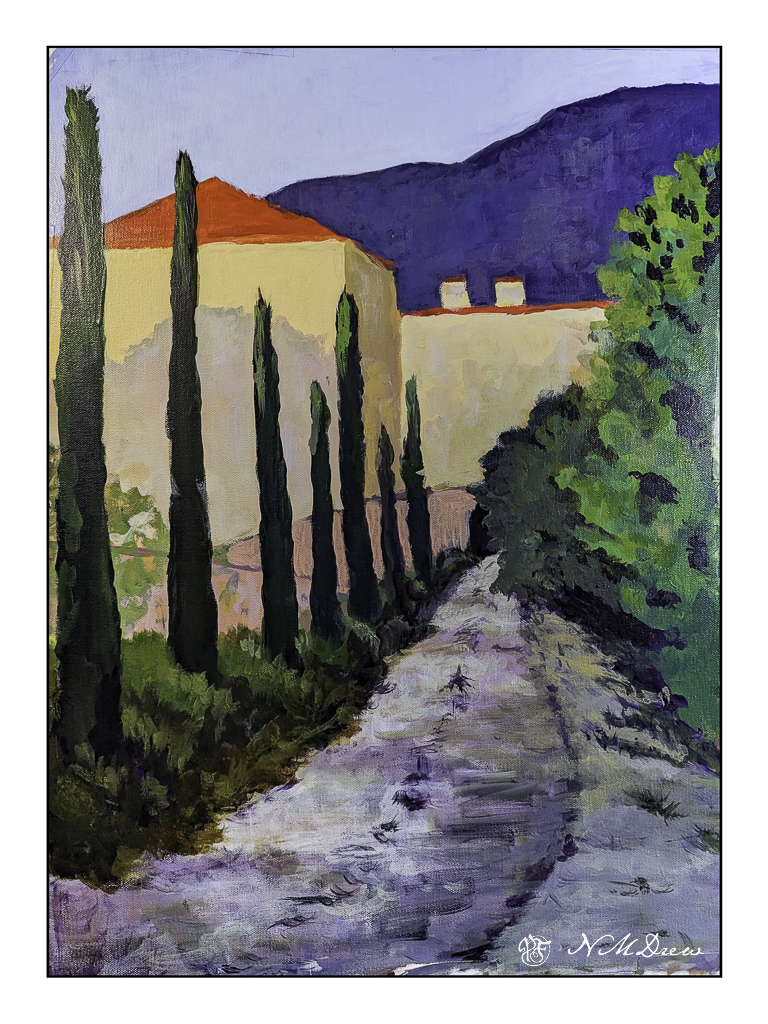
Several weeks ago I started an acrylic painting of a building at the end of a road. It was sort of painted in a traditional manner, meaning I was trying to represent reality. Truthfully, it bored the hell out of me, but I kept it as it was fairly decent in my opinion, but it did put me to sleep. 

Working with brighter colors of late has really been exciting for me as I feel much more of a connection to the colors I use than I do to subject matter. Subject matter can be anything – but colors express more to me and are more true to who I am (a magpie reincarnated as an old bat) than subject matter in general. So, I took the painting and painted over it. Below is the original.

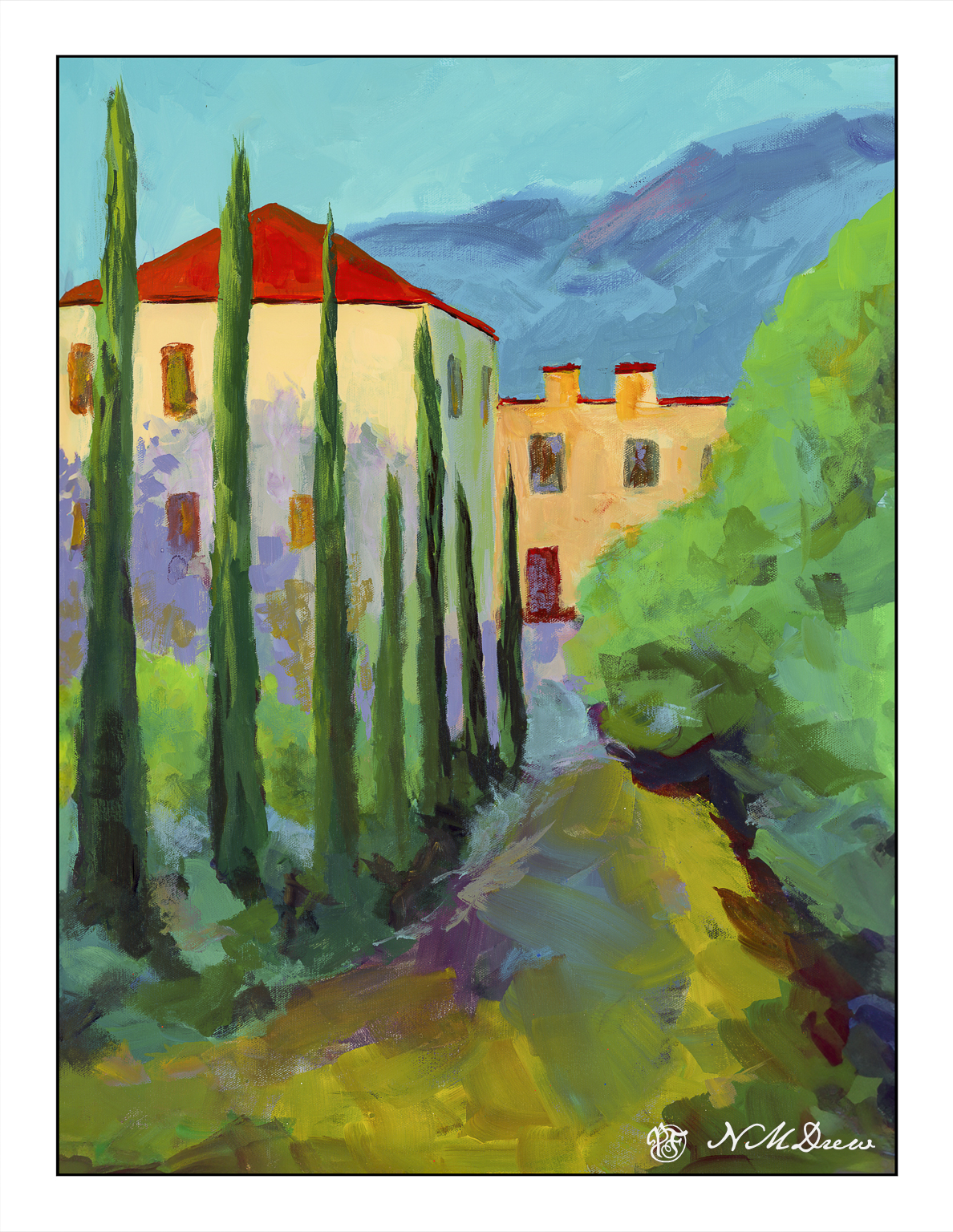
This is a photograph I took and it is pretty crap (above) as there is a lot of weird stuff going on. I didn’t think it scanning it because of its size. This morning I scanned my current iteration of this painting.

I like this much better, but it is not quite done. I need to work on the road in the foreground as well as details of the building. More windows, fix windows, fewer windows? Create some focus at the end of the road? Fix the road? Cast some shadows – creating light and dark – across the road?

Many things to consider here. I am going to let it sit and ignore it awhile. If you have any ideas, let me know!

Acrylic, canvas, 18×24, scanned on an Epson V600.

Colorfield #1

Lately I have been playing a lot with color and trying to use it not realistically, abstractly, and so on. There are a lot of people out there known for their color usage. Andre Derain, Georges Braque, Mark Rothko, Wolf Kahn are a few of them. The name for their color usage varies, from Fauve, Abstract Expressionist, Colorist / Colorism, Colorfield. I rather like the word Colorfield as it seems more all encompassing and broader in content / context than many of the others.

There is a lot more to using colors abstractly than I have realized, probably because I am a bit of a realistic if not realistically realistic person when it comes to artwork. Harmonious colors are important to me, and playing with these as I have has been a very difficult situation. While I like stormy weather, gloomy paintings are not my cup of tea. I don’t like them a lot as they tend to be depressing – but that is dependent, too, on subject matter. Picasso’s Guernica is a good example of a depressing painting – as are many of his portraits during his “Blue Period”.

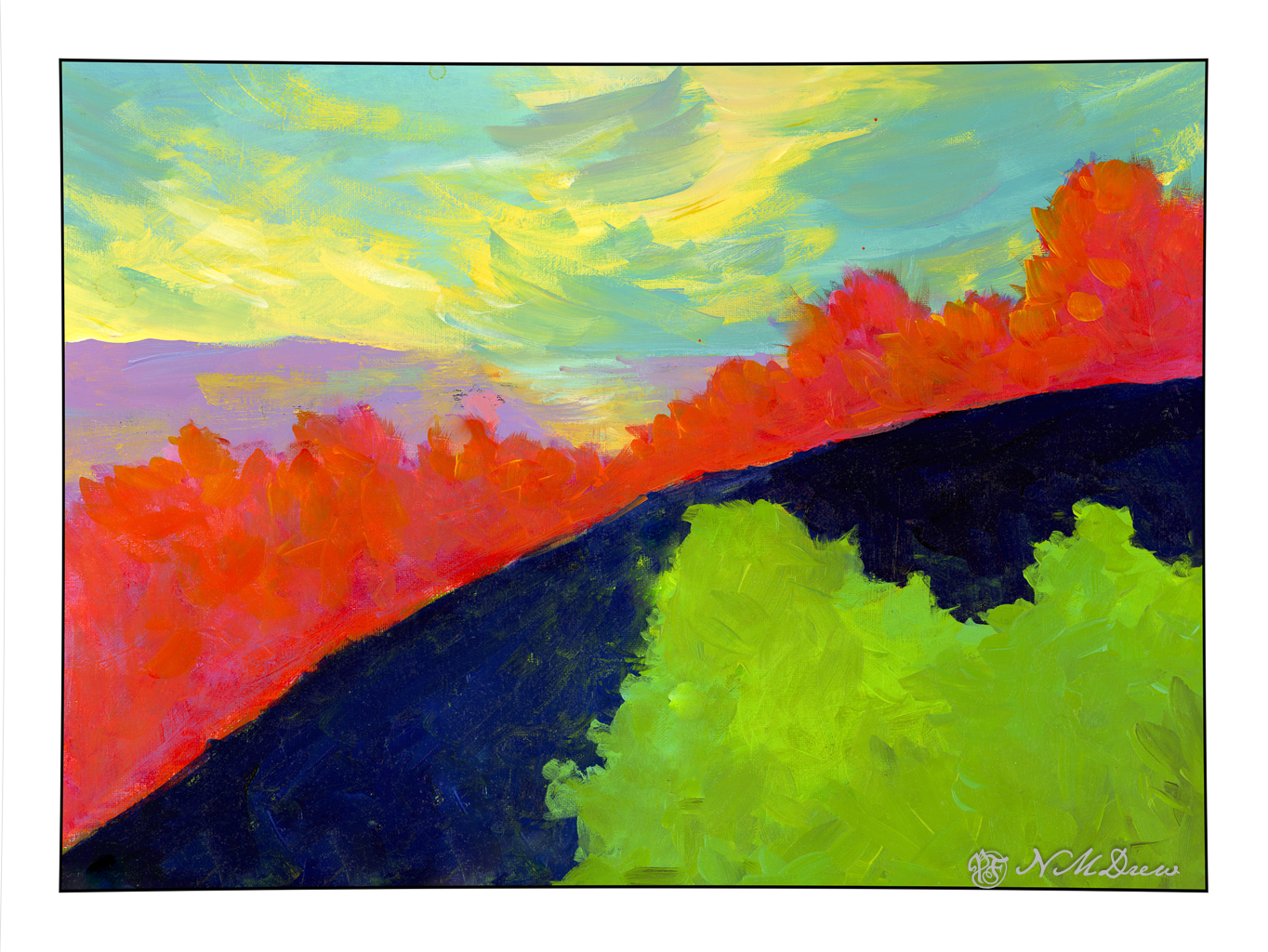
This painting, to my eye, is really depressing. There are parts of it I like, such as the sky and lavender land below it. Independently I like the red / lavender bushes. Below them, the navy and green just don’t do anything for me. Get rid of the bottom or change the colors may be something for the future, but I am pretty tired of this whole thing!

Colorfield – what do I want to do with it? When I did Into the Blazing Hills, I was much happier with the colors and certainly not depressed by them.

Looking at the above painting, I realize I like the lightness and warmth of the colors. The blob of blue and green in the top painting are cold and too contrasting in comparison with the rest of the painting. The orange bushes / trees create a hard barrier and keeps the whole painting from working well together.

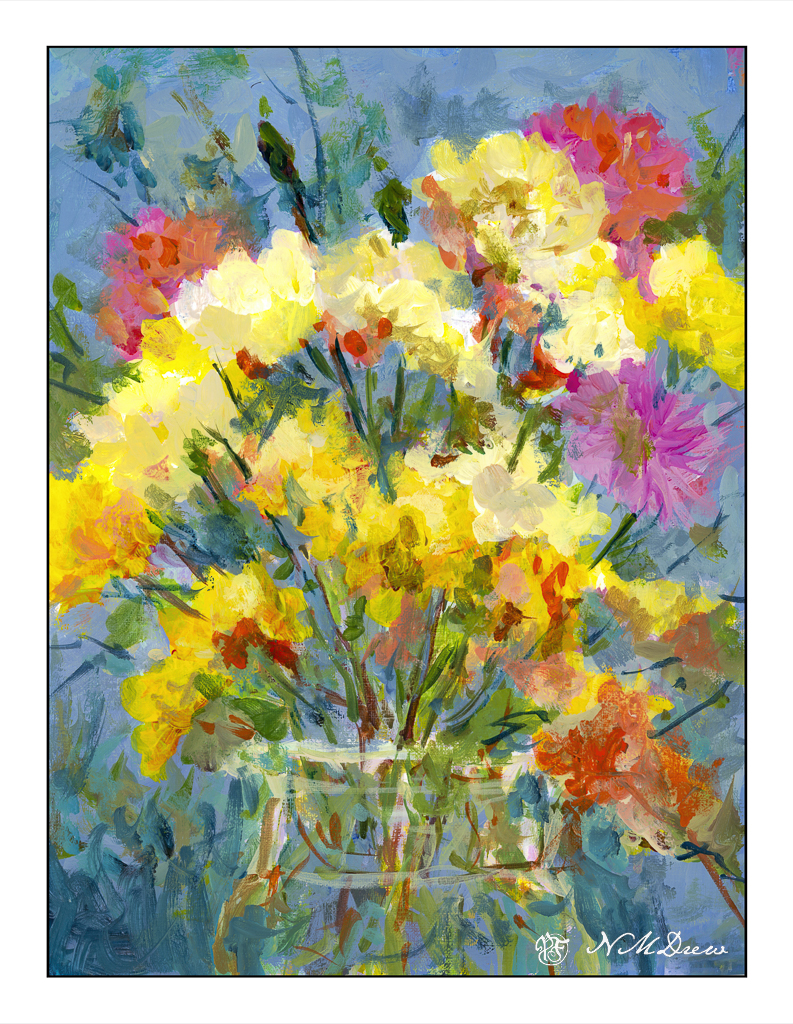
These flowers are also more harmonious and pleasing to me. A busier painting than the top one, and less abstract than the second one, but it doesn’t give me a sense of depression.

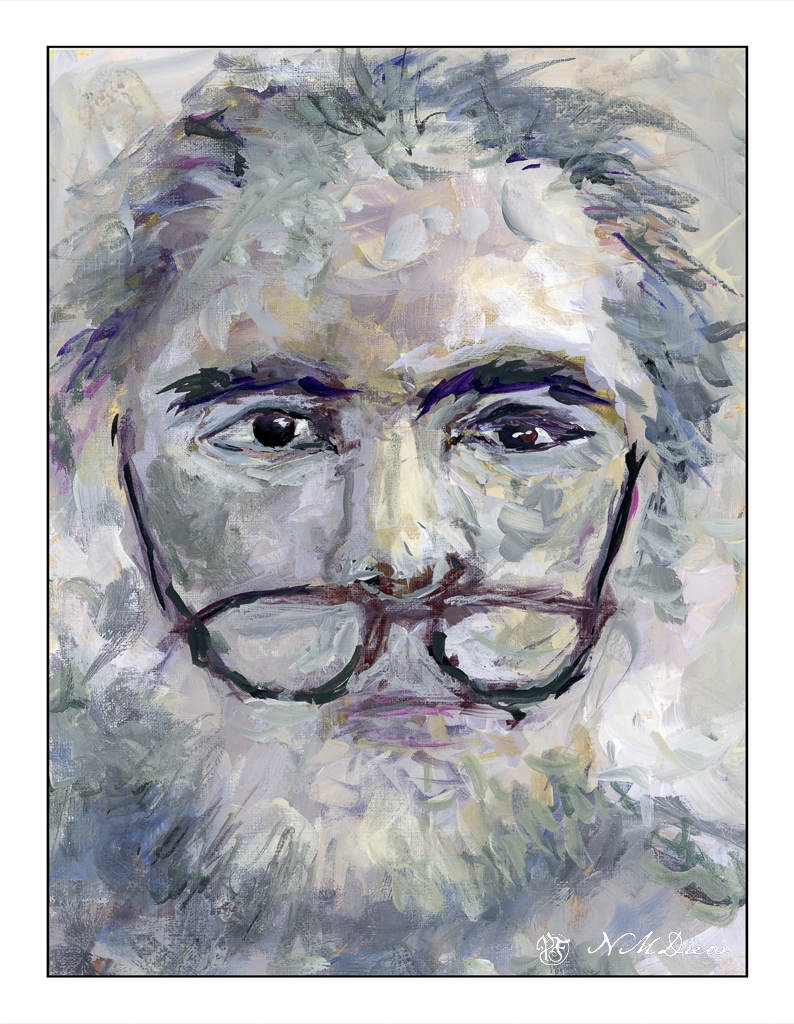
This portrait, too, is not depressing even though it is a low-key color palette.

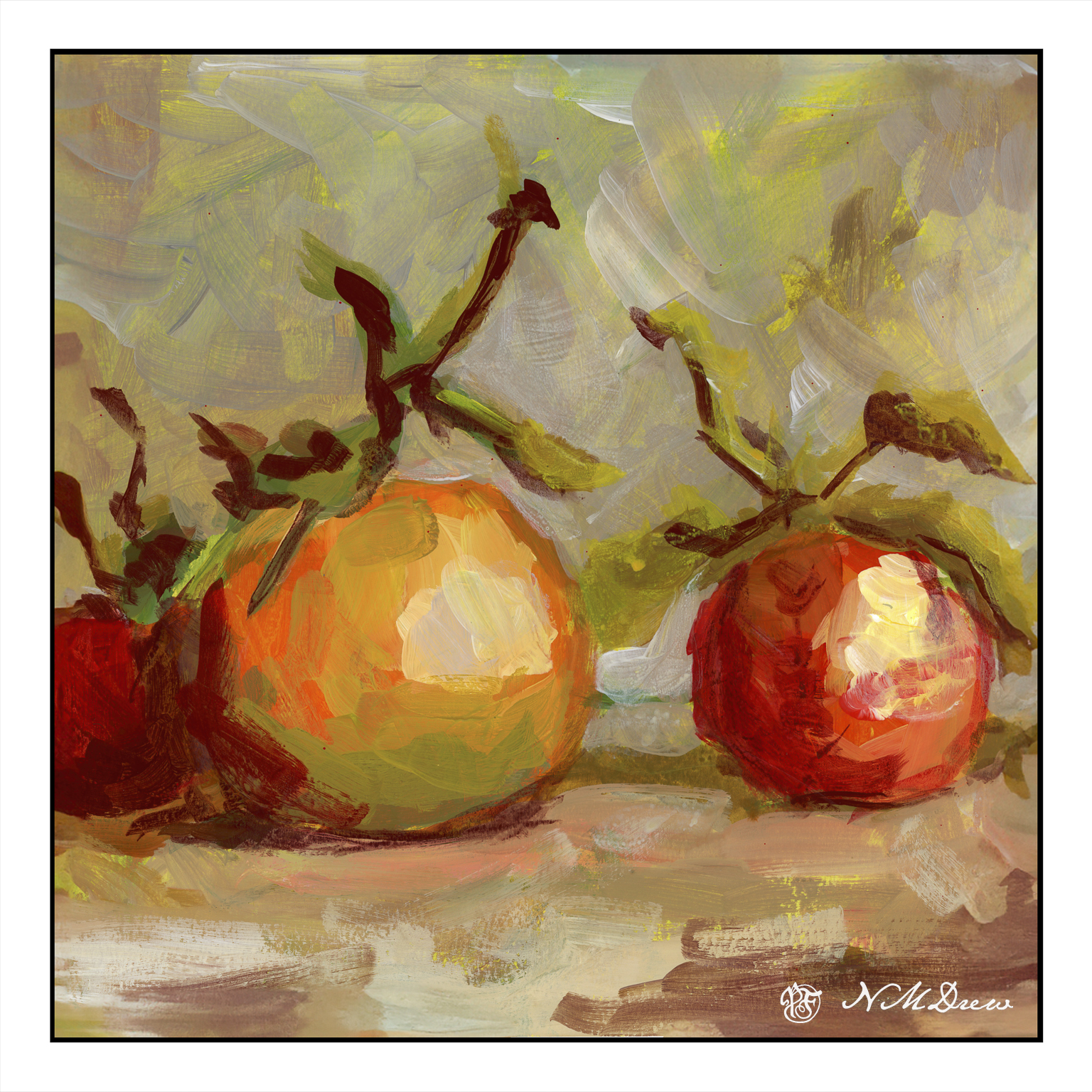
Colors here are also warm and friendly.

So, what does all this mean for me? It means that using colors – in say a “colorfield” style painting – that I like, that please me, are very important. While I like bright colors and contrast, how far should it go? That is really what this painting was all about – finding what works, what doesn’t work.

Play is a way to learn. I learned I need to pay attention to colors especially if I am using large areas, such as with this study. The teal / yellow sky is okay; the lavender land beneath the sky is also okay. The lavender / orange trees are fine too. But, that green and blue do nothing for me except repulse me. It is “not me” if I were to say anything about it. It is ugly and not harmonious. There is not a sense of balance in any part of the painting – rather it is a bunch of stuff stuck together to see what happens.

Not a happy camper with the results, but pleased with my analysis.

Upward to the Beyond

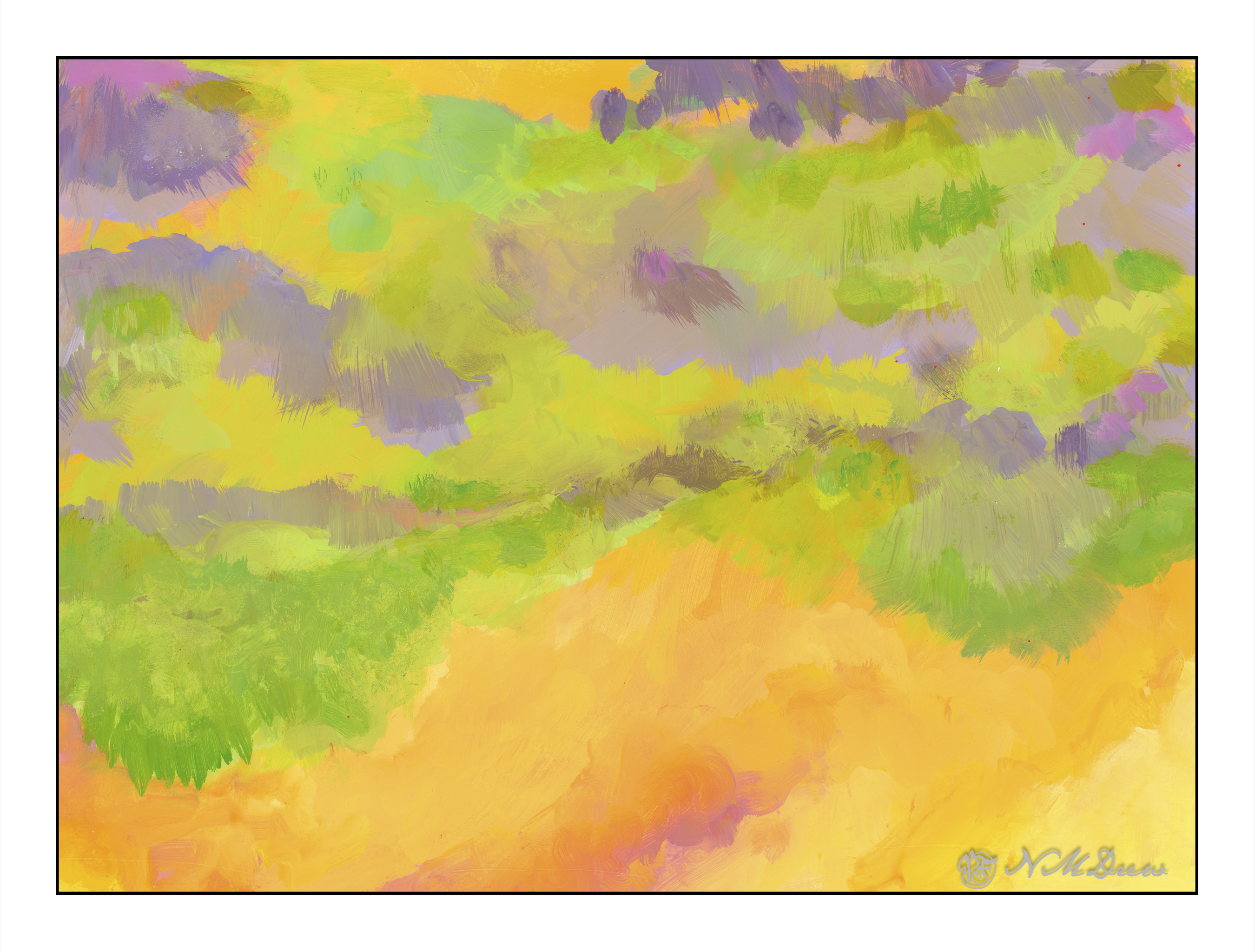
What is the “right” way to hang an abstract? Is it the artist’s choice – the viewer’s choice – the hanger’s choice? The painting “Into the Blazing Hills” is one thing – the title telling you what I see. Inverted, I see “Upward to the Beyond” – moving toward the other side. What is the other side?

Putting my digital signature on this one gives it a different sort of reality – the signature grounds the painting and says “this is the bottom so upward is the top.” What is the top? What is the bottom?

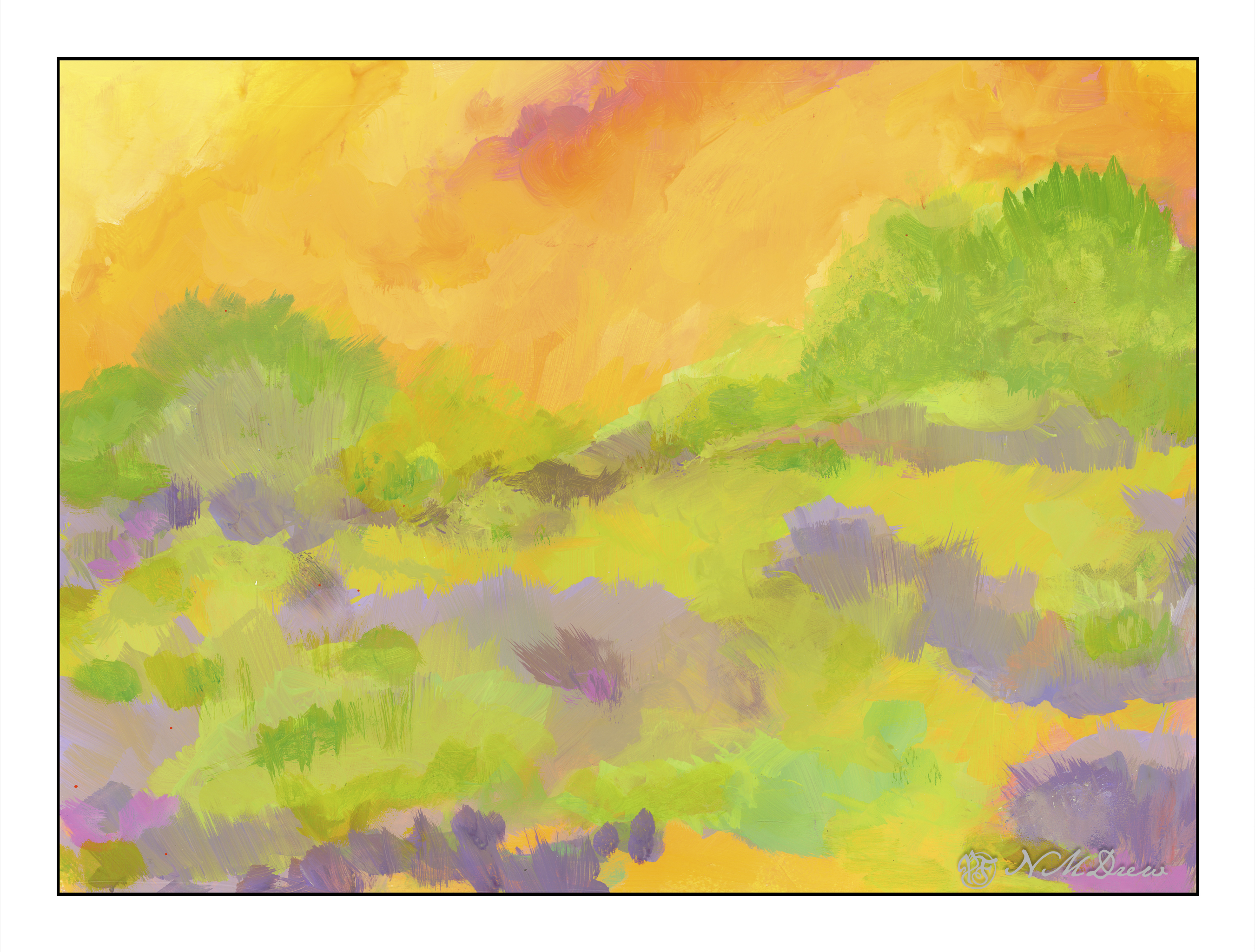
Sideways, the painting does nothing for me, with the yellows on the left or right, but yellows on the top or bottom create a totally different feeling, but somehow the feeling is right. I will say, the yellows on the bottoms are more disconcerting and unsettling to me than when it is on the top. So, upset or comfort?

If I were to critique this at all, I would find this painting bottom-heavy in yellow, and moving upward it seems as if there are trees silhouetted against the sky. However, there is all this stuff in between, and it lacks the harmony, I think, that “Into the Blazing Hills” has. Perhaps it is the ability for me to recognize my surroundings – the hills of California – with either a sky and brilliant, blazing sunset – or a wildfire encroaching a bit of paradise, destruction being moments away.

This is going to take time – maybe both are “right” – and perhaps the middle chaos in this painting is okay but needs a path of some kind to lead the eye upward.

Into the Blazing Hills

One thing I enjoy about a retrospective show of an artist’s work is to have a sequential progression of his / her development. As an erstwhile “artist” I find myself is bopping around. It is my erratic personality – my magpie personality – drawn to this and that. That is probably why I like Hawaiian print shirts – colorful and rather crazy. When I look at my own paintings over time, color is always the primary theme. Sometimes my color usage is quite bad – nay, awful! – and sometimes very much to my liking.

In this vein, I decided to just paint with the Golden fluid acrylics, spreading around colors and creating shapes. I figured it would make itself known to be whatever it is to be. As someone who likes landscapes, I figured it would become one. My thoughts were, as I progressed, a flower meadow, hills of flowers, trees, and then just putz. Using acrylics means putting paint down in a way which works with their quick drying qualities, but I did use matte medium. A lot of times I just dumped color on the palette paper, mixed, added white, and then mooshed it around on the paper. The matte medium creates a bit of transparency, and it makes a sort of glaze over underlying colors.

Painting was done with wide, flat brushes – 3″ and 1″ flats – later a large round – and my fingers encased in nitrile gloves. It took about 3 days and 6 hours to paint this on 15×20 watercolor paper. Golden Fluid acrylics, matte medium.

Colorism is something that truly appeals to me. Not Fauvism, which I find a bit too loud for my taste, but colors to create an emotion or feeling more than reality, with a bit of a suggestion of reality.

A Touch of the Fauve in Cinque Terre

Cinque Terre is located in Liguria, in northwest Italy, and comprises 5 villages built into the steep cliffs along the coastline. You can find all sorts of articles, videos, photos about it, and to my thoughts it sounds like an incredible place to see. However, it is not something I will get to do next week, so I thought it would make a good painting study. The idea of living in a house, built on a cliff at the edge of the ocean – I don’t know, but it seems quite a fascinating way to live!

I was more interested in playing with the paint and experiencing how to use the Golden fluid acrylics than I was in making a finished work of art. I am finding I like them when they have dried a bit and become rather sticky but still maintain the consistency of cream. Opacity seems to improve as the paints become more viscous. This stickiness makes for some rather nice ways of creating color combinations – one on another – and texture. This is all play, and play is the best way to learn how to use something, I think. The plan is to continue and come up with an opinion about if I like them – I think I do, sometimes more than other times – as well as just exploring painting with them.

This painting was inspired by a photo taken offshore and looking landward. The houses cling to the cliffs, and if you look closely at the photo, you can see pathways and stairs leading from one area of houses to another. There were more outcroppings of rock in the photo than I have here, and I think it would have been a better painting to have included them. It looks like I have two rock columns madly in love, and having a good smooch! Despite that, I had fun playing with not just the colors, but ways in which to apply the paint – like rubbing it in with a paper towel in addition to a paint brush. Soft and hard brushes also have and impact, as does using a filbert, flat, or round brush. So much to learn . . .

Golden fluid acrylics, a bit of a fauvist or colorist approach, 15×20 paper.