Estuary

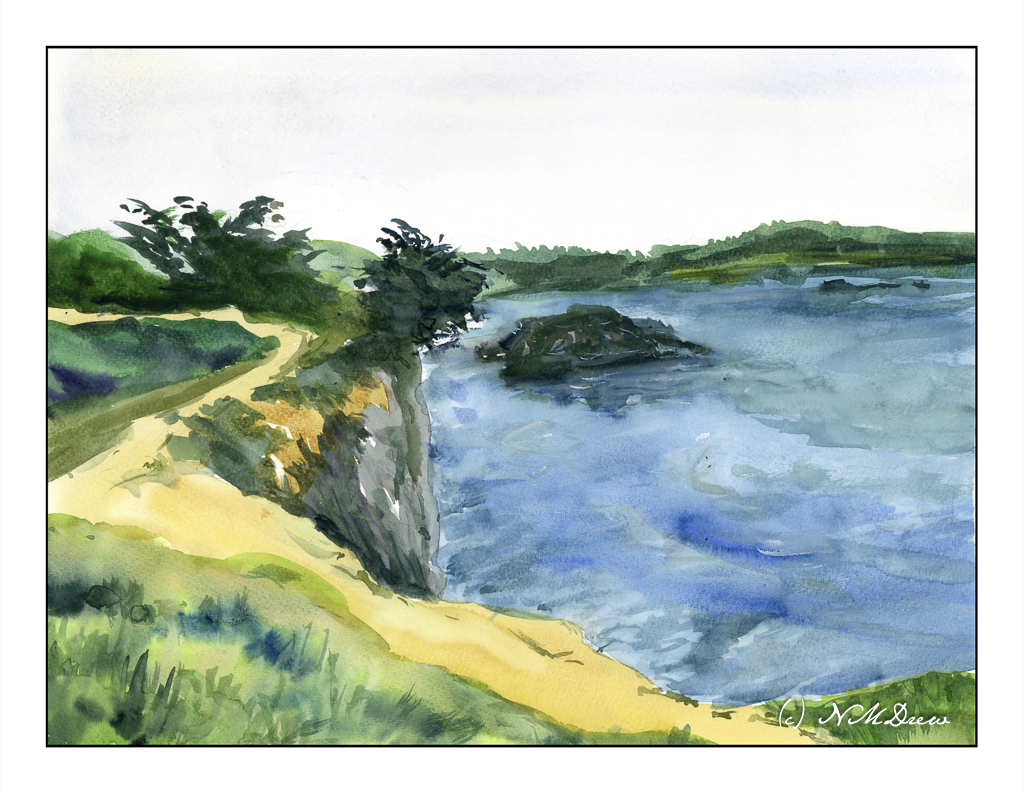
Estuaries are important connections between rivers and fresh water to the sea. The land may be marshy, the water brackish, and adapt to the influx of waves and sea water and the outward movement of fresh water. Consequently, the estuary provides high levels of nutrients in both the water and the sediment, creating highly productive habitats. Plants, animals, birds, fish, and all sorts of life thrive in the estuaries.

Additionally, the estuaries form a protective barrier between land and sea, but with the loss of estuaries, the damage from the sea increases. A good example of this is in areas where hurricanes and other fierce storms sweep inland, causing great damage – estuaries can survive such storms and recover, but further inland where the land and water are not adapted for saltwater, valuable land may be lost.

Estuaries are found worldwide. In northern California, the Pescadero Marsh Natural Preserve is found near San Francisco, and offers a wonderful environment for hiking and observing birds and plants. Currently, many trails are closed, but the visit to Pescadero State Beach is beautiful, as are many of the beaches found the length of the coast of California.

And, if you didn’t know, all beaches are public in California, so even if someone’s house fronts the shoreline, the beach is there for all. There may be a couple of exceptions to this law, but by and large, no one can tell you that you cannot walk along the shore.

Watercolor, Arches Rough 140#, 12×16.

Beach Day at Low Tide

After a busy several days, including the winding down of my summer painting classes, I needed to do some watercolor and landscape painting! Oil painting and portraiture require a lot of focus, but it is so restful to just think about colors and shapes, as I do in watercolors.

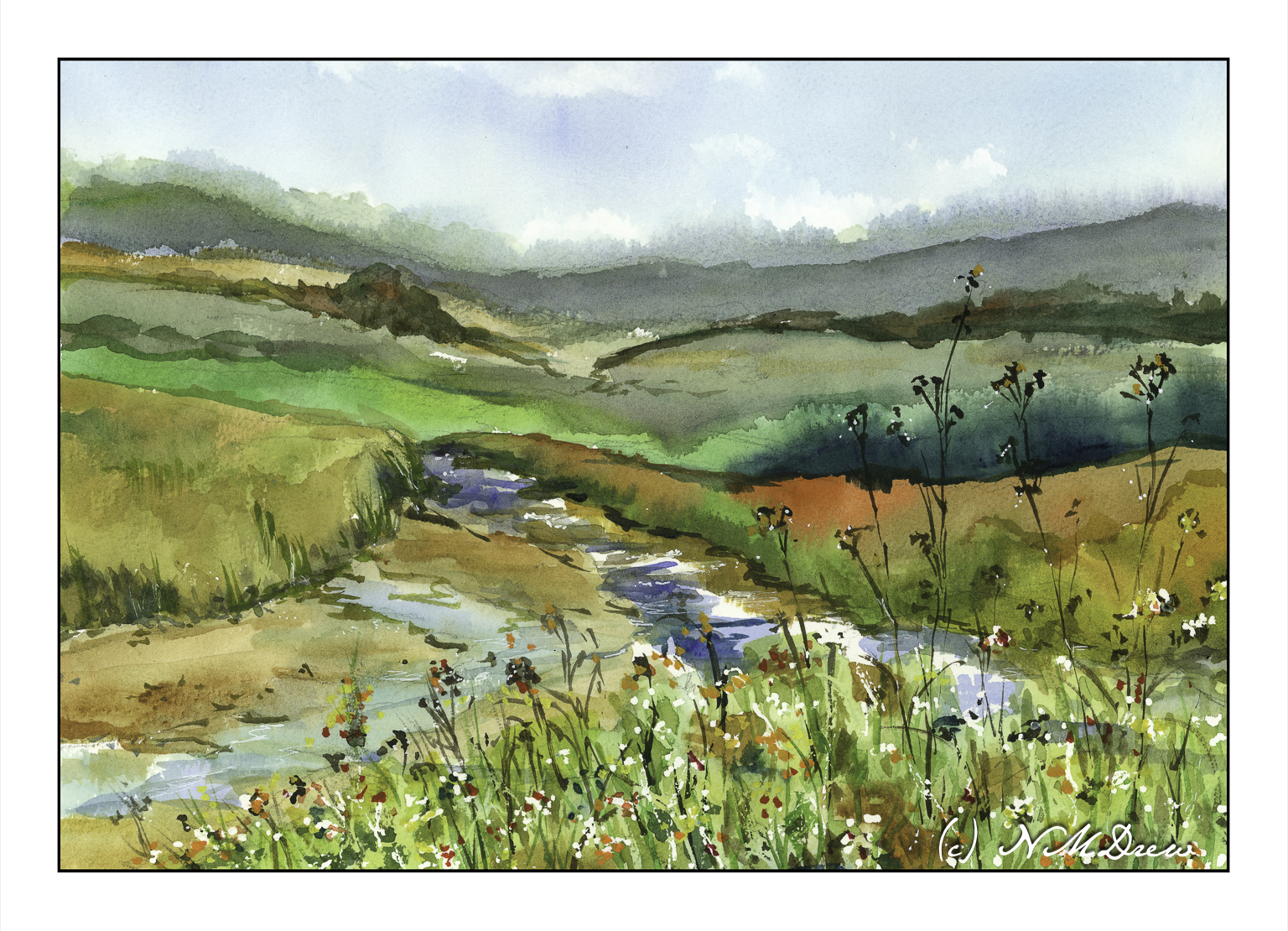
This painting is inspired by travels along the Oregon coastline. I tried to capture both the color of the sea as well as the mistiness of the distant mountains. The little dots representing a beach filled with people was a bit inspired because I needed to do something with some empty space in the middle. Nothing like being the god of your landscape, eh?

Watercolor, St. Cuthbert’s Mill Bockingford paper, 140# CP, 12×16.

North Coast

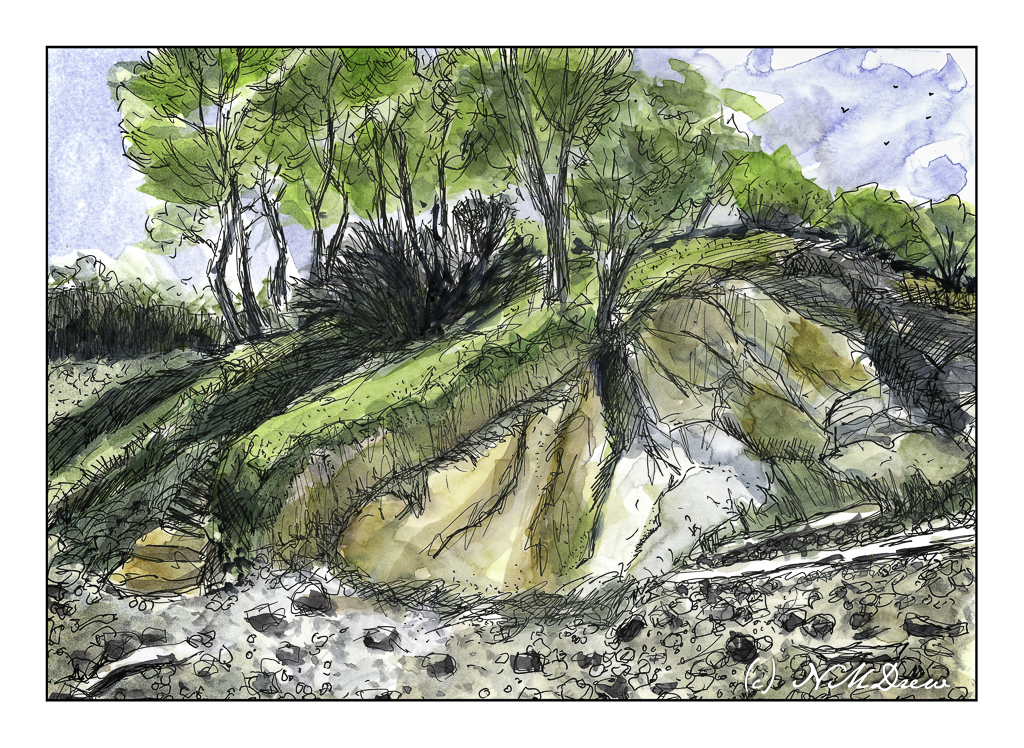
Rocky coastlines are always fascinating because the first time I ever saw the ocean was along a wide, sandy beach with gentle waves. Not so here! You can see the debris – fallen trees stripped to bare logs, rocks, erosion. You can only imagine what it is like during a storm.

Years ago, we drove up the California coast, heading into Oregon and points north. It seems once you hit the central coast, about 100 miles from where we are, the coastline begins to change. Highway 1 leads into Big Sur, that fabled and beautiful land, and it is here you see rugged cliffs. Then, north of San Francisco, you move into the wide beach sands of Stinson Beach and move further along to the rugged Mendocino coast and then beyond. This picture is based on a photo I took there years ago – no idea where we were, but it was stunning.

Ink, watercolor, bristol paper.

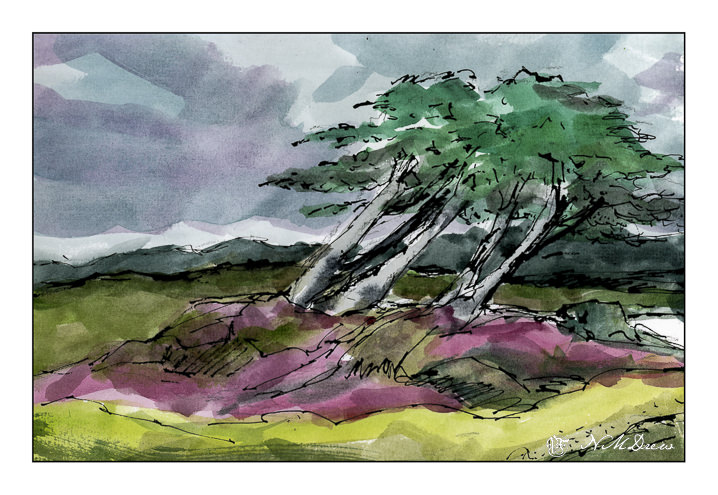
California Coastal Cypress

Stuck at home for the most part because of my ankle, I need to find things to do. It turns out that my ankle, while a mess of historical injuries, has no tears in the soft tissues. That is good. However, my heel bone has “microfractures” from the hard landing dodging the car last month. This is a bone bruise, and it is painful! I finally got into see the orthopedist, got a walking boot, and return in a month. The boot makes a big difference though it does take some getting used to wearing and using. I have to be careful not to pitch forward or backward. And you can hear me coming a mile away – squish, squeak, squish, squeak.

Of course, painting is the first choice! I am still tired intermittently from Covid, but I don’t have brain fog (at least I don’t think so), and look for things to enjoy but not be a source of frustration. Thus, ink and watercolor.

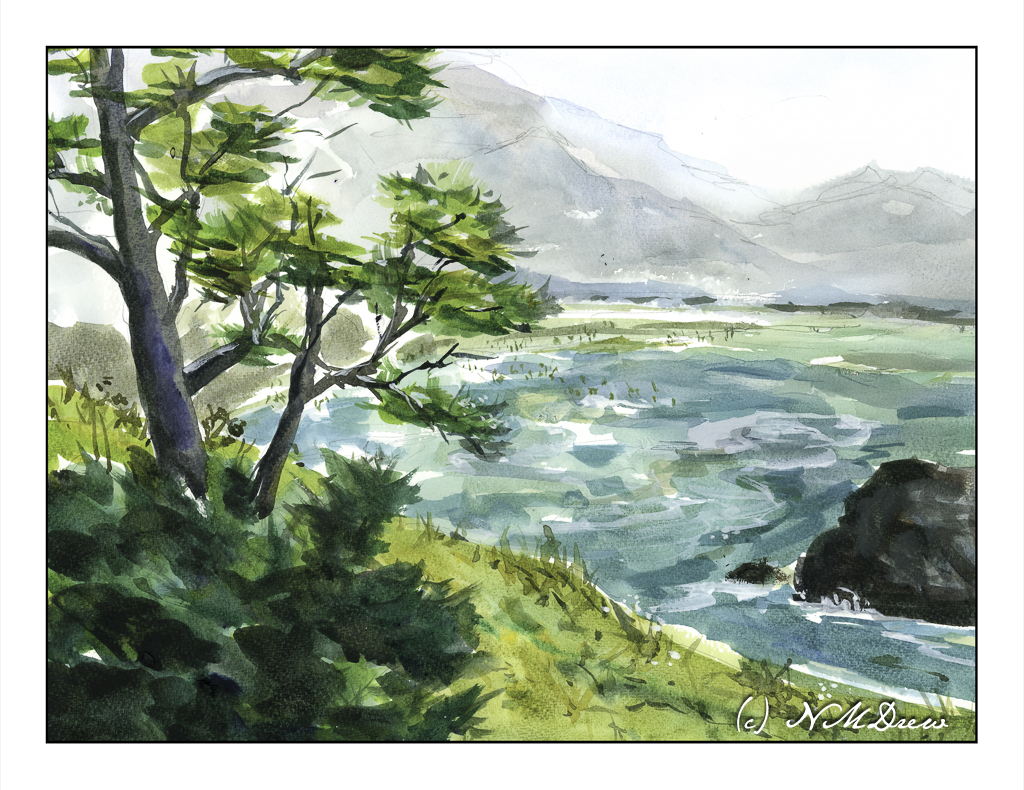
The Monterey Cypress is a tree that is common along the northern central coast of California. It is shaped by the environment as it moves with the wind and seems to grow away from the prevailing winds. To me, this quality is what makes it so beautiful and eye-catching. The coast is also subject to foggy days, damp and dreary, even in the height of summer.

Carbon ink, watercolor, Koi pan paints, about 8×10.

1. The Cove Below

Siena Blue did a series of 30 gouache studies – and she/he did a beautiful job! Inspired, I have decided to do a series of gouache paintings over the next several days, but I am not setting myself a goal as to how many. Gouache can be returned to easily enough as the paint re-wets quite well. As I have not worked in gouache lately and my life is going to be rather crazy over the next few weeks, it seems like the perfect medium for playtime.

So, a view looking over the edge of a cliff (I assume) taken somewhere on Capri – thus states the Pixabay description. As it is now summer, a rocky coastline, and a moored sailboat on a turquoise sea is quite a pleasant thought!

When I first began exploring gouache I found the work of Lena Rivo, observed her YouTube videos and took her short course. Both really helped me get a sense of how gouache works – it’s not watercolor nor oil or acrylic – and has an odd opacity that takes some getting used to – the colors are unique in many ways as there is a lot of white filler in the colors. Good quality gouache paints are opaque and cover well. All of my colors here are the same Lena Rivo uses, made by Holbein.

Gouache, about 8×10.