
No, not the Good Ship Madeleine, nor sister to the HMS Pinafore, but the Delicious Cookie Madeleine.
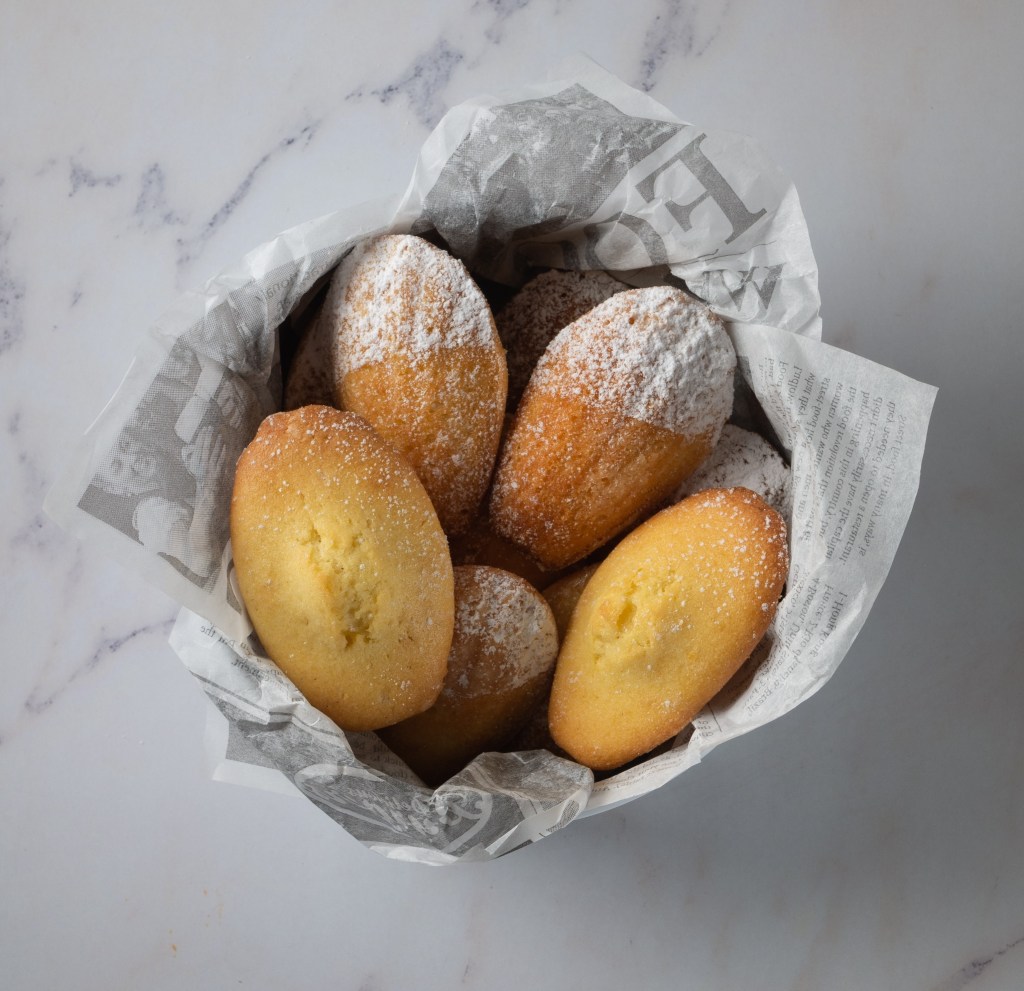
A madeleine is a French cake-like cookie, essentially a genoise, known for its shell-like shape from the pan side and a blump on the reverse. A good recipe is to be had at Preppy Kitchen – it produces a lovely, light, delicate cookie with a subtle hint of lemon. However, a couple of things – bake at 350F, and use a pan which makes smaller madeleines than mine does! I have one pan and I filled the madeleine molds full, like really full, and the batter runnethed over the tops of the molds and the cookies flowethed unto each other.
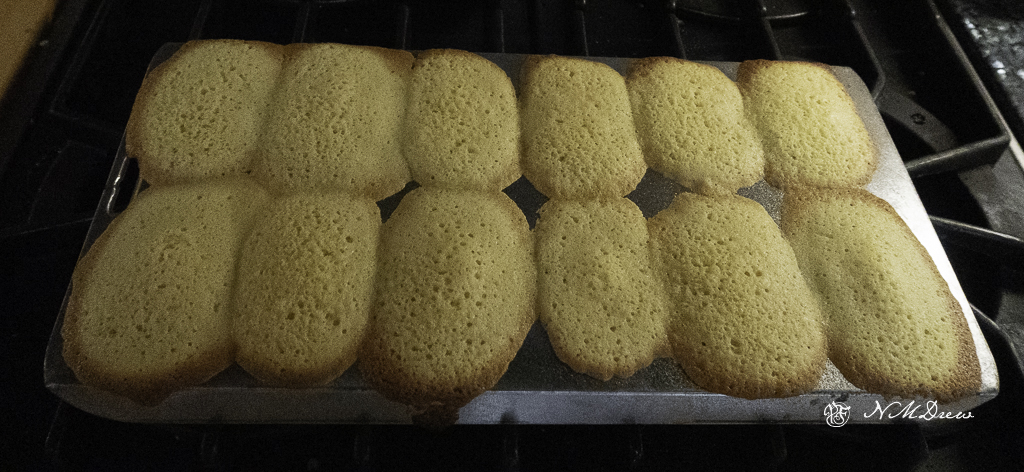
As you can see, my madeleines are robust and hardly delicate to look at. They are baked blobs of blobs of batter.
And, how to get them out of the pan? Well, I had thought of trimming their edges, but then the brown around the sides would disappear, and that little bit gives a crunch to the otherwise soft, airy cookie. And, if they sit in the pan, they get soggy. So, what to do with a hot pan and a cookie mess? Simple – dump them all out on the wire rack. This way, too, I could see if the cooking spray I used to grease the madeleine shapes would work.
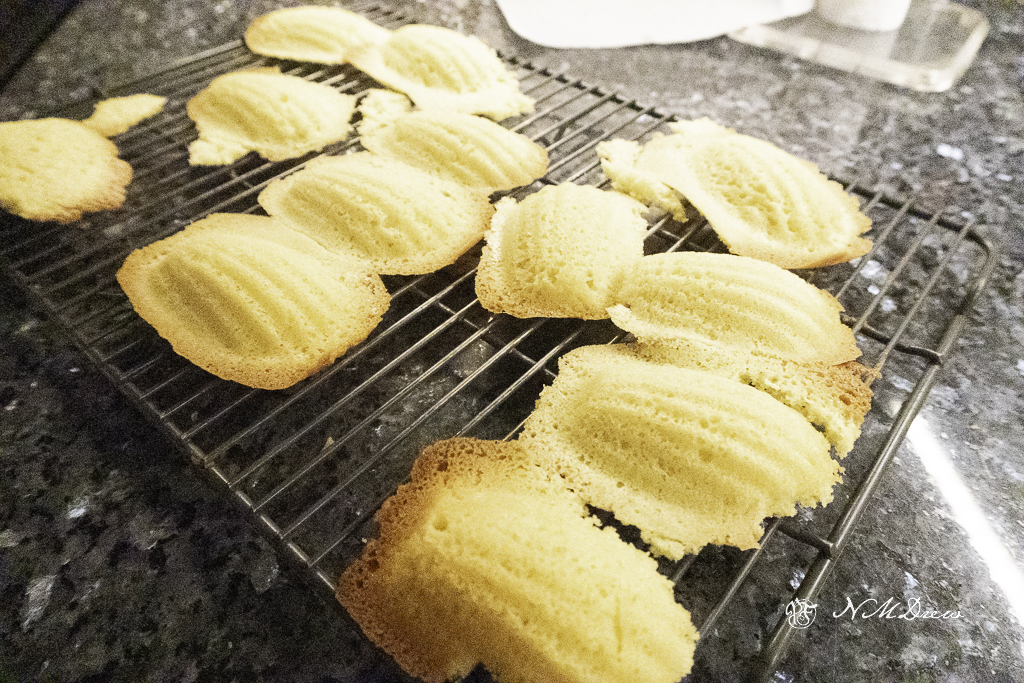
And the spray worked beautifully. Now, I have a pile of weird-looking cookies that don’t look especially appetizing – certainly not as lovely as our very first photo, which is a royalty-free one off the internet. However, be not dismayed! They are delicious! Good dunked in coffee, and most likely tea, and if you are familiar with M. Proust, you know of which I write.
Make yourself some madeleines, at least once in your lifetime. Make a test cookie or two in your pan – don’t overfill, but don’t underfill, either. I used a heaping tablespoon of batter for my pans, and it was too much. Here is the recipe below – refer to the link above, too, to get some good info that is not included here, and below is the recipe from a devilishly good and delicious website:
Madeleine Cookie Recipe
Ingredients
- 7 tbsp unsalted butter (100g)
- 2 large eggs at room temperature
- 1/2 cup granulated sugar (100g)
- 1 teaspoon lemon zest
- 1 teaspoon pure vanilla extract
- 3/4 cup all-purpose flour plus 1 tbsp (100g sifted)
- 1/4 teaspoon baking powder
- 1 pinch salt
Instructions
- Melt the butter either in your microwave or in a small pot over medium heat. Browning the butter will add a lovely depth or flavor to the cakes but is of course optional. Once melted or browned pour the butter into a bowl and allow to cool.
- Sift the flour, salt, and baking powder into a bowl then whisk together and set aside.
- Add the eggs and sugar to the bowl or your stand mixer fitted with a whisk attachment or a large bowl if using an electric hand mixer. Beat on high until the mixture is a light yellow color with a thick silky texture, about 8-9 minutes. You’ll see the beater leave trails when it’s ready. Mix in the vanilla and lemon zest toward the end.
- Fold the dry ingredients into the egg mixture and mix until just combined. You can sift the flour mixture into the eggs while you fold to avoid getting lumps or over-mixing the delicate batter.
- Drizzle the butter into the batter and gently mix until just combined.
- Cover and chill the batter as well as the buttered tins for 1 hour then scoop one tablespoon of batter into each scallop-shaped well. Bake at 350F 8-10 minutes.
- Serve with a light dusting of powdered sugar.
Notes from the Baker
Making these cookies needs a light touch. If you can, weigh your ingredients within a gram or two. Make sure you whisk your dry ingredients together and then sieve or sift the dry ingredients into the egg-sugar mixture. Fold it in with a light touch.
After you drizzle the butter over this, again, use a light touch. Turn your bowl as you fold. The butter will eventually work into the batter, but do it carefully.
Be sure to refrigerate the pan and the batter – I had mine in about 90 minutes. This stiffens the batter a bit and preserves the air beaten into the egg-sugar mix.
The recipe says to bake 8 minutes – which I did – but when I saw how big they were, I did another five, touched the center for a springy firmness, removed the pan from the oven. After letting the pan sit for a minute, contemplating what to do, I just turned the entire pan over and watched the cookies peel away from the pan, helping some as needed.
Make some batter. Make some test cookies. Enjoy no matter how homely they may look.




 Ink, Yarn & Beer