The Wreck of the Madeleine

No, not the Good Ship Madeleine, nor sister to the HMS Pinafore, but the Delicious Cookie Madeleine.
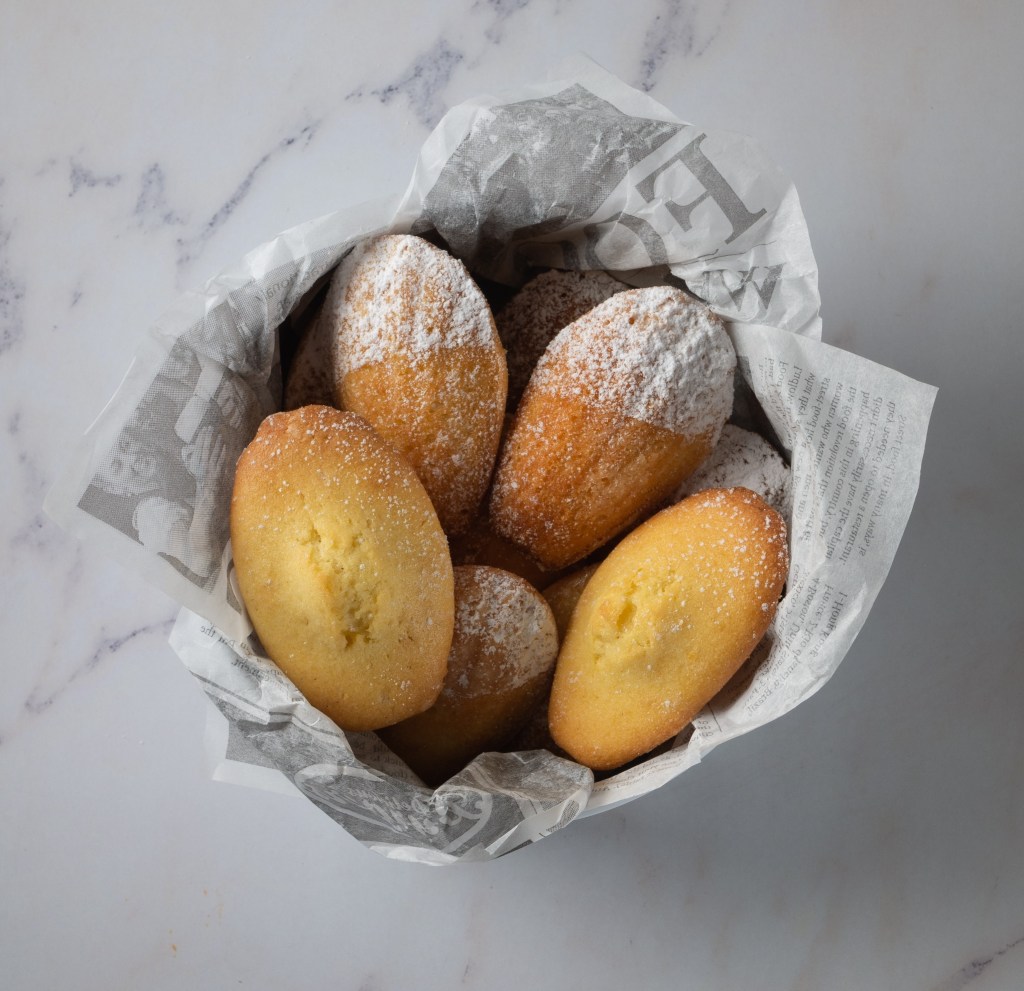
A madeleine is a French cake-like cookie, essentially a genoise, known for its shell-like shape from the pan side and a blump on the reverse. A good recipe is to be had at Preppy Kitchen – it produces a lovely, light, delicate cookie with a subtle hint of lemon. However, a couple of things – bake at 350F, and use a pan which makes smaller madeleines than mine does! I have one pan and I filled the madeleine molds full, like really full, and the batter runnethed over the tops of the molds and the cookies flowethed unto each other.
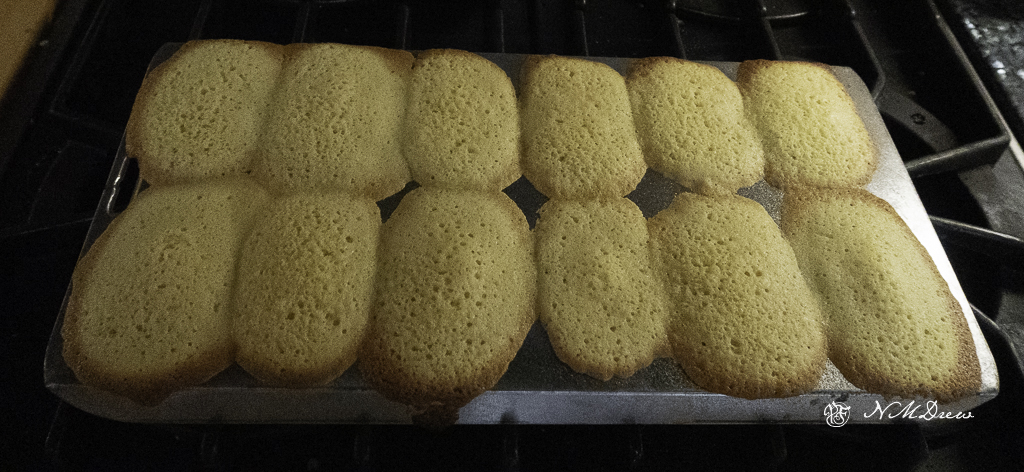
As you can see, my madeleines are robust and hardly delicate to look at. They are baked blobs of blobs of batter.

And, how to get them out of the pan? Well, I had thought of trimming their edges, but then the brown around the sides would disappear, and that little bit gives a crunch to the otherwise soft, airy cookie. And, if they sit in the pan, they get soggy. So, what to do with a hot pan and a cookie mess? Simple – dump them all out on the wire rack. This way, too, I could see if the cooking spray I used to grease the madeleine shapes would work.
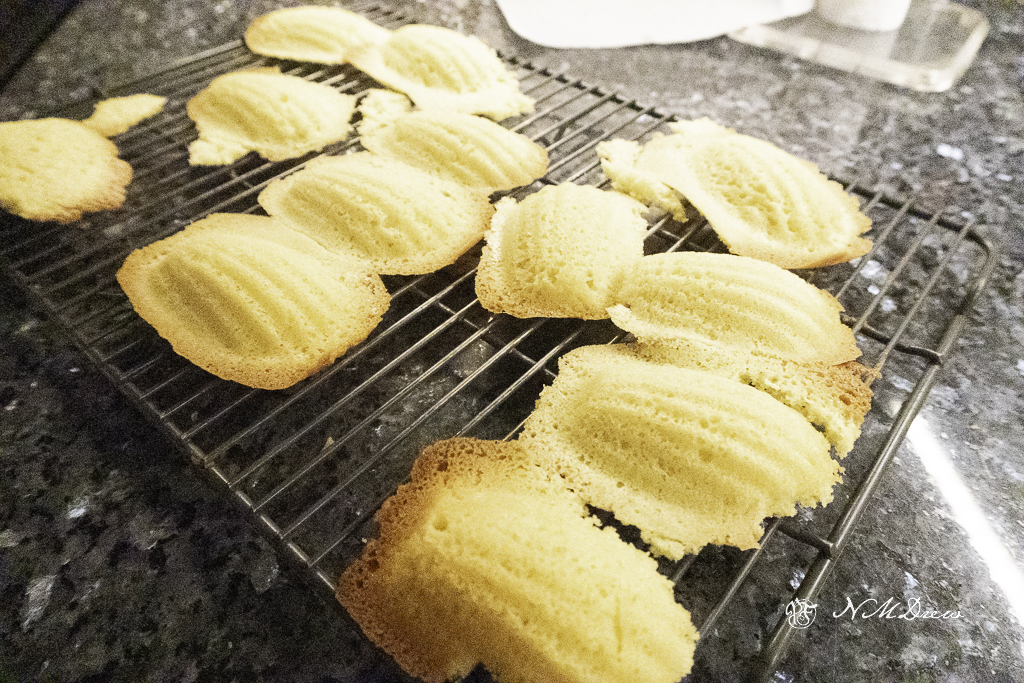
And the spray worked beautifully. Now, I have a pile of weird-looking cookies that don’t look especially appetizing – certainly not as lovely as our very first photo, which is a royalty-free one off the internet. However, be not dismayed! They are delicious! Good dunked in coffee, and most likely tea, and if you are familiar with M. Proust, you know of which I write.

Make yourself some madeleines, at least once in your lifetime. Make a test cookie or two in your pan – don’t overfill, but don’t underfill, either. I used a heaping tablespoon of batter for my pans, and it was too much. Here is the recipe below – refer to the link above, too, to get some good info that is not included here, and below is the recipe from a devilishly good and delicious website:

Madeleine Cookie Recipe

Ingredients
  • 7 tbsp unsalted butter (100g)
  • 2 large eggs at room temperature
  • 1/2 cup granulated sugar (100g)
  • 1 teaspoon lemon zest
  • 1 teaspoon pure vanilla extract
  • 3/4 cup all-purpose flour plus 1 tbsp (100g sifted)
  • 1/4 teaspoon baking powder
  • 1 pinch salt
Instructions
  • Melt the butter either in your microwave or in a small pot over medium heat. Browning the butter will add a lovely depth or flavor to the cakes but is of course optional. Once melted or browned pour the butter into a bowl and allow to cool.
  • Sift the flour, salt, and baking powder into a bowl then whisk together and set aside.
  • Add the eggs and sugar to the bowl or your stand mixer fitted with a whisk attachment or a large bowl if using an electric hand mixer. Beat on high until the mixture is a light yellow color with a thick silky texture, about 8-9 minutes. You’ll see the beater leave trails when it’s ready. Mix in the vanilla and lemon zest toward the end.
  • Fold the dry ingredients into the egg mixture and mix until just combined. You can sift the flour mixture into the eggs while you fold to avoid getting lumps or over-mixing the delicate batter.
  • Drizzle the butter into the batter and gently mix until just combined.
  • Cover and chill the batter as well as the buttered tins for 1 hour then scoop one tablespoon of batter into each scallop-shaped well. Bake at 350F 8-10 minutes.
  • Serve with a light dusting of powdered sugar.

Notes from the Baker

Making these cookies needs a light touch. If you can, weigh your ingredients within a gram or two. Make sure you whisk your dry ingredients together and then sieve or sift the dry ingredients into the egg-sugar mixture. Fold it in with a light touch.

After you drizzle the butter over this, again, use a light touch. Turn your bowl as you fold. The butter will eventually work into the batter, but do it carefully.

Be sure to refrigerate the pan and the batter – I had mine in about 90 minutes. This stiffens the batter a bit and preserves the air beaten into the egg-sugar mix.

The recipe says to bake 8 minutes – which I did – but when I saw how big they were, I did another five, touched the center for a springy firmness, removed the pan from the oven. After letting the pan sit for a minute, contemplating what to do, I just turned the entire pan over and watched the cookies peel away from the pan, helping some as needed.

Make some batter. Make some test cookies. Enjoy no matter how homely they may look.

Apple, Anyone?

I was feeling rather depressed by my rather poor watercolors of the other day – so, time for a break. What to do? Well, how about a bit of serious cleaning up of stuff that this gal has accumulated? What I am talking about is my bill and finance drawer. Need I tell you what was in it – nay! But let us say I shredded up about 4-5 fifteen gallon trash bags worth. Now there is a lot of room in the drawer, it is organized, and I have made the resolution to shred unnecessary items about every other month.

Okay, stop laughing. There is a definite pack-rat gene in the family, specifically on the paternal side (sorry, Dad!). De-pack-ratting requires a break, and a break from watercolors means using something else. Enter revisiting pastels. I did an apple.

I was doing pastels a few years ago and really enjoyed the medium. It is a combination of painting and drawing, both of which I like. Apples are rather generic and very recognizable, and cheerful, too, if you like bright red. I do like bright red, and so here we are.

I think I am going to be doing pastels for awhile. I need a bit of a break and a change from watercolor, even though I am really trying to work hard at it. The only drawback to pastels is the dust, but I wear an N95 mask and clean up the dust with a damp cloth afterwards. Here, Nupastels and Rembrandt soft pastels, and a touch here or there with a pastel pencil. I have some fixative arriving tomorrow which supposedly will not darken the pastel painting much. The paper is Mi-Teintes, reverse surface, painted upright.

Too Much Work

“For every 100 photos, 1 is a keeper.”

“Two steps forward, one step back.”

Well, that is true for me in the world of trying to make my watercolor paintings more simple in painting style though not necessarily in content. Of late, rocks and plants.

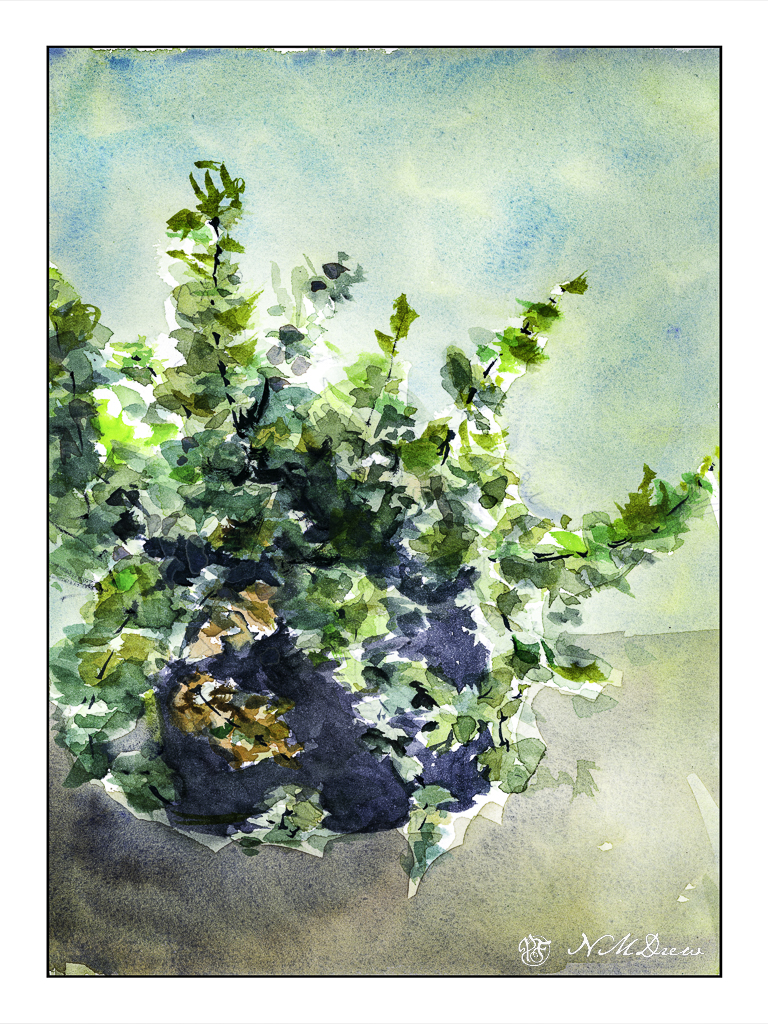
Let’s start with my painting of Greek oregano, growing like a weed in a pot on the patio. The leaves are simple enough, shaped somewhat like an egg (but flatter 🙂 ) on long, straggly stems. The color is sort of that dull, sagey-olive green that plants in the Mediterranean climate often have. In sunlight, a bit of warm yellow shows up. In shade, the greens are darker. Pretty logical, right?

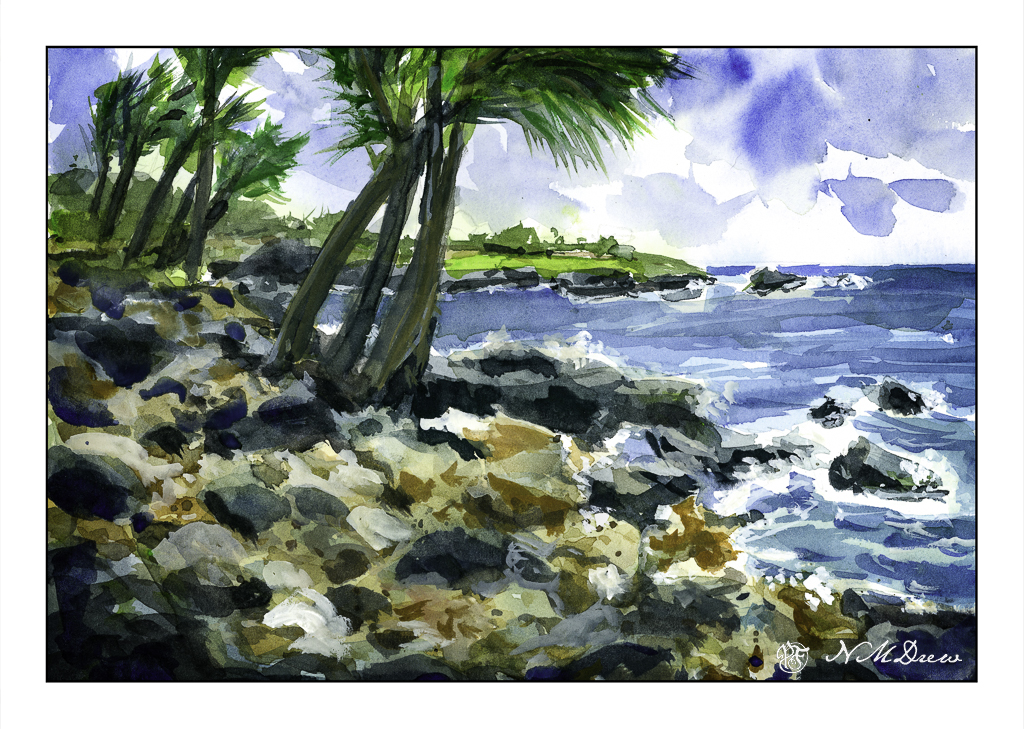
And then there are the rocks I have been thinking about since I did the much more successful cliffs of the other day. The rocks in the fort in the VI was okay as a rock building study, but not so hot as a painting. The beach scene below is of a rocky beach of lava stones – many black ones in particular, but with softer sandy rose colored stones in between. And a few palm trees. And an ocean. And a spit of land sticking out. The rocks were the primary focus as that is the rocky subject I am approaching. Simplification of shape and shadow – some successful, some not.

I sat outside yesterday, using reference photos of lava rock beaches around the world, and then using the oregano plant a few feet away on the concrete. Good to be outside. Good to work on two opposing pages of the sketchbook, waiting for one to dry and working on the other. Back and forth. I was amazed I was out there for at least two hours, with more indoors. I am spending more time on painting a picture than I have before . . .

Success? It comes in steps. A lot of crap with a few successes.

I think it is time to go hem some pants.

Practice Stones: Fortress in the British Virgin Islands

After working on the cliffs, I also want to work on another item found in nature – rocks and boulders. These are also used as building materials, so why not a building of rocks and such cemented together in the 1600s? I always love stone buildings – or fortresses – constructed of nature’s gift. Stone has been used for millennia, so why not? This is a painting of what I believe is Fort Recovery on the island of Tortola, which I visited some time ago.

The purpose of this picture is not a complete picture but a way of figuring out how the stones might be done. The palm trees are really part of the actual fortress, but I put them in as it helps me see if something works.

The stones are simple but I am experimenting with how to express such rock and stone buildings. I could try to do all of the stones, but what a yawn. More, it is the texture of a building made with the irregular shapes and colors of rocks.

What I have chosen to do here is to simplify the structure – not paint rock for rock – but give an impression of it. The stones in many instances are more round than depicted, but it is on the beach – that gorgeous sand is so bright! – with a few plants and palms and newer construction around it. If I recall, the day was glaring and sunny, very hot and humid as is the norm for the V.I. that time of year, and it was also in July.

Cliffs

There is nothing so dramatic as a sea and cliffs, sometimes a sandy shore – but rugged rocks and trees clinging on for dear life always catch my eye. Northern California has its share, as do Oregon and Washington. All over the world such drama is there for our pleasure and to keep us humble.

My approach, thanks to having a sketchbook – my lovely sketchbook! – is becoming more deliberate and more patient. I am working with larger planes of color, going for the grand before homing in on the detail. I also wanted strong contrast of sun and shadow. Simplicity. Clarity. Less is more, etc. As well, warm and cool.

I am honestly very pleased with how this painting turned out. I think I will leave it at that!