Me and My Cookie Scoop

I love cookies, but of late, dietary issues have forced me to stop eating certain foods after a lifetime of eating them.  Well, that is the way life is.  Luckily, there is the internet, there is imagination, and there is my love for cookies.  If I were to single out two favorite sweets, cookies and homemade fruit pie are the winners.  So, today, I decided I would look for cookies that didn’t use flour or starches, and I came across this recipe for thumbprint cookies by Danielle Walker.  They are designed to be paleo or specific carbohydrate diet (SCD).  They are a great start, but as I didn’t have coconut flour, I changed them a bit.  Here is my take on the recipe.

Thumbprint Cookies

1 egg
6 T. soft butter
1/3 c. honey
1/2 t. vanilla extract
1 egg
2 c. blanched almond flour (mine is from Trader Joe’s)
1/2 c. almond meal
1/2 c. unsweetened flaked coconut
1 tsp. cinnamon
Fruit preserves without sugar (I used some fruit spread sweetened with grape juice and natural pectin from Trader Joe’s)

Preheat oven to 350F. Beat together butter, honey, and egg, for about a minute at medium speed. Beat in at low speed the remaining ingredients until the mix together well.

I suggest you make one test cookie! This will help you adjust time and add ingredients if you need to.

Using a 2 T. cookie scoop, make balls, and place on parchment covered cookie sheet. Press your finger into the cookie to make a deep well. Fill well with just enough fruit spread to fill the indentation – don’t let it run over the sides or overfill. Bake for 15 minutes until lightly brown. Let cool completely on wire rack to allow the fruit spread to cool to a non-liquid state.  Yield:  17 – 18 cookies (I ate some of the dough!).

I think next time around I will add a bit of salt . . . I seldom cook with salt, but these cookies need just a tad.

Damned good cookies if you ask me!

Wet-in-Wet Pond in Mist

Another lesson in wet-in-wet technique with Peter Sheeler.  This one really worked well for me!  I like the results below.  My weeds in the foreground on the left were not as dry-brush as they should have been to get the crispy qualities – the right side was more successful.  I’ll be doing another of Peter’s exercises later today!

Holiday Cards: Winter Stream

I used six of Peter Sheeler’s videos to create cards for my sister-in-law’s Christmas present, along with using them for practice.  Doing all of these has proven to be more thought-provoking than I realized.  Copying by watching a video is really informative.

In many ways, this was perhaps the most deceptively simple in appearance, but in reality the most complex.  The reason for this is the stream.  Water is never easy to express (at least for me).  There are ripples, reflections, shifting colors to reflect the sky and scenery above.  Besides all this, there is the snow.  It also reflects along the banks of the stream, which you can see in Peter’s video, but which never made it into mine – this is on the center left of the stream.

Mine below has some good areas – certainly there is white! – but bits of it are a tad overworked.  The scan is not as subtle as the painting, either, but I am not really sure how to deal with that.  I decrease some areas of saturation in the image using Lightroom . . . and I am not sure if I am going to include this card in the set because of the smudges and such.


Moonlight

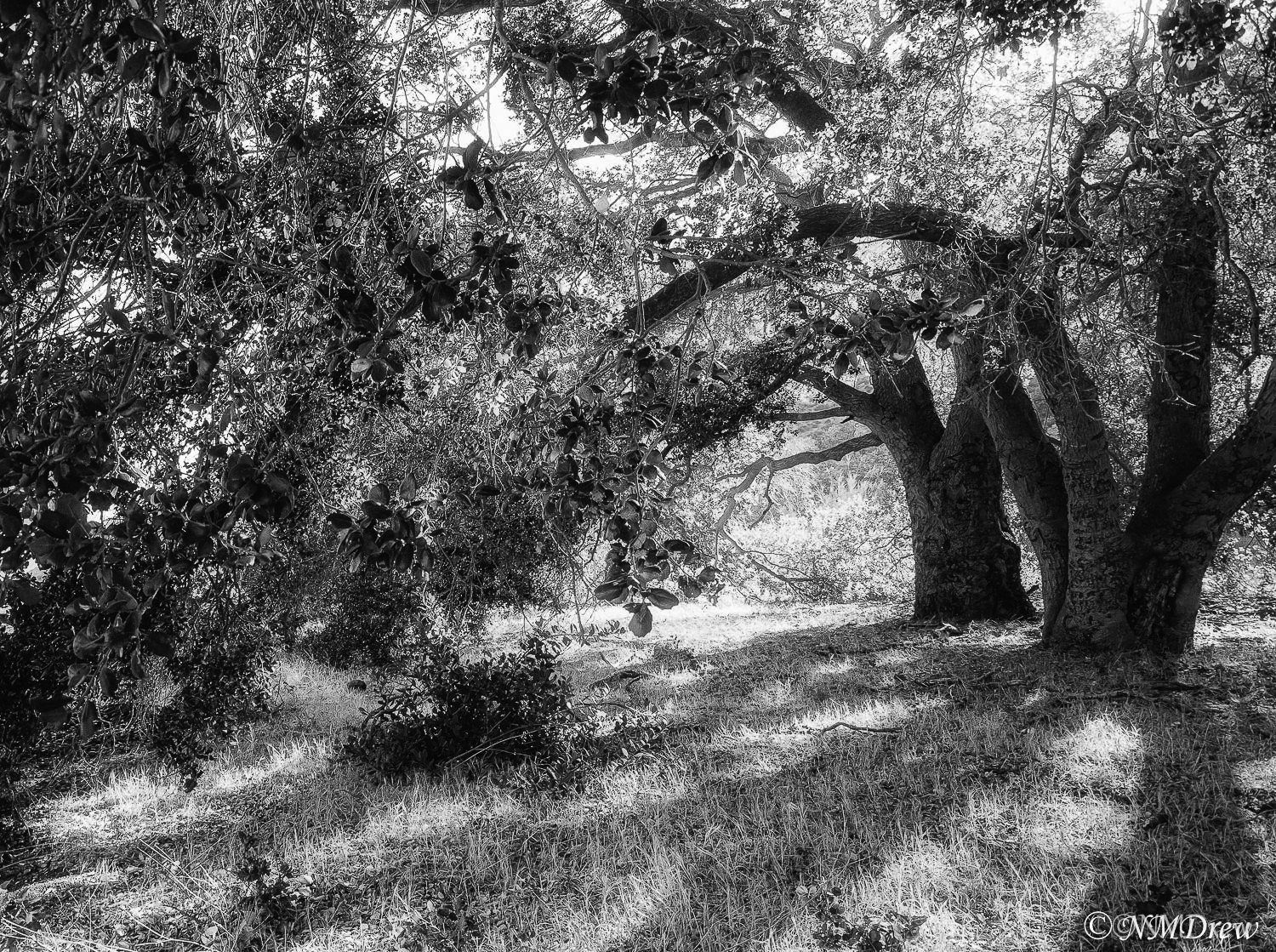
Night is always mysterious and exciting.  The moon overhead – clouds – wind- the creaking of branches – the rustles in the undergrowth.  This is what I decided to try, using an old sycamore tree as the subject, and a bit of my imagination.

First step was to decide on colors, and approach.  I decided warm undertones for the tree and the sky.  I used a bit of Quinacridone gold and Yellow Ochre for a thin wash.  From there, successive glazes in Ultramarine Blue, Indrathene Blue, and Carbazole Violet.  As things progressed, some Burnt Sienna.  You can see the different layers below.

At times I used a hair dryer to dry the layers . . . other times I painted as I held the hair dryer.  I used rounds, flats, and finally a rigger brush (for the very first time!)  It was okay to use the rigger in the background, but crossing it along the bottom of the tree – I don’t know – I think it detracts from the rest of the tree – hard to say at the moment.


Negative Painting & Glazing

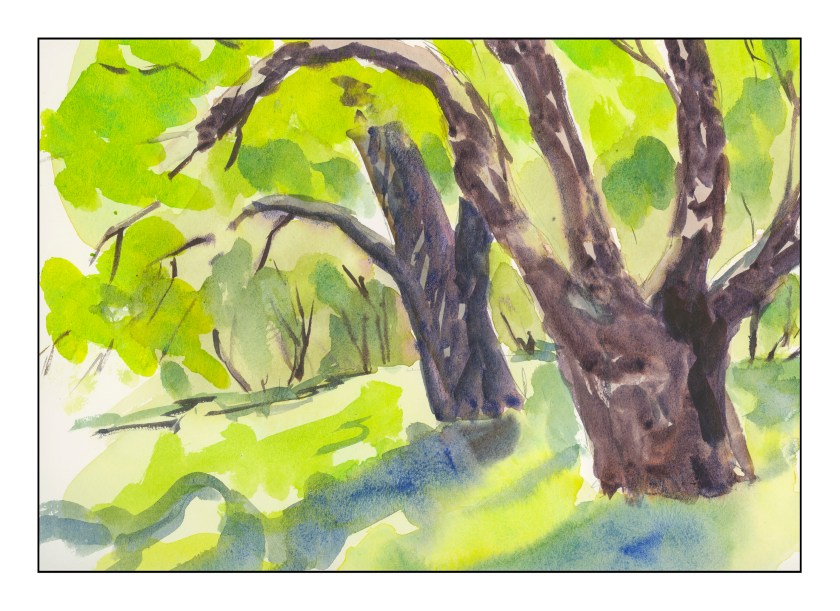
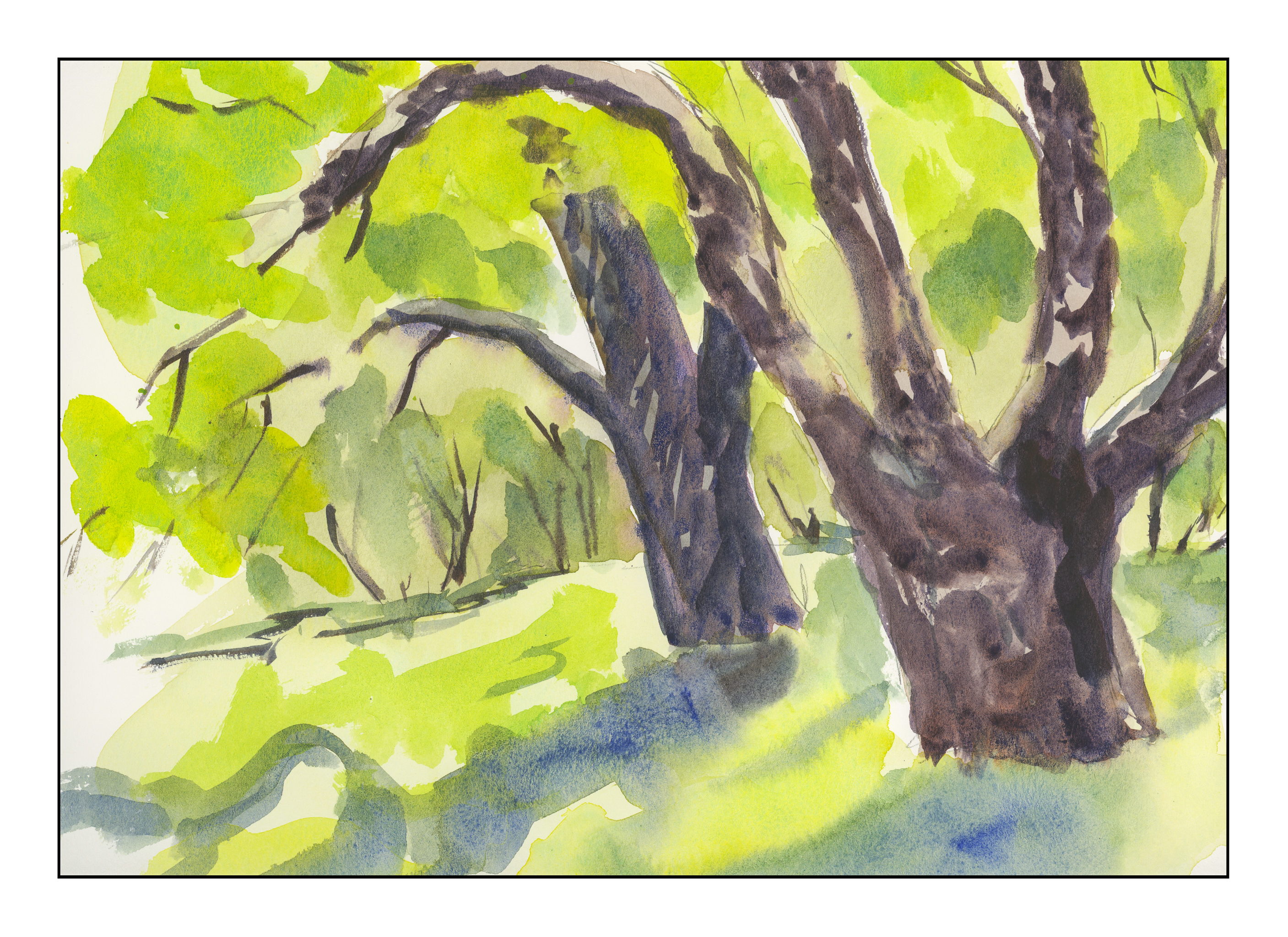
This morning I decided to do a few things I haven’t been too fond of in the past.  One is negative painting.  The other is using glazes.  That’s what I did here.  The first layer was a warm yellowish wash, very thin.  From there, about 3 or 4 consecutive layers of blues and violets around the main trunks, and then over the ones to the sides, making them bluish.  I then used a rigger brush (for the first time) to create branches.

Overall, the picture works, but the areas I can say shouldn’t have happened are the branches in front of the central trunk.  The other thing I need to do is to create better contrast on the branches, in particular it seems on the right.  I would like to see more blue in there, in narrow strips using a flat brush.  I may do that later.

The idea behind this painting a sycamore tree in moonlight, with the above exercises to accomplish it.  I thought ahead more than I usually do, considering colors and such, as well as the approach to creating what I desired as an end product.