Saguaro

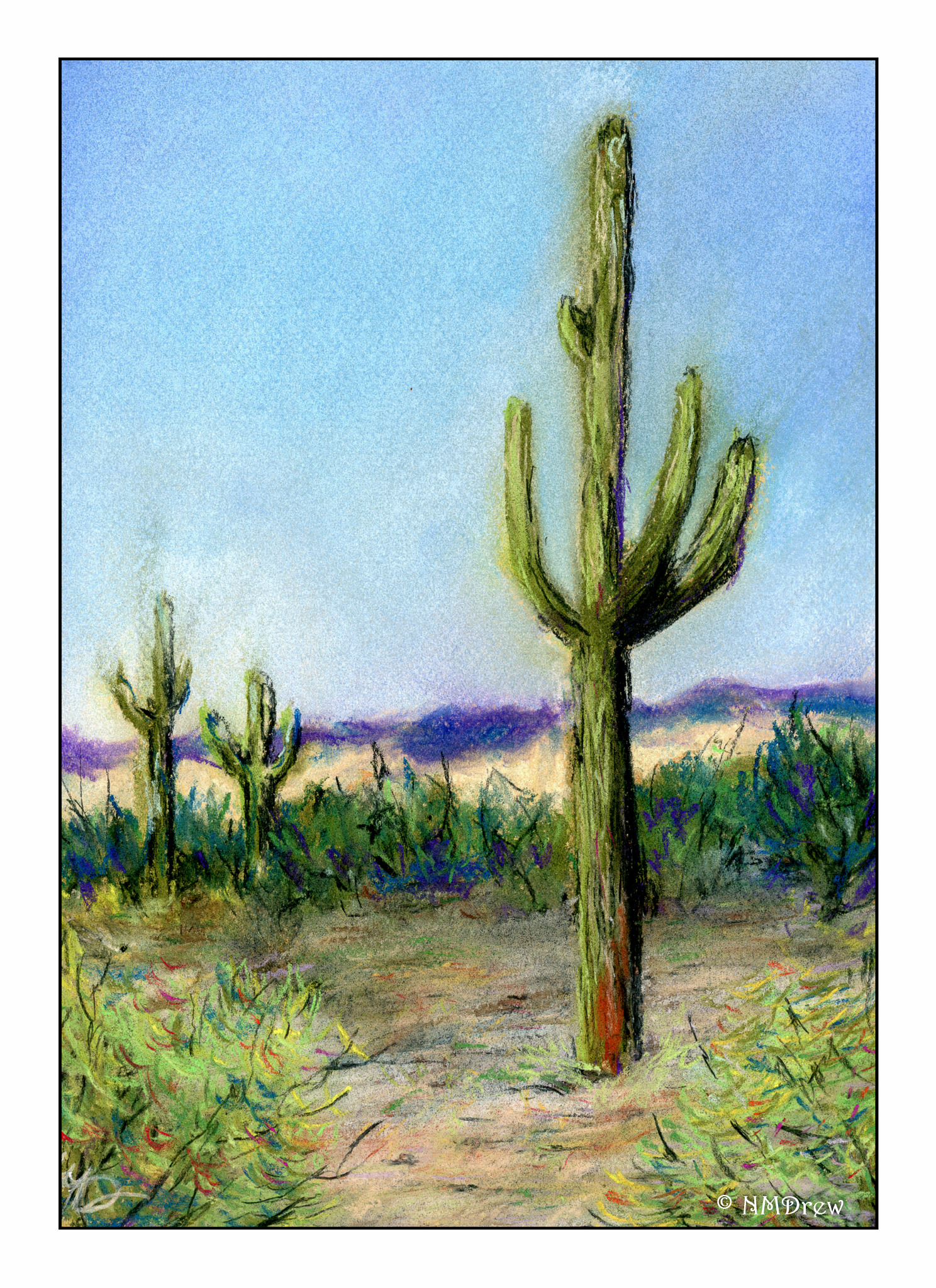
This is my third pastel, and second subject from the class on Monday.

There are some things I learned in doing this pastel.  First, the large cactus has to be put in after the sky because it is just too big – the sky and the cactus – to work around.  The mountains and smaller cacti are fine.  I had to redo the sky a bit, and if you look, you can see halos of the cacti in the sky.  Live and learn!

I also had to totally redo the foreground – it was all the same tonality!  Midtoned.  So, I went in and worked in a lot, a lot, a lot of lighter colors.  It worked.  Before there was nothing leading the eye to the big cactus- now there is to some degree.

The foreground plants in the corner are also at issue here.  While they are lighter than the middle ground’s plants, they are not quite right.  I need to increase the contrast within them, I think, to help them become individualized from the sandy dirt around them.

Finally, it is interesting to realize the importance of fixatives in the process of doing a pastel painting.  Harder pastels don’t create as much dust (Nupastel) as do softer ones (Rembrandt).  A “workable fixative” is necessary as the layers go down.  A “final fixative” is applied when the painting is done.  I have both, but the final fixative still allows the pastel to be rubbed off to some degree.

So, third painting, and I am getting the hang of it.  Still very amateurish – my lack of depth perception always seems to get me.  “Look at the light!” is my constant reminder, as well as the tricks of creating distance in a 2-dimensional painting.  Gouache painting has proven to be very helpful here.
The Last Narcissus

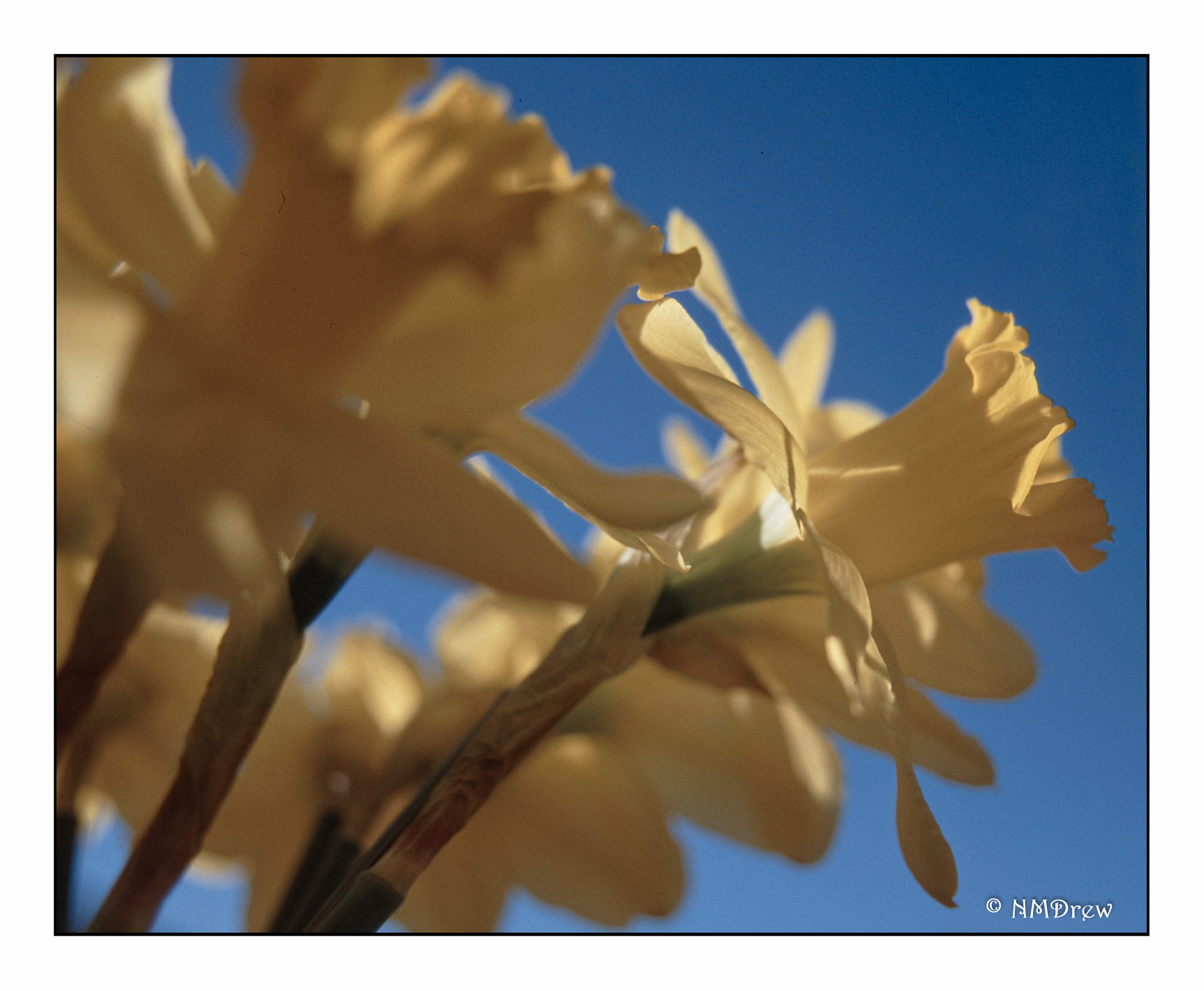
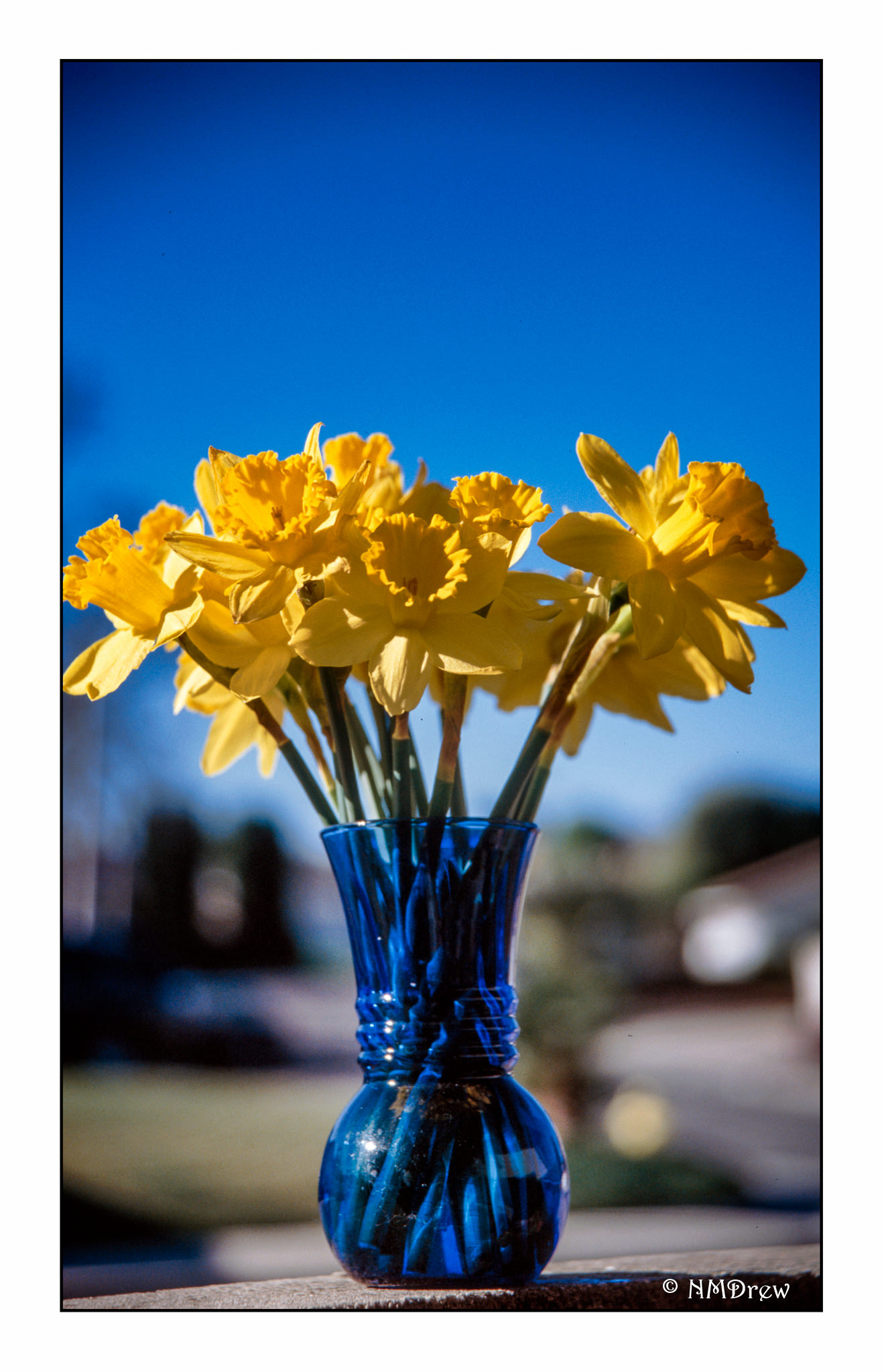
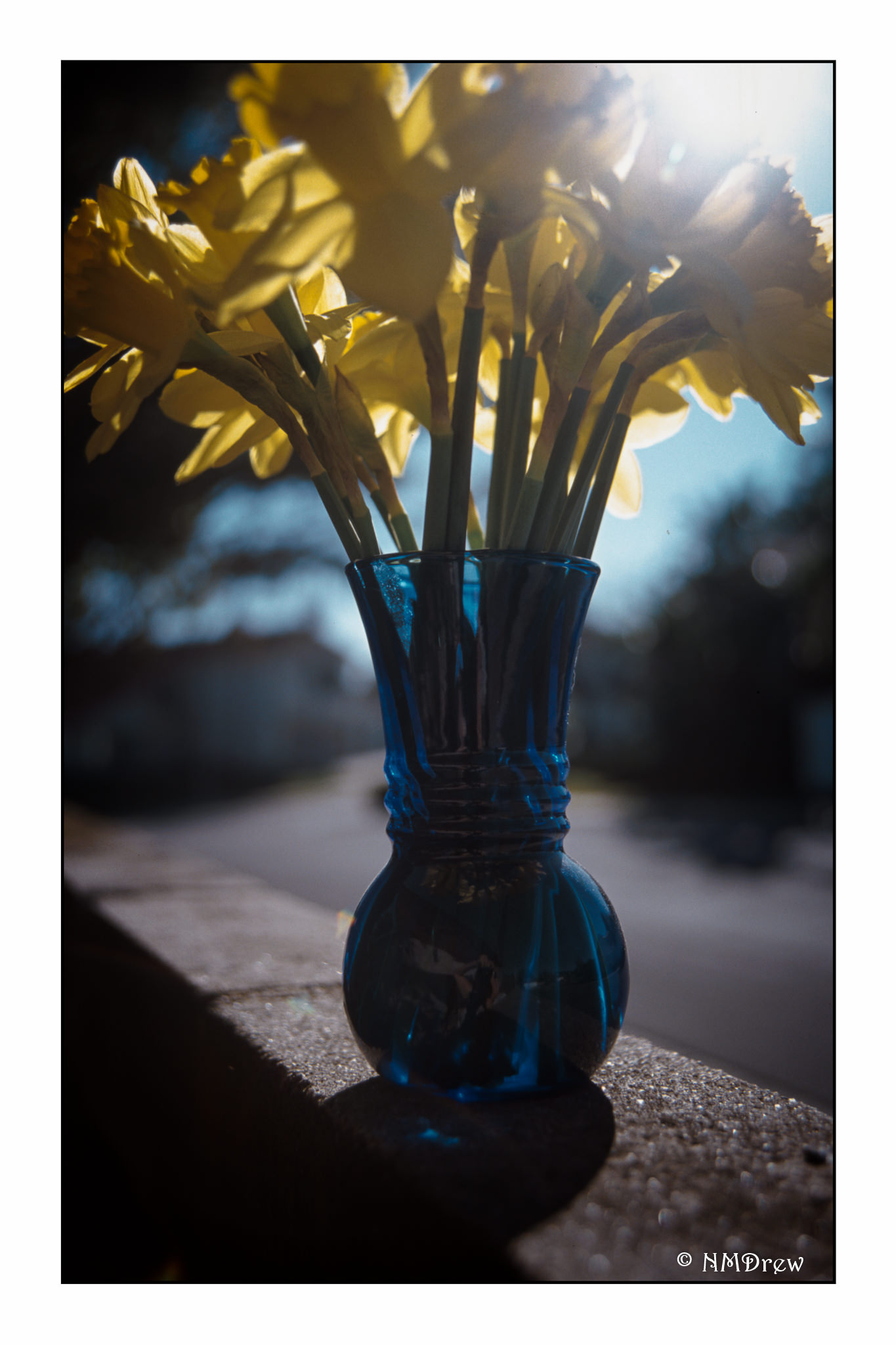
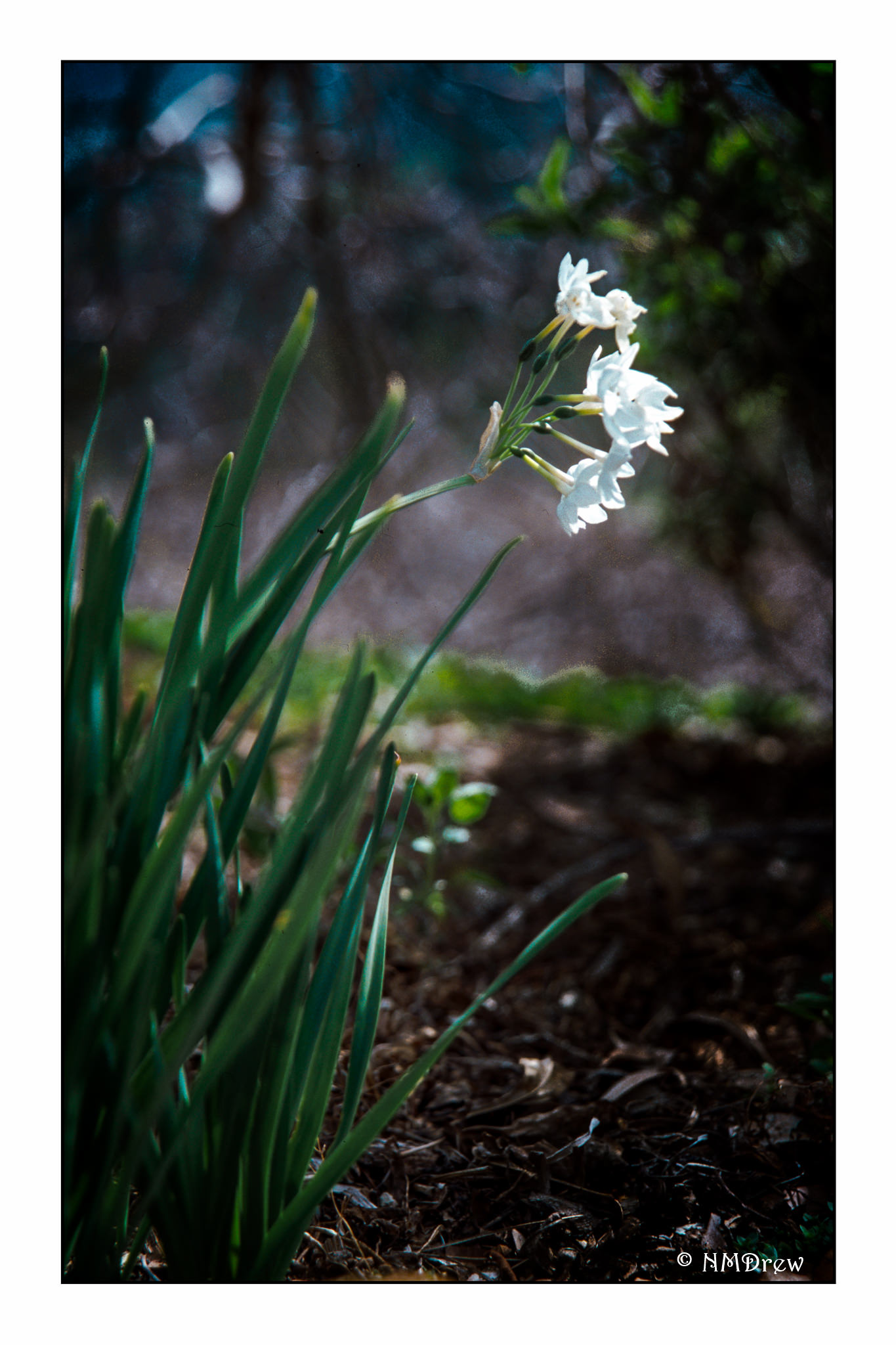
I took my Nikon N90s, Nikon 28-85 f2.8 Macro, and a roll of the new Kodak Ektachrome E100 to the botanical garden – always a favorite place! Springtime is the best, too, as trees and bulbs and plants are all in bloom. This was taken as the last of the narcissus bloomed and were fading away. At the gardens, the narcissus are the first up and first to fade.

I am pleased with the new Ektachrome E100. Yes, it’s a positive film, needing E6 chemistry to process, and it costs more than B&W or color. However, positive film has so much going for it, and here is more than ample proof. Film, camera, and lens all came together quite nicely.

Winter Trees at Dawn

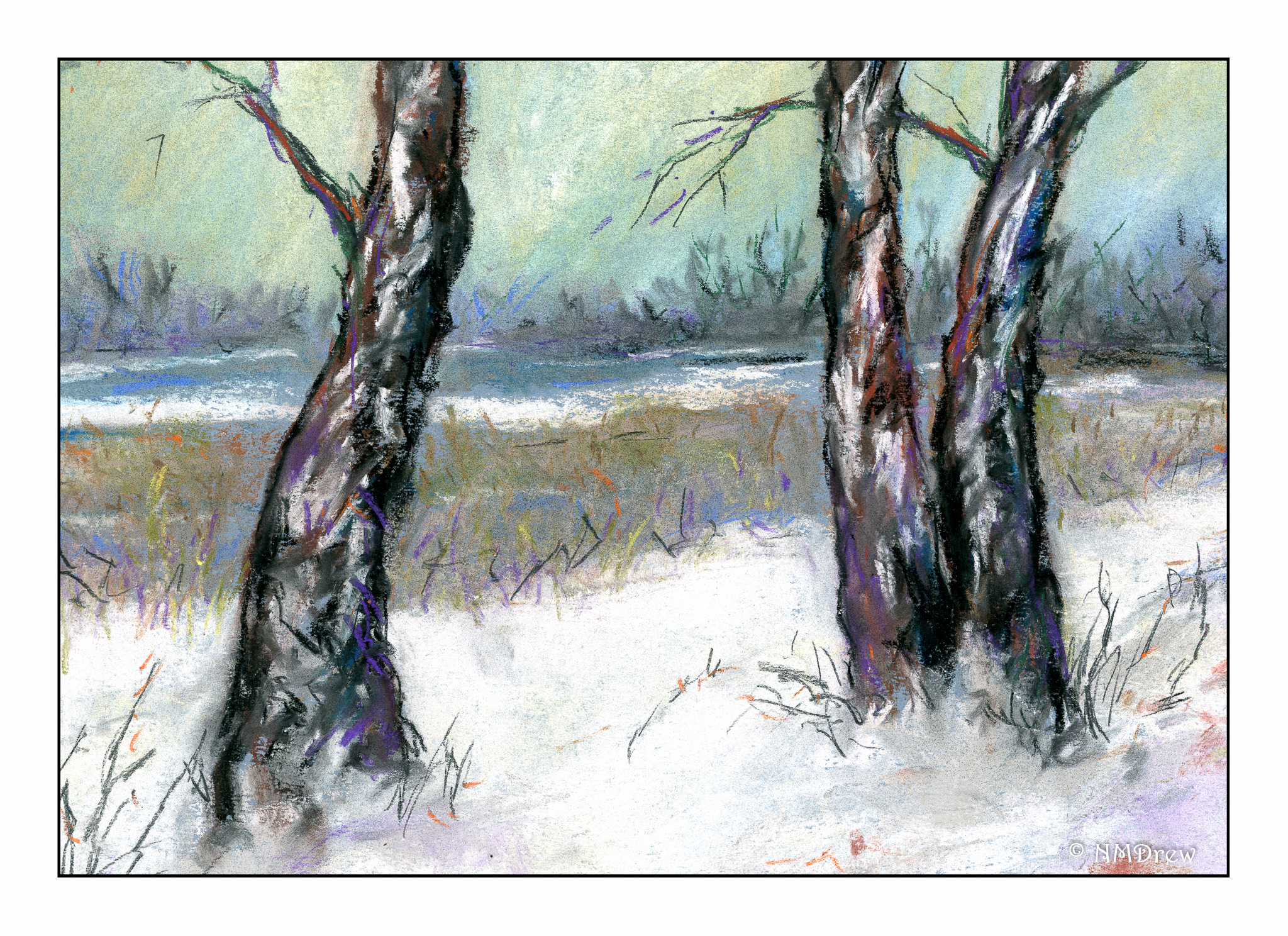
Second pastel.

Here, I used a medium blue paper and tried out different techniques, such as circular blending with the pastel itself, a torchon, fingers. I used vine charcoal and charcoal pencils for some of the finer lines.

The snow on the trees was an interesting challenge. To accomplish it, I scribbled some pure white pastel onto it, and then used the tip of the torchon to blend around it.

Compositionally, I think there is something missing here . . . I also think the midground could be a bit different to convey a sense of depth.

For a second bout with pastels, I can say I am enjoying what I am doing, even though I have to dress like a hazmat worker! (I wear a mask to keep the dust down.)

New Growth

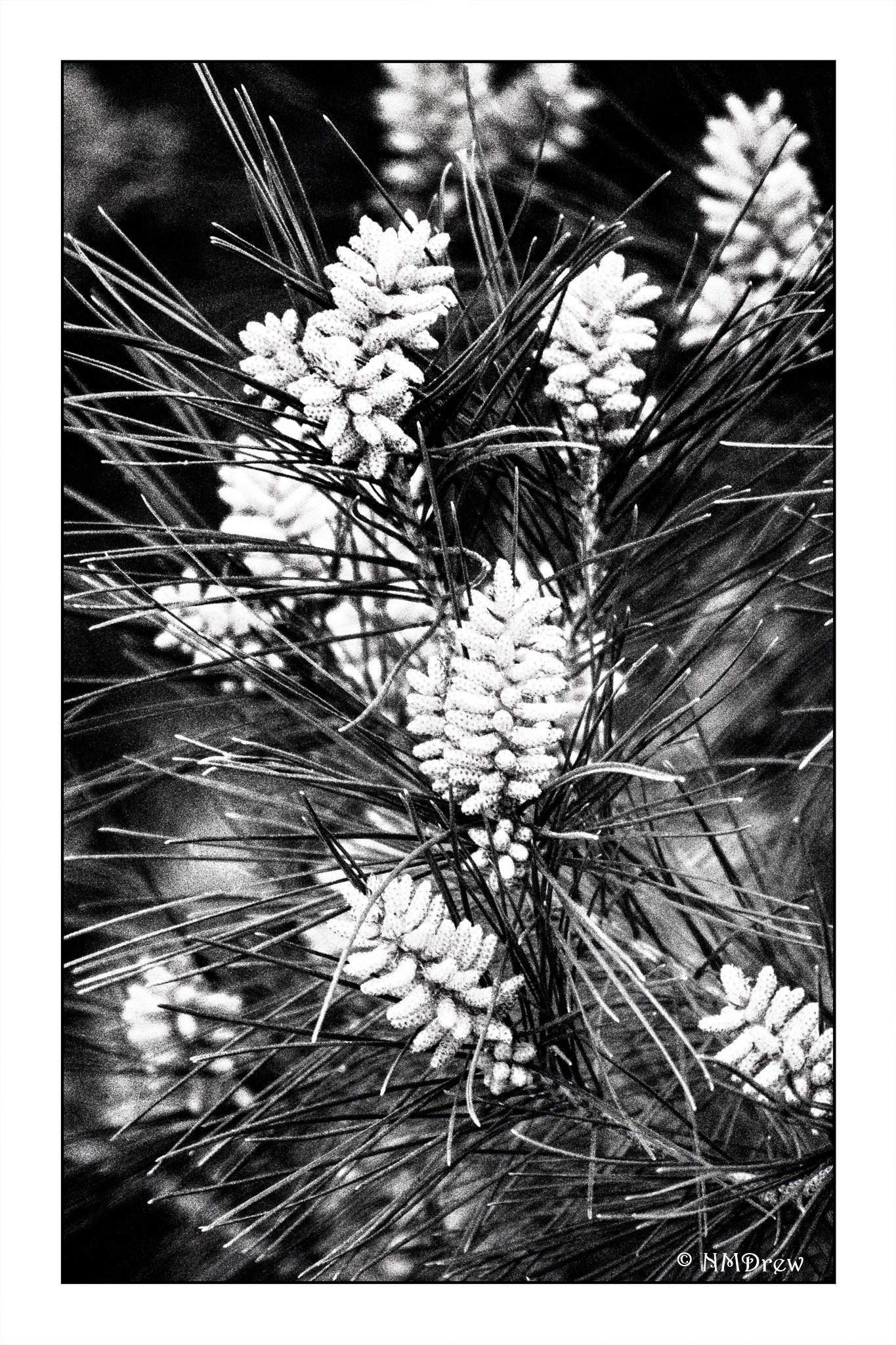
Yesterday it was over 80F. Today it is a cool 69F. Little rain. Still, life continues. New growth on a pine at the local garden, where flowers are in bloom everywhere. A walk in the open space nearby found mockingbirds singing away, looking for wives, and staking out their territory. It’s a stunning time of year.