
Goo – osh! Isn’t that a great word?
Anyway, when we were in San Diego awhile back, we found a genuine art store in the neighborhood. Of course, I had to wander in there, and I finally was able to find water-based gouache paints. All the ones I ever seem to find are acrylic, which is not what I want. Today I got them out for the first time and put them onto a palette, leaving space for other colors, which I am sure I will want to add.
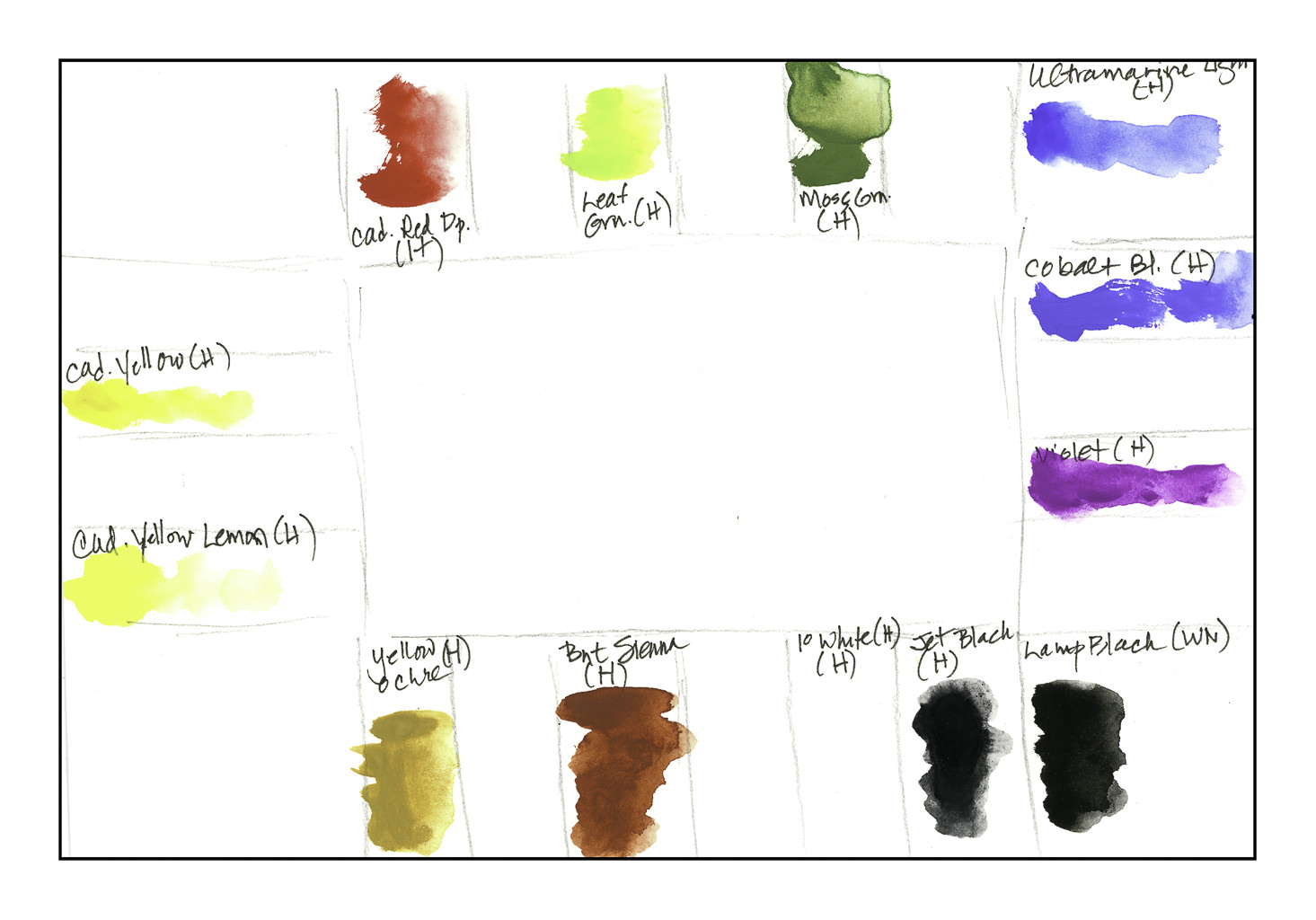
I think I need to add a red along the lines of alizarin and a couple of greens, such as Hookers and sap. I use them a lot in watercolors.
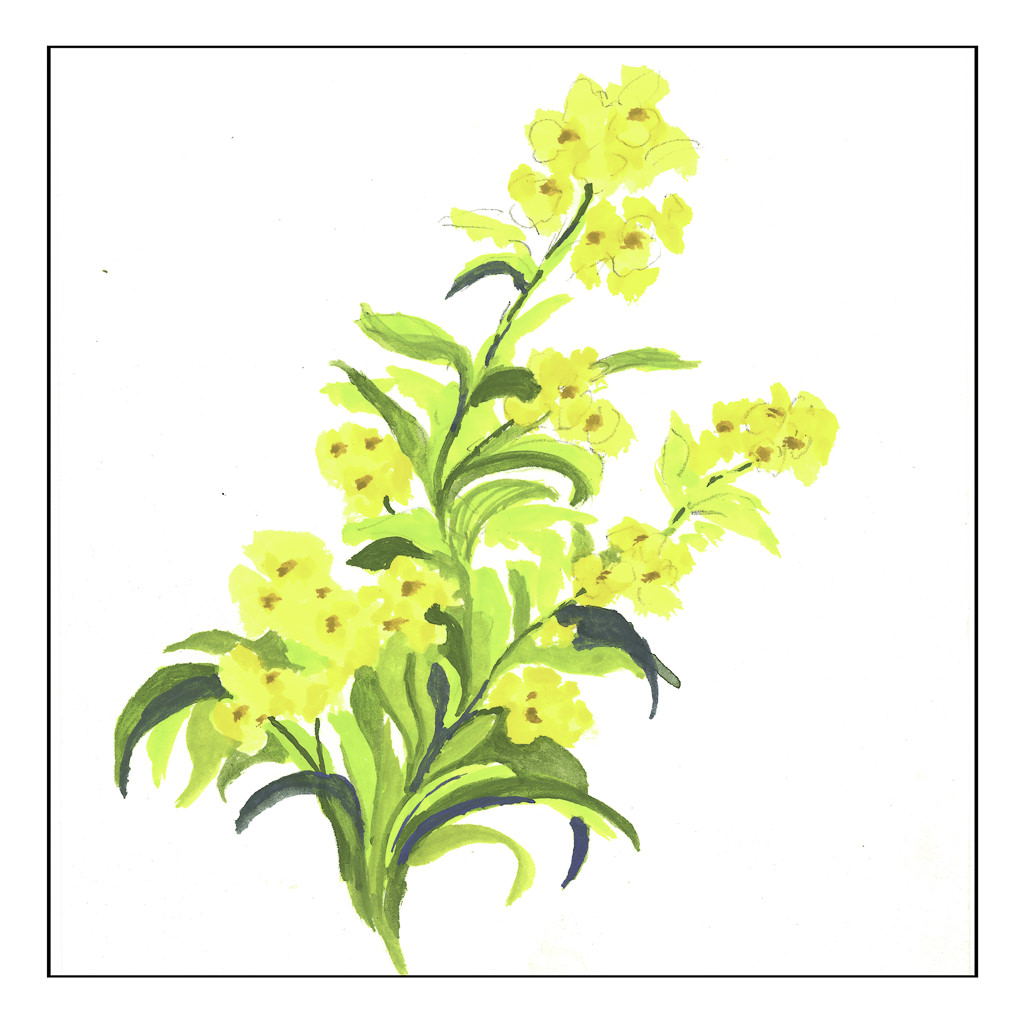
My first picture was quite tentative, but eventually I got a bit more brave. Sadly, the scanner did not differentiate very well between the yellows in the flowers. Rather than just one color, I used both to suggest petals. The greens are straight out of the tube as well as mixed with blue and black.
This next painting is what made me realize I needed an alizarin or something close to it. The actual flowers are more pink; cad red does not turn pink with the addition of white, nor is very pretty with purple mixed in. So, I settled on the violet with the addition of white. The leaves were painted light to dark, and I tried to let the paint dry thoroughly so I could paint around things, such as the flowers, or on top of other colors. This is how watercolor is done – light to dark. The pot was done while the paint was still wet and I mixed other colors in as I went along. That was really a lot of fun just to see the result. Finally, the shadow was painting on fairly transparently and loosely, only to be covered with more opaque paint. I rather like the result.

Finally, I remembered that gouache suggests painting dark to light. Here I placed a black/blue mixture and let it dry. From there, I applied moss green, but I should have mixed it and the yellows and reds with white so they would dry brighter. Still, that is a good lesson for the future:. Darks in gouache dry lighter, and lights dry darker. Here I applied paint directly and let it dry, as well as mixing it on the paper.
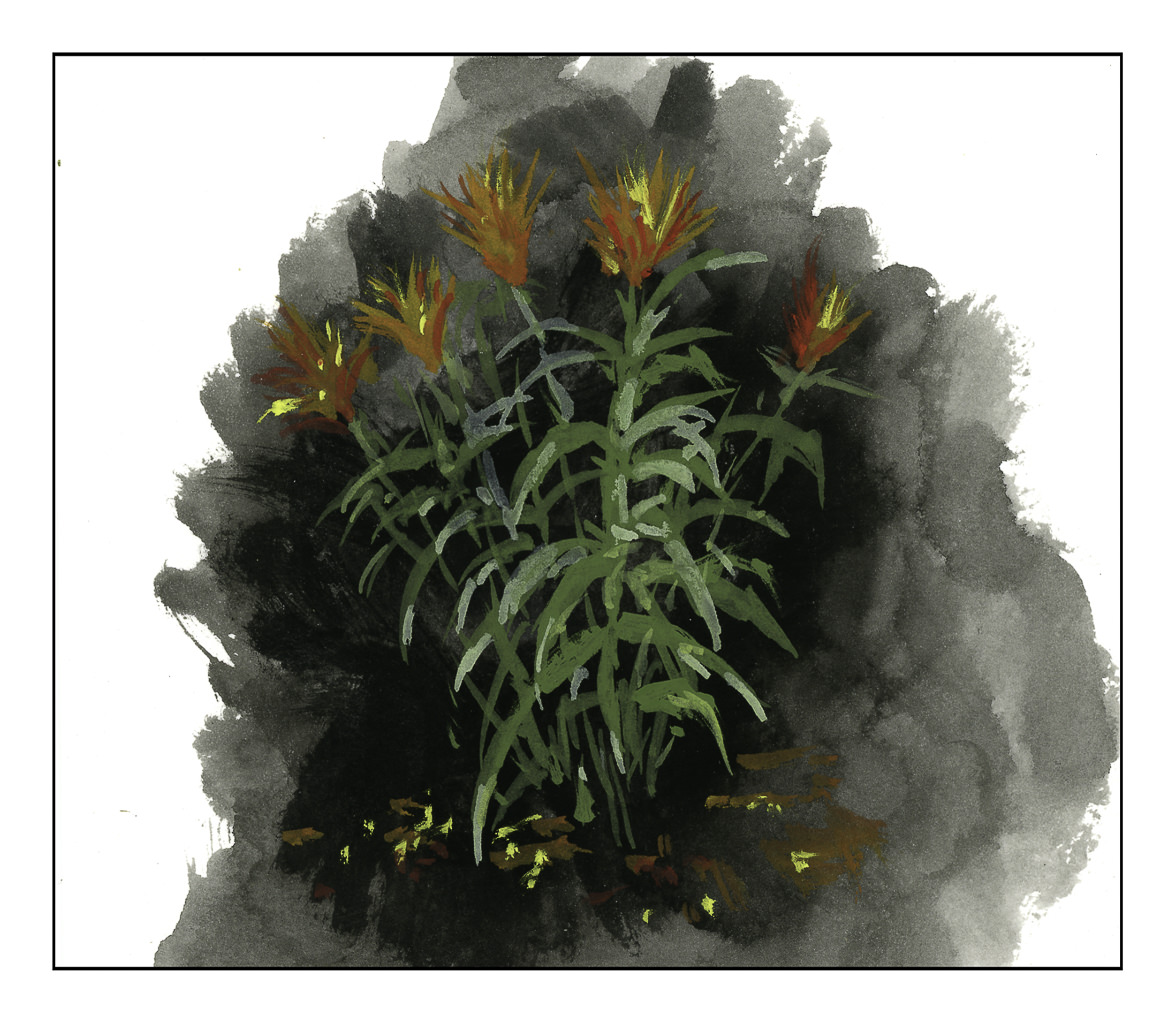
Because paper is so important in painting, I used some 6×8″ 100% cotton paper. I’m glad I did as there were times when the paper was wet, as when laying down the black background on the painting above. I really love the fact that I can put lighter colors on dark. As a kid in elementary school, poster paints were some of my favorite ones for this same reason.
Old dog, new tricks! Hooked on gouache, indeed!

 Ink, Yarn & Beer