World Watercolor Month 2019 – Days 1-6

Click to enlarge!!

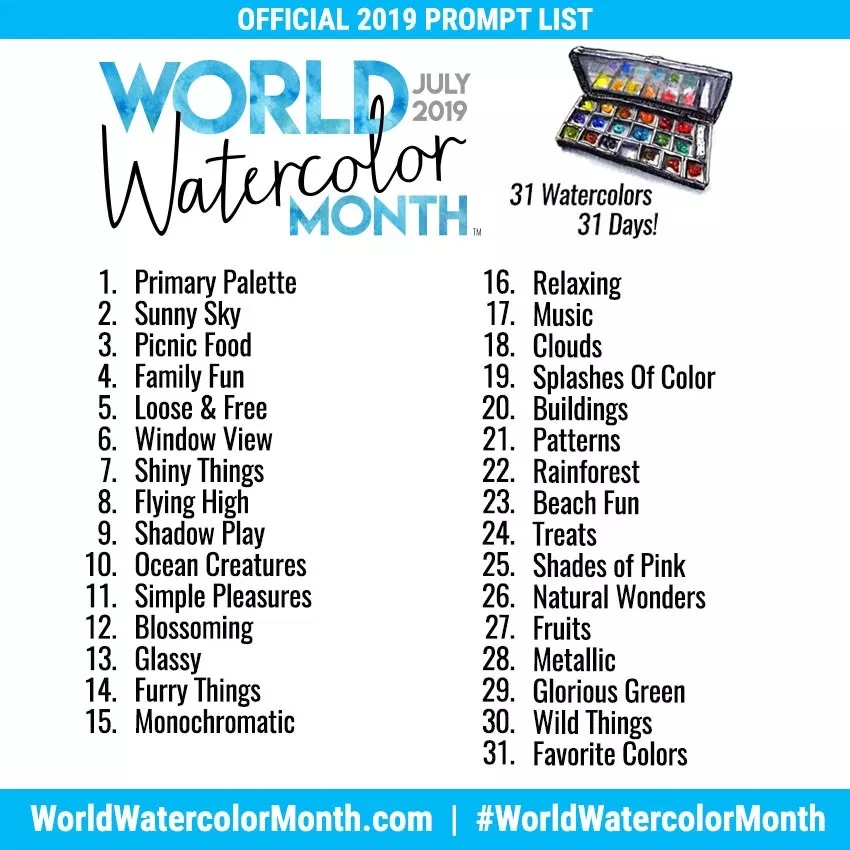
It seems that as the global world contracts, our ability to reach out expands. The internet is both demon and angel in this regard. I get tired of the constant barrage of news and texts and sales from varying companies, all on my phone and on my computer, but then one finds wonderful communities that meet one’s needs or interests. Such a community is Doodlewash, and Charlie O’Shields Facebook group. Annually he posts World Watercolor Month, which has prompts to follow. While he does this every month, World Watercolor Month is especially delightful as people from all over the world paint the subject matter and post it somewhere online, such as Instagram (using the hashtag #worldwatercolormonth2019), and elsewhere. It’s a lot of fun to see what other people produce and how they interpret the prompts.

So, here we are on Day 6 – World Watercolor Month is July. Last year I did Inktober and had so much fun, learned a lot, and thus I decided to do World Watercolor Month 2019. Being retired, there is finally time! The prompts I have done so far are:

  1. Primary Palette
  2. Sunny Sky
  3. Picnic Food
  4. Family Fun
  5. Loose & Free
  6. Window View

Here are my interpretations.
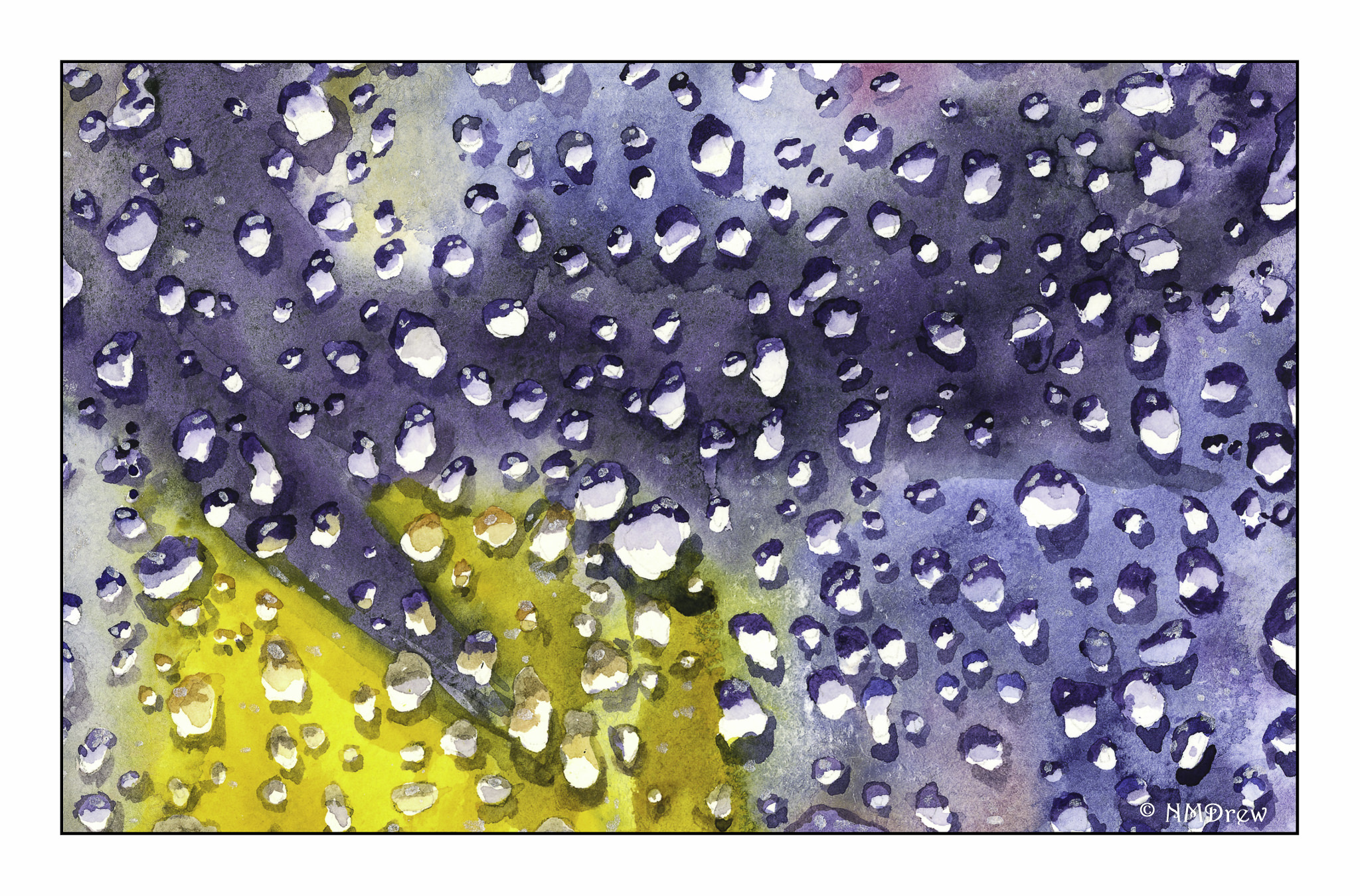
1. Primary Palette – Blue, Red, Yellow – With Some Secondaries Created from the Primaries
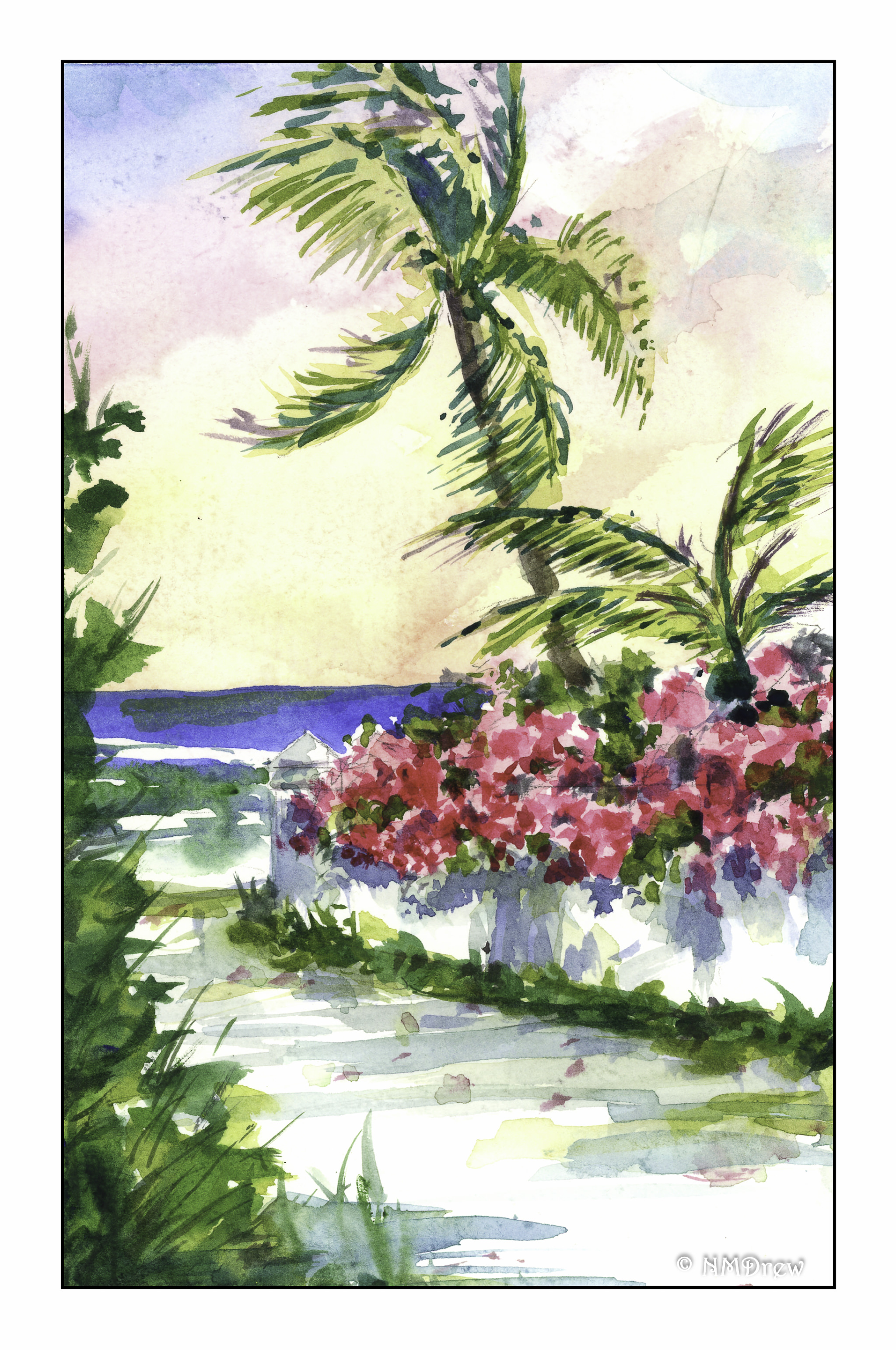
2. Sunny Sky
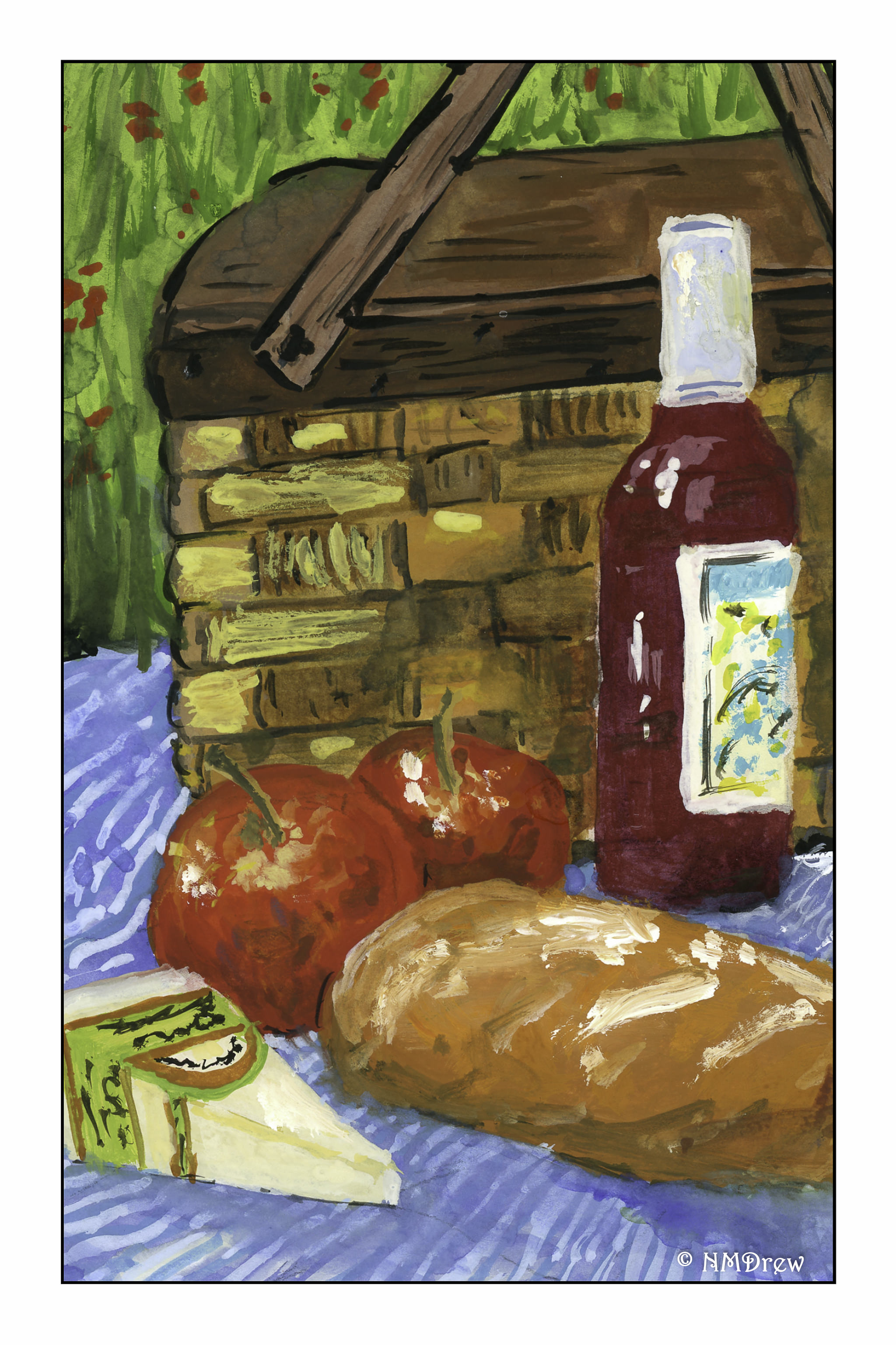
3. Picnic Food
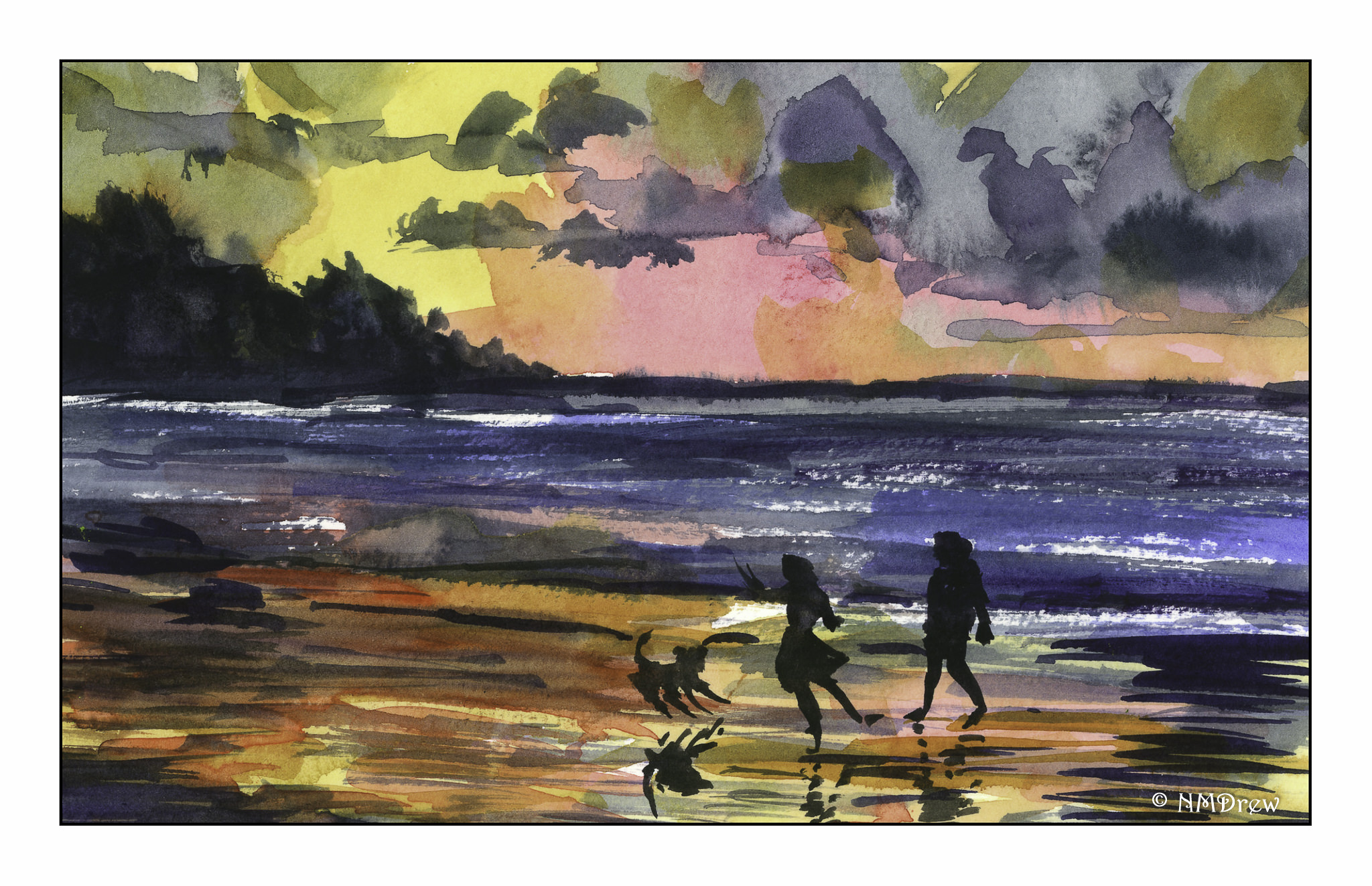
4. Family Fun – Let’s Dance on the Beach!
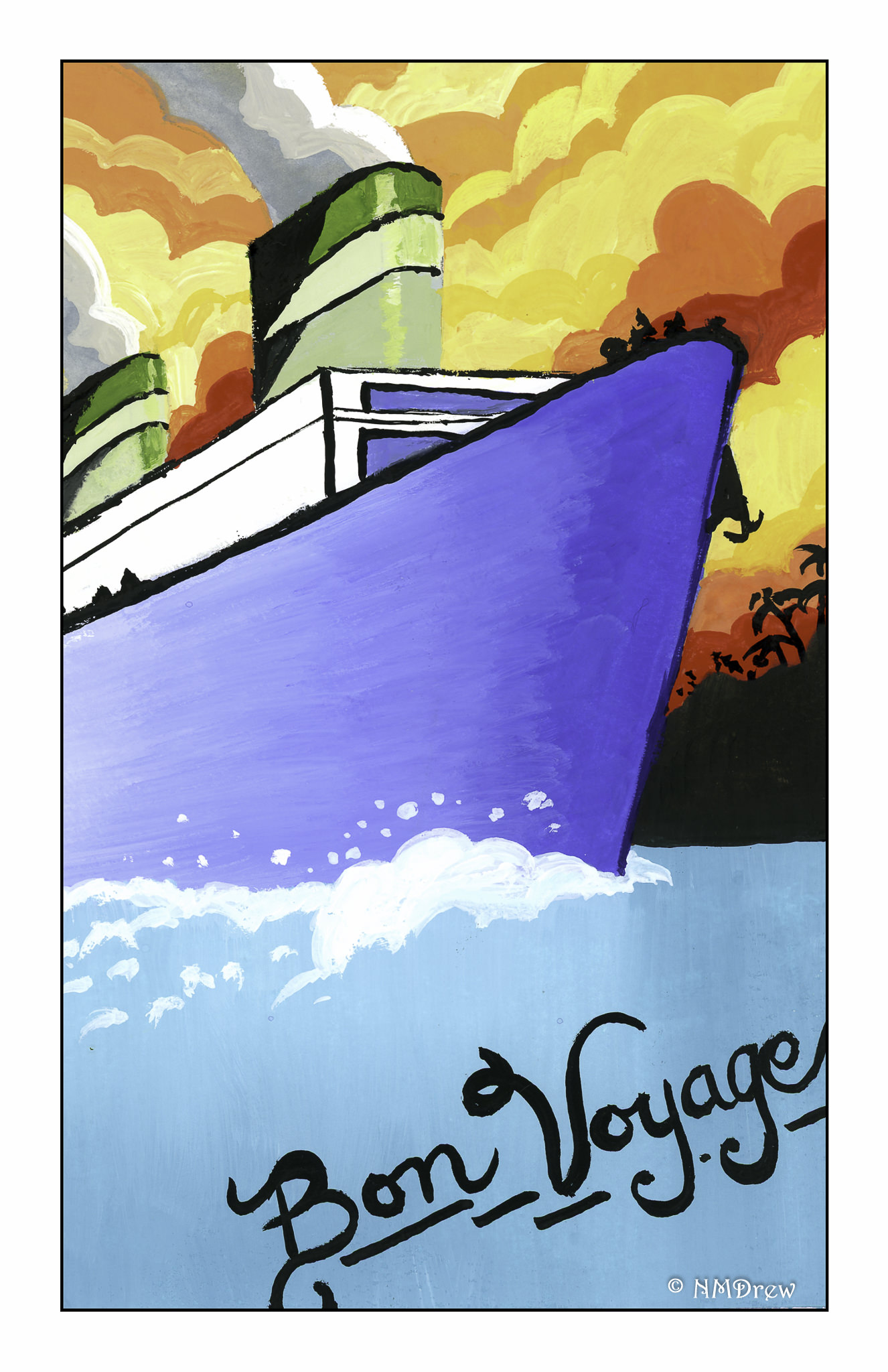
5. (Foot) Loose & (Fancy) Free – Sale the World!
6. Window View – Looking In? Looking Out?

One of the goals I have for this project is to alternate between transparent watercolor and water-based gouache, which is often known as opaque watercolor. Both require different techniques. In watercolor, you work light to dark, and leave paper unpainted to depict white. You can cheat by using liquid frisket to mask out areas, but there are challenges in using it, and sometimes frustrations. You can also cheat by using the water-based white gouache to touch things up, but purists frown on this. Gouache, being opaque, allows you to build up layers, and you work, in general, from dark to light. Dark gouache colors dry lighter than they appear wet, and lighter colors dry darker. What a head spin! Gouache also requires a lot more time to paint a picture that seems simple compared to watercolor – but that is my experience so far. I am pretty new to gouache, so I am really in the baby steps of learning how to use the medium.

I hope that I will be able to continue to do my paintings every day for July. I am alternating days of watercolor and gouache, with odd-numbered days being in gouache, and even-numbered days in watercolor. We have another water leak in our house, but hopefully the planned repair will be quick and cheaper than the last, without any jack-hammering the foundation. This might keep me out of the studio a bit, but I plan to continue painting so will be moving things to other parts of the house a bit and create a studio space somewhere . . .

Enjoy the wonders of summer!

WWM #5: (Foot) Loose & (Fancy) Free

“Well,” I thought to myself, “how to express ‘loose and free’?”

I thought about wild hair, lions and zebras on the veld, and all sorts of crazy things.  Nothing felt right.  Then the word “foot loose” came to mind, and, as they say, the rest is history.

“Foot loose” means traveling.  What better way to travel than a luxurious sea voyage (and maybe a camel ride when you hit Cairo).  Those wonderful vintage posters for ships to exotic and wondrous ports of call make you want to pack a steamer trunk and just go!  Gouache lends itself perfectly to such classical posters, and I must say, painting this was a thrill – a puzzle – a delight.  I hope you like it as much as I do!

WWM #3: Picnic Food

The third prompt for #WorldWatercolorMonth!  Here, picnic food.  Bread, wine, cheese, fruit.  Sounds a lot more healthy than burgers and fries, and certainly more attractive to paint!  But, oh, what a challenge gouache is compared with watercolor.  I haven’t worked in opaque medium in years and years and years.  Personally, I don’t like the picnic basket, but the cheese, bread, wine, and (sorta) the fruit look okay.

I started with broad swaths of the major colors, such as the green, browns, blues, and laid in the underlying colors for the bread, cheese and apples.  From there I moved into less thin paint to thicker, working from the most distant (the grass) to the foreground.  At the end, I laid a thin wash of ultramarine blue to dissolve a bit of the underlying gouache to create shadows, knowing full well it would lift and blur the paint underneath it.

While I cannot say I love the painting – still lives are not things I pursue, preferring landscapes – I can say that it was definitely a worthwhile study.  Paint handling is getting a bit more intuitive and logical.  So different than watercolor – but at the same time comprehensible, if that makes any sense.  It’s really just understanding the logistics of the medium . . . And, I think I am improving (a bit) in using gouache, which is a good feeling.  I’m looking forward to the challenge of alternating transparent with opaque medium during #WorldWatercolorMonth.

WWM #1: Primary Palette

The very first entry of #WorldWatercolorMonth!  The prompt is “primary palette” and so I chose a painting that predominates with the primary colors of red, yellow, and blue.  From there, secondary colors were mixed, such as oranges and greens.  With gouache, water may be used to thin the paints, but white and black are often used to lighten or darken colors as needed.  Given the fact I haven’t done much painting over the past 2 or 3 weeks, this one worked out rather well.  Let’s see what happens tomorrow!

Under the Oaks

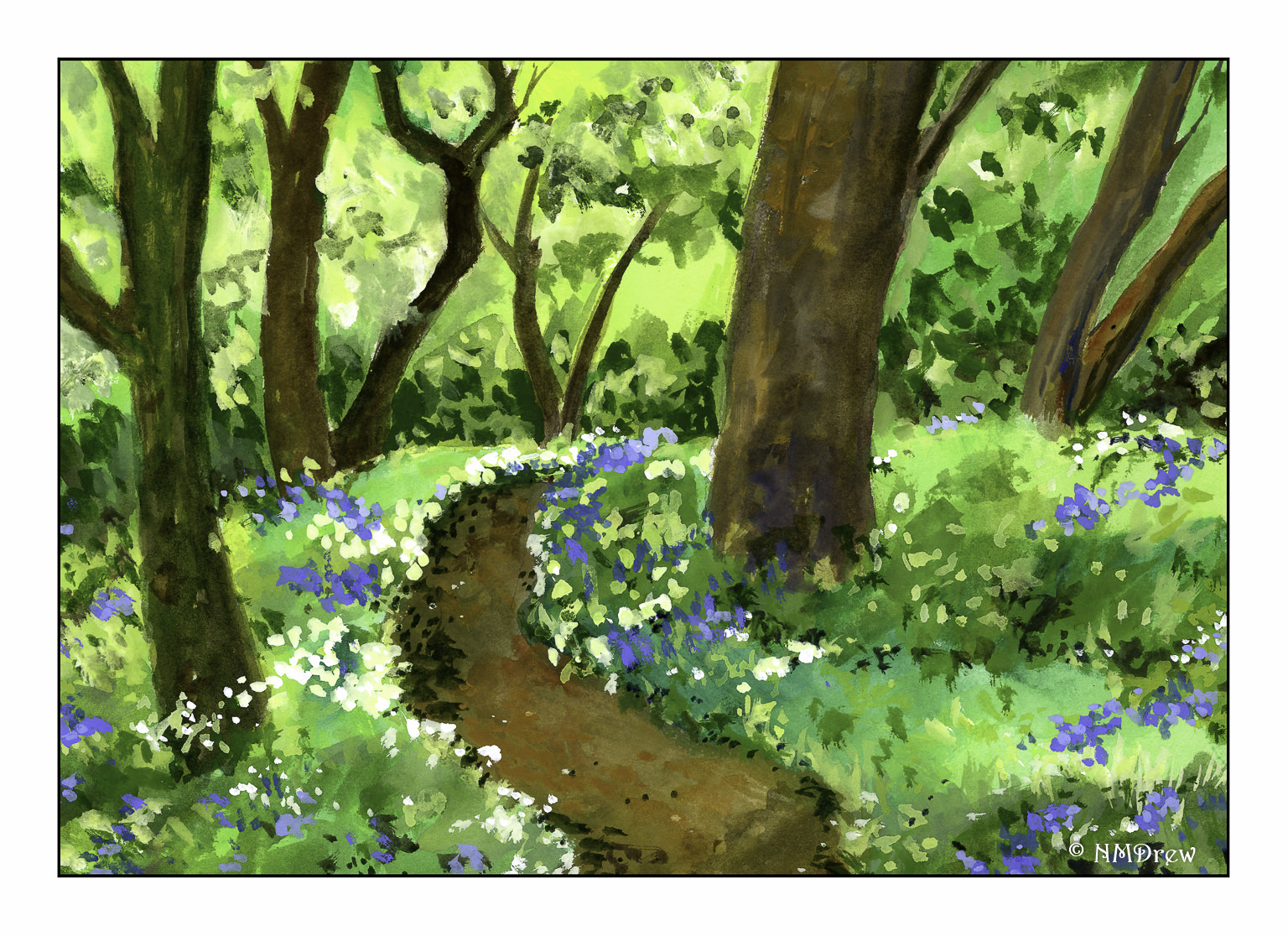
This past spring in California has been one of the most stunning I can recall.  A long period of rain, extending deep into May, produced a situation in which flowers bloomed, and bloomed, and bloomed.  There are still traces of colors – golds and yellows mostly – on the hills when normally the color is beige and dead.  The richness of the wildflowers made the landscape, whether on the hills or under the trees, in the meadows or alongside the freeway, a wonderland of color.  I am still sorting out photos and memories as sources for paintings.

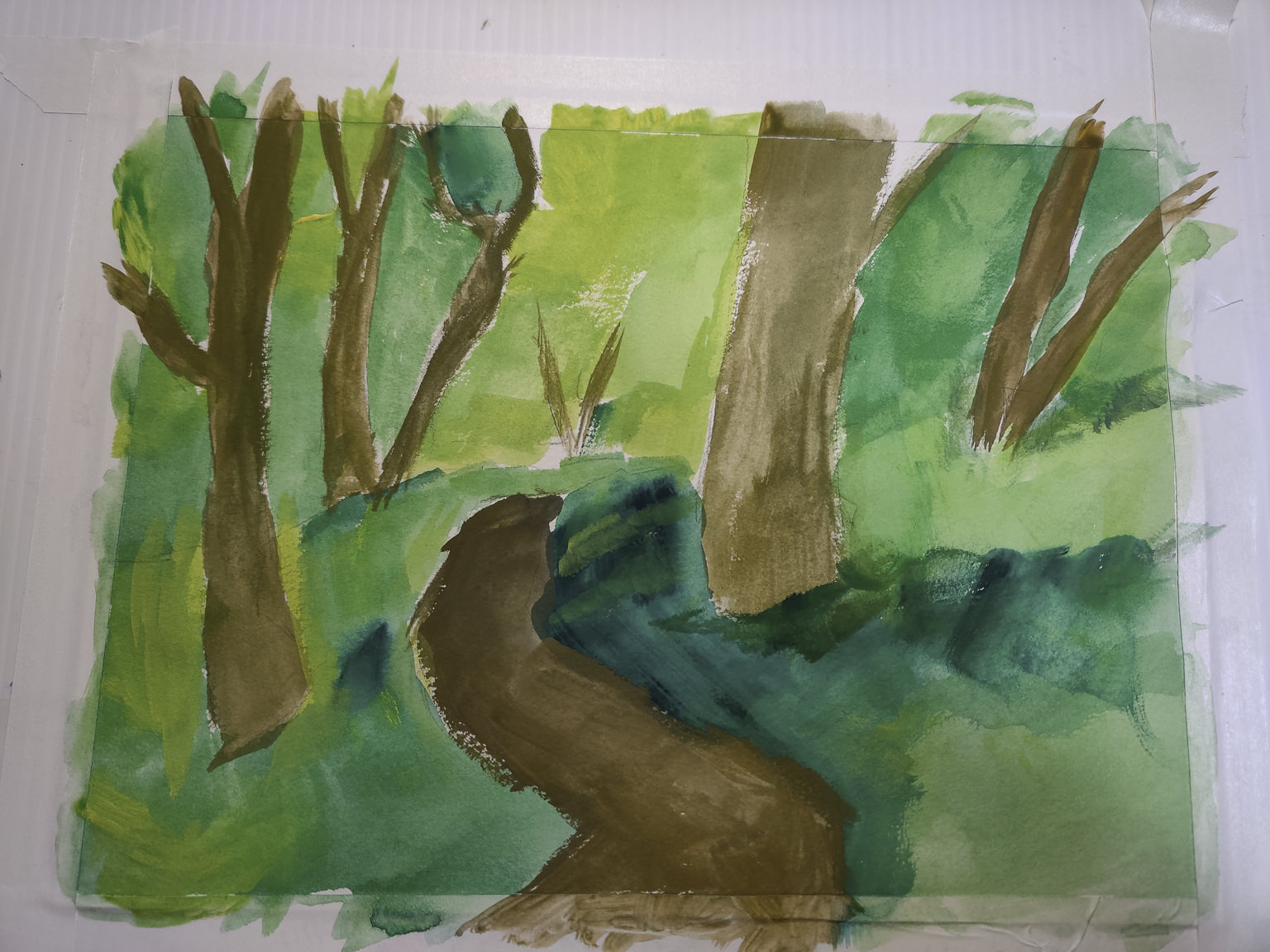
This is an underpainting for the gouache painting I did today.  Wildflowers under the oak trees along a local trial – lupines, wild cucumber, white and yellow flowers of known and unknown species.  Here, a la James Gurney, I decided to do an underpainting using casein paints.  He suggests casein as the underpainting as it cannot be picked up, as can an underpainting of gouache, once it dries.  It primes the paper, too.  While the smell is rather gross, the substrate it creates is stable and I rather liked using it, not just for what it did for the paper, but to lay in some values as well.

From there, I moved into remembering – thin layers to thick in gouache, building to lighter colors and thicker layers as you move along.  I’ve watched a number of videos on YouTube to get a sense of the process.  In particular, I have enjoyed the videos on gouache by Sarah Burns.  It’s rather strange to me, but it worked out.  Below is a painting of blue-eyed grass and white flowers under the oak trees in this stunning California spring.