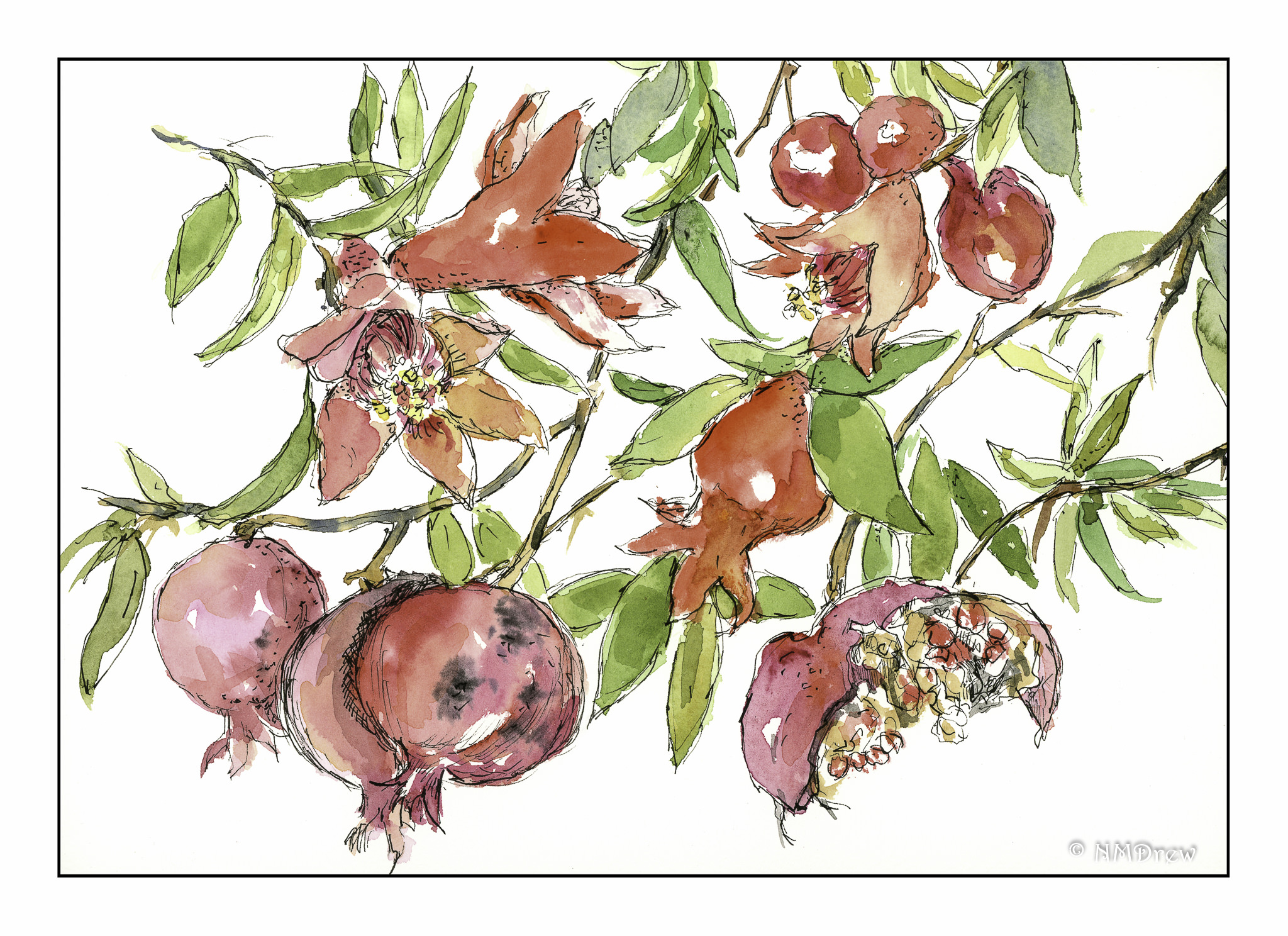
Life Cycle of the Pomegranate

Well, I’m back!  I’ve spent the last 2 weeks dealing with all the little sticky bits of paperwork and choices for retirement, from choosing a supplemental Medicare program to whatever.  It’s a lot of drudgery, but has to be done.  I’ve everything except one card – the prescription card – but the rest is in place.  Besides that, I have also had the time and desire to focus on conquering some software issues, now resolved but only to have another pop up.  Thus, back to painting – so much more enjoyable and fun, even when things go wrong . . .

Here, the life cycle of the pomegranate, from flower to fruit to food for birds when it bursts open.  The local botanical garden has several of these lovely trees, now in the stage of bloom and setting fruit.  Large, ripe fruits come later in the year, of course.  I don’t know why I thought of doing a life cycle, but it seemed like a fun thing to do – maybe a mirror of my own life cycle?  Done with the weekly commute and such?
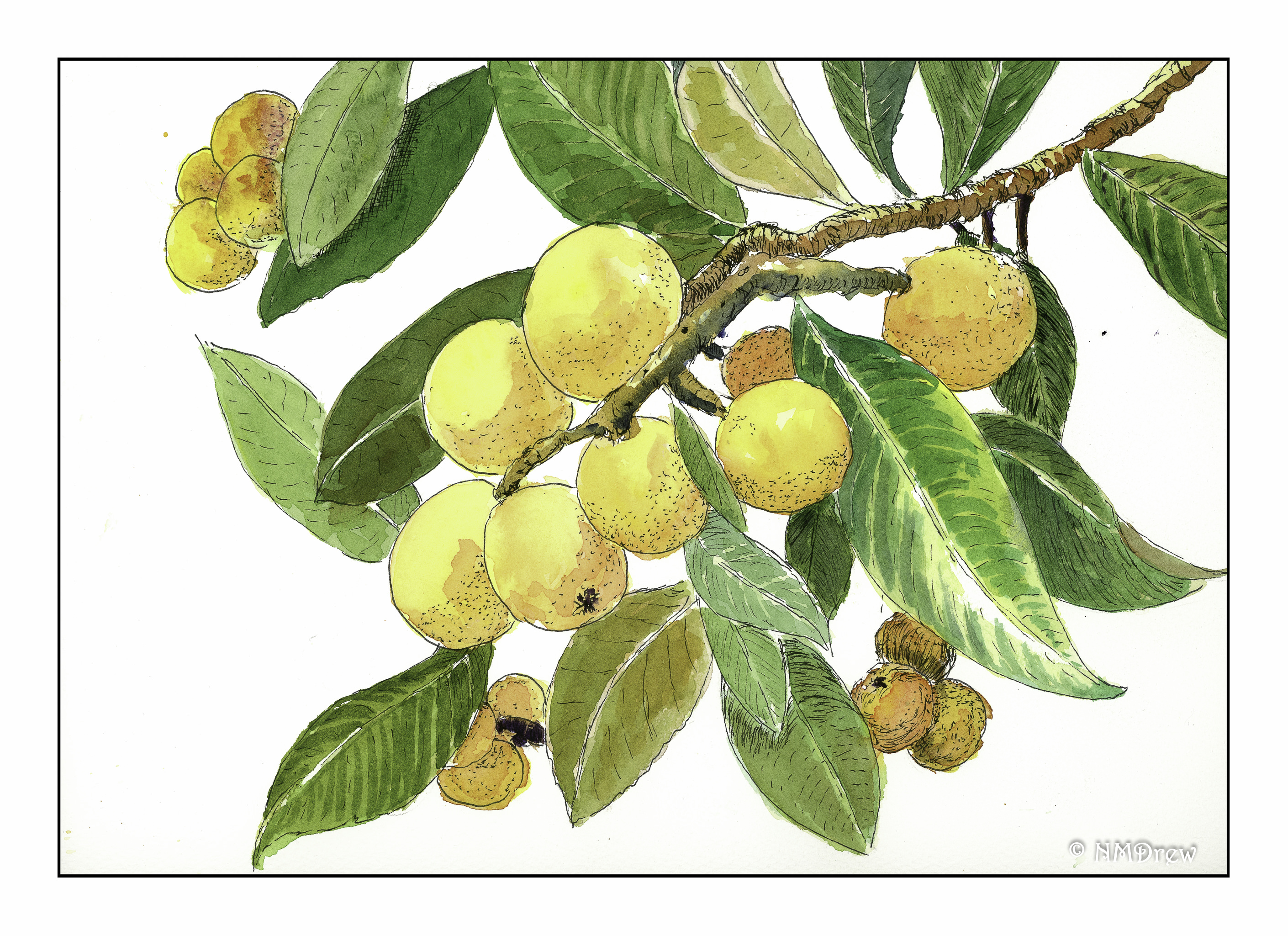
Loquats for the Picking

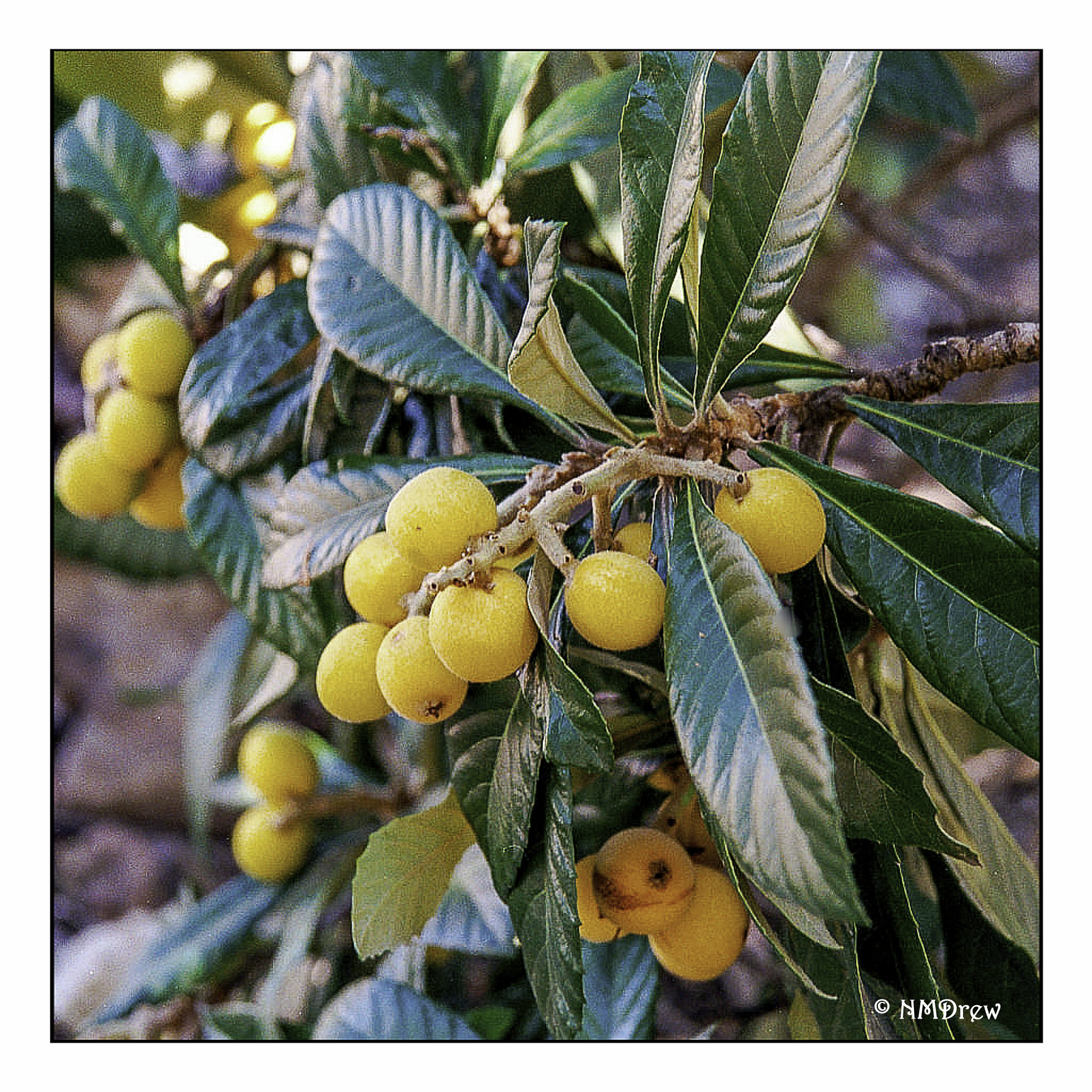
A couple of weeks ago I took a photo of loquats, not really ready to be eaten, but certainly not too much sooner!

The loquat is a fruit tree indigenous to southeastern China. It is frequently grown in California gardens for its fruit and decorative qualities. The fruit is a pale yellow to a golden color, and the leaves are stiff and dark green. The contrast of the roundish fruit with the wide, pointy leaves makes for an interesting painting subject.

The photo from which the drawing evolved:

Painting the loquat has a bit of cross-cultural history behind it, too; ink painting tradition honors the loquat in Asia.

It would be easy enough to paint a loquat in watercolors, without ink, as well.

Crocus

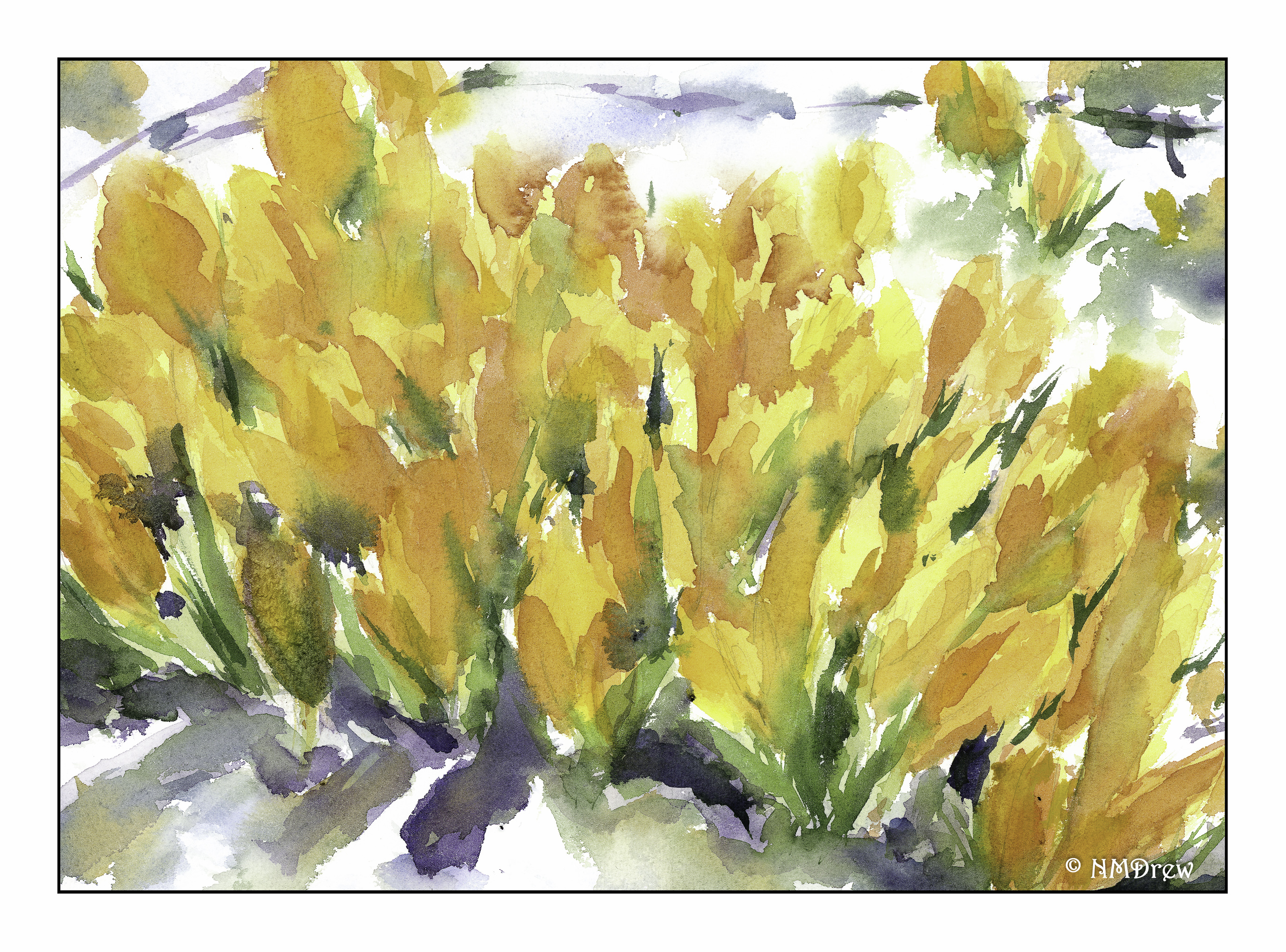
This became more of an impression of crocus rather than a detailed study.  To tell the truth, I have never seen a crocus in my life!  I can imagine the joy they bring, though, as they peek through the last of the winter’s snow.  Hyacinths were the bulbs that bloomed in the snow in the midwest, soon followed by tulips and daffodils.  I tried to work with negative space to define the flowers, as well as blur the background and put a bit more detail in the foreground – perspective in action on a conscious level!

This is the reverse side of the paper I used yesterday, St. Cuthbert’s Millford.  This paper has a really nice tooth, not smooth or CP, and smoother than rough.  It catches the brush bristles rather nicely.  Colors are dreamy when blending together.  It also lifts well – some color ran into another area and I was able to lift it out and recover to a degree from the mischief.  I don’t know if Arches would handle it as well as this paper, but that is something I should check out.

In addition to no longer making masses of mud, I find I am actually remembering things – make long brush strokes, lay down large areas of light colors and leave the whites in the process; think about the direction of the light; a few rules about perspective.

Late Afternoon

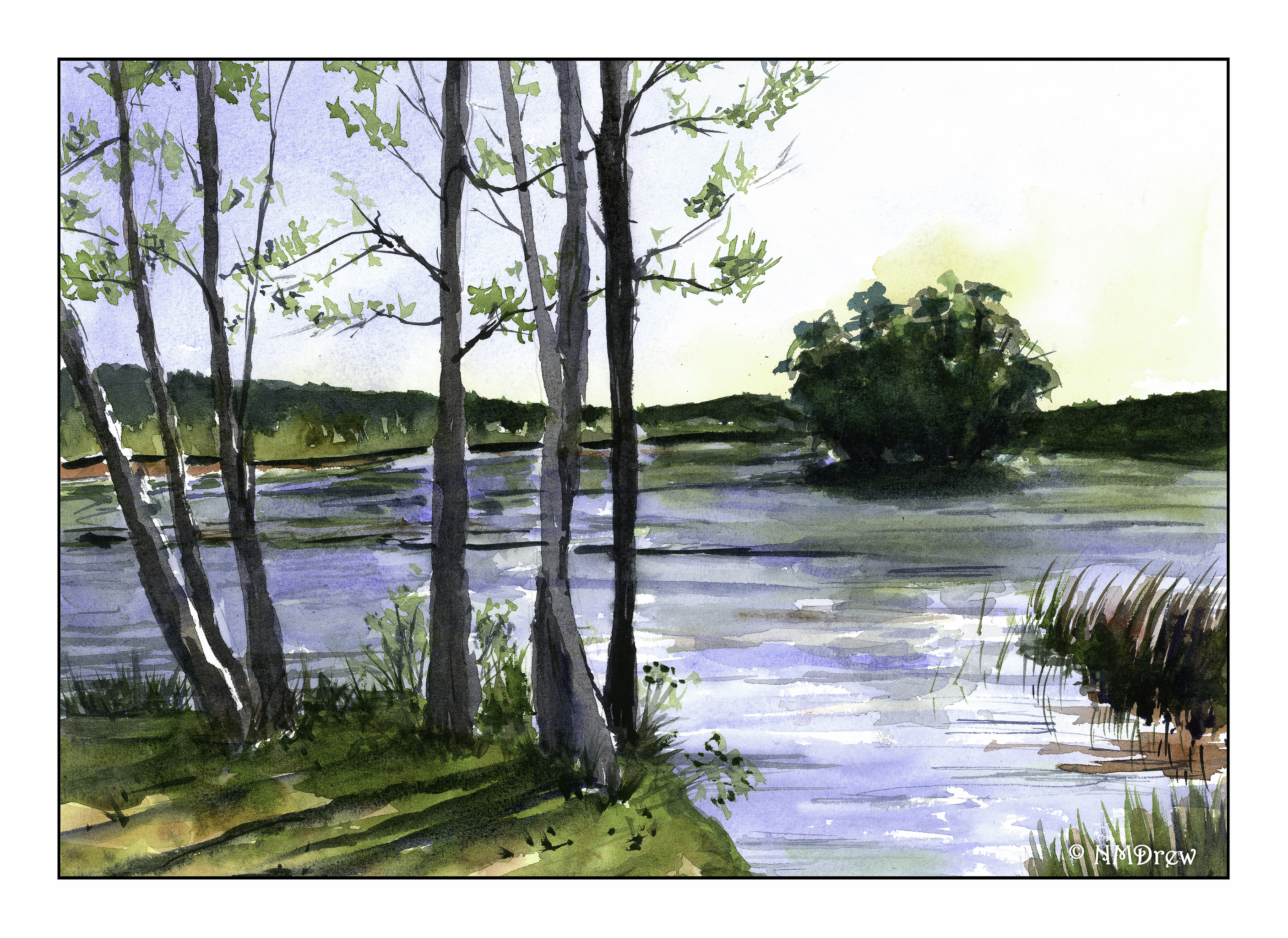
I used St. Cuthbert’s Millford paper. What a difference from Arches! The colors lie on the surface longer it seems – a totally different painting experience. First time trying out this paper and I really like it!  Can you believe it came all the way from England!?

Anyway, this whole week has been a wash – just craziness and little odd details, appointments, and so on.  My head is spinning.  Finally, having time to paint, I made myself sit down and do it, without thinking ahead.  I just needed to get the brush and colors and paper going again.

Lichens on Tree Branches

I have finally gotten out to the local botanic garden after a month long hiatus.  I went a couple of days ago on a bright sunny day.  Today, in the foggy gloom, I went again.  Both times, camera in hand.  The sunny day I was accompanied by a friend while this morning one of my dogs came along.

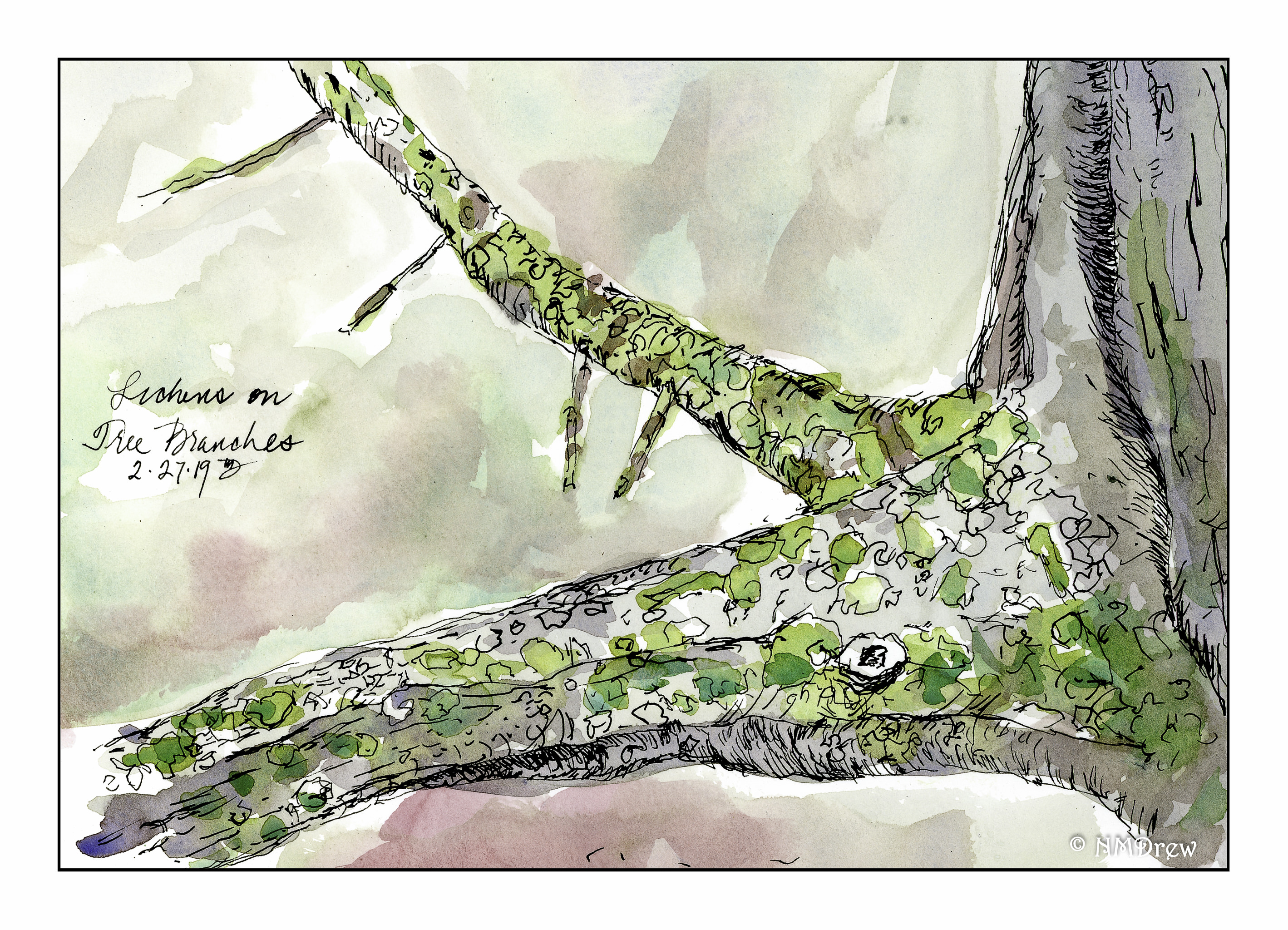
In today’s gloom, the bright green lichens on this tree caught my eye.  I’ve photographed it a number of times, in different seasons, under different lighting conditions.  There are spots of green, white, and dark grey.  Textures range from smooth to rough.  In the textures of the garden – leaves, flowers, critters, stems, branches, – it is easy to overlook the subtle beauty of a couple of branches.