Practice Present Presented

My sister-in-law requested hand-painted cards for a Christmas present.  She’s getting them!  Out of all of these, 6 were from exercises I did following Peter Sheeler’s YouTube painting tutorials.  What made them particularly useful, to me, was that many of them had a lot of white space in them, such as white snow or flowers.  The other thing was the simplicity of composition – a few trees, a stream, some flowers.  While they look easy, I did need to focus on the videos to follow the sequence of painting, as well as to focus on what I was seeing.  Of all of them, I think the stream was the most challenging.

From using Peter’s videos to practice with, and to create cards, I went on to do two based upon photos I have taken.  One is a prickly pear which really does sit on a heart-shaped paddle, and the California poppy fields at the State Preserve.  The latter made me think of Monet’s painting of a woman in a poppy field – the brilliant colors against a sea of green.  Our poppies in California are orange and yellow, so no reds, but mixed in with these colors are blues and whites and so many other colors it is hard to imagine that much of California once looked like that in the springtime!

Below are the different cards I did.  Click on one of them to start the slide show.

New Year, New Focus

paint-boxes-1189945_1280

I’ve done watercolor off and on since I was a teenager, back before the dinosaurs disappeared, but I have never made it a resolution to spend time – a lot of time – mastering it.  Rather, the approach I have had has been sporadic and amateurish.  Now, I want to be the “serious student” I never was . . . and while I think I am off to a good start, the real question which lies ahead is how well will I integrate painting into my work life?  I’ve managed to integrate both sumi-e and photography into my life, but I began both of those long before I ended up working 10-hour days.

There are a lot of good books about “how to” watercolor, and I have looked through and purchased a number of them.  As well, there are a number of good YouTube channels with talented artists, with whom you get to cruise along with as they produce a painting.  For me, this visual is what gets me all the time.  While books show you step-by-step photos, some in color, some in black and white, there is absolutely nothing like the video of beginning-to-end, with commentary as the painting develops.

I still plan on pursuing photography – in fact, I have a 365 project planned, with different subjects on a monthly basis.  While I am shifting my focus away from photography as my primary creative outlet, I really want to master watercolor and drawing, and to do so, I need to spend more time doing it rather than thinking about doing it.

So, Happy New Year to everyone!  I hope you have new intentions to keep you happy and creative in your life!

Learning to Like Photography

For me, photography has always been an interesting dichotomy or dilemma, a sort of love-hate relationship.  I enjoy looking at photographs, but as someone who has always drawn or painted, to me, photography often seemed rather pointless other than “creating memories.”  It’s the exactitude of a photo that gets me – little in the area of artistic endeavor.  However, as I have been doing it now for about five years, I am slowly changing my mind.

OLYMPUS DIGITAL CAMERA

Let’s travel back in time.  As a kid, I had a camera, and took snaps.  I also have a handful of photos from times past, images of my family and parents and of a generation past.  There is something to be said for these pictures – a name has a face – a flavor of a time is caught.  No, these are not “art” as I think of it, but bits and pieces of the quilt which is my life and the lives of others.

2003

In my twenties, I bought a Canon A-1, thinking I’d be a hotshot photographer because I finally got a “good” camera.  Hah!  I have a number of snaps of deer butts – yes, indeed!  a fine collection!  The reason is simply because I had no education in photography or concept of construction of a photo – of waiting, of thinking, of taking the time to wait for a picture.  The cost of film processing was dreadful, and so I put away the camera until the digital age.

Cimg1481

The beauty of digital, as we all know, is the fact that film and processing costs go out the door.  A few classes helped me learn more about the camera, and soon I had a few purchases and thousands of pictures under my belt.  Truth to tell, I was – and still am – somewhat caught in a love-hate relationship with photography.

P1020742

Now I am returning to film, and finding there is something about having to wait to see my photos.  Digital has given me the opportunity to learn more about the elements of composition and how different lenses work.  There are some lenses that are my favorites, many of which are manual focus or prime digitals.  Some of my cameras I prefer more than others.  There are also software programs and plug-ins which can trigger the creative process.  Finally, it is a real pleasure to be able to scan my own analog images and play with them.  Perhaps at one point I will develop and print, but for now, that cost factor and failure factor, and the where-the-hell-will-I-put-these factor all create a “no” for now.
Mooooo (1 of 1)

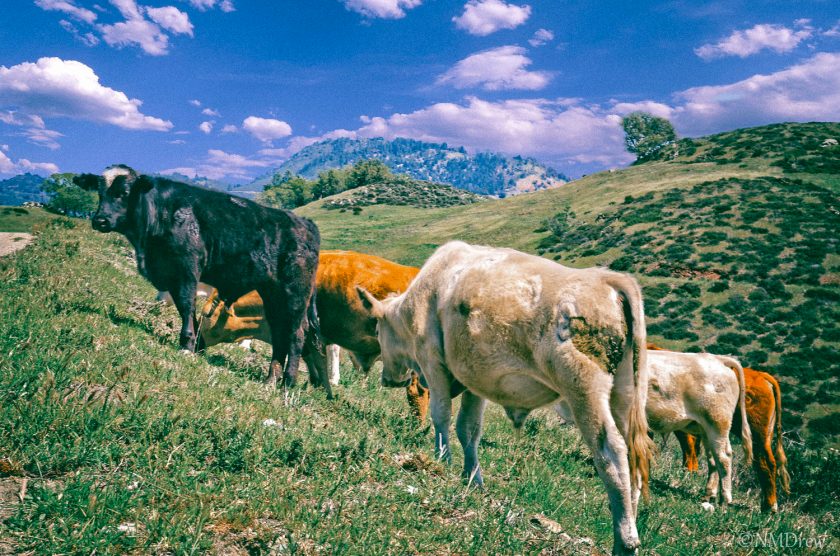
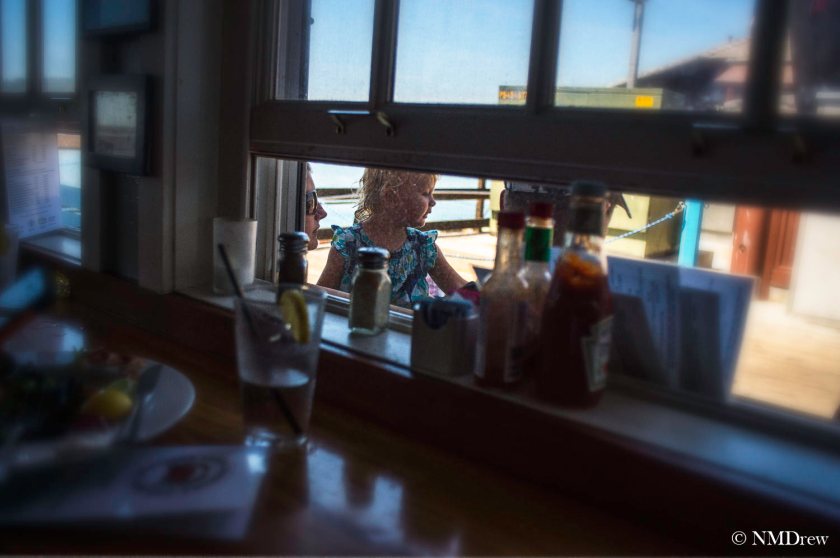
I am learning to like photography more, and appreciate it as an art form.  Some of it is an appreciation for the historical.  Some of it is going out with friends and looking at what others do.  Reading about different ways to “see” helps as well – working with the rule of thirds, layering of fore-middle-back, action, direction – all these are helping me see the world around me as it happens, which is very different than creating a picture on paper wherein I am the god(dess) directing motion, movement, or whatever.

Under the Greenwood Trees

Somewhere I read one must dedicate 10,000 hours to an art to gain a modicum of mastery.  Maybe I am on my way.
Lunch Window (1 of 1)

Life Magazine – A Retrospective

I grew up with Life magazine – from it I saw the world as it was, not as it was supposed to be.  I learned history, about current events, about war, love, drugs, hate.  This magazine epitomized America for 36 years.  This video from BBC 4 is too short – but says so much.

In a Pickle!

Pickles - 1

If it weren’t for Elizabeth Fluehr, I wouldn’t be in such a state.

I did a search for negative painting on YouTube, and came across a series of three videos on the subject which she did.  The first one is pretty simple – it explains what negative space is, and what it is not.  Very clear explanation.  The heart of the matter is in the second video, all done with a pile of pickles.  The third is the actual painting, time lapsed a bit because of the time needed for paper and paint to dry.  Check out her website as well as her YouTube channel.  You will see some lovely work at her website.

Pickles 2

As Elizabeth defines it, you are painting a defined edge, and painting away from it.  You can have a lot of edges, or a few.  A whole painting may be made of negative space, or integrated inside a painting with positive space.  Her suggestion is to paint what is closest – in the video’s case, and in my practice sample, the pickles on the top of the pile.  Then work to the next layer, on down, until the very bottom layer is done.  She explains, too, that in a landscape, it would be the object closest, such as a barn, and the last painted would be the horizon.  I think that would apply for a landscape done entirely in negative painting, which might be worth a try, and could create a really interesting abstract.

Pickles - Finished

For me, negative space is a hard thing to address. Working in sumi-e, one does some work with negative space, but its handling, from my perspective, is a bit different. Partly this is because of color, which for me is altogether a big distraction. However, Elizabeth Fluehr’s pickles are a great exercise, and one which I intend to follow up on with more paintings.

Hard Edges & Negative Space

And while I was doing the pickles, in between I tried a bit of a still life, painting around the flowers in the background, and some of the edges, working wet-into-wet. Not a nice painting, but the practice was the purpose.
