Changing Seasons

It is really important that if you study art that you make studies! I’ve been following along in my haphazard manner a number of teachers I like, online, and am trying to implement what I am learning. Or what is being taught – and then working conscientiously to absorb some of it. Being a magpie doesn’t help as I am so easily distracted by this and that. Focusing on one thing really helps bring mastery, but I get bored with doing only one thing. I know a lot of single-minded people, and I rather envy them. However, we all have to follow our own drummer.

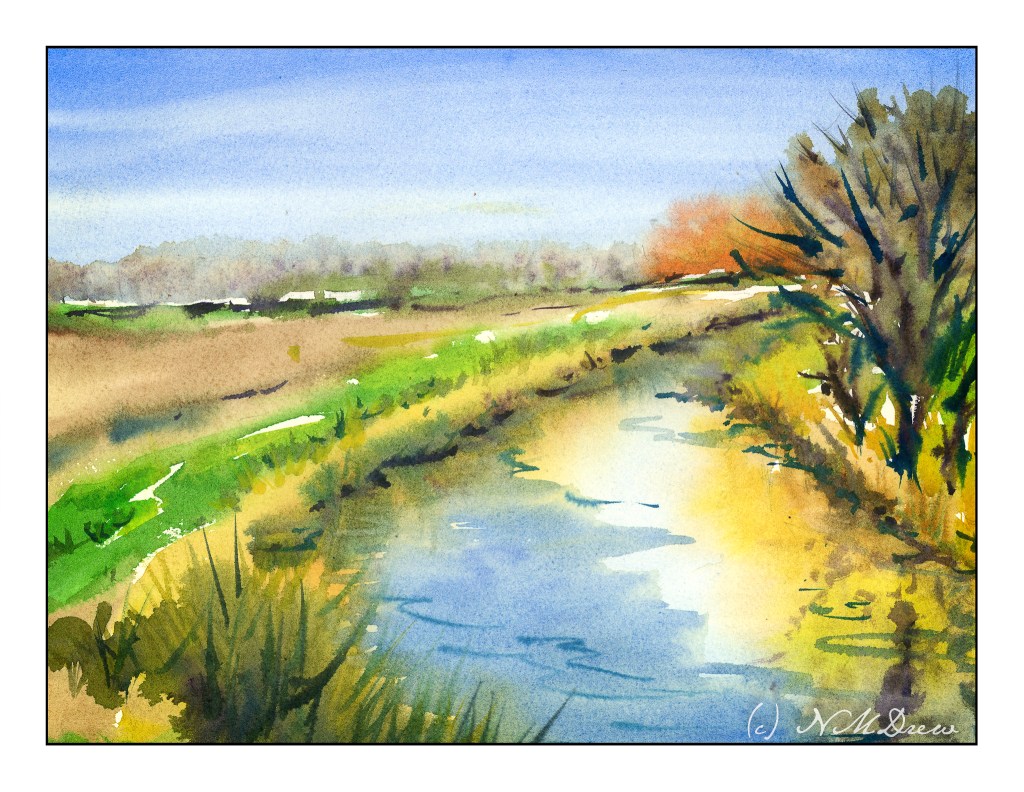
The focus here is to lead the eye to the orangish, autumny trees in the distance. The water does it primarily, but I hope the curves of the field do, too, as well as the lines along the horizon. I am not too thrilled with the trees on the right, but c’est la vie.

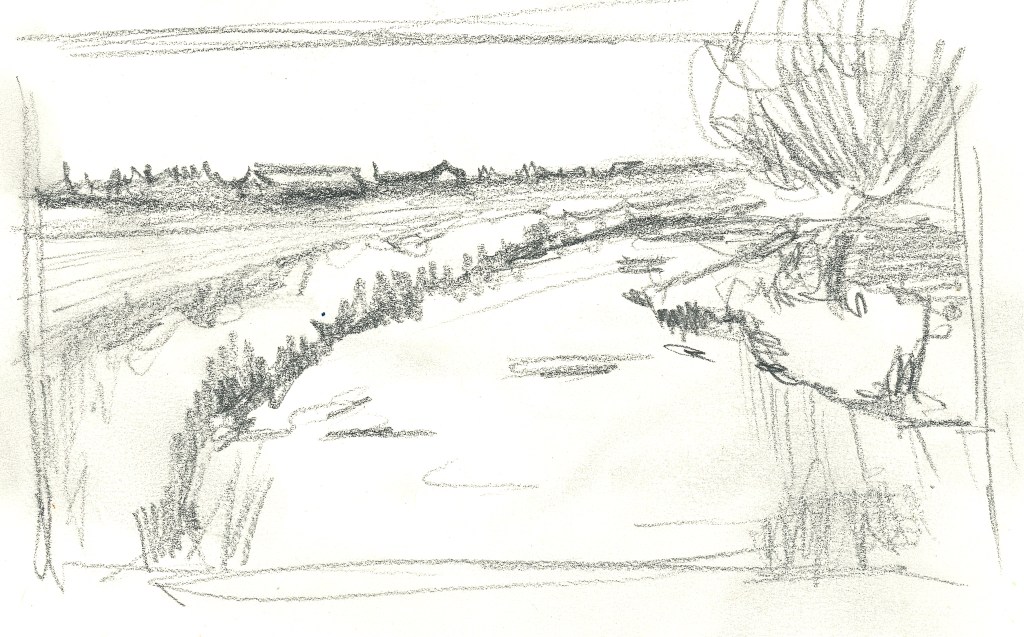
So many artists say a value sketch is important. I like to think I can create the values in my head as I become more sophisticated in my abilities. I have decided to create some kind of preliminary sketch before painting as a habit and that is not an easy task for me – even if it only takes a few minutes. Well, the one below is not really a value study, but it did help me work on some compositional elements. Hmmm.

Kilimanjaro rough 140# paper; watercolor.
Sycamore

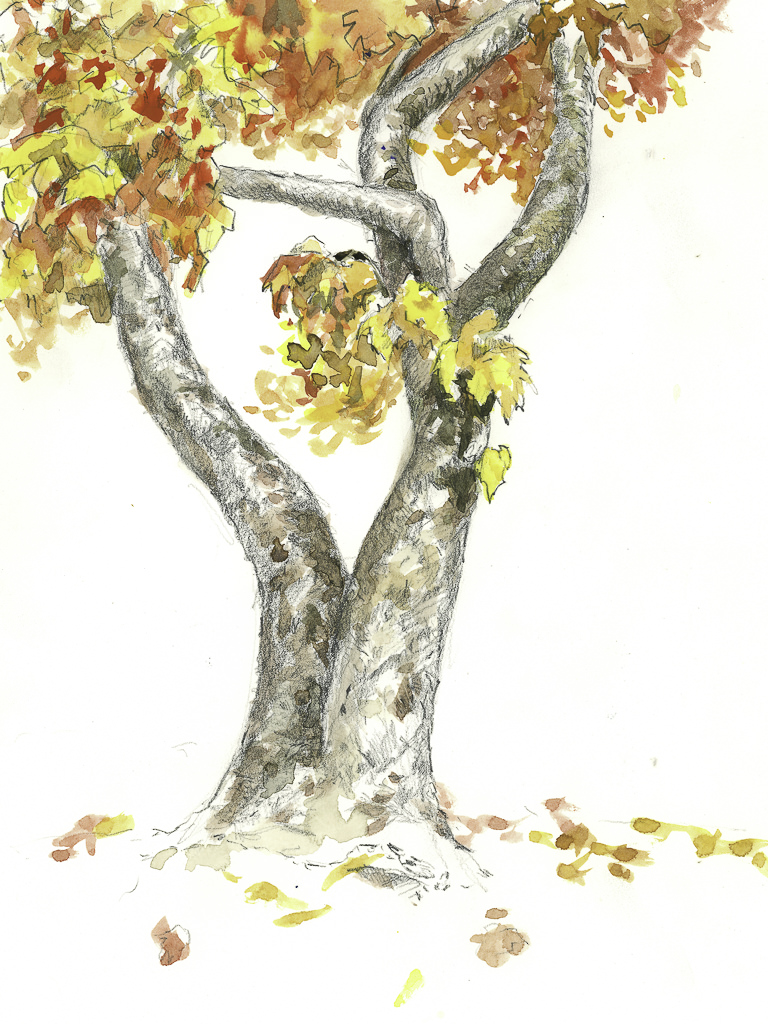
Yesterday was a meeting of the Pencil Portraits in the Park group, but drawing people held little appeal for me. So, I decided to try something I had briefly seen somewhere and thought interesting: during their travels in the 19th century, many people sketched in pencil (graphite) and then colored the drawings with watercolor. These days most people sketch with waterproof ink and then color things in, but I rather liked this idea. A sycamore tree in our park, dressed out in autumn finery made a nice portrait, methinks.

9×12, hot press 140# Arches. Graphite and watercolor.

Sycamore

Sycamore

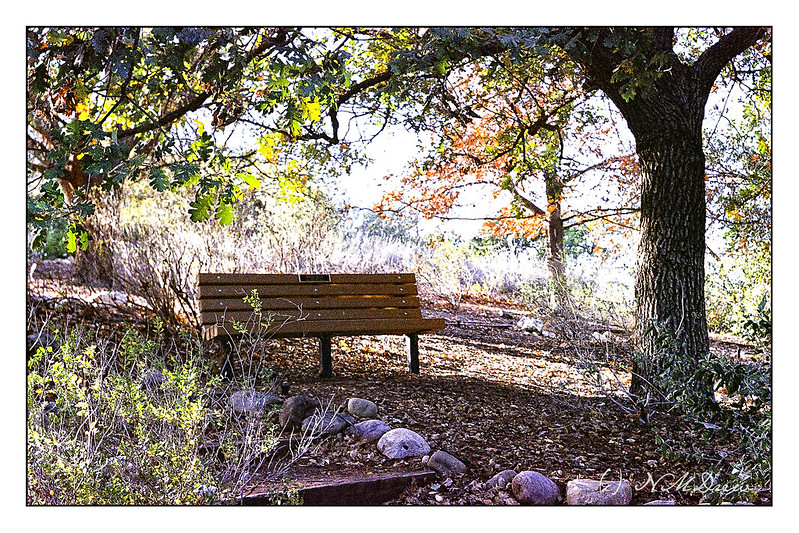
Before they added a second entry, this was the first tree to greet you as you walked in. Every autumn its leaves change color, and tumble to the ground. Sometimes they fly past you when the wind picks up. They are large and colorful, and something I look forward to every fall as much of California, where I live, is populated with non-deciduous trees and bushes.

Olympus Trip 35, Fuji Superia 400.

Time to Pause

Time to Pause

Over the next few weeks, expect more pictures of the local scenery. When I went out, at last able to do more than a hobble because of my foot, I went up to the botanical garden. With the seasonal changes come color changes, even here in Southern California. The local garden is always changing, and autumn and spring are the seasons with the most changes.

On this trip, I was determined to finish up a couple of rolls of film – the Olympus Trip 35 had Fuji Superia 400 in it, and the Agfa Ambi Silette, loaded in 2019, still had a lot of Kodak UltraMax 400 to be used up. The Agfa, too, had never been tested – it was one of those vintage cameras that intrigued me, so, being me, I bought it. The Trip 35 and the Agfa are small, but compared to the Trip 35, the Agfa is a tiny tank. A nice tank, but still a tank. It has no lugs, either, so I had to use a wrist strap that screws into the tripod mount. Awkward, but it works.

I always play with my photos, digital or analog, in Lightroom. Post processing is part of the way I see photos – like pictures and paintings – I want them to show what I want them to show, not what is straight out of the camera. One of my friends says this is cheating . . . ah, well. It’s autumn and time to show those colors and textures!