Oh, Nick, You’re Such a Tool . . .

We all talk about “equipment” at sometime or another.  Evaluation of the tools we use is important simply because some tools are better than others.  Hammers are pretty simple items – you can use a shoe or a rock if necessary – but a well-balanced hammer in hand is quite nice to use.  Paint brushes, too, are tools.  Every artist has favorites, and ones which are okay, and others which you cannot wait to send to paint brush heaven.  There are surgical tools, gardening tools, big tools (cars and tanks), little tools (nail clippers), software.  A tool helps one accomplish a task more easily.

Without a doubt, lenses and a camera are tools.  For me, they have been tools for a while; I am still struggling with photography, deciding if it is a “yes” or “no” in my vision of creativity.  The fact is, it is a bunch of expensive tools, but not necessarily break-the-bank kind of tools.  Cameras and lenses are all individual in quality.  I’m just beginning to appreciate some of the more sophisticated elements of the Nikon camera.  I’m also enjoying the manual art of some of the lenses, and the mechanical and electronic and computer sophistication others display.  Software is another area for enjoyment because it can be the vehicle for the final creative effort, but I wonder if it will ever become something I really enjoy because I really don’t like sitting indoors at a computer for hours on end.  I probably will enjoy it as I master it.

I’ve acquired a few older lenses in the past year, ones which require manual focus, but which will interface with the aperture priority chip of the Nikon.  This means the camera can set the time for my exposure, based on whatever else I’ve dialed into the camera.  The other day, I picked up a lens which doesn’t do any of this.  It is big and heavy and produces lovely images.  It is a Vivitar Series 1 135mm f2.3 lens, and weighs at least a pound.

Last night, we went to dinner at Josh’s parents’ house, so while the light lasted, I played with the lens in the kitchen, garden, wandering around.  At times I pushed the ISO, other times I dropped it.  I had to think about a lot of things, and totally enjoyed it, looking at the LCD on the back of the camera to “chimp” over the picture.  Time, distance, focus, aperture – the old fashioned dance of the photographer with his equipment.

I’m not sure if it is me, but what I see in the older lenses is a very different quality of contrast and color than I see in my newer lenses.  I usually use my newer lenses on some variant of the automatic mode, so I wonder if that impacts things.  Maybe, maybe not.  I suspect some of the differences is in the glass and coatings used.  Older lenses seem to have a more mellow quality, as well as brighter, but not as harsh as newer lenses.  One day I wlll take the time to find out.

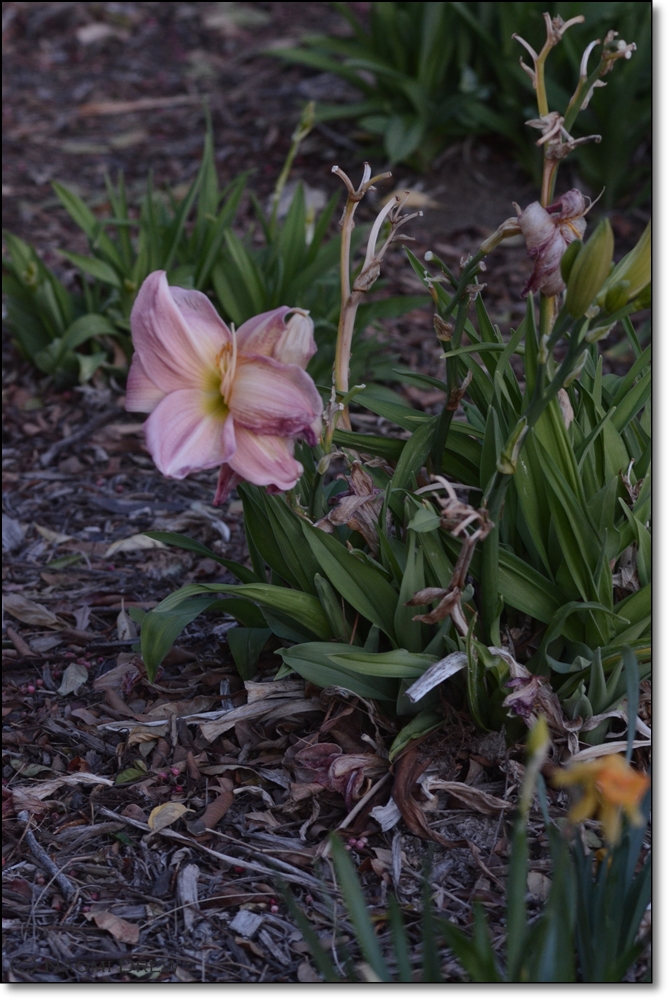
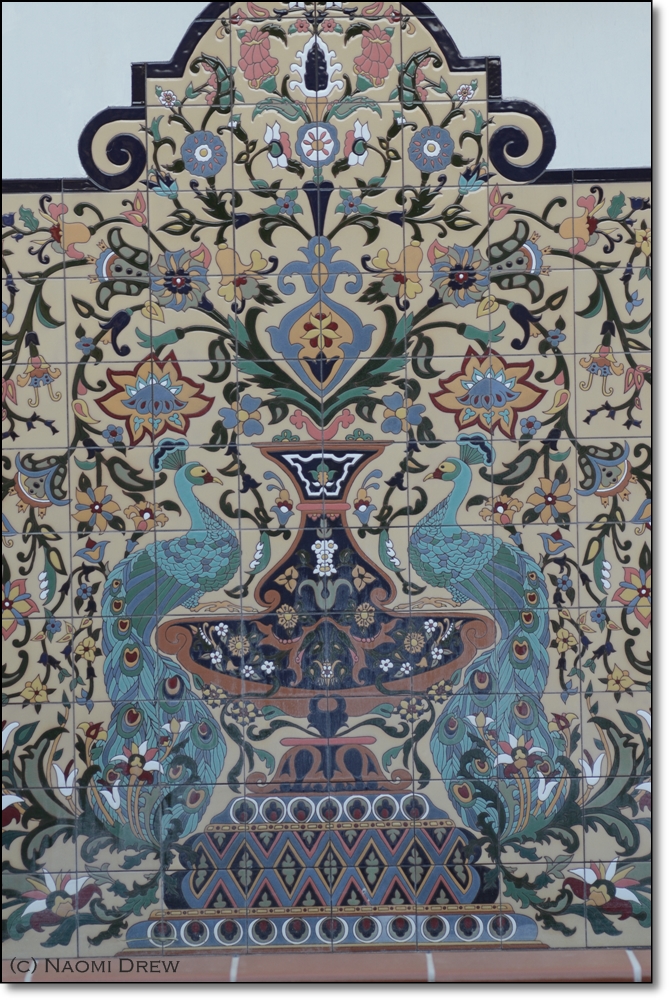
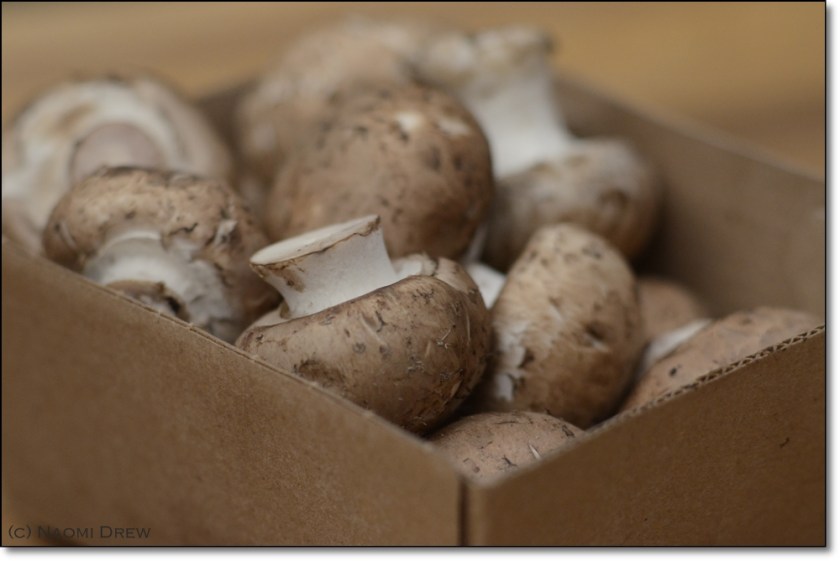
Today’s pictures on this post are taken with that new-to-me old lens.  You can see more of them if you want on my flickr page.  I didn’t post-process any of them, except to resize them and add my name.

Out and About

A whole day spent outdoors taking pictures!  A first in the photo safari department for me.

I went with a friend, another novice in photography, and for both of us, it proved enjoyable and challenging.  There is nothing worse than going out to shoot pictures with someone not doing the same – you know who I mean . . . the person who “patiently” waits for you to do whatever, “sneaking” glances at the wrist watch, sighing, texting.

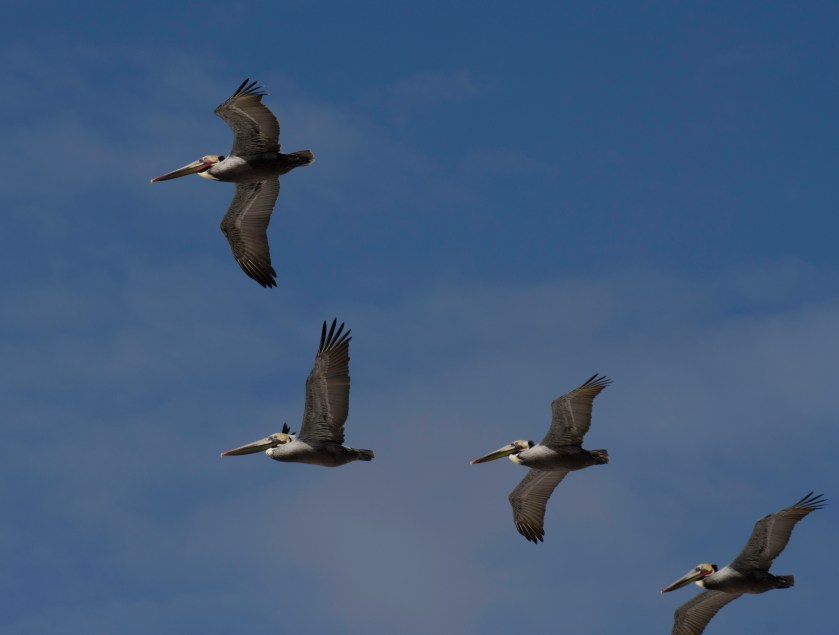
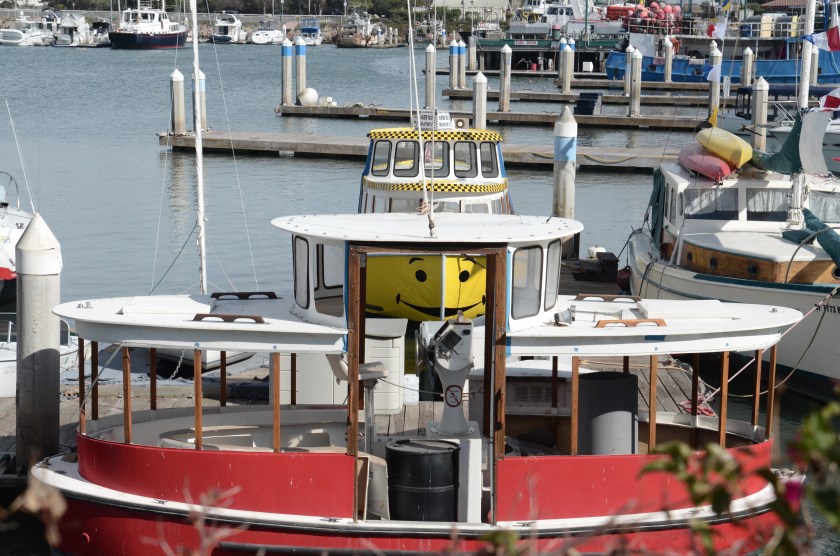
The first stop was the Ventura Marina, and a walk south toward McGrath State Beach and the estuary of the Santa Clara river.  The tide was out, halfway between high and low; the beach was broad and long, mostly deserted except for a few strollers and fishermen.  The estuary is home to many birds, and provides breeding and feeding grounds.  Gulls, terns, pelicans all roost here, and others I cannot identify.  We set up our cameras on tripods, used long and short lenses, and played a bit.  In particular, we enjoyed the pelicans, out on patrol, flying in groups or in pairs, toward Ventura itself.  Often, they head out in the morning, after the first cup of coffee (some sleep in), and then return later in the day.

This really was my first attempt to catch birds in flight.  I used my Tamron SP 70-300 f/4-5.6 Di VC lens – yes, long name – but it is a great lens!  The VC stands for “vibration control.”  This element, combined with autofocus and a short, short exposure time gave me the opportunity to catch the pelicans in flight, still and unblurred.  The Nikon also can shoot up to 6 frames / second (I think); this also helped to catch them in flight, swooping in and out of the waves.  Even with my camera mounted on the tripod, I was pretty pleased by being able to pan and shoot at the same time.

When we got back to the car, we tucked all the photo gear back into the car, and went to eat lunch.  3 hours on a chilly, windy beach, trudging through the sand, makes you work up an appetite.  Some of the best fish and chips is to be had at Andria’s Seafood, so off we went a pile of fish.  Then, back to the car to change lenses – I put on a 17-50mm lens – a wander around the marina itself, into the boat yard where numerous fishing boats are up on blocks for repair and repainting.  Other areas explored were the commercial fishing area, tourist boat rentals, and down to the local museum for the Channel Islands National Park.  Fishing boats are big, some very ugly, but always fascinating as far as I am concerned.  I don’t like sailing unless doped up on scopolamine patches, or out in a brisk and wild wind on a sail boat – I get v-e-r-y seasick otherwise.

The little museum has a wonderful section of books, as well as a saltwater open aquarium which replicates tidepools, and there are windows on the floor you can peer into, meeting lobsters and flounders face-to-face, as well as looking in from above at starfish and urchins and barnacles.  Behind the museum is a small garden of plants found on the Channel Islands.  My favorite one is the coreopsis, which is odd as it has a thick trunk from which many bright yellow flowers erupt – it really looks like something Dr. Seuss might draw!

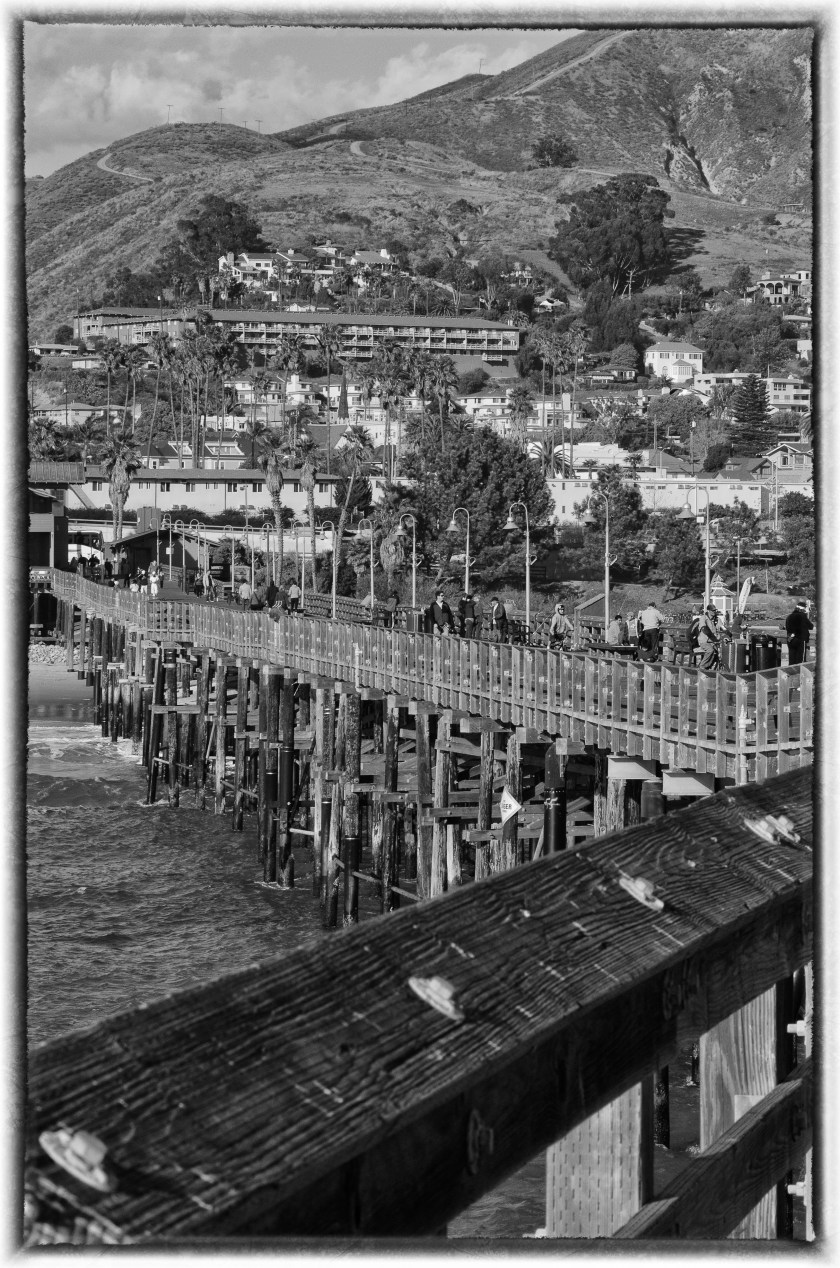
Finally, a decsion:  head to a local beach park, or out to the pier.  The pier won, hands down.  Here, just a prime 100mm macro lens for me.  I wanted the challenge a prime gives, as well as the macro element in case I saw something I really found interesting to look at close up.  (I did . . . ewww! . . . someone’s used condom.)  Once up on the pier, though, I had wished otherwise as the surfers and parasailing surfers were out in numbers.  Despite that, there was a lot to see, above the pier and below.

Gosh, I love digital!  I took about 300 pictures, just because I could!  Some had to be shot fast, such as gulls and pelicans in flight, as well as sailboats flying before the wind.  Overall, I was really pleased with the lenses and their responsiveness.  The Tamron 70-300 was fantastic in its response to distance and time and focusing.  It was the first time I really put it through some jumps, and I am really glad I got it.  The 17-50mm is also a Tamron, while the 100mm macro is a Tokina.  I have some manual focus lenses, but I doubt I could have gotten some of what I did of the birds without automation.

Learning Curve

I have some nice software for photography.  Some is intuitive and easy to use.  Some is free.  Some I have paid for, and have been able to navigate with a fair amount of comfort.  However, Photoshop CS5 has proved to be none of the above because it is such a complicated and sophisticated program.

Not having time nor interest in classes, that leaves me with mucking around or doing internet classes or reading.  I’ve got one book which is fantastic by Martin Evening, complete with DVD and lessons.  However, what I have been wanting is one simply focused on layers.  Layers are an essential part of CS5, but rather confusing because of the many things that can be done in a layer, to a layer, with a layer, and in the layers panel itself.  Last weekend, down at the local bookstore, I found a couple of books which caught my interest, one on flower photography, and another specific to layers in CS5, by Matt Kloskowski.

Layers, to me, means using acetate and transparencies, because I am from the pre-computer days and am used to rubylith and light tables and wax and the darkroom.  I am not illiterate, either, in the computer world, but I am lazy in the learning world!  As a result, this book is probably going to be able to open a lot of doors into this software I have not explored.

Another software I really like is from Nik. It is Silver Efex 2, specifically designed for black and white photography. I have tried a few of their other products, which are also good, so I ordered their Complete Collection, and it includes Silver Efex, Viveza, HDR, Color Efex, and Sharpener.

The Complete Collection should arrive today.  I have enough to keep me out of trouble for awhile.

Sumi-e Studies

After the trip to the Descanso Gardens, and the Gardens of the World, I finally got out some ink, paper, and brushes.  The camellias in bloom everywhere in the Descanso Gardens, and the rows of magnolias in the Gardens of the world, pushed it.  Seeing something that I have practiced painting before, in abundance, was an amazing inspiration.  So much beauty!  It is much different to paint something, practice something, and become familiar with it in one form – and then to re-experience it in another form.

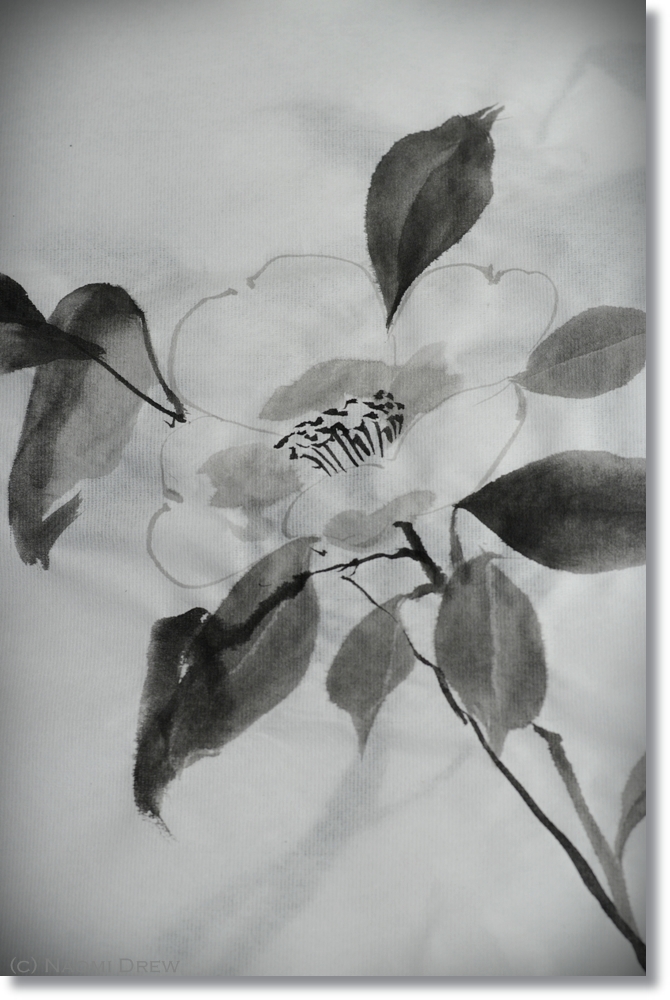
I chose to focus on the camellia, or tsubaki.  There is a lovely painting demonstration by Kazu Shimura, as well as other images in sumi-e throughout the web if you google.  Photographs help, too, ones you might take or you might find.

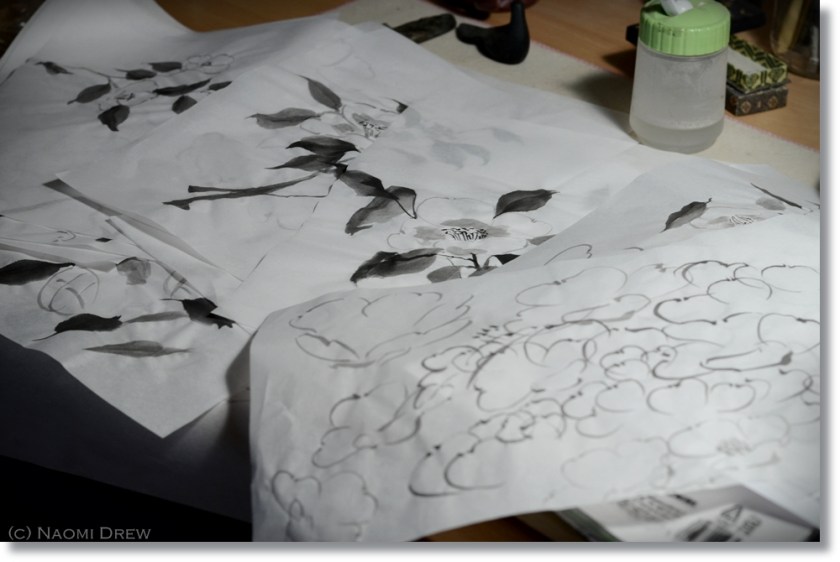
The petals have a light ruffled edge, the center stamens and pistils point outward. Blossoms vary from a few petals – as seen in Shimura’s paintings – to multiple layers.  The leaves vary in shape, but in general are long and round and end in a point.  The edges of the flowers are hard to do gracefully, for me at least.  The leaves are easier.  I spent several hours just practicing the outline of the petals.

Yesterday at a local garden supply store, there were camellia bushes for sale.  I may just buy one for more up close studies as this is the season of bud and flower and leaf.