Oregon Coastline – Your Thoughts?

The Pacific Northwest – Oregon, Washington – has some of the most dramatic and beautiful coastlines. I could easily spend a summer just exploring them. The rock formations, deep beaches, wildness all hold such an appeal. Any rugged coastline fascinates me, and perhaps someday I will get to spend weeks in Maine, Nova Scotia, and other places of such beauty.

Today, I decided to revisit Oregon from a trip awhile ago. Sea stacks run out into the Pacific, some merely rocks, other crowned with pine trees. Take a look at the two paintings below – the same, but with a bit of variation.
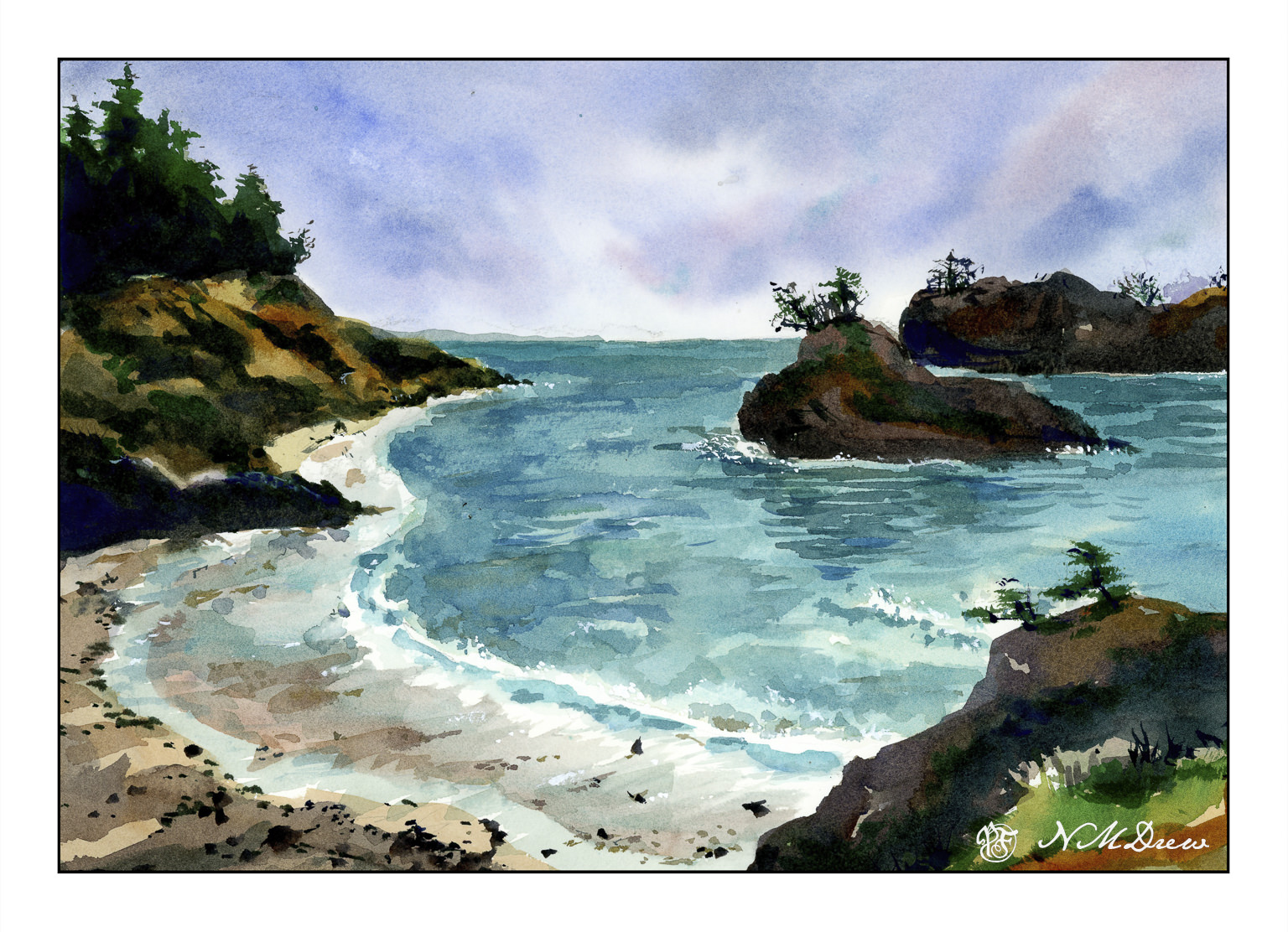
This is the painting as it now stands – but what do you think of the one below?
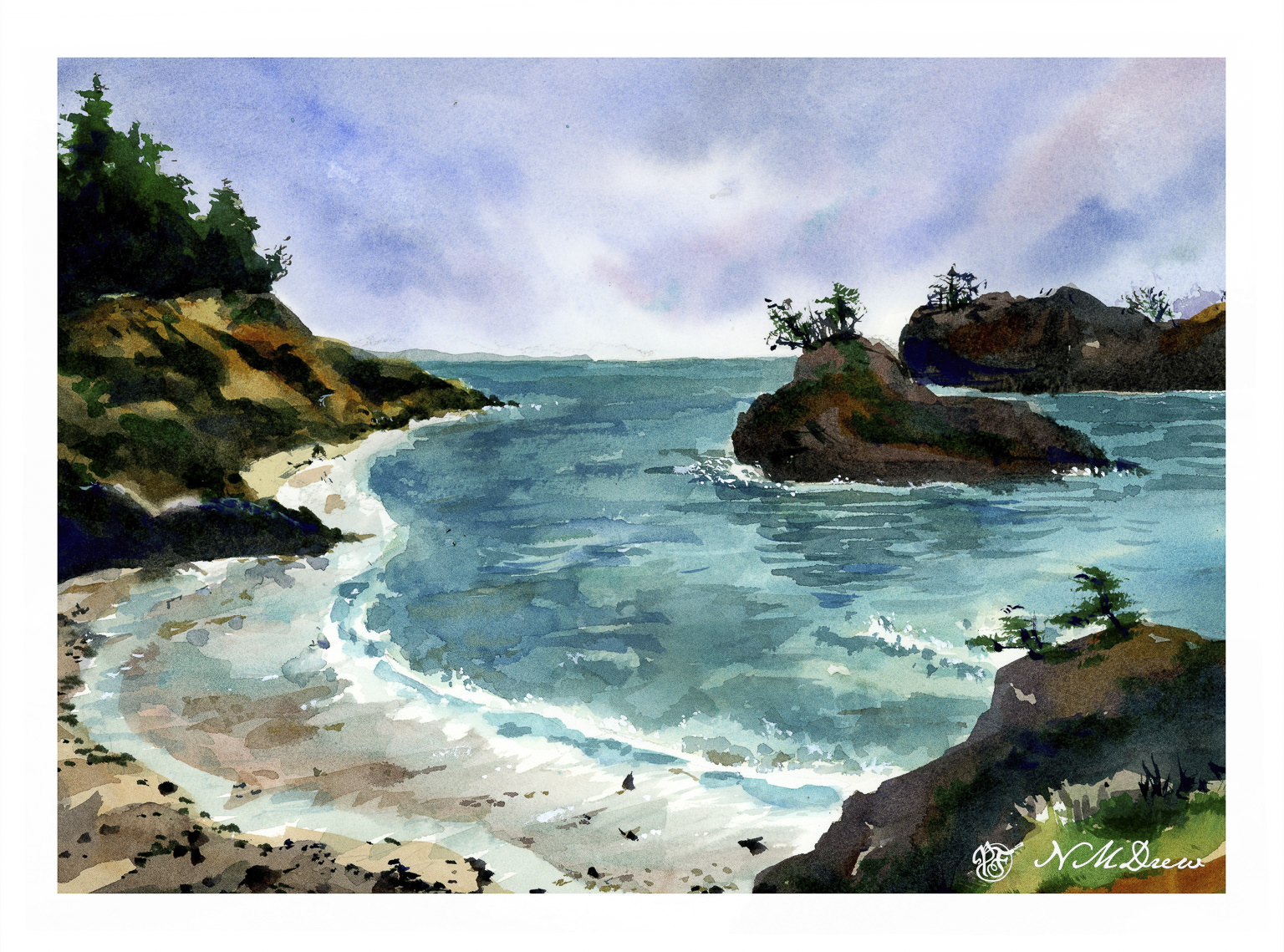
They don’t vary a great deal – and I am not going to tell you what I did – but if you have some thoughts as to which you like, and why, let me know.

Meanwhile, painting this, I worked really hard to create a sense of depth. The photo I used was an overcast and rather murky day. The distant sea stacks were not much different in value than the nearer ones; the coast itself was a bit brighter. Overall, the light was flat here and twas a bit hard to conceptualize it altogether. I am fairly pleased with it, but as with any painting, I see areas for improvement, some I like, some I think are great, etc. Anyone who paints knows this!

Watercolor, CP 140# paper, about 10×12.

Another Day in Late Spring

As I mentioned yesterday, I finished up Shari Blaukopf’s short course on painting spring flowers in watercolor. From crocus, we moved onto hyacinths, and today we have a field – or certainly a large patch – of tulips.

Shari’s tulips are more rounded at the tops, as are your standard tulip. Me, in my messiness and lack of attention to shapes, created ones which have more ragged tops, more open in bloom, and any other excuse you can think of for not adhering to recognizably-shaped tulips!

With that out of the way, this painting was a conclusion to all three studies. Out of all of them, for me the crocus was the biggest challenge simply as I am not familiar with them in reality – only pictures. The hyacinth was difficult because the flowers are small, 6-pointed, and blur into one another. Working with them as color masses, light to dark, with an occasional recognizable flower made for success in painting a complex subject. These tulips, while not especially tulippy, were my favorite to paint.

If you enjoy watercolor, I recommend Shari’s short courses – as I have before. They are reasonably priced, some are better than others, but in each one there is a clear subject and a clear goal. She has put together some “series” of online classes, too, which cover related topics. Many classes have a section for the student to upload their studies, and Shari is very good about getting back, even if it may be a few weeks later because she is away teaching in-person workshops.

Watercolor, 10×12, CP paper.

Yes, It Is Still Spring . . . .

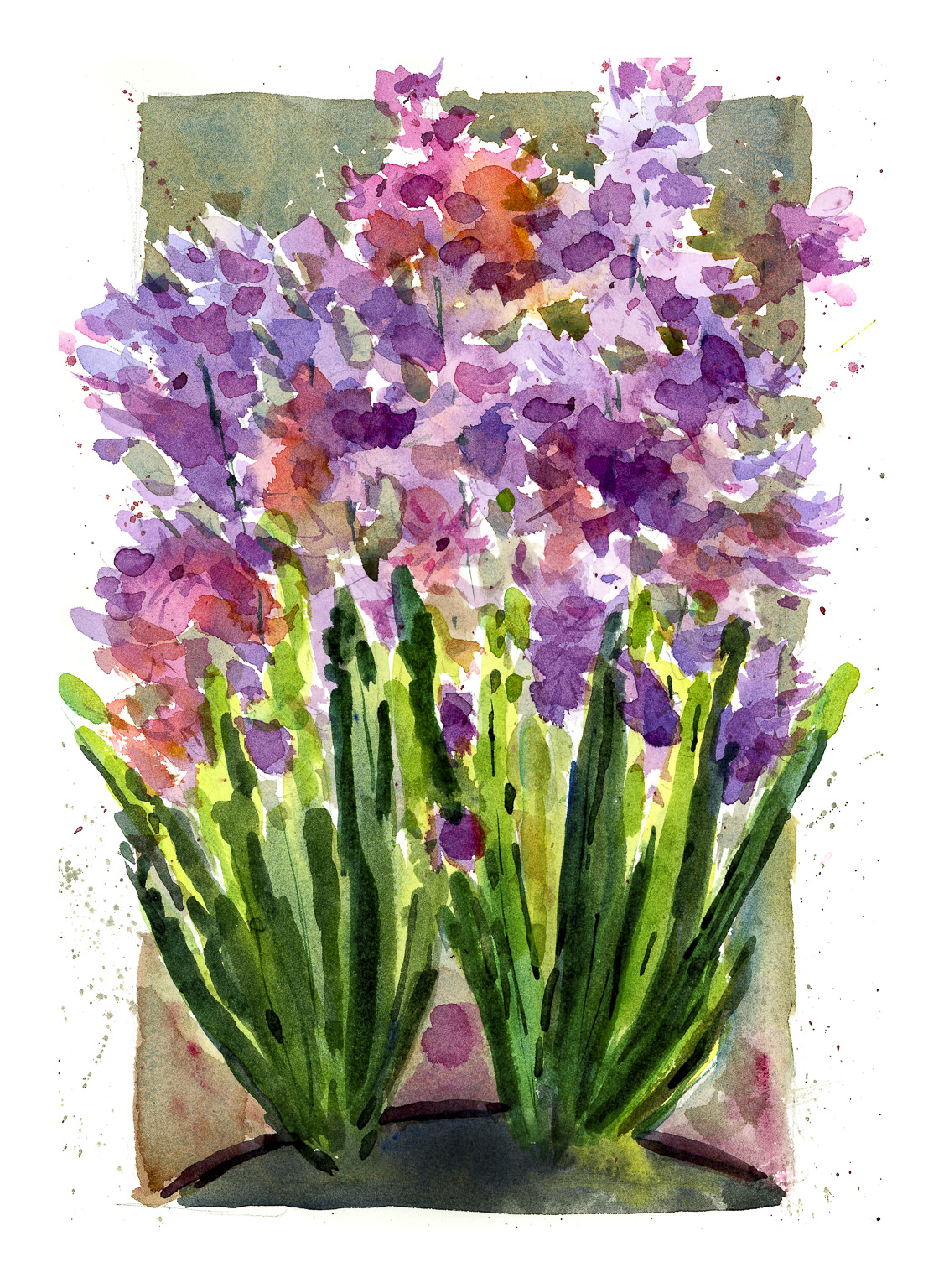
The solstice is not yet here, so it is still technically Spring! I thought this was an important fact since I am showing off the hyacinth study from Shari Blaukopf’s online course of flowers in the spring. I already did the crocus – the flower I have never seen – and today I present you with the second study, hyacinths.

Whether or not these really look like hyacinths may be up to you. Shari is not a botanical watercolorist, and neither am I. I really like the intensity of her colors and the way she handles paint and subject matter. Add to that, she is a really good teacher and I have enjoyed all her online courses.

Overall, I am pleased with this study, but I will say the bottom, in the pot and the dirt, I need to fix that, but will later. Time to have a snack and kick back after this. I was focused and now I need to unfocus.

Watercolor, about 9×12.

Suburban Notan

Suburban Notan

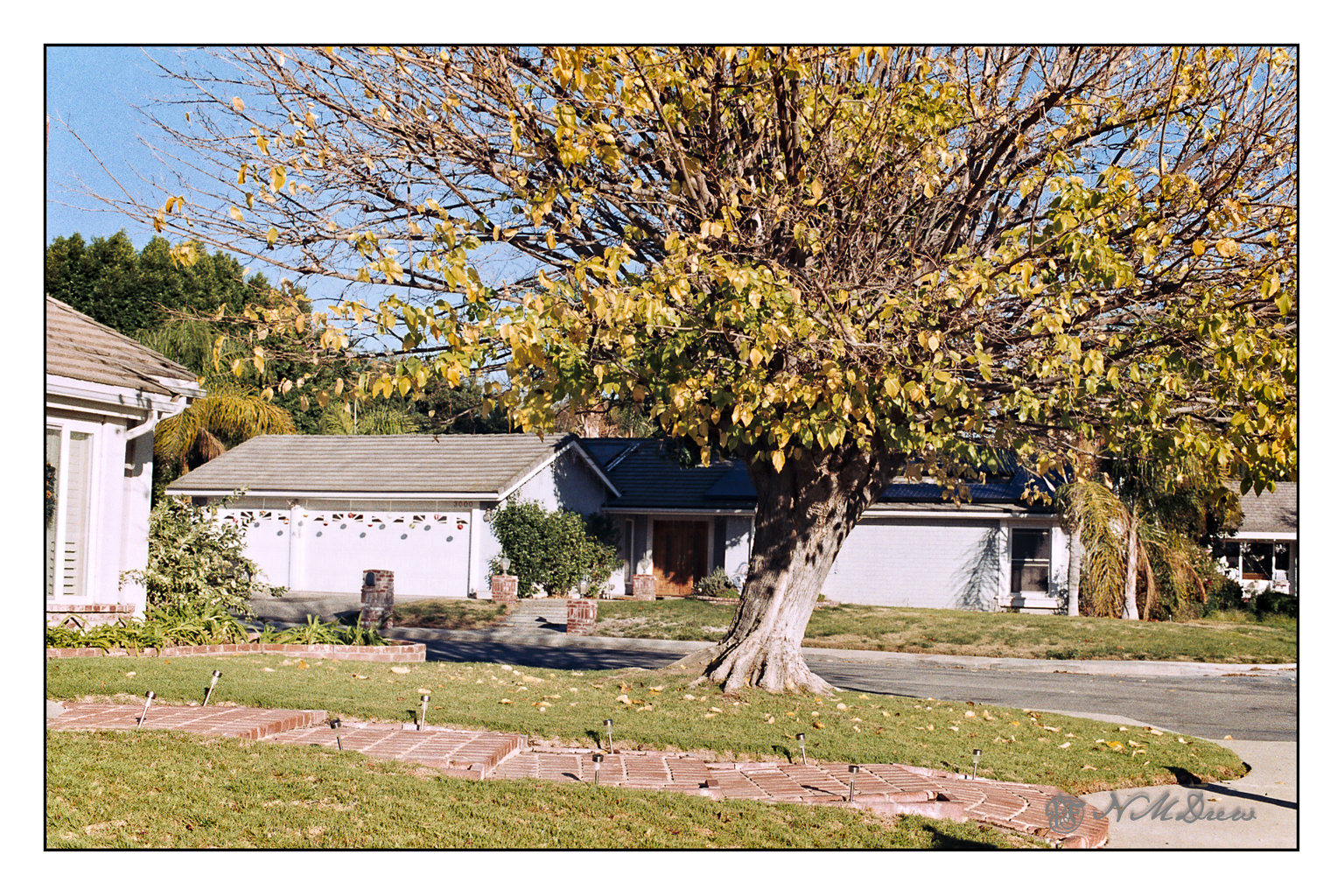
Putzing around a bit, I decided to take an image I had developed a week or so ago and take it somewhere. No idea about the camera, but it is Fujicolor film. I desaturated it and then pushed it to extremes in black and white – I like to do this when considering a subject for value studies, whether I painted it already, or plan to paint it. Below is the color version.

Just as an aside, this is my favorite tree in the neighborhood. In the fall all the leaves are scattered around, bright yellow. In the spring, they come back slowly, little bright bits of green and then a full canopy. The shape is very symmetrical at the height of summer.

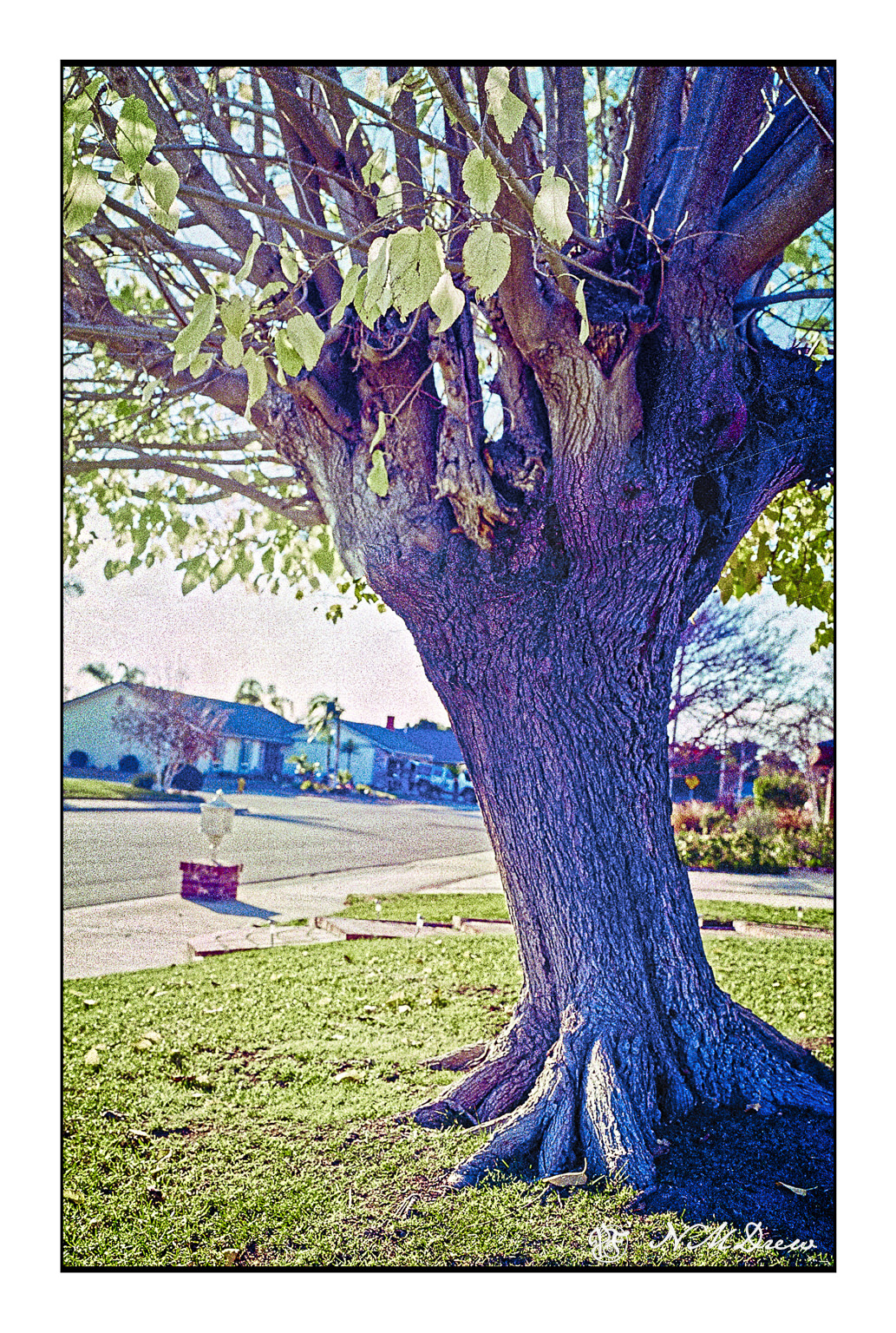
The above was a series of five or six pictures fused together into a panorama. The original pano was not as detailed – the image was a bit soft – but I wanted the texture of the trunk to show clearly.

35mm Fujicolor 100 film, scanned with a Pakon 135, and again with a PrimeFilm XA Super using Silverfast 8e.

First Tomatoes

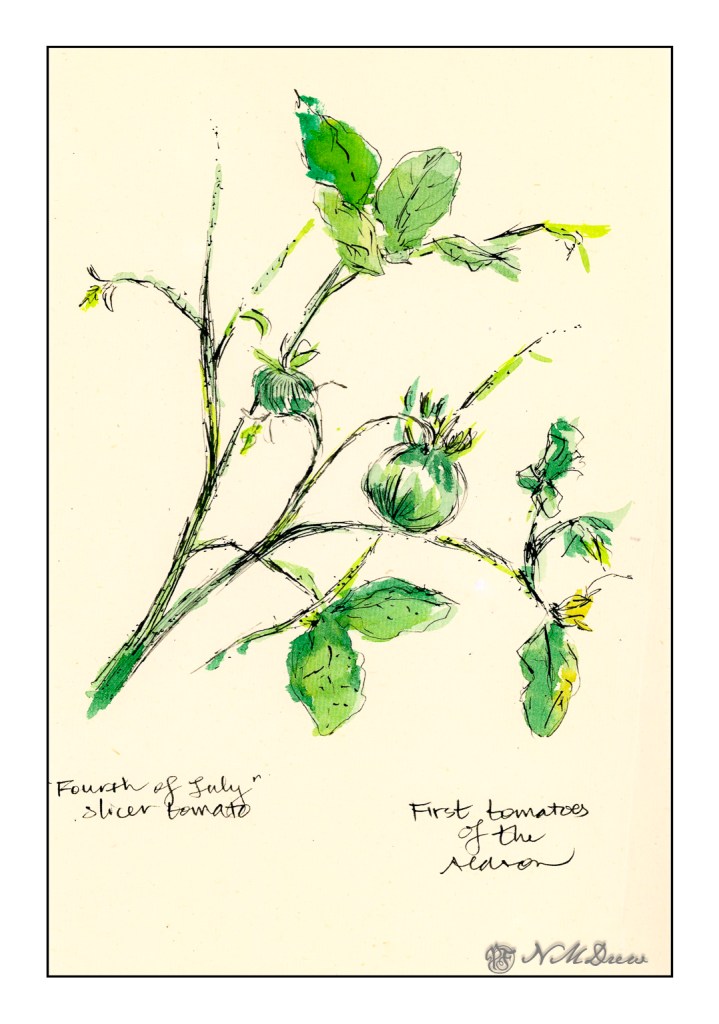
This year, for me, it has been a challenge getting in tomatoes. Our wet winter and gloomy spring months make anything wanting sun not a galloping success. However, I did persevere and put in a right load of vegetables, herbs, and flowers, mostly in containers. The other day I noticed my first tomatoes had set – these are ones I have never grown before, called “Fourth of July” and are a slicing tomato.

I have other tomato plants, too, which I hope will do well. I think as the summer progresses it will be seen as fail or success. I do have a lot of blossoms, though, so I can at least hope!

When I was doing this sketch I was thinking to myself that these sketches of the garden will give me plenty of opportunities to mix greens . . .

And, we had the first mesclun tonight in our salad!

Watercolor, ink, Chinese fanfold sketch book